
 It is the term for particles found in the air including dust, dirt, soot, smoke and pollen. Particles can be suspended in the air for long periods of time. Some are large or dark enough to be seen such as soot or smoke and some are invisible to the naked eye.
As in the case of air quality in Beijing earlier this year and the current levels being experienced in Singapore, it is a concern to peoples health when PM level counts are high with a readings in excess of 300 on the pollution index and is measured in micrograms per cubic metre of air.
Particulate Matter comes in a wide range of sizes, measured in micrometres or ‘microns’. Like inches, metres and miles, a micron is a unit of measurement for distance, a very small distance. There are 1000 microns in one millimetre and the width of a hair on your head is between 100 and 500 microns. A typical range of particles found in city air would be in the order of 50+ microns in size down to less than 1 micron in size.
Particles that are 50+ microns in diameter can be seen by the naked eye, but as they get smaller they tend to invisibility. (The Invisible Threat)
Particles less than 10 microns in diameter (PM10) start to pose a health concerns because they can be inhaled into the back of the throat region causing irritation and coughing.
Particles less than 2.5 microns in diameter (PM2.5) which include sub micron particulates (less than one micron) are referred to as fine or ‘respirable’ particles and are believed to pose the greatest health risk.
Because of their size, the normal human filtering system the nose and its nasal hair are unable to trap these fine particulates. They pass through the upper airways and deep into the the fine capillaries and air sacs which is where the oxygen exchange occurs to oxygenate the blood.
Current concerns are that very small amounts of toxic or carcinogenic chemicals like the VOC pyrene and Benzene are carried on the particle and taken to the point of exchange, which allows for the potential of the chemical agent to be absorbed into the blood stream and affect other vital organs.
A typical sample of black smoke emitted from one of the more popular people carrying vehicles, would include particles from 100 microns to particles less than one micron in size. The sizing variation comes from the type of fuel being burnt and how efficiently it is being burnt. In the current case of Singapore, the particulate matter from forests being burnt, would be high in carbonaceous material and other residual matter from the sap of the trees.
In general, short term health effects from exposure to high pollution levels are eye, nose, throat and chest irritation, coughing, sneezing, runny nose and shortness of breath. Constant exposure to fine particles will also affect lung function, worsen medical conditions in existence such as asthma and heart disease and increase the risk of respiratory disorder in healthy people.
Those who exercise in an urban environment consistently where the PM reading is high, should really take considered and appropriate precautions. For example those who cycle for an average of 30 minutes to work at a brisk pace are likely to breathe approximately 1800 litres of air in that journey; without respiratory protection, that 1800 litres of contaminated air will be filtered by a cyclists respiratory system. That’s every day twice a day for two thirds of a year. Is there any wonder why people are looking to use masks to protect themselves.


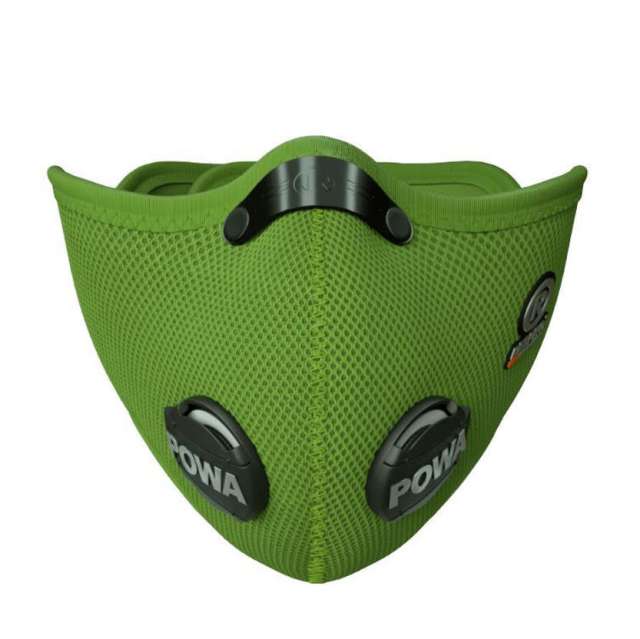





 Respro® Masks are reusable
 Respro® Bulletin Board