
 The New Orleans, Baton Rouge, Lake Charles and Shreveport areas would be in violation of lower standards for ground level ozone, the main ingredient of smog, that were proposed Wednesday by the federal Environmental Protection Agency.
The new standards, if approved after a 90-day public comment period, would require reductions in ozone-creating air pollutants by local industries and businesses. They could also require restrictions in how gasoline and other fuels are sold to the public, and possibly vehicle inspections and other measures. EPA doesn’t expect to release a final version of the rule until October.
Industry groups and some state officials, including Gov. Bobby Jindal, immediately attacked the proposal as too costly for industry.
“President Obama’s new environmental regulations are reckless and based on a radical leftist ideology that will kill American jobs and increase energy prices,” Jindal said.
Some environmental and health organizations, however, said the proposed standards aren’t low enough.
“Thousands of peer-reviewed medical studies show that breathing ozone pollution is dangerous to human health and the EPA review shows harm is occurring at levels far below what is currently considered ‘safe,'” said American Lung Association President Harold Wimmer.
High levels of ozone are linked to asthma, lung damage and other health problems. EPA is proposing to reduce the 8-hour standard for ground level ozone to between 65 and 70 parts per billion, from the present 75 parts per billion set in 2008 by President George W. Bush administration. EPA on Wednesday also requested public comment on dropping the standard even lower, to 60 ppb.
Baton Rouge was found in violation of the 75 ppb standard, which requires a three-year period of being below the 8-hour average, but was declared to be in compliance with the 2008 ozone standard in December.
If a new standard were set at 70 ppb, parishes out of compliance today would include St. Tammany and St. John the Baptist in the New Orleans area; East Baton Rouge, Livingston, Ascension, Iberville, and Pointe Coupee in the Baton Rouge area; Bossier and Caddo in the Shreveport area; and Lafourche Parish. All those communities exceeded 70 ppb in ozone readings taken from 2011 through 2013.
 Parishes that would violate 65 parts per billion (ppb) standard Parishes that would violate 70 ppb standard
If the standard were set at 65 ppb, parishes out of compliance would include Orleans, Jefferson, St. Bernard, St. Charles and St. James in the New Orleans area; West Baton Rouge and Lafayette; and Calcasieu in the Lake Charles area.
What makes ozone harmful
Ground level ozone, often referred to as smog, is created by chemical reactions between oxides of nitrogen and volatile organic compounds. Higher levels are found in the air on sunny days, and ozone can also be transported long distances by wind.
The chemical constituents are found in emissions from industrial facilities, electric utilities, motor vehicle exhausts, gasoline vapors and chemical solvents, such as paint thinner.
Children are at greatest risk to ozone exposure because their lungs are still developing, and they’re likely to be active outdoors.
The proposed rules include a secondary standard of between 65 and 70 ppm for areas where ozone may affect sensitive vegetation and ecosystems.
In a news conference Wednesday, EPA Administrator Gina McCarthy said the new standard is the result of a five-year review of the existing rules and of new scientific research on ozone health effects, required under the federal Clean Air Act.
EPA’s new analysis indicates dropping the standard to a range of 65 to 70 ppb will especially protect children and the elderly, who are more at risk of breathing problems caused by the pollutants.
She said the analysis predicts the new standard will prevent from 750 to 4,300 premature deaths, 1,400 to 4,300 asthma-related emergency room visits and 180,000 missed work days a year by 2025. For children, the new standards will prevent between 320,000 and 960,000 asthma attacks and from 330,000 to 1 million missed school days a year by 2025, she said.
EPA estimates it will cost $3.9 billion a year to meet a 70 ppb standard in 2025, and $15 billion for a 65 ppb standard. It estimates the health benefits are valued at $6.4 billion to $13 billion a year in 2025 for a 70 ppb standard, or $19 billion to $38 billion in 2025 for a 65 ppb standard.
McCarthy said the cost estimate for complying with the proposed ozone rules factors in results of other new EPA rules restricting air pollution to help reduce emissions of the chemicals that cause ozone, nitrogen oxide and sulphur dioxide.
Those rules include new “Tier 3” clean vehicle and fuels standards that will lower smog from industry and transportation, and new rules restricting emissions of carbon from electric power plants. Those rules are equally controversial with industry and several are facing court challenges.
McCarthy said that while EPA is requesting comments on a 60 ppb standard for ozone, that’s likely not in the cards at the moment. She said there’s a greater level of uncertainty concerning the scientific backing for the lower standard.
DEQ: Lower standards would affect industry
A lower standard also would trigger stringent review of permits for some industrial facilities, according to the state.
A Louisiana Department of Environmental Quality spokesman, Gregory Langley, said if the standards are set low enough for the New Orleans area to be in non-compliance, new industrial facilities in the region or those undergoing major renovations would have face a “nonattainment new source review,” a more stringent permitting process that would allow smaller amounts of pollutants to be released.
The plants might be able to offset those emissions by improvements at other facilities or through the purchase of credits from other industries that have reduced their emissions.
The area might also fall under “Transportation and General Conformity” restrictions that could result in reductions of federal dollars for road and construction projects, with the aim being to lower emissions from vehicles, Langley said. He said the New Orleans area business community is establishing a Clean Air Coalition to deal with air pollution issues, similar to one that has been in existence in the Baton Rouge area for several decades.
Jefferson Parish’s environmental affairs director, Marnie Winter, said the Greater New Orleans Clean Air Coalition has been meeting regularly since July to discuss anticipated changes in National Ambient Air Quality Standards. The coalition includes the Regional Planning Commission, the Louisiana Department of Environmental Quality, members of the Baton Rouge Clean Air Coalition, the Port of New Orleans, several industries and local governments. Winter said Jefferson Parish, as well as Louisiana Parishes against Coastal Erosion, a coalition of 20 coastal parishes, will submit comments on the proposed rules.
“At this point, it is unclear what types of regulations would be imposed on local governments in order to achieve attainment,” Winter said. “Our initial focus will be on voluntary measures that can be implemented as well as public education.”
In Baton Rouge, local industries already have been under those sorts of restrictions and will continue to do so, Langley said. “The state will work with established and new industrial facilities to meet any and all goals set by EPA,” Langley said.
What remains unclear, however, is the effect on ozone levels of tens of billions of dollars in new industrial projects announced during the past three years, especially in parishes along the Mississippi and Calcasieu rivers.
Those include South Louisiana Methanol’s $1.3 billion plant in St. James Parish, Sasol Ltd.’s $21 billion gas-to-liquids and ethane cracker complex outside Lake Charles and Russian fertilizer giant EuroChem’s plans to build a $1.5 billion production plant in either Iberville or St. John parishes.
EPA spokeswoman Enesta Jones said the studies conducted for the proposed EPA ozone rules were based on present emission levels, and only factored in expected reductions for existing facilities based on court-approved consent decrees. Those studies didn’t include the emissions from new plants.
Industry, lung doctors have opposite reactions
The proposed ozone rules were immediately attached by a variety of Louisiana politicians and industry groups, arguing the rules will cost many times more than the EPA estimates, eliminating jobs and hurting consumers.
Jindal said the rules would force companies to limit production, and would cause energy prices to increase. He said Obama “believes the government in Washington knows what’s best and that’s why he wants to force this new job-killing regulation on the American people.”
American Petroleum Institute President and Chief Executive Officer Jack Gerard said the new regulations aren’t necessary, because industry is already moving towards reducing pollutants under the 2008 standards. He said the new rules could cost $270 billion a year, including $53.4 billion in Louisiana from 2017 through 2040.
“Air quality has improved dramatically over the past decades and will continue to improve as EPA and states implement existing standards, which are the most stringent ever,” Gerard said in a news release.
Gerard’s cost estimates are based on a recent study by NERA Economic Consulting that estimates losses based on the 60 ppb standard, and included all parishes, whether or not they now have monitoring for ozone.
McCarthy, the EPA administrator, said the decision on whether to expand monitoring would be left to individual states.
The proposed rule was criticized as not going far enough by the American Lung Association, however, because it would not require the lower, 60 ppb standard. The group said 60 ppb has been recommended by scientists and several health and medical societies.
“The scientific record clearly shows that a standard of 60 ppb would provide the most public health protection. We will continue to push the agency to adopt standards based on the scientific evidence,” Wimmer, the group’s president, said.
He said setting ozone standards that are not low enough gives the public a false sense of safety.
“This means too many Americans have been informed that the air in their community is safe to breathe based on the outdated standard. The science shows that information was wrong. Every parent in America has a right to know the truth about the air their children breathe,” he said.
via Metro New Orleans, Baton Rouge, other areas would violate proposed EPA ozone standards | NOLA.com.


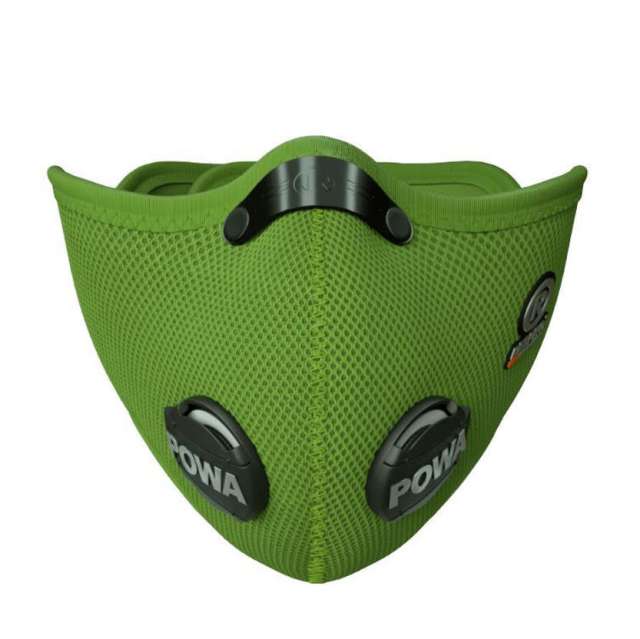





 Respro® Masks are reusable
 Respro® Bulletin Board