
A new study published in The Lancet Global Health involving researchers from the University of Liverpool, provides greater understanding of the impact household air pollution can have on the development of child pneumonia.
Streptococcus pneumoniae (the pneumococcus) is a major human pathogen causing more than two million deaths per year; more than HIV/AIDS, measles and malaria combined. It is the leading cause of death due to infectious disease in children under five years of age, but is also part of the normal microbial community of the human upper airways (the nasopharynx). The burden of pneumococcal carriage and pneumonia is particularly high in sub-Saharan Africa.
Household air pollution from solid fuels increases the risk of childhood pneumonia. Nasopharyngeal carriage of Streptococcus pneumoniae is a necessary step in the development of pneumococcal pneumonia. More than 2.6 billion people are exposed to household air pollution worldwide. It is estimated that household air pollution from the burning of biomass and the inefficient use of fuel accounts for approximately 3.8 million premature deaths annually and approximately 45% of all pneumonia deaths in children aged younger than five years. However, there has been little evidence that identifies the causal pathway that links household air pollution and pneumonia.
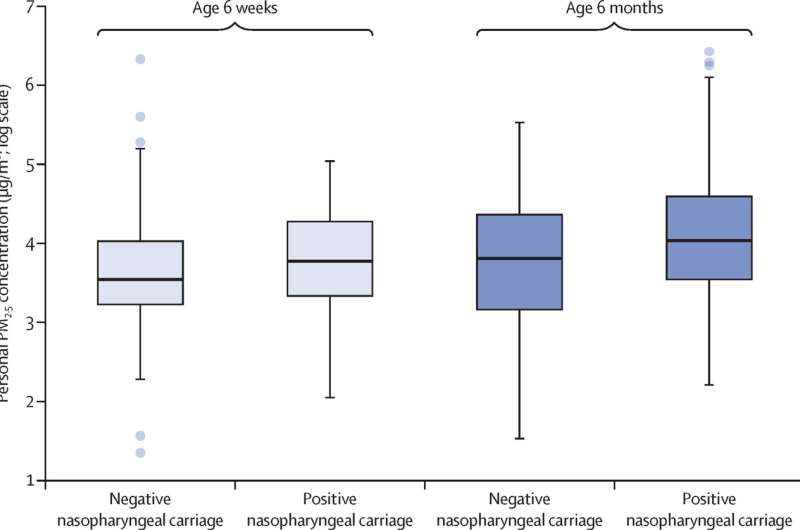
In order to understand the connection between exposure to household air pollution and the risk of childhood pneumonia researchers from the UK, Malawi and the United States conducted the MSCAPE (Malawi Streptococcus pneumoniae Carriage and Air Pollution Exposure) study embedded in the ongoing CAPS (Child And Pneumonia Study) trial. The MSCAPE study assessed the impact of PM2.5, the single most important health-damaging pollutant in household air pollution, on the prevalence pneumococcal carriage in a large sample of 485 Malawian children.
Through exposure-response analysis, a statistically significant 10% increase in risk of Streptococcus pneumonia carriage in children was observed for a unit increase (deciles) of exposure to PM2.5 (ranging from 3.9 μg/m³ to 617.0 μg/m³).
Dr. Mukesh Dherani, the study principal investigator, indicated: “This study provides us with greater insight into the impact household air pollution can have on the development of child pneumonia. These findings provide important new evidence of intermediary steps in the causal pathway of household air pollution exposure to pneumonia and provide a platform for future mechanistic studies.”
Professor Dan Pope, one of the study authors and Director of the NIHR CLEAN-Air(Africa) Global Health Research Group led by the University of Liverpool stated: “Moving forward further studies, particularly new randomized controlled trials comparing clean fuels (e.g. liquefied petroleum gas) with biomass fuels, with detailed measurements of PM2.5 exposure, and studies of mechanisms underlying increased pneumococcal carriage, are required to strengthen causal evidence for this component of the pathway from household air pollution exposure to ALRI in children.”
Professor Nigel Bruce, co-principal investigator, stated: “This study provides further important evidence that emphasizes the need to accelerate to cleaner fuels, such as LPG, which are now being promoted by many governments across the continent in order to meet SDG7 by 2030.”
New study identifies link between household air pollution and child pneumonia








 Respro® Masks are reusable
 Respro® Bulletin Board