AFRICA: The continent tops a global ranking on pollution levels

The results of the “Global Health” study published recently in the British scientific journal The Lancet, reveal that the African continent is the most affected of the 9 million deaths caused annually by air pollution across the planet. This phenomenon, which affects people and biodiversity, is increasingly attracting the attention of African policy makers.

Chad, Central African Republic (CAR), Niger, Burkina Faso, Somalia and South Africa are among the top 10 countries in the world with the highest number of air pollution-related deaths. In total, the phenomenon has been killing 9 million people each year across the planet since 2015. According to the British scientific journal The Lancet, which published the results of the study, this is an increase of 7% compared to the previous decade.

“This puts pollution on a par with smoking in terms of deaths. Covid-19, by comparison, has killed about 6.7 million people worldwide since the start of the pandemic,” says the report, called “Global Health” and based on data from the University of Washington.

While industrial processes (toxic chemicals, fumes) and urbanisation have usually been blamed, contaminated water and soil have rapidly increased pollution levels on the continent, with economic losses estimated at $4.6 trillion annually. Yet some countries, such as Ethiopia and Nigeria, have cut pollution-related deaths by two-thirds between 2000 and 2019 thanks to a number of government programmes, the report says.

Breaking the deadlock

While 51% of Uganda’s 600 tonnes of annual waste ends up in the environment, according to the International Union for Conservation of Nature (IUCN), the East African country has developed air quality regulations and standards, including for emissions from vehicles and industries.

In Morocco, where fossil fuels, notably coal, oil and gas, still account for more than 63% of the energy mix, according to the Moroccan National Office of Electricity and Drinking Water (ONEE), the authorities are focusing on the energy transition for climate change resilience. Togo has also developed major renewable energy projects in recent years with a view to diversifying its electricity mix and pursuing the objective of carbon neutrality.

AFRICA: The continent tops a global ranking on pollution levels | Afrik 21
Posted in Africa, Air Quality | Tagged , , , , , , , | Leave a comment

Air pollution linked to deadly heart rhythm disorder

Life-threatening arrhythmias are more common on days with highly polluted air, according to research presented today at Heart Failure 2022, a scientific congress of the European Society of Cardiology (ESC).1 The study was conducted in patients with an implantable cardioverter defibrillator (ICD), enabling the authors to track the occurrence of arrhythmias and delivery of life-saving therapy.

“Our study suggests that people at high risk of ventricular arrhythmias, such as those with an ICD, should check daily pollution levels,” said study author Dr. Alessia Zanni, now working at Maggiore Hospital, Bologna and previously at Piacenza Hospital, Italy. “When particular matter (PM) 2.5 and PM 10 concentrations are high (above 35 μg/m3 and 50 μg/m3, respectively), it would be sensible to stay indoors as much as possible and wear an N95 mask outside, particularly in areas of heavy traffic. An air purifier can be used at home.”  

Outdoor air pollution kills an estimated 4.2 million people every year, according to the World Health Organization.2 Nearly one in five cardiovascular disease deaths are due to dirty air, which was ranked the fourth highest risk factor for mortality after high blood pressure, tobacco use and poor diet.

This study investigated the relationship between air pollution and ventricular arrhythmias in Piacenza, Northern Italy. The European Environment Agency graded the city 307 worst out of 323 cities for annual mean PM2.5 concentrations in 2019 and 2020, with a figure of 20.8 μg/m3.4“We had observed that emergency room visits for arrhythmias in patients with ICDs tended to cluster on days with particularly high air pollution,” noted Dr. Zanni.

“We therefore decided to compare the concentration of air pollutants on days when patients had an arrhythmia versus pollution levels on days without an arrhythmia.”The study included 146 consecutive patients who received an ICD between January 2013 and December 2017. Of those, 93 received an ICD because of heart failure after a heart attack while 53 had a genetic or inflammatory heart condition. Just over half (79 patients) had never experienced a ventricular arrhythmia, and 67 patients had previously had a ventricular arrhythmia.

Data on ventricular arrhythmias (ventricular tachycardia and ventricular fibrillation) were collected remotely from the ICD until study completion at the end of 2017. The researchers also recorded the therapy delivered by the device. This included antitachycardia pacing for ventricular tachycardia (fast heartbeat), which delivers electrical impulses to the heart muscle to restore a normal heart rate and rhythm. The second therapy was an electric shock to reset the heartbeat during ventricular fibrillation.

Daily levels of PM10, PM2.5, carbon monoxide (CO), nitrogen dioxide (NO2) and ozone (O3) were obtained from Regional Environmental Protection Agency (ARPA) monitoring stations. Patients were assigned exposures based on their home address. The researchers analysed the association between pollutant concentrations and the occurrence of ventricular arrhythmias.

A total of 440 ventricular arrhythmias were recorded during the study period, of which 322 were treated with antitachycardia pacing and 118 were treated with a shock. The researchers found a significant association between PM2.5 levels and ventricular arrhythmias treated with shocks, corresponding to a 1.5% increased risk for each 1 μg/m3 rise in PM2.5. They also found that when PM2.5 concentrations were elevated by 1 μg/m3 for an entire week, compared to average levels, there was a 2.4% higher likelihood of ventricular arrhythmias regardless of the temperature. When PM10 was 1 μg/m3 above average for a week there was a 2.1% raised risk of arrhythmias.

Dr. Zanni said: “Particulate matter may cause acute inflammation of the heart muscle which could act as a trigger for cardiac arrhythmias. As these toxic particles are emitted from power plants, industries and cars, green projects are needed to protect health, on top of the actions individuals can take to protect themselves.”

She concluded: “These data confirm that environmental pollution is not only a climate emergency but also a public health problem. The study suggests that the survival of patients with heart disease is affected not only by pharmacological therapies and advances in cardiology but also by the air that they breathe. This battle can be won by an alliance between scientific societies and politicians to protect not only the environment but also the health of the human population.”

Air pollution linked to deadly heart rhythm disorder
Posted in Air Quality, Health Effects of Air Pollution, Medical Studies | Tagged , , , , , , , , , | Leave a comment

Iraq faces an increasing number of severe dust storms

Today’s Image of the Day from NASA Earth Observatory features a severe dust storm in Iraq. Dust storms are most common in this region in the late spring and summer, triggered by seasonal winds such as the “shamal” that blows in from the northwest. 

In the past two weeks in the Middle East, poor air quality from two major storms has sent thousands of people to the hospital for asthma and other respiratory diseases.

“The skies above Baghdad, Najaf, Sulaimaniyah, and other cities turned orange as visibility dropped to a few hundred meters. Several airports were closed during the dust events, and schools were closed nationwide. Government offices were shuttered in seven of the Iraq’s 18 provinces, and several governors declared states of emergency,’ reports NASA.

According to news media reports, Iraq has endured at least eight dust storms in the past six weeks. Recent studies have shown that these events have become more frequent in Iraq. 

“The country has been facing drought conditions in recent years, as well as land-use changes and overuse that mean there is more loose soil available to be lofted into the atmosphere,” says NASA. “The World Bank cited Iraq as one of the countries most vulnerable to desertification and climate change.”

The image was captured on May 16, 2022 by the Moderate Resolution Imaging Spectroradiometer (MODIS) instruments on NASA’s Aqua satellite. 

Image Credit: NASA Earth Observatory 

Iraq faces an increasing number of severe dust storms • Earth.com
Posted in Air Quality, Iraq, Middle East | Tagged , , , , , , , | Leave a comment

Study Identifies Outdoor Air Pollution as the ‘Largest Existential Threat to Human and Planetary Health’

Deaths from exposure to emissions from vehicles, smoke stacks and wildfires have increased by more than 50 percent this century, with poorer countries bearing the brunt of the impacts.

Since the turn of the century, global deaths attributable to air pollution have increased by more than half, a development that researchers say underscores the impact of pollution as the “largest existential threat to human and planetary health.”

The findings, part of a study published Tuesday in The Lancet Planetary Health, found that pollution was responsible for an estimated 9 million deaths around the world in 2019. Fully half of those fatalities, 4.5 million deaths, were the result of ambient, or outdoor, air pollution, which is typically emitted by vehicles and industrial sources like power plants and factories.

The number of deaths that can be attributed to ambient air pollution has increased by about 55 percent—to 4.5 million from 2.9 million—since the year 2000.

Deaths from ambient air and chemical pollution were so prevalent, the study’s authors said, that they offset a decline in the number of deaths from other pollution sources typically related to conditions of extreme poverty, including indoor air pollution and water pollution.

“Pollution is still the largest existential threat to human and planetary health and jeopardizes the sustainability of modern societies,” said Philip Landrigan, a co-author of the report who directs the Global Public Health Program and Global Pollution Observatory at Boston College.

The report noted that countries with lower collective incomes often bear a disproportionate share of the impacts of pollution deaths, and called on governments, businesses and other entities to abandon fossil fuels and adopt clean energy sources.

“Despite its enormous health, social and economic impacts, pollution prevention is largely overlooked in the international development agenda,” says Richard Fuller, the study’s lead author, who is the founder and CEO of the nonprofit environmental group Pure Earth. “Attention and funding has only minimally increased since 2015, despite well-documented increases in public concern about pollution and its health effects.”

The peer-reviewed study, produced by the 2017 Lancet Commission on Pollution and Health, using data from the 2015 Global Burden of Disease (GBD), found that roughly 1.2 million deaths were attributable to household air pollution (which generally comes from tobacco smoke, household products and appliances); about 1.3 million deaths were attributable to water pollution and 900,000 deaths were attributable to lead pollution.

All told, the study’s authors wrote, roughly 16 percent of deaths around the world are attributable to pollution, which resulted in more than $4 trillion in global economic losses.

Ambient air pollution can be generated by a range of sources, including wildfires.

Deepti Singh, an assistant professor at the School of the Environment at Washington State University, co-authored a separate study into how wildfires, extreme heat and wind patterns can deteriorate air quality.

She noted how in recent years smoke from wildfires in California and the American West has traveled across the United States all the way to the East Coast. At one point during the 2020 wildfire season, Singh said, residents in as much as 70 percent of the country experienced negative air quality because of the blazes in the West.

“That wildfire smoke, you know, it has multiple harmful air pollutants,” Singh said. “We don’t even fully understand all the things that are in that smoke. But we know that it’s increasing fine particulate matter, which is something that directly affects our health. It’s something that we can inhale and it affects our cardiovascular respiratory system, and it can cause premature mortality and developmental harm—many, many different health impacts associated with that.”

Study Identifies Outdoor Air Pollution as the ‘Largest Existential Threat to Human and Planetary Health’ – Inside Climate News

Posted in Air Quality, Health Effects of Air Pollution, Medical Studies | Tagged , , | Leave a comment

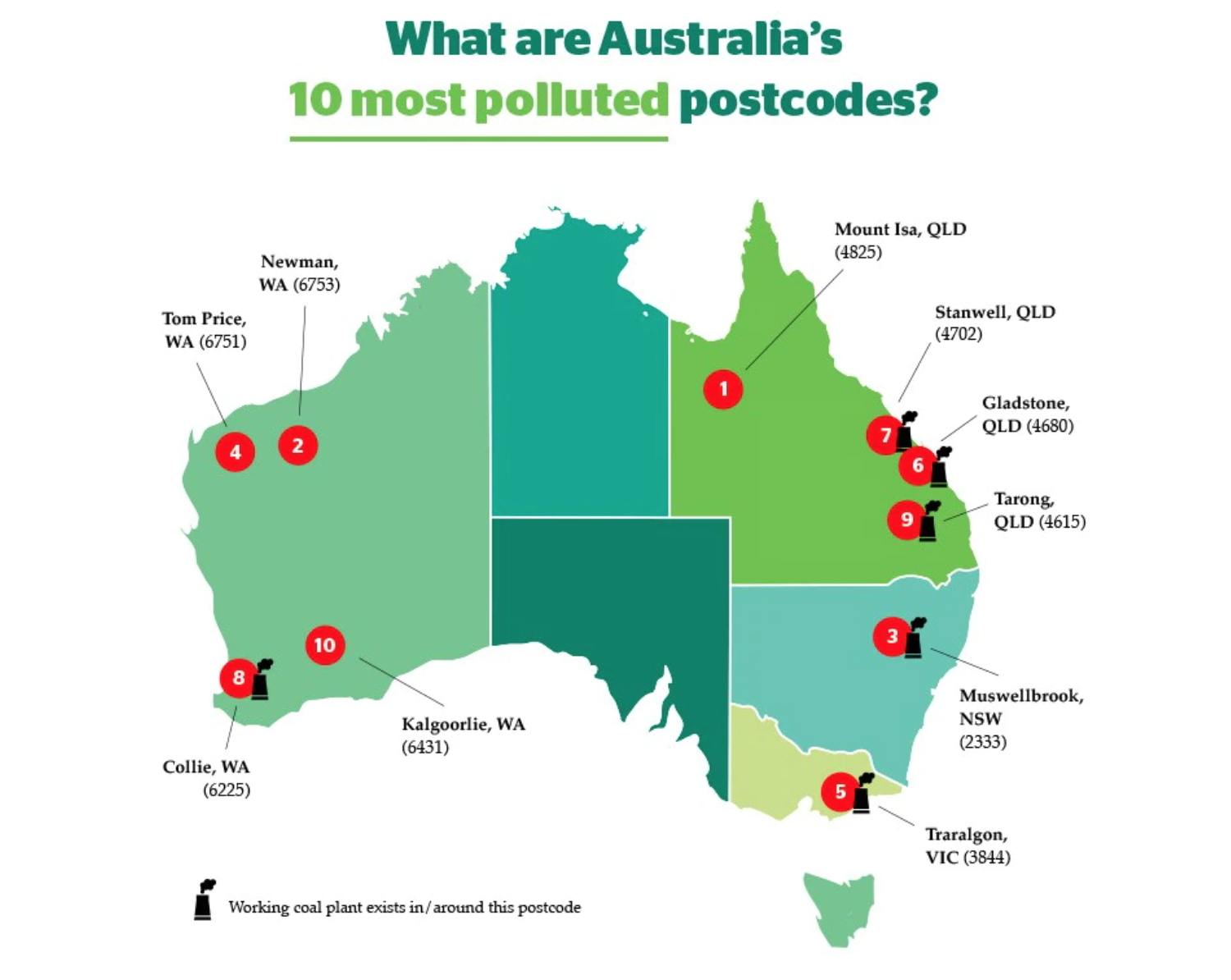
Australian Conservation Foundation names Mount Isa the most polluted postcode in the country

The top polluted towns in Australia for 2022 according to National Pollutant Inventory emission data.(Supplied: Australian Conservation Foundation)

Mount Isa Mines responsible for 91% of emissions in the outback city despite having an ‘industry-leading air quality management framework’

Mount Isa has been named the most polluted postcode in Australia in a new report from the Australian Conservation Foundation (ACF).

The ACF said the outback city is one of four Queensland locations listed among the Top 10 most polluted postcodes in the country, alongside Gladstone, Stanwell and Tarong.

The report was based on analysis of five pollutants of concern in the National Pollutant Inventory: sulfur dioxide, mercury, coarse and fine particles and oxides of nitrogen.

Mount Isa hosts copper, lead, zinc and silver mines, with 17 facilities reporting pollutants of concern to the NPI.

Mines in around the city emitted 400,000 tonnes of sulfur dioxide, 3,800 tonnes of oxides of nitrogen and 860kg of mercury and compounds in the air in the 2020/21 reporting period, according to the NPI.

Local residents told Guardian Australia that when they take their children to play at the local park, they can sometimes taste the sulfur dioxide blowing in from the copper smelter nearby.

They also spoke of one occasion where a school assembly finished early because children were coughing due to fumes drifting into the grounds from a nearby mine.

One resident – a former school teacher in the town, who did not wish to be named – said she decided to move away from Mount Isa last year when she fell pregnant.

As an asthmatic, she said remembers times where she had to cover her mouth and nose while walking between buildings at work.

Mount Isa Mines, operated by Glencore, is responsible for 91% of the postcode’s emissions, according to the ACF.

Glencore said Mount Isa Mines has the “most intensive air quality monitoring network of any city in Australia”, as part of an “industry-leading” framework used to control emissions and dust at the source and prevent contaminates from escaping.

“Mount Isa Mines is regulated by over 75 separate permits and authorities, with stringent and transparent reporting of environmental performance and we operate within our environmental limits for sulphur dioxide emissions and lead,” the company said.

“Every resident of Mount Isa is within 1,200 metres of a sulphur dioxide monitor. Mount Isa Mines also engages openly about operations to ensure the community and stakeholders can stay informed.”

Matthew Rose, ACF’s economy and democracy program manager, said sulfur dioxide is associated with “increased respiratory symptoms, difficulty in breathing and ultimately, for some people, premature death.”

“Air pollution kills about 3,000 Australians every year and worsens conditions such as asthma, emphysema, chronic bronchitis and other respiratory diseases,” Rose said.

But he said Mount Isa was one of the few “polluted” postcodes in the country that does not host coal-fired power stations or coalmines.

Muswellbrook in the New South Wales Hunter Valley, Traralgon in Victoria’s Latrobe Valley, Collie in Western Australia and Queensland’s Gladstone, Stanwell and Tarong are all centres for coal burning, according to the ACF.

Danielle Slade, the mayor of Mount Isa, said Glencore has a comprehensive system of emission capturing technology in place.

“They probably have one of the most intense air monitoring networks in any city in Australia. It operates 24/7,” Slade said.

Slade said the city’s copper smelter has an acid plant attached to it that captures all the fumes coming out of the stack. She said the copper smelter’s emissions are then turned into fertiliser.

“There are some good, sort of green ways to turn to manage this,” she said. “Mining of these minerals is critical so that we can have electric cars, smartphones, smart TVs.”

Slade acknowledged it was “very rare” to have a community living so close to a mine, but described moments where residents can taste sulfur as “isolated incidents” that occur only when the acid plant was down.

“I grew up in Mount Isa and before the acid plant was here you could taste the sulfur. The mine’s been doing a great job to mitigate this,” she said.

Queensland’s environment minister, Meaghan Scanlon, said the Environment Department “takes air quality very seriously and plays an active role in monitoring air quality across Queensland”.

“Right now, the department reports and monitors close to 40 monitoring stations throughout Queensland, including in Mount Isa and in Gladstone, where we have installed eight monitoring stations,” Scanlon said.

Scanlon said overall air quality has improved over the last three decades and remains “relatively good as a result of industry regulation, stricter emission standards for motor vehicles and new emission reduction technology.”

But Rose said Australia needs new, nationally consistent air quality standards and a coherent national plan to transition to a clean energy future.

Australian Conservation Foundation names Mount Isa the most polluted postcode in the country | Pollution | The Guardian
Posted in Air Quality, Australia & Oceania | Tagged , | Leave a comment

Many Turkish cities hit air pollution limits, warns Greenpeace

Noting that many Turkish provinces have reached the “air pollution limits of 2022” in just four months, independent global environmental network Greenpeace said, “human lives could be in danger.”

The organization highlighted that the duration for PM10 pollution should not last for more than 35 days a year. “However, many cities reached this 35-day annual limit in the first few months of the year.”

PM10 is any particulate matter in the air with a diameter of 10 micrometers or less, including smoke, dust, soot, salts, acids, and metals.

When asked what this situation means, Gökhan Ersoy, Greenpeace Mediterranean Climate and Energy Project coordinator, said, “Authorities should immediately stop all activities causing pollution in these provinces.”

According to the report published by daily Milliyet on May 12, Doğubeyazıt district of the eastern province of Ağrı was the first region that “hit the polluted days limit” on Feb. 9.

The northwestern province of Edirne surpassed the limit on Feb. 10, the Aegean province of Denizli and the southeastern province of Batman reached the limit on Feb. 13.

Feb. 14 was the day the eastern province of Iğdır and the Altındağ district of the capital Ankara had more than 35 days of air pollution.

They were followed by the western province of İzmir’s Alsancak district on Feb. 18.

Mecidiyeköy neighborhood, one of Istanbul’s business centers, entered the list on Feb. 27.

Greenpeace, in 2021, has declared a list of 10 cities that are face-to-face with big air pollution risks.

“However, in the first four months of this year, new cities, such as, İzmir, [the Black Sea provinces of] Zonguldak, Düzce, Karabük and [the northwestern province of] Çanakkale have already surpassed the 35-day limit,” Ersoy added.

Many Turkish cities hit air pollution limits, warns Greenpeace – Turkey News
Posted in Air Quality, Europe | Tagged , , | Leave a comment

Air pollution continues to threaten health of people in Southeast Europe

Air pollution continues to be a leading health concern in Southeast Europe, where PM2.5 concentrations are well above the World Health Organization (WHO) annual guideline value of 5 μg/m3. This is highlighted in the new report created by the Health Effects Institute. 

Up to 99% of the population in this region lives in areas above the WHO annual guideline value of 5 μg/m3 for PM2.5.

According to the analysis “A state of Global Air special report: Trends in Air Quality and Health in SouthEast Europe” published by the Health Effects Institute (HEI), air pollution is ranked among the top 10 risk factors for ill health in every country in Southeast Europe.

Almost 12 percent of total deaths in Southeast Europe (56,300 premature deaths) were linked to air pollution in 2019

Almost 12 percent of total deaths in Southeast Europe (56,300 premature deaths) were linked to air pollution in 2019. Outdoor PM2.5 accounted for the most air pollution-related deaths (46,600, or 9.7% of the total). Romania had the highest number of air pollution–attributable deaths (17,100) in the region while Montenegro had the lowest (700).

Long-term exposures to air pollution contribute to an increased risk of illness and premature death from chronic noncommunicable diseases, such as ischemic heart disease, lung cancer, chronic obstructive pulmonary disease (COPD), stroke, and type 2 diabetes as well as lower respiratory infections (e.g., pneumonia), especially in children under 5 years of age.

Exposure to PM2.5 also puts mothers at risk of delivering babies too early

Exposure to PM2.5 also puts mothers at risk of delivering babies too early and smaller than average, and these babies are more susceptible to dying from a range of diseases or are considered to be at increased risk for diseases later in life. There is also emerging evidence on the role of air pollution in cognitive disorders, including dementia.

PM2.5-linked death rates exceed the global rate of 53.5 deaths per 100,000 population in eight out of nine countries — Slovenia is the only exception

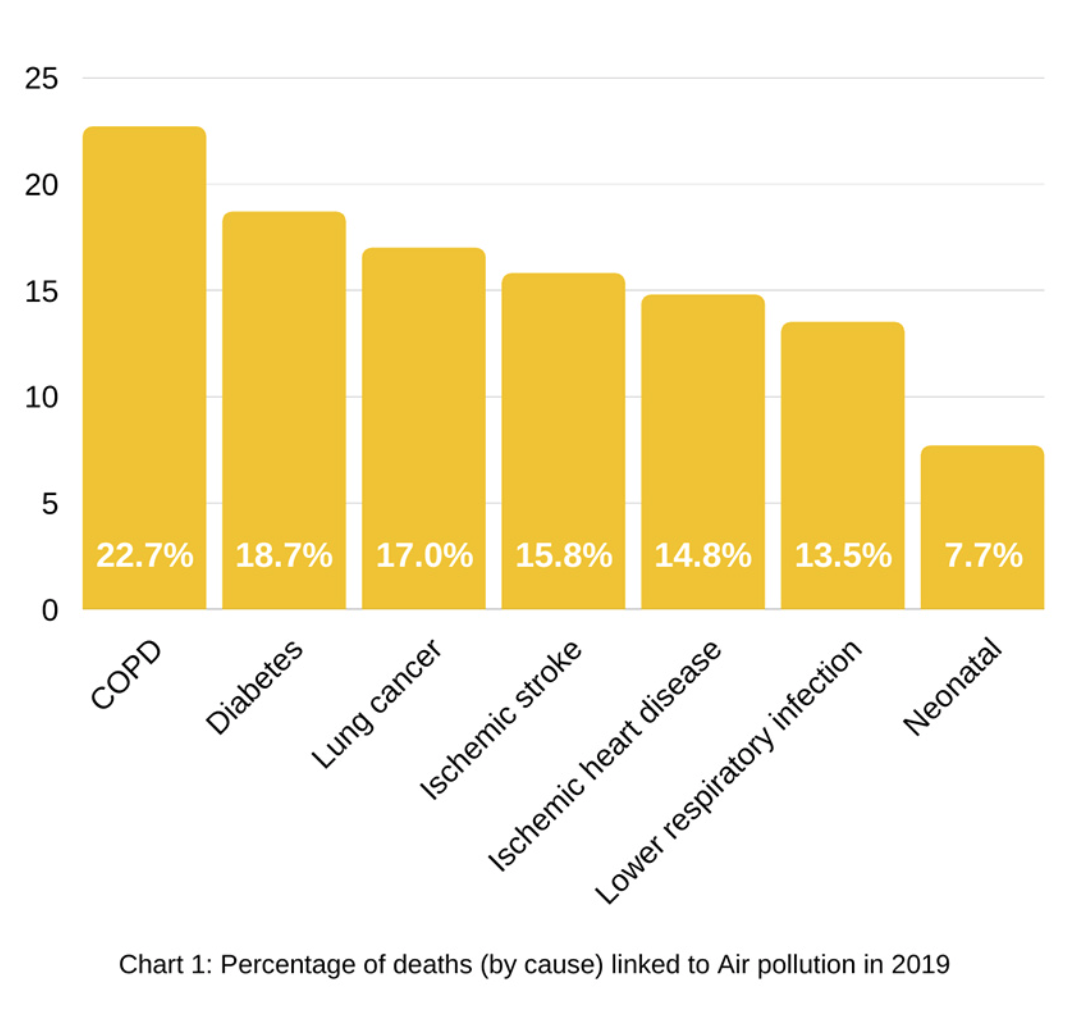
On average, nearly 23% of all COPD-related deaths were attributed to air pollution. The largest impacts were seen in Bosnia and Herzegovina (30%), North Macedonia, and Montenegro (each 26%), while the lowest such burden was estimated for Romania (14%). These numbers come from global atmospheric modeling and are to some extent relying on the data from the monitoring stations in the countries, but might not represent exact real-world monitoring data.

Srdjan Kukolj, Consultant for the Balkan region at the Health and Environment Alliance (HEAL) highlights that Western Balkan countries are very much dependent on fossil fuels. “We see that extreme levels of air pollution are still present in the region so we call on decision-makers to put health at the center of environmental policies and to set more ambitious plans towards healthier and sustainable ways of living. The link between the damaging effects of poor air quality and humans is very well established. Air pollution threatens human lives in two primary ways: causing an increase in non-communicable disease cases and leading to premature deaths. Not only does it affect people’s lives, but it also contributes to the downfall of public health, the economy, the environment and makes the climate more extreme,’’ Kukolj elaborated.

How have pollutant exposures changed between 2010 and 2019

PM2.5 annual average exposures have decreased for every country in the region over the last decade, with the largest decrease in Serbia, where levels of PM2.5 in 2019 were 19.1% lower compared to 2010.

The highest annual average PM2.5 exposure in 2019 was observed in North Macedonia (30.3 μg/m3), while Romania had the lowest exposure (15.7 μg/m3).

PM2.5 (presented as population-weighted annual average concentration) has been lower in 2019 (19.1 μg/m³) than in 2010 (25.5 μg/m³) but still higher than the EU-28 average (11.4 μg/m³). Household air pollution (percentage of the population relying on solid fuels for cooking) is lower in 2019 (23.0%) than in 2010 (27.7%). Ozone (presented as poulation-weighted seasonal average concentration) has been lower in 2019 (82.0 μg/m³) than in 2010 (87.9 μg/m³), and lower than the EU-28 average (83.5 μg/m³).

Highest impacts of air pollution on the young and the old

Across Southeast Europe, the largest number of deaths occur in people aged 70 or older. Exposure to air pollution accounted for 7.7% of neonatal deaths, with most premature deaths attributed to ambient PM2.5. The percentage of neonatal deaths linked to air pollution in 2019 was largest in Bosnia and Herzegovina (11%) and North Macedonia (10%).

Key sources of PM2.5 in Southeast Europe

Important fuel contributors to PM2.5 exposures in the region include coal, liquid fuel and natural gas, and solid biofuels. As individual sources, residential sources contributed the most (20%) to PM2.5 attributable deaths in 2019, followed by energy production (18%), windblown dust (13%), agriculture (13%), and transport (7%).

Vlatka Matković, Senior Policy Officer at the Health and Environment Alliance (HEAL) has raised concerns about the long-term exposure to air pollution across the region: “Europe’s South-Eastern region has long been an air pollution hotspot, with coal-burning as the main contributor. This report confirms the urgency to act for clean air for health. A swift phase-out of the region’s chronic coal pollution is needed to protect health and help tackle climate change. Ending coal dependence will bring many benefits, including reduced rates of cancer, heart and lung disease, and the healthier development of children.” 

Strengthened political commitment and efforts overdue

Establishing cooperation between the countries of the Western Balkans should lead to strengthening the health response toward stopping pollution, experts underline. They are united in the opinion that ministries of health, public health institutes, and academia must play a more participatory role in decision-making relevant to public health, energy, climate change, and the environment.

Regional cooperation is essential to achieving a healthier and more sustainable future. Leading organizations in the field of air pollution and its impact on health recommend to the leaders of this region to urgently move away from polluting practices, especially from burning fossil fuels and commit to integrated, effective measures that will lead to a significant reduction in the health burden due to air pollution in the region, which has so far left an unacceptably large burden for public health, the environment and economy.

Air pollution continues to threaten health of people in Southeast Europe

Posted in Air Quality, Europe | Tagged , , , , , , , , , , , , | Leave a comment

Micro- and nanoplastic from the atmosphere is polluting the ocean

In a new study, an international team of researchers investigates the atmosphere as a relevant source of plastic pollution in our planet’s waters

According to estimates, by 2040 the level of plastic pollution could reach 80 million metric tons per year. Plastic particles have now been detected in virtually all spheres of the environment, e.g. in water bodies, the soil and the air. Via ocean currents and rivers, the tiny plastic particles can even reach the Arctic, Antarctic or ocean depths. A new overview study has now shown that wind, too, can transport these particles great distances – and much faster than water can: in the atmosphere, they can travel from their point of origin to the most remote corners of the planet in a matter of days. In the journal Nature Reviews Earth and Environment, an international team of researchers – including experts from the Alfred Wegener Institute, the Institute for Advanced Sustainability Studies in Potsdam, and the GEOMAR Helmholtz Centre for Ocean Research in Kiel – describes how microplastic finds its way into the atmosphere and how it is subsequently transported.

Today, between 0.013 and 25 million metric tons of micro- and nanoplastic per year are transported up to thousands of kilometres by ocean air, snow, sea spray and fog, crossing countries, continents and oceans in the process. This estimate was arrived at by an international team of 33 researchers, including experts from the Alfred Wegener Institute, Helmholtz Centre for Polar and Marine Research (AWI), the Institute for Advanced Sustainability Studies in Potsdam (IASS) and the GEOMAR Helmholtz Centre for Ocean Research in Kiel.

“Air is a much more dynamic medium than water,” says co-author Dr Melanie Bergmann from the AWI. “As a result, micro- and nanoplastic can much more quickly penetrate those regions of our planet that are most remote and still largely untouched.” Once there, the particles could affect the surface climate and the health of local ecosystems. For example, when these darker particles are deposited on snow and ice, they affect the ice-albedo feedback, reducing their ability to reflect sunlight and promoting melting. Similarly, darker patches of seawater absorb more solar energy, further warming the ocean. And in the atmosphere, microplastic particles can serve as condensation nuclei for water vapour, producing effects on cloud formation and, in the long term, the climate.

How do plastic particles get into the atmosphere?

First of all, through human activities. Particles produced by tyres and brakes in road traffic, or by the exhaust gases from industrial processes, rise into the atmosphere, where they are transported by winds. However, according to the overview study, there is also evidence suggesting that a substantial number of these particles are transported by the marine environment. Initial analyses indicate that microplastic from the coastal zone also finds its way into the ocean through eroded beach sand. The combination of sea spray, wind and waves forms air bubbles in the water containing microplastic. When the bubbles burst, the particles find their way into the atmosphere. As such, transport to remote and even polar regions could be due to the combination of atmospheric and marine transport.

Consequently, it is important to understand interactions between the atmosphere and ocean, so as to determine which particle sizes are transported, and in which quantities. The atmosphere predominantly transports small microplastic particles, which makes it a much faster transport route that can lead to substantial deposits in a broad range of ecosystems. As Melanie Bergmann explains: “We need to integrate micro- and nanoplastic in our measurements of air pollution, ideally on an international scale as part of global networks.” For this purpose, in a first step, first author Deonie Allen and Bergmann began collecting samples of microplastic in the air, seawater and ice during a Polarstern expedition to the Arctic last year.

Joining forces to grasp the microplastic cycle

Understanding and characterising the microplastic cycles between the ocean and atmosphere will require joint efforts. In this regard, in the study, the team of researchers led by first authors Deonie Allen and Steve Allen from the University of Strathclyde, Glasgow, outlines a global strategy for creating a seamless, intercomparable database on the flow of micro- and nanoplastic between the ocean and atmosphere. “There are so many aspects of the emissions, transport and effects of microplastic in the atmosphere that we still don’t fully understand,” says co-author Prof Tim Butler from the IASS. “This publication reveals the gaps in our knowledge – and presents a roadmap for the future.”

Two dedicated working groups from the Joint Group of Experts on the Scientific Aspects of Marine Environmental Protection (GESAMP) prepared the study. According to study co-author and GESAMP member Prof Sylvia Sander from GEOMAR: “The study makes it clear that a comprehensive grasp of the ocean, and of the effects of human influences on it, can only be achieved by networking researchers and their data. The great challenges of our time are at the global scale. Accordingly, we have to pursue answers to pressing questions with expertise that is as comprehensive and international as possible. That can only be done by working together.” GESAMP is a conglomerate of eleven organisations belonging to the United Nations. Its goal is to arrive at a multidisciplinary, science-based understanding of the marine environment. To date, the network has already collaborated with more than 500 experts from countries around the globe on a range of questions.

Micro- and nanoplastic in the air is also relevant for human health. In a recently released British study, microplastic was detected in the lungs of 11 of 13 living human beings. “This is yet another reason why we need to integrate plastic into monitoring programmes for air quality,” Bergmann stresses. In order to reduce environmental pollution from plastic, the production of new plastic would also need to be successively reduced on the basis of an international treaty, as Bergmann and other experts recently called for in a letter to the journal Science.

Original publication

Deonie Allen et al.: Micro- and nanoplastics in the marine-atmospheric environment. Nature Reviews Earth & Environment (2022). DOI: https://doi.org/10.1038/s43017-022-00292-x

Micro- and nanoplastic from the atmosphere is | EurekAlert!
Posted in Air Quality | Leave a comment