Exposure to air pollution impacts the brain performance and work capacity

Even short-term exposure to air pollution impacts our brain performance and capacity to work, according to researchers from The University of Queensland and Carnegie Mellon University.

Dr Andrea La Nauze from UQ’s School of Economics said a data study indicated that air pollution damaged cognitive function in working-age adults.

“Our research used data from Lumosity brain training games to investigate the impact of air pollution on adults living in the United States.

The games we studied targeted seven cognitive functions: memory, verbal ability, attention, flexibility, maths ability, speed and problem-solving.

We found that exposure to moderately high levels of fine particulate matter (PM2.5) caused a player to drop by almost six points in a 100-point scale where 100 represents the score of the top one per cent of cognitive performers.

In fact, if you’re under 30 years old and you’re exposed to this level of pollution, your cognitive function declines by the same amount as aging by 15 years.”

Dr Andrea La Nauze, UQ’s School of Economics

PM2.5 are tiny particles 2.5 microns or less in size.

If inhaled, PM2.5 can penetrate the lungs, enter the bloodstream and cause serious health problems, including heart disease and respiratory issues.

Dr La Nauze said while the health effects of PM2.5 were widely understood, this research was the first to use brain training data to study the potential impact on cognitive performance.

“Cognitive functions are skills that we use to process, store and use information – they’re critical to tasks ranging from making a cup of tea to self-regulating,” she said.

“Economists are just beginning to study cognition, but recent research suggests changes in cognitive function impact workforce productivity.

“Our results show the effects of air pollution are largest for those under 50 – people of prime working age – which indicates that day-to-day performance in our jobs is also likely to be impacted.”

The study found the largest effects were on memory, meaning occupations that rely more on memory function are likely to be most affected.

Although the study used United States data, Dr La Nauze said the results are relevant to Australia.

“We believe our research has real implications for the average working-age Australian adult, particularly as bushfires become more frequent and contribute to air pollution levels,” she said.

“The 2019-2020 bushfire crisis subjected millions of Australians to the worst air pollution in the world.

“Although Australia’s air is pretty clean by international standards, the average Australian is still exposed to higher levels of air pollution than the latest World Health Organisation recommendations.”

Dr La Nauze said a combination of individual and policy measures could combat the effects.

“You can alter your exposure in small ways by staying indoors, using air filtration or moving to a less-polluted suburb,” she said.

“Fundamentally though, it comes down to government policy: reducing vehicle emissions, targeting sources of air pollution such as bushfires and revising air-quality standards.

“Air-quality standards in Australia and around the world should take into account the cognitive effects and their downstream productivity impacts.”

Exposure to air pollution impacts the brain performance and work capacity
Posted in Air Quality | Leave a comment

Delhi schools to close for a week due to smog

Levels of PM 2.5 particulates hit 20 times safe levels as agricultural fires add to city’s air pollution crisis

Authorities in Delhi have announced that schools are to close for a week as the Indian capital’s pollution control body warned of a looming health emergency due to smog.

Delhi is ranked one of the world’s most-polluted cities, with a hazardous mix of factory and vehicle emissions and smoke from agricultural fires turning its air a toxic grey every winter.

On Saturday, levels of PM 2.5 particles – the smallest and most harmful, which can enter the bloodstream – topped 300 on the air quality index. That is 20 times the maximum daily limit recommended by the World Health Organization.

“Starting Monday, schools are being shut so that children don’t have to breathe polluted air,” Delhi’s chief minister, Arvind Kejriwal, told reporters in the city of 20 million people.

Kejriwal said no construction activity would be allowed for four days, starting on Sunday, to cut down dust from vast open sites.

Government offices were asked to operate from home and private businesses advised to stick to work-from-home options as much as possible.

The central pollution control board on Friday told residents to “limit outdoor activities and minimise their exposure” and advised government authorities to prepare “for implementation of measures under ‘emergency’ category”.

It said the poor air quality would probably last until at least Thursday [18 November] due to “low winds with calm conditions during the night”.

Hospitals were reporting a sharp rise in patients complaining of breathing difficulties, the Times of India reported.

“We are getting 12 to 14 patients daily in the emergency, mostly at night, when the symptoms cause disturbed sleep and panic,” Dr Suranjit Chatterjee from Apollo Hospitals told the newspaper.

Earlier on Saturday, the supreme court suggested imposing a pollution lockdown on Delhi to help with the air quality crisis. “How will we live otherwise?” India’s chief justice, NV Ramana, said.

Delhi’s government has been vowing for years to clean up the city’s air. The burning of agricultural waste in neighbouring states – a major contributor to the city’s pollution levels every winter – has continued despite a supreme court ban.

Tens of thousands of farmers around the capital burn their stubble – or crop residue – at the start of every winter, clearing fields from recently harvested paddies to make way for wheat.

The number of farm fires this season has been the highest in the past four years, according to government data.

Earlier this year, the Delhi government opened its first “smog tower” containing 40 giant fans that pump 1,000m3 of air a second through filters.

The $2m installation halves the amount of harmful particulates in the air but only within a radius of one square kilometre (0.4 square miles), according to engineers.

A 2020 report by the Swiss organisation IQAir found that 22 of the world’s 30 most polluted cities were in India, with Delhi ranked the most polluted capital globally.

The same year, the Lancet said 1.67 million deaths were attributable to air pollution in India in 2019, including almost 17,500 in the capital.

In recent days the river flowing through Delhi, the Yamuna, has also been choked with sickly white foam.

The city government has blamed the blight on “heavy sewage and industrial waste” discharged into the river from farther upstream.

Delhi schools to close for a week due to smog | Delhi | The Guardian
Posted in Air Quality | Leave a comment

Air pollution in Europe still killing 300,000 a year: EEA

Premature deaths caused by fine particle air pollution have fallen 10% annually across Europe, but the invisible killer still accounts for 307,000 premature deaths a year, the European Environment Agency said Monday (15 November).

If the latest air quality guidelines from the World Health Organisation were followed by EU members, the latest number of fatalities recorded in 2019 could be cut in half, according to an EEA report.

Deaths linked to fine particular matter – with a diameter below 2.5 micrometres or PM2.5 – were estimated at 346,000 for 2018.

The clear reduction in deaths for the following year were put down partly to favourable weather but above all to a progressive improvement in air quality across the continent, the European Union’s air pollution data centre said.

In the early 1990s, fine particles, which penetrate deeply into the lungs, led to nearly a million premature deaths in the 27 EU member nations, according to the report.

That figure had been more than halved to 450,000 by 2005.

In 2019, fine particulate matter caused 53,800 premature deaths in Germany, 49,900 in Italy, 29,800 in France and 23,300 in Spain.

Poland saw 39,300 deaths, the highest figure per head of population.

The EEA also registers premature deaths linked to two other leading pollutants, but says it does not count them in its overall toll to avoid doubling up.

Deaths caused by nitrogen dioxide – mainly from car, trucks and thermal power stations – fell by a quarter to 40,000 between 2018 and 2019.

Fatalities linked to ground-level ozone in 2019 also dropped 13% to 16,800 dead.

Air pollution remains the biggest environmental threat to human health in Europe, the agency said.

Heart disease and strokes cause most premature deaths blamed on air pollution, followed by lung ailments including cancer.

In children, atmospheric pollution can harm lung development, cause respiratory infections and aggravate asthma.

Seven million global death toll

Even if the situation is improving, the EEA warned in September that most EU countries were still above the recommended pollution limits, be they European guidelines or more ambitious WHO targets.

According to the UN health body, air pollution causes seven million premature deaths annually across the globe – on the same levels as smoking and poor diet.

In September, the alarming statistics led the WHO to tighten its recommended limits on major air pollutants for the first time since 2005.

“Investing in cleaner heating, mobility, agriculture and industry improves health, productivity and quality of life for all Europeans, and particularly the most vulnerable,” EEA director Hans Bruyninck said in a statement.

The EU wants to slash premature deaths due to fine air pollution by at least 55 percent in 2030 compared to 2005.

If air pollution continues to fall at the current rate, the agency estimates the target will be reached by 2032.

However an ageing and increasingly urbanised population could make that more difficult.

“An older population is more sensitive to air pollution and a higher rate of urbanisation typically means that more people are exposed to PM 2.5 concentrations, which tend to be higher in cities,” said the report.

Air pollution in Europe still killing 300,000 a year: EEA – EURACTIV.com

Posted in Air Quality, Europe, France, Germany, Health Effects of Air Pollution, Poland, Spain | Tagged , , , , , , , , , , | Leave a comment

Thick, toxic smog over Indian capital as temperatures, wind speed drop

New Delhi’s air quality plummeted again on Friday, and a thick haze of toxic smog hung over India’s capital due to a drop in temperature and wind speed, and a spike in the burning of crop waste in surrounding farmlands.

The haze reduced visibility and the Air Quality Index (AQI) hit 461 on a scale of 500, according to the federal pollution control board. This level of pollution means the air will affect healthy people and seriously impact those with existing diseases.

The concentration of poisonous PM2.5 particulate matter averaged 329 micrograms per cubic meter of air. The government prescribes a “safe” PM2.5 reading at 60 micrograms per cubic meter of air over a period of 24 hours.

PM2.5 is small enough to travel deep into the lungs, enter the bloodstream and can cause severe respiratory diseases, including lung cancer.

“This is becoming a nightmare,” said Gufran Beig, founder project director of air quality and weather monitor SAFAR that falls under the Ministry of Earth Science.

“Fire counts are in the range of 3,000-5,000 and not declining,” Beig told Reuters, referring to crop stubble fires in the regions around the capital.

He said current severe conditions may ease by Saturday, but air quality would remain “very poor” until Nov. 17.

Air quality might worsen if farm fires continued, as the SAFAR model forecasts calm wind conditions, Beig said.

India’s efforts to reduce crop-waste burning, a major source of air pollution during winter, by spending billions of rupees over the past four years have done little to avert a sharp deterioration in air quality.

Delhi, often ranked the world’s most polluted capital, faces extremely bad air in winter due to the crop stubble burning, emissions from transport, coal-fired plants outside the city and other industrial emissions, open garbage burning and dust.

Residents of Delhi endured this year’s worst air on Nov. 5, a day after revellers burnt firecrackers during the Diwali festival, as AQI levels surged to 463 on a scale of 500.

Vehicular emissions contributed more than half of Delhi’s particulate pollution between October 24-November 8, the Centre for Science and Environment think tank said in its report published on Thursday.

Thick, toxic smog over Indian capital as temperatures, wind speed drop | Reuters
Posted in Air Quality, Asia, India | Tagged , , , , | Leave a comment

European cities could avoid an extra 114,000 premature deaths every year by meeting the new WHO air quality guidelines

Air Pollution Maximum Levels; Barcelona Institute for Global Health (ISGlobal)

An update of the ISGlobal Ranking of Cities shows that the new air pollution recommendations could save up to 58,000 additional deaths for PM2.5 and 56,000 for NO2 compared to the previous recommendations

A health impact assessment from the Barcelona Institute for Global Health (ISGlobal), a centre supported by the ”la Caixa” Foundation, has concluded that European cities could avoid an extra 114,000 premature deaths every year if they met the new air quality guidelines presented by the World Health Organization (WHO) in September 2021 compared to the previous guidelines.

These estimates are an update of a study originally published in January 2021 in The Lancet Planetary Health, in which ISGlobal researchers showed that European cities could avoid up to 51,000 premature deaths per year by meeting WHO’s previous air quality guidelines, which had been in place since 2005. After the publication of the new guidelines, the research team performed a new assessment of the mortality burden attributable to fine particulate matter (PM2.5) and nitrogen dioxide (NO2in the same 1,000 European cities included in the original study. The overall results have been published in a letter in The Lancet Planetary Health, while the specific results for each city have been published on the ISGlobal Ranking of Cities website.

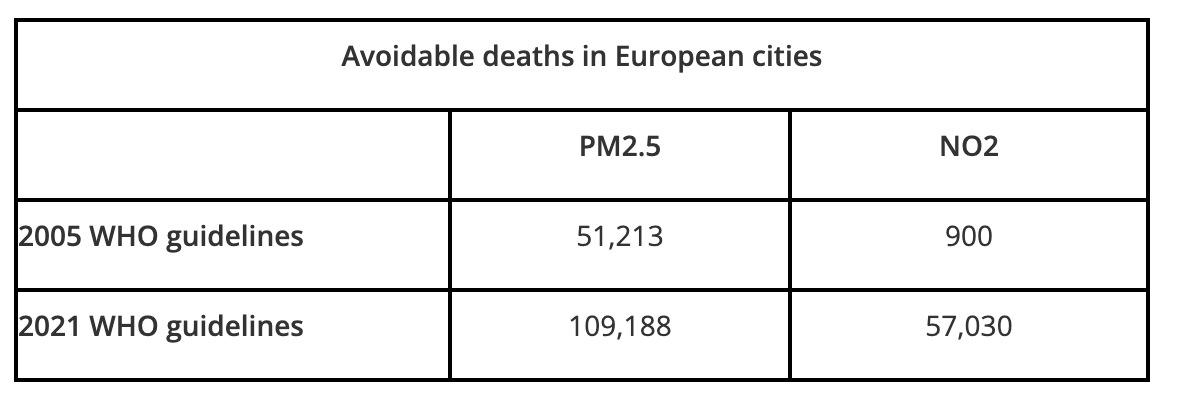
The updated results show that achieving the new air quality guidelines for PM2.5 would result in a 113% increase in the number of deaths that could be avoided in European cities compared to the previous air quality guidelines from 2005, avoiding 109,188 premature deaths each year. For NO2, achieving the new recommended levels could prevent up to 57,030 premature deaths, 56,130 more than the 900 avoidable deaths estimated for the former NO2, recommended levels.

Going further, meeting the lowest levels of PM2.5 and NO2 observed in any city, could prevent 125,000 and 79,000 annual premature deaths, respectively.

“Even though there is no safe exposure threshold below which air pollution becomes innocuous, these new results show how the new WHO global air quality guidelines offer a much better framework for protecting human health and prevent a large number of deaths”, says ISGlobal researcher Sasha Khomenko, first author of the study.

The new data show that the number of avoidable deaths is much higher if the new WHO reference levels are adopted as targets. This effect is much more noticeable in the case of NO2. Among the cities with the highest mortality attributable to this pollutant, Madrid would go from avoiding 206 annual deaths if the old WHO recommendations were met to avoiding 1,966 using the new targets. Antwerp would go from 22 avoidable annual deaths to 254; Turin from 34 to 562; Paris from 185 to 2,135; Milan from 103 to 1,864 and Barcelona from 82 to 1,554.

Nearly 100% of the population above recommended levels

One statistic that shows how far European cities have to go to achieve clean air is the percentage of the population living in areas with concentrations of air pollutants higher than those recommended by the WHO. While under the previous WHO recommendations this percentage was 84% for PM2.5 and 9% for NO2, under the new recommendations these figures rise to 99.8% and 99.7% of the urban population, respectively. It should be noted, however, that the study was based on air pollution data for 2015.

“Since the current levels of air pollution in European cities are putting more than 100,000 lives at stake every year, the EU should align its legislation to match the WHO recommendations”, says Mark Nieuwenhuijsen, senior author of the study and Director of the Urban Planning, Environment and Health Initiative at ISGlobal. “In turn, local, regional and national governments should set the reduction of air pollution as a priority. We urgently need to reduce fossil fuel use, remove private cars and add more green spaces in our cities. This will not only reduce air pollution, but also contribute to climate action, which is one of our highest priorities for humankind”, he adds.

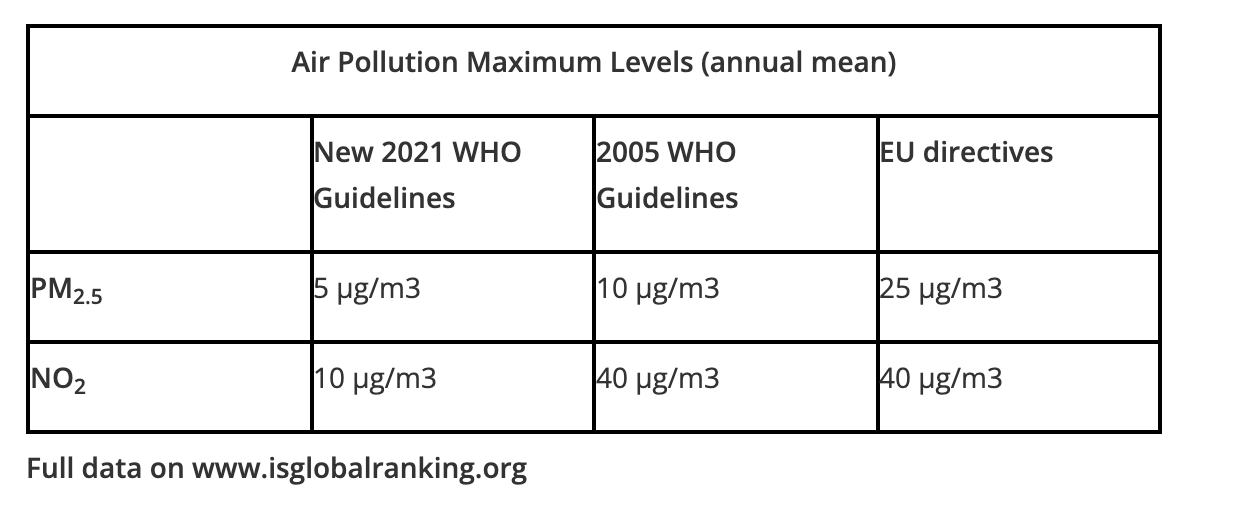
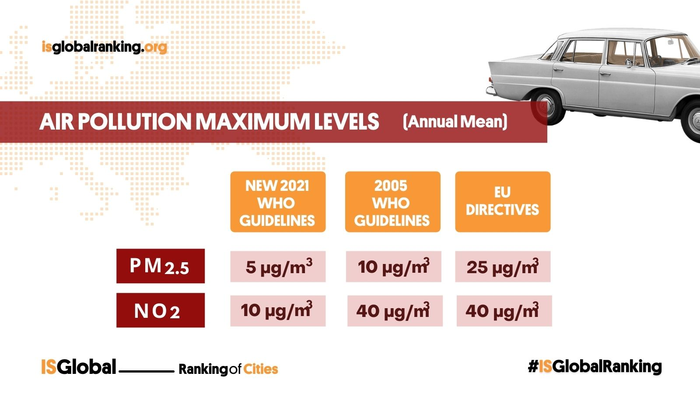
Current European directives stipulate an upper limit of 25 µg/m3 for annual mean PM2.5 and 40 µg/m3 for annual mean NO2. 

From November 11, 2021, updated avoidable mortality data using the new WHO recommendations for the 1,000 cities included in the study will be available at www.isglobalranking.org, where the recently published ranking of mortality associated with lack of access to green space is also available.

The update of the WHO’s air quality recommendations has not changed the position of the cities within the rankings of mortality associated with excess air pollution.

Top 10 cities with the highest mortality burden

The ten cities with the highest mortality burden due to PM2.5:

  1. Brescia (Italy)
  2. Bergamo (Italy)
  3. Karviná (Czech Republic)
  4. Vicenza (Italy)
  5. Silesian Metropolis (Poland)
  6. Ostrava (Czech Republic)
  7. Jastrzębie-Zdrój (Poland)
  8. Saronno (Italy)
  9. Rybnik (Poland)
  10. Havířov (Czech Republic)

The ten cities with the highest mortality burden due to NO2:

  1. Madrid (metropolitan area) (Spain)
  2. Antwerp (Belgium)
  3. Turin (Italy)
  4. Paris (metropolitan area) (France)
  5. Milan (metropolitan area) (Italy)
  6. Barcelona (metropolitan area) (Spain)
  7. Mollet del Vallès (Spain)
  8. Brussels (Belgium)
  9. Herne (Germany)
  10. Argenteuil-Bezons (France)

Top 10 cities with the lowest mortality burden

The ten cities with the lowest mortality burden attributable to PM2.5:

  1. Reykjavík (Iceland)
  2. Tromsø (Norway)
  3. Umeå (Sweden)
  4. Oulu (Finland)
  5. Jyväskylä (Finland)
  6. Uppsala (Sweden)
  7. Trondheim (Norway)
  8. Lahti (Finland)
  9. Örebro (Sweden)
  10. Tampere (Finland)

The ten cities with the lowest mortality burden attributable to NO2:

  1. Tromso (Norway)
  2. Umeå (Sweden)
  3. Oulu (Finland)
  4. Kristiansand (Norway)
  5. Pula (Croatia)
  6. Linköping (Sweden)
  7. Galway (Ireland)
  8. Jönköping (Sweden)
  9. Alytus (Lithuania)
  10. Trondheim (Norway)

Posted in Air Quality, Europe, France, Germany, Health Effects of Air Pollution, Italy, Medical Studies, Poland, Spain | Tagged , , , , , , , , , , , , | Leave a comment

Lockdown-driven air pollution cuts lower heart attack risk

The number of people in the US suffering from heart attacks fell during the Covid-19 lockdowns, as air quality improved due to the reduction in the number of cars on the road, a study has found.

“Reducing pollution is not only helpful for the environment it may also have significant health benefits at the population level such as preventing heart attacks,” said lead author Sidney Aung, a fourth-year medical student at the University of California.

Heart disease is the leading cause of death in the US and previous research has shown that environmental conditions such as air pollution can increase the risk of it occurring. In 2017, exposure to particulate air pollution was estimated to be associated with more than seven million premature deaths and the loss of 147 million healthy life-years globally.

Across the period analysed in this study (Jan 2019-April 2020), the number of severe heart attacks dropped substantially in association with declining ambient pollution levels.

According to an international analysis, IQ Air’s 2020 World Air Quality Report, global lockdown measures to slow the spread of Covid-19 resulted in healthier air around the world in 2020.

The report is based on the world’s largest database of ground-based air pollution measurements. Less air pollution was noted, particularly during the initial period of the lockdown when people were ordered to shelter in place, closing schools and businesses and reducing vehicle and airplane traffic.

Overall, 60,722 heart attacks occurred during the study. With each 10 µg/m3 (micrograms per cubic meter) drop in PM2.5 the number of heart attacks decreased by six per cent, translating to 374 fewer heart attacks per 10,000 person-years.

“This study highlights the importance of reducing air pollution, which could, in turn, prevent heart attacks,” Aung said. “We also hope our study may influence other investigators to pursue similar research to corroborate these results or to investigate other forms of air pollutants outside of particulate matter 2.5 that may have also declined during the pandemic lockdowns.”

Other studies have made similar links – for example a rapid drop in acute heart attacks occurred after public smoking bans reduced second-hand smoke exposure. However, it is unclear what connections exist between the pandemic lockdown and fewer heart attacks.

“It is also possible that other things were going on last year to reduce heart attack triggers – fewer exertional activities or other stressors, for example, that were also a result of the Covid lockdowns,” said Professor Joel D. Kaufman of the University of Washington. “If it turns out that we can meaningfully link a reduction in traffic-related air pollution during Covid lockdowns to a reduction in heart attacks, it points the way toward a major change that could help to reduce the burden of heart disease. We know how to reduce air pollution concentrations and have seen that it is possible.”

“This could reinforce the benefits of air pollution reduction as a cost-effective way to improve health,” he said. “It also means that reducing fossil fuel combustion, which we need to do anyway to combat climate change, may yield tremendous health benefits now, even if the climate benefits take years to accrue.”

In September, the WHO tightened its air quality guidelines in a bid to cut air pollution deaths.

Lockdown-driven air pollution cuts lower heart attack risk | E&T Magazine
Posted in Air Quality, Health Effects of Air Pollution, Medical Studies, USA, USA & Canada | Tagged , , , , | Leave a comment

New study finds genes and air pollution multiply healthy people’s risk of depression

A genetic predisposition for depression combined with exposure to high-particulate-matter air pollution greatly elevates the risk that healthy people will experience depression, according to a first-of-its-kind study published today in the Proceedings of the National Academies of Sciences (PNAS) from neuroscientists at the Lieber Institute for Brain Development (LIBD), on the Johns Hopkins Medical Campus, and Peking University in Beijing, China. The study involved a global partnership synthesizing scientific data on air pollution, neuroimaging, brain gene expression, and additional data gathered from an international genetic consortium from more than 40 countries.

“The bottom line of this study is that air pollution doesn’t only impact climate change, it’s affecting how your brain works,” said Daniel R. Weinberger, M.D., Chief Executive Officer and Director of the Lieber Institute and a co-author of the study. “The effects on liability for depression may just be the tip of the iceberg where brain health is concerned. The major challenge in medicine today is a deeper understanding how genes and the environment interact with one another. This study sheds bright light on how this happens.”

“The key message in this study, which has not been shown before, is that air pollution is affecting important cognitive and emotional circuitry of the brain by changing the expression of genes that are conducive to depression,” said Hao Yang Tan, M.D., an investigator at the Lieber Institute, who led the research in collaboration with Peking University. “More people in high-pollution areas will become depressed because their genes and pollution in their environment exaggerate the individual effects of each.”

All people have some propensity for developing depression, the researchers say, but certain people have higher risk written into their genes. This predisposition does not mean that a person will develop depression, but it elevates a person’s risk above the average population. This study shows that depression is far more likely to develop in otherwise healthy humans who have these key genes and who live in environments with high levels of particulate-matter in the air.

“Our results are the first to show a direct, neurological link between air pollution and how the brain works in processing emotional and cognitive information and in risk for depression,” said Zhi Li, Ph.D., a postdoctoral fellow at the Lieber Institute and lead author of the study. “What is most intriguing is that the two factors are linked in such a way that they have a multiplier effect on one’s risk of depression. That is, together, risk genes and bad air raise the risk of depression much more than either factor does in isolation.”

The brain circuits involved in the effects of genetic risk and air pollution control a wide range of important reasoning, problem-solving, and emotional functions, suggesting potentially widespread brain effects of air pollution.

The study recruited 352 healthy adults living in Beijing, a city with well-documented daily pollution levels. Participants first underwent genotyping from which the researchers calculated each person’s polygenic depression risk score—the mathematical likelihood that a person will suffer depression based on genes alone. The researchers then collected detailed information about each participant’s relative exposure to air pollution over a prior six-month period.

Next, the participants engaged in a series of simple cognitive tests while undergoing functional magnetic resonance imaging (fMRI) showing which parts of the brain were activated during the cognitive processing. While doing the tests, participants were also subjected to social stress (unexpected negative feedback about their performance), which affected how a widespread network of brain circuits operated during the tests. The researchers then showed that this brain network was disproportionately degraded by the combination of the genes for depression and the relative degree of exposure to air pollution.

To directly examine how genes for depression operated in the human brain, the researchers examined data from a gene atlas of postmortem human brain tissue. They then mapped the postmortem brain networks to the very same networks in living subjects to test whether those genes underwrite the effects of air pollution.

Using that sophisticated model, the team found that people who had high genetic risk for depression and high exposure to particulate matter had brain function predicted by a tighter integration with how genes for depression operated together. The researchers also found that a subset of genes driving these associations were implicated in inflammation, as well—a finding that could provide new pharmacological insights into mitigating the effects of air pollution on brain function and depression.

Tan said that this new understanding has implications for policymakers around the world. The role of air pollution on the brain is no longer a matter of conjecture.

“Armed with this knowledge, leaders and public health officials around the globe have ample evidence that additional air pollution controls will lead to improved cognitive function and lower rates of depression—particularly in densely populated urban areas where air pollution is highest, and stress from socioeconomic and racial inequities is greater,” Tan said. “Given the long-term costs of neuropsychiatric disorders, there is an urgent need for scientific and policy strategies to better identify and protect vulnerable individuals from the deleterious brain impacts of air pollution.”

New study finds genes and air pollution multiply healthy people’s risk of depression
Posted in Air Quality, Health Effects of Air Pollution, Medical Studies | Tagged , , | 1 Comment

Ammonia from farms behind 60% of UK particulate air pollution – study

Problem is causing £8bn a year in health damage but can be tackled cost-effectively, say scientists

Sixty per cent of the tiny particles polluting the air in the UK are from ammonia leaking from farms, according to research.

The ammonia is released from livestock manure and urine and the overuse of synthetic nitrogen fertilisers. The gas drifts into cities and reacts with other air pollutants to form tiny particulate matter, called PM2.5, which is the deadliest form of air pollution.

These particles cause £8bn a year in health damage in the UK, the scientists calculate. Globally, 39% of PM2.5 is derived from ammonia and results in $420bn (£320bn) of health damage, according to the study, published in the journal Science.

Ammonia can be trapped on farms by sealing manure pits or injecting the waste under fields, and by the more efficient use of fertiliser. Such action saves £23 in health damage for every £1 spent in the UK, say the researchers, with the global cost benefit ratio being 4:1.

In the past, the burning of fossil fuels by vehicles and industry produced large amounts of PM2.5 but pollution controls have cut levels significantly in developed nations. However, ammonia emissions have barely fallen in the UK since 1980. This means agriculture is now responsible for a larger share of PM2.5 in the UK. Pollution from wood burning stoves has also risen in prominence.

Other nitrogen compounds, called nitrogen oxides, are emitted by diesel vehicles and damage health in two ways: as irritant gases when first emitted and then by combining with ammonia to form PM2.5. Relatively little has been done to cut ammonia emissions, meaning there are simple policies that would be far more cost-effective in reducing PM2.5 levels than further technological measures to tackle nitrogen oxides from vehicles, the scientists say.

Cutting nitrogen pollution would also tackle the climate crisis, the pollution of rivers and seas, and soil acidification. Nitrous oxide is a potent greenhouse gas, causing about 6% of global heating and results mostly from the overuse of fertilisers.

The researchers presented a “#Nitrogen4NetZero” proposal at the Cop26 summit in Glasgow on Wednesday, which aims to ensure cutting nitrogen gases is included in climate targets. The 2019 Colombo declaration, led by Sri Lanka and backed by the UN Environment Programme, aims to cut nitrogen waste by half by 2030 and would save $100bn (£75bn) a year in wasted fertiliser costs.

“The way we use nitrogen is extremely inefficient. About 80% of the nitrogen resources [produced by humans] are lost into the environment,” said Prof Mark Sutton of the UK’s Centre for Ecology and Hydrology, a co-author of the study.

The UK government is consulting on banning the use of urea in fertiliser, which emits much more ammonia than ammonium nitrate fertiliser. The Netherlands and Germany already require manure to be injected into fields rather than sprayed on the surface, but there is no such requirement in the UK. “Any farmer that can smell their manure is losing that goodness,” said Sutton.

Air pollution causes at least 7 million premature deaths a year globally, making it a bigger killer than smoking, car crashes or HIV/Aids. Air pollution may be damaging every organ in the human body, according to a comprehensive global review in 2019.

Ammonia from farms behind 60% of UK particulate air pollution – study | Air pollution | The Guardian
Posted in Air Quality, Europe, UK | Tagged , , , | Leave a comment