EU Commission launches legal action over UK air quality

The European Commission has launched legal proceedings against the UK for failing to deal with air pollution.

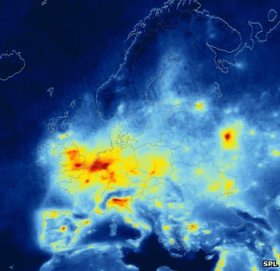
The EU says that levels of nitrogen dioxide, mainly from diesel engines, are “excessive” in many British cities.

The Commission says that this gas can lead to major respiratory illnesses and premature deaths.

Britain was supposed to meet EU limits by 2010, but the government admits that London won’t achieve this standard until 2025.

The UK’s problem with dirty air stems from the EU’s air pollution directive, which came into force in 2008.

It set limits on the the levels of air-borne contaminants, including particulate matter and nitrogen oxides, gases that are produced from the burning of fossil fuels.

They are an important element of ground-level ozone, which can damage human health as well as plants and animals.

Nitrogen dioxide (NO2), which in the main is produced by diesel cars and trucks, can inflame the lining of the lungs and lead to respiratory disease.

It is of particular concern to people living near roadways in big cities and those suffering with asthma.

Excess gas

Controlling the amount of this gas in air has proved particularly difficult for the UK.

For the purposes of air pollution, the UK is divided into 43 zones.

In 2010, when the EU restrictions were meant to come into effect, the levels of nitrogen dioxide were exceeding the limits in 40 of these 43 areas.

Member states were able get an extra five years’ grace if they put in place plans to cut levels of NO2. The UK admitted that the limits relating to 16 zones, including London, could not be met by the revised deadline of 2015.

For many of these areas, including Greater Manchester, the West Midlands, Merseyside and Glasgow, the government believes the levels can be reached by 2020.

In London though, they admit it is likely to be 2025.

For the EU, this is far too long. They’ve decided to launch the first case against a member state for breaching the limits on NO2.

Several other EU members, including France, Sweden, Denmark and Greece have also exceeded the levels, but the EU denied that the UK was being picked on.
“Our priority is to protect public health and the environment,” said European Commission spokesman Joe Hennon.

“We think that’s what the people of the UK would want as well.”

What might have tipped the EU’s hand was a ruling by the UK Supreme Court last year.

In a case brought by environmental campaigners ClientEarth, the judges agreed that the government was in breach of an obligation to reduce air pollution.

In the judgement, Justice Lord Carnworth wrote that “the way is now open to immediate enforcement at national or European level.”

The campaign group believes that, in addition to the Supreme Court verdict, the scale and the duration of the UK’s breaches made the EU action inevitable.

“The UK has some of the worst NO2 levels in Europe, they’re a national disgrace,” said Alan Andrews, a lawyer with ClientEarth.

“London has a particular problem, in some streets it is three or four times above the legal limits.”

The legal process could ultimately end in the European Court of Justice where the UK would face huge fines if found in breach of the directive.

If the government is to cut levels it will need to take drastic actions, say campaigners. Around half of new car sales are diesel powered, they say. There will need to be strict low emissions zones in cities.

“Germany implemented low emissions zones very early,” said Alan Andrews.

“They have 60, we just have the one in London and ours doesn’t include cars – it’s a low standard.”

Another option is cutting speed limits.

“The evidence from Germany suggests they can reduce NO2 by 10-15% on heavily polluted roads, but the scale here in the UK is so big they need to be looking at everything possible to tackle the problem,” said Mr Andrews.

The UK has two months to respond to the European Commission.

The Department for Environment, Food and Rural Affairs (Defra) said that Britain wasn’t alone in breaching the NO2 limits, pointing out that in 2012, 21 member states reported their emissions did not comply with the annual mean target.

“Air quality has improved significantly in recent decades. Just like for other member states, meeting the NO2 limit values alongside busy roads has been a challenge,” said a spokesman.

“That is why we are investing heavily in transport measures to improve air quality around busy roads and we are working with the commission to ensure this happens as soon as possible.”

A spokeswoman for London Mayor Boris Johnson said: “Since the mayor was elected, the number of people living in areas exceeding nitrogen dioxide limits has halved but he fully recognises the need to take further action.

“This includes the introduction of the world’s first ultra-low emission zone in central London from 2020, tougher requirements for taxis from 2018 and a £20m fund to tackle local problem areas.”

via BBC News – EU Commission launches legal action over UK air quality.

Posted in Air Quality, London, UK | Tagged , , , , , , | Leave a comment

Air pollution monitors to be installed in Yangon

Air pollution monitoring equipment costing K600 million (about US$608,000) will be installed throughout Yangon next month, the municipal administration said on February 19.

“The equipment will be installed at fifteen locations,” said U Aung Myint Maw, the deputy head of the Yangon City Development Committee’s Environmental Protection Department.

The YCDC is coordinating with the German Society for International Cooperation (GIZ), to install the instruments, worth K40 million each, he said.

The YCDC was still deciding where to install the equipment, but five would be at busy intersections and four will be located in industrial zones, U Aung Myint Maw said.

The other instruments would be mobile devices that could be moved to different locations in the city.

U Aung Myint Maw said the devices would contain solar powered computers that measure air quality.

via Air pollution monitors to be installed in Yangon.

Posted in Air Quality, Asia | Tagged , , , , | Leave a comment

Air pollution: European commission launches legal action against the UK

The UK faces fines of up to £300m a year and embarrassing court appearances after the European commission launched legal proceedings against it for failing to reduce “excessive” levels of nitrogen dioxide (NO2) air pollution from traffic, despite 15 years of warnings and several extensions and postponements granted to the government.

Other European countries have also failed to meet the air quality directive – that should have been adopted in 2008 – but the EU environment commissioner, Janez Potočnik, has singled Britain out for its “persistent” breaches of the air quality directive. The government has been sent a letter of formal notice of the intention to take Britain to court. The UK has been given two months to respond.

In a statement, the commission said that: “Nitrogen dioxide is the main precursor for ground-level ozone causing major respiratory problems and leading to premature death. City-dwellers are particularly exposed, as most nitrogen dioxide originates in traffic fumes … air pollution limits are regularly exceeded in 16 zones across the UK.”

The affected areas are Greater London, the West Midlands, Greater Manchester, West Yorkshire, Teesside, the Potteries, Hull, Southampton, Glasgow, the east, the south-east, the east Midlands, Merseyside, Yorkshire & Humberside, the west Midlands, and the north-east. But the commission said that Britain had not presented any “credible and workable plan” for meeting air quality standards by 2015.

Potočnik was spurred into action by the UK supreme court’s landmark ruling last year which declared that Britain was in breach of the directive and said: “The way [is] open to immediate enforcement action at national or European level.”

Air pollution causes 29,000 early deaths a year in the UK and the World Health Organisation has confirmed that air pollution causes cancer. Poor air quality also causes heart attacks and children living near busy roads in the UK have been shown to grow up with underdeveloped lungs.

According to Potočnik, poor air quality is the number one environmental cause of premature death in the EU with a toll that outstrips road traffic accidents. “It is an invisible killer and it prevents many people from living a fully active life. It already costs Europe €330bn-€940bn (£277bn-£789bn) a year in extra health costs and prematurely killed over 100,000 people a year,” he said last year.

While most British cities have plans to reduce traffic fumes to within the legal limit by 2020, London has insisted that it could not meet its NO2 targets set in 1999 until 2025 at the earliest. London has the highest levels of NO2 of any European capital city and the UK has the highest proportion of zones breaching legal limits.

James Thornton, director of Client Earth, a legal NGO that took the government to the supreme court last year, said: “We have the right to breathe clean air and the government has a legal duty to protect us from air pollution. The commission has singled out the UK following the supreme court’s landmark decision last year. The UK has some of the highest levels of nitrogen dioxide in Europe.”

“This much-needed legal action will hopefully end a national scandal that causes tens of thousands of people to die prematurely each year because of poor air quality. The UK government and mayor of London must now take tough and urgent measures to protect us all – particularly the most vulnerable and disadvantaged, who are hardest hit,” said a Friends of the Earth spokeswoman.

“If Owen Paterson wants to avoid another disaster for his department he will need an ambitious plan to protect people from deadly diesel fumes. We need a national network of low emission zones to save lives and make the UK a world leader in clean transport.”

“This is the EU at its best taking legal action against the UK at its worst,” said Simon Birkett, director of Clean Air in London.

A spokesperson from the UK government’s Department for Environment, Food and Rural Affairs, said: “Air quality has improved significantly in recent decades. Just like for other member states, meeting the NO2 limit values alongside busy roads has been a challenge.

“That is why we are investing heavily in transport measures to improve air quality around busy roads and we are working with the commission to ensure this happens as soon as possible.”

via Air pollution: European commission launches legal action against the UK | Environment | theguardian.com.

Posted in Air Quality, London, UK | Tagged , , , , | Leave a comment

Sandwell and Walsall named among worst air pollution hotspots

Two boroughs in the Black Country have been named as among the worst in Britain for air pollution.

Sandwell and Walsall both suffer from high levels of air pollution which are even worse than Birmingham, the figures show.

The 10 most polluted neighbourhoods are all in London. But outside the capital, Sandwell and Leicester are joint fifth, with Walsall in eighth position and Birmingham tied in 10th place with Nottingham. All have levels significantly above World Health Organisation(WHO) guidelines.

The problem is caused by tiny particles of airborne pollution from vehicle exhaust fumes.

Of the many types of air pollution, the invisible-to-the-eye droplets are the only kind that can enter the bloodstream and therefore be taken deep into the body and cause the most damage.

However, there is no obligation for local authorities to tackle the fine particulates air pollution which is being blamed for a wide range of medical conditions, including angina and heart attacks, cancer, asthma, bronchitis, Type 2 diabetes and dementia. Road transport remains the largest single source of nitrogen-dioxide pollution.

The motorway network and cars and lorries belching fumes whilst waiting in traffic queues is being cited as the root of the problem. The WHO upper limit for the particulate is 10 micrograms per cubic metre of air.

In Sandwell the figure is 13.6 and in Walsall 13.2. The level in Birmingham is 13.1. The City of London has the highest level in the UK with a reading of 18.8.

Sandwell director of public health, John Middleton, said: “We have a network of air quality monitoring stations around the borough to measure air quality and we are doing all we can to combat pollution.”

Elsewhere in the Black Country, work is taking place to tackle pollution levels in Netherton, Dudley. Birmingham City Council is looking to reduce driving and encourage cycling.

via Sandwell and Walsall named among worst air pollution hotspots « Express & Star.

Posted in Air Quality, UK | Tagged , , , , | Leave a comment

Air pollution: how big a problem is it for cyclists?

It’s a scenario familiar to any urban cyclist: you’re stuck behind a fume-belching bus or taxi, a choking diesel aroma wafting through your lungs. You think: is this really the healthy option?

The good, if simple, answer from pollution experts is: yes. Cycling does remain many, many times better for your health than not cycling, even factoring in exposure to pollution and the risk of accident. What’s more surprising is that on two wheels you might even be exposed to less of the smelly stuff than those using other forms of transport.

The more full answer is, inevitably, slightly mixed. Air pollution is a very real danger, with even conservative estimates gauging it prematurely kills almost 30,000 Britons a year, making it the most deadly public health hazard apart from smoking.

And yet, experts say, there are a range of measures cyclists can take to limit their exposure, from taking quieter back routes, to cycling at particular times of the day. There’s even an argument that pollution masks, once common in cities like London but little seen these days, might help. But more of that later.

Gary Fuller, an expert on air quality at King’s College London, notes that the villain behind most of the peril in urban areas is the diesel engine. While petrol vehicles have somewhat cleaned up their emissions in recent years, diesels still emit lots of particulate nasties like black carbon, and are increasingly common in new cars. He says:

People should be worrying about diesel traffic and particle exposure, and also about nitrogen dioxide. The thing about these is they haven’t really improved in urban areas for the last decade or so. We’ve managed to clean up air pollution emissions in terms of nitrogen dioxide from petrol cars.

Buy a petrol car today and it will emit about four-tenths as much in oxides as a car you bought 10 or 12 years ago. But for diesels, despite the fact we have ever-tighter emissions standards the conditions in which the emissions test is performed doesn’t really reflect the real world.

It is, Fuller adds, a national issue:

It’s not just a London problem. You can go out into apparently rural areas with an A-road travelling through a small village and you can find EU limits being exceeded.

That said, the way people are exposed to airborne pollution is not as straightforward as you might think. Fuller’s KCL colleague, Ben Barratt, carried out a test in which a group of Londoners – an ambulance driver, a cycle courier, a toddler, a pensioner, an office worker and a school pupil – spent the same 24-hour period fitted with GPS trackers and an instrument to measure their exposure to black carbon.

Barrett stresses this was no more than an illustrative demonstration study, but the graph of cumulative exposure is nonetheless interesting, with the cycle courier encountering the second-least amount of less black carbon overall, and being exposed to less than the ambulance driver during work hours as a proportion of the total day.


Bike Blog: King's Colllege London pollution study
A graph produced by Ben Barratt of King’s College London shows the cumulative exposure to black carbon. Photograph: King’s College London

There are other factors at play, Barratt says, not least the ambulance driver’s longer working hours, and the different levels of exposure depending on where people lived. However, he says, it does seem that cycling helps dissipate smog through movement in the open:

A lot of it is about ventilation, and the cycle courier is in a big, open air room, whereas the ambulance driver is in an enclosed box.

Obviously, if you’re replacing dirty air with dirty air it doesn’t make much difference, but with this particular pollutant you’re very susceptible to individual, filthy diesel vehicles, and that’s what the ambulance driver is picking up, I think.

There is, of course, another big factor at play: Barrett’s study measures exposure, not dosage, and a cyclist is likely to breathe more heavily, which could increase the amount of black carbon ingested. Conversely, in a busy city like London a trip by bike can be much quicker than, say, its equivalent on a bus, which can reduce exposure all over again.

As an aside, Barrett notes the relatively small amount of daytime pollution exposure for the office worker, despite the fact they are based in central London. This is, seemingly, because their office is mechanically ventilated:

It’s not necessarily just where you are. It’s a combination of where you are, what you’re doing, and what time of day you’re doing it.

So, as a cyclist, what can you do to limit your exposure? One simple idea is to take quieter back streets, where the concentration of some pollutants can be considerably lower than on main roads. As an illustration, the London Air website provides a live map of smog levels in the capital, showing how so much of it is clustered around big roads.

Fuller also advises riders to consider when they cycle, especially in the summer, when ozone tends to peak in the afternoon, and can have a significant impact on lung function:

Ozone follows a distinct diurnal pattern. It’s always greatest in the mid to late afternoon. It’s not so much for urban cyclists but if you’re looking to have a day out on the bike maybe think about travelling in the morning and then the evening, avoiding the mid afternoon on the hottest, most polluted days. That can reduce your exposure quite a lot.

Ozone build-up is the reason endurance events at the London 2012 Olympics, like the marathon, were mainly scheduled in the morning.

Yet another KCL academic, Ian Mudway, an expert on respiratory toxicology, points to studies by Edinburgh university in co-operation with academics in Beijing, which appeared to show that masks can filter out some smog.

The lessons are not entirely clear, he stresses, not least as the masks used were closer to industrial ones than cycling masks, while Beijing’s pollution is more severe even than London. He says:

Having read those papers I wouldn’t say they have no benefit. I might say that people who wear them probably overestimate the benefits that they’re delivering, but I think there’s enough in that paper to say they make some difference.

Fuller reiterates that the risk from pollution is often underestimated. He cites a questionnaire sent by smog campaigners to MPs, asking them to list a series of public health hazards. Air pollution was, he says, consistently and wrongly placed at the bottom.

It’s an illustration of how the perception of risk isn’t fully understood. I have a feeling cyclists perceive the risk form pollution more than the general public, because they have a much more intimate association with it, much more visceral.

As ever, all this needs to be placed in context. And the context is clear: cycling is, on balance, very good for you even in big cities.

A study last week in the British Medical Journal said London’s hire bike scheme had brought a clear net benefit to health, as activity outweighed the risks from pollution or crashes. An earlier study on Barcelona’s equivalent bike hire scheme, published in the British Medical Journal, estimated the system saved the city an average of more than 12 lives a year overall.

But pollution is still a worry. I have a habit of leaving home sufficiently late that I usually end up cycling to the office along the most choked main roads. There is a perfectly good route which guides me mainly along the back streets, but takes about ten minutes longer. Maybe it’s time to start thinking about that.

via Air pollution: how big a problem is it for cyclists? | Environment | theguardian.com.

Posted in Air Quality, Cycling, London, UK | Tagged , , , | Leave a comment

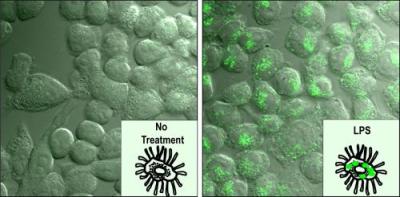
Urban air pollution exposure may trigger toxic responses in brain cells and impact neurodegenerative disease pathways

Credit: Michelle Block, Ph.D./VCU.

From diesel exhaust to gaseous pollutants and suspended particulate matter, such as dust, smoke and fumes, air pollution from transportation, industry and energy generation has taken a toll on the environment and human health.

While the adverse effects of air pollution on the cardiovascular and respiratory systems have been well documented, little is known about how the associated toxins may impact the brain and the central nervous system. In recent years, experts have reported a marked rise in the prevalence of stroke, autism and cognitive decline in the elderly.

Researchers such as Michelle Block, Ph.D., associate professor in the Department of Anatomy and Neurobiology in the Virginia Commonwealth University School of Medicine, are now on a mission to define the impact of air pollution on the brain and central nervous system.

Through basic science, Block and her team are working to understand the underlying molecular mechanisms in hopes of developing an intervention that can protect human health.

Recent scientific reports suggest air pollution exposure and the activation of a specific group of cells found in the brain being studied in Block’s laboratory may play a role in the increased incidence of central nervous system diseases and neurological conditions. They have observed that these factors may also impact the neurodegenerative disease process.

Last week, Block, presented her team’s significant research findings to peers from across the country during a symposium she co-organized at the 2014 annual meeting of the American Association for the Advancement of Science, held in Chicago, from Feb. 13 to 17.

“Angry” cells, toxic responses

Block’s research examines microglia, a group of resident immune cells found in the brain and spinal cord, which can display a kind of dual personality – one good, and the other bad if agitated.

Under normal conditions, microglia primarily serve as the defenders of the central nervous system. They bring balance to the system. They destroy infectious agents, engulf various unwanted cellular and foreign materials and promote regrowth of damaged neural tissue.

Exposure to urban air pollution may trigger toxic responses in brain cells and impact neurodegenerative disease pathways

But microglia can be dangerous when they are exceptionally “angry” and are known to leave behind significant bystander damage to neighboring cells. This adverse behavior may lead to the development of any number of neurodegenerative diseases, including Parkinson’s disease, Alzheimer’s disease, or Gulf War Illness.

In some ways, microglia are similar to misunderstood superhero The Incredible Hulk. Despite having a decent-sized heart and extraordinary abilities to help save the day, nobody wants to stir his rage and anger.

Block’s laboratory specializes in understanding the cellular and molecular machinery responsible for essentially fueling microglia “anger” – why they become chronically and excessively activated to drive damage in the brain.

“Our goal is to define how microglia detect and respond to air pollution, reveal when this microglial response may actually be damaging the brain, identify potential markers of ongoing silent neuropathology and ultimately use the mechanistic information we acquire as a tool to halt the induced or augmented neuropathology,” Block said.

In several peer-reviewed, published reports, Block and her colleagues have demonstrated that exposure to a diverse source of urban air pollution can trigger toxic microglial responses and impact neurodegenerative disease pathways.

“Given the prevalence of human exposure to urban air pollution above safety regulations, it is critical to understand the underlying mechanisms through which air pollution affects the brain,” Block said. “We hope to find an opportunity to intervene and protect human central nervous system health.”

According to Block, her team’s work shows that many components of urban air pollution, including the particle components of air pollution, also called particulate matter, and gases, such as ground level ozone, activate microglia.

Some of the problems with this cell type come in when the same molecular tools used by microglia internalize (eat) and clean up toxic stimuli and accidentally trigger the switch to an excessive, angry activation state. The work she presented reveals how air pollution does this, essentially leaving microglia with much more than a mouthful. Her lab has discovered that the MAC1 pattern recognition receptor may be a common mechanism through which microglia detect and ultimately misinterpret different forms of air pollution as an invading pathogen to result in excessive production of reactive oxygen species and consequent damage to neighboring brain cells.

Further, ongoing research in Block’s lab aims to define where damage to the lungs through inhaled toxicants produces injury signals in the circulation that are not only detected by microglia in the brain, but are responsible for shifting microglia to a deleterious phenotype impacting central nervous system health. She refers to this as a “Lung-Brain Axis.”

via Urban air pollution exposure may trigger toxic responses in brain cells and impact neurodegenerative disease pathways.

Posted in Air Quality, Health Effects of Air Pollution | Tagged , , , | Leave a comment

Solution close at hand for Mexico’s dirty air

When President Barack Obama sits down Wednesday with Mexican President Enrique Peña Nieto and Canadian Prime Minister Stephen Harper in Toluca, Mexico, they will have a lot to talk about: competitiveness, economic integration and security, among others.

But if they pause to look out the window of their meeting place, the elegant Palacio de Gobierno, they will see something else they should be discussing – Mexico’s continuing air pollution problem. The picturesque colonial city has some of the country’s worst air pollution. However, unlike some intractable issues the leaders face, this one has a workable solution close at hand.

It’s an important matter not only for Mexicans, but for Americans, too. Cleaner air will mean not only healthier people, but a healthier Mexican economy, which is good for trade and investment, and pollution standards harmonized with America’s and Canada’s will strengthen the whole North American market.

Mexico has already made strides in cleaning up some of its worst sources of dirty air, but an acute problem remains – the sooty, toxic exhaust belching from the country’s hundreds of thousands of diesel-fueled heavy duty trucks and buses and light-duty vehicles.

Global health experts say dirty diesel exhaust can cause cancer in people. Ozone and other contaminants, which in Mexico far exceed World Health Organization standards, and which are produced by dirty diesel engines, contribute to health-harming smog. The large amount of particulate matter – another component of diesel exhaust – is especially dangerous because it can penetrate deep into people’s lungs. Moreover, studies show that roadside diesel pollution is linked to asthma, with the worst effects on children.

The World Health Organization said air pollution of all kinds killed 14,700 Mexicans in 2010.

Two linked culprits are responsible for Mexico’s diesel pollution: the high amount of sulfur in diesel fuel, and the vehicle fleet’s dirty, inefficient engines. Both sides of the equation must be tackled at once – ultra-low sulfur diesel, such as what’s available in the U.S. and Canada, is necessary to operate low-emission vehicles.

In recent years, progress has been made in developing national standards that would cut sharply the harm being done by diesel fumes. But action has stalled. Strong, positive encouragement from Obama could persuade Peña Nieto to finalize and implement the standards.

If adopted, three pending regulations could make a big difference:

Ultra-low sulfur fuels. Most Mexican diesel now contains 300 parts per million of sulfur. That needs to come down to 15 ppm to match the U.S. and Canada. President Peña Nieto’s National Energy Strategy 2013-2020 identifies the need to move to ultra-low sulfur fuels.

Heavy-duty vehicle emissions standards. Heavy trucks are a major source of dangerous particulate pollution and officials are negotiating with industry on standards comparable with American ones.

Light-duty vehicle emissions standards. These haven’t been updated since 2010, and Mexican regulators have been slow to start developing new ones that would match the latest U.S. rules.

Adopting and implementing ultra-low sulfur fuels would reduce particulate matter for all vehicles overnight by 5 to 10 percent. More important, it would enable the use of advanced particulate filters that can reduce particulate matter by more than 90 percent.

Cleaner, more efficient trucks would cut down emissions of all kinds, including the carbon dioxide and soot that contribute to climate change.

Transportation is the biggest factor in Mexico’s climate emissions, and the black carbon soot in dirty diesel exhaust is the second most powerful contributor to climate change. Addressing Mexico’s transportation pollution will boost regional climate change efforts.

These common-sense steps won’t solve all Mexico’s air pollution woes, but the government’s top officials know the changes are in their country’s own interest. They are certainly important to the United States. Obama and Peña Nieto can do the citizens of their countries a big favor by committing to get these standards adopted as quickly as possible.

via Ortega/Casey-Lefkowitz: Solution close at hand for Mexico’s dirty air – Houston Chronicle.

Posted in Air Quality, Latin America, Mexico | Tagged , , | Leave a comment

Utah Lawmakers Considering Dozens of Air Quality Bills

UtahUtah legislators are considering more than two dozen bills in the current session that could help reduce the state’s serious air-quality issues. Rep. Patrice Arent (D-Millcreek) co-chairs the House Clean Air Caucus, which is made up of Democrats and Republicans. She said legislators are considering at least 27 bills that are targeted at reducing air pollution and added that it seems to be the issue most pressing with citizens.

“During my time in the legislature, the number one issue has always been education,” Arent said. “But I’m getting so many more emails this year about air quality than education, it’s not even close, and that is really unusual. Nothing has ever surpassed education.”

Arent said one of the bills under consideration would provide $20 million to replace or remove school buses with old diesel engines. Salt Lake City’s air quality was so bad at some points this year that it ranked among the nation’s most polluted cities.

The bills being considered encourage increased use of public transit and making it easier to drive clean vehicles, she said, and another bill would offer a subsidy to homeowners with wood-burning stoves to convert to a cleaner heating source. The stoves are a major contributor to Utah’s air pollution, she explained.

“They’re very polluting. Any one home that heats with a sole source of wood has the amount of pollutants going out of it like 200 homes heated with natural gas,” Arent said.

Utah’s growing reputation for having poor air quality is hurting tourism statewide, she warned, even though many parts of the state have very clean air. The number of clean-air bills under consideration is greater in number than all similar bills from the past several legislative sessions combined.

via Utah Lawmakers Considering Dozens of Air Quality Bills / Public News Service.

Posted in Air Quality, USA & Canada | Tagged , , | Leave a comment