Respro® Masks FAQ: What filter do I need?

What filter do I need?

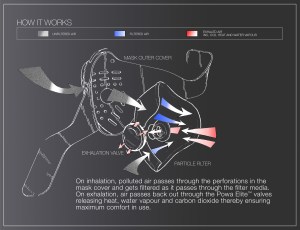
You will need to determine what type of environment you will be using the mask in, a city environment or a countryside environment. Typically, if you are commuting every day with heavy or slow moving traffic, you should use the City™ filter. Although chemical pollutants can be found in the countryside; crop sprays, fertilisers etc., particulates are more likely to pose a potential problem, thus a Sportsta™ filter is likely to be the better option.

For more FAQ,  see Respro® Mask FAQ

Posted in Air Quality | Tagged | Leave a comment

Initiative to reduce air pollution

The Office of the Prime Minister and Council of Ministers is set to launch an initiative to reduce air pollution at the Lumbini World Heritage Site.

A high-level meeting held under Bhola Prasad Siwakoti, acting secretary of the OPMCM, has submitted a five-point strategy to tackle air pollution in the birthplace of Gautam Buddha, a source said. The move came after the Centre for Public Health and Environmental Development wrote to the government, pointing at an alarming level of environmental pollution in the heritage site.

According to a study that Indian scientists had conducted in association with the World Health Organisation, air pollution in the heritage site exceeds the national standard. The PM25 (fine particle) at the Buddhist site is 270 µg/m3 against 40 µg/m3 set by the National Ambient Air Quality Standard of Nepal, 2012. Industrial activities and heavy and phased-out vehicles that transport raw materials and finished products of factories, especially cement factories, are mainly blamed for air pollution around the area. Air pollution has also caused problems to domestic and foreign tourists visiting the site.

The government has directed ministries concerned to ensure that all industries operating around the heritage site implement the industrial commitment to conserving the environment around the site.

It has also assured to expedite road repair, lane expansion and construction of roads passing through the Lumbini Area, and manage traffic to curb environmental pollution.

via The Himalayan Times : Initiative to reduce air pollution – Detail News : Nepal News Portal.

Posted in Air Quality, Asia | Tagged , , , , | Leave a comment

Davos report highlights worsening global air quality

Air quality around the world is plummeting, according to the latest version of an annual report, issued at the Davos Summit over the weekend.

Produced by researchers at Yale and Columbia universities, the Environmental Performance Index (EPI) ranks performance in key environmental areas on a per-country basis. It breaks down these issues into two broad policy areas: detection of human health from environmental harm and protection of ecosystems. It then ranks each nation based on their overall performance.

Air quality, affected by activities such as burning solid biomass on open stoves or pollution from power plants, can have a deleterious effect on human health, the report said, adding that just 16 per cent of countries met the target for household air quality.

Almost 1.8 billion people were exposed to poor air quality in 2011, defined as more than twice the World Health Organisation standard for clean air of 10 µg of particular matter per metre cubed. This was up from well under 1.25 billion people in 2000.

China and India were among the worst countries for air pollution, with populations there suffering the highest average exposure to particular matter in the world, added the document.

Angel Hsu, who co-authored the report, is postdoctoral associate and project manager of the Environmental Performance Measurement programme area at Yale. She highlighted a lack of global targets for air quality, contrasting them with clearly defined goals in other areas.

“Where you have global targets for reducing the proportion of the population that lack access to clean drinking water and sanitation, you can see measurable results,” she said. “But at the same time, you see some issues where global goals are poorly defined, and you don’t have clearly defined measurement targets. There is definitely an unevenness globally that we are seeing in these environmental indicators and trends.”

In general, wealthier nations had curbed their carbon dioxide emissions slightly, while emerging economies such as Brazil, with rapidly growing economies, have grown their carbon emissions dramatically over the past decade. Overall, the BRIC emerging economies performed worse than Europe and Asia. For example, South Africa, which the researchers consider as part of the BRIC grouping because of its economic profile, came 72nd in the overall environmental rankings, followed by Russia in 73rd. Brazil was ranked 77th and China was 118th. At 155th place, India languished at the bottom of the BRIC group, warned Hsu.

Mark Levy, adjunct professor of international and public affairs at Columbia, warned that poor data was a challenge to gathering research for the EPI, and that researchers had to work around this hurdle when gathering air quality information and data on other indicators.

“There are a number of data systems that have been left to languish over the last 10-20 years – things that we built up throughout the 70s and 80s in our enthusiasm for the environmental consciousness that was growing then,” he said. “We have let them wither on the vine. The global air quality monitoring network is one example, where it has been virtually dismantled. There are a number of individual countries’ networks, but no global network to track air quality. The water network is even more stark.”

Due to a lack of accurate ground station data, the team for the first time created the air quality measure used in the EPI using satellite data in collaboration with Dalhousie University.

Hsu said investors should take note of the issues highlighted in the report, because they help to highlight risk areas, especially in emerging markets. For example, she argued that Brazil is poised to become very attractive for incoming investment, whereas India represents “a lot of risk”, in large part because of its poor environmental performance.

At the top of the rankings, Switzerland came in first place, while Australia and Singapore were newcomers to the top 10, although Hsu stressed that ranking mechanisms had changed thanks to different data gathering techniques year-on-year.

The report came as Chinese state media reported once again that Beijing plans to accelerate efforts to tackle worsening air pollution in the city.

With the city facing some of its worst air pollution in recent months, Xinhua reported that Beijing’s mayor Wang Anshun has set a new target to cut coal use by 2.6 million tonnes and invest 15 billion Yuan ($2.4bn) in improving air quality.

He also said that all coal-burning boilers within the city\’s fifth ring road will be banned and further steps will be taken to tackle the most polluting and inefficient vehicles.

Xinhua also reported that 8,347 heavily polluting companies have now been shut down in the northern Hebei province, as part of the government’s promised crackdown on carbon emissions and air pollution.

There is mounting evidence governments around the world are prepared to introduce robust new standards and legislation to tackle levels of air pollution that are so high they have contributed to social unrest. Increasingly such measures are having a direct impact on businesses, with governments showing a willingness to shut factories, restrict urban journeys, and even close airports to tackle air pollution and smog.

via Davos report highlights worsening global air quality – 28 Jan 2014 – Analysis from BusinessGreen.

Posted in Air Quality, Singapore, World News | Tagged , , , | Leave a comment

India and China, Besieged by Air Pollution

The United States space agency published a map in September that showed how rates of premature deaths from air pollution vary around the world. It indicated that northern China has one of the worst rates, attributed to the density of a deadly fine particulate matter, known as PM 2.5, that often results from coal burning. The map was based on data collected by a research team led by Jason West, an earth scientist at the University of North Carolina.

The map also showed that the rate in northern China — what appears to be about 1,000 or more deaths each year per 1,000 square kilometers, or 386 square miles — is matched by that of northern India, in a diagonal belt stretching from New Delhi southeast to Calcutta. Those acutely polluted areas are colored dark brown on the NASA map. (Europe was perhaps surprisingly colored a deep brown too, though the rate was not as bad as that of the two Asian nations.)

Various recent studies and data suggest that air quality in Delhi is worse than in Beijing, though India’s air pollution problems do not get nearly as much attention on the world stage as those of Beijing. One study shows that Indians have the world’s weakest lungs. The World Health Organization says India has the world’s highest rate of death caused by chronic respiratory diseases, and it has more deaths from asthma than any other nation.

Yet, Indians and foreigners living in Delhi do not express anxiety about the air the way that residents of Beijing and other Chinese cities do. Air purifiers are a rarity in homes there, and face masks are generally not seen on the streets. The Indian news media do not cover air pollution to nearly the same extent the Chinese media do. (Government censors in China had blocked widespread coverage of the problem for years, but they loosened the restrictions during an infamous surge in pollution across northern China in January 2013; now even official state-run Chinese news organizations report regularly on air pollution.)

Ananth Krishnan, the China correspondent for The Hindu, has been mulling over this disparity in public dialogue on air quality. He posted tweets about it in December, during a bad pollution day in Delhi. One of his conclusions was that the United States Embassy in Beijing had helped raise awareness in China by posting on Twitter for the past several years the air quality readings from a rooftop monitoring device.

The embassy “did play a role in PM 2.5 awareness; maybe right time to start @USAndIndia air monitor,” Mr. Krishnan wrote on Twitter.

In part because of the public release of PM 2.5 readings by the United States Embassy, prominent Chinese commentators like the real estate tycoon Pan Shiyi began asking on microblogs why the Chinese government was not making available data that it had collected. This helped put the issue in the spotlight, and Chinese officials then agreed to release the data for many cities across the country.

Mr. Krishnan said in an interview that Delhi had been making the same kind of data available to the public well before Chinese officials agreed to release their numbers, and that the Indian numbers proved without a doubt that the air quality in the Indian capital was poor. However, he said, there has never in India been populist demand for the government to change policy to improve the air, as there is now in China.

“I think when you have the sense that they’re hiding something, it galvanizes public attention in a counterintuitive way,” said Mr. Krishnan, who has lived in Beijing since early 2010.

“I don’t think the Indian media has given enough attention to this issue,” he added. “I remember an Indian environmental scholar visited Beijing a few months ago, and he was surprised that pollution was getting so much attention in the press here.”

Coverage of air quality by the Indian news media “will have to change very soon,” Mr. Krishnan said.

On Saturday, China Daily, an official English-language newspaper, reported that December was the worst month of 2013 for air quality in China. More than 80 percent of the 74 cities with official air monitoring devices failed to meet the national air quality standard for at least half of December, the report said, citing information from the Environmental Protection Ministry. That was twice as many cities as the number in November.

In some of the smog attacks in December, visibility in cities was reduced to less than 10 meters, or 33 feet. Levels of five major pollutants increased that month. The monthly average of PM 2.5, the same particulate matter that scientists deem to be most harmful to human health, rose by almost 56 percent.

The report also said Beijing officials would issue “guidance” to tell the public whether the weather would be conducive to the setting-off of fireworks and firecrackers during the Lunar New Year holiday, which begins this week. Officials have said that smoke from the explosives contributes to air pollution. The four levels of guidance are: proper, not quite proper, not proper and extremely improper.

via India and China, Besieged by Air Pollution – NYTimes.com.

Posted in Air Quality, Asia, China, India | Tagged , , , , , , | Leave a comment

Scotland’s ‘most polluted streets’ identified

Friends of the Earth Scotland has published league tables which they claimed identify Scotland’s most polluted streets last year.

Hope Street in central Glasgow is named as the area with the most serious nitrogen dioxide (NO2) pollution problem in the country.

High levels of NO2 are linked to asthma and other respiratory problems.

Market Street in Aberdeen is claimed to be the worst in Scotland for particulate matter pollution (PM10).

Health experts say long-term exposure to air pollution caused by particulates is linked to a higher risk of heart attack.

The tables have been produced by FOE Scotland following analysis of data gathered by roadside and kerbside monitoring stations around Scotland.

The campaigners have highlighted research published by the Committee on the Medical Effects of Air Pollutants which suggests that very fine particulate pollution (PM2.5) was responsible for the deaths of 1,560 people in Scotland in 2008.

FOE Scotland said those figures demonstrated that air pollution was a greater threat to public health than road traffic accidents.

Streets in Glasgow, Edinburgh, Aberdeen, Dundee, Perth and Paisley are all listed in the league tables.

Figures for NO2 and PM10 are given in micrograms per cubic metre. The European annual mean legal limit is 40 for NO2, while Scottish Air Quality Objective for particle matter is 18.

Street Town/city NO2 PM10
Hope Street Glasgow 65 23
Central Road Paisley 61
Seagate Dundee 58
St John’s Road Edinburgh 57
Wellington Road Aberdeen 52 24
Raith Interchange South Lanarkshire 51
Meadowside Dundee 51 19
Lochee Road Dundee 50
Union Street Aberdeen 49 21
Atholl Street Perth 49 23
Dumbarton Road Glasgow 46 20
Byres Road Glasgow 45
Queensferry Road Edinburgh 45 19
Market Street Aberdeen 44 27
Salamander Street Edinburgh 22
High Street Irvine 21
West Bridge Street Falkirk 20
West High Street Crieff 20
Kilsyth Road Falkirk 19
King Street Aberdeen 19
Main Street Rutherglen 19
Main Street Chapelhall 19
A904 at Newton, West Lothian 19

Dr Richard Dixon, director of FOE Scotland, said the research showed that air pollution was also a threat to health in smaller towns and villages.

He told BBC Scotland: “We have air pollution problems in all of our big urban areas. Action is long overdue.

“We still haven’t met health protection targets which we were supposed to meet in 2005 and 2010.

“But there are some surprising places in the results as well. For example, we’re missing health targets in Crieff, in Perth, and even in small villages in some parts of West Lothian and North Lanarkshire.

“It’s taken us a decade to talk about it, but do very little, and we need to see much more action if we’re going to solve the problem and give ourselves the clean air we deserve.”

‘Weather conditions’

Responding to the publication of the league tables, the Scottish government insisted it was working to tackling air pollution.

Environment and Climate Change Minister, Paul Wheelhouse, said: “The Scottish government is committed to working with partner agencies such as local authorities to tackle air quality in areas where it is a problem.

The government says cars are not being driven at optimal efficiency

“While we have seen nationally a 65% decrease in nitrogen oxides, a 78% decrease in sulphur dioxide and a 58% decrease in particulates between 1990 and 2011, we recognise that more can be done.

“That is why we recently consulted on proposals for further action to improve air quality and expect to set out next steps later this year.”

The government is urging Scots to walk or cycle when making short journeys. Its active travel campaign was designed to highlight that mile for mile, short car journeys cause the greatest emissions.

Ministers said a third of car journeys in Scotland were under two miles (3.2km), and car engines did not operate at optimal efficiency over such short distances.

Scientists caution that air pollution data must be interpreted carefully, to ensure long-term trends can be accurately identified.

Dr Stefan Reis, of the Natural Environment Research Council’s Centre for Ecology and Hydrology in Edinburgh, said: “Comparing measurements over longer periods of time is important, as the effect of weather conditions can be larger than year-to-year reductions due to emission limits for new cars or buses for example.

“Longer-term trends show a gradual decline of concentrations of key pollutants, but more needs to be done to tackle the levels of pollution urban populations are exposed to.

“This means not only urgently adopting stricter, binding standards, such as the limit value recommended by the World Health Organisation for fine particulate matter (PM2.5) of 10 micrograms per cubic metre, but also enforcing the attainment of these standards.

“It will, however, require policies as well as individuals to consider the use of private cars or using solid fuel stoves to achieve this”.

via BBC News – Scotland’s ‘most polluted streets’ identified.

Posted in Air Quality, UK | Tagged , , , , , | Leave a comment

More diseases from air pollution uncovered by improved data material

At rest, we breathe approx. 12-15 times per minute, and for each inhalation we change approx. one litre of air. Depending on the activity level, this makes up a daily quantity in the order of twenty cubic metres of air that — with its content of pollution in the form of particles and different gases — can make us ill depending on how polluted the air is.

Asthma attacks, wheezing, cardiovascular diseases and lung cancer are some of the more glaring examples of diseases we — in worst case — can get from the domestic air. The list of injuries due to air pollution in Denmark is long. This appears from a brand new article that professor Ole Hertel from Aarhus University, has written with a number of Danish colleagues at University of Copenhagen, the Danish Cancer Society and Aarhus University. “So the list of diseases detected in Denmark is long, but it does not mean that we have the world’s most polluted air. This is to be found in Asia, Africa and South America. Here, you typically find a yearly mean value of the particle pollution (PM10) of 50-200 micrograms per cubic metres of air, while the content in Copenhagen and other Western European Megacities typically is at a lower level — about 20-50 micrograms per cubic metre. But even in a “moderately polluted” air as we call it in Danish towns and cities, we find many serious injuries which come from the air that we breathe every day,” explains Ole Hertel.

Danish studies

In the article “Utilizing Monitoring Data and Spatial Analysis Tools for Exposure Assessment of Atmospheric Pollutants in Denmark,” Ole Hertel and his colleagues review the Danish experiences in combining measurements and models. By combining measurements on relatively few but well-chosen places with advanced models for spreading of air pollution, the researchers can calculate the air pollution down to the individual addresses.

Hertel and Co. review a number of Danish studies of the coherence between air pollution and injuries to health. A total of nine short-term studies have been published in Denmark, where researchers have demonstrated respiratory and cardiovascular diseases after episodes with increased air pollution, etc. Similarly, eleven studies demonstrate long-term injuries due to air pollution, e.g. lung cancer, cardiovascular diseases, diabetes and mortality.

Improved information

The scientists’ ability to detect a wide range if different types of damages of the Danes’ health is due to the fact that Danish researchers represent some of the very best to demonstrate illnesses caused by air pollution on human health. This is obvious when we look at the model for spreading of air pollution, OSPM, which was developed by Danes and is now used in approx. twenty countries. This is also why Ole Hertel was invited to give an overview of the diseases detected to be a consequence of the air pollution in Denmark, first on a major international conference and afterwards in book form:

“We have some very unique health registers in Denmark and that is quite different from other countries. We are able to connect addresses and health registers with air-polluted areas. In Denmark, we have many cohort investigations where the same persons are followed during a long period of time. Here, we can link to other sorts of information and thus separate effects related to e.g. lifestyle from effects related to air pollution. For instance, the Danish Cancer Society makes a study of people’s diet and exercise habits in a so-called Diet, Cancer, Health study, and in addition you have the whole birth cohort where the same children have been followed from around the turn of the century until now,” explains Ole Hertel.

But not only do we have some of the world’s best health registers in Denmark, “We also have some outstanding good pieces of information on traffic, buildings and infrastructure. This information we have concluded in the so-called AirGis Model which uses digital road maps and building and road registers to determine the parameters we need for air quality calculations on address level. Therefore, we can come up with conclusions that are more precise than in other countries.” Ole Hertel emphasizes that there are strong constrains around handling of personal information.

Surprising results

Ole Hertel points out one of the Danish results as particularly notable:

“It came as a surprise to me that the studies showed a connection between air pollution and diabetes. It is rather new information that air pollution can cause diabetes, and we are working on finding a biological explanation for this correlation. This is an example of the fact that our very detailed way of working in Denmark leads to precise results.”

It takes fifty liters of air to read this article

Dear reader, if you represent an average reader, you have just spent three minutes and 58 seconds to read this article — probably inclusive of pauses for thoughts (thank you for that!). During this time you have inhaled approx. fifty litres of air through your lungs, depending on your gender and size.

via More diseases from air pollution uncovered by improved data material.

Posted in Air Quality, Health Effects of Air Pollution | Tagged , , , , , , , | Leave a comment

Beijing to spend £76bn to improve air quality

In an attempt to clean up the smoggy air in the Chinese capital, Beijing’s authorities have introduced a new set of measures to cut emissions and allocated 760 billion yuan (£75.8 billion) to improve the city’s air quality by 2017.

Last week, Beijing once again suffered hazardous levels of air pollution prompting the city’s mayor to announce an “all-out effort” to tackle the smog. Residents were advised to stay indoors as levels of fine particulate pollution known as PM2.5 reached the highest in a year. Unhealthy and even hazardous levels of air pollution have become commonplace in Beijing and in 2013 the city endured a total of 189 polluted air days.

The new measures will cut coal burning, limit car emissions and set yearly quotas for local governments and individual polluters. There will also be bigger fines for those found to be in violation of air pollution standards.

According to state media, the new measures replace a guideline which was issued in 2000 and is the “first of its kind” for the city. This will be the first time that Beijing has set targets to curb its total pollution emissions, according to Fang Li, vice head of the Beijing Municipal Environmental Protection Bureau. The previous guideline targeted only the growth of emissions.

Yu Jianhua, the director in charge of air pollution for the Beijing Municipal Environmental Protection Bureau made an amusing analogy: “If we compare smoggy Beijing to an obese man, the previous control on emission growth was like asking him to eat less, but our expectation now is that he must try harder to actually lose weight.”

The new measures are part of Beijing’s efforts to put in place a national plan introduced in September to reduce the country’s dependence on coal in order to improve air quality. A number of China‘s cities are plagued with air quality problems, which has led to concerns about the environmental costs of the country’s massive economic growth.

Meanwhile a new study has found that a number of industrial plants in some of the worst polluted areas of China are exceeding pollution discharge limits. The report was issued by NGO the Institute of Public and Environmental affairs, which is headed up by one of China’s most well-known environmentalists Ma Jun, in conjunction with a number of other organisations.

By analysing real-time air quality information, the Blue Sky Roadmap report found that in some provinces in Northern China including Shandong and Hebei, some large-scale thermal power plants and steel factories had emissions that were “in serious breach of discharge standards”. It also found that even during periods of high levels of air pollution some of these plants were continuing to breach standards.

The report analysed pollution data and praised the development that since the start of January 179 cities have begun releasing real-time air quality information. This information, it stated has “provided important underlying data to help understand the sources of smog”. Residents of these cities can now access pollution data online and this information has “highlighted serious pollution, which has prompted several areas to develop emergency contingency plans for times when pollution is severe”, according to the report.

Shandong, Zhejiang and Hebei were among the first provinces to start real-time disclosure of online monitoring data. Ma Jun, director of Institute of Public and Environmental Affairs said that good practice in these provinces “helps fulfill the public’s right to know, and also helps identify the main pollution sources within that geographical region.” However in other areas that also suffer from high levels of pollution including Tianjin, Guangdong and Hunan similar data has not been published as required.

via Beijing to spend £76bn to improve air quality | Jennifer Duggan | Environment | theguardian.com.

Posted in Air Quality, Asia, China | Tagged , , , | Leave a comment

Shipping Could Suffer From Land Air Pollution

There’s a lot of talk about how polluting air emissions from shipping can affect the health of people living in coastal regions. An estimated 200,000 people die prematurely. However, it’s not a one-way street. Extreme air pollution in Asia appears to be making storms and cyclones stronger, according to a study by Texas A&M University and NASA’s Jet Propulsion Laboratory researchers. This implies that shipping safety could, in turn, be adversely impacted by land pollution.

The researchers found that air pollution over Asia – much of it coming from China – is impacting global air circulations. China’s booming economy during the last 30 years has led to the building of enormous manufacturing factories, industrial plants, power plants and other facilities that produce huge amounts of air pollutants. Once emitted into the atmosphere, pollutant particles affect cloud formations and weather systems worldwide, the study shows. Increases in coal burning and car emissions are major sources of pollution in China and other Asian countries.

Yuan Wang, a former doctoral student at Texas A&M, along with Texas A&M atmospheric sciences professors Renyi Zhang and R. Saravanan, have had their findings published in the current issue of Nature Communications.

“This pollution affects cloud formations, precipitation, storm intensity and other factors and eventually impacts climate. Most likely, pollution from Asia can have important consequences on the weather pattern here over North America,” said Zhang.

Air pollution levels in some Chinese cities, such as Beijing, are often more than 100 times higher than acceptable limits set by the World Health Organization standards. One study has shown that lung cancer rates have increased 400 percent in some areas due to the ever-growing pollution problem.

Conditions tend to worsen during winter months when a combination of stagnant weather patterns mixed with increased coal burning in many Asian cities can create pollution and smog that can last for weeks. The Chinese government has pledged to toughen pollution standards and to commit sufficient financial resources to attack the problem.

via http://www.maritime-executive.com/article/Shipping-Could-Suffer-From-Land-Air-Pollution-2014-01-22/.

Posted in Air Quality, Asia, China | Tagged , | Leave a comment