Car occupants exposed to more pollution than cyclists

Ongoing research at the University of Canterbury has found that the air inside cars contains more pollutants than the air cyclists breathe on the street.

Researchers measured traffic pollution whilst travelling via different transport modes in Auckland and Christchurch. Their latest results, published in the journal Environmental Pollution, found that, in a standard morning commute in pre-quake Christchurch, car occupants were exposed to the most carbon monoxide and ultra-fine particulate matter.

“The air inside motor cars is generally more polluted that the air in buses, trains and for cyclists,” said lead researcher Prof Simon Kingham.

Where cyclists rode also had an impact on pollution exposure. “People cycling on the road experience significantly worse quality air than people cycling on routes away from roads,” said Prof Kingham.

via Science Media Centre » Blog Archive » Car occupants exposed to more pollution than cyclists.

Posted in Air Quality | Tagged , , , , , | Leave a comment

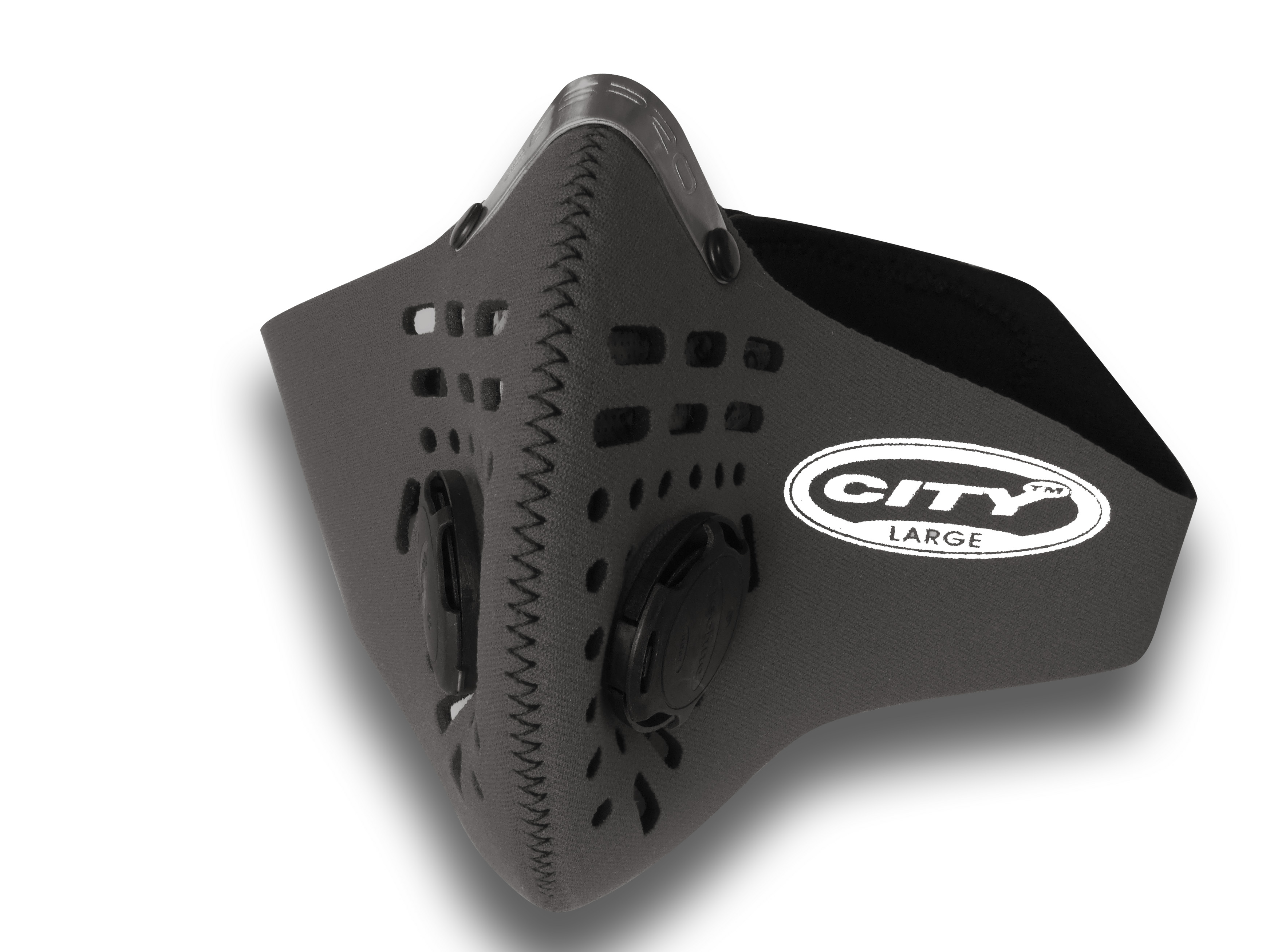
Respro® Masks FAQ: How do the Sportsta™ and City™ filters differ?

How do the Sportsta™ and City™ filters differ?

Each filters type has a primary use in a specific environment.

1. The City filter uses Dynamic Activated Charcoal Cloth (DACC) a 95% pure charcoal weave, originally developed by the U.K. Ministry of Defence for use in the protection against chemical and bacteria warfare situations. We use DACC to effectively filter out Primary pollutants associated with vehicle exhaust emissions. The DACC is laminated with medical grade non woven polypropylene material which filters particulates from the air and helps prevent them from entering the respiratory system.

The City™ filter offers protection against: – Hydrocarbons. e.g. Benzene; Pyrene; 1,3 Butadiene. – Acid gases. e.g. Nitrogen dioxide; Sulphur dioxide. – Photo-chemical pollutants. e.g. Low level Ozone – Particulates. e.g. Black smoke; Pollen; Lead oxide. For a more comprehensive list of all the chemicals that have tested with DACC, please go to the Industrial section of the website.

2. The Sportsta™ filter uses electrostatically charged fibres to attract airborne particulates down to 0.3 microns in size. 1 Micron = 1/1000mm. Unlike most particle filters which rely on mechanical retention, which inherently results in high inhalation resistance or very large cumbersome filters, the Sportsta™ filter offers extremely low inhalation resistance, by like comparison. The Sportsta™ filter offers protection against: – Pollen dust; Building dust; Clay dust; Grain dust; Soya dust; Carbon dust; House dust; Cigarette smoke. – PM10’s. e.g. Diesel smoke. – Lead & Tar.

For more FAQ,  see Respro® Mask FAQ

Posted in Air Quality | Tagged | Leave a comment

Major European study finds air pollution–lung cancer link

Exposure to ambient air pollution is associated with an increased risk for lung cancer, particularly adenocarcinoma, a large European cohort study indicates.

The association was driven by exposure to particulate matter with diameters of less than 10 µm (PM10) and less than 2.5 µm (PM2.5), and occurred at concentrations below current European Union limit values.

“Particulate matter air pollution is ubiquitous, and on the basis of our results, further reductions in particulate matter air pollution can be expected to reduce the number of lung cancer cases in Europe,” say Ole Raaschou-Nielsen (Danish Cancer Society Research Center, Copenhagen) and fellow investigators writing in the Lancet Oncology.

The team analyzed data obtained by the European Study of Cohorts for Air Pollution Effects (ESCAPE) – a prospective investigation into the effects of exposure to air pollution on human health in Europe.

They included 17 cohort studies located in 12 areas of nine European countries. A total of 312,944 individuals contributed 4,013,131 person–years at risk, with 2095 incident lung cancer cases occurring over an average follow-up of 12.8 years.

Each participant’s exposure to air pollution was estimated based on the proximity of their residential address to different types of land-use, such as industry, roads, and ports. A comprehensive set of pollutants was assessed along with two traffic indicators, namely, traffic intensity on the nearest street and total traffic load on all roads within 100 meters.

Meta-analysis revealed significant associations between lung cancer and three separate air pollution variables: levels of PM10, levels of PM2.5, and total local traffic load, with adjusted hazard ratios (HRs) of 1.22 per 10 µg/m³, 1.18 per 5 µg/m³, and 1.09 per 4000 vehicle–km/day, respectively.

The association was also stronger for people who had lived at the same address throughout follow-up, with HRs of 1.48 and 1.33 for levels of PM10 and PM2.5, respectively.

Analysis by histologic subtype revealed that the association was strongest for adenocarcinomas, with HRs of 1.51 and 1.55 for levels of PM10 and PM2.5, respectively, while there was a non-significant association with squamous cell carcinomas.

Lung cancer risk was not associated with ambient levels of nitric oxide or traffic intensity on the nearest street.

Noting that their study benefited from “standardised exposure assessment, a large number of participants, information about potential confounders, and a virtually complete follow-up,” the team concludes: “This very large multicentre study shows an association between exposure to particulate matter air pollution and the incidence of lung cancer, in particular adenocarcinoma, in Europe, adding substantially to the weight of the epidemiological evidence.”

via medwireNews – General oncology – Major European study finds air pollution–lung cancer link.

Posted in Air Quality, Health Effects of Air Pollution, Medical Studies | Tagged , , , , , | Leave a comment

NZ air pollution similar to large cities overseas – study

Commuters in Auckland and Christchurch are exposed to levels of air pollution similar to those found in other large cities around the world, a new study reveals.

The study, led by University of Canterbury geography Professor Simon Kingham, examined the quality of air commuters in the two cities breathed.

“The results show that, compared to other countries, the air that commuters breathe while travelling is cleaner for carbon monoxide, but similar for fine particulates for some of the world’s biggest cities,” Professor Kingham said.

This was especially significant as Auckland and Christchurch had comparatively less congestion and lower volumes of traffic than other large cities around the world.

Results showed those taking private cars were worse off than those who took public transport or cycled to work.

“The air inside motor cars is generally more polluted that the air in buses, trains and for cyclists,” Professor Kingham said.

The study, which was published in the international journal Environmental Pollution, was one of the first research projects into air pollution in smaller cities with relatively little traffic congestion and no long-range transport of pollutants.

It was also the first of its type in New Zealand, Professor Kingham said.

Investigating the issue of air pollution and gauging how significant it was in a small city such as Christchurch was important, he said.

“It is widely accepted that transport emitted air pollution has an adverse effect on health outcomes such as mortality, morbidity and hospital admissions,” he said.

“In addition the economic costs can be great. It has been estimated that each year there are 500 cases of premature death in New Zealand due to exposure to air pollution.”

The study was funded by the New Zealand Transport Agency and New Zealand’s Foundation for Research Science and Technology.

Researchers from Auckland University and the National Institute of Weather and Atmospheric Research were also involved.

via NZ air pollution similar to large cities overseas – study – National – NZ Herald News.

Posted in Air Quality, Australia & Oceania | Tagged , , , , | Leave a comment

Haze moves north, air quality in Ipoh, Seberang Jaya unhealthy

The haze has moved north, causing Ipoh in Perak and Seberang Jaya in Penang to have an unhealthy level of air quality this evening.

According to the Department of Environment’s website, the Air Pollutant Index (API) reading recorded at 3 pm in Ipoh was 104, while in Seberang Jaya, the API reading was 100.

In GEORGE TOWN, Penang Health, Welfare, Caring Community and Environment Committee chairman Phee Boon Poh said the state government was prepared to distribute 200,000 face masks to the people in the state, with priority to be given to schoolchildren, expectant mothers, motorcyclist and pillion riders.

Phee also advised the public to reduce outdoor activity and to use public transportation to reduce air pollution.

“The public are also advised to drink a lot of water during this period and seek immediate medical if they experience sore throats, coughing and breathing difficulties,” he told reporters.

Thirty-six other areas recorded moderate API readings, including Seri Manjung (93), Cheras (89), Putrajaya and Batu Muda (60), and Shah Alam (70).

Fifteen areas recorded good API readings including in Sabah, Sarawak and Johor.

Based on the air quality index, reading of between 0-50 is categorised as good, 51 to 100 (moderate), 101-200 (unhealthy), 201 to 300 (very unhealthy), and 300 and above hazardous.

via Haze moves north, air quality in Ipoh, Seberang Jaya unhealthy | Astro Awani.

Posted in Air Quality, Asia | Tagged , , , , | Leave a comment

China to unveil £180 billion anti-pollution plan

Zhou Shengxian, the environment minister, said Beijing would publish a five-year plan in the coming weeks which would include a commitment to pump an additional 100 billion yuan into his ministry’s coffers each year.

Speaking at an environmental forum in the south-western city of Guiyang, Mr Zhou, said the plan would focus on slashing levels of PM2.5, a minute airborne particulate which has been linked to a host of ailments including heart and lung disease.

“The central government is very determined” to combat such pollution, Mr Zhou said last weekend, according to the influential Chinese magazine Caixin.

The plan was reportedly approved by the country’s State Council in June but few precise details have been made public.

It will seek ways to reduce emissions from industry and boost energy efficiency as well as working to control pollution from vehicles and improving fuel quality, according to the Xinhua news agency. Money would also be invested in monitoring and early warning systems designed to detect pollution.

Chinese state media described the plan as “a landmark effort in the government’s fight to control air pollution.” Under “tough” new measures, “sectors that produce large amounts of waste and pollution” will be “strictly” controlled, with China’s steel and cement industries to face particular scrutiny.

The environment minister has reportedly promised to promote “a shift away from coal as the main energy source”, according to Caixin, although no details of how that might be achieved were given.

China is currently the world’s top coal consumer and producer with nearly 80 per cent of its electricity coming from the fossil fuel. In 2011, China consumed 3.45 billion metric tons of coal – almost half of the global total – according to America’s Energy Information Administration.

Xi Jinping’s first months as China’s president have coincided with growing public outrage over the risks air pollution is posing to public health.

Mr Xi has repeatedly vowed to clean up his country’s waterways and skies in order to build a “Beautiful China.”

At 1.7 trillion yuan £180 billion the air pollution plan would be more than double the size of the defence ministry’s annual budget, which this year hit around 740.6 billion yuan £78.5 billion.

Jun Ma, the chief economist for Greater China for Deutsche Bank, told the Wall Street Journal that recent government moves to clear the country’s skies represented “the most aggressive policy effort to address air-quality issues in Chinese history.”

via China to unveil £180 billion anti-pollution plan – Telegraph.

Posted in Air Quality, Asia, China | Tagged , , , | Leave a comment

Kuala Lumpur chokes on polluted air

The haze around the Malaysian capital Kuala Lumpur reached unhealthy levels on Tuesday as forest fires worsened in Indonesia’s Sumatra, a month after haze from fires on the island blanketed parts of Malaysia and Singapore.

The air pollution index (API) in Kuala Lumpur reached 97, while in the nearby district of Port Klang it reached 103, the government’s Environment Department said.

An API of 100 to 200 is considered unhealthy, while 200 to 300 is very unhealthy and more than 300 is hazardous.

Also on Tuesday, Singapore warned of an imminent pollution spike, saying satellite data showed “a marked increase in the number of hotspots in Sumatra”, referring to the heat signatures of apparent forest fires.

Ronnie Tay, head of the city-state’s National Environment Agency, had contacted Indonesian authorities and “sought an urgent update of Indonesia’s efforts to tackle the fires”, the agency said.

He offered Singapore’s help, including data gathering the fires and the use of aircraft for cloud-seeding operations.

Jakarta assured Singapore that it was monitoring the situation and taking action to suppress the fires, the statement added.

Malaysia’s Meteorological Department said there were 252 hotspots or forest fires in Sumatra on Tuesday up from 159 on Sunday.

Haze from forest fires on Sumatra island mostly affects Indonesia’s Riau province, Malaysia and Singapore during the dry months of June to September.

The fires are started illegally to clear land quickly and cheaply for agricultural use, from land-clearing by plantation owners and accidental peat fires.

Last month, a large portion of Malaysia including Kuala Lumpur, and the island-state of Singapore were choked in dangerous levels of haze from smoke off forest fires in Sumatra

via Kuala Lumpur chokes on polluted air | News24.

Posted in Air Quality, Asia, Singapore | Tagged , , , , , , , | Leave a comment

High Ozone Levels During Heat Waves Make Air Pollution Worse

High temperatures make air pollution worse. A new study has found that during heat waves, plants reduce their ozone absorption which lead to high levels of the gas remaining in the environment.

Ozone is a gas that exists both at stratosphere and troposphere and can be beneficial or toxic depending on its location. When close to the ground, the gas is known to increase asthma risk in children and damage crops and tress. Ozone is the major ingredient in the urban smog.

Ozone levels range from 0 parts per billion (ppb) to 300 ppb depending on the level of pollution. A related study had recently reported that ozone levels increase risk of burst appendix in people.

Heat waves that swept through the U.K. and parts of Europe in July 2006, broke all records which led to premature deaths of many people. Currently the U.K. is facing another heat wave similar to the ones that occurred in 2006 and 2009 and is showing no signs of cooling.

The present study was conducted by researchers from Stockholm Environment Institute (SEI) at the University of York along with their colleagues at King’s College, London.

During heat waves, plants tend to close their stomata to reduce loss of water through leaves. But, it could also lead to excess ozone in the atmosphere, explained Dr Lisa Emberson, lead author of the study.

In the present study, researchers looked at the atmospheric conditions during the drought that occurred in the summer of 2006 in the U.K. The team used computer models to study the ozone effect in two different scenarios; one with perfect ozone uptake by plants and in the other where plants absorbed minimum amount of the gas.

They found that the worst case scenario for the heat wave was when the plants were absorbing minimum ozone. They also discovered that the difference between perfect and minimum absorption was equivalent to two weeks of high ozone level in the atmosphere that led to premature deaths in the U.K.

About 970 deaths occurred during the heat wave when there was minimum uptake of ozone by the plants, scientists estimated. Of these 970 people, 400 could be saved if the plants absorbed ozone at normal rate.

“Vegetation can absorb as much as 20 per cent of the global atmospheric ozone production, so the potential impact on air quality is substantial. What we set out to do in this study was to quantify that impact in terms of increased ozone levels and the toll on human life,” said Dr Emberson, a senior lecturer in the Environment Department at the University of York and director of SEI’s York Centre, according to a news release.

“The most vulnerable people to ozone pollution are those with existing respiratory and cardiovascular diseases,” added Dr Emberson. “For example, ground-level ozone can lead to lung inflammation, decreased lung function, and an increase in asthma attacks. That is why, during high ozone episodes, especially in urban areas, people are generally advised not to do physical activity.”

The study is published in the journal Atmospheric Chemistry and Physics.

via High Ozone Levels During Heat Waves Make Air Pollution Worse : Environment : Nature World News.

Posted in Air Quality, UK, World News | Tagged , , , , , | Leave a comment