Utah air quality alert system gets new color scheme

Utah Air Quality Scale

Just as the first Red Day of the winter season was announced, state officials Monday unveiled plans to abandon the time-tested, three-color air quality alert system.

Green, Yellow and Red Day declarations have guided Utahns through the winter air pollution season for the past two decades. Beginning in January, the state will move to a six-color system that attempts to more precisely delineate the health risks at each level of pollution.

“We’re actually making it more effective,” said Bryce Bird, director of the state’s Division of Air Quality.

But the new six-color system is already drawing fire.

“I don’t think anyone’s interests are served by having the public confused about the issue,” said Dr. Brian Moench, president of Utah Physicians for a Healthy Environment.

The forecast of a Red Day today applies to Salt Lake, Weber and Davis counties. It resulted from a typical winter phenomenon: A temperature inversion traps colder air in the valleys, and the stagnant air gets thicker and thicker with smog from cars, industry and wood-burning stoves.

via Utah air quality alert system gets new color scheme | Deseret News.
Posted in Air Quality, USA & Canada | Tagged , , , | Leave a comment

The 9 Most Common Air Pollutants

If you live in an urban area, you have most likely experienced a smog filled day or an inversion. It’s not a surprise, due to the fact that much of the pollution is caused by vehicle emissions and industrial factory byproducts. Interestingly enough, studies show that living in a metropolitan area can actually reduce your life span by 2 to 3 years. It is important to understand what the major pollutants are, and what people can do to decrease the damage that they cause.

The Environmental Protection Agency is required by the Clean Air Act to set quality standards for six of the most common and harmful air pollutants. These air pollutants pose a particular threat to the environment, as well as people’s over-all health. Since they have the potential to cause bodily damage, the EPA sets permissible levels for these air contaminates, and checks them on a regular basis. Known as criteria air pollutants, the six most common pollutants include ozone, carbon monoxide, sulfur dioxide, lead, nitrogen oxides, and particulate matter.

Greenhouse gases are another form of hazardous air pollution. These gases have led to the occurrence of global warming, which is responsible for a shift in the Earth’s ecosystem. People are trying to reduce their “carbon footprint”, or amount of carbon dioxide they leave behind. They are doing this by recycling, driving their vehicles less often, and conserving. The government is also taking this issue seriously by increasing the tax on gas, so that people will conserve their gas usage.

Continue reading…

via The 9 Most Common Air Pollutants | Business 2 Community.

Posted in Air Quality, Asthma, Health Effects of Air Pollution, World News | Tagged , , , , , , , , , , , | Leave a comment

Autism: Traffic pollution linked, study suggests

The possibility that autism is linked to traffic pollution has been raised by researchers in California.

Their study of more than 500 children said those exposed to high levels of pollution were three times more likely to have autism than children who grew up with cleaner air.

However, other researchers said traffic was a “very unlikely” and unconvincing explanation for autism.

The findings were presented in the Archives of General Psychiatry journal.

Data from the US Environmental Protection Agency were used to work out levels of pollution for addresses in California.

This was used to compare exposure to pollution, in the womb and during the first year of life, in 279 children with autism and 245 without.

The researchers from the University of Southern California said children in homes exposed to the most pollution “were three times as likely to have autism compared with children residing in homes with the lowest levels of exposure”.

They have previously shown a link between autism and living close to major roads.

They warn that there could be “large” implications because air pollution is “common and may have lasting neurological effects”.

via BBC News – Autism: Traffic pollution linked, study suggests.

Posted in Air Quality, Health Effects of Air Pollution, USA & Canada, World News | Tagged , , , , , | Leave a comment

New zones plan may mean some vehicles banned due to emissions

LORRIES which do not meet strict emissions standards could be banned from parts of Edinburgh in a crackdown on pollution.

Latest monitoring figures show air quality in the Capital is getting better, but still falling short of European targets, which have to be met by 2015.

Now council chiefs are looking at the idea of “low emission zones” (LEZs), where lorries and vans which do not conform to tough exhaust emission limits face a ban or a hefty fine.

CCTV cameras and an automatic number plate recognition system could be used to enforce the system.

New pollution monitoring sites are to be set up after latest figures showed the city is not hitting air quality targets.

Edinburgh has three official “air quality management areas” – the city centre; St John’s Road, Corstorphine; and Great Junction Street, Leith – designated because of high concentrations of nitrogen dioxide from vehicle exhausts.

Latest monitoring results show pollution levels have improved but are still too high in all three areas.

Nitrogen dioxide levels outside these areas are also breaking the limits, so the designated areas in the city centre and Leith are now to be extended and a new one declared in Newbridge.

In the city centre, the pollution levels were exceeded at Easter Road, London Road, and in the Grassmarket and Cowgate. In Leith, the designated area will now include Bernard Street.

Excess nitrogen dioxide levels were also found at the Inverleith Row/Ferry Road junction.

In addition, there will be new monitoring sites to focus on pollution at Inverleith Park, Portobello Road, Queensferry Road, and Angle Park Terrace.

via New zones plan may mean some vehicles banned due to emissions – Transport – Scotsman.com.

Posted in Air Quality, UK | Tagged , , , , , | Leave a comment

Running a risk

Five days before the Beijing Marathon, the air pollution level in Beijing was rated “very unhealthy” by the US Embassy, and buildings in the distance appeared obscured by haze.

Nonetheless, about 30,000 runners are gathering in the city on Sunday to run the race starting in Tiananmen Square, snaking through the city and eventually reaching the Olympic village and crossing the finish line at the “Bird’s Nest” National Stadium.

Despite an awareness of pollution levels in Beijing, many runners are not worried enough to stop them from taking part, feeling the immediate and concrete benefits of running outweigh the abstract potential risk.

“If I referred to the [pollution] index every day, then there would be very few days that I would go outside to run,” says Zhang Suhai, 44, who is running in Sunday’s marathon for the first time. Nonetheless, Zhang says he does refer to the air pollution index using his mobile phone app, a habit shared by many local runners.

“I do care about the air quality and if the air pollution is serious, I will stay at home or jog with a mask or handkerchief.”

Neil Fraser, a 25-year-old Englishman living in Beijing who takes part in weekly runs organized by the Beijing Hash House Harriers, says he personally has never had a problem with pollution here and doesn’t wear a mask. But he adds, “The running community in general is very aware of pollution levels. They check their iPhone apps [for pollution] and some wear masks when it’s particularly bad.”

He says he has noticed that when pollution is bad, “Westerners tend to stay away from outdoor training and wear protection [face masks], but the Chinese don’t seem to really mind and go on as usual.”

via Running a risk – Globaltimes.cn.

Posted in Air Quality, China, Exercise & Air Pollution, Running, Sports | Tagged , , , , , | 1 Comment

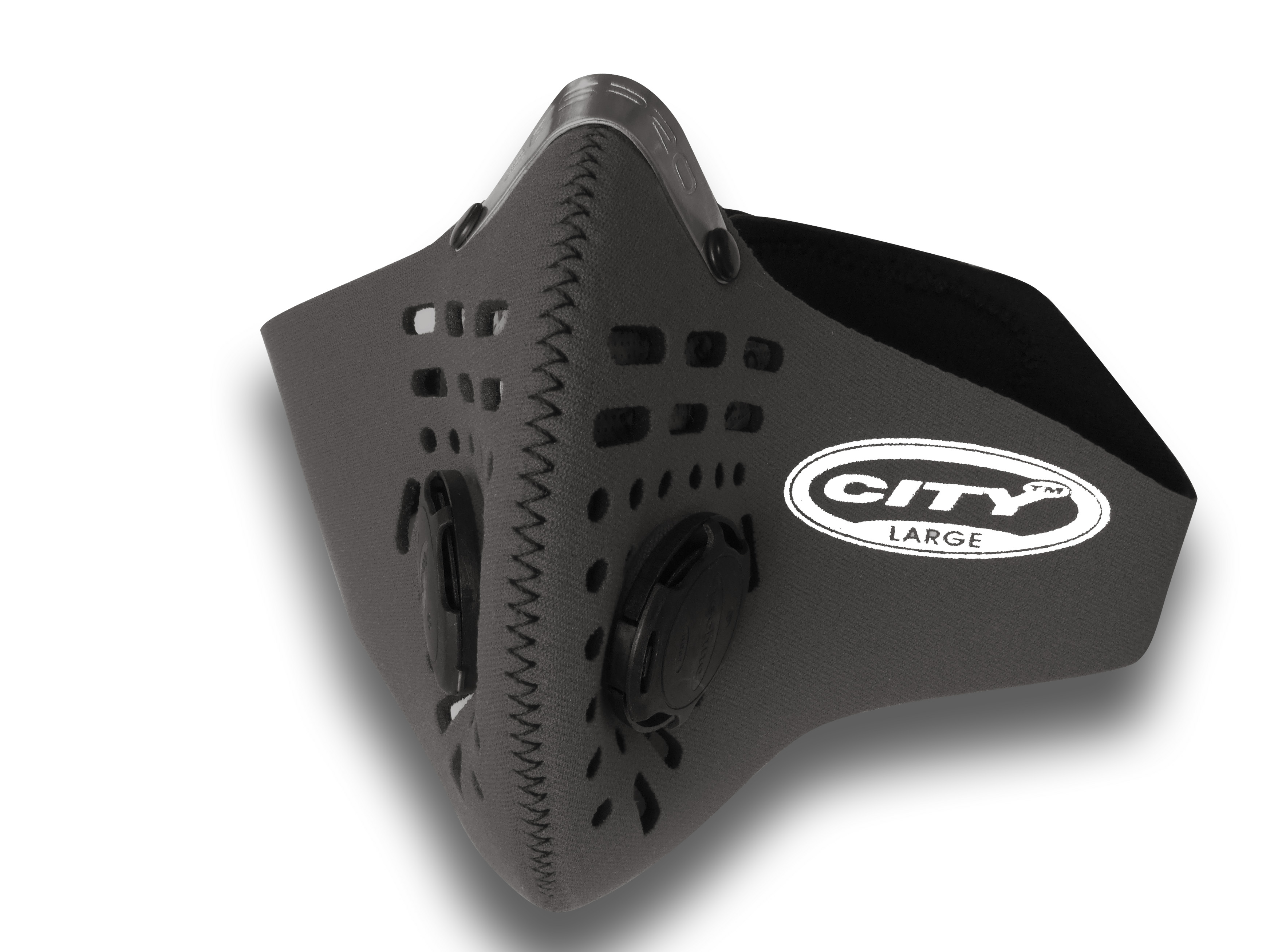
FAQ: How do the Sportsta™ and City™ filters differ?

How do the Sportsta™ and City™ filters differ?

Each filters type has a primary use in a specific environment.

1. The City filter uses Dynamic Activated Charcoal Cloth (DACC) a 95% pure charcoal weave, originally developed by the U.K. Ministry of Defence for use in the protection against chemical and bacteria warfare situations. We use DACC to effectively filter out Primary pollutants associated with vehicle exhaust emissions. The DACC is laminated with medical grade non woven polypropylene material which filters particulates from the air and helps prevent them from entering the respiratory system.

The City™ filter offers protection against: – Hydrocarbons. e.g. Benzene; Pyrene; 1,3 Butadiene. – Acid gases. e.g. Nitrogen dioxide; Sulphur dioxide. – Photo-chemical pollutants. e.g. Low level Ozone – Particulates. e.g. Black smoke; Pollen; Lead oxide. For a more comprehensive list of all the chemicals that have tested with DACC, please go to the Industrial section of the website.

2. The Sportsta™ filter uses electrostatically charged fibres to attract airborne particulates down to 0.3 microns in size. 1 Micron = 1/1000mm. Unlike most particle filters which rely on mechanical retention, which inherently results in high inhalation resistance or very large cumbersome filters, the Sportsta™ filter offers extremely low inhalation resistance, by like comparison. The Sportsta™ filter offers protection against: – Pollen dust; Building dust; Clay dust; Grain dust; Soya dust; Carbon dust; House dust; Cigarette smoke. – PM10’s. e.g. Diesel smoke. – Lead & Tar.

For more FAQ,  see Respro® Mask FAQ

Posted in Respro® Products | Tagged , | Leave a comment

Heavily Polluted Chinese City to Publish PM 2.5 Data

Readings of PM (particular matter) 2.5 in the city of Lanzhou, one of China’s most polluted, will be available for public scrutiny in December, according to officials.

The capital city of Gansu Province will conduct the PM2.5 monitor according to new environmental air quality standards on Dec. 1.

Lanzhou is among the first batch of 74 Chinese cities required by the Ministry of Environmental Protection to publish daily reports on PM2.5 by the end of the year.

The PM2.5 index is considered stricter than the PM10 standard previously adopted in China. It measures airborne particles smaller than 2.5 micrometers, which are more hazardous to people’s heath.

The data will be updated on government websites and via television and radio before the end of the year, the head of Lanzhou Environmental Protection Bureau, Pan En, told Xinhua.

The move was hailed by local residents who have complained of air pollution in the northwestern city.

“What matters is not the reading itself, but that its publication can at least put pressure on officials to do something to alleviate the pollution,” said Pan Jiang, a local citizen.

The 74 cities include China’s four municipalities, 27 provincial capitals, as well as cities in three highly urbanized and industrialized regions — Yangtze River Delta in the east, Pearl River Delta in the south and the northern Beijing-Tianjin-Hebei area.

via Heavily Polluted Chinese City to Publish PM 2.5 Data.

Posted in Air Quality, China | Tagged , , , , , | Leave a comment

Air quality agency issues Southland no-burn alert

Much of Los Angeles is being asked to hold off lighting wood-burning fireplaces or open pits starting at midnight Saturday and continuing for 24 hours to avoid releasing unhealthy soot that becomes trapped in the air by a wintertime weather pattern.

The first-ever no-burn alert comes with a $50 fine for first-time residential violators and applies to the downtown area, West Hollywood, Burbank and much of the eastern San Fernando Valley.

It’s part of a new program adopted by the South Coast Air Quality Management District to cut down on the release of harmful wood smoke, said Sam Atwood, an agency spokesman. The air pollution regulator expects about 10 to 15 alerts each year, Atwood said.

“Over 1 million homes actively use fireplaces to burn wood in Los Angeles,” he said. “That results in four times the particulate pollution created by all of the power plants in the basin.”

National Weather Service forecasters are predicting an inversion layer that traps fine particulates under dense fog, he said. That condition, combined with mild Santa Ana winds, triggered the alert, Atwood said.

Residents can enter their ZIP Code at http://www.aqmd.gov/noburn to see if they live in an area affected by the alert. They can also sign up for daily air-quality reports at http://www.airalerts.org.

via Air quality agency issues Southland no-burn alert – latimes.com.

Posted in Air Quality, USA & Canada | Tagged , , , | Leave a comment


