China sees post-lockdown rise in air pollution: study

China’s levels of some air pollutants have risen back to above last year’s levels after dropping when the government imposed strict lockdown measures to contain the coronavirus pandemic, according to a study published on Monday.

The rebound was likely due to industrial activity, the researchers said, adding there were concerns that after months of unusually low pollution levels, a drive to kickstart economic activity was causing emissions to spike.

“There are early warning signs that China’s recovery from the COVID-19 crisis is reversing air quality gains,” the Helsinki-based Centre for Research on Energy and Clean Air (CREA), which produced the study, said.

Average levels of some air pollutants in China dropped in February to significantly below levels for the same period in 2019, as lockdown measures shuttered factories, curbed electricity demand and slashed transport use as swathes of the population stayed home.

But average levels of some pollutants have since rebounded, and were higher in the 30 days ended 8 May compared with the same period in 2019, CREA said in its analysis of data from 1,500 air quality monitoring stations in China.

This was true of nitrogen dioxide, sulfur dioxide, and fine particulate matter, suggesting a rebound in industrial activity drove the trend, CREA said.

Regions with factory clusters reported bigger increases in nitrogen dioxide emissions. Densely populated urban areas – where emissions of the gas are mostly from vehicles, rather than factories or power plants – showed smaller increases.

After months of lockdowns, China is reopening its economy as the outbreak comes under control, although some cities – such as Shulan, in the north east – have reimposed lockdown measures after reporting clusters of new coronavirus infections.

Overall passenger transport use in China remains lower year-on-year, but CREA said concerns about catching the coronavirus had led people to choose private cars over public transport as lockdowns eased, contributing to the rise in air pollution.

In Europe, cities including London, Milan and Brussels have expanded cycle lanes to encourage people to choose bikes over cars as containment measures start to lift.

But many emissions-intensive sectors are desperate to return to work. Public health campaigners said the China study showed governments would need to take tougher measures to clean up industries, to avoid a sustained surge in health-damaging air pollution.

“There is no reason to think that going back to normal would not have the same consequences – namely, pre-crisis pollution levels,” Zoltan Massay-Kosubek, policy manager for clean air at the non-profit European Public Health Alliance, said of easing lockdowns in Europe.

“The question is what will be the new normal.”

via China sees post-lockdown rise in air pollution: study – Reuters

Posted in Air Quality, Asia, China | Tagged , | 1 Comment

I’ve been wearing a mask since 2018. Here’s what I learned.

The COVID-19 pandemic catapulted face masks into the mainstream consciousness. For the first time, many are confronting the same questions I faced about fashion, protection, and public space.

1_bCwRYmJZsQkmcwEsRhzuwA

Photo @ghost.lux

I started wearing a mask in the fall of 2018 to protect my lungs from pollution and traffic exhaust. I moved to a new neighborhood, commuting by bicycle from my home in an industrial area to work in the center of the city. My route took me through dusty construction sites, under highways, and through city streets, congested with traffic.

This new route was way more intense than my old commute, so for comfort and safety, I amped up my gear. I swapped street clothes for a full cycling kit: padded bib shorts, long sleeve UPF top, and tall socks to protect my ankles. I’ve always worn a helmet, but I added shatterproof glasses to protect my eyes from the rocks, glass, and trash that pummeled my face as I rode through gravel-strewn intersections between city buses and garbage trucks.

With the new gear, I protected my outer bod, but my lungs felt it. I developed a cough, a persistent sore throat, and a hoarse, scratchy Kathleen Turner voice which, to be honest, felt kind of sexy but also alarming. When my raw throat improved on weekends and vacations, it was clear the commute caused tangible damage to my body.

Beyond my anecdotal experience, the data is convincing and scary: traffic fumes can trigger heart attacks. High levels of pollution, including exposure to the pollutant particles and nitrogen dioxide in traffic, can increase the risk of suffering a heart attack for up to six hours after exposure. And there I was, day in and day out, sucking down truck exhaust on my “healthy” bike commute.

I also learned there are masks designed to combat this problem, but remained skeptical: Were they effective? Was I overreacting? Was I confident enough to be the weirdo with the mask? On the one hand, wearing a mask fits my style, particularly my affinity for techwear — a subculture interested in the practical application of technology to meet environmental conditions through garment design. Some of techwear’s major influences are mask-appropriate environments: dystopian speculative fiction like the future dust bowls of Dune, Interstellar, and Mad Max, and the cyberpunk worlds of Syd Mead. There are factions within techwear, and while my style leans futuristic and minimal, I value material performance and design utility over #Techwear, which heavily emphasizes the aesthetic over everything else. It’s a slippery slope from technical apparel for the discerning urban citizen to the “all straps, no substance” Scarlxrd cosplay look. I worried a mask was a step over that line.

In the end, my concern for my health won out over my style snootery. There is limited but promising data about the effectiveness of masks to filter pollution, so I was willing to try. And I looked like a dork on my bike anyway. Padded butt shorts? Yes please! As long as I knew in my heart I wasn’t cosplaying as Melina from Mortal Kombat, I didn’t care. I wanted to get to work without feeling like I’d been vaping pop rocks.

What mask did I choose?

There are different masks available with varying degrees of protection, durability, and purposeful design. After evaluating my options, I landed on the Respro Sportsa because of the interchangeable, replaceable filters and positive reviews of the mask’s comfort for high-intensity activities like cycling. I liked that it’s washable, straps behind my head instead of hooking my ears, and has an adjustable nose piece for a good fit on my lady face. And it comes in black. Also I trust the filters: Respro City filters are charcoal and polypropylene, designed to screen out the chemical pollutant particles resulting from vehicle combustion. TL;DR: it keeps exhaust out of my precious lungs.

What did I learn?

Anecdotally, the mask makes a difference. After two years of consistent wear, I no longer get sore throats and coughing fits when cycling through city traffic. Worn with sunglasses, the mask covers most of my face, so I don’t worry as much about sunscreen mixing with sweat and stinging like hell in my eyes. In the winter, the mask keeps my face toasty and protects it from the wind. I also haven’t swallowed a bug since 2018, which counts for a lot.

As a masked person, I get a lot of attention, though I imagine that will change now. Frequently, I get stopped by a curious driver, a fellow cyclist, or a stranger on the corner. In varying degrees of politeness, they want to know “what the heck is on my face.” Because of the din of traffic, I often have to pull down my mask to explain what I’m wearing and why. They assume it simulates high altitude training (it doesn’t), and lose interest when I say it’s for traffic fumes. Apparently, pollution is boring. In the past, when I’ve ignored these questions, I usually regret it; I don’t love being called a bitch twice a day.

Paradoxically, while the mask draws attention, it also makes me anonymous. Riding through a city street full of angry, texting drivers behind the wheel of 5000 lb missiles, plus the risky business of being a woman in public — a double whammy of vulnerability experienced during cycling while female. Women cyclists report high rates of harassment like grabbing and catcalling, and there’s evidence to support that drivers are more reckless around female cyclists. A mask obscuring my face makes me less obviously female and so a less obvious target for harassment and negligent driving. There are still incidents (see: getting called a bitch for ignoring strangers), but after I started commuting masked, I notice fewer attempts to grab and catcall.

This anonymity makes me feel powerful. It is, in fact, a kind of cosplay: gearing up as a confident, skilled cyclist who can handle whatever the city throws at me. And at this point, it’s part of my kit and routine. On the rare occasions when I ride without the mask, I feel naked.

In these weird times, it’s impossible to predict if we’ll reach for masks along with our keys, wallet, and cellphone when heading out the door. Racism is a problem. There’s hate aimed at Asian-Americans who first wore surgical masks during the COVID-19 outbreak, and people of color often cannot safely wear masks in public. There’s also mask production: clothes have to look good but masks have to work. What are the risks when consumer-grade masks are produced by clothing companies? When brands accustomed to making goods quickly and at the lowest possible price are suddenly responsible for producing items that could mean the difference between life and death? Can fast fashion pull this off? Do we want them to? And would we trust them if they claimed they did? The techwear community typically asks these questions — what matters most? How a garment performs? How it’s made? How it looks?

I am excited by the swift adoption of protective masks. I am hopeful that progressive brands, independent makers, and motivated individuals will take on this new challenge with thoughtful enthusiasm and innovation.

Masks might someday be as ordinary as seatbelts and as stylish as sunglasses. It’s not hard to imagine telling my grandchildren about before we wore masks, the way my mom recounts her childhood sunburns in the years before sunscreen was a thing. It seems like we’re at a turning point in history, where masks are no longer an edgy accessory of an imagined cyberpunk future but a necessary tool for our uncertain reality. Either way, I’m wearing mine.

via medium.com/@ghostlux/ive-been-wearing-a-mask-since-2018-here-s-what-i-learned-6a21d9508e24

Posted in Air Quality, Respro® Mask Reviews, Respro® Products | Tagged , | 5 Comments

CLEANING YOUR RESPRO® MASK AND REPLACEMENT OF FILTERS

Respro® Masks are reusable

Filter Lifespan

A Hepa-Type filter (Cinqro™ Sports Filter, Allergy™ Particle Filter, Sports filter) is replaced based on discolouration.

The particulates that are retained will increase the inhalation resistance. If the inhalation resistance is not bothering you then no need to replace the filter but to maintain the hygiene practice to keep the filter hygienically clean.

A Combination filter (Cinqro™ Urban Filter, Techno™ Filter, Allergy™ Chemical Particle Filter) is replaced based on the characteristics of the active urban cyclist.

If you are using the mask for another activity it still applies, but your breathing rate and activity would put the lifespan of the filter at a proportionally shorter or longer time. If your breathing rate is say half that of a cyclist, then the effectiveness of the filter would be twice as long. For cycle commuting on a daily basis we recommend that the filter should be replaced every month or every 69 hours, whichever is sooner.

Please see the following video tutorial on how to replace a filter in your Respro® Mask. The filters are replaced and not added to the fitted filter.

Hygiene

One aspect that does need consideration if you are using the mask regularly for a long period of time is the hygiene aspect.

Quick Cleaning process: We now have added a water based Sanitiser to our range, it is nontoxic, kills 99.9% of all common germs and bacteria and is hand sized. It is an excellent travel product and is best used on a daily basis.

Please visit the following link to see the how to clean a mask using the Respro® Sanitiser spray: https://www.youtube.com/watch?v=0-AkTgn0OB4

Standard cleaning process: To ensure good hygiene/ care measures, we suggest that you place the filter and valves in a pan of freshly boiled water (remove pan from heat source before putting filter in) and let it cool down. Remove the filter unit from the water and allow to stand dry.

This procedure will remove facial oils that may build up over a period of continuous use and will also remove some of the particulates and organic vapour that will be present within the Charcoal structure of the filter or tissue salt build in the valves.

Storage

What you need to avoid, is the exposure of the filter to anything that it can adsorb.

Retaining the filter in its packaging or in a sealable bag will do the trick. “No Air Flow” will maintain the filter ability to work.

An arid storage environment would be better than a damp environment; this will inhibit the growth of any plant life that may arise from seeds/spores or other potential growth material that you may have inadvertently trapped in the filter.

Posted in Air Quality, Help & FAQs, Respro® Products | 6 Comments

Children face three times more air pollution during the school run

Children face a worrying threefold increase in air pollution during the daily school runs, causing air quality experts to call for restrictions on the use of cars during those periods.

In a study published by the journal Science of the Total Environment, experts from the University of Surrey’s world-renowned Global Centre for Clean Air Research (GCARE) partnered with a local school and the local community in Guildford to investigate the impact cars have on air quality in and around schools during drop-off and pick-up times.

In a school of around 420 pupils, the research team installed air quality sensor kits in five key areas around the school – including drop-off points where cars often sit idling in queues, the playground which is located near a main road, and a classroom. The team investigated the concentration of fine (PM2.5) and coarse particulate matter, as well as carbon dioxide in the morning (7:30am until 9:30am) and the evenings (2pm until 4pm).

The study discovered that dangerous PM2.5 from vehicles lining up to drop off children were the main source of air pollution around the school. The team also found that PM2.5 levels were nearly three times higher during morning drop-off periods than the afternoon pick-up or active school periods. This is due to the fact that pick-ups were conducted from off-site parking areas and a large number of pupils took part in after school activities.

The team also found that PM2.5 levels rose slightly within the classrooms closest to the road during drop-off and pick-up times. Researchers speculated that this could be because of the classroom’s dependence on natural ventilation (open windows) which brings in unfiltered air.

The study also found that the playground’s close proximity to the main road, a characteristic similar to many of the country’s schools, resulted in the playground having consistently high PM2.5 levels at key times in the school day.

The researchers from GCARE have recommended that schools provide safe and accessible off-site parking drop-off points to help reduce levels of air pollution. The team has also recommended the use of green hedges as physical barriers to prevent air pollutants reaching children from cars at drop-off points and the main road.

Professor Prashant Kumar, Director of GCARE at the University of Surrey, said: “This is work of global significance, but we are also proud to collaborate with our local community on this work – employing smart sensing technology and a citizen science approach. The findings will be of great concern to parents locally and further afield. It goes without saying that our children’s health and wellbeing is of the highest priority in society and that is why we must protect them from the dangers of air pollution, including where the school run can now be seen to be directly impacting the school environment.

“Every school is different. However, many have characteristics that will mean that children are exposed to hotspots of air pollution in school premises. We have found that the use of cars during the school run is increasing the number of dangerous particles our children breath in, even during playtime long after they have been dropped off.”

Mr Neil Lewin, the Headteacher of St Thomas of Canterbury Catholic Primary School in Guildford, said: “Minimising air pollution exposure in and around the school has to be at the top of our agenda and we need to find practical but effective ways to reduce this exposure to air pollution in our school environment. This co-designed study has been an excellent experience for our children (especially our eco-warriors) giving them hands-on real science experience, and I hope will be very influential in compelling our parents to think again about their journeys to and from school to ensure the safest environment for their children.”

Mr Andrew Strawson, the Chairman of Merrow Residents’ Association in Guildford, said: “This is a rare and welcome opportunity for direct community involvement in the co-creation and co-design of a scientific study aimed at addressing important local and national issues. We thank Professor Kumar and his team for their continuing involvement with this community programme. His team promotes excellent guidance on green infrastructure initiatives. He has now taken this further and enabled this joint project which provides key data and strategies for use in helping to protect our children from air pollution at school.”

via Children face three times more air pollution during the school run | EurekAlert! Science News

Posted in Air Quality, Health Effects of Air Pollution, Medical Studies | Tagged , , , | Leave a comment

𝗧𝗵𝗲𝘀𝗲 𝗯𝗲𝗻𝗱𝘆 𝗻𝗼𝘀𝗲 𝘁𝗵𝗶𝗻𝗴𝘀, 𝗵𝗼𝘄 𝗳𝗮𝗿 𝘀𝗵𝗼𝘂𝗹𝗱 𝗜 𝗯𝗲𝗻𝗱 𝘁𝗵𝗲𝗺?

RC01 BK_maska antysmogowa Respro CITY MASK Black_07


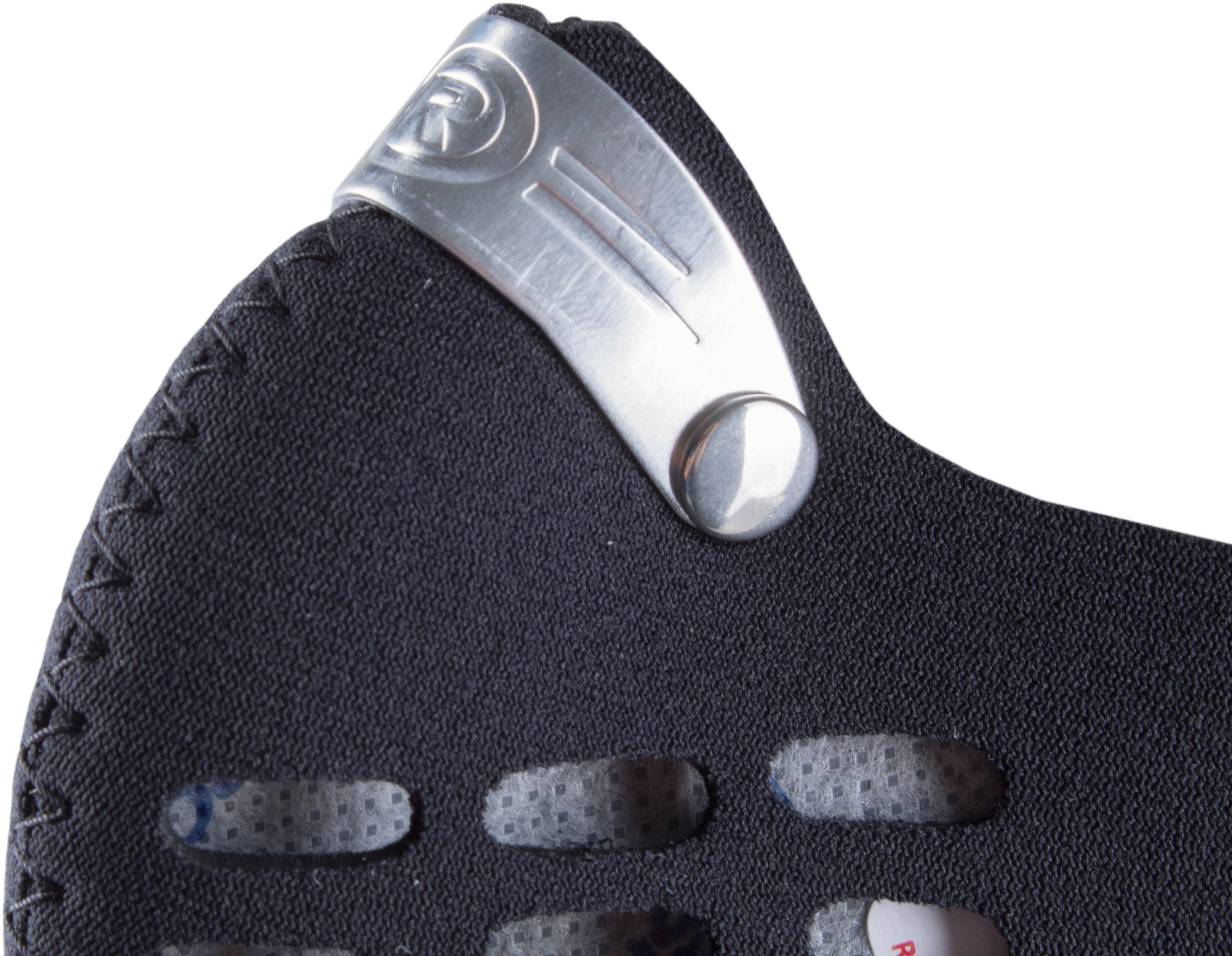
The malleable nose clip deforms easily so that a good fit can be formed around the bridge of the nose. Continuous or exaggerated deformation will eventually cause failure in the metal – it will snap.

Once a good fit has been found, it is best to maintain the shape, rather than folding it flat when storing it or when not in use.

If the nose clip breaks, all you have to do is send a picture of it, indicating size, model and address details to customerservices@respro.com and we will send a replacement shell FOC. There is a small shipping charge which is charged at cost and dependent on country location.

Posted in Air Quality, Help & FAQs, Respro® Products | Tagged , | 2 Comments

Babies in popular low-riding pushchairs are exposed to alarming levels of toxic air pollutants

Parents who are using popular low-riding pushchairs could be exposing their babies to alarming levels of air pollution, finds a new study from the University of Surrey.

In a paper published by Environment International, experts from Surrey’s Global Centre for Clean Air Research (GCARE) investigated the amount of harmful air pollutants babies potentially inhale while out in a pram with their parents or carers.

The study looked at three different pushchair types — single pushchairs facing the road, single pushchair facing the adult and double pushchairs facing the road — and assessed the difference in concentration of pollutants compared to those experienced by adults. The GCARE team also investigated whether pushchair covers altered exposure levels.

The team simulated 89 school drop off and pick up trips in Guildford, Surrey, walking just over 2km, between the times of 8am to 10am and 3pm to 5pm.

Significantly, the team found that on average, regardless of the type of pushchair, babies could be breathing 44 per cent more harmful pollutants than their parents during both morning and afternoon school runs.

The GCARE team also found that a child at the bottom of a double pushchair faced up to 72 per cent higher exposure to pollutants than a child on the top seat.

However, the team from Surrey found a ray of hope in the form of pushchair covers, discovering that they reduced concentration of small-sized particles by as much as 39 per cent.

Professor Prashant Kumar, Founding Director of GCARE at the University of Surrey, said: “For parents, nothing is more important than the health of our children and this is why we at the University of Surrey are continuing to build on this research to understand the impact air pollution has on babies travelling in pushchairs.

“Our research shows that choices such as the type of pushchair you use, can impact on the amount of pollution your child faces when you are running a typical errand. But there is cause for some optimism, as our study confirms that pushchair covers and upping the buggy heights appears to have shielded children from an appreciable amount of pollution under certain conditions.”

via Babies in popular low-riding pushchairs are exposed to alarming levels of toxic air pollutants — ScienceDaily

Posted in Air Quality, Health Effects of Air Pollution | Tagged , | Leave a comment

Coronavirus: Mandatory for all in Singapore to wear mask when out, except for kids under 2 and those doing strenuous exercise

It is mandatory, with immediate effect, for everyone to wear a mask when they step out as part of stricter measures to curb the further spread of the coronavirus.

Those who do not risk a $300 fine for first-time offenders.

There are exemptions for those engaging in strenuous exercise and children below the age of two, as medical experts recommend against them wearing masks, National Development Minister Lawrence Wong said at a media conference on Tuesday (April 14).

People may remove their masks when engaging in exercise such as running or jogging, but they must put them on afterwards, he said.

Mr Wong, who co-chairs the multi-ministry task force tackling the outbreak, said the Government is also seeking to reduce the number of services considered essential.

About 20 per cent of Singapore’s workforce, including foreign workers, continue to commute to work as they are in essential services, he said.

“We will now proceed to look at the list of companies classified as essential services and tighten this list further”, with the objective of further minimising movement and keeping people at home, said Mr Wong.

Details will be announced when finalised, he said, adding: “We will trim it down as much as we can.”

Responding to a question from The Straits Times on whether older workers in essential services should continue to work amid the advisory for the elderly to stay home as they are more vulnerable, Manpower Minister Josephine Teo said that such individuals should be relieved from having to go to work, if possible.

“The alternative is that if the person really has to come to work, then, within the work environment, can the person be redeployed to a different role where the interactions with co-workers is kept to a minimum?”

If interaction with others is unavoidable and senior workers cannot be provided adequate protection, arrangements should be made for them to clear leave, so they can continue to receive payment while at home, said Mrs Teo.

On the mandatory use of masks, Mr Wong stressed that the new requirement does not mean going out is encouraged.

He said: “You should not go out as much as possible… but on the rare occasion that you do need to go out for purchase of your groceries or essentials, it’s only at that time that you wear a mask.”

He noted that many have been complying with the stricter measures in the week since Singapore’s circuit breaker began, and hot spots such as parks and wet markets are now under control.

Noting that some have complained of cabin fever, he said it is early days, and there are “at least another three weeks to go”.

“We have to double down our efforts and stay home,” he said.

Mr Wong said the requirement to wear masks in public may extend even beyond the circuit breaker period, which ends on May 4.

Health Minister Gan Kim Yong said that there will be a need to review whether to extend the circuit breaker after the month is up, and if measures will need to be tweaked.

“It is also important to bear in mind that even at the end of the circuit breaker, with or without extension, it’s not likely that we’ll open the entire system altogether and then (it becomes) free for all, (where) everyone does what they like,” said Mr Gan.

Relaxing of the safe distancing rules will be a gradual process informed by risk assessment, he said.

“So I think we should not have the idea that at the end of the circuit breaker, everything will revert to normal and you don’t have to wear a mask anymore, (and) we don’t have to (practise) safe distancing anymore,” he said.

The Ministry of Health (MOH) said in a statement on Tuesday that the rules on mask-wearing apply to all forms of transport as well as walking to markets.

All essential workers must also don masks, whether they are frontline staff or performing back office functions, the ministry said.

It noted that medical experts have advised that some groups may have difficulties wearing a mask, including children with special needs and young children.

“We will exercise flexibility in enforcement for these groups,” the ministry said.

For workplaces which remain open, cross-deployment of staff to different branches will no longer be allowed, to reduce the risk of transmission.

Teams working in different locations should also not interact, though essential service providers who need to move between different locations in the course of duty may continue to do so as long as safe distancing measures are complied with.

Businesses face a fine of $1,000 for first-time offences, and essential service providers may be required to suspend operations should staff become infected.

More than 6,200 warnings and 500 fines have been issued to individuals who flouted safe distancing measures since April 7, when the circuit breaker period began.

Singaporeans have made significant efforts to stay home over the last week, and public transport ridership and traffic volume has dropped by more than 70 per cent, MOH said.

However, it added that are still cases spreading within the community, including at workplaces.

“We must make this circuit breaker period count, and tighten where there are areas of risk,” the ministry said.

via Coronavirus: Mandatory for all in Singapore to wear mask when out, except for kids under 2 and those doing strenuous exercise, Singapore News & Top Stories – The Straits Times

Posted in Air Quality, Asia, Health Effects of Air Pollution, Singapore | Tagged , , | Leave a comment

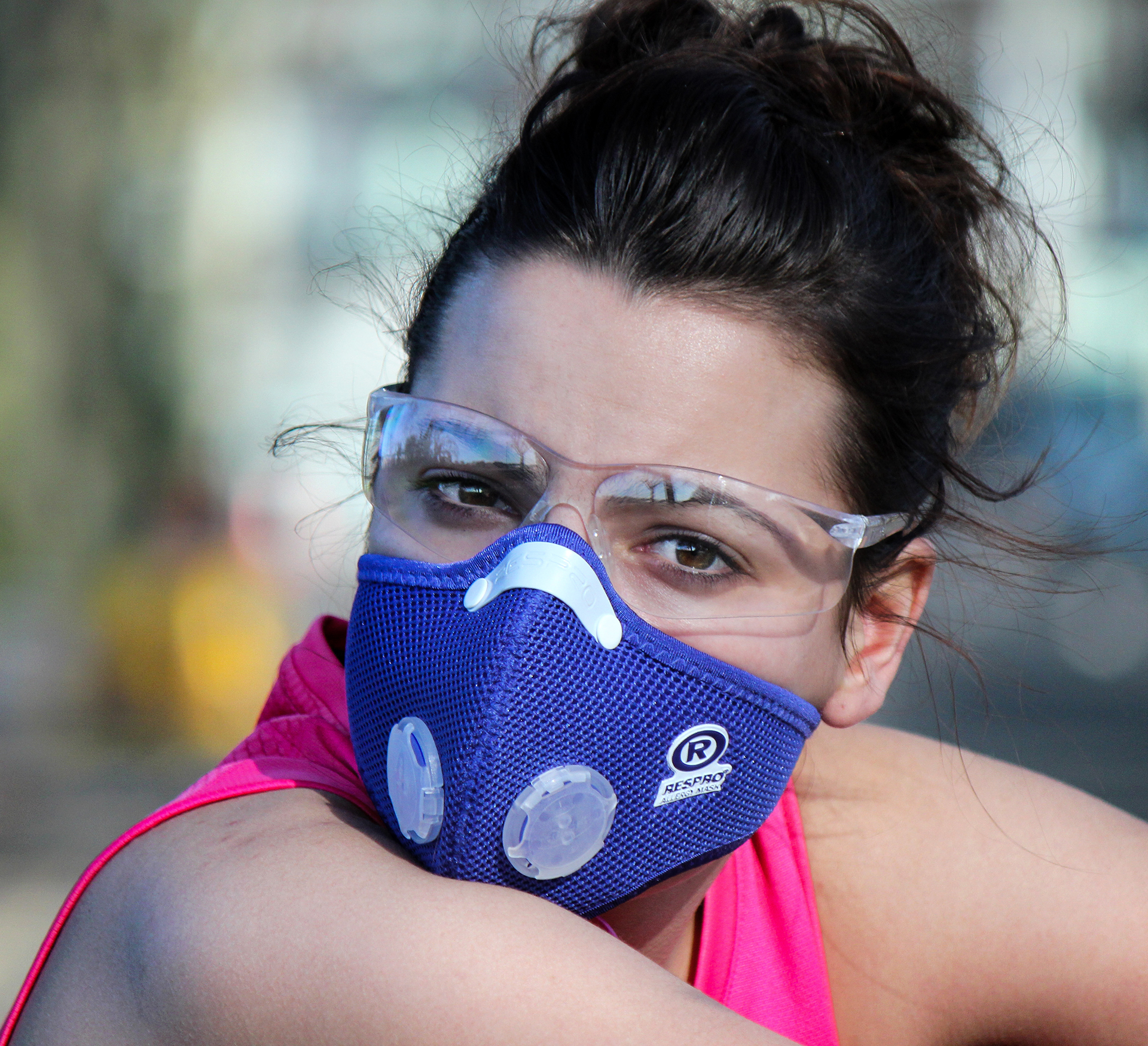
How do I stop my glasses from misting up?

ALLERGY-BLUE-FEMALE

The Respro® Allergy™ Mask

How do I stop my glasses from misting up?

When using a mask with glasses, it is best to fit the mask first to get the correct fit with no seal leakage, then place the glasses in front of the nose clip on the mask. It is really dependent on the seal of the mask. Having adjustable nose pads facilitates a better fit than plastic moulded rims. A good seal around the nose and cheekbone will mean no leakage in that region which equals no misting. This is how/ why glasses get misted up on the inside of the lens. In our experience most glasses wearers manage to figure a way of fitting glasses with a mask without them getting misted up.

Posted in Air Quality, Help & FAQs, Respro® Products | Leave a comment