How Bad Is Wildfire Smoke for Your Health?

A Yale medical expert discusses how poor air quality affects adults and children.

Overview

It hasn’t been that long since the threat of COVID-19 drove people outdoors to avoid infection. Recently, people living in the Northeast were encouraged to do the opposite when wildfire smoke from Canada created poor air quality hundreds of miles from the flames.

Stay inside. Wear masks. Get an air purifier. The advice from public health and medical experts has been consistent. And as with the COVID-19 variants that caused surges followed by periods of relative calm, air quality has gone back and forth between healthy and unhealthy levels.

As long as there are wildfires, experts expect these shifts in air quality to continue. Below, Yale Medicine’s Carrie Redlich, MD, MPH, who is trained in internal medicine, pulmonology, and occupational and environmental medicine, discusses air quality and how we can stay safe.

What is the Air Quality Index?

The United States Environmental Protection Agency (EPA) established an Air Quality Index (AQI) to measure air pollutants. A higher AQI, with color codes and corresponding numbers ranging from 0 to 500, means a greater health concern.

Particle pollution, also known as particulate matter (or PM), is a type of air pollutant made up of tiny particles of solids or liquids suspended in the air. It’s one of the main components of wildfire smoke, which is a mix of gases and fine particles from burning vegetation, as well as building and other materials.

Particulate matter includes PM10, inhalable particles that are 10 micrometers and smaller in diameter, and PM2.5, inhalable particles with diameters of 2.5 micrometers and smaller. PM2.5 poses a greater health risk than PM10 because the particles are so small (30 times smaller than the diameter of a human hair) and can get deep into the lungs and bloodstream.

Local AQI information is available on various apps and websites, including www.airnow.gov.

Although air pollution is not good for anyone, certain groups are more sensitive to it than others, including those with heart or lung disease, older adults, infants and children, and pregnant women. As the AQI levels increase, the risk of health effects increases, especially among these more sensitive groups.

“The advice to limit strenuous activities is because when your respiratory rate is higher, you inhale more particulates,” says Dr. Redlich.

When the AQI is 201 and higher, everyone should be concerned about health risks and limit physical activity outdoors as much as possible, she adds.

For context, with the recent wildfires in Canada, the AQI of PM2.5 climbed above 400 for a brief period in New York City in early June.

Why is particulate matter dangerous?

PM2.5 particles are so tiny that they get through the usual defense mechanisms of the upper airway and can penetrate deep into the lungs, where they can impair lung function, cause illnesses, such as bronchitis, and increase asthma attacks. The particles can also pass into the bloodstream and travel to other organs, where they can cause damage. In addition to respiratory problems, PM2.5 exposure has been linked to an increased risk of heart attackstrokelung cancer, and a decline in cognitive function.

“The health effects extend beyond respiratory issues and include the cardiovascular system,” Dr. Redlich says. “There is more extensive literature on particulate air pollution, in general, than forest fires specifically, but the indication is that wildfires have similar health effects. And there has been an explosion in research and understanding that even relatively low levels of air pollution can impact your lungs and heart, especially if you have asthma, chronic obstructive pulmonary disease [COPD], or cardiac disease.”

The reason particle pollution has such systemic effects, Dr. Redlich explains, is that when you inhale these tiny particles, “they get everywhere through the bloodstream and trigger inflammatory pathways, which can exacerbate a number of underlying cardiac and respiratory conditions.”

Furthermore, even if you don’t see or smell smoke in the air, it can still affect you, she adds.

Are there other kinds of air quality alerts?

The EPA has an AQI for five major pollutants: ground-level ozone, particle pollution, carbon monoxide, sulfur dioxide, and nitrogen dioxide. However, the two air pollutants of greatest health concern in the U.S. are particles and ozone.

Ground-level ozone is created by pollutants from cars, power plants, refineries, and other sources reacting chemically in the presence of sunlight.

“Ozone levels are generally highest on hot, sunny days, often in the summer in the late afternoon and evenings,” Dr. Redlich says. “High ozone levels can also aggravate lung diseases, such as asthma, bronchitis, and COPD.”

When should you seek medical help?

For many people, the symptoms of inhaling particulate matter are similar to what someone with allergies experiences: stinging eyes, scratchy throat, runny nose, coughing, sinus irritation, wheezing, and shortness of breath. Breathing in smoke can also cause headaches, fatigue, and a fast heartbeat.

If the above symptoms are minor, there’s no reason to seek medical care, Dr. Redlich explains. However, if you have asthma and the outdoor air quality causes an exacerbation that you can’t manage at home, such as with a rescue inhaler, you should contact your doctor, she adds.

“Or, if you are having chest pain or trouble breathing, you should contact your medical provider,” Dr. Redlich says.

Why are kids more susceptible to poor air quality?

Children are more likely to be affected by air pollutants because their airways are small and still developing, and they breathe in more air relative to their body weight than adults do, according to the Centers for Disease Control and Prevention (CDC). Plus, kids typically spend more time outside than adults, which places them at higher risk.

Also, pregnant women are more likely to be affected by smoke because of increased breathing rates and other physical changes that occur during pregnancy. Smoke exposure may also put women at risk for preterm birth.

What is the risk from smoke exposure if you are in good health?

Through its color system, the AQI spells out recommendations on when everyone should avoid being outdoors. But what if the AQI is “unhealthy” and you aren’t considered high risk? Is it OK to go for a run outside—or even a brisk walk?

Dr. Redlich doesn’t have a firm answer to that question. “I would be more concerned if someone has a pre-existing heart issue, and this might be the thing that tipped the balance,” she says. “It’s harder to say what the risk to any one person is of, say, three days of poor air quality. Still, even at low levels of air pollution, studies have shown adverse health effects across a large population.”

However, if someone comes to the hospital with a cardiac event, it typically is not associated with high air pollution levels, she adds.

Does a mask protect against wildfire smoke?

The best type of mask to wear for protection against wildfire smoke is a well-fitted N95 or P100 respirator with two straps that go around your head. The “95” and “100” refer to the percentage of particles filtered out by the mask. They are not specially made for children.

“A surgical mask probably does some good, but the N95 or even a KN95 is better,” Dr. Redlich says. “KN95s may be easier to find and may come in sizes that fit children better.”

The EPA provides a one-sheet with information on how to choose the right mask for wildfire smoke.

Is staying inside always best when the outdoor air quality is poor?

When the air quality is poor, the general advice is to go inside, shut the windows, and use an air conditioner (with a clean filter and the fresh-air intake closed). But, not every home has air conditioning or can be tightly sealed to keep the bad air out, Dr. Redlich explains.

“It’s not as though you go inside and the level drops to zero. Yes, going inside is usually a good idea, but you can also store poor air quality levels—or even air pollutants—in your home,” she says. “Plus, you can generate air pollutants inside by cooking, smoking cigarettes, and burning candles.”

These, Dr. Redlich says, are all things we have control over and can be avoided or mitigated with steps like using a vent over your kitchen stove. Another step people can take to improve particulate air quality or reduce particulate air pollution in their homes is to use a portable air purifier with a high-efficiency particulate air (HEPA) filter. The air purifier should be sized appropriately for the size of the room.

And if none of these protective measures can work for you, seek emergency shelter if the smoke is affecting your health.

via https://www.yalemedicine.org/news/how-bad-is-wildfire-smoke-for-your-health

Posted in Air Quality, Health Effects of Air Pollution | Tagged , , , , | Leave a comment

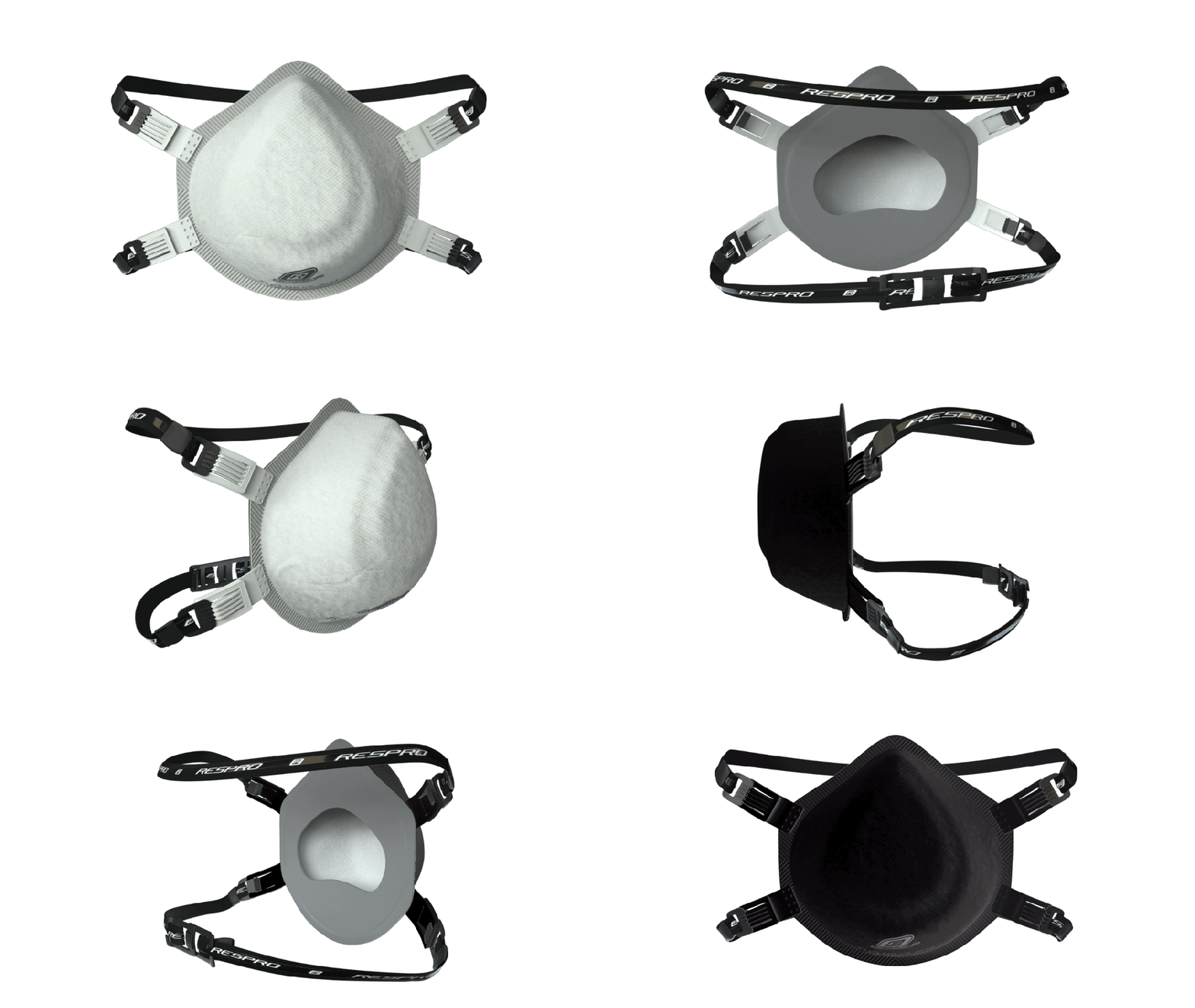
WILDFIRE PROTECTION: GET STREETSMART™

The Respro® StreetSmart™ Mask is valveless and FFP3 certified.
FFP3 is the highest European professional standard for a face mask and on par with the American standard N99.

It has a uniquely developed seal on the inside to ensure that the wearer has an excellent fit which is airtight around the nose and mouth.

The StreetSmart™ Mask fits all adults and children over the age of 10 years. Each mask comes with durable, 4-point adjustable elastic head straps for maximum protection and comfort.

Posted in Respro® Masks, Respro® Products | Tagged , , , , , , | Leave a comment

London high pollution alert triggered for Tuesday

A “high” air pollution alert for London on Tuesday has been triggered by City Hall, after it said local emissions had combined with warm weather and winds blowing pollutants from the continent towards the capital.

Imperial College London forecasters advised the Mayor of London’s office to issue the alert, the second this year, due to a strong likelihood of high ozone levels, City Hall said.

The last alert was in January, with one day of “high” pollution followed by three days of “moderate” air pollution.

Londoners are being asked by the mayor’s office to consider choosing to walk, cycle or take public transport, and to “avoid unnecessary car journeys, stop their engines idling and refrain from burning wood or garden waste”, a spokesperson said.

Tuesday will be the 201st day of either moderate or high levels of air pollution in London over the past five years, City Hall said.

In total, there have been 14 high pollution days and 186 moderate pollution days since the start of 2018.

The moderate and high daily thresholds are based on the national Daily Air Quality Index (DAQI) from the Department for Environment Food and Rural Affairs (Defra).

‘Climate ready’

The alert has been issued on the same day as the mayor announced an independent review into how the capital can better utilise technology to adapt to climate change.

Speaking at the start of London Tech Week, the mayor said the London Climate Resilience Review would explore how the capital could harness technology – including AI – to better adapt to, and prepare for, the impacts of a changing climate and future-proof the capital against its devastating impacts.

It would then recommend what more could be done to protect against climate risks such as wildfires, flooding and extreme heat.

The review is being led by Emma Howard Boyd CBE, a UN Global Ambassador for the Race to Resilience and former Chair of the Environment Agency.

She said: “London needs to be climate ready.

“During 2022’s heatwave, London hospitals had to cancel operations as systems crashed in the record-breaking heat. In 2021, flash flooding stopped people getting to work as roads and underground stations were inundated.”

via https://www.bbc.co.uk/news/articles/ckvzldzegnyo

Posted in Air Quality, Europe, London, UK, World News | Tagged , , , | Leave a comment

Smoke from Canadian wildfires hits Norway and flows to southern Europe

Researchers used a model to predict how the smoke would move through the region and said it wouldn’t pose a health risk

Smoke from Canadian wildfires that has descended upon parts of the eastern US and Canada in a thick haze has drifted over Norway and is expected to hit southern Europe, Norwegian officials said on Friday.

Using a climate forecast model, atmosphere and climate scientists with the Norwegian climate and environmental research institute (NILU) predicted how the smoke would travel through the atmosphere, flowing over the Scandinavian country before moving further south. The smoke was not expected to pose a health risk there.

“Smoke from the forest fires in Canada is still drifting in over Norway. It will also reach other parts of Europe over the next few days,” the institute said on Twitter.

The smoke has moved over Greenland and Iceland since 1 June, and observations in southern Norway have recorded increasing concentrations of aerosolized particles, the independent research institution said.

“We may be able to see some haze or smell smoke,” Nikolaos Evangeliou, a senior NILU researcher, said. “However, we do not believe that the number of particles in the air here in Norway will be large enough to be harmful to our health. When the smoke reaches Europe, the number of particles is much lower,”.

The smoke will probably continue to move through Norway as the blazes burn in Canada, he said in a statement.

Kjetil Tørseth, research director with NILU, said that with the increasing temperatures due to climate crisis, forest fires are likely to be more common and of a larger magnitude.

“So I think these kind of episodes are to be more common in the future. And they do, of course, have an impact on climate,” he told the Associated Press. “We are especially interested to see the effects on the Arctic, where soot deposition on to snow and ice might actually increase the local warming.”

Canada and the east coast of the US have experienced hazardous levels of pollution from the Canadian wildfires, mainly in the eastern province of Quebec. Massive swaths of unhealthy air extended as far as the US midwest.

Wednesday was the worst day for wildfire air pollution in recent US history – the same day New York and Detroit reported the worst air quality in the world.

The smoke has put more than 110 million Americans under toxic air warnings, led to flight delays at major airports, caused the postponement of Major League Baseball games and prompted people to fish out pandemic-era face masks.

Canada has asked for help fighting more than 400 blazes nationwide.

via https://www.theguardian.com/world/2023/jun/09/canada-wildfire-smoke-norway-southern-europe-health-risk

Posted in Air Quality, Canada, Europe, USA & Canada, World News | Tagged , , , , | Leave a comment

Brisbane smoke haze expect to linger for 2-3 days as air quality readings rated ‘very poor’

Subscribe to continue reading

Subscribe to get access to the rest of this post and other subscriber-only content.

Posted in Air Quality, Australia & Oceania | Tagged , , , , | Comments Off on Brisbane smoke haze expect to linger for 2-3 days as air quality readings rated ‘very poor’

Here’s What Wildfire Smoke Does To Your Body

At a Glance

  • Wildfire smoke is mainly made up of microscopic particulate matter.
  • When inhaled, it can go deep inside the lungs and bloodstream.
  • Smoke from wildfires can impact air quality thousands of miles away.

Wildfire smoke is linked to a host of medical problems, even in people who are otherwise healthy.

Why is wildfire smoke so bad for us?

-Wildfire smoke is made up mainly of microscopic particulate matter 30 times smaller than the diameter of a strand of hair.

-The particles are made up of things like acids, chemicals, metals, soil and dust from whatever the fire is burning – including vegetation, buildings and vehicles.

-When inhaled, they can go deep inside the lungs and bloodstream.

-Research has shown smoke from wildfires is 10 times more hazardous to humans than similar pollution from other sources.

-The CDC says breathing in wildfire smoke can cause coughing, shortness of breath, increased heart rate and other immediate effects, even in healthy people.

-It can also aggravate chronic heart and lung conditions, increase the risk of stroke and heart attack, damage vital organs and shorten a person’s lifespan.

Weather.com meteorologist Danielle Banks adds:

-“Air quality can be affected hundreds or thousands of miles away from the actual fire.”

-“Small particles of smoke can stay in the air and move through the atmosphere for weeks depending on how long the fires last.”

-“Pets can also be affected by unhealthy air and if possible, should be brought indoors.”

What can you do to protect yourself?

-There are a few ways to track your local air quality index (AQI), including the federal government’s AirNow website and The Weather Channel app.

-NOAA says: “The AQI focuses on health effects you may experience within a few hours or days after breathing polluted air.”

-For some people, health issues can start with relatively low AQI. The higher the number gets, the worse the effects.

-It may be necessary to stay indoors with windows and doors closed and avoid outdoor activities.

Why Wildfire Smoke Is Bad For Your Health | Weather.com
Posted in Air Quality | Tagged , , , , | Leave a comment

Acute exposure to air pollution may increase risk of symptomatic arrhythmia

Does air pollution affect your heart? Acute exposure to air pollution was found to be associated with an increased risk of arrythmia -; irregular heartbeat -; in a large study of 322 Chinese cities published in CMAJ (Canadian Medical Association Journal).

The common arrhythmia conditions atrial fibrillation and atrial flutter, which can progress to more serious heart disease, affect an estimated 59.7 million people globally. Air pollution is a modifiable risk factor for heart disease, but the evidence linking it with arrythmia has been inconsistent.

To determine whether there is a link, Chinese researchers evaluated hourly exposure to air pollution and the sudden onset of symptoms of arrythmia using data from 2025 hospitals in 322 Chinese cities. Air pollution in China is well above the World Health Organization’s guidelines for air quality, and the researchers conducted their analyses using air pollutant concentrations from monitoring stations closest to the reporting hospitals.

“We found that acute exposure to ambient air pollution was associated with increased risk of symptomatic arrhythmia. The risks occurred during the first several hours after exposure and could persist for 24 hours. The exposure–response relationships between 6 pollutants and 4 subtypes of arrhythmias were approximately linear without discernable thresholds of concentrations.” – Dr. Renjie Chen, School of Public Health, Fudan University, Shanghai, China, with coauthors

The study included 190 115 patients with acute onset of symptomatic arrythmia, including atrial fibrillation, atrial flutter, premature beats (originating in either the atria or ventricles of the heart) and supraventricular tachycardia.

Exposure to ambient air pollution was most strongly associated with atrial flutter and supraventricular tachycardia, followed by atrial fibrillation and premature beats. Additionally, among 6 pollutants, nitrogen dioxide (NO2) had the strongest association with all 4 types of arrythmias, and the greater the exposure, the stronger the association.

“Although the exact mechanisms are not yet fully understood, the association between air pollution and acute onset of arrhythmia that we observed is biologically plausible,” write the authors. “Some evidence has indicated that air pollution alters cardiac electrophysiological activities by inducing oxidative stress and systemic inflammation, affecting multiple membrane channels, as well as impairing autonomic nervous function.”

The authors note that the association was immediate and underscores the need to protect at-risk people during heavy air pollution.

“Our study adds to evidence of adverse cardiovascular effects of air pollution, highlighting the importance of further reducing exposure to air pollution and of prompt protection of susceptible populations worldwide,” they conclude.

Source:Canadian Medical Association JournalJournal reference:Xue, X., et al. (2023). Hourly air pollution exposure and the onset of symptomatic arrhythmia: an individual-level case–crossover study in 322 Chinese cities. CMAJ. doi.org/10.1503/cmaj.220929.

Acute exposure to air pollution may increase risk of symptomatic arrhythmia

Posted in Air Quality, Health Effects of Air Pollution, Medical Studies | Tagged , , , | Leave a comment

Air pollution is killing 1,200 children and teenagers in Europe each year, EEA warns

Air pollution kills more than 1,200 children and teenagers per year in Europe, according to a report released by the European Environment Agency (EEA) on Monday.

It also significantly increases the risk of disease later in life.

Despite improvements made in recent years, the level of key air pollutants in many European countries remain “stubbornly above” World Health Organization (WHO) guidelines, the report warns.

Central-eastern Europe and Italy are particularly severely affected.

Why are young people so vulnerable to air pollution?

Children and adolescents are especially vulnerable to air pollution because their bodies and immune systems are still developing.

Exposure to nitrogen dioxide and ozone in the short term, and fine particulate matter – also known as PM 2.5 – in the long term can affect children’s lung function and development. This can lead to respiratory and cardiovascular diseases, including asthma, which affects nine per cent of young people in Europe.

Exposure to air pollution during pregnancy is additionally linked to low birth weight and risk of preterm birth.

The report estimates that air pollution causes more than 1,200 premature deaths per year among those under age 18 across the EEA’s 32 member countries, which do not include the UK, Switzerland or Ukraine.

Although this number is still low compared to overall deaths from air pollution, which was estimated at 311,000 in 2021, the impact of death or chronic illness in early life is considered greater.

Among the wider population, heart disease and stroke are the most common causes of premature deaths from air pollution, followed by lung diseases and lung cancer.

How bad is air pollution in Europe?

In 2021, more than 90 per cent of the EU’s urban population was exposed to harmful levels of air pollution, the report says.

Exposure to PM 2.5 – the most damaging pollutant to human health – was even higher at 97 per cent. Fine particulate matter is a leading cause of stroke, cancer and respiratory disease.

Data shows PM 2.5 levels are the worst in central-eastern Europe and Italy, mainly due to the burning of solid fuels like coal in homes and industry. Areas deemed to have ‘very poor’ air quality include Piotrków Trybunalski and Nowy Sacz in Poland, Slavonski Brod in Croatia and Cremona in Italy.

Monitoring showed ozone and nitrogen dioxide levels exceeded WHO guidelines in all countries, while the highest ozone levels were seen in the Mediterranean region and central Europe.

Faro in Portugal and Umeå and Uppsala in Sweden were ranked as the cleanest European cities with the lowest average levels of PM 2.5.

How can we reduce harm from air pollution?

Part of the Green Deal, the EU’s Zero Pollution Action Plan aims to limit emissions and slash air pollution across the bloc. By 2030, it aims to reduce the number of PM 2.5-related deaths by 55 per cent compared to 2005 levels.

But until it is reduced to safe levels, improving air quality around schools can help reduce harm to children.

This may include improving cycling infrastructure and imposing traffic bans or speed limits when children are commuting to school or playing outdoor sports.

Air pollution is killing 1,200 children and teenagers in Europe each year, EEA warns | Euronews
Posted in Air Quality, Europe, Health Effects of Air Pollution, Italy, Poland, World News | Tagged , , , , , , , , , , , | Leave a comment