Which Respro® Mask to use for wildfire smoke

Air pollution from burning shrub land and forest fires is made up of carbonaceous particulates in the form of black smoke and resultant chemical compounds from burning sap from the trees.

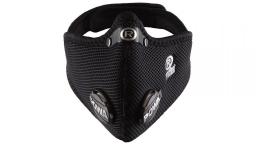
We recommend the Respro® Ultralight™ Mask with a Cinqro™ Urban filter pack.

ultralight-mask-combo__zoom

The filter fitted in the Respro® Ultralight™ Mask as standard (Cinqro™ Sports filter) is a Hepa-type filter, perfect for sub-micron black smoke particulates and pollen (smaller than PM2.5 and less than 1 micron).

The filter pack supplied with the ‘combo’ kit is the Cinqro™ Urban Filter.  This filter is a combination filter made of an Dynamic Activated Charcoal Cloth (DACC) layer laminated to the Hepa-type particulate layer of the Sports filter. It provides a broader spectrum of screening which would include wood gas and carbonaceous pollution together with filtration from urban vehicle pollution.
 

respro_ultralight_best_bike_mask

The Respro® Ultralight™ Mask is made from air permeable material which is good for facial ventilation, comes in 4 sizes for a comfortable flexible fit and is fitted with the Powa Elite valves for humidity control in the filter.
 

RTG01 BK_maska antysmogowa Respro TECHNO MASK _01

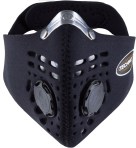
A more economical solution would be the Respro® Techno™ Mask, as this has a combination filter similar in specification to the Cinqro™ Urban Filter.


All Respro® masks have interchangeable filters and valves to allow you to choose the best option of mask and filter dependent on your needs and build a mask to your own specification mask.

Masks we recommend for Wildland fire pollution:

COMBO KIT ULTRALIGHT™ MASK PLUS URBAN FILTER
http://respro.com/store/product/ultralight-mask-plus-urban-filter-combo

RESPRO® TECHNO™ MASK 
http://respro.com/store/product/techno-mask

RESPRO® BANDIT™ SCARF
http://respro.com/store/product/bandit-scarf

PERSONAL SIZING GUIDE

http://respro.com/pg/faqs/mask-sizing-guide

It is important that a mask fits correctly otherwise air will just pass through the gaps and not function how it is intended. Even if it has the best filter; if it is a poor fit it will reduce its ability to filter out the pollutants.

If you do use our website service, we strongly recommend that you send in your details to confirm your sizing. We ask this so that we can ensure you have the correct size and that the mask will be of benefit to you or those who are using it. It is also important for any sizing issues that may arise so we are able to assess and resolve any problems.


For further information please contact customerservices@respro.com

Posted in Air Quality, Respro® Masks, Respro® Products | Tagged , , , , , | Leave a comment

Air pollution leads to cardiovascular diseases: Mechanisms that cause vascular damage

Air pollution, and fine dust in particular, is responsible for more than four million deaths each year. Almost 60 per cent of deaths occur as a result of cardiovascular diseases. Scientists around Professor Thomas Münzel, Director of Cardiology I at the Department of Cardiology at the Medical Center of Johannes Gutenberg University Mainz (JGU), reviewed the mechanisms responsible for vascular damage from air pollution together with scientists from the UK and the USA. Their findings have been published in the latest issue of the European Heart Journal.

The large percentage of deaths from cardiovascular disease has prompted an international group of experts from Germany, England, and the USA to analyze the negative effects of air pollution on vascular function in a review article. Key research questions focused on components of air pollution (particulate matter, ozone, nitrogen dioxide, carbon monoxide, and sulfur dioxide) that are particularly damaging to the cardiovascular system and mechanisms that damage the vessels.

“This report in the latest issue of the European Heart Journal is another important contribution from our Working Group on Environment and Cardiovascular Disease. In summary, it can be said that in relation to the vascular damaging effect of air pollution, particulate matter plays a prominent role,” commented Professor Thomas Münzel. “We are especially worried about ultrafine dust. These particles have the size of a virus. When ultrafine matter is inhaled, it immediately enters the bloodstream through the lungs, is taken up by the vessels, and causes local inflammation. Ultimately, this causes more atherosclerosis (vascular calcification) and thus leads to more cardiovascular diseases such as myocardial infarction, acute myocardial infarction, heart failure, and cardiac arrhythmias. Of particular interest is the fact that with regard to the much-discussed diesel exhaust emissions, particulate matter and not nitrogen dioxide (NO2), both of which are produced by burning diesel fuel, have a negative effect on vascular function,” Münzel continued.

Other participants in the expert group include the particulate matter researcher Professor Sanjay Rajagopalan of the UH Cleveland Medical Center, the vascular researcher and cardiologist Professor John Deanfield of the Institute of Cardiovascular Science at University College London, Professor Andreas Daiber, Head of Molecular Cardiology at the Mainz University Medical Center, and Professor Jos Lelieveld from the Max Planck Institute for Chemistry (MPIC) in Mainz.

“The fine dust particles are chemically formed mainly in the atmosphere from emissions from traffic, industry, and agriculture. In order to achieve low, harmless concentrations, emissions from all these sources need to be reduced,” commented Professor Jos Lelieveld.

“In the future, we will work intensively with the Max Planck Institute for Chemistry to investigate the causes of cardiovascular disease caused by air pollution, especially in combination with (flight) noise,” added Professor Thomas Münzel.

via Air pollution leads to cardiovascular diseases: Mechanisms that cause vascular damage — ScienceDaily

Posted in Air Quality, Health Effects of Air Pollution, Medical Studies | Tagged , , , , , , , , , | Leave a comment

Wildfires’ smoke gets even worse, prompting B.C. to elevate health-risk warnings for Metro Vancouver to highest levels

Metro Vancouver’s air quality continues to deteriorate as smoke from dozens of serious wildfires remains over the area.

This afternoon (August 21), the province revised values for the region’s Air Quality Health Index, elevating health-risk levels from eight and nine (depending on the specific region) to nine, 10, and 10+.

A 10+ is defined as a “very high” health risk. It’s the highest category the B.C. government has.

At the time of writing, the nine, 10, and 10+ health-risk values issued today applied to the City of Vancouver, Burnaby, Richmond, Delta, as well as to cities along the east coast of Vancouver Island.

Slightly lower ratings of seven and eight were recorded in areas covering Surrey, Langley, and Abbotsford.

Things are better around Port Coquitlam, Pitt Meadows, and Maple Ridge, where the Air Quality Health Index stands at four.

Index values for every area of B.C. are available online in the form of a list and an interactive map.

“Metro Vancouver is continuing an Air Quality Advisory for Metro Vancouver and the Fraser Valley because of high concentrations of fine particulate matter due to smoke from wildfires burning in British Columbia and the western United States,” reads an August 20 update (issued just prior to risk levels passing 10 today). “Elevated levels of fine particulate matter are expected to persist until there is a change in fire or weather conditions.”

For at-risk populations, a 10+ means they should “avoid strenuous activities outdoors. Children and the elderly should also avoid outdoor physical exertion,” according to the provincial government.

For the general population, it means people should “reduce or reschedule strenuous activities outdoors, especially if you experience symptoms such as coughing and throat irritation”.

The Air Quality Health Index’s elevated health-risk warnings come when fine-particulate matter are detected. Fine-particulate matters—about one-thirtieth as thick as a human hair—are of a particular health concern because, when they are inhaled, they are small enough to travel deep into our lungs.

airquality_180821

Dark-red dots indicate air-quality testing stations where equipment has detected enough fine-particulate matter to warrant a “very high” health-risk warning. Image: B.C. MINISTRY OF ENVIRONMENT & CLIMATE CHANGE

As of August 21, there were more than 50 “wildfires of note” burning across British Columbia. That’s an unusually high number, or at least it used to be.

The province declared a state of emergency and requested assistance from the federal government on August 15.

Last year, B.C.’s 2017 wildfire season was the worst in generations. It “dwarfed the historic records for area burned in British Columbia at well over a million hectares, or 12,000 square kilometres,” reads a July 2017 government media release. “The effects on people, wildlife and our forest economy will be felt for many years to come.

“Consider also that 2017 was the driest year ever recorded in many parts of B.C.—by a significant margin, according to Environment Canada,” it continues.

That July 2017 release from the provincial government notes that year’s fires were due, “in large part,” to climate change.

via Wildfires’ smoke gets even worse, prompting B.C. to elevate health-risk warnings for Metro Vancouver to highest levels | Georgia Straight Vancouver’s News & Entertainment Weekly

Posted in Air Quality, Canada, USA & Canada | Tagged , , , , , | Leave a comment

Even low levels of air pollution linked with serious changes in the heart, according to new UK research

Researchers from Queen Mary University of London have found that people exposed to air pollution levels well within UK guidelines have changes in the structure of the heart, similar to those seen in the early stages of heart failure.

The study, led by Professor Steffen Petersen, was part-funded by the British Heart Foundation (BHF) and published in the journal Circulation.

It looked at data from around 4,000 participants in the UK Biobank study, where volunteers provided a range of personal information, including their lifestyles, health record and details on where they have lived. Participants also had blood tests and health scans, and heart MRI (magnetic resonance imaging) was used to measure the size, weight and function of the participants’ hearts at fixed times.

Pollution levels within UK guidelines

The team found a clear association between those who lived near loud, busy roads, and were exposed to nitrogen dioxide (NO2) or PM2.5 — small particles of air pollution — and the development of larger right and left ventricles in the heart. The ventricles are important pumping chambers in the heart and, although these participants were healthy and had no symptoms, similar heart remodelling is seen in the early stages of heart failure.

Higher exposures to the pollutants were linked to more significant changes in the structure of the heart. For every 1 extra µg per cubic metre of PM2.5 and for every 10 extra µg per cubic metre of NO2, the heart enlarges by approximately 1 per cent.

In the study, average annual exposures to PM2.5 were well within UK guidelines (25µg per cubic metre), although they were approaching or past World Health Organisation (WHO) guidelines (10µg per cubic metre).

‘Doctors and the general public all need to be aware’

Air pollution is now the largest environmental risk factor linked to deaths in England. The UK Government’s consultation on their draft Clean Air Strategy closes on 14 August 2018, which commits to halving the number of people in the UK living in areas where PM2.5 levels exceed WHO guidelines (10µg per cubic metre) by 2025. Following this research, the BHF are calling for this action to go further to reduce the health impacts of toxic air as quickly as possible.

Dr Nay Aung who led the data analysis from Queen Mary’s William Harvey Research Institute and Barts Health NHS Trust said: “Although our study was observational and hasn’t yet shown a causal link, we saw significant changes in the heart, even at relatively low levels of air pollution exposure. Our future studies will include data from those living in inner cities like Central Manchester and London, using more in-depth measurements of heart function, and we would expect the findings to be even more pronounced and clinically important.

“Air pollution should be seen as a modifiable risk factor. Doctors and the general public all need to be aware of their exposure when they think about their heart health, just like they think about their blood pressure, their cholesterol and their weight.”

Professor Jeremy Pearson, Associate Medical Director at the BHF said: “We can’t expect people to move home to avoid air pollution — Government and public bodies must be acting right now to make all areas safe and protect the population from these harms.

“What is particularly worrying is that the levels of air pollution, particularly PM2.5, at which this study saw people with heart remodelling are not even deemed particularly high by the UK Government — this is why we are calling for the WHO guidelines to be adopted.”

This research was a collaboration between Queen Mary University of London, Barts Heart Centre and the University of Oxford.

via Even low levels of air pollution linked with serious changes in the heart, according to new UK research — ScienceDaily

Posted in Air Quality, Health Effects of Air Pollution, Medical Studies | Tagged , , , , , | Leave a comment

Roman beekeepers study air pollution using honey

Italian beekeepers are working with the country’s Carabinieri police to learn more about the state of the air in the Eternal City.

On the roof of a building in the heart of the capital that houses the Italian Federation of Beekeepers (FAI), 15 beehives are abuzz with activity.

“This is an experimental urban hive that we are using to collect data of scientific interest, in order for example to devise a plant biodiversity map of Rome,” FAI president Raffaele Cirone told AFP.

“However, we are also studying the adverse effects of being in the centre of a big city,” added Cirone, who is looking for the harmful residue of fine particles PM10 and PM2.5, heavy metals and micro-plastics.

Instruments measuring the number of fine particles in the air are placed a few steps away from the rooftop hives.

Data taken from the instruments will be compared with the honey produced in the hives, which is periodically removed and analysed by the scientists.

“The scientists will be able to better understand the movements of these particles, if and how much they rise from the ground and whether they settle,” Cirone said.

In total around a dozen roofs in the centre of Rome house the hives, including one at the top of a Carabinieri building.

The aim is to move towards a larger colony of high rise helpers, Davide De Laurentis, deputy Commander of the force’s forestry, environmental and agri-food unit, told AFP.

De Laurentis, who describes bees as “nature’s sentinels”, says that the initiative could be rolled out in other major Italian major cities that suffer from problems with pollution.

via Roman beekeepers study air pollution using honey — Italianmedia

Posted in Air Quality, Europe, Italy | Tagged , , , , , | Leave a comment

REVIEW: Respro® Ultralight™ Mask: Best cycle mask for hot conditions

respro_ultralight_best_bike_mask

Respro® is the world leader in bike pollution mask sales, and while its masks might look a little sinister, their N99-rated filtering technology certainly does the job. The Ultralight is our favourite from Respro’s range: its mesh-like stretchy fabric keeps you cool when it’s hot and humid, and a double-valve filter makes it easy to breathe, even when you’re pedalling hard to get to the office on time. The Hepa Sport 2.5 PM filters on the Respro® Ultralight are replaceable, and you can buy specialised filters designed to reduce allergic reactions or eliminate bad smells.

by expertReviews

Posted in Air Quality, Cycling, Respro® Mask Reviews, Respro® Products | Tagged , , | Comments Off on REVIEW: Respro® Ultralight™ Mask: Best cycle mask for hot conditions

Tweets prove to be reliable indicator of air quality conditions during wildfires

Tweets originating in California during the state’s 2015 wildfire season suggest that social media can improve predictions of air quality impacts from smoke resulting from wildfires and have the potential to improve rescue and relief efforts, according to research by two USDA Forest Service scientists.

The study by Sonya Sachdeva of the Forest Service’s Northern Research Station and Sarah McCaffrey of the Rocky Mountain Research Station, “Using Social Media to Predict Air Pollution during California Wildfires,” was recently published by the International Conference on Social Media & Society.

Whether it is caused by wildfire or prescribed fire, smoke can have serious health ramifications, including aggravating respiratory and cardiovascular conditions. In a previous study, Sachdeva looked at 700 tweets related to the King Fire in California and found that they were a reliable predictor of air quality related to that fire. In new research, Sachdeva and McCaffrey evaluated 39,000 tweets that included the names of the state’s most destructive wildfires of the 2015 season.

“With wildfire seasons becoming longer and more people living in fire-prone areas, smoke is becoming a greater public health concern,” Sachdeva said. “Models for predicting the extent and range of impact of smoke dispersion from wildfire events can be a critical tool in safeguarding public health, and we’re finding that information people share in social media has great potential for improving those models.”

Sachdeva and McCaffrey combined ground-based monitoring of fine particulate air pollution levels obtained from the Environmental Protection Agency (EPA) AirData air quality database with a topic model mapping the content of citizens’ tweets. Tweets were geocoded so they could be associated with specific air quality monitoring stations. Tweets and air quality data were connected in time by using the date of the tweet and the daily fine particulate air pollution report by the EPA.

Twitter also offered insight into people’s perspective on wildfire. When people were near a fire, their tweets were often focused on the status of the firefighting effort, concern for firefighters, and the status of evacuation orders. Further away, people were interested in the cause of fire. The study suggested that social media could help predict air quality in remote areas that are not monitored for air quality, and that tweets could also have potential in linking people who need help with people who have the resources to offer assistance.

via Tweets prove to be reliable indicator of air quality conditions during wildfires

Posted in Air Quality, USA, USA & Canada | Tagged , , , , | Leave a comment

Sadiq Khan triggers high pollution warning in London amid sweltering heatwave

Screen Shot 2018-07-26 at 09.53.23

The sweltering heatwave gripping the UK has triggered a high pollution warning as forecasters predict the mercury could reach 37C by the end of the week.

London mayor Sadiq Khan said he triggered the capital-wide warning for Thursday amid concerns over “extremely high” temperatures.

He added that it is only the second time this year that the high alert has been used.

An amber heat health watch warning is also in place for much of east and south-east England, with people being urged to try to stay out of the sun between 11am and 3pm.

Mr Khan said: “This week has seen London experience extremely high temperatures.

“The heat, combined with London’s toxic air, a lack of cloud cover and emissions travelling from the continent, means I am triggering a ‘high’ air pollution alert today, for tomorrow, under our comprehensive alert system.

“This is the second time in six months that we have had to use the ‘high’ alert system and shows just why air pollution is a public health crisis.”

Air quality alerts will be displayed at bus stops, river piers, on busy roads and at the entrances to London Underground stations.

In high pollution episodes, adults and children with lung problems and adults with heart problems should reduce strenuous physical exertion, particularly outdoors.

People with asthma may find they need to use their reliever inhaler more often, and older people should also reduce physical exertion.

Anyone experiencing discomfort such as sore eyes, cough or sore throat should consider reducing activity, particularly outdoors.

Temperatures at set to peak at about 35C on Thursday before increasing to a possible 37C on Friday.

This would see the previous July record of 36.7C, recorded at Heathrow Airport on July 1, 2015, toppled.

Paul Gundersen, chief meteorologist at the Met Office, said: “The heatwave conditions will continue across much of England, with temperatures into the mid to high-30s Celsius in many places from the Midlands eastwards on Thursday and Friday and it’s possible that we could break the all-time UK record of 38.5C if conditions all come together.”

The all-time UK high pf 38.5C was set in August 2003.

Despite ever increasing temperatures, yellow weather alerts have been issued over fears of torrential downpours by the weekend.

Mr Gundersen added: “There is the chance of thunderstorms breaking out over some eastern parts of England on Thursday, but it is Friday when we see intense thunderstorms affecting many central and eastern areas.

“Whilst many places will remain dry and hot, the thunderstorms on Friday could lead to torrential downpours in places with as much as 30mm of rainfall in an hour and 60mm in 3 hours.

“Large hail and strong, gusty winds are also likely and combined could lead to difficult driving conditions as a result of spray and sudden flooding.”

via Sadiq Khan triggers high pollution warning in London amid sweltering heatwave | London Evening Standard

Posted in Air Quality, Europe, London, UK | Tagged , , , , | Leave a comment