Can Air Pollution Increase Risk Of Diabetes?

Can your risk of diabetes increase due to exposure to airborne particles of dust, dirt, and smoke? A new report warned that outdoor air pollution may be a significant contributor to diabetes cases around the world.

The risk does not dissipate, researchers warned, even if the pollution is at levels deemed “safe” by the Environmental Protection Agency (EPA) and the World Health Organization (WHO).

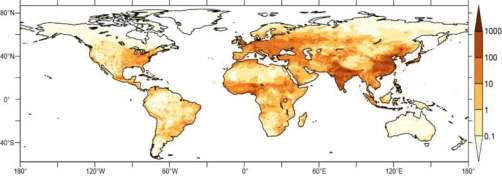
The study titled “The 2016 global and national burden of diabetes mellitus attributable to PM2·5 air pollution” was published in the journal Lancet Planetary Health on June 29.

“Our research shows a significant link between air pollution and diabetes globally,” said Dr. Ziyad Al-Aly, senior author and an assistant professor of medicine at Washington University.

He noted how even low levels of air pollution (i.e. considered to be safe levels by the EPA and WHO) could contribute to an increased risk. “This is important because many industry lobbying groups argue that current levels are too stringent and should be relaxed. Evidence shows that current levels are still not sufficiently safe and need to be tightened.”

According to previous research, airborne particles — including particulate matter, airborne microscopic pieces of dust, dirt, smoke, soot, and liquid droplets — can enter and spread through the bloodstream and the lungs. At high levels, this can affect the functioning of organs like the heart and kidney.

“Ten or 15 years ago, we thought that air pollution caused pneumonia, asthma and bronchitis and not much more than that,” said Dr. Philip Landrigan, dean for global health at Icahn School of Medicine at Mount Sinai in New York.

“We now know that air pollution is a very important cause of heart disease and stroke and contributes to chronic lung disease, lung cancer, and chronic kidney disease.”

Studies from recent years suggested pollution could reduce insulin production and trigger inflammation in the body. This can affect the conversion of blood glucose into energy which may ultimately increase the risk of diabetes.

While previous studies have attempted to link the disease to air pollution, the new paper gathered data and quantified the global burden. On a global scale, air pollution was estimated to have contributed to 14 percent of all new diabetes cases in 2016, which would mean around 3.2 million new diabetes cases that year.

Lower-income nations like India face a particular risk because of fewer resources for creating and maintaining clean-air policies. Poverty-stricken nations (such as Afghanistan, Papua New Guinea, and Guyana) also faced the higher risk. Wealthier countries (such as France, Finland, and Iceland) faced a low risk, and the United States faced a moderate risk.

Among Americans, 150,000 new cases of diabetes per year were attributed to air pollution while an estimated 350,000 years of healthy life were lost annually.

via Can Air Pollution Increase Risk Of Diabetes?

Posted in Air Quality, Health Effects of Air Pollution, Medical Studies | Tagged , , , , | Leave a comment

REVIEW: 5 best anti-pollution masks for cycling

respro-ultralight

INDY/ BEST BUY: Respro® Ultralight™ Mask (N99)

Respro’s Ultralight mask uses a stretchy fabric that allows the face to breathe in hot and humid conditions, which made it comfortable to wear for the duration of our 40-minute commute. It comes in four sizes, boasts two exhale valves (which allow the air you are breathing out to leave the mask) and an “unbreakable” nose clip that keeps the mask snug to your face. The two valves improve airflow performance, making breathing a little easier and reducing condensation that inevitably builds up in the mask, especially on cold mornings. The filters, which are designed to filter “sub-micron” particulates (those measuring smaller than one micron), were also able to cut out bad smells, something which was less noticeable with other masks we tried and which made traffic-clogged streets a little more pleasant.

by Independent


Posted in Air Quality, Respro® Mask Reviews, Respro® Products | Tagged , | Leave a comment

Melbourne’s ‘fog’ is actually particulate pollution

It’s been another cold winter day in Melbourne, with temperatures struggling to make it to 10 degrees Celsius. And while it may look like the fog stuck around all day, there’s more to it than meets the eye.

It’s actually low cloud and haze — and it led Victoria’s Environment Protection Authority (EPA) to issue a warning about poor air quality across parts of Melbourne.

Cold temperatures and still conditions over the past 24 hours led to an increase in tiny air pollution particles, especially in the inner city, northern suburbs and inner west.

People over 65, children under 15, pregnant women and those with existing heart or lung conditions are advised to avoid prolonged or heavy physical activity and limit the time spent outdoors.

EPA chief environmental scientist Dr Andrea Hinwood said the lack of wind was causing pollution by sources such as motor vehicles and wood-fired heaters, to accumulate in the air.

“We’ve got no wind to move it anywhere,” Ms Hinwood said.

“Because it’s so cold and still, it’s all being trapped.”

The view from the Eureka Tower high over Melbourne showed a city covered in a thick layer of brown haze that stretched across the suburbs.

Ms Hinwood said inner-city areas were particularly affected because of increased traffic, industrial activity and the number of households with wood-fired heaters.

The poor air quality is expected to continue until Friday.

“If you do have a pre-existing cardiovascular condition, please don’t go for a run today,” Ms Hinwood said.

Bureau of Meteorology senior forecaster Chris Godfred said the cloud and haze were trapped by an inversion layer.

Northerly winds are expected to pick up overnight and visibility should improve by Friday morning.

Dozens of flights were delayed or cancelled at Melbourne Airport this morning because of the thick fog.

via Melbourne’s ‘fog’ is actually particulate pollution – ABC News (Australian Broadcasting Corporation)

Posted in Air Quality, Australia & Oceania | Tagged , , , , , | Leave a comment

Saddleworth Moor fire generating pollution that can harm health: experts

The fire raging on Saddleworth Moor is generating high levels of pollutants that could have a significant effect on people’s health, experts have warned.

As firefighters battled the blaze, Manchester Fire and Rescue Service (GMFRS) urged residents to keep doors and windows closed.

The smoke can irritate eyes, skin and air passages, leading to coughing and wheezing, breathlessness and chest pain, and it can also worsen existing problems such as asthma, officials said.

People with asthma should carry their inhaler with them at all times and anyone concerned about symptoms is advised to contact their GP or NHS Direct.

Experts said the fire was generating high levels of tiny particles of pollution known as “particulate matter”, created by burning materials such as plants.

The particulate matter is combining with high levels of ozone, another pollutant created when pollution is exposed to sunshine, leading to poor air quality in the area.

Hugh Coe, professor of atmospheric composition at the University of Manchester, said:

“High levels of particulate matter are being emitted from the large moorland fire in north Derbyshire and are affecting large areas of Greater Manchester.

“In the plume peak concentrations are very high and close to the fire air quality is very poor.”

– HUGH COE, MANCHESTER UNIVERSITY
He said pollution plumes have been detected in the centre of Manchester.

Measurements were showing high concentrations of particulate matter, which the instruments identified as coming from burning plant matter and so the moorland fire was the cause.

“These high levels of particulate are mixing with air that already has very high levels of ozone, formed when pollution is exposed to strong sunlight.

“Both of these pollutants have significant health impacts including leading to breathing difficulties, sore throat and eye irritation,” he warned.

Alastair Lewis, professor of atmospheric chemistry at the National Centre for Atmospheric Science, University of York, said the main pollution from moorland fires was particles and smoke.

The smaller particles known as PM2.5 can enter the lungs, while particles from burning can carry toxic chemicals on their surfaces, he said.

Dr Thomas EL Smith, assistant professor in environmental geography at the London School of Economics & Political Science, said photos from the eastern suburbs of Manchester suggested “hazardous” levels of particulate air pollution, while data from the city centre indicates “unhealthy” levels.

“People with pre-existing heart or respiratory conditions should be advised to avoid exertion.

“Children and the elderly, even without pre-existing conditions, should avoid exposure to the smoke in the eastern suburbs, where we can clearly see from photos that the smoke is thick,” he urged.

Experts also warned that climate change could mean more periods of prolonged dry weather which increases the risk of fires and the kind of air pollution events they bring.

via Saddleworth Moor fire generating pollution that can harm health: experts | Granada – ITV News

Posted in Air Quality, Europe, UK | Tagged , , , | Leave a comment

Air pollution kills more than 6,000 people in Spain every year

Deaths caused by pollution are eight times higher than those caused by car accidents

AIR POLLUTION has prematurely killed 93,000 people in Spain over the last decade, new figures reveal.

In the first study of its kind in Spain, researchers from the National Health School in Madrid have suggested traffic restrictions should be imposed in a bid to cut down air pollution.

Biologist and researcher, Cristina Linares, told El Pais: “There has been a trend toward diesel in Spanish vehicles, and diesel motors are the largest source of nitrogen dioxide.”

It comes as a recent study by Environment International revealed nitrogen dioxide is the cause of some 6,085 deaths every year.

According to the World Health Organisation the common chemical poses serious health risks and is released every day by engines and heating machines.

Shockingly, preventable deaths caused by pollution are much higher than those caused by car accidents.

Julio Díaz, head of the Epidemiology Department at the National Health School, said: “Three percent of Spain’s annual mortality is caused by this atmospheric pollution.

“This mortality rate is eight times greater than the mortality caused by car accidents each year.”

via TOXIC: Air pollution kills more than 6,000 people in Spain every year – Olive Press News Spain

Posted in Air Quality, Europe, Spain | Tagged , , | Leave a comment

Forest fires cause pollution worse than that in toxic cities, says NRSC study

NRSC found that such high-magnitude events had the potential to destroy a wide variety of flora and fauna as the levels of pollution become higher than those in some highly polluted cities.

As massive fires engulfed forests in Uttarakhand last month, a study by the National Remote Sensing Centre (NRSC) found that such high-magnitude events had the potential to destroy a wide variety of flora and fauna as the levels of pollution become higher than those in some highly polluted cities in the country.

The Hyderabad-based NRSC studied changes induced by forest fires in the atmosphere over Uttarakhand, using space-based observations and model simulations. The study revealed that concentrations of trace gases and aerosols rose to alarming levels during a massive fire in April-May 2016.“CO (carbon monoxide) levels were more than double the normal values, while NO2 (nitrogen oxide) concentrations were nearly three times the normal values.

“Elevated levels of AOD (aerosol optical depth) also indicate that substantial amount of aerosols was emitted during the main phase as well as towards the end of the fire event,” said the NRSC study.Forest fires are major sources of trace gases and aerosols, and the emissions influence the chemical composition of the Earth’s atmosphere and climate system significantly.

“Various pollutants released by forest fire events include trace gases such as CO, CO2 (carbon dioxide), NO2, CH4 (methane) and ozone, in addition to photo-chemically reactive compounds, and fine and coarse particulate matter. Through direct emissions as well as secondary physical and chemical processes, forest fires can have a significant impact on the tropospheric chemistry and also can serve as a major source of air pollution,” noted the researchers in the study.

Citing other sources, the researchers said that biomass burning had a significant effect on the concentrations of CO in the atmosphere and the amount of CO emitted during a forest fire episode could match the entire anthropogenic contribution in a year.The study highlights that the transport of CO and other pollutants in an ecologically and environmentally sensitive area can have potential effects.

“Immediate effects include changes in local weather and environment. Long-term impact includes effect of snow albedo and glacier melting. A detailed study on the extent of damage to the glacial belt needs to be ascertained through more ground-based studies,” the NRSC study added.

The damage

Pollutants released by forest fires: Carbon monoxide, carbon dioxide, nitrogen oxide, methane, ozone, and fine and coarse particulate matter
Carbon monoxide emitted during a forest fire can match the entire anthropogenic contribution in a year.

via Forest fires cause pollution worse than that in toxic cities, says NRSC study- The New Indian Express

Posted in Air Quality, Asia, India | Tagged , , , , , , , , | Leave a comment

London ferries produce same pollution as hundreds of buses and trucks – but are not policed by tough new emission regulations

London ferries produce same pollution as hundreds of buses and trucks – but are not policed by tough new emission regulations

Ferries used by commuters and tourists in the centre of London are spewing out pollution equivalent to hundreds of buses and trucks every day.

Meanwhile, cruise ships docking at places like Tower Bridge pump out as much toxic nitrogen oxide gases and particulates as nearly 700 lorries each.

These vessels – alongside the tour boats, container ships and tugs that use the river every day – can use filthy fuel and engines because they operate under the same rules as trawlers in the North Sea.

Boats can therefore emit up to 100 times the level of sulphur oxide gases (SOx) permitted for cars, vans and buses.

These lax standards mean river traffic is far from complying with the targets set by London’s low emission zone, let along the ultra-low emission zone (ULEZ) coming into force next year.

Decades of reform have seen increasingly tight regulations placed on cars and vans, culminating in the London mayor’s ULEZ – which will stretch to the North and South Circular roads by 2021.

While the contribution of boats to the city’s air pollution crisis is small compared to that of  road vehicles, campaigners and experts have warned that river traffic is being left behind – despite the threat it poses to Londoners living near the Thames.

Ralph Hardwick from No Toxic Cruise Port, a campaign group fighting against a new cruise port in Greenwich, said the river had been completely overlooked in Sadiq Khan’s latest plans to clean up the city’s toxic air.

“Nothing on the Thames has really got emission controls, so when the mayor is trying to have ultra-low emissions, it’s just not going to touch the river,” he said.

“You can’t call London a low emission zone when the river is not included.”

As the mayor’s authority does not extend to London’s rivers, responsibility for the pollution coming from river traffic falls on the Port of London Authority (PLA), and emissions targets are ultimately set by the International Maritime Organisation (IMO).

“It’s a bit of a strange dichotomy where you can have cars that are subject to increasingly strict restriction and then on the river next to them sometimes you have boats subject to restrictions that permit greater levels of emissions,” said Professor Matt Loxham, an air pollution toxicologist at the University of Southampton.

Shipping pollution typically contains high levels of SOx – pollutants that have been linked with a variety of diseases.

Under the sulphur emission control area introduced by IMO in 2015, which covers the Thames, boats must use fuel that contains 0.1 per cent sulphur in efforts to reduce this pollution. This is 100 times more sulphur than is permitted in road diesel.

“SOx are irritants to the airways – a bit like nitrogen dioxide – they can cause inflammation and in people who are predisposed they can exacerbate asthma or respiratory conditions,” said Professor Loxham.

Some London boats, such as the Thames Clippers – high-speed catamarans that carry commuters and sightseers – use gasoil with SOx levels comparable with those found in road diesel.

However, Dr Tristan Smith, a shipping researcher at University College London, estimates the lack of stringency on nitrogen oxide (NOx) emissions means the engines used by these boats produce quantities around 10 times higher, per passenger, than London buses.

Compared to a truck operating under the latest European diesel standards, the figure is closer to 20 times higher.

Measures like ULEZ are intended to keep vehicles that do not meet the strictest emissions standards out of the city. Data suggests 9,500 Londoners currently die prematurely every year due to air pollution, and scientists say the lethal cocktail of gases and particles is having far-reaching effects.

“It’s not just about asthma, it’s about cancer, heart disease, poor sleep and dementia as well,” said Professor Hugh Montgomery, an intensive care medic at University College London.

However, Martin Garside from PLA said that not only is the Thames a “vital transport artery”, its river traffic serves a key role in actually reducing air pollution in the city.

“With a single barge able to carry the load of 50 lorries, it is central to reducing traffic and pollution on London’s congested roads,” he said.

“Last year more than four million tonnes of cargo was transported by water between terminals on the Thames – equivalent to more than 300,000 lorry movements removed from London’s roads.”

In May the PLA released its own air quality strategy for the Thames, including targets to cut NOx and particulates by half over the next 25 years.

Such measures are already being implemented in the Thames Clippers, but critics have pointed out that even with these changes pollution levels would still far exceed those of road vehicles.

“To me it’s weak – it’s a lot of smoke and mirrors to say they are doing something,” said Mr Hardwick.

Dr Smith said that considering the capacity the road sector has shown for bringing down pollution, the same ought to be done for the river.

“Given that we hybridised the London buses (which handles a lot of the transient emission issues) 10 years ago, and they were much more stringently regulated then and are now, there is no good technological or environmental reason why the river craft shouldn’t at least meet equivalent standards,” he said.

“Instead, we’ve let their regulation be left to be driven by international multilateral negotiations at the IMO.”

As it stands, PLA estimates use of the river accounts for just 1 per cent of the city’s annual emissions – a figure that will rise to around 3 per cent in the next decade due to improvements in road engines and an increase in river traffic.

However, this figure covers the city in its entirety, and concentrations of toxic pollutants around the Thames are likely to be far higher.

Germany’s Nature And Biodiversity Conservation Union (NABU) has conducted assessments of air pollution in port cities around Europe, from Venice to Hamburg, and found universally harmful levels of pollution.

Of particular note were the levels of highly dangerous ultrafine particulates, which were on average present at levels 400 times higher than is considered “safe”. The tiny size of these particles allows them to penetrate deep into the lungs and cause damage.

Dietmar Oeliger, head of transport policy at NABU, said that, although the organisation was yet to measure levels on the Thames, the share of the area’s pollution coming from boats “must be quite high”.

“Along the rivers you tend to have very high concentrations of ultra-fine particles and I’m sure this is the same in London,” he said.

Mr Hardwick said ultimately control over river emissions needs to come from the government.

“They need to step up and say we can’t carry on allowing vessels in UK waters continuing to pollute as they are,” he said.

A Department for Transport spokesperson said: “Shipping is an international industry, so it is entirely appropriate that there is a global approach to regulating shipping through the IMO.”

“This government is doing more than ever before to reduce harmful emissions across all modes of transport.”

Experts point out there are alternatives available that would bring river traffic in line with the standards being applied to the road.

“Belgium now has a hydrogen powered river craft operating (hydroville), and the Netherlands and other European inland waterways are increasingly electrifying river traffic,” said Dr Smith.

According to NABU, a switch to low-sulphur fuel combined with particulate filter and emission-reducing catalysts would virtually eliminate air pollution from boats being used in cities.

“Incentivising such solutions will be important if London’s river craft aren’t going to end up significantly behind the curve and creating a growing share of London’s emissions,” said Dr Smith.

via London ferries produce same pollution as hundreds of buses and trucks – but are not policed by tough new emission regulations | The Independent

Posted in Air Quality, Europe, London, UK | Tagged , , , , , | Leave a comment

Beijing is tackling air pollution at street level

Beijing just announced a new policy to control the number of cars without local licences on the road in order to ease traffic and reduce air pollution.

Starting November 1 next year, people can no longer drive cars with non-Beijing licences without a time limit. They can apply for permits that allow them to drive in the city a maximum of 12 times per year, with each permit effective for seven consecutive days.

The policy means that a person who owns a car with a licence registered elsewhere can only drive it for 84 days in the capital per year. During days without permission to drive, their cars cannot be driven or parked in public areas in the city that are not residential parking lots.

“There have been too many cars with non-Beijing licences on the roads in recent years, which has made the traffic terrible,” said Ding Zhe, 42, a resident who now takes the subway to work, even though he owns a car with a Beijing licence, because of the inescapable traffic congestion.

The number of cars registered in Beijing was 5.97 million as of April, according to the Beijing Municipal Commission of Transport.

However, the number of cars without Beijing licences that are driven constantly in the downtown area is as high as 700,000 – as many as the total number of cars in Hong Kong.

To control the rapid increase of cars in the capital, Beijing started a policy in 2010 where people have to apply for licence plates and obtain one through a lottery before they buy a car.

However, due to the large demand, the possibility of getting a licence has become more and more difficult. Those who don’t want to try their luck choose to buy a car registered elsewhere and use that vehicle in the city.

Digital permits

Many car retailers provide services to help people get a non-Beijing licence with a cost of about 4,500 yuan (Bt23,000).

After the purchase, the car owners only need to put a record online to get digital permits on a weekly basis to drive their cars in the capital.

In 2015, the authority gave out 50,000 permits every day. In 2016, the number soared to 100,000 a day. Since the start of 2017, the authority has given out 725,000 permits every week. This aroused the attention of city managers.

“The aim of the permit is for people who do not live in Beijing to drive their cars into the capital to deal with matters occasionally,” said Zhang Rui, an associate professor focused on city planning at Beijing University of Civil Engineering and Architecture.

“People who permanently use their cars without local licences in the city have actually harmed the fairness of the lottery policy.

“Even though there is rigid demand for cars, the city policymakers still have to make social fairness a priority to ensure the effectiveness of existing regulations,” she said.

via Beijing is tackling air pollution at street level

Posted in Air Quality, Asia, China | Tagged , , | Leave a comment