Sofia Most Polluted Capital in Europe 

Sofia is the most polluted capital in Europe, showed data of the European Environment Agency.

On Friday, an operation was launched for measuring harmful emissions from exhaust gases of vehicles. Units of the Road Police and Executive Agency Automobile Administration will take part in the operation. It was organised by the Association Diabetes Type 2 and Climate Coalition – Bulgaria.

“Between14,000 and 18,000 people die in Bulgaria due to the high levels of pollution. 13% of the air pollution is caused by vehicles, while fine particles rank first among harmful emissions. The levels of pollution after the heating season starts are above the highest permissible levels,” said Denitsa Ivanova from the association diabetes Type 2.

Household heating and old cars in Bulgaria cause air pollution and affect the cardio-vascular, reproductive and nervous systems, pointed out Todor Todorov from Climate Coalition – Bulgaria.

“This undertaking makes sense because it is time to make a clear distinction between the share of transport and the share of household heating in air pollution, and to take the necessary steps which will be more accessible with more modern equipment. There are laboratories in other European countries which calculate pollution in real time,” commented Todorov on BNR.

The organisers are drafting a Decree on Air Pollution with clear criteria for air purity and control.

Source: Sofia Most Polluted Capital in Europe – Novinite.com – Sofia News Agency

Posted in Air Quality, Europe | Tagged , , | Leave a comment

Air quality alert issued for North Pole; first of the season 

The first air quality alert since last winter was issued Thursday for North Pole, where the air quality has been classified as moderate. The alert is in place through 5 p.m. Friday.

Anyone sensitive to air pollution should avoid prolonged exertion outdoors, according to the Fairbanks North Star Borough air quality hotline (459-1234). An electronic notification was also sent Thursday afternoon.

Under the Stage 1 alert, residents are asked to stop wood and coal burning if they can.

Air quality manager Ron Lovell said the air has been stagnant and that the alert could be extended through the weekend, depending on weather conditions.

Source: Air quality alert issued for North Pole; first of the season | Local News | newsminer.com

Posted in USA & Canada | Tagged , , , | Leave a comment

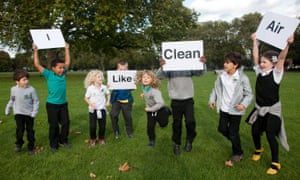
Councils failing to monitor most British schools for dangerous air pollution 

Councils are failing to monitor most schools in Britain for dangerous air pollution despite government advice, freedom of information requests have revealed.

All Britain’s 433 local councils were asked by the British Lung Foundation (BLF) whether they placed pollution monitors within 10 metres of school grounds. Of the 322 which replied, only 140 said they did.

In urban areas identified by the World Health Organisation as having harmful levels of particulate pollution, nearly half were found to be monitoring only one or two schools. Less than one in three local authorities monitored more than two schools.

Air quality monitoring guidance for the UK is drawn up by the Department for Environment, Food and Rural Affairs (Defra). The government does not insist that schools are monitored and local authorities are left to implement and interpret results and take action where needed.
The survey showed “alarming discrepancies” in council behaviour, said a BLF spokeswoman. Some used very simple diffusion tubes to measure only NO2 gas, but others monitored for different-sized particles called PM10s and 2.5s which are spewed out by traffic and industry, she said.

Equally, some authorities monitored the air close to school playgrounds, but others measured air quality hundreds of metres away.

“The guidance on monitoring that Defra gives local authorities needs to be revised and strengthened. Parents should be able to tell what their children are breathing, especially if they have conditions like asthma,” the spokeswoman said.

Concern about children’s health has grown following new scientific research which has shown lung capacity can be permanently impaired by pollution at very early ages.

A study of 2,400 children at 25 schools across east London found children had 5-10% less lung capacity, with an increased risk of diseases such as asthma and bronchitis.

According to the BLF, nearly 1 million schoolchildren up to 15 years old have been diagnosed with lung conditions.

“Children and teaching staff are not being made fully aware of the health risks posed by air pollution. Local authorities need clear guidance to monitor the air that children breathe as well as more resources and funding to tackle it,” said Russell Hobby, general secretary of the National Association of Head Teachers.

“Children’s lung health is particularly vulnerable to air pollution, yet they are not being protected by the government’s air quality monitoring guidance. There is a huge discrepancy in the levels of monitoring outside schools across the country, with many schools in the most harmfully polluted places not being monitored,” said Dr Penny Woods, chief executive of British Lung Foundation.

A an LGA spokesman said: “Councils follow guidelines on monitoring air pollution which are laid down by central government. These are to take a risk-based approach – monitoring those locations where members of the public might be regularly exposed.

“As well as schools this could also include residential properties, hospitals and care homes – depending on which area is at greatest risk. Many schools are actually some distance from busy roads and therefore unlikely to have high air pollution levels.”

He added that the “real issue” was for councils to move from monitoring pollution to acting on it, which would take government support.

A report that was commissioned but not published by London city hall under Boris Johnson showed that the number of primary schools in the capital breaching EU pollution levels had fallen from 433 in 2010 to 357 in 2013.

Another report, for the mayor of London, found children at nearly 90 secondary schools in London regularly breathed illegal and dangerous levels of air pollution.

Research by the Campaign for Clean Air found that 1,148 schools in London are within 150 metres of roads carrying 10,000 or more vehicles per day, and a total of 2,270 schools are within 400m of such roads.

“Children across the UK are exposed to illegal levels of air pollution on a daily basis. Air pollution is an invisible problem and parents have a right to know if their children are breathing dirty air, so it should be monitored,” said Andrea Lee, healthy air campaigner at environmental law firm ClientEarth.

Source: Councils failing to monitor most British schools for dangerous air pollution | Environment | The Guardian

Posted in Air Quality, Europe, UK | Tagged , , , , , , , | Leave a comment

Hanoi’s air pollution ranks 2nd worst in world 

Hanoi’s air pollution was recorded as the second worst in the world Wednesday morning by a global air quality watchdog.

The Real-time Air Quality Index, which compiles information from local authorities globally, ranked the city as “very unhealthy” based on data provided by the U.S. Embassy’s monitoring station.

Only India’s Varanasi ranked higher on the index.

Hanoi’s air pollution is frequently blamed on traffic congestion. It is reported to be home to 5.5 million vehicles with 700 motorbikes for each kilometer/mile of road.

A recent study from the environment ministry put Hanoi’s nitrogen dioxide levels at 1.3 times permitted levels and particulate matters, which are defined as airborne particles of less than 10 micrometers in length, at 1.4 times the limit.

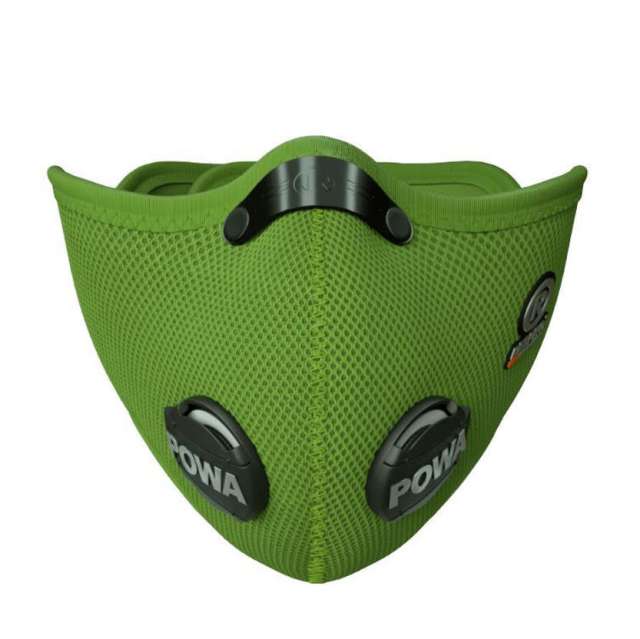
High levels of smog in recent years have also made face masks a common site in the city, with carbon filter masks particularly popular.

Duc Nguyen, a 20-year-old Vietnamese photographer living in Hanoi, told Anadolu Agency on Wednesday that air pollution is a big concern for him.

“It was bad a couple of months before but its even worse now,” he said, adding that he blames the pollution on recurring health aliments.

“I feel sleepy, breathless and my muscles are tired all the time.”

Source: Hanoi’s air pollution ranks 2nd worst in world | Health & Environment | Worldbulletin News

Posted in Air Quality, Asia, Vietnam | Tagged , , | Leave a comment

Thermal imaging video shows air pollution danger zones

With the World Health Organisation revealing this week that air pollution kills 16,000 Britons a year, one of the UK’s leading academics on air quality is developing thermal – or infrared – technology that enables viewers to physically see pollution and could help to save lives.

Martin Williams, Professor of Air Quality at Kings College London, has created a video with thermal imaging experts, FLIR Systems, to show how everyday transport contributes to air pollution. He says: “By using infrared technology you can physically see pollutants and how they spread from the source into the air. Technologies like this, that physically show pollution – whether fumes from a car, aeroplane or train – will help enormously in getting the message across.”

With young children so vulnerable to pollution, Professor Williams says one of the major concerns centres around prams and push chairs being so close to vehicle exhaust level: “If parents could see what it looks like pushing their child through a band of raw pollution, they’d take preventive action.”

While the World Health Organisation and other environmental groups are using cutting-edge technology to track and monitor air pollution, the hope is that the use of infrared technology in this way will have more impact when it comes to raising awareness about the harmful effects of air pollution and reducing its impact.

As Chris Brown from FLIR Systems said: “Unfortunately, we are only born with five senses! And what infrared lets us to do is optimise that sixth sense – allowing us to see air pollution before and while it’s happening.”

To see the video click here.

Thermal image of air pollution from street traffic in London courtesy of FLIR Systems.

Source: Thermal imaging video shows air pollution danger zones | EAEM

Posted in Air Quality | Tagged , , , , | Leave a comment

Volcano emissions linked to increases in asthma attacks

A new study from the active volcano Kīlauea, which is on the big island of Hawaii, reports that people — especially children — with asthma are at greater risk of having serious asthma attacks if they live in a community with high levels of the volcanic gas sulfur dioxide (SO2) than if they live upwind of the volcano.

Volcanoes can emit SO2 and other airborne chemicals while erupting, and human sources of SO2, like coal plants, are reputed triggers of asthma attacks. Nurse epidemiologist Bernadette Mae Longo, from the University of Nevada, Reno, began to question whether volcanic sulfurous air pollution, known as “vog,” was linked to human health after having conversations with local health care professions and conducting door-to-door surveys near Kīlauea.

“As a nurse, it touched my heart, because I knew as I read a medical record that this was a real person struggling. Or maybe this was a family with a baby or child that had asthma, and it is very frightening when an asthma attack occurs,” says Longo, who will speak on the subject on Tuesday, 27 Sept., at the meeting of the Geological Society of America in Denver, Colorado. “The overriding question was: ‘is all the volcanic air pollution making people sick?’ ”

SO2 is considered a “non-threshold” gas, meaning that the amount of SO2 needed to trigger an asthma attack varies person to person. People without asthma or other respiratory illnesses can breath in a larger amount of SO2 before experiencing breathing problems.

After confirming that communities downwind of Kīlauea were being exposed to volcanic SO2, Longo initiated a seven-year study that ran from 2004 to 2010. She monitored atmospheric SO2 levels and documented the number of people who visited either emergency rooms or local clinics in need of immediate medical treatment for an asthma attack. She compared communities living downwind of the volcano, and thereby exposed to SO2 emissions, to communities upwind of the volcano. Longo ended up recording information from more than 1,000 visits from patients, who ranged in age from three months old to more than 89 years.

The risk of an asthmatic experiencing a serious asthma attack was three times higher for people living downwind of the volcano compared to populations living upwind of the volcano, once the data was corrected for age and gender. When she considered age, Longo found that the children downwind of Kīlauea were at much higher risk of an attack than the unexposed children.

Specifically, Longo saw that the risk of asthma attacks increased with in-town SO2 concentrations and not the amount of emissions gushing from the volcano. Furthermore, communities closer to the vents had a higher risk of asthma attacks compared to communities farther downwind.

At the beginning of the study, the East Rift Zone of Kīlauea was continuously erupting on a small scale, but the Halemaumau Crater of Kīlauea explosively erupted in 2008, causing SO2emissions to skyrocket. Even now, downwind communities still exceed EPA recommendations for SO2 exposure a few times during the week, according to Longo.

“It allowed for a natural experiment of low vog exposure and high vog exposure,” says Longo. “We found that there was already significant risk before the summit eruption, but the magnitude of risk increased after the eruption.”

Overall, vog exposure appears to be hazardous to the health of those with asthma, because every asthma attack can further damage a patient’s lungs. Longo suggests geologists, public health care workers, and clinicians can work collaboratively to write guidelines that would allow clinicians to provide the best evidence-based, culturally sensitive care for the vulnerable populations living on volcanoes. In addition, Longo says scientists need to continue researching the effects of vog pollution on human health, not only on SO2, but also on the other gases and particulates in vog.

“We can’t shut the volcano off, and if we don’t document that there is this problem, there may not be the initiative to do something to try and help these populations,” says Longo.

Source: Volcano emissions linked to increases in asthma attacks — ScienceDaily

Posted in Air Quality, Asthma, Health Effects of Air Pollution | Tagged , , , , , | Leave a comment

Dust Pollution Reaches Dangerous Levels in Several Iranian Provinces

The air pollution caused by haze and particles in Iran’s western, southwestern, central, and southeastern provinces has reached hazardous levels.

Air conditions are alarming in the southeastern Iranian province of Sistan and Baluchestan as its air pollution levels have risen to 9 times the limits.

Air condition in the country’s southwestern province of Khuzestan has been also classified as unhealthy where air pollution has exceeded safe limits set by the World Health Organization (WHO).

In central and western Iran, Isfahan and Kermanshah are among the most polluted provinces.

Haze is also expected to cover other provinces of the country, including Tehran.

Iranian residents in the western and southwestern provinces that border Iraq are facing a growing trend in the influx of fine particles, which are generated by drought-hit marshlands in neighboring countries.

The disruptive dust storms have pushed pollution in those border areas to alarming levels, raising health concerns.

The particles, carried by winds, can penetrate the lungs and enter the bloodstream, causing serious diseases such as lung cancer, asthma and heart problems.

Source: Tasnim News Agency – Dust Pollution Reaches Dangerous Levels in Several Iranian Provinces

Posted in Air Quality, Iran, Middle East | Tagged , , , , , | Leave a comment

Beijing on pollution alert as smog season sets in

Beijing was put on yellow smog alert on Sunday, imposing restrictions on building and cooking outdoors.

The Air Quality Index in Beijing stood at between 200 and 300 out of 500 on Saturday and Sunday, meaning “very unhealthy”.

Forecasters said the pollution would continue on Monday and be dispersed by a cold snap on Tuesday. Smog had also affected Tianjin, Hebei and Shaanxi, the National Meteorological Centre said.

China has a four-tier system for air pollution, with red being the most serious, followed by orange, yellow and blue. Under the yellow warning, barbecues, work at construction sites and the burning of straw by farmers are not allowed.

Children, the elderly and people with respiratory or cardiovascular diseases are advised to stay indoors and people are advised to take public transport.

Environmental Protection Minister Chen Jining held an emergency meeting on Sunday to address the issue. Experts at the meeting said pollutants were concentrated because of weather conditions, Caixin reported.

Wang Zifa, a researcher at the Chinese Academy of Sciences, was quoted as saying that northern China would face more serious air pollution in autumn and winter this year.

He said the impact of El Nino and temperature inversions would make it difficult for pollutants to be dispersed.

The environmental ministry said on Thursday that air quality in the Beijing-Tianjin-Hebei region had improved in the first eight months of this year from the same time in 2015, but critics said more needed to be done to clean up the air.

Decades of economic development on the mainland has spawned massive pollution.

On Thursday, a Dutch inventor opened what he calls the world’s largest air purifier in Beijing. The seven-metre Smog Free Tower, part of a project started by artist and innovator Daan Roosegaarde, is said to capture 75 per cent of smog particles that have diameters of 2.5 microns and 10 microns, and release clean air around the structure.

Some Beijing residents said they would like to see more such towers to raise awareness of pollution in Beijing, but others questioned whether the effectiveness of the tower was backed by scientific research.

Source: Beijing on pollution alert as smog season sets in | South China Morning Post

Posted in Air Quality, Asia, China | Tagged , , , , , , | Leave a comment