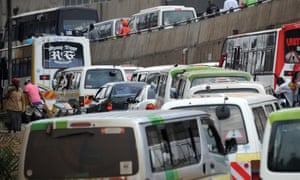
Choking smog hits Beijing, with clear skies not expected until Monday 

Beijing woke to more choking smog on Friday morning with the skies not expected to clear until Monday.

The capital’s Environmental Protection Bureau issued a blue alert for air pollution on Thursday afternoon, forecasting an air quality index of between 200 and 300 for at least a day.

Visibility dropped to below 500 metres in some areas of the city as the pollution mixed with heavy fog.

At 9am, the capital recorded an average air quality index of 277 with some areas reaching almost 350, according to monitoring data from the United States Embassy in Beijing.

screen-shot-2016-10-14-at-07-36-36

The smog blanketed not only Beijing but also some parts of Liaoning and Shandong provinces and was expected to continue through Saturday.

The poor air quality is expected to improve gradually to “slightly polluted”, or an AQI of between 100 and 150, on Saturday when it is forecast to rain, but will only change to “good”, or an AQI of between 50 and 100, on Monday.

Wang Buying, an engineer with the Beijing Municipal Environmental Monitoring Centre, told Xinhua that Beijing was more likely to experience temperature inversion, or temperature rising with height, in September and October when the weather is usually stable with little rain, which makes it very difficult for pollutants to disperse.

No disruption to flights has been reported at Beijing Capital International Airport.

Source: Choking smog hits Beijing, with clear skies not expected until Monday | South China Morning Post

Posted in Air Quality, Asia, China | Tagged , , , , | 1 Comment

London pollution death toll to hit 2,500 

smoglondon2408

The death toll from tiny particulate pollution in London is on the brink of hitting 2,500 this year, according to new figures.

At least four boroughs – Barnet, Bromley, Croydon and Ealing – have seen the deadly impact of long-term exposure to human-made PM2.5 pollution rise above 100.

The analysis by Clean Air in London showed the total for the capital reached 2,475 today and is set to climb above 2,500 within days.

Levels of this type of toxic pollution, found by scientists to be particularly dangerous as it can infiltrate deep into the lungs and into the bloodstream, are worse in central London, including Westminster, and Kensington and Chelsea.

But the death toll is higher in several outer boroughs given their large populations.

“Even these shocking numbers understate the dangers we face,” said Simon Birkett, founder of Clean Air in London.

“They exclude the effects of other air pollutants such as nitrogen dioxide (NO2) and other health effects such as reduced lung function in children for life.”

While new Mayor Sadiq Khan had “woken up” to the problem, he added, the Government was failing to do enough to tackle it.

Nearly half of Londoners now say filthy air has impacted on their health, according to a new poll.

The TNS survey for London Councils also showed the figure was even higher among cyclists, 59 per cent, parents, 58 per cent, people living in inner London, 51 per cent, and those who had arrived in the capital in the last five years, 56 per cent.

The most common health problem which Londoners blamed on air pollution was breathing difficulties, 16 per cent of those citing symptoms, worsening asthma, 11 per cent, and coughing, nine per cent.

Nearly half of parents in the capital, 48 per cent, now say that the state of the air influenced their decision on picking a school for their children.

Fifty-four per cent of them say it is on their mind when thinking about where they live.

Cllr Julian Bell, London Councils’ executive member for transport and environment, said: “This research highlights the very real concerns many Londoners have about air pollution.

“The fact so many people reported a negative impact on their health, and concerns about the health of their children, is worrying and shows this continues to be an issue of huge significance in our city.”

He urged the Government to draw up a new Air Quality Strategy and pass new Clean Air Act legislation so existing air pollution limits and targets are not scrapped due to Brexit.

Environmental lawyers ClientEarth will take the Government back to court next week to try to force it to step up action to cut NO2 levels which are above EU legal limits in many parts of the city.

NO2 and PM2.5 are estimated to cause an annual death toll, the combined total of life lost due to these pollutants in London, equivalent to up to 9,400 lives.

ClientEarth chief executive James Thornton said: “The air we breathe in this city is illegal and it harms the health of Londoners.“

The government needs to get a grip of this public health crisis.”The Government stressed it was “firmly committed” to improving air quality and that its latest report to the European Commission showed progress was being made.

A spokesman added: “We know there is more to do, which is why we have committed more than £2 billion to greener transport schemes since 2011 and we will continue to work closely with the Mayor of London to improve air quality in the capital.”

Mr Khan is proposing introducing a £10-a-day “T-charge” on the most polluting vehicles next year and an expanded Ultra Low Emission Zone, possibly a year early in 2019.

TNS interviewed 1,006 Londoners between September 12 and 15. Data are weighted.

Source: London pollution death toll to hit 2,500 | London Evening Standard

Posted in Air Quality, Europe, London, UK | Tagged , , , , , , , , , , , , , , | Leave a comment

School children put at risk by air pollution, says charity 

School children are not being protected from air pollution, a leading health charity has said.

The British Lung Foundation (BLF) found more than 40% of Welsh councils did not have any air quality monitors outside schools.

This prompted the charity to launch a petition calling for urgent action from the UK and Welsh governments.

The Welsh Government said it was “firmly committed to improving air quality across Wales.”

The BLF said Wales already had some of the highest rates of lung disease in the UK and exposing children to more polluted air would only make it worse.

The charity’s Freedom of Information request to Welsh councils found:

  • Seven out of 17 councils which responded had not placed any air quality monitors within 10m (33ft) of a school
  • In the five areas identified as having unsafe levels of particle pollution – Cardiff, Chepstow in Monmouthshire, Newport, Swansea and Port Talbot – only six schools had nearby monitors
  • Three councils – Caerphilly, Denbighshire and Pembrokeshire – did not consider schools to be a priority when placing air quality monitors

“Children’s lung health is particularly vulnerable to air pollution, yet they are not being protected by the government’s air quality monitoring guidance,” said Joseph Carter, head of BLF Wales.

He said the UK Government needed to bring forward a new clean air act and the Welsh Government needed to change its guidance to councils to make sure it monitored air quality outside schools.

Head teachers’ union NAHT Cymru is supporting the BLF’s petition.

Rob Williams, the union’s director of policy, said: “Schools leaders in Wales strive to create safe and happy environments for children. However, they cannot address the potentially dangerous levels of pollution around their schools.”

A spokesman said the Welsh Government was “firmly committed to improving air quality” and provided guidance to councils to help them fulfil their responsibilities for reviewing local air quality.

“We recently launched a consultation on this subject which recognises the immediate and long-term health benefits to be gained by reducing pollution exposure across Wales alongside action on localised pollution hotspots,” he added.

Source: School children put at risk by air pollution, says charity – BBC News

Posted in Air Quality, Europe, Health Effects of Air Pollution, UK | Tagged , , , , , , , , | Leave a comment

Air Pollution Has Been Linked To Dementia 

Air pollution, along with a range of other environmental factors have been included in a new shortlist linked to the risk of getting dementia.

Scientists from the University of Edinburgh and elsewhere compiled the list after reviewing dozens of studies which investigated the risk factors for Alzheimer’s and other forms of dementia.

What they found was that a lack of vitamin D, air pollution and exposure to certain types of pesticides were all found to raise the dementia risk. In addition to these, excessive minerals in drinking water were also found to be linked to the disease.

It’s important to note however that these are not proven causes of the condition, instead they’re simply associations and common linkages found during the studies.

Lead scientist Dr Tom Russ, from the University of Edinburgh, said: “Our ultimate goal is to prevent or delay the onset of dementia. Environmental risk factors are an important new area to consider here, particularly since we might be able to do something about them.

“We found that the evidence is particularly strong for air pollution and vitamin D deficiency. But we really need more research to find out whether these factors are actually causing dementia and how, and if so, what we can do to prevent this.”

About a third of a person’s risk of developing dementia remains unexplained, pointing to the potential involvement of environmental factors.

The findings are published in the journal BMC Geriatrics.

Commenting on the research, Professor Robert Howard, an expert on old age psychiatry at University College London, said: “There is robust evidence that head trauma and poor cardiovascular health increase dementia risk. But most of the environmental factors identified in this review probably represent no realistic increase or only a vanishingly tiny increased risk for dementia.

“If you want to avoid dementia, look after your heart and try to avoid getting knocked unconscious.”

Professor Tom Dening, from the University of Nottingham, said: “What is difficult is to tell whether the environmental exposures are themselves contributing to dementia or whether they are in fact acting as proxies for some underlying variable.”

Dr Tara Spires-Jones, interim director of the Centre for Cognitive and Neural Systems at the University of Edinburgh, pointed out: “The key word here is ‘associated’. While this study was thoroughly conducted, an association, or statistical correlation, like this does not imply that any of these factors cause dementia. There could be another factor, related to the two, that is the cause.”

Source: Air Pollution Has Been Linked To Dementia | Huffington Post

Posted in Air Quality, Health Effects of Air Pollution | Tagged , , , | Leave a comment

Salty snow could affect air pollution in the Arctic

In pictures, the Arctic appears pristine and timeless with its barren lands and icy landscape. In reality, the area is rapidly changing. Scientists are working to understand the chemistry behind these changes to better predict what could happen to the region in the future. One team reports in ACS’ Journal of Physical Chemistry A that sea salt could play a larger role in the formation of local atmospheric pollutants than previously thought.

The Arctic’s wintertime ice hit a record low this year, and its air is warming, according to NASA. Previous research has shown that pollutants, including gaseous nitrogen oxides and ozone, have at times been recorded at levels similar to those one would see in more populated areas. Nitrogen oxides are air pollutants that, in sunlight, lead to the formation of ozone, the main component in smog normally associated with cities. The gases can be processed in the atmosphere and be deposited on Earth as nitrates, which can get trapped in snow. In sunlight, snow can act as a reactor in which nitrates may be transformed back to nitrogen oxide gases. In the Arctic, sea ice and snow contain salt and other impurities that can possibly alter the efficiency of this process. James Donaldson, Karen Morenz and colleagues took a closer look at how salt and nitrate content in snow could affect the levels of nitrogen oxides in the air during sunny conditions.

The researchers tested lab-made snow containing nitrate alone or nitrate and salt. They found that under simulated sunlight, about 40 to 90 percent more nitrogen dioxide (NO2) was reformed from the snow with low levels of salt at environmentally relevant concentrations than snow with no salt. Researchers observed the greatest effect when they used realistic sea salt in the experiment. The results suggest that sea ice and salty snow, which previously have not been considered as factors in the balance of ozone-forming chemicals in the atmosphere, should be a part of future models.

Source: Salty snow could affect air pollution in the Arctic | EurekAlert! Science News

Posted in Air Quality | Tagged , , , | Leave a comment

London’s black communities disproportionately exposed to air pollution – study 

Black, African and Caribbean people are exposed to higher illegal nitrogen dioxide levels than the percentage of the population they account for

Black communities in London are disproportionately more likely to breathe illegal levels of air pollution than white and Asian ones, new research seen exclusively by the Guardian shows.

The study for the mayor of London shows black, African and Caribbean people account for 15.3% of all Londoners exposed to nitrogen dioxide (NO2) levels that breach EU limits, but they account for just 13.3% of the city’s population.

The proportion of white and Asian individuals exposed to the dangerous NO2 levels is lower than the fraction of the population they account for, said Aether, the consultancy which produced the report.

Southwark, Lambeth and Hackney were among the boroughs with an overlap of both a higher proportion of black residents and the higher pollution levels.

Previous research has shown there is a clear link between economically deprived areas and greater exposure to polluted air. But the new work, which comes as Sadiq Khan launches a new consultation on charges to tackle London’s polluted air, is one of the first to suggest there is a related race dimension too.

“People living in places with high proportions of black, mixed or ‘“other’ ethnic groups are more likely to be exposed to above EU NO2 limit value concentrations than those in areas with a high proportion of white people,” said the Aether study. “This effect is not seen for areas with a high proportion of Asian groups.”

screen-shot-2016-10-12-at-17-59-41

But because of the “very mixed ethnic geography of London”, the pattern is less strong between ethnicity and exposure than the one between deprivation and exposure, Aether found. In areas with poor air quality, 32% of people living there were from the most deprived groups, versus 7% from the least deprived.

“This research shows the disproportionate impact air pollution has on deprived communities in London,” said Aether’s director, Katie King.

“We have known for some time now that poor families end up living in cheaper housing which is often in close proximity to busy roads,” said a spokesman for the air quality unit at King’s College London.

However, he said the new study’s use of proportionate data was misleading, as in absolute terms there are more Asian and white people exposed to high NO2 levels.

Last month, the Black Lives Matter UK group linked ethnicity and environmental issues during a protest at London City airport – although the protestors were also criticised for their largely white membership.

The study compiled King’s data on NO2 concentrations in 2013 – the most recent available – census results, official statistics on deprivation and ethnic profiles of small areas in London. In total, 1.9 million people in London were exposed to NO2 concentrations above the EU’s annual average limit.

The work is an update of a report which the former mayor Boris Johnson was accused of burying when Khan took office. That earlier report showed 433 primary schools were exposed to NO2 above the limits in 2010, with that number falling to 360 by 2013 in today’s study, showing some areas have got cleaner.

Transport for London (TfL) published a consultation on Monday seeking Londoners’ views on Khan’s new measures to tackle the problem. They include whether to introduce a £10 emissions surcharge in October 2017, the so-called T-charge, which will mostly apply to pre-2005 diesel cars.

Khan and TfL are also consulting on whether to bring in an enlarged “ultra low emissions zone” (Ulez) in 2019 rather than 2020 as previously planned, charging owners of dirtier cars £12.50 to enter. Both charges will be in addition to the existing £11.50 congestion charge.

“Toxic air in London is a health emergency that requires bold action, including introducing charges for older polluting vehicles and expanding the Ulez,” said Khan.

Environmental groups and thinktanks welcomed the proposals, but Friends of the Earth said the mayor needed to go further.

“To bring down London’s air pollution as quickly as possible, Sadiq Khan must extend the Ulez for all vehicles across the whole of London; and create a plan for phasing out diesel on London’s roads altogether,” said Sophie Neuburg, a campaigner at the green group.

Next week the government faces a court case brought by environmental law firm ClientEarth over what it says is an inadequate plan to reduce NO2 pollution.

“Today’s announcement sends a clear message to the government that it needs to get a grip with this public health crisis. This is a national problem that needs a national solution. That is why we are taking them back to court next week,” said Alan Andrews, a ClientEarth lawyer.

Source: London’s black communities disproportionately exposed to air pollution – study | Environment | The Guardian

Posted in Air Quality, Europe, Health Effects of Air Pollution, London, UK | Tagged , , , , , , , , , , | Leave a comment

London congestion zone: Old cars face extra £10 ‘pollution charge’ 


Owners of older, more polluting cars face an extra £10 fee for entering the congestion charge zone, under plans issued by London Mayor Sadiq Khan.

City Hall hopes to introduce the additional emissions surcharge from October next year.

The plans were put out for formal consultation on Monday.

Mr Khan is also putting forward plans to extend the capital’s ultra low emissions zone to the north and south circular roads.

Under the proposals, the owners of diesel and petrol vehicles manufactured before or up to 2005 that do not meet Euro 4 emissions standards for nitrogen oxide (NO2) and particulates will be required to pay £10 on top of the congestion charge.

The mayor has also called on the government to put in place a national diesel scrappage scheme to help people replace vehicles affected by his plans.

City Hall said its research showed people living in London’s most deprived communities, often by busy roads, are on average exposed to 25% higher levels of harmful NO2 pollution.

It is estimated that the equivalent of 9,400 premature deaths occur each year in London due to illnesses caused by long-term exposure to air pollution and 448 schools in London are in areas exceeding legal air quality levels.

Diesel vehicles are recognised as a major contributor to pollution and associated health impacts in London and the mayor wants to phase out these vehicles from the bus, taxi and other fleets.

Mr Khan said: “Toxic air in London is a health emergency that requires bold action, including introducing charges for older polluting vehicles and expanding the ultra low emissions zone.

“I am determined to help every Londoner breathe cleaner air. After the massive response to my first consultation I now need the public to let me know their views on my detailed proposals to help clean-up our filthy air.”

Source: London congestion zone: Old cars face extra £10 ‘pollution charge’ – BBC News

Posted in Air Quality, Europe, London, UK | Tagged , , , , | Leave a comment

Car exhaust fumes confuse bees, make pollination harder, research shows 

Pollution may make it even harder for bees to pollinate plants. Researchers have found that car exhaust fumes can mask the smell of flowers, making it more difficult for bees to learn individual floral scents.

Bees use their noses to sniff out the best flowers for pollen and nectar – they fly from flower to flower, transferring pollen and seeds, ensuring our food continues to grow. Aside from producing honey, bees enable the growth of apples, oranges, avocados and broccoli in this way.

Sticking out their tongues

According to Ryan James Leonard of the University of Sydney, in lab tests bees were able to quickly learn that a whiff of floral scent is usually followed by a taste of sugar. They then come to expect it, sticking out their tongues for sweetness after catching a blossomy sniff. However mix the smell with exhaust fumes and it takes bees a lot longer to develop that behaviour. Leonard tested the bees with several different floral scents. The bees could still identify linalool, (a natural chemical found in lots of flowers) after being mixed with exhaust fumes but other chemicals proved tougher.
Puff Puff Pass

Usually bees learnt to stick out their tongues for sugar after just two puffs of scent. But it took them three puffs to identify the ingredient myrcene when it was mixed with exhaust fumes. It took them four puffs when dipentene was mixed with exhaust fumes and it took them six puffs to learn the complex smell of a geranium.

Ryan James Leonard told the International Congress of Entomology that he hoped his research would show how living alongside traffic affected the life of bees. His findings echo a number of other studies that showed how pollutants impact bees’ behaviour. In 2013, scientists discovered how diesel made oilseed flowers smell different to bees. In 2015 it was discovered that effect of diesel fumes on flower scent was even greater than previously thought. Research from Reading University found that in polluted environments, diesel fumes may be reducing the availability of almost half the most common flower odours that bees use to find their food.

Bee nice

Lead author Dr Robbie Girling said: “Bees are worth millions to the British economy alone, but we know they have been in decline worldwide. “People rely on bees and pollinating insects for a large proportion of our food, yet humans have paid the bees back with habitat destruction, insecticides, climate change and air pollution. “This work highlights that pollution from dirty vehicles is not only dangerous to people’s health, but could also have an impact on our natural environment and the economy.”

Source: Car exhaust fumes confuse bees, make pollination harder, research shows – The i newspaper online iNews

Posted in Air Quality | Leave a comment