Delhi: Air pollution is ‘severe’ three days before Diwali

The state government started the process of installing Radio Frequency Identification Devices and Weigh-in-Motion machines to curb pollution.

The Air Quality Index indicated that pollution levels in Delhi were “severe” at many places on Thursday and prompted the government to issue an alert, reported PTI. The pollution level is categorised as severe if the AQI ranges between 401 and 500.

The System of Air Quality and Weather Forecasting and Research data showed that the overall AQI crossed 300. However, the worst air quality levels were at Anand Vihar, Mandir Marg and RK Puram, where it touched the maximum limit of 500 three days before Diwali, reported Hindustan Times.

Simultaneously, the Delhi government started the process of installing Radio Frequency Identification Devices and Weigh-in-Motion machines for regulation of commercial vehicles to curb air pollution. These machines will be installed at 13 entry points to the Capital. The step comes six days after the Supreme Court had asked the authorities concerned to come up with a concrete plan for garbage disposal. The environment department has already said that Rs 5,000 will be charged if one is caught burning garbage and dry leaves in the open, reported India Today.

Plans are also afoot to introduce other steps to check pollution in the coming months. However, no announcement has been made in this regard so far.

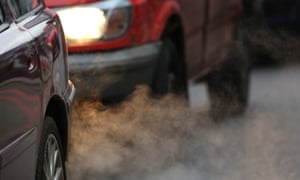
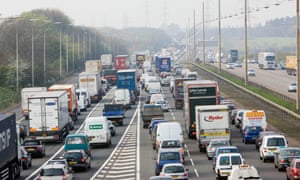
According to reports, the quality of air worsens in the Capital because of a spike in vehicular traffic, while decreasing temperatures and lack of winds also invite more pollution. Experts have warned Delhiites to brace for worse air quality, with Diwali around the corner. For the past few years, Delhi pollution has multiplied up to five times on the day of Diwali, and experts believe that this year will not be any different.

Source: Delhi: Air pollution is ‘severe’ three days before Diwali

Posted in Air Quality, Asia, India | Tagged , , , | Leave a comment

Air pollution limits are not strict enough to tackle public health dangers, scientists warn

Breathing in high levels of soot and other tiny particles from fossil fuels may have a similar effect on blood pressure as being overweight

air-pollution

Living in the most polluted parts of a city appears to have a similar effect on your blood pressure as becoming overweight, according to the world’s largest ever study of the effects of fossil fuel emission on human health.

Researchers warned their findings showed that current European Union limits on air pollution were not low enough to adequately protect people.

Those limits are regularly breached in parts of the UK and the Government has been taken to court in order to force it to introduce measures to address the problem.

According to official figures, an estimated 40,000 people a year die prematurely in the UK because of the air they breathe. The World Health Organization has warned air pollution is “wreaking havoc on human health”, while campaigners have described diesel fumes as the “biggest public health catastrophe since the Black Death”.

The new study investigated the effects of air pollution and traffic noise on 41,000 people in five different countries, Spain, Germany, Norway, Sweden and Denmark, for up to nine years.

When the research began, none of the participants had high blood pressure, but more than 6,200 reported they had developed the disease or had started taking drugs to lower their blood pressure during the period.

The researchers found that those living in the most polluted parts of a city had a higher chance of developing it than people in less polluted urban areas. They said the risk was similar to someone with a normal body mass index becoming officially overweight.

Traffic noise was also a factor: people living in areas where the average night-time noise level was 50 decibels – about the same level as a conversation at home – had a six per cent higher change of high blood pressure compared to those where the average level was 40 decibels, which is like a library.

Professor Barbara Hoffmann, of Heinrich-Heine-University in Düsseldorf, who led the study, said: “As virtually everybody is exposed to air pollution for all of their lives, this leads to a high number of hypertension cases, posing a great burden on the individual and on society.

“One very important aspect is that these associations can be seen in people living well below current European air pollution standards.

“This means the current legislation does not protect the European population adequately from adverse effects of air pollution.

“Given the ubiquitous presence of air pollution and the importance of hypertension as the most important risk factor for cardiovascular disease, these results have important public health consequences and call for more stringent air quality regulations.”

The researchers said they had been able to show that traffic noise and air pollution were both independently linked to high blood pressure.

They added it was possible that they affected the body in different ways. Air pollution may affect the heart and blood vessels by causing inflammation, a build-up of damaging molecules in the body, and disruption of the nervous system. Noise is believed to affect the nervous and hormonal systems.

Commenting on the research, described in the European Heart Journal, Jenny Bates, a Friends of the Earth air pollution campaigner, said the evidence about the impact of air pollution on people’s health was clearly increasing.

“Crucially, this study shows that there are health risks, even when levels of fine particles of air pollution are below EU legal limits – and in fact the World Health Organisation say there is no known safe limit for this pollution,” she said.

“Air pollution leads to 40,000 early deaths in the UK every year. It causes lung cancer, contributes to respiratory disease including worsening of asthma, and to heart disease with this latest study linking it to high blood pressure.

“Urgent action is needed to get dirty diesel vehicles off our roads, and to reduce road traffic. The UK Government must be bold and put in place a plan to phase out diesel, support Clean Air Zones across the country and offer people real alternatives to driving, in order to save lives and improve health.”

Greenpeace senior campaigner Areeba Hamid said: “The UK is facing a public health emergency due to air pollution, mainly caused by diesel cars.

“Even though the list of symptoms is worryingly long, the Government’s plan to bring safe air to all Britons is conspicuous by its absence. As we begin the process to exit the EU, any legislation around air quality should take the best of the current EU standards and make them even better.

Three of the five countries where this study was undertaken are already seeing cities moving to cleaner technologies and transport systems. It is time for the UK to decide if it wants to join that shift, or continue spending billions on NHS resources to treat conditions linked to air pollution.”

However Professor Francesco Cappuccio, who is vice-president of the British & Irish Hypertension Society, said there should be a “big note of caution” about the research.

“The present aggregate analysis suggests that whilst measures of air pollution across different European countries are associated with a greater risk of ‘self-reported’ hypertension, there is no evidence of such an association with the incidence of ‘measured’ hypertension,” he said.

“It is well recognised that the awareness of hypertension in the general population is weakly correlated with its presence when measured, and the lack of symptoms or signs often associated with it makes self-reported estimates unreliable, often biasing population hypertension estimates.

“In the future, similar population studies should only rely on objective, direct and valid measures of blood pressure in the community to estimate prevalence or incidence of hypertension.”

Source: Air pollution limits are not strict enough to tackle public health dangers, scientists warn | The Independent

Posted in Air Quality, Europe, Germany, Health Effects of Air Pollution, Spain, UK | Tagged , , , , , , , , , , , | Leave a comment

Petrol cars allowed to exceed pollution limits by 50% under draft EU laws 

Car industry successfully lobbied for loopholes to dilute EU laws limiting toxic particulates emissions for new cars, the Guardian has learned

New European cars with petrol engines will be allowed to overshoot a limit on toxic particulates emissions by 50% under a draft EU regulation backed by the UK and most other EU states.

Campaigners say that a simple €25 (£22) filter could drastically cut the pollution, but the Guardian has learned that car-makers have instead mounted a successful push for loopholes and legislative delay.

Bas Eickhout, a Green MEP on the European parliament’s environment committee and dieselgate inquiry panel, promised action to ensure that the lessons of the VW scandal were learned.

“With this ridiculous proposal, the EU’s member states are again trying to dilute EU laws at a terrible cost to human health. We will call on the European commission to come to the European parliament and explain themselves on this issue,” he said.

Particulate matter (PM) is the largest single contributor to the estimated 600,000 premature deaths across Europe from pollution-related heart and lung diseases each year. Children and the elderly are worst affected, and the associated health costs could be as high as €1.6tn a year in Europe, according to the World Health Organisation.

Although exhaust fumes from diesel and petrol engines are one of the largest sources of particulates emissions, most EU member states support raising the EU’s pollution standard 50% above the legal limit set down in the Euro 6 regulation. Behind the scenes, vehicle makers have pushed strongly for a staggering 300% over, according to material seen by the Guardian.

The draft regulation is still being discussed by EU member states and the auto industry has not given up hopes of wrenching further concessions on particulate emissions ahead of a final decision on 7 December.

One Powerpoint slide shown to EU expert groups by the European automobile manufacturers association (Acea) says that a 300% latitude in meeting the letter of the law would be “realistic” because of “measurement uncertainty” in emissions tests.

Florent Grelier, a clean vehicles engineer at the Transport and Environment (T&E) campaign group, told the Guardian she feared that EU attempts to improve air quality were being “bent to the will of the automotive industry”.

“This is a petrolgate scandal in the making,” she said. “Unless the European commission and governments establish strict test procedures to protect the industry from its own short-sightedness, within a few years we will see continuing high levels of particles killing hundreds of thousands of citizens prematurely.”

Under EU law, car-manufacturers are already obliged to use filters for diesel engines, but not for the rapidly-growing 40% of the petrol engine market which is made up by uncontrolled gasoline direct injection engines. These release more particulate matter than modern diesel cars.

Gasoline particulate filters could reduce these emissions by a factor of around 100, and would cost manufacturers just €25 per car, according to research by T&E. But car manufacturers have argued this would violate the principle of technology neutrality.

A spokesman for Acea declined to comment on the issue.

Calls by the auto industry for a delay in implementing the new regulation have been well received by several car-producing EU countries. Spain and Sweden argued for a one-year legislative delay that would push its introduction back to 2019, in minutes of a technical committee meeting earlier this month seen by the Guardian.

The UK took no formal position on when the new regulation should enter into force but warned of “unintended adverse effects” if PM limits were given a separate starting date to standards for another pollutant, nitriogen oxide (NOx) , which will now begin in 2019.

An EU group of national experts – the technical committee on motor vehicles – is now expected to sign off on the final proposal to amend the Euro 6 regulation for real world driving emissions, in December.

The issue of “conformity factors” – or compensating for uncertainties in emissions tests – last year led the committee to impose a NOx limit 110% higher than the one written into the Euro 6 regulations last year.

Source: Petrol cars allowed to exceed pollution limits by 50% under draft EU laws | Environment | The Guardian

Posted in Air Quality, Europe | Tagged , , , , , , , , | Leave a comment

Four in 10 UK councils exceed air pollution limits, figures show 

Ministers reveal 169 local authorities breached annual legal limits on nitrogen oxide, linked to lung disease, last year

Four in 10 of Britain’s local authorities breached legal air quality limits last year, largely due to heavy road traffic, government records reveal.

Ministers have admitted that 169 local authorities were found to have gone over annual limits on nitrogen dioxide. It is an invisible gas produced predominantly by road traffic, and is linked to lung disease and cardiovascular problems such as heart attacks and strokes.

Monitoring stations in councils across all four nations of the UK recorded breaches of the legal limits on NO2, data from the Department for Environment, Food and Rural Affairs shows.

A report in April from the environment, food and rural affairs select committee stated that poor air quality was linked to more than 40,000 premature deaths in the UK every year. The committee is chaired by Neil Parish, the Tory MP who obtained the latest figures from the government.

Parish said he was working with the liberal conservative thinktank Bright Blue to secure the power and funding to introduce a clean air zone in pollution hotspots in all local authorities. This month, the government made available £3m for councils to bid for funding to improve air quality.

Parish said: “These are shocking statistics. When we think of areas breaking air quality laws, we usually think of a handful of areas in our busiest towns and cities. These figures show just how widespread the problem is across the UK. It requires a comprehensive solution – urgently”.

“The government needs to act now to give all councils the power – and crucially, the funding – to implement a clean air zone and limit the most polluting vehicles in hotspot areas. The £3m government funding pot is a start but not nearly enough. We also need a big push to incentivise electric and low emissions vehicles to replace the oldest, most polluting vehicles.”

The government is being hauled before the courts over its failure to tackle the levels of nitrogen dioxide. A 1999 European Union directive set legal limits that came into force in 2010. Now the legal activist group, ClientEarth, is asking the high court to order ministers to come up with a better plan for improving air quality.

Sam Hall, environment researcher at Bright Blue, said the worst polluting carsshould be banned from cities in order to tackle the problem. “Forty percent of local authorities in the UK breached legal air pollution limits last year,” he said. “Poor air quality is clearly a national public health issue that requires urgent action.

“The government’s current plans for clean air zones in just five cities do not go far enough. Ministers should enable all city councils to set up clean air zones to restrict the dirtiest cars from urban centres.

“Together with measures to encourage greater uptake of electric vehicles, this approach would reduce air pollution, cut carbon emissions and boost automotive manufacturing in the UK.”

Source: Four in 10 UK councils exceed air pollution limits, figures show | Environment | The Guardian

Posted in Air Quality, Europe, UK | Tagged , , , , | Leave a comment

Protecting people and planet from ‘invisible killer’ is focus of UN health campaign to tackle air pollution

The United Nations World Health Organization (WHO) in partnership with the Coalition for Climate and Clean Air (CCAC) and the Government of Norway has launched a global awareness campaign on the dangers of air pollution – especially ‘invisible killers’ such as black carbon, ground-level ozone and methane – for the health of individuals and the planet.

Titled BreatheLife: Clean air. A healthy future, the campaign aims to mobilize cities and their inhabitants on issues of health and protecting the planet from the effects of air pollution. Moreover, By WHO and CCAC joining forces, ‘BreatheLife’ brings together expertise and partners that can tackle both the climate and health impacts of air pollution.

According to WHO, air pollution kills nearly seven million people each year, nearly 12 per cent of deaths worldwide. It is responsible for 35 per cent of deaths due to lung disease, 27 per cent of deaths from heart disease, 34 per cent of deaths from stroke, and 36 per cent of deaths from lung cancer.

Urban air pollution levels also tend to be higher in many low and middle-income cities and in poor neighbourhoods of high-income cities. This means reductions in pollutants can have particularly large health benefits for lower income groups as well as for children, elderly, and women, the agency explains.

The campaign seeks to cut in half the number of deaths from air pollution by 2030 – the target year for the achievement of the UN Sustainable Development Goals (SDGs), adopted by the UN General Assembly in September 2015.

‘Breathe Life’ highlights the practical policies that cities can implement to improve the air quality through better housing, transport infrastructure, managements of waste and energy systems. It also educates individuals and communities about the measures they can take daily to achieve cleaner air, such as stopping the incineration of waste, development of green spaces and the choice of walking or cycling.

Improved vehicle standards, prioritization of clean public transport, and the adoption of stoves and more efficient alternative fuel for cooking, lighting and heating are also part of the actions put forward by the campaign the goal of saving more lives and protect the environment.

For WHO and its partners, this series of measures to achieve a reduction of pollutants could significantly reduce the number of annual deaths from air pollution.

Source: United Nations News Centre – Protecting people and planet from ‘invisible killer’ is focus of UN health campaign to tackle air pollution

Posted in Health Effects of Air Pollution | Tagged , , | Leave a comment

Air pollution more deadly in Africa than malnutrition or dirty water, study warns 

Annual human and economic cost of tainted air runs to 712,000 lost lives and £364bn, finds Organisation for Economic Co-operation and Development

Africa’s air pollution is causing more premature deaths than unsafe water or childhood malnutrition, and could develop into a health and climate crisis reminiscent of those seen in China and India, a study by a global policy forum has found.

The first major attempt to calculate both the human and financial cost of the continent’s pollution suggests dirty air could be killing 712,000 people a year prematurely, compared with approximately 542,000 from unsafe water, 275,000 from malnutrition and 391,000 from unsafe sanitation.

While most major environmental hazards have been improving with development gains and industrialisation, outdoor (or “ambient particulate”) air pollution from traffic, power generation and industries is increasing rapidly, especially in fast-developing countries such as Egypt, South Africa, Ethiopia and Nigeria.

“Annual deaths from ambient [outdoor] particulate matter pollution across the African continent increased by 36% from 1990 to 2013. Over the same period, deaths from household air pollution also continued to increase, but only by 18%”, said a researcher at the Paris-based Organisation for Economic Co-operation and Development development centre. The OECD is funded by the world’s richest 34 countries.

For Africa as a whole, the estimated economic cost of premature air pollution deaths in 2013 was roughly $215bn (£175bn) a year for outdoor air pollution, and $232bn for household, or indoor, air pollution.

The study’s author, Rana Roy, is concerned by the pace at which outdoor air pollution is growing in Africa, bucking the downward trend in most countries. Used cars and trucks imported from rich countries are adding to urban pollution caused by household cooking on open fires.

“This mega-trend is set to continue to unfold throughout this century. It suggests that current means of transportation and energy generation in African cities are not sustainable,” said Roy. “Alternative models to those imported from industrialised economies, such as dependence on the individual automobile, are necessary.

“It is striking that air pollution costs in Africa are rising in spite of slow industrialisation, and even de-industrialisation in many countries. Should this latter trend successfully be reversed, the air pollution challenge would worsen faster, unless radically new approaches and technologies were put to use.

“The ‘new’ problem of outdoor air pollution is too large to be ignored or deferred to tomorrow’s agenda. At the same time, Africa cannot afford to ignore the ‘old’ problem of household pollution or to consider it largely solved: it is only a few high-income countries – Algeria, Egypt, Libya, Mauritius, Morocco, Seychelles and Tunisia – that can afford to view the problem of air pollution as being a problem of outdoor particulate pollution alone.”

The study stresses that there is not nearly enough knowledge of the sources of air pollution and its impact in much of Africa. It quotes UK scientist Mathew Evans, professor of atmospheric chemistry at York University, who is leading a large-scale investigation of air pollution in west Africa.

“London and Lagos have entirely different air quality problems. In cities such as London, it’s mainly due to the burning of hydrocarbons for transport. African pollution isn’t like that. There is the burning of rubbish, cooking indoors with inefficient fuel stoves, millions of steel diesel electricity generators, cars which have had the catalytic converters removed and petrochemical plants, all pushing pollutants into the air over the cities. Compounds such as sulphur dioxide, benzene and carbon monoxide, that haven’t been issues in western cities for decades, may be a significant problem in African cities. We simply don’t know.”

Whereas China has reached a level of development that has allowed it to concentrate on solving air pollution, most African countries must grapple with several major environmental burdens at the same time, said the report.

“[They] are not in the position of a China, which can today focus on air pollution undistracted by problems such as unsafe water or unsafe sanitation or childhood underweight,” said Roy.

Henri-Bernard Solignac-Lecomte, head of the Europe, Middle east and Africa unit at the OECD development centre, said the paper made a double case for action. “Air pollution in Africa increasingly hurts people and hinders economic development. Reducing it requires urgent action by governments to change the unsustainable course of urbanisation. Indeed, Africa urbanises at a very fast pace: today’s 472 million urban dwellers will be around a billion in 2050. Today’s investment choices will have decade-long impacts on urban infrastructure and the quality of life of urbanites.

“Bold action to improve access to electricity, using clean technologies such as solar power, can contribute to reducing the exposure of the poorer families to indoor smog from coal or dung-fired cooking stoves.

“As for outdoor pollution, African economies would be well advised to learn from the experience of industrialised countries, for example by developing mass public transportation systems – like Rabat or Addis-Ababa are doing with their tramways.”

Roy warned that the human and economic costs of air pollution might “explode” without bold policy changes in Africa’s urbanisation policies.

She concluded with a call for urgent international action: “If Africa’s local air pollution is contributing to climate change today, at a time when its population stands at 1.2 billion, or 16% of the world’s population, it is safe to suppose that … it is likely to contribute considerably more when its population increases to around 2.5 billion, or 25% of the world’s population in 2050, and thence to around 4.4 billion, or 40% of the world’s population in 2100.”

Source: Air pollution more deadly in Africa than malnutrition or dirty water, study warns | Global development | The Guardian

Posted in Africa, Air Quality | Tagged , , , , , , | Leave a comment

Beijing issues air pollution alert 

Beijing environmental authorities issued a yellow alert for air pollution on Tuesday afternoon, as smog is forecast for the capital for two days.

The yellow alert, the third-highest warning level, came shortly after smog eased Sunday. It means the Air Quality Index will exceed 200 for 48 hours.

Disadvantageous climatic conditions will contribute to the upcoming haze, according to the local emergency office for severe air pollution.

Residents have been advised to take protective measures, such as keeping their windows and doors closed and reducing outdoor activities. In addition, construction sites and factories have also been ordered to reduce emissions, and regulation of burning of straw must be enhanced, according to the city’s contingency plan for severe air pollution.

The weather is expected to improve starting from the morning of Oct. 20 thanks to the arrival of a cold front.

Zhang Dawei, head of the Beijing Environmental Protection Monitoring Center, said the city experienced fifth of every year featuring climatic conditions that fail to help dispel smog.

Despite persistent haze this month, official data indicted improved air quality in the first nine months of this year. During the period, the density of fine particulate matter PM2.5 in Beijing decreased by 10.1 percent year-on-year.

Since the central government rolled out an action plan on air pollution control in 2013, Beijing has seen the amount of burned coal reduced by 48 percent, the Beijing Environmental Protection Bureau announced Tuesday.

Fang Li, deputy head of the bureau, said the watchdog has fined more than 60 million yuan (8.9 million U.S. dollars) in over 10,000 law-breaking cases this year.

Source: Beijing issues air pollution alert – Xinhua | English.news.cn

Posted in Air Quality, Asia, China | Tagged , , , | Leave a comment

Air pollution levels rising 

The levels of air pollution in Kathmandu Valley has been increasing rapidly since the day after Bijaya Dashami last week, as traffic movement returned to normal with people returning to the capital from their home districts after Dashain celebrations.

The Air Quality Monitoring Station in Ratnapark showed that all four parameters of air pollution  PM10, PM2.5, PM1 and Total Suspended Particulate  have recorded continuous increment.

The data has shown that on Bijaya Dashami, which was on October 11, PM10 was around 120, PM2.5 was 90, PM1 was 19, and TSP was 92. However, on October 16, PM10 reached 235, PM2.5 reached 110, PM1 reached 90, and TSP reached 338.

Senior Divisional Chemist at the Department of Environment Shankar Prasad Paudel said that the increment of traffic and human activity in the Valley were the main causes behind the increase in air pollution.

“This is definitely because many people have returned after celebrating Dashain and vehicular movement has increased,” he told The Himalayan Times, adding, “All four air quality parameters have shown increment after Dashain.”

Currently, the department is monitoring air pollution through one station installed in Ratnapark of Kathmandu. Another station will reportedly be installed in Dhulikhel by the end of this week.

With that station, the government will be operating 15 air quality monitoring stations throughout the country by the end of this fiscal year.

Source: Air pollution levels rising – The Himalayan Times

Posted in Air Quality, Asia | Tagged , , | Leave a comment