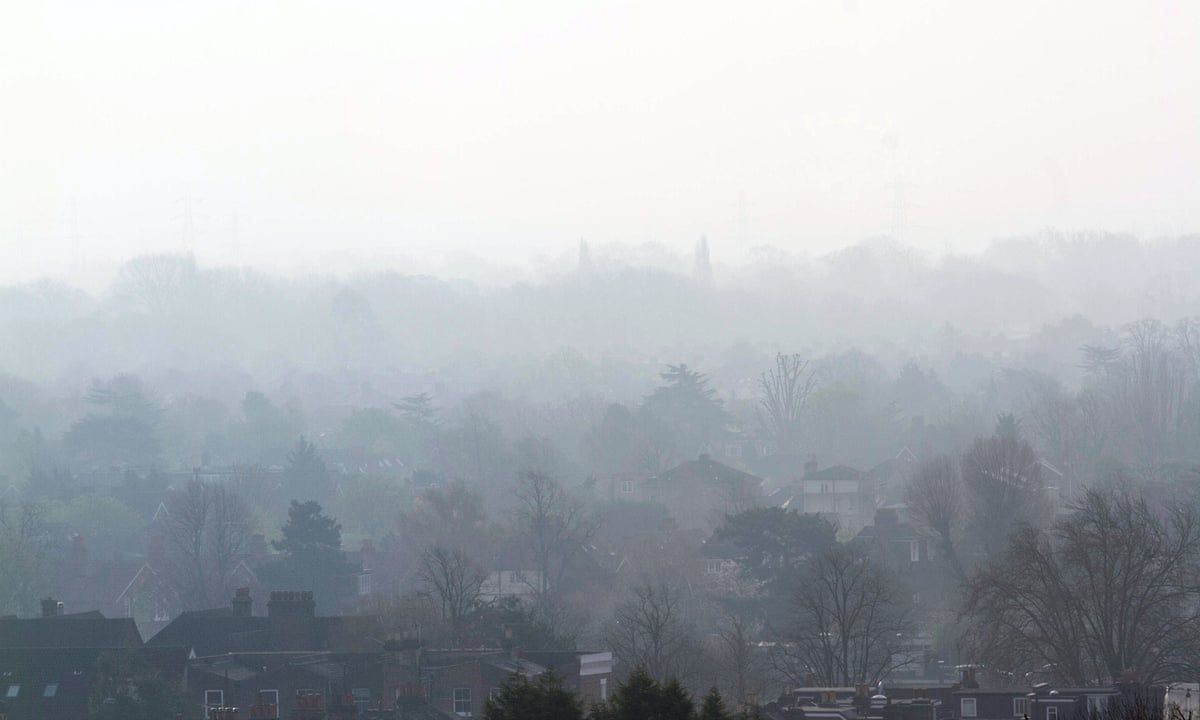
Mexico City faces air pollution … again 

The Atmospheric Monitoring System (Simat) reported a continuous bad air quality over 15 municipalities in the State of Mexico and eight districts in Mexico City.

The agency reported that the municipalities of Ecatepec and Tlalnepantla present 114 Imeca points, meaning that they have the worst air quality in the State of Mexico.

They are followed by Coacalco, Cuautitlán Izcalli, Cuautitlán Melchor Ocampo, Tultepec, Tultitlán, Tonanitla, Nextlalpan, Teoloyucan, Jaltenco, Tepotzotlán, Chalco, Valle de Chalco e Ixtapaluca, with more than a 100 points.

In Mexico City, the districts of Tlalpan, Coyoacán, Xochimilco, Iztacalco, Benito Juárez, Venustiano Carranza, Tláhuac and Gustavo A. Madero face the worst atmospheric quality.

In the rest of the Valley of Mexico, the air quality is just slightly better.

Source: Mexico City faces air pollution … again | El Universal

Posted in Air Quality | Tagged , , | Leave a comment

Hanoi under a polluted cloud 

Many Hanoians seem unaware of the high air pollution in their city despite the warnings of environmentalists and statistics from the US Embassy’s air quality monitoring station in Lang Ha Street that show the air quality index remaining at unhealthy levels (between 151–200 units) over the past week.

These levels mean that everyone may begin to experience negative health effects, and members of sensitive groups may start to experience more serious health effects.

“Air pollution in Hanoi – it’s a very worrying situation now,” said Hoang Duong Tung, deputy head of the Vietnam Environment Administration, who talked to Vietnam News on Friday afternoon.

Tung said that the nearly five million motorbikes and half a million cars, the many construction sites, and people in outlying districts burning crops were the main contributors to pollution. The administration has previously warned people in the city many times about air pollution, he said.

Nguyễn Thu Hương, 30, a staff member of a bank in Đống Đa District, said she had heard about the air pollution in Hanoi early last month via a TV news broadcast. She said at the time she was worried about it, but was too busy to give it prolonged thought.

Nguyen Anh Tai, 26, said the sky appeared smoky and foggy, but thought it was just bad weather.

Dozens of people who were randomly questioned by the Vietnam News about how much they cared about the air quality index in the city had similar answers to Huong and Tai.

Most of them had never accessed the websites http://vietnam.usembassy.gov/air_quality_monitor.html, http://www.cem.gov.vn or http://www.aqivn.org/vi to find information about air quality.

In the meantime, expatriates in Hanoi certainly do care about air pollution.

Stephen Broke-Smith shared photos on the largest expat forum in the capital – the Hanoi Massive Facebook group – showing the air quality index in Hanoi on March 13 stayed around 231. This is considered a “very unhealthy” level.

Sandro Manzon commented, “I know that it is hard to accept, but Hanoi is one of the most polluted developing cities on earth… The air quality index sometimes stays around 300 for weeks. Anything over 250 is considered seriously hazardous.”

A Vietnamese Facebooker, Nguyen Quan shared his confusion about the air quality index data released by http://www.aqivn.org/vi after checking the air quality data in Hanoi provided by the state-owned Centre for Environmental Monitoring at http://www.cem.gov.vn. That site indicated that the current air quality index was only 55 – a moderate acceptable level. However, some pollutants still pose a moderate health risk to a small number of people. For example, people who are unusually sensitive to ozone may experience respiratory symptoms.

Explaining the difference between the two sets of data, Tung said that the different locations where the AQI monitoring stations were installed were the main reason.

The US Embassy used a beta ray analyzer to measure the air quality index, whereas the centre used a light-scattering device, he said, adding that this might help explain the dissimilar data.

“Although it is not an unusual phenomena in the city, it is true that the air quality index in the city is very worrying,” he said.

Tung also said that the administration was drafting a plan to control air pollution by 2020, with a vision towards 2030, and would soon submit to the Government plans to fix the situation.

At this time, the administration has co-operated with the Ministry of Transport and the Ministry of Construction to implement measures to mitigate air pollution in the city, he said.

According to the World Health Organisation, air pollution is an important determinant of health. The WHO estimates that in 2012, around one in eight deaths could be attributed to air pollution, making it the largest environmental risk factor for ill health.

Medical experts said people should wear masks to reduce the effects of air pollution on their health, especially in the case of respiratory disease.

Source: Hanoi under a polluted cloud – News VietNamNet

Posted in Air Quality, Asia, Vietnam | Tagged , , | Leave a comment

Unable to curb pollution crisis, Medellin bans outdoor activity

Medellin authorities have temporarily suspended outdoor activities in the city following extreme levels of pollution in recent weeks.

Amid the current crisis, Mayor Federico Gutierrez put restrictions in place in order to limit the effects of air pollution on the 3 million inhabitants of Colombia’s second biggest city.

“We have all have to be concerned,we have never had the levels of pollution as these days. I am acting responsibly for the care and health of people,” Gutierrez told RCN Radio.

The mayor said he will not suspend classes in schools, but has asked educational institutions to not perform outdoor physical activities.

“We can not expose children to this environment, especially in the morning when there is more pollution. Children can go [to school] but remain in enclosed spaces,” added the mayor.

The authorities have introduced several other measures as the “City of the Eternal Spring” has gradually become the City of Eternal Smog.

The city’s metro can temporarily be used for free. Meanwhile a restriction has been put in place on the use of private cars and motorbikes as well as trucks for garbage collection.

According to a recent report by the World Health Organization (WHO), Medellin is one of the cities in Colombia with the highest concentration of pollutant particles such as dust, soot, ash, metal and cement.

This action by the Mayor temporarily aims at reducing the exposure of the public to these particles while as they continue to suffer the effects of the abnormal weather pattern caused by the “El Nino” phenomenon.

Source: Unable to curb pollution crisis, Medellin bans outdoor activity

Posted in Air Quality, Colombia, Latin America | Tagged , , , | 1 Comment

Extreme haze forces 77 schools to close for two days 

Seventy-seven schools in south-western Sabah are closed for two days after thick smoke enveloped the area amidst simmering peat fires from the Binsuluk Forest Reserve in the Klias peninsula.

Schools in Beaufort (53), Papar (10) and Kuala Penyu (14) were closed as the Air Pollutant Index (API) reached a very unhealthy reading of 279.

In some areas, the visibility was so bad that drivers could only see 20m ahead in the thick haze.

Sabah Education Department acting director Maimunah Suhaibul said the schools, involving over 20,000 students, would reopen tomorrow should conditions improve.

Although the Department of Environment (DOE) does not have a permanent station monitoring the air quality in Beaufort, the reading was taken off a portable machine.

Sabah DOE could not be reached and there were no updates on its website over the API and haze situa­tion.

“It is difficult to breathe. You can smell smoke the moment you walk out,” said housewife Rohani Rowel, 30.

Adding that she was keeping her children indoors, she said the situation deteriorated two days ago des­pite hazy conditions the past week.

Clerk Mazniah Mazta said visibility was sometimes less than 20m and that it was quite difficult to drive.

“The situation improved slightly but the haze came back. I think it is because of the winds,” she said, adding that like many people in Kuala Penyu, they were staying indoors.

As at press time, state Health Department director Christina Rundi had yet to issue any advice or statement if there was an increase in the number of respiratory cases in Beaufort and other parts of Sabah.

Firemen have been battling do­zens of jungle, bush and orchard fires on a daily basis as the dry spell – induced by El Nino – entered its third month in Sabah.

On Saturday, firemen said they had brought the Binsuluk forest peat fires under control after a series of aerial water bombings.

However, they warned that un­­der­growth fires could flare up from time to time.

Despite hazy conditions in Sabah’s west coast, including Kota Kinabalu and parts of Keningau, API readings there were at healthy levels.

Source: Extreme haze forces 77 schools to close for two days – Nation | The Star Online

Posted in Air Quality, Asia | Tagged , , , , , , , | Leave a comment

Exposure to air pollution leads to obesity: Study 

Exposure to air pollution leads to obesity and makes people prone to other lifestyle diseases such as hypertension and heart disease, a study has revealed.

The study published in the Journal of Federation of the American Society of Experimental Biology said surveys have shown that high exposure to air pollution also increases insulin resistance, which is the precursor of diabetes Type 2.

“The link between air pollution and obesity is indeed a new subject of concern. While it is already well established that toxic air is causing more damage than just to the respiratory system, but its link with obesity is certainly worrisome, because then indirectly it will also lead to a rise in obesity linked complications, like hypertension, heart diseases and type 2 diabetes etc,” it said.

Researchers reached the conclusion after they placed pregnant rats and their offspring in two chambers, one exposed to outdoor air and the other containing an air filter that removed most of the air pollutant particles.

After 19 days, the lungs and livers of the pregnant rats exposed to the polluted air were heavier and showed increased tissue inflammation. These rats had 50 per cent higher LDL (bad) cholesterol and 97 percent higher total cholesterol.

Their insulin resistance level, a precursor of Type-2 diabetes, was also higher.

At the age of eight weeks, female and male rats exposed to the pollution were 10 per cent and 18 per cent heavier respectively than those exposed to clean air.

Talking on the prevention of obesity due to air pollution, S.P. Byotra, head of the department of medicine at Sir Ganga Ram Hospital, said: “Given the level of pollution people are exposed to in metros, installing air purifiers at home can be one of the best solutions for air pollution, which is a cause for various types of diseases.”

According to the study published in the Journal of the American College of Cardiology in 2015, indoor exposure to fine particulate matter (PM 2.5) from outdoor sources was a major health concern, especially in highly polluted developing countries.

Source: Exposure to air pollution leads to obesity: Study – Times of India

Posted in Air Quality, Health Effects of Air Pollution, Medical Studies | Tagged , , , | Leave a comment

Huge cruise ships will worsen London air pollution, campaigners warn 

Resident groups mounting a high court challenge to plans for a new wharf in Greenwich say diesel emissions from docked liners would breach legal limits

Toxic fumes from large cruise liners powered by giant diesel engines will worsen London’s air pollution and could prevent the city from meeting its EU legal limits on deadly nitrogen oxide emissions, says resident groups opposing a new terminal.

Plans for a wharf in the Thames that would be able to handle 240 metre-long cruise liners carrying up to 1,800 passengers and 600 crew were approved by Greenwich council last July but are being challenged in the high court by residents.

Developers say that 55 liners a year, each weighing around 48,000 tonnes, would be expected to spend up to three days “hotelling” at Greenwich. Using their auxiliary diesel engines while moored, they would burn around 700 litres of diesel an hour for six months of the year in a borough considered a hot spot for air pollution.

Consultants have calculated that each ship would emit the equivalent of 688 heavy lorries permanently running their engines at Enderby Wharf in Greenwich.

But larger ships, potentially the size of the 12-deck high Crystal Symphony, may also be allowed to moor at Enderby and would emit as many diesel fumes as 2,000 lorries a day, say objectors.

“On top of the ships the port will need tugs, hundreds of taxis and service vehicles all belching diesel close to high-density housing in an already heavily polluted area. I am aghast. Greenwich is already breaching EU limits. The council must know that 10,000 people a year die from diesel fumes a year in London,” said Ralph Hardwick, a campaigner from the Isle of Dogs.

“The alternative is to supply clean onshore power to the cruise vessels rather than running filthy diesel engines. Yet the current planning permission does not require a cleaner operation. Nor has a health feasibility study been undertaken,” said a spokesman for East Greenwich Residents Association.

A spokeswoman for London City cruise port declined to comment pending the legal challenge.

The residents will argue in court that the council should have required the development to provide an onshore power supply for the ships. If so, the liners could turn their engines off while berthed. Instead, it accepted the developers’ argument that it was not “commercially viable”.

The legal challenge follows law firm ClientEarth taking the UK government to court for a second time over what it says are its repeated failures to tackle illegal levels of air pollution in London and other UK cities. Last year the supreme court forced the government to rethink its plans to meet EU limits.

Concern about air pollution from cruise ships is growing as a new generation of mega-liners is commissioned and cruise holidays become more popular. The largest liners are now effectively floating cities, able to take 8,000 passengers and crew. Powered by some of the largest diesel engines in the world, they burn hundreds of tonnes of fuel a day.

“Air pollution emissions from ships are continuously growing, while land-based emissions are gradually coming down. If things are left as they are, by 2020 shipping will be the biggest single emitter of air pollution in Europe, even surpassing the emissions from all land-based sources together,” said a spokesman with Brussels-based Transport & Environment group.

Air pollution from international shipping accounts for around 50,000 premature deaths per year in Europe, at an annual cost to society of more than €58bn, according to studies.

In Southampton, one of nine UK towns and cities cited by the World Health Organisation as breaching air quality guidelines, up to five large liners a day can be berthed in the docks at the same time, all running engines 24/7, said Chris Hines, vice-chair of the Southampton Western Docks Consultation Forum (WDCF).

Southampton is one of the world’s busiest ports for starting and ending sea cruises. “Pollution from the ships is leading to asthma and other chest diseases. The docks are the most polluted areas of Southampton. The pollution is getting worse. We are now getting more, bigger liners, but also very large bulk cargo ships,” said Hines.

Under EU law, ships must switch to their auxiliary engines and burn low-sulphur fuel within two hours of arriving in port until two hours before they leave. However, there are no regulations on how much NOx and particulate emissions they can emit.

Low-sulphur fuel has greatly reduced SO2, or “acid rain” pollution but not other toxins like nitrogen oxides, benzene, toluene and formaldehyde which are emitted in diesel fuel and can have serious health impacts.

According to the Southampton city council scrutiny committee, admissions to hospital from lung, chest and heart diseases are most common from polluted areas like the docks.

According to evidence given to the committee by WDCF, the cumulative effect of up to 20 or more ships in port at the same time, including many large cruise liners with large diesel engines, was a major concern to the public. Incidences of lung diseases in the city and hospital admissions for respiratory diseases linked to air pollution were much higher than the average in England, it was said.

Emissions can be reduced by 95% if ships and ports are adapted allow ships a shoreside electricity supply but this is resisted by the industry on grounds of practicality.

According to Royal Caribbean, one of the largest cruise line companies in the world, only six out of the 490 ports that their ships visit have shore power.

In evidence to the scrutiny committee, Royal Caribbean said: “If Southampton were to explore installing shore power, it would be important to note that ships may not come equipped to use it. The European Union has stated that emissions reductions of only 1-3% of emissions are seen during a seven-night cruise during which a ship could use shore power at every port on the itinerary.”

Source: Huge cruise ships will worsen London air pollution, campaigners warn | Environment | The Guardian

Posted in Air Quality, Europe, London, UK | Tagged , , , , , , | Leave a comment

University “shed” could hold the key to fighting deadly and tiny air pollution particles 

THIS humble shed could hold the key to fighting ultra fine deadly pollution particles.

The Argus was among a small select group of media invited to look round the University of Brighton‘s ground-breaking air-pollution monitoring station at their Falmer campus yesterday.

The state-of-the-art station will be used to learn about the ultra-fine particles in the Sussex air whose health impacts are even more damaging than the recognised PM10 and PM2.5 particulates which current legislation protects us from.

The station will be used to find out bout more ultra fine particles affecting not just victim’s respiratory systems but also damaging nervous systems, the brain and causing cancers.

The particles, for which there are currently no “safe” legislated limits, are a particular threat to the vulnerable including children, the elderly and those with respiratory diseases such as asthma and chronic obstructive pulmonary disease.

Data released this week has shown that the scientific instruments at the monitoring station have successfully detected the ultra-fine particles at a trial run in London last summer.

Lead investigator Dr Kirsty Smallbone said the £750,000 research project, funded by the EU Interreg fund and the University of Brighton, needs to be running for a year to draw any meaningful data from it.

As well as attempting to reduce transport levels causing the pollution, University of Brighton researchers said public bodies may also want to consider air condition filters on schools and hospitals in high pollution areas to capture some of the harmful pollutants.

Researchers said the ultra-fine particles were like a pinhead compared to a PM10 “football”, which are already the fraction of a human hair, which has made them difficult traditionally to detect.

Principal researcher Dr Kevin Wyche said a lot more work was needed but the research could help to shape future legislation in finding safe levels for these ultra-fine particles as the EU currently sets its members safe limits for PM10 and even reshape policy on what is considered safe traffic levels in cities and towns.

Dr Smallbone said: “Air pollution is important and we need to take it more seriously.

“I would like to see more infrastructure [in Brighton] to encourage safe cycling, more affordable public transport and more joined up thinking.”

Keith Taylor, Green MEP for the South East and former Brighton and Hove City Councillor, said: “It’S clear that currently we are not doing enough on air pollution, that is why the British Government has been taken to the Supreme Court and the European Court for failing to conform to the European air quality standards.

“All over the UK, local authorities need to rise to the challenge that air pollution represents and do whatever it takes to improve people’s health and save lives.

“Because of cross-border challenges such as air pollution, we need cross-border solutions and to me that justifies the position and the need to stay in Europe.”

Source: University “shed” could hold the key to fighting deadly and tiny air pollution particles (From )

Posted in Air Quality, Europe, UK | Tagged , , , , , | Leave a comment

Mexico City orders all cars off the road one day a week to tackle air pollution 

In addition vehicles must stay off the road one Saturday a month as the Mexican capital grapples with its worst air-quality crisis in over a decade

Authorities in Mexico City have temporarily ordered all cars to remain idle one day a week in response to this notoriously smoggy capital’s worst air-quality crisis in over a decade.

Until now vehicles have been exempt from the Mexican capital’s “no circulation” rules if owners obtain a holographic sticker from a smog-check centre certifying them as lower-emission.

But the Environmental Commission of the Megalopolis, a cross-government agency comprising the capital and surrounding suburbs that together are home to more than 20 million people, said via Twitter that all cars must now comply, even if they have the exemption sticker.

Vehicles will also be forced to remain idle one Saturday a month.

The measure will begin on Tuesday and run until 30 June, around the time that summer rains typically arrive and improve the region’s air quality significantly.

Officials have been meeting to consider anti-pollution measures since a Phase 1 emergency due to high ozone levels – the first since 2005 – was declared two weeks ago, when warm temperatures and still air left pollution trapped in Mexico City’s volcano-ringed valley.

At the time, government officials and environmental activists pinned at least some of the blame on a supreme court decision last year that overturned a rule barring all cars over eight years old from the streets one day a week.

The ruling is said to have put an extra 1.4m vehicles back on the roads each day.

Smog levels dropped significantly during Easter Week, when much of Mexico City empties out due to the holiday. But on Wednesday afternoon authorities were reporting a pollution index of 108 – officially “bad”, though about half the levels recorded at the peak of the Phase 1 alert.

The commission said that starting on 1 July, more modern technology will be put in place at smog-check centres. Vehicles are supposed to get checked every six months, though it’s common knowledge that for a bribe of $20 or so drivers can ensure a car comes out “clean”.

“The definitive ‘no circulation’ program will align with the new rule for vehicular verification that will be presented soon,” the federal environment secretary, Rafael Pacchiano, tweeted.

Pacchiano said that in addition to Wednesday’s emergency measures, authorities are working on medium-term solutions including improvements to public transportation.

Source: Mexico City orders all cars off the road one day a week to tackle air pollution | World news | The Guardian

Posted in Air Quality, Latin America, Mexico | Tagged , , | Leave a comment