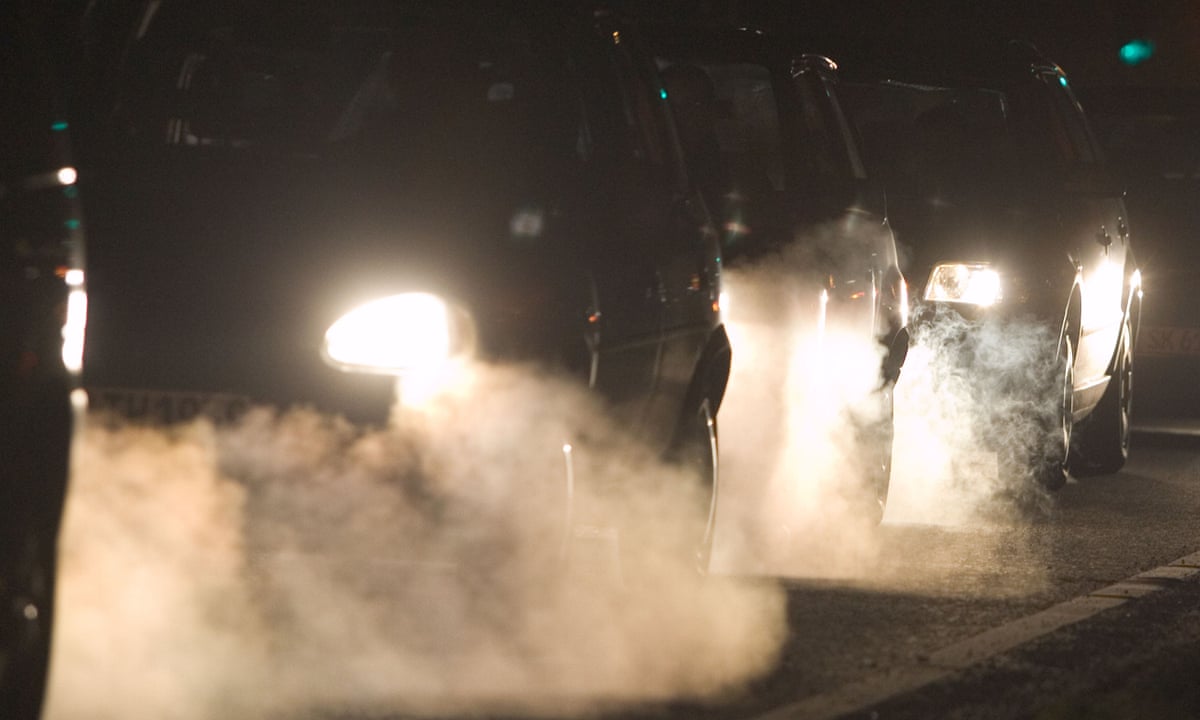
UK toxic car pollution tests delayed by lack of equipment 

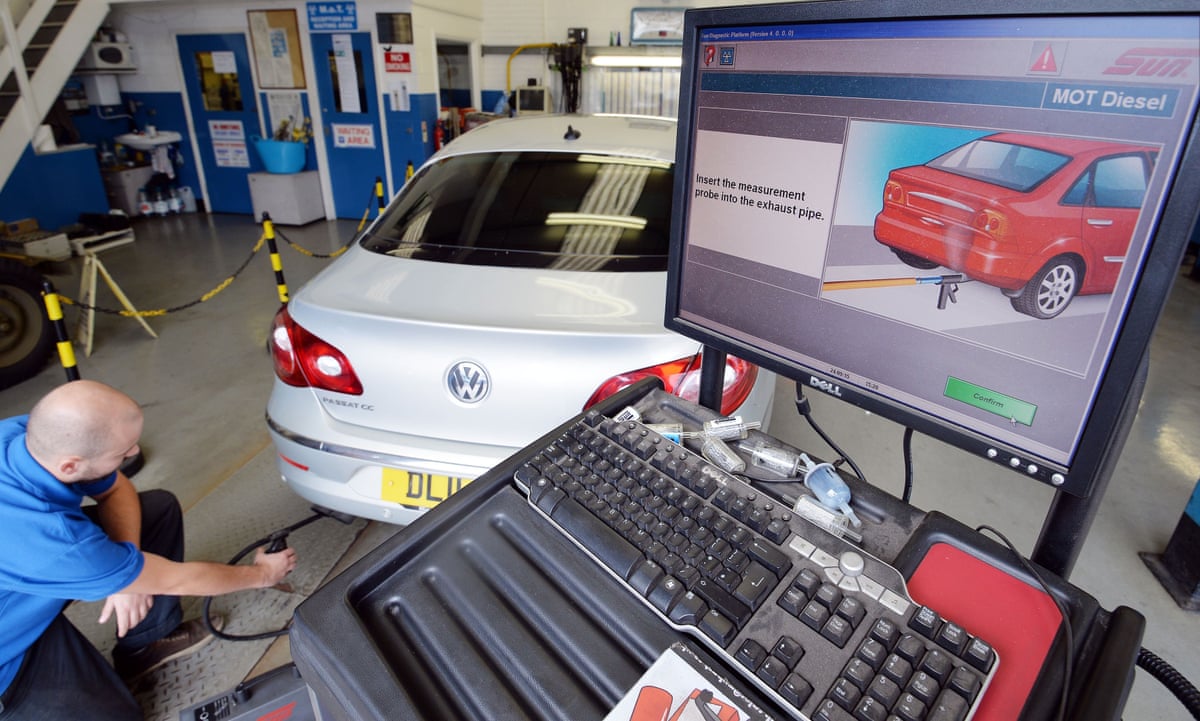
The government has little idea of how much deadly nitrogen oxide (NOx) is being emitted by individual passenger cars because it has only one £100,000 machine able to test real-world emissions, it has emerged.

Until now, government vehicle inspectors have used laboratory tests that can be manipulated by car manufacturers with “cheat devices” to give false results, MPs on the environmental audit committee were told.

But following the VW scandal, when it emerged that the German company had installed devices to lower NOx emissions in its diesel engines, the government pledged to test other cars to see how widespread the practice might be and to ascertain the environmental impact.

According to Michael Hurwitz, director of the Energy, Technology and International Directorate at the Department for Transport, it will be several months before interim results can be made public. “The limiting factor is the availability of the £100,000 kits. We have one and and are looking to get another. But will not be possible to test thousands of vehicles in a short time,” he said.

Transport minister Robert Goodwill and environment minister Rory Stewart told the committee of MPs that they were not surprised at the divergence in CO2 levels between lab tests and real-world driving, which had been known about for several years and was not secret.

But with NOx emissions it was different. “We did not think that manufacturers were cheating. We were aware of discrepancies which we attributed to manufacturers designing engines for the test. We thought that the tests were bad, not that people were cheating,” said Stewart.

The ministers said they had been impressed that heavy goods vehicles (HGV) with new Euro VI engines emitted much less NOx gas. “Possibly we were naive to think that passenger cars would perform as well,” said Goodwill.

But they insisted they wanted much better testing of passenger cars as soon as possible. “The euro VI standard is being broken by factor of five. This is unacceptable. We are working with the German government to test cars on the road. We are working to come up with better tests which will be more accurate,” said Stewart.

He played down freedom of information reports showing that the industry lobby had easy access to ministers, with more than 200 meetings recorded between them in the last parliament – but only two meetings with clean air groups.

Instead, he said that the VW scandal had changed the position of other countries which now wanted stricter testing. “In May the UK was the only government wanting real-world tests. Now almost all support us.”

Goodwill defended diesel in the face of mounting medical evidence that its fumes were dangerous to health, and figures which showed that numbers of diesel vehicles had increased from 1.4m on the road in 1994 and 10.7m now.

“In terms of taxes, diesel has not been discriminated for or against. Diesel has played a major role in reducing transport emissions. We will better positioned to [know its health impact] when we have tested vehicles across the fleet to see the discrepancies between laboratory tests and real-world emissions,” he said.

Source: UK toxic car pollution tests delayed by lack of equipment | Environment | The Guardian

Posted in Air Quality, Europe, UK | Tagged , , , , , , | Leave a comment

Air pollution from China expected to hit, to be at its worst Wednesday 

Taiwan will feel the impact of air pollution from China starting Tuesday due to increasing seasonal winds, which have contributed to a large portion of Taiwan’s air pollution in recent years, a local weather company said Monday.

The degree of pollution could be at its worst on Wednesday, said Peng Chi-ming (彭啟明), CEO and founder of WeatherRisk Explore Inc., the first private weather company in Taiwan.

Similar situations could be rather common in the coming few months because China often encounters high atmospheric pressure masses in winter that prevent air pollutants from dispersing, and the high concentration of pollutants is then blown by seasonal winds to Taiwan, he explained.

Among the pollutants swept to Taiwan’s shores, especially hazardous fine particulate matter smaller than 2.5 micrometers (PM2.5) could be more concentrated in southern Taiwan than in the north as little rain is anticipated there during winter, making it difficult to wash the particles away, Peng said.

Under the Environmental Protection Administration’s (EPA) index for PM2.5, no significant increases in PM2.5 concentrations are forecast for Taiwan on Tuesday but all areas except for eastern Taiwan could see a sharp rise on Wednesday.

Most areas on Taiwan proper will see maximum PM2.5 levels of between 5 and 7 — considered a medium to high range — while the Yunlin, Chiayi and Tainan areas in the southern part of Taiwan may experience PM2.5 levels as high as 9, the highest level in the high range.

Level-10 PM2.5 concentrations exceed 72 micrograms per cubic meter and are considered extremely high, but measurement above level 7 is deemed severe enough to cause tangible discomfort and health problems.

When Taiwan suffers poor air quality, the EPA usually advises elderly residents in affected areas and people with lung or heart problems, persistent coughs or discomfort around the eyes to avoid outdoor activities.People with asthma may also need to use their inhalers more often than normal while the pollution persists, it said.

Source: Air pollution from China expected to hit, to be at its worst Wednesday – The China Post

Posted in Air Quality, Asia, Taiwan | Tagged , , , | Leave a comment

Scents and sense ability: Diesels fumes alter half the flower smells bees need 

In polluted environments, diesel fumes may be reducing the availability of almost half the most common flower odors that bees use to find their food, research has found. The new findings suggest that toxic nitrous oxide (NOx) in diesel exhausts could be having an even greater effect on bees’ ability to smell out flowers than was previously thought. NOx is a poisonous pollutant produced by diesel engines which is harmful to humans, and has also previously been shown to confuse bees’ sense of smell, which they rely on to sniff out their food.

In polluted environments, diesel fumes may be reducing the availability of almost half the most common flower odours that bees use to find their food, research has found.

The new findings suggest that toxic nitrous oxide (NOx) in diesel exhausts could be having an even greater effect on bees’ ability to smell out flowers than was previously thought.

NOx is a poisonous pollutant produced by diesel engines which is harmful to humans, and has also previously been shown to confuse bees’ sense of smell, which they rely on to sniff out their food.

Researchers from the University of Southampton and the University of Reading found that there is now evidence to show that, of the eleven most common single compounds in floral odours, five have can be chemically altered by exposure to NOx gases from exhaust fumes.

Lead author Dr Robbie Girling, from the University of Reading’s Centre for Agri-Environmental Research (formerly of University of Southampton), said: “Bees are worth millions to the British economy alone, but we know they have been in decline worldwide.

“We don’t think that air pollution from diesel vehicles is the main reason for this decline, but our latest work suggests that it may have a worse effect on the flower odours needed by bees than we initially thought.

“People rely on bees and pollinating insects for a large proportion of our food, yet humans have paid the bees back with habitat destruction, insecticides, climate change and air pollution.

“This work highlights that pollution from dirty vehicles is not only dangerous to people’s health, but could also have an impact on our natural environment and the economy.”

Co-author Professor Guy Poppy, from Biological Sciences at the University of Southampton, said: “It is becoming clear that bees are at risk from a range of stresses from neonicitinoid insecticides through to varroa mites. Our research highlights that a further stress could be the increasing amounts of vehicle emissions affecting air quality. Whilst it is unlikely that these emissions by themselves could be affecting bee populations, combined with the other stresses, it could be the tipping point.”

This latest research is part of continuing studies into the effects of air pollution on bees. Previous work in 2013 found that bees in the lab could be confused by the effects of diesel pollution. Dr Girling and Dr Tracey Newman from the University of Southampton are currently studying how diesel fumes may have direct effects on the bees themselves.

Source: Scents and sense ability: Diesels fumes alter half the flower smells bees need — ScienceDaily

Posted in Air Quality | Tagged , , , | Leave a comment

US steams ahead with new rules to curb pollution by superyachts 

No self-respecting oligarch these days can afford to be without a superyacht. Ownership of a bling boat is as obligatory as the Ferrari in the triple garage and the private jet on standby.

However, within months any billionaire wanting to sail their marine home into US waters will have to comply with stringent new environmental regulations to curb their hulking vessel’s polluting effects. The regulations, which stipulate that certain types of vessel built after 2016 have to be fitted with bulky equipment that converts nitrogen oxides into nitrogen and water, were presented to the International Maritime Organisation, the UN body responsible for reducing shipping pollution, but were resisted by trade bodies representing superyacht manufacturers. They protested that the proposed rules threatened their industry because the engine rooms of some superyachts were too small to accommodate the new equipment, meaning they would have to lose a guest cabin to make room for the technology.

A vociferous lobbying campaign was mounted, with some boat builders suggesting that the regulations represented a “doomsday” scenario for their industry. Russia, too, weighed in against the proposals. Amid the standoff, the US has opted to impose its own unilateral obligations, which come into force from 1 January in North America and the US Caribbean, and will force all newly built boats over 24m long and with a gross tonnage of 500 tonnes or more to cut their sulphur and nitrogen oxide emissions by nearly 80%. Experts predict that the regulations, which will apply to all vessels over 24m by 2021, would soon be rolled out to other maritime areas, including the Mediterranean.

Although the new US rules apply to all types of boat built from next year, it is their impact on superyachts that will be most noticeable. Environmental campaigners have expressed anger that, even when the cheapest of cars are equipped with anti-pollutant filters, superyachts have historically had to meet few environmental obligations to reduce their sizeable diesel emissions.

Screen Shot 2015-10-27 at 07.39.42

It reportedly costs more than £250,000 just to fill the fuel tanks of the Vava II, which is almost 100 metres long and was commissioned for a former Miss UK, Kirsty Bertarelli, by her billionaire husband Ernesto. The vessel is dwarfed by Russian billionaire Roman Abramovich’s 160m Eclipse, which can accommodate 36 guests in 18 cabins. U2 singer Bono owns the more modestly sized Kingdom Come which is 60m long and can hold up to 115,000 litres of fuel.

With the super-rich competing to build ever larger vessels, curbing diesel emissions is becoming a priority for engine builders who believe that incorporating anti-pollution systems into their next-generation designs represents a new marketing opportunity.

“These yachts can go up to 200 metres and everything is getting bigger and bigger and bigger,” said Ivo Van Den Berg, business manager at Zenoro, a company that specialises in fitting power systems to superyachts. “These boats need more than shore power can provide when they are moored up. You go to Monaco and you see lot of yachts running on generators all the time. When there is no wind, the emissions are like smog in the city.” Dan Houston, editor at classicsailor.com, said the shipping world was a major polluter that had been slow to clean up its act. “Around 95% of all that we use comes in by ships,” Houston said. “I live in Hove, and you can see the diesel fumes out at sea on certain days. The ships are trucking up and down through the straits of Dover, and when you can’t see the yellow smudge out to sea, that’s when you’re in it.”

Some studies suggest that the health risks of shipping pollution are worse than those caused by traffic pollution. It is claimed that one giant container ship can emit almost the same amount of cancer and asthma-causing chemicals as 50 million cars. A German report estimates that 60,000 deaths each year are caused by shipping pollution.

But, despite these concerns, the shipping world has not yet been subject to the same level of scrutiny as other polluting industries.

Source: US steams ahead with new rules to curb pollution by superyachts | Sport | The Guardian

Posted in Air Quality, USA & Canada | Tagged , , , , , | Leave a comment

Over 40,000 Poles die from air pollution each year

Tens of thousands of people in Poland die from causes directly related to air pollution every year.

The main source of the illnesses is the burning of coal in domestic fireplaces, the Rzeczpospolita daily wrote on Thursday.

The number of victims who die from pollution in Poland is more than ten times higher than victims of road accidents, who amount to more than 3,000 people.

According to experts from the Warsaw University of Technology, the main sources of air pollution in Poland are heating systems in houses and old buildings.

These are responsible for nearly 90 percent of the PM10 and PM2.5 pollutants in Poland, and nearly 100 percent of the polycyclic aromatic hydrocarbon (PAHs) pollution which has carcinogenic properties.

In early October, President of Poland Andrzej Duda signed the so-called “anti-smog” law, marking the culmination of a long-running campaign by environmentalists.

Source: Over 40,000 Poles die from air pollution each year – National

Posted in Air Quality, Europe, Poland | Tagged , | Leave a comment

Expanding pedestrian zones can solve Hong Kong’s congestion and air pollution problems 

Hong Kong has earned a reputation as an international city with high living standards. However, it continues to be affected by high air pollution levels, congestion, and an overall lack of space. Property consultant Knight Frank suggests that expanding the tram network and pedestrianisation can solve this.

According to the Government, trams provide frequent and affordable services without roadside emissions on Hong Kong Island for approximately 180,000 passengers per day. While only a small portion of the population, many are in the city’s lowest income group. Trams are primarily used for their practical value. The tramway system in Hong Kong began in the early 1900s. After more than 110 years of service, there are now 163 tramcars in Hong Kong, making it the world’s largest double-deck tram fleet still in operation.

Though seen as part of Hong Kong’s heritage, trams can be recognised as transportation for the future. New tram networks have been developed to great success all over Europe, as well as in major Chinese cities such as Shenyang, Suzhou, Beijing, Nanking, and Shenzhen. Hong Kong’s latest tramcars use aluminium for their structure, making them lighter and more durable. This improves energy efficiency. The new engines save up to 25 per cent of energy compared with older engines, with safety improvements added as well. Less noise is generated for more passenger comfort.

As for congestion, new roads won’t work. In fact, evidence shows that taking roads away is what increases quality of life in congested areas without causing traffic problems. Overseas cases demonstrate that 20 per cent to 60 per cent of traffic disappeared where roads were closed or traffic capacity reduced. More significantly, closures did not result in rerouting of traffic as in liquid form, but contracted as if traffic behaved as gas. Fifty years of successful pedestrianisation schemes in Europe show that significant amounts of traffic do not reappear after road closure. A more liveable and sustainable environment is created instead.

Hong Kong’s current vehicular pattern in Central is not sustainable. One might assume that pedestrianisation of a major road in Central will aggravate traffic conditions in the rest of the Central Business District, but the Occupy Central Movement proved the opposite. Commuters used more environmentally friendly modes of transport such as the MTR, bicycles or even walking instead.

Road transport and its associated emissions are major causes of environmental degradation in central urban areas. Transportation policy is therefore crucial for addressing public health concerns by improving air quality and reducing greenhouse gas emission. Pedestrianisation is shown to positively impact environmental conditions in core urban areas.

In 2009, a portion of Broadway in New York City was pedestrianised for 6 months. Pollutants closely related to traffic emissions including nitric oxide (NO) and nitrogen dioxide (NO2) decreased by 63 per cent and 41 per cent respectively. Urban planners and environmental engineers were astounded. As a result of this success, the city government plans to expand the pedestrianised zone and create a permanent zone throughout Broadway.

Hong Kong’s Occupy Central Movement proved a link between roadside emission and the city’s air pollution. It also proved that pedestrianisation would significantly improve air quality. An air quality monitoring station at the Charter Road and Des Voeux Road Central junction recorded levels of 10/10 Air Quality Health Index before the Occupy Central Movement, and improved to 3/10 only three days into the movement. Clean Air Network measurements recorded an average PM2.5 level of 18 micrograms/m3 during the movement, which is far below World Health Organisation’s maximum safe standard of 25.

Studies also show positive economic returns from upgrading pedestrian infrastructure. Benefits include increased retail turnover, rental income and occupancy rate. Pedestrians can shop and view shop-windows more without vehicle safety concerns. Cities with pedestrianised districts attract tourists thanks to lower pollution, pleasant walking environments and amenities such as sidewalk cafes, fountains or other street furniture. These districts become popular destinations for the general public.

In New York, the provision of protected bike lanes at Union Square North led to a 49 per cent decrease in commercial vacancy rates. In Freiburg, Germany, the city centre has remained open only to pedestrians, trams, buses and cyclists since the 1980s. This enabled tram services to run through the commercial area without delay and become citizens’ preferred means of transport. The local economy also benefited, with rents of centrally located stores becoming among Germany’s highest. Since most of the city centre is a pedestrian area, 23 per cent of travelling in Freiburg is done on foot. In Hong Kong, research showed rental rates increasing by 17 per cent after pedestrian investments.

These types of adjustments, can help the Hong Kong Government’s Transport and Housing Bureau achieve major policy objectives. Objectives include promoting the use of public transport services by improving quality and coordination; effectively managing road use, reducing congestion and promoting safety; and continuously supporting environmental improvement measures in transport-related areas.

Source: Expanding pedestrian zones can solve Hong Kong’s congestion and air pollution problems | South China Morning Post

Posted in Air Quality, Asia, China | Tagged , , | Leave a comment

Air pollution stunting children’s lungs, study finds

A six-year study finds children living in highly polluted parts of cities have up to 10 per cent less lung capacity than normal, with warnings the damage could be permanent

High levels of air pollution are stunting the growth of children’s lungs, a major study has found.

Eight and nine-year-olds living in cities with high levels of fumes from diesel cars have up to 10 per cent les lung capacity than normal, the research suggests.

Over six years, researchers examined the lung function of 2,400 children at 25 schools across east London, and found a direct correlation between air pollutant exposure and reduced lung growth.

Such children have an increased risk of disease such as asthma and bronchitis and, and the prospect of a permanent reduction in lung capacity.

The tests checked the volume of air each child could breathe, as well as levels of inflammation in their lungs, with urine tests to check for heavy metals, which are produced by vehicles.

Overall, those living in areas with high levels of particulates and nitrogen dioxide had up to 10 per cent reduced lung capacity the study led by Prof Chris Griffiths, principal investigator at the Medical Research Council and Asthma UK Centre in Allergic Mechanisms of Asthma.

“The data shows that traffic pollution stops children’s lungs growing properly,” Ian Mudway, a respiratory toxicologist at King’s College London told the Sunday Times.

“The evidence suggests that by 8-9 years old, children from the most polluted areas have 5 to 10 per cent less lung capacity and they may never get that back.”

The study was designed to assess the impact of London’s Low Emission Zone (LEZ) which since 2008 has discouraged larger diesel vehicles such as lorries from entering the capital.

The research found the measure had made no difference.

“It is very disappointing that the LEZ, which was specifically designed as a major public health intervention, has so far brought about no change,” said Prof Griffiths.

“This raises questions over the government’s current consultation on air quality, which is based around the idea of creating similar low emission zones in up to 30 other polluted urban areas. There appears to be no evidence that these low emission zones can reduce pollution or improve health.”

Other studies have shown diesel pollutants causing lung inflammation, researchers said, with tests showing black carbon from diesel exhaust emissions inside children’s lung cells.

Earlier this year research suggested that air pollution could increase the risk of brain damage and small strokes which are linked to dementia.

Environmental groups say diesel cars could be phased out as part of Government efforts to address pollution.

Source: Air pollution stunting children’s lungs, study finds – Telegraph

Posted in Air Quality, Health Effects of Air Pollution | Tagged , , , , , | Leave a comment

Haze grounded flights in Langkawi; almost 3,000 people stranded, SE Asia News & Top Stories 

Close to 3,000 people, mostly tourists, were stranded here as the haze grounded almost all flights to and from Langkawi International Airport for the past two days.

On Thursday morning (Oct 22), passengers of certain airlines were told the next available flights would be late Friday afternoon, and even then, there was no guarantee that they wouldn’t be cancelled.

“We cannot give any estimates because we can’t predict the haze.

“We can only wait until visibility levels are safe, inform the airlines, and let them decide whether it’s safe to fly,” said airport manager Jefry Ramli.

Sandra Chu and Jimmy Cheung, both 49, from Hong Kong, spent two days waiting for replacement flights at the airport, and their rescheduled flight to Kuala Lumpur on Thursday was also cancelled.

They spent over HK$10,000 (S$1,799) on their trip to Pulau Langkawi, and have now been forced to forego most of the hotel stay and tour packages they’ve paid for in Kuala Lumpur


.”It’s a total loss,” said Cheung of the Kuala Lumpur leg of his holiday. “I never experienced anything like this. I don’t think I’ll ever come back here.”Frenchman Aoune Sane, 33, and his friends had to cancel their flights to Kuala Lumpur and Phuket, worth a total of €300 (S$465), due to the delay.

They finally decided to travel to Phuket by sea – a five-hour journey – in order to catch their flight back to Paris from Thailand.

Others desperate to get to the mainland had to take the ferry from Kuah Jetty to Kuala Perlis or Penang, and book land transport from there.

Airport and airline staff were doing their best to cope with the chaos caused by the haze.”Only a few have shouted at us, but that’s to be expected,” said AirAsia guest service assistant Mohd Azhar Saidan, who was in good spirits despite working 12-hour shifts for the past three days.

Jefry said the airport was also doing its best to help passengers.

Source: Haze grounded flights in Langkawi; almost 3,000 people stranded, SE Asia News & Top Stories – The Straits Times

Posted in Air Quality, Asia | Tagged , , | Leave a comment