Poor air quality forecast for Taiwan through Tuesday

The air quality throughout most of Taiwan is expected to remain poor through Tuesday as a result of pollutants being carried on cold air mass from China, the Environmental Protection Administration (EPA) said Monday.

The most severely affected areas are likely to be Pingtung, Kaohsiung, Yunlin, Chiayi and Tainan in southern Taiwan, the EPA said.

Its data showed that the level of particle pollution –the concentration of harmful fine particulate matters in the air that are 2.5 microns or less in width — may be around 9 in those areas.

Kinmen and Matsu, which sit just off the coast of China, may also experience a pollution level of up to 9, with the poor air quality in all the affected areas prevailing through Tuesday, the EPA said.

Measurements above 7 on the 10-point particle pollution index are deemed severe enough to cause tangible discomfort and health problems.

People in the affected areas are advised, therefore, to wear protective masks to cover their noses and mouths when going outdoors during the high-level pollution period, the EPA said.

It also suggested that senior citizens and people with heart or respiratory problems avoid going outdoors if possible.

via Poor air quality forecast for Taiwan through Tuesday | Society | FOCUS TAIWAN – CNA ENGLISH NEWS.

Posted in Air Quality, Asia, Taiwan | Tagged , , , , , , , , | Leave a comment

Pollutionwatch: Fumes from the farm

The first hints of spring appeared in our air pollution during February.

Ground level ozone rises each spring across the whole northern hemisphere as increasingly strong sun acts upon air pollution that built up over winter. First indications of this were measured across Scotland and Yorkshire last month. Although spring concentrations rarely reach the peaks that we experience during summertime smog, a health impacts study across Sussex found that the frequency of days with moderate ozone results in more air pollution-induced hospital admissions during spring than at any other season.

Easterly winds bought particle pollution across the eastern half of England in mid-February. The greatest concentrations were in Norwich, and the pollution extended as far west as Birmingham. Last spring particle pollution made the headlines; Paris imposed emergency traffic bans and most of the UK experienced the worst air pollution for several years. This was caused by pollution from industry and traffic mixing with ammonia from farming.

Particle pollution control focuses on industry and traffic; less attention is paid to agriculture. Farm animals dominate ammonia emissions. In the UK, half of this comes from cattle manure and slurry and a quarter from poultry. Europe-wide pigs play an important role and many emission areas are close to the UK – in the Netherlands, Denmark and Brittany. In many areas slurry spreading is restricted during autumn and winter to prevent river and water pollution but this can focus slurry spreading during the spring when fertilizer is also being applied to crops. The effect of this burst of agricultural ammonia on our springtime air pollution is largely unstudied.

via Pollutionwatch: Fumes from the farm | Environment | The Guardian.

Posted in Air Quality, UK | Tagged , , , , , | Leave a comment

EPA warns of high air pollution levels in nation’s south

Southern Taiwan will continue to experience poor air quality as a result of pollutants being carried on a cold air mass from China, the Environmental Protection Administration (EPA) said.

In Kaohsiung and Pingtung, the level of particle pollution — the concentration of harmful fine particulates in the air that are 2.5 microns or less in width — might reach as high as nine on the 10-point index, the EPA said.

Adjoining counties in the south as well as parts of central Taiwan are likely to experience a particle pollution level of up to eight.

The conditions in country’s south and center might prevail until Saturday, the agency said.

Measurements above level seven on the index are deemed severe enough to cause tangible discomfort and health problems.

The EPA said people in the affected areas are advised to wear protective masks covering their noses and mouths when going outdoors during the high-level pollution period.

The agency also suggested that senior citizens and people with heart or respiratory problems should avoid going outside if possible.

High levels of particle pollution are considered harmful because the particles are usually from toxic substances such as heavy metals and can penetrate deep into human lungs.

via EPA warns of high air pollution levels in nation’s south – Taipei Times.

Posted in Air Quality, Asia, Taiwan | Tagged , , | Leave a comment

Why does Chamonix have some of the worst air pollution in France?

It’s famous for its winter sports but few visitors know about the high levels of pollution that collect in this idyllic mountain valley. Chamonix’s mayor hopes a raft of improvements, including a new train service, will help clean up the air

My ears pop as the car winds its way up the mountainside. On either side, a sheer, vertical drop of over 60 metres looms. Ahead, just before the Mont Blanc Tunnel, is the picturesque French resort of Chamonix, where over 10,000 people live and almost five million tourists visit every year.

Anyone there to enjoy the pure mountain air may be disappointed. Chamonix, like much of the l’Arve Valley, is home to some of the highest air pollution levels in France.

Chamonix has, in a way, become a victim of its own natural beauty. An idyllic winter wonderland situated at the foot of Mont Blanc, it is one of the oldest ski resorts in France, with unparalleled panoramas and mountain ranges that make it a mecca for skiing, gliding and climbing enthusiasts.

What people often don’t see, amid the excitement of a ski trip or weekend getaway, is the industrial plain of Passy below or the sheer amount of traffic that filters through the area every day. Now, as a result of its V-shaped valley, Chamonix is suffering.

“Last night, we had the monthly council meeting,” says the mayor of Chamonix, Eric Fournier, as we sit down in his office at the town hall. “Everybody – whether it’s the opposition or not – is in agreement that Chamonix has to be a pioneer in our commitment to improving the air quality.”

Fournier is a Chamonix local and the son of a mountain guide, who was first elected mayor in 1995. He has spent the last 10 years trying to find a solution to the town’s pollution problem. “The geographical situation of the valley – the fact that it’s V-shaped – makes it quite encased, so when we have high pressure it basically puts a lid on the valley,” he explains.

Rising levels of pollution in the l’Arve Valley first set alarm bells ringing 15 years ago and have worsened ever since, erupting in 2012 when the EU threatened to sue Chamonix for endangering the health of its inhabitants.

Currently, the pollutants affecting Chamonix mostly include fine particles as a result of residential activity such as heating or burning green waste, and nitrogen dioxide from traffic. Another pollutant reaching worrying concentrations is a cancerous organic compound known as Benzo(a)pyrene (BaP). All of these are regulated by European laws, whose daily limits the valley often exceeds. When levels become critical, the alarm is raised.

“At 10am this morning we were at 17 micrograms per cubic metre [for PM10s, fine particulate pollution] ,” Fournier says, scrolling through a website that lists the stats. “We inform the population from 50 onwards and when it hits 80, it becomes critical and an alert goes out.” At that point, physical activity is discouraged.

Onscreen, a green box indicates that all is ‘bon’ in Chamonix – for now at least.

Some of the steps that have been taken to combat the rising pollution levels in Chamonix are impressive. They include changes to the public transport system, which is now free throughout the valley for both visitors and residents. This costs the municipality around €5m (£3.6m) per annum, but for Fournier and the local environment, it’s worth it. “Public transport carries three million people every year,” he says. “And that number has tripled since it’s been free.”

I’m aware that I am Chamonix’s worst nightmare, having travelled the 80km from Geneva by car. However, most people living locally know how difficult it is to get here by train and willingly take to the roads – even if that does mean a €6 toll.

Now, a new project called Grande Geneve aims to improve the rail network. “At the moment, people can’t really get to Chamonix by train because it’s so complicated,” says Fournier. “You have to change, it takes forever and the Chamonix line is a metric line so the rails aren’t the same width as the main ones. Grande Geneve will make a big difference for us.”

Chamonix’s property sector, too, is being transformed, thanks to a local fund that promises to finance 20% of any renovation work. Tax reductions are on offer for homeowners who install sustainable heating systems and many public buildings, such as the library, have been completely redeveloped. In an area where much of the property hails from the early 1900s, particle filters, solar panels and insulation are nothing short of revolutionary.

But for all his efforts, Fournier knows that he can’t fix the problem without help from the state. External factors like heavy goods vehicles – a major source of pollution – are ones Chamonix has limited influence over.

HGV vehicles, particularly those travelling through the Mont Blanc Tunnel, have been a headache for Chamonix over the years. Between 1999 and 2002, when the tunnel was closed after a transport truck fire, the air quality throughout the l’Arve region improved dramatically. Wild flowers that hadn’t been seen for years suddenly re-appeared. The entrance to the tunnel, blackened by exhaust fumes, became pearly white.

Today, half a million HGVs still pass through every year, but improvements are well underway – 94% of HGV trips through the tunnel are now made by more environmentally-friendly lorries.

As Fournier closes his laptop, I notice three cow statuettes on the corner of his desk. Each one is decorated with the flag of an alpine neighbour – Switzerland, Italy and France. Does he see Chamonix as an example to the world?

“Because Chamonix is such a well-known destination it needs to be an example,” he says, smiling. “This is more than just a commitment. It’s a real duty.”

via Why does Chamonix have some of the worst air pollution in France? | Environment | The Guardian.

Posted in Air Quality, Europe, France, Sports | Tagged , , , , , , , | 1 Comment

REVIEW: Respro® Pollution Mask

2014 has brought Saharan dust and increased toxic air quality reports to the UK and earlier this year, London suffered serious smog problems that led to warnings for vulnerable people, including children, the elderly and those with respiratory illnesses, to stay indoors for days.

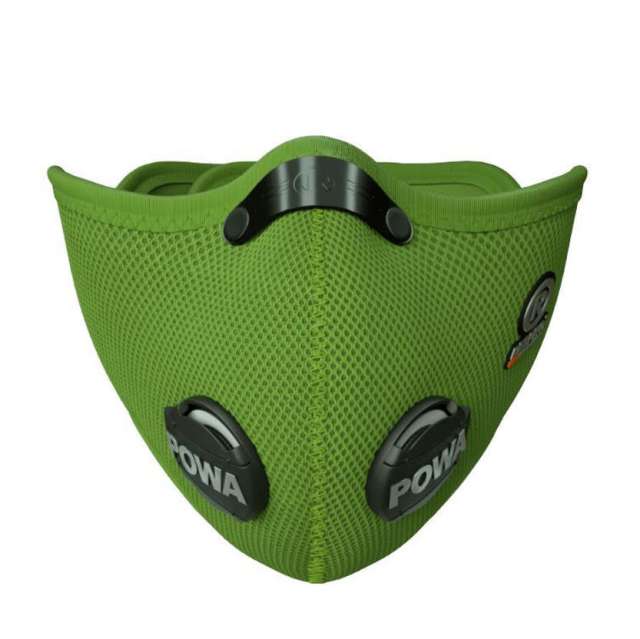
In response to the ever-deteriorating air quality both here and world wide, Respro® has launched a new line of Skins™ pollution masks, the company’s most fashionable line to date. The idea behind it is to introduce a style element for the wearer: instead of feeling alienated by wearing a mask, it becomes a fashion accessory with a statement.

Wearing a mask as a cycle commuter or a city runner will provide some protection to a user’s lungs and the new Respro® Skins™ range enables the wearer to match their style and complement their active wardrobe.

Respro® founder and mask inventor Harry Cole comments; “Much has been written about the UK’s deteriorating air quality over the past months and at times the hype may seem impure. But when we see a noticeable haze sitting atop the London skyline when viewed from Primrose Hill or BrockwellPark and note a heaviness in our lungs when breathing on those hazy days, for us there’s no question that the quality of London’s air is getting worse. ”

To see the new Skins™ range and how they can now be personalised, go to: respro.com/pollution-masks/skins

Respro®

Established in 1993, Respro® (UK) Ltd is a leading player in developing solutions to problems found in the urban sports environment. Most well known for the range of Hump® back pack covers seen all over the UK and pollution masks used world wide.

A British Company, Respro® produces uniquely exportable products and a brand range that works both at a local and a global level. From its UK manufacturing it currently supplies products to over 26 countries.

How do Respro® masks work?

Respro® masks have a filtration system which is inexpensive, easy to use and offers effective protection from inhaling polluted air. The premise is simple: inhaled air passes through a filtration system built into an ergonomic housing.

The technology behind the mask is highly sophisticated, based on an activated charcoal filtration system developed by the Ministry of Defence in the UK, which captures and converts gases to solid aggregate material within the fabric. As air is inhaled, Respro® filters exclude primary and secondary pollutants emitted from vehicle exhausts including Particulate Material (PM 2.5–stuff that goes deep into the lung), Sulphur dioxide, VOC’s, together with photochemical pollutants such as low level Ozone and Nitrogen oxides.

Neoprene®, commonly used for diving suits, forms the shell or housing of the filter and valves and allows a close, comfortable fit around the face. Comfort is further enhanced by the use of exhalation valves that expel unwanted heat, water vapour and carbon dioxide.

Do Respro® masks work?

Yes, Respro® masks work exceptionally well. The three key contributors to our mask effectiveness are: fit, comfort and an effective filter. As official test results go, Respro® masks conform to the technical standards required for European Standard EN149 (equivalent to American NIOSH standards for face masks used in industry) and CE certification.

via Respro Pollution Mask – Luxury & Life Coach Magazine – SLOAN! Magazine London UK | Relationship Coach Seminars to Luxury Reviews, Celebrity Interviews, Health, Wellbeing, Elegance and more….

Posted in Respro® Mask Reviews | Tagged | Leave a comment

London pollution shame laid bare: the UK’s 50 worst spots for air filth are ALL in the capital

London’s pollution shame was laid bare by shocking new figures today.

Londoners are breathing the filthiest air in the country – with toxicity levels up to three-and-a-half times the EU legal limit.

All 50 of Britain’s worst blackspots for dirty air are in the capital, according to data obtained under Freedom of Information.

And each has at least double the EU limit for nitrogen dioxide, a toxic gas linked to asthma, lung infections and other respiratory problems.

The most polluted street is Marylebone Road where the EU limit is shattered in at least five places.

Next worst are Park Lane, Knightsbridge, the Hammersmith Flyover and the East Ham and Barking By Pass.

Number seven on the toxic Top 50 is Oxford Street where it joins Orchard Road at Selfridges – despite Boris Johnson last year dismissing as “bollocks” claims by top experts that the country’s famous shopping street harboured some of the worst pollution on the planet.

Labour accused the Government of failing to tackle a “silent killer” that is believed to lead to thousands of premature deaths each year.

Shadow environment secretary Maria Eagle said: “Air pollution is killing 29,000 people a year, and London’s fifty dirtiest roads all exceed legal limits.”  She said Labour would give councils new powers to clean up.

The figures show NO2 levels recorded at monitoring stations around London near where people shop, live and travel.

The European Union sets a limit of 40 micrograms of NO2 per cubic metre on average per year.

London’s worst blackspot, where Marylebone Road joins Glentworth Street, showed 132 micrograms – about three and a half times the EU maximum.

Nearby at the junction with Wyndham Street the level was 124, some three times the maximum.

Simon Birkett, the former banker who founded the Clean Air in London campaign, said the figures contained “extraordinary revelations” about the pollution picture.

“We need a serious debate about these issues during the election,” said Mr Birkett. Official forecasts showed roads would still be twice the legal limit in 2030, and Heathrow becomes a top 50 hotspot from 2025, even without a third runway.

The new data lists at least two sites in Oxford Street where current pollution levels are nearly triple the limit.

Pollution levels at Park Lane and Knightsbridge were 117, while at the Hammersmith Flyover and Alfred’s Way, the East Ham and Barking By Pass, they were 114.

Even the least polluted locations out of the 50 showed pollution levels of 92 or more, which is two and a half times the maximum.

A spokesperson for Defra, the environment department, said: “Air quality has improved significantly in recent decades and we are investing heavily in measures across government to continue this, committing £2 billion since 2011 in green transport initiatives.”

A spokesperson for the Mayor said pollution was falling, saying: “The Mayor is leading the most ambitious and comprehensive package of measures in the world to improve London’s air quality.” Plans include an Ultra Low Emission Zone from 2020.

Research by the Campaign for Clean Air found that 1,148 schools in London are within 150 metres of roads carrying 10,000 or more vehicles per day.

via London pollution shame laid bare: the UK’s 50 worst spots for air filth are ALL in the capital – London – News – London Evening Standard.

Posted in Air Quality, Europe, London, UK | Tagged , , , , , , | Leave a comment

Industry lobbyists weakened Europe’s air pollution rules, say Greenpeace

New limits on air pollution in Europe have been watered down because governments are allowing some of the worst polluters to help draw up the rules, according to a Greenpeace investigation.

New limits on air pollution in Europe have been watered down because governments are allowing some of the worst polluters to help draw up the rules, according to a Greenpeace investigation.

The Guardian has also learned that despite UK claims to the contrary, energy industry representatives repeatedly and forcefully pushed for weaker pollution limits at meetings in Brussels.

As a result of ongoing lobbying, the proposed European Union standards on toxic emissions from coal plants will be less strict than in China, the green campaign group said.

Greenpeace analysed the backgrounds of hundreds of representatives who have been appointed by governments to sit on a key official group that is formulating new limits on air pollution across Europe.

It found that out of 352 members of the technical working group, 183 are either employed by the companies that are being regulated, or by lobby groups that represent those companies.

“Toxic emissions are killing thousands of people across Europe every year, but rather than clamp down on polluters, politicians are allowing them to prioritise profit over public health. People in the UK could now end up paying with their health for our government’s sell-out to the coal lobby on a vital issue like air quality,” said Lawrence Carter, a campaigner for Greenpeace.

Documents released to the group under the freedom of information act show that the companies helped to formulate Britain’s position, which was adopted and submitted to the European negotiations two years ago.

Five out of the UK’s nine-strong delegation in Brussels work for companies that are responsible for large-scale emissions, including coal power plant operators RWE, EDF and E.ON. The remaining members of the British delegation are civil servants.

The UK government maintains that industry representatives do not negotiate but the Guardian has learned that at key meetings in Brussels, they forcefully pushed for weaker pollution limits.

Officials from energy firms repeatedly complained about the cost of clean air improvements, and a perceived lack of analysis of the economic consequences. They also lobbied to eliminate measures such as ‘coal washing’ from consideration, which would have reduced emissions of ash and sulphur dioxide.

Other measures advanced by energy firms included weaker limits for nitrogen oxide emissions from gas plants, and using more polluting plants as the baseline for limits set under the new rules.

A UK government spokesman told the Guardian: “It is absolutely right that the working group includes representatives from industry as they are well positioned to advise on these very technical and complex matters. It is also right that UK civil servants represent stakeholder interests, including industry, in Europe.”

In all, more than 8,500 comments were submitted by EU states on the proposed new rules, a number the commission considers “exceptional”. The Guardian understands that the vast majority sought to weaken the proposed limits or introduce exemptions.

“Operators of energy utilities shouldn’t sit in the official member states delegation to avoid obvious conflicts of interest in the setting of environmental performance benchmarks that they will themselves have to meet,” said Christian Schaible, a senior policy officer for the European Environment Bureau.

In its report published on Thursday, Greenpeace accuses the delegations from Britain, Poland, Czech Republic, Greece, Germany, France and Spain of being the driving force behind the weakening of proposed controls.

“Several of these countries are among the largest sources of coal-fired power plant pollution in Europe, causing significant health impacts and costs on their citizens and on the citizens of neighbouring countries,” the campaigners said.

Greenpeace accuses nominally-independent members of European delegations of regularly promoting the interests of the polluters, “often using statements directly copied from industry representatives”.

“This is a classic case of the fox guarding the henhouse,” Carter said. “By leaving the big polluters to write new air quality rules, EU and UK ministers are guilty of a collective dereliction of duty.”

The industrial emissions directive rules were originally proposed in June 2013 and could still be amended in a formal proposal which the commission hopes to have ready by the end of the month. Across Europe, they would cut sulphur dioxide, nitrogen oxide and particulate matter emissions by around 70%, 50% and 60% respectively.

But an EU source confirmed to the Guardian that this would still be less robust than in other countries.

“The US legislation was stronger than our [proposal]. They were quite a bit ahead of the EU, so Greenpeace are probably correct,” they said. “China had quite ambitious plans but putting them into reality is another story.”

The new rules govern ‘best available techniques’ for curbing emissions under the directive, which is intended to prevent or reduce pollution.

However, a clause in the directive allows rules to be implemented in an “economically viable and technically reliable” way. Some countries argue that the benefits of cleaner air are outweighed by the cost of technologies such as selective catalytic reduction, the most effective way of controlling nitrogen oxide emissions.

Industry groups say that the top 20 energy utilities have already lost €500bn since 2008 because of EU clean energy targets.

“Looking at the potentially high number of power plants which we will still have to close and the very limited scope for investing in this area, I think it is logical that industry should have expressed a strong interest in keeping their ability to supply much-needed balancing power alive,” said Hans ten Berge, the secretary-general of Eurelectric, which represents Europe’s electricity companies.

On Tuesday, the European Environment Agency warned that air pollution will still cause hundreds of thousands of people to die prematurely in Europe in the next two decades because of governments’ failure to act.

via Industry lobbyists weakened Europe’s air pollution rules, say Greenpeace | Environment | The Guardian.

Posted in Air Quality, Europe, UK | Tagged , , , | Leave a comment

NY air pollution increases risk of stroke: study

It’s enough to take your breath away.

A new study reveals that inhaling New York air can block arteries to the brain — raising the risk of such constriction by nearly 25% in the dirtiest areas.

“We need to worry about the air now?” asked Virginia Fogle, 60, a former corrections officer from Jamaica.

Yes, Virginia, we do. Air pollution can narrow the arteries in the head and neck, cutting off oxygen to the brain and triggering strokes, according to the research by NYU Langone Medical Center, which studied 300,000 area residents.

The constriction — a condition known as carotid artery stenosis that’s responsible for half the strokes in the country — is especially troubling for people with health problems.

“Pollution could be that extra little push that could lead to a cardiovascular event,” said study author Dr. Jonathan Newman, who published his findings in the Journal of the American College of Cardiology Wednesday — one day after other scholars warned of the danger of that other unavoidable fact of New York life: subway rats.

The feds say that humans can safely tolerate 12 micrograms of pollution per cubic meter of air. But the worst parts of the tri-state area register 12.9-14.7 micrograms — raising those residents’ risk by 8.1-24.3%.

“For every 1 microgram increase in air pollution, your risk of carotid artery stenosis goes up by 9%,” Newman told The News.

New York’s air has gotten cleaner since federal standards were tightened in the 1970s — but the city still doesn’t meet federal standards for two dangerous pollutants, fine particulate matter and ground-level ozone.

Surprisingly, areas like the South Bronx, Bedford-Stuyvesant and Flushing have cleaner air than tony Gramercy and Chelsea, where pollution is 18% and 9.5% above federal standards.

Those neighborhoods have the dirtiest air in the five boroughs. But at least those Manhattanites aren’t living in Beijing, where the smoggy air recently registered 568 micrograms per cubic meter — 47 times our nation’s standard.

Since not breathing is not an option, Newman recommends that people already at risk for stroke — smokers, and those with high blood pressure and high cholesterol, for example — should stay indoors when smog or ozone is particularly bad.

The news scared stroke survivor Juan Villafane, 69, a retired auditor from downtown Brooklyn.

“It could be fatal (next) time,” he said.

Newman also recommended that residents lobby for cleaner air. But there’s only so much that can be done until that happens.

“New York is a dirty city,” said Joseph Butler, a 62-year-old retired city transit worker in Park Slope. “You gotta breathe.”

via NY air pollution increases risk of stroke: study – NY Daily News.

Posted in Air Quality, Health Effects of Air Pollution, USA & Canada | Tagged , , , , , | Leave a comment