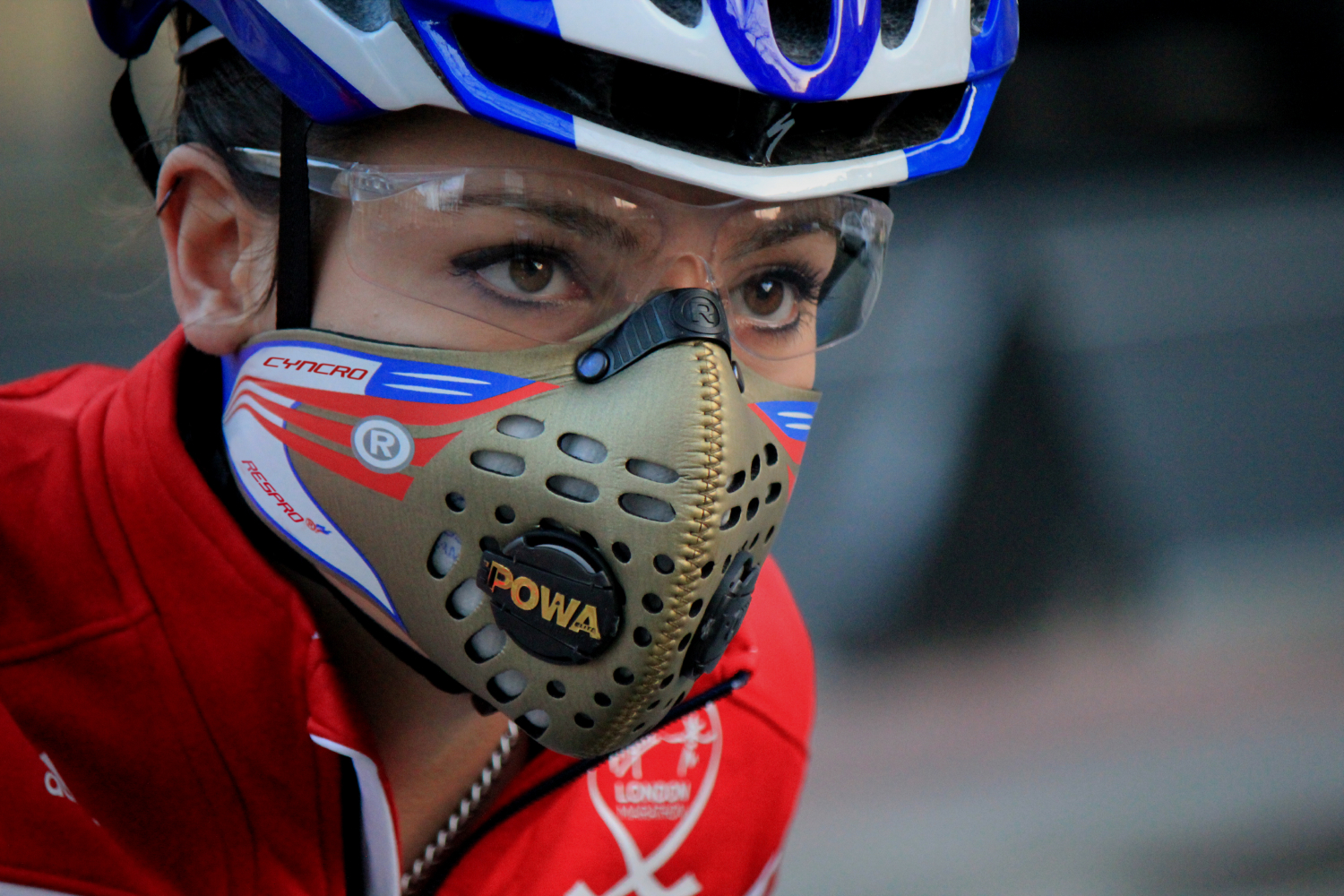
Respro® Masks FAQ: Are children’s masks availiable?

respro-allergy-child-mask-1-lr

Respro® Allergy™ Mask, Image: Respro® UK

Our concern in providing masks for children is that the size variation in children is so wide, that a ‘childs’ mask will not fit the range of sizes that children come in.

A 3-year-old will not require the same mask sizes as a 7 -to 10-year-old. We do not recommend the use of face masks for children younger than 11 years, but to seek alternative ‘common sense’ precautions ie hood on push chairs, keep away from large congested or dense traffic environments; if you cannot, then place something in front of their faces more like a guard to prevent air/wind/ polluted air from direct contact.  Children’s breathing rates are considerably lower that that of a walking adult so they should not be in too much danger. Generally common sense practice where at all possible should be considered. If a child has a particular respiratory issue then medical advice should be considered first and foremost.

The small Respro® Allergy mask is the smallest size available and useable by very small adults and older children above the age of 10 years.

Respro® mask size guide.

Posted in Air Quality | Tagged | Leave a comment

China smog crisis: ‘Air turns toxic grey’

Officials in China say they are confident green technology will help overcome the country’s notoriously polluted air.

Apocalyptic scenes of dense smog have recently forced major cities including Shanghai and Harbin to virtually shut down.

BBC News – China smog crisis: ‘Air turns toxic grey’.

Posted in Air Quality, Asia, China | Tagged , , | Leave a comment

Air pollution ‘kills more people than car accidents’

New figures from the Office of National Statistics shows that air pollution in the capital is a factor in thousands of deaths.”In London and across Europe, air pollution is killing more than ten times the number of people dying from road traffic accidents.

The known health effects of air pollution have rocketed in recent years with the World Health Organisation classifying outdoor air pollution as carcinogenic to humans in October 2013 as it did smoking in February 1985.

At its simplest, in public health terms, ‘invisible’ air pollution is where smoking was thirty years ago in terms of the scale and certainty of the risks and the lack of public understanding of them.

The huge variation in death rates for different death categories across boroughs may raise serious questions about inequalities and the competence and culpability of London authorities.”

– Simon Birkett, Founder and Director of Clean Air in London

via Air pollution ‘kills more people than car accidents’ | London – ITV News.

Posted in Air Quality, Europe, Health Effects of Air Pollution, London, UK | Tagged , , , , | 1 Comment

Air pollution, genetics combine to increase risk for autism

Exposure to air pollution appears to increase the risk for autism among people who carry a genetic disposition for the neurodevelopmental disorder, according to newly published research led by scientists at the Keck School of Medicine of the University of Southern California (USC).

“Our research shows that children with both the risk genotype and exposure to high air pollutant levels were at increased risk of autism spectrum disorder compared to those without the risk genotype and lower air pollution exposure,” said the study’s first author, Heather E. Volk, Ph.D., M.P.H., assistant professor of research in preventive medicine and pediatrics at the Keck School of Medicine of USC and principal investigator at The Saban Research Institute of Children’s Hospital Los Angeles.

The study, “Autism spectrum disorder: Interaction of air pollution with the MET receptor tyrosine kinase gene,” is scheduled to appear in the January 2014 edition of Epidemiology.

Autism spectrum disorder (ASD) is a lifelong neurodevelopmental disability characterized by problems with social interaction, communication and repetitive behaviors. The Centers for Disease Control and Prevention estimates that one in 88 children in the United States has an ASD.

ASD is highly heritable, suggesting that genetics are an important contributing factor, but many questions about its causes remain. There currently is no cure for the disorder.

“Although gene-environment interactions are widely believed to contribute to autism risk, this is the first demonstration of a specific interaction between a well-established genetic risk factor and an environmental factor that independently contribute to autism risk,” said Daniel B. Campbell, Ph.D., assistant professor of psychiatry and the behavioral sciences at the Keck School of Medicine of USC and the study’s senior author. “The MET gene variant has been associated with autism in multiple studies, controls expression of MET protein in both the brain and the immune system, and predicts altered brain structure and function. It will be important to replicate this finding and to determine the mechanisms by which these genetic and environmental factors interact to increase the risk for autism.”

Independent studies by Volk and Campbell have previously reported associations between autism and air pollution exposure and between autism and a variant in the MET gene. The current study suggests that air pollution exposure and the genetic variant interact to augment the risk of ASD.

Campbell and Volk’s team studied 408 children between 2 and 5 years of age from the Childhood Autism Risks From Genetics and the Environment Study, a population-based, case-control study of preschool children from California. Of those, 252 met the criteria for autism or autism spectrum disorder. Air pollution exposure was determined based on the past residences of the children and their mothers, local traffic-related sources, and regional air quality measures. MET genotype was determined through blood sampling.

Campbell and Volk continue to study the interaction of air pollution exposure and the MET genotype in mothers during pregnancy.

via Air pollution, genetics combine to increase risk for autism.

Posted in Air Quality, Health Effects of Air Pollution, Medical Studies | Tagged , , , | Leave a comment

Desolation of smog: Tackling China’s air quality crisis

Officials in China say they are confident green technology will help overcome the country’s notoriously polluted air.

Apocalyptic scenes of dense smog have recently forced major cities including Shanghai and Harbin to virtually shut down.

The capital Beijing is among urban areas where pollution routinely exceeds safety limits set by the World Health Organization (WHO).

In a rare interview, a senior environmental official told the BBC he was “optimistic” that the problems would be overcome.

The Chinese government has launched an effort worth 1.7 trillion yuan (£180bn) to clean up power stations and traffic fumes.

The head of air quality at Beijing’s Environmental Protection Bureau, Wang Bin, pointed to the success other major world cities have had in tackling smog.

“You can see in those big cities like in London in Britain, Los Angeles in America and Tokyo in Japan, they all had huge air problems in the past – for example, London was nicknamed Smog City – which was caused by fast industrialisation.

“But their situation has improved a lot and their air is really better now. Beijing’s pollution is not that severe.

“We have already moved fast to cope with this issue. So we are very confident about reaching a good level of air quality and changing our capital into a green Beijing in future.”

Specific measures include closing down any power stations within the city that burn coal – or switching them to burning cleaner gas instead.

A new lottery system with very few winners is restricting the rise in the number of new cars and drivers. Beijing already has five million cars on its roads, and greener cars will get priority.

Beyond that, a major push for renewable energy including hydroelectric, wind and solar is designed, in part, to help replace power generation by coal, the cheapest but most polluting fuel.

But many people will remain to be convinced that these actions are drastic enough – or that any official optimism is justified.

One mother, Jia Yi, told me of her fears for the health of her twin seven-year-old daughters.

She insists that Ji Xiang and Ru Yi wear face masks on days when the pollution levels are high.

“There are so many people and cars in Beijing and that will influence my children’s health – I do believe Beijing is not a place to live.

“So if it won’t affect my children’s education, we’d rather go to the southern part of China which has better air and environment.”

Prof Pan Xiao-chuan of Peking University’s School of Public Health has led studies into air pollution.

“My personal feeling is that in the last two years the smog frequency in Beijing has been rising – we have figures to prove that – and also the density of the smog is increasing.

“This means the figures of PM 2.5 and PM 10 are really high when there’s a big smog in Beijing.”

PM 2.5 and PM 10 are two types of pollution involving particles too small to see with the naked eye – less than 2.5 or 10 microns in diameter.

Often these consist of fragments of unburned fuel and are small enough to reach the lungs or, in the smallest cases, to cross into the bloodstream as well.

The World Health Organization (WHO) sets a maximum safe limit of exposure over a 24-hour period: 25 of the PM 2.5 particles in every cubic metre of air.

Infographic

Most Chinese cities routinely experience levels well in excess of 200 and, on one occasion in Beijing, of 800.

Given the risks of respiratory and cardiovascular problems, Prof Pan says the regular publication of pollution data has “a very important public health value”.

Until recently, the Chinese authorities did not release data on PM2.5, even though readings on this pollution type were published by the US Embassy in Beijing.

This led to an outcry on social media during a particularly bad smog event in 2011 and forced a change in policy.

Prof Pan said: “This will warn the public when they can go outdoors and when it’s better to stay indoors, and how the old and children should protect themselves.”

The threat of air pollution has become so serious that one school for expatriate children has taken the drastic step of sealing off part of its playground.

A giant inflatable dome at the International School of Beijing now provides an insulated space where the air is filtered and positive pressure ensures any pollution is kept at bay.

Gerrick Monroe, the school’s operations director, said the dome was bought after one pollution spell kept children indoors for a 20-day period.

“One of the first questions prospective parents will ask is ‘what is the air quality like?’

“This is one of the selling points – we take indoor air quality very seriously here.”

For the longer term, the hope is that the government’s measures will start to take effect.

But one leading environmental scientist, Prof Zhang Shiqui of Peking University, says it is “a really big challenge for China” trying to balance economic growth and poverty reduction with public health.

“I think it’s highly dependent on whether China can successfully introduce a restructuring strategy and, second, can China can switch to cleaner sources of energy, and can consumers change their behaviours?

“In previous years, if the government wanted to slow down the economy to get a greener environment, the public would not have agreed.

“But after the PM2.5 event in 2011, the public has a high awareness of air pollution and they are eager to improve the environment here.

“But although China has huge GDP growth, per capita it’s still very low, so China should maintain proper economic growth to solve the poverty issue.”

The reality is that it will take years or even decades to reduce China’s pollution problem – but a combination of public awareness and cleaner technology may help accelerate the process.

via BBC News – Desolation of smog: Tackling China’s air quality crisis.

Posted in Air Quality, Asia, China | Tagged , , , , , , , | Leave a comment

Air quality reaches unhealthy levels around Taiwan

The air quality in some parts of Taiwan has reached “unhealthy” levels due to relatively high concentrations of particulate matter brought in by a continental cold air mass, a government air quality monitoring website indicated Saturday.

The Environmental Protection Administration’s Taiwan Air Quality Monitoring Network site reported that due to the migration of transboundary pollution, the concentrations of PM10 and PM2.5 in the air over Taiwan were relatively high.

Particulate matter (PM), also known as particulates, is mainly divided into bigger PM10 particles of up to 10 micrometers in size and smaller PM2.5 particles, which are about 100 times thinner than a human hair.

The smaller particles are considered particularly harmful to human health because they can travel deeper into one’s lungs and are often more toxic than larger particles.

The air quality in areas around the main island of Taiwan and its offshore islands was graded “ordinary” based on monitoring data of PM10 for Jan. 4-6.

But the pollutant standards index (PSI), based on the concentration of several particles in the air, reached a red (unhealthy air quality) level in Taipei and on the outlying Kinmen and Matsu islands on Saturday morning.

According to the EPA’s forecast for air quality, PM2.5 levels for most of Taiwan, from Taipei in the north to Tainan in the south, were expected to reach 80 micrograms per cubic meter on Saturday, a level considered unhealthy based on Japan’s national air quality standards for PM2.5 particles.

The PM2.5 concentration level in Kinmen was forecast to reach 95-115 micrograms per cubic meter per hour.

Meanwhile, the EPA urged elderly people, children and people who suffer from allergies and cardiovascular diseases to stay indoors when possible.

via Air quality reaches unhealthy levels around Taiwan | Society | FOCUS TAIWAN – CNA ENGLISH NEWS.

Posted in Air Quality, Asia, Taiwan | Tagged , , , | Leave a comment

Respro® Masks FAQ: How do I stop my glasses from misting up?

CINQRO 1967When using a mask with glasses, it is best to fit the mask first to get the correct fit with no seal leakage, then place the glasses in front of the nose clip on the mask. It is really dependent on the seal of the mask. Having adjustable nose pads facilitates a better fit than plastic moulded rims. A good seal around the nose and cheekbone will mean no leakage in that region which equals no misting. This is how/why glasses get misted up on the inside of the lens. In our experience most glasses wearers manage to figure a way of fitting glasses with a mask without them getting misted up.

For more FAQ,  see Respro® Mask FAQ

Posted in Air Quality | Leave a comment

Utah’s air quality Thursday among worst in nation, EPA map shows

Parts of Utah currently have some of the worst air quality in the country, and a health alert remains in effect for the week.

A current map from the U.S. Environmental Protection Agency shows red, or “unhealthy” air over Salt Lake City up through Brigham City.

According to the website, that means people in the area may begin to experience some health effects, especially those with lung sensitivities.

Yellow on the map indicates moderate air quality, meaning air quality is acceptable. Orange means unhealthy air for sensitive groups.

Authorities say there is no relief in sight after pollution levels spiked earlier this week.

Weber County started off the New Year with nearly three times the federal standard of pollution, with 73 micrograms of fine soot per cubic meter.

According to the EPA, Salt Lake City, Phoenix, Las Vegas and central California are suffering from the worst air in the country.

Utah regulators say most of the pollution comes from tailpipe emissions, so residents are encouraged to drive less this week if possible.

Also, those with heart or respiratory problems are encouraged to stay indoors and reduce physical activity.

The next chance for an improvement in air quality may come on Saturday, according to KSL Meteorologist Dan Guthrie.

via Utah’s air quality Thursday among worst in nation, EPA map shows | ksl.com.

Posted in Air Quality, USA & Canada | Tagged , , , , , | 1 Comment