Air pollution impacts on bees ability to find food

Diesel fumes from modern transport and agricultural equipment could be preventing honeybees from finding their food flowers according to scientists. The researchers from Southampton have discovered that air pollution can mask the odour of flowers.

By masking the floral smells of different species the honey bees are unable to find their preferred source of food. Ultimately this could impact on the ability of bees to prosper and pollinate the food crops that humans depend on.

The Southampton team, led by Dr Tracey Newman and Professor Guy Poppy, found that diesel exhaust fumes change the profile of flora odour. They say that these changes may affect honeybees’ foraging efficiency and, ultimately, could affect pollination and thus global food security.

The team used 8 chemicals that are found in the odour of oil rapeseed. When mixed in with clean air the composition of the chemicals remained unchanged. When the same mixture was introduced into air polluted with diesel fumes then the composition changed substantially. 6 of the 8 chemicals reduced and 2 of them disappeared completely within a minute in the presence of diesel.

The researchers used the same process with NOx gases (nitric oxide and nitrogen dioxide), which is found in diesel exhaust, they saw the same outcome, suggesting that NOx was a key facilitator in how and why the odour’s profile was altered. The changed chemical mix was then shown to honeybees, which could not recognise it.

Dr Newman, a neuroscientist at the University, comments: “Honeybees have a sensitive sense of smell and an exceptional ability to learn and memorize new odours. NOx gases represent some of the most reactive gases produced from diesel combustion and other fossil fuels, but the emissions limits for nitrogen dioxide are regularly exceeded, especially in urban areas. Our results suggest that that diesel exhaust pollution alters the components of a synthetic floral odour blend, which affects the honeybee’s recognition of the odour. This could have serious detrimental effects on the number of honeybee colonies and pollination activity.”

Professor Poppy, an ecologist at the University, adds: “Honeybee pollination can significantly increase the yield of crops and they are vital to the world’s economy – £430 million a year to the UK alone. However to forage effectively they need to be able to learn and recognize the plants. The results indicate that NOx gases — particularly nitrogen dioxide — may be capable of disrupting the odour recognition process that honeybees rely on for locating floral food resources. Honeybees use the whole range of chemicals found in a floral blend to discriminate between different blends, and the results suggest that some chemicals in a blend may be more important than others.”

via Air pollution impacts on bees ability to find food | Wildlife News.

Posted in Air Quality | Tagged , , , | Leave a comment

One-fifth of U.S. population lives near traffic where air pollution levels are elevated, study says

Nearly one-fifth of the U.S. population lives near a high-volume road where pollution levels are typically elevated from vehicle exhaust, a new study says.

The analysis found 60 million people living within about one-third of a mile from a busy road. In California, 40% of the population lives that close to traffic, the highest of any state.

“It’s a surprisingly large proportion of the population,” said Gregory Rowangould, a professor of engineering at the University of New Mexico who used U.S. Census and Department of Transportation traffic data to conduct the nationwide tally.

The study found similar results across all regions of the country, suggesting traffic pollution is not only an urban issue but “potentially a much larger and more widespread public health concern.”

Researchers have known for years that air pollution levels are higher along major roads, putting people who live nearby at greater risk of respiratory illness, including asthma and lung cancer.

The study also found that non-white and low-income residents are more likely to live near busy roadways and that most counties do not have monitors to measure air pollution levels close to traffic.

“If there’s no monitor, a potential violation is not going to be detected, and there’s not going to be the additional regulations that can help clean up air pollution in that area,” Rowangould said.

That is set to change in some places starting Jan. 1, when air quality officials in more than 100 metropolitan areas across the country must begin to install air pollution monitors near busy roadways under new rules from the U.S. Environmental Protection Agency.

The study, published in the journal Transportation Research Part D: Transport and Environment, counted people near roads where more than 25,000 vehicles travel each day, a traffic density that Rowangould said represents “the lower limit of roadways with health impacts.”

The study tallied the population within 500 meters of traffic. That’s about 1,640 feet, a wider swath than the 300 to 500 feet environmental regulators have used to measure the population near roadways.

The South Coast Air Quality Management District estimates nearly 1 million people in its four-county basin live within about 300 feet of a major roadway; The U.S. Environmental Protection Agency puts that number at 35 million people nationally.

While past research has shown air pollution levels drop off significantly a few hundred feet from traffic, recent studies have found pollutants from cars and trucks can drift more than a mile downwind.

via One-fifth of U.S. population lives near traffic where air pollution levels are elevated, study says – latimes.com.

Posted in Air Quality, USA & Canada | Tagged , , | Leave a comment

Respro® Masks FAQ: Can the mask be washed?

Can the mask be washed?

It is recommended that you wash the neoprene shell of the mask every month under normal use. To do this it is necessary to remove the filter and the valve first. Although spare valves and filters are available from your retailer, please be careful not to misplace any of the components during maintenance.

For more FAQ,  see Respro® Mask FAQ

Posted in Air Quality | Tagged | Leave a comment

Beijing to issue air quality warnings

China plans to pilot an air quality warning system in the heavily-polluted cities of Beijing, Tianjin and surrounding areas next month amid the country’s increasing efforts to tackle the much-concerned problem.

China Meteorological Administration and the Ministry of Environmental Protection has jointly released the plan that put the alert system at three levels — I being the highest and III the lowest.

When the air quality index is set to go beyond 500, a level I warning will issued, and level II and III are for the index to be at between 300 to 500, 200 to 300, respectively, for three consecutive days.

The plan came as China has been under growing pressure to address the causes of air pollution after heavy smog smothered large swathes of the country early this year.

The government aims to cut the density of inhalable particulate matter by at least 10 percent in major cities nationwide by 2017.

PM 2.5, a key indicator of air pollution, should fall by about 25 percent from 2012 levels in Beijing and surrounding provincial areas by 2017, according to a recent government plan.

via Beijing to issue air quality warnings|Society|chinadaily.com.cn.

Posted in Air Quality, Asia, China | Tagged , , , | Leave a comment

Killer air worse than ever before as pollutants linked to birth defects

Experts believe poor air quality contributed to 29,000 deaths in the UK in 2008, with 4,300 in London.

Critics of air control measures say the public is being duped into thinking the air is getting cleaner when they argue that it is in fact becoming more of a health hazard. Today we publish details from a report on air quality written in 2011 by London mayor Boris Johnson which reveals worrying findings about the danger of pollutant nitrogen dioxide (NO2).

Mr Johnson introduced the controversial policy of banning black cabs which were more than 15 years old in London with many replaced by the apparently greener Mercedes Benz Vito six seaters. However, he says in his report the more modern cars, including the Vito, emit “around five times as much direct NO2”.

US researchers discovered that exposure to high levels of traffic pollution causes birth defects.

They found mothers living in areas with the highest levels of carbon monoxide, nitrogen dioxide and other pollutants were almost twice as likely to give birth to a child with neural tube defects, like spina bifida.

Mr Johnson’s report admits: “NO2 levels have not fallen in recent years as modelling had predicted. This is a problem in major cities in the UK and the EU.

“Evidence suggests this may be due to the failure of recent Euro standards to deliver expected reductions of NO2. Meeting NO2 limit values is much more challenging and is a problem in many urban areas in the UK.”

He urged the Government to implement tax incentives for cleaner vehicles and called for more research into the impact of poor air quality at local and national level “to help communities play their part in air quality management”.

The report admits that measures introduced by the mayor, such as low emission zones, will not be sufficient to meet NO2 limits set for 2015. In 2011 Londoners endured some of the highest levels of large particulate pollution in eight years.

Last night Ukip mayoral candidate Lawrence Webb said: “People think the air is getting better but it is getting worse. People are being duped.

“Mr Johnson’s report reveals some of the more disturbing truths. More ­people will die due to poor air quality in the future and that is why we need a public inquiry.”

Clean air campaigner David Davies, director of Eco Power, said: “The mayor has not implemented a ­single effective policy to reduce pollution and has failed in his legal duty to ­protect the public.”

The mayor’s spokesman said: “Since he took office, emissions of oxides of nitrogen are down by 20 per cent. There is still more to do, which is why the mayor announced plans for a new Ultra Low Emission Zone from 2020.”

via Killer air worse than ever before as pollutants linked to birth defects | UK | News | Daily Express.

Posted in Air Quality, Health Effects of Air Pollution, London, UK | Tagged , , , , , , | Leave a comment

London air pollution level hits startling high

London’s air pollution level is so high that it will exceed acceptable standards, set by the UN, in several years. Thirty thousand people die from air pollution every year. To improve air quality in the UK’s capital, the authorities call on London residents to ride bicycles instead of driving cars.

Air contains particles hazardous to one’s health as they are capable of getting into people’s respiratory system. Londoners’ vehicles are often to blame for it as cars and trucks emit a dangerous air pollutant, NO2, which greatly affects people’s health by causing respiratory system diseases and reducing lung function. According to the WHO, it even may contribute to the development of cancer.

The largest sources of NO2 and other toxic gases in London are buses and diesel-powered cars as they account for 90% of harmful emissions.

An environmental organization, Client Earth, filed a lawsuit against the British government as it believes the authorities failed to protect Britons from air pollution and to implement a plan to reduce NO2 levels.

Local activists claim that the charge for entering the center of London and introduction of so-called green buses are not enough. They call on London residents to contribute to the environmental protection and ride bicycles instead of driving cars. However, it’s unclear whether it could possibly change anything. The government admits London will remain one of the most polluted cities in the world at least until 2025.

Temperatures to rise 0.3-4.8 C this century – UN panel

A UN panel said Friday it was more certain than ever that humans were causing global warming and predicted temperatures would rise by 0.3 to 4.8 degrees Celsius (0.5-8.6 degrees Fahrenheit) this century.

The Intergovernmental Panel on Climate Change (IPCC) also projected sea levels would rise by between 26 and 82 centimetres (10.4 and 32.4 inches) by 2100, according to a summary of the first volume of a long-awaited review.

The Nobel-winning group said it was “extremely likely,” a term meaning it was 95-percent convinced, that humans caused more than half of the warming observed over the past 60 years.

In its last report in 2007, the panel had rated its conviction at 90 percent.

The new document is the first volume in a trilogy seeking to summarise the status of global warming and its impacts.The IPCC has delivered four previous assessment reports in its 25-year history.

Each edition has pounded out an ever-louder drumbeat to warn that temperatures are rising and the risk to the climate system – in drought, floods, storms and rising seas – is accentuating.

The panel’s projections for 2100 are based on computer models of trends in heat-trapping greenhouse gas emissions, especially from coal, oil and gas, which provide the backbone of the energy supply today.

The most optimistic of four warming scenarios sees an average temperature rise of 1.0 C (1.8 F) by 2100 over 2000 levels, ranging from 0.3 to 1.7 C (0.5-3.1 F).

This is the only scenario that can safely meet a UN target of 2 C (3.6 F) which also factors in warming from the start of the Industrial Revolution to 2000.

The highest IPCC scenario has an average additional warming this century of 3.7 C (6.7 F), ranging from 2.6 C (4.7 F) to a 4.8 C (8.6 F).

Read more: http://voiceofrussia.com/news/2013_09_29/London-air-pollution-level-hits-its-high-7167/?from=menu

via London air pollution level hits startling high – News – World – The Voice of Russia: News, Breaking news, Politics, Economics, Business, Russia, International current events, Expert opinion, podcasts, Video.

Posted in Air Quality, London, UK | Tagged , , , , | Leave a comment

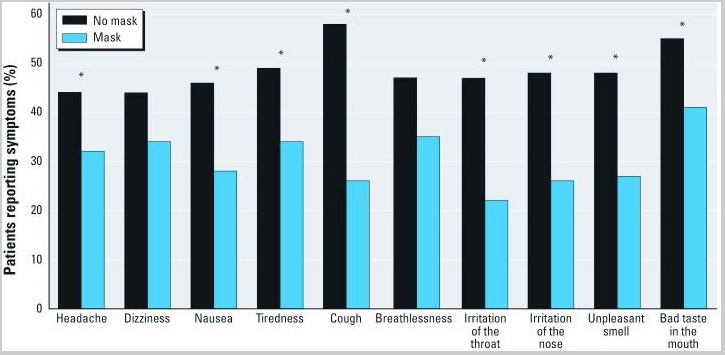
Reducing personal exposure to particulate air pollution improves cardiovascular health in patients with coronary heart disease

Mask No MaskBACKGROUND: Air pollution exposure increases cardiovascular morbidity and mortality and is a major global public health concern.

OBJECTIVES: We investigated the benefits of reducing personal exposure to urban air pollution in patients with coronary heart disease.

METHODS: In an open randomized crossover trial, 98 patients with coronary heart disease walked on a predefined route in central Beijing, China, under different conditions: once while using a highly efficient face mask, and once while not using the mask. Symptoms, exercise, personal air pollution exposure, blood pressure, heart rate, and 12-lead electrocardiography were monitored throughout the 24-hr study period.

RESULTS: Ambient air pollutants were dominated by fine and ultrafine particulate matter (PM) that was present at high levels [74 μg/m³ for PM(2.5) (PM with aerodynamic diamater

CONCLUSIONS: Reducing personal exposure to air pollution using a highly efficient face mask appeared to reduce symptoms and improve a range of cardiovascular health measures in patients with coronary heart disease. Such interventions to reduce personal exposure to PM air pollution have the potential to reduce the incidence of cardiovascular events in this highly susceptible population.

Authors

Langrish JP, et al.

PMCID

PMC3295351 Free Full Text

via Reducing personal exposure to particula – PubMed Mobile.

Posted in Air Quality, Health Effects of Air Pollution | Tagged , , | Leave a comment

Top worst polluted cities in the world

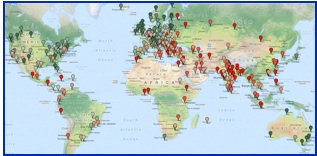
mapView the 25 worst polluted cities in the world:

Current Air Pollution Index Rate

The data is updated weekly (every Monday)

Numbeo surveys the following about pollution in the cities:

  • Satisfaction with air quality
  • Quality and accessibility of drinking water
  • Water pollution (general)
  • Satisfaction with garbage disposal
  • Does people find the city clean and tidy
  • Noise pollution and light during the night in the city
  • Green and parks in the city
  • Feeling of being comfortable to spend time in the city because of the pollution


Posted in Africa, Air Quality, Asia, Australia & Oceania, China, Europe, India, Japan, Latin America, London, Middle East, UK, USA & Canada, World News | Leave a comment