Lucknow, the most polluted city in the world; three other Indian cities feature on 25 most polluted cities: Survey

A pollution index is currently featuring four Indian cities in the 25 most polluted places in the world

A pollution index by Numbeo, updated every week, is currently featuring four Indian cities in the 25 most polluted places in the world. In fact, the city of Lucknow takes the lead with the number one spot.

Lucknow is accompanied by Kolkata at 14 spot, closely followed by Meerut at 17, and Mumbai at 21. Interestingly, no other country features as many times on the list as India. “Pollution Index is an estimation of the overall pollution in the city. The biggest weight is given to air pollution, than to water pollution/ accessibility, two main pollution factors. Small weight is given to other pollution types,” states Numbeo, explaining how and what is calculated in this index.

“Lucknow faces many problems similar to major metros in India. So we can look at Lucknow as a test case for almost any other Class A or B city in India. Various independent and government research reports have conclusively shown that the ambient air quality in most part of the city is extremely poor – not only in industrial areas, but even in residential zones,” explains environmentalist and microbiologist Anuj Wankhede who has worked with Greenpeace and Société Générale de Surveillance.

And before you think, that perhaps India is simply having a bad week. Take a look at India’s annual performance on the pollution index:

Lucknow still leads in the number one spot, followed by Mumbai on 8, and Kolkata on 11. And while China is in close competition on this list, we still take the crown with two cities in the top 10 most polluted.

What is being done?

Not much. It is appalling that despite being the fifth largest killer in India, there is little movement to curb air pollution, or any other form of pollution for that matter.

Emphasising on the harmful effects of this situation, Wankhede adds, “The suspended particulate matter (SPM) levels are dangerously high and a cause of many chronic respiratory ailments. These ailments in turn can result in weakened immunity and secondary infections resulting in pain, economic loss and reduced productivity for the citizens. While large and small scale industrial units spew gases in an unregulated manner, the situation is worsened by the daily addition of vehicles onto the city roads.”
via Lucknow, the most polluted city in the world; three other Indian cities feature on 25 most polluted cities: Survey – India – DNA.

Posted in Air Quality, Asia, India, World News | Tagged , , , , , | Leave a comment

Tehran’s air pollution problem needs rapid solution

Air pollution in Iran’s capital city continues to become a big concern for the country, as it faces numerous ecological problems.

Air pollution and the use of old cars are the two main problems of Iran’s capital city Tehran, that should be adressed as soon as possible, Tehran’s governor Seyyed Hossein Hashemi said, Fars news agency reported.

“One body can’t deal with Tehran’s air pollution, so all the related organizations should cooperate to solve it,” Hashemi said.

According to him, the fuels used in cars and homes should also be studied.

The air over Iran’s capital is amongst the most polluted in the world. Experts say many Iranians suffer serious health problems as a result.

Tehran’s air pollution problem forced the government repeatedly to declare some days-off in the capital due to high degree of pollution.

Tehran’s pollution is mainly related to bumper-to-bumper traffic in a city wedged between two mountains which trap fumes.

Motor vehicles account for 70 percent of pollution in the Iranian capital. Some experts and officials say the low quality of the gasoline and diesel fuel that is used is responsible for the heavy smog in Tehran.

Officials say all car makers should be committed to manufacture vehicles meeting Euro-4 and Euro-5 standards.

Iran currently produces 14 million liters of Euro-4 and Euro-5 gasoline per day. The amount will reach 22 million once the RFCC unit of Shazand oil refinery comes on stream.

Besides, major Iranian cities also struggle with pollution on a seasonal basis.

The fact that some other big cities, like Isfahan, Mashhad, Arak, Karaj, Qom, Tabriz, and Ahvaz, are facing more or less a similar situation backs up this view.

Recall, that Iran has previously had laws implemented for dealing with the problem of air pollution, however none of them worked.

via Tehran’s air pollution problem needs rapid solution – AzerNews.

Posted in Air Quality, Iran, Middle East | Tagged , , | Leave a comment

Air pollution in São Paulo kills more people than car accidents, breast cancer, and AIDS combined

In the sprawling metropolis of São Paulo, Brazil, home to 20 million people and a lackluster public transportation system, fighting through road traffic is a part of everyday life for commuters. With some 7 million vehicles already clogging city streets, and about a thousand more being added daily, it’s not surprising that São Paulo offers a troubling example of how deadly car culture can be.

But while annual deaths from traffic accidents is quite high, it actually pales in comparison to another way cars are killing people — from pollution.

According to a study commissioned by the Institute of Health and Sustainability, 4,655 people died as a result of air pollution in São Paulo in 2011. In that same time period, traffic fatalities accounted for 1,556 deaths. The study also points out that pollution contributed to over twice as many deaths that year than both Aids (874) and breast cancer (1,277) combined.

São Paulo air pollution particulates average 20 to 25 micrograms per cubic meter; over twice what is deemed safe by the World Health Organization.

Across the entire state of São Paulo, air pollution has been cited as responsible for the deaths of nearly 100,000 people from 2006 to 2011 from respiratory illness. As more cars are added to the road, and likewise more people move into the dense urban centers, that number is likely to rise — both in Brazil, and throughout the world.

via Air pollution in São Paulo kills more people than car accidents, breast cancer, and AIDS combined : TreeHugger.

Posted in Air Quality, Latin America | Tagged , , | 2 Comments

Research highlights health benefits of cutting air pollution

Millions of lives could be saved by the end of the century if greenhouse gas emissions were reduced, say US researchers.

If the world does take concerted action to reduce greenhouse gas emissions, then by 2100 between 1.4 million and three million people a year will be conspicuously better off: they won’t be dead.

Jason West of the University of North Carolina, Chapel Hill, in the US, and colleagues took a long, cool look at the health consequences of climate mitigation, and report that as carbon dioxide emissions fall, so do levels of fine particulate matter and ozone.

These incidental by-products of fossil fuel combustion are notorious health hazards, and can impose huge health costs on society.

But some air pollution would be a direct result of climate change, and slowing this, too, would have a global health payoff.

The authors report in Nature Climate Change that in US dollar terms, for every tonne of carbon dioxide emissions saved, the world would be somewhere between $50 and $380 richer.

Calculations like these are bewildering, hard to resolve with plausible accuracy and of course cannot be checked for another eight decades.

Most of the notional sufferers are not yet born, and some would suffer and die from respiratory problems anyway.

The potential deaths remain just that: potential but also potentially avoidable deaths of unidentifiable future citizens.

But such calculations are important for government planning – every decision both imposes costs and delivers benefits, and politicians need to have some sense of which are likely to be greater.

There have been arguments that attempts at climate mitigation would be expensive and, ultimately, more trouble than they are worth.

Dr West and colleagues confined their study to just the immediate incidental benefits of reduced emissions. They thought about the rise in international transport, the effect of methane on global ozone levels, and future population projections.

They did not try to calculate the value of limiting sea level rise, or containing the spread of tropical and subtropical diseases into the temperate zones, or the extra deaths through increased hazards of flood and drought and heat wave in a warmer world.

Action

They just looked at the incidental pollutants that accompany fossil fuel combustion, and started doing the sums.

They considered those regions where there were already high pollution levels and low governmental controls; they considered the age groups likely to cough and choke in an atmosphere of low level ozone, aerosols and fine soot particles.

Dr West also considered a series of climate projections in which emissions were reduced, or not reduced very much, or not at all; and then arrived at a set of likely deaths per year for the decades to come.

They also took into account political possibilities: the likelihood, for instance, that legislation in both East Asia and South Asia would start to limit air pollution, as governments began to do decades ago in Europe and the US.

And they concluded that there was clear value in action now: a global reduction in greenhouse gas emissions would save lives and save money around the planet.

By 2030, somewhere between 300,000 and 700,000 premature deaths a year could be avoided: two thirds of them in China alone.

By 2100, real action could prevent 2.2 million premature deaths a year – it could be 800,000 more, it could be 800,000 fewer.

But the money saved in the first decades for health services alone by reducing emissions would be greater than the overall economic price of mitigation.

The authors conclude that there is a clear need to coordinate action on air quality and climate change: “By addressing both problems simultaneously, they may be managed more effectively, at less cost, and with greater overall benefits.”

via Research highlights health benefits of cutting air pollution.

Posted in Air Quality, Health Effects of Air Pollution | Tagged , | Leave a comment

It may be possible to use trees to monitor levels of air pollution in cities, new research suggests.

A Belgian study found evidence that leaves of urban trees change both chemically and physiologically when exposed to different levels of air pollution. If these changes are carefully quantified, trees could provide cheap and widespread ‘bio-indicators’, the study’s authors suggest.

Trees could be used to monitor air pollution simply and cheaply Air pollution can present serious risks to both human health and the environment. However, accurately monitoring air pollution requires expensive equipment which is often only placed in a small number of sites. The bio-indicator approach uses the chemical and physical changes in organisms to directly assess the effects of air pollution on the environment.

In this study, carried out in the city of Gent, Belgium, researchers chose two species of lime tree (also called linden trees), a ‘hairy’-leaved and a smooth (non-hairy)-leaved variety. Seven or eight trees were selected in two areas; one industrial area with high air pollution levels and the other area containing urban green spaces and semi-natural habitat with lower air pollution. The air pollution levels in the two areas were verified by government monitoring stations.

During August 2009, three to four leaves were collected from different branches of each tree. Researchers then measured the chlorophyll content (a green pigment, essential for photosynthesis) and how much light was reflected by the leaf from both adaxial (upper) as well as abaxial (lower) sides.

The results demonstrated that chlorophyll content was significantly lower in the more polluted area in both species of tree. Furthermore, for the hairy-leaved species, adaxial leaf reflectance signific antly increased in the more polluted area. Adaxial leaf reflectance was also higher in the smooth-leaved species; however, this result was marginally significant. The higher reflectance in the more polluted area was likely to have been caused by the lower chlorophyll content, a link which has been demonstrated in other studies. The higher sensitivity of the hairy-leaved species to pollution may suggest that the leaf hairs trap pollutants, increasing exposure. This shows that any bio-indicator approach to air pollution monitoring must take into account differences between specific species, say the authors.

The researchers also looked to see if leaves with reflective adaxial sides were also reflective on their abaxial sides. For both species, both sides were more likely to be more reflective in the polluted area. This indicates structural changes to the leaf, the authors say, resulting in a thinner leaf. The lower chlorophyll content again might also play a role.

The study concludes that using plants as bio-indicators could provide a simple and cheap method of monitoring air pollution and its environmental impacts in particular. However, care must be taken to ensure that differences between species are fully accounted for.

via 342na1.pdf.

Posted in Air Quality | Tagged , | Leave a comment

Cleaner air from tackling climate change ‘would save millions of lives’

Tackling climate change would save millions of lives a year by the end of the century purely as a result of the decrease in air pollution, according to a new study.

The study is published as scientists from around the globe gather in Stockholm to thrash out final details of a landmark assessment of climate science. Their final report is due to be released on Friday 27 September and will set out projections of wide-ranging impacts of global warming from droughts to floods to sea-level rise.

The research suggests that the benefits of cuts to air pollution from curbing fossil-fuel use justify action alone – even without other climate impacts such as more extreme weather and sea-level rise.

“It is pretty striking that you can make an argument purely on health grounds to control climate change,” said Jason West, at the University of North Carolina at Chapel Hill, whose work is published in Nature Climate Change.

West’s team compared two futures, one in which climate change is stabilised by aggressive cuts in greenhouse gas emissions and one in which emissions are not curbed. The scientists then modelled how this affected air pollutants and the consequent effects on health.

They found that 300,000-700,000 premature deaths a year would be avoided in 2030, 800,000 – 1.8 million in 2050 and 1.4 million to 3 million in 2100. By mid-century, the world’s population is expected to peak at around 9 to 10 billion.

A key finding was that the value of the health benefits delivered by cutting a tonne of CO2 emissions was $50-$380, greater than the projected cost of cutting carbon in the next few decades. The benefits do not accrue from reductions in CO2 per se but because of associated pollutants released from burning fossil fuels.

It is possible to reduce pollutants in fossil fuel emissions more cheaply without switching to low carbon sources of power – for example with scrubbers on coal plants that remove NOx and SOx; or by cars switching from diesel to petrol – but the authors say it is striking that the value of health benefits outweigh the costs of cutting carbon.

The benefits were particularly great in China and east Asia, where the value of health improvements was between 10 and 70 times greater than the cost of reducing emissions. “The benefits in north America and Europe are still pretty high, but in east Asia you have a very high population exposed to very bad air pollution, so there are lots of opportunities for improvement there,” said West.

The research analysed how cutting emissions from coal-fired power plants, cars and other sources reduced levels of small pollution particles PM2.5 which increase heart attacks, strokes and lung cancer and of ozone, which causes respiratory illnesses.

Unlike previous studies, which have tended to focus on specific countries or regions, the new study took a global perspective. “Air pollution does not stop at the border,” said West. “If China reduces pollution, people outside of China benefit as some pollution travels across the Pacific or the other way into south-east Asia.”

Another key difference of the new work was including future population increases and the rising longevity of people, which means they are more likely to be affected by cardiovascular diseases, rather than dying young from infectious diseases. The ranges in the estimates of premature deaths avoided and the economic benefits arise from the relative uncertainty of how people’s health responds to air pollution and the range of valuations used for lives, with the US Environmental Protection Agency using a value of $7m per life, while the European Union uses $2m per life.

The wider assessment from the Intergovernmental Panel on Climate Change due on 27 September, its first since 2007, will play a crucial role in the international negotiations towards a global deal to tackle global warming in 2015. West said: “Climate change is a long-term problem and the benefits of any action taken by one country are shared out among all: both of these things make reaching and an agreement difficult. But the air pollution co-benefits are local, tangible and near term, with air quality improving within weeks. That strengthens the argument for taking action.”

via Cleaner air from tackling climate change ‘would save millions of lives’ | Environment | theguardian.com.

Posted in Africa, Air Quality, Asia, Australia & Oceania, China, Europe, Health Effects of Air Pollution, India, Japan, Latin America, London, Middle East, UK, USA & Canada, World News | Tagged , , , , , , , | Leave a comment

Here’s Where You’re Most Likely to Die From Air Pollution

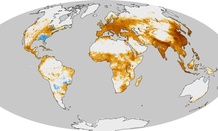
Where on earth are you most likely to die early from air pollution? NASA provides the answer with this mortally serious view of the planet, and it is: lots of places.

Like tar stains on a healthy lung, the sickly yellow and brown areas in this visualization represent regions with significant numbers of pollutant-influenced deaths. Heavily urbanized places in eastern China, India, Indonesia, and Europe are stippled by the darkest colors of snuff, meaning they experience rates of ruination as high as 1,000 deaths per square kilometer each year.

In good news, areas painted in blue show where humanity has managed to lower its output of choking smog since the 1850s. These safer havens include spots in the middle of South America and the southeastern United States, where the amount of agricultural burning has decreased since the mid-19th century.

This representation of our befouled atmosphere is based on the work of Jason West, an earth scientist at the University of North Carolina who’s investigating the health effects of bad air. According to computer models that West and his team constructed, an incredible 2.1 million deaths a year can be attributed to one type of pollution alone – fine particulate matter, or PM2.5, which are teensy specks that fly out of car-exhaust pipes, industrial smokestacks and other things. (They’re also what the NASA map is referencing.)

via Here’s Where You’re Most Likely to Die From Air Pollution – Nextgov.com.

Posted in Air Quality, World News | Tagged , , , , | Leave a comment

China really gets tough on air pollution

China is expected to have 200 million cars on the road by 2020 increasing pressure on energy security and the environment, government officials said yesterday.

The concentration levels of breathable suspended particles with a diameter of 10 microns — known as PM10 — or less, must fall by at least 10 percent by 2017 from the levels in 2012.

Tougher objectives have been set for some key areas. For the Beijing-Tianjin-Hebei regional cluster, concentration levels of PM2.5 particles — those smaller than 2.5 microns in diameter, which can penetrate deep into the lungs — must be cut by 25 percent by 2017 from the 2012 level, under the plan. The target for the Yangtze River Delta region is a reduction of 20 percent and for the Pearl River Delta region it is a cut of about 15 percent.

The plan takes into account pollution and economic development in different areas, with the aim of reducing PM2.5 levels in the three key regions and PM10 levels in the other cities, Wang said.”

But this does not mean that controlling PM2.5 is not important in the other regions, as PM2.5 particles account for 50 to 60 percent of PM10 particles,” he added.The plan is an updated version of one released late last year that was designed to tackle air pollution in 13 key areas.

Under the former plan, PM2.5 levels in the three key areas were targeted to drop by 6 percent by 2015, based on 2010 levels.Wang said the updated version was drawn up in response to a growing consensus that a tougher approach to air pollution is required following severe pollution in January.Thick smog and haze covered 2.7 million square kilometers of the country at the start of the year, affecting more than 600 million people.

The technological level and quality standards of its industry as a whole are still fairly low, notwithstanding a marked change since 2000, spurred in part by foreign investment. The market-oriented reforms China has implemented over the past two decades have unleashed individual initiative and entrepreneurship, whilst retaining state domination of the economy.

increasing pressure on energy security and the environment, government officials said yesterday. In large part as a result of economic liberalization policies, the GDP quadrupled between 1978 and 1998, and foreign investment soared during the 1990s.

Agriculture is by far the leading occupation, involving over 50% of the population, although extensive rough, high terrain and large arid areas – especially in the west and north – limit cultivation to only about 10% of the land surface.

Except for the oasis farming in Xinjiang and Qinghai, some irrigated areas in Inner Mongolia and Gansu, and sheltered valleys in Tibet, agricultural production is restricted to the east. Livestock raising on a large scale is confined to the border regions and provinces in the north and west; it is mainly of the nomadic pastoral type.

Growing domestic demand beginning in the mid-1990s, however, has forced the nation to import increasing quantities of petroleum. Hydroelectric projects exist in provinces served by major rivers where near-surface coal is not abundant.

There are railroads to North Korea, Russia, Mongolia, and Vietnam, and road connections to Pakistan, India, Nepal, and Myanmar.

via China really gets tough on air pollution – China, Environment – Thailand Business News.

Posted in Air Quality, Asia, China, Thailand | Tagged , , , , | Leave a comment