New research finds 1M deaths in 2017 attributable to fossil fuel combustion

Map: Nationallevel outdoor PM2.5 disease burden in 2017 (from the 2019 Global Burden of Disease concentration-response relationships). Panels: Annual averagepopulation-weighted PM2.5 exposure levels and attributable mortality (rounded to the nearest 1000). (Left pie charts) fractional sectoral source contributions.’Other fires’ include deforestation, boreal forest, peat, savannah, and temperate forest fires. ‘Remaining sources’ include volcanic SO2, lightning NOx, biogenic soil NO, aircraft emissions, and oceanic and biogenic sources. Credit: Lab of Randall Martin

An interdisciplinary group of researchers from across the globe has comprehensively examined the sources and health effects of air pollution—not just on a global scale, but also individually for more than 200 countries.

They found that worldwide, more than one million deaths were attributable to the burning of fossil fuels in 2017. More than half of those deaths were attributable to coal.

Findings and access to their data, which have been made public, were published today in the journal Nature Communications.

Pollution is at once a global crisis and a devastatingly personal problem. It is analyzed by satellites, but PM2.5—tiny particles that can infiltrate a person’s lungs—can also sicken a person who cooks dinner nightly on a cookstove.

“PM2.5 is the world’s leading environmental risk factor for mortality. Our key objective is to understand its sources,” said Randall Martin, the Raymond R. Tucker Distinguished Professor in the Department of Energy, Environmental & Chemical Engineering at Washington University in St. Louis.

Martin jointly led the study with Michael Brauer, a professor of public health at the University of British Columbia. They worked with specific datasets and tools from the Institute for Health Metrics and Evaluation at the University of Washington, the Joint Global Change Research Institute at the University of Maryland and Pacific Northwest National Laboratory, as well as other researchers from universities and organizations across the world, amassing a wealth of data, analytical tools and brainpower.

First author Erin McDuffie, a visiting research associate in Martin’s lab, used various computational tools to weave the data together, while also enhancing them. She developed a new global dataset of air pollution emissions, making it the most comprehensive dataset of emissions at the time. McDuffie also brought advances to the GEOS-Chem model, an advanced computational tool used in the Martin lab to model specific aspects of atmospheric chemistry.

With this combination of emissions and modeling, the team was able to tease out different sources of air pollution—everything from energy production to the burning of oil and gas to dust storms.

This study also used new techniques to remote sensing from satellites in order to assess PM2.5 exposure across the globe. The team then incorporated information about the relationship between PM2.5 and health outcomes from the Global Burden of Disease with these exposure estimates to determine the relationships between health and each of the more than 20 distinct pollution sources.

As McDuffie put it: “How many deaths are attributable to exposure to air pollution from specific sources?”

Ultimately, the data reinforced much of what researchers already suspected, particularly on a global scale. It did offer, however, quantitative information in different parts of the world, teasing out which sources are to blame for severe pollution in different areas.

For instance, cookstoves and home-heating are still responsible for the release of particulate matter in many regions throughout Asia and energy generation remains a large polluter on the global scale, McDuffie said.

And natural sources play a role, as well. In West sub-Saharan Africa in 2017, for instance, windblown dust accounted for nearly three quarters of the particulate matter in the atmosphere, compared with the global rate of just 16 percent. The comparisons in this study are important when it comes to considering mitigation.

“Ultimately, it will be important to consider sources at the subnational scale when developing mitigation strategies for reducing air pollution,” McDuffie said.

Martin and McDuffie agreed that, while a takeaway from this work is, simply put, air pollution continues to sicken and kill people, the project also has positive implications.

Although pollution monitoring has been increasing, there are still many areas that do not have the capability. Those that do may not have the tools needed to determine, for instance, how much pollution is a product of local traffic, versus agricultural practices, versus wildfires.

“The good news is that we may be providing some of the first information that these places have about their major sources of pollution,” McDuffie said. They may otherwise not have this information readily available to them. “This provides them with a start.”

Apples to apples

One unique aspect of this research is its use of the same underlying datasets and methodology to analyze pollution on different spatial scales.

“Previous studies end up having to use different emissions data sets or models all together,” said first author Erin McDuffie. In those instances, it is difficult to compare results in one place versus another.

“We can more directly compare results between countries,” McDuffie said. “We can even look at pollution sources in places that have implemented some mitigation measures, versus others that haven’t to get a more complete picture of what may or may not be working.”

New research finds 1M deaths in 2017 attributable to fossil fuel combustion
Posted in Africa, Air Quality, Asia, Australia & Oceania, Canada, Chile, China, Colombia, Europe, France, Germany, India, Indonesia, Iran, Iraq, Italy, Japan, Latin America, Malaysia, Mexico, Middle East, Mongolia, Philippines, Poland, Singapore, South Korea, Spain, Taiwan, Thailand, UK, USA, USA & Canada, Vietnam, World News | Tagged , , , , , , , , , , , , | 1 Comment

Bulgaria, Poland, Romania, Croatia have highest PM2.5 air pollution in EU

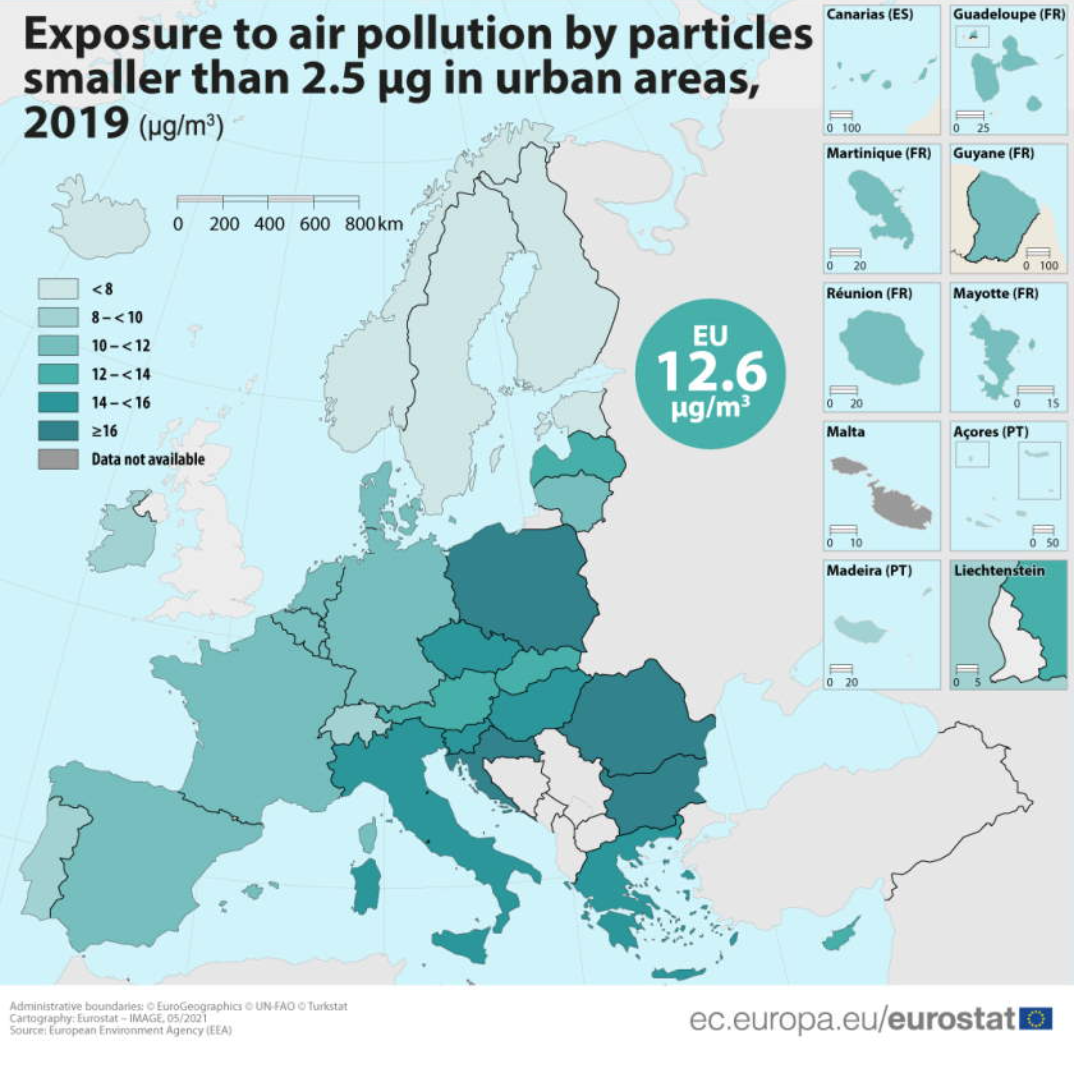
Bulgaria, Poland, Romania, and Croatia have the highest values of particulate matter 2.5 (PM2.5) in the European Union, according to Eurostat.

Among the EU member states, the annual mean concentration of fine particles (PM2.5) is highest in urban areas of Bulgaria (19.6 μg/m3) and Poland (19.3 μg/m3), followed by Romania (16.4 μg/m3) and Croatia (16 μg/m3).

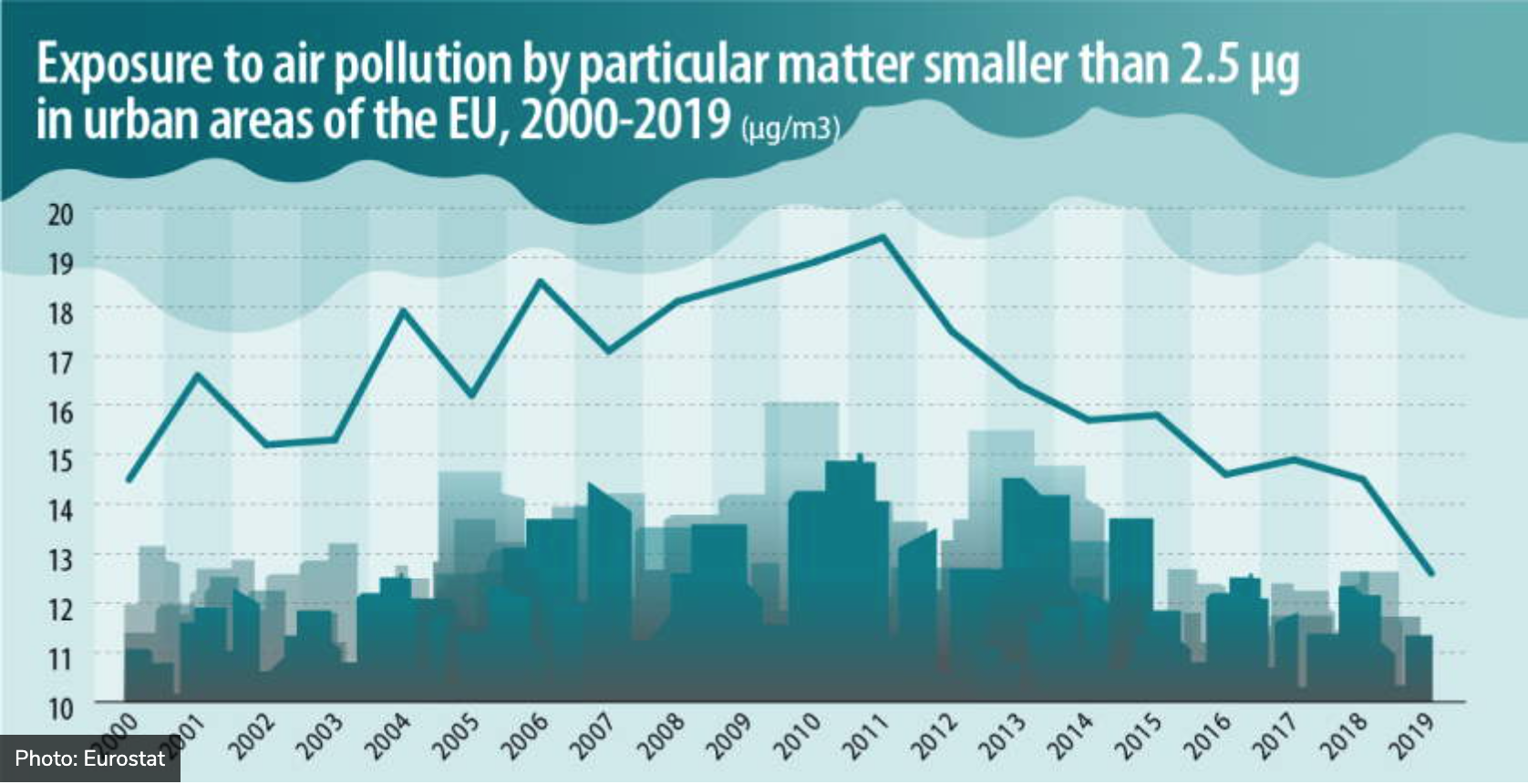
The data is for 2019, and the average value for the EU is 12.6 μg/m3.

In contrast, the concentration is lowest in urban areas of Estonia (4.8 μg/m3), Finland (5.1 μg/m3) and Sweden (5.8 μg/m3).

The annual mean of PM2.5 air pollution in 2019 continued to be above the level recommended by the WHO – 10 μg/m3

While this type of air pollution has been for a number of years below the limit set from 2015 onwards (25 μg/m3 annual mean), substantial air pollution hotspots remain. Moreover, despite the gradual decrease in recent years, the levels of air pollution in 2019 still continue to be above the level recommended by the WHO (10 μg/m3 annual mean), Eurostat said.

Pollutants such as fine particulate matter suspended in the air reduce people’s life expectancy and perception of well-being, while they can also lead to or aggravate many chronic and acute respiratory and cardiovascular diseases.

Fine particles PM10, those with a diameter of under 10 micrometres, can be carried deep into the lungs, where they can cause inflammation and exacerbate the condition of people suffering from heart and lung diseases. Meanwhile, even smaller fine particles PM2.5 (with a diameter below 2.5 micrometres) can impact health even more seriously as they can be drawn further into the lungs, according to Eurostat.

via Bulgaria, Poland, Romania, Croatia have highest PM2.5 air pollution in EU

Posted in Air Quality | Tagged , , | Leave a comment

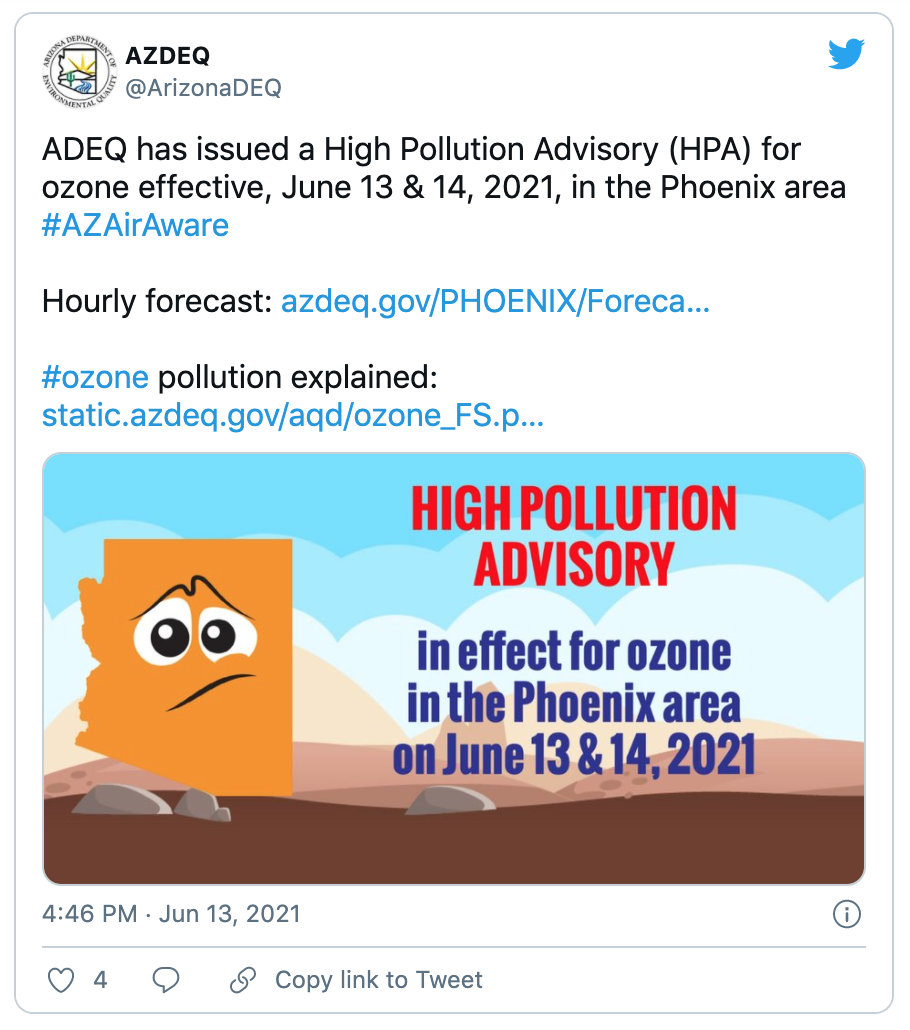
High pollution advisory in effect for metro Phoenix area

A high pollution advisory is in effect across metro Phoenix through Monday, the Arizona Department of Environmental Quality announced.

It is recommended that residents — especially children and adults with respiratory problems — limit outdoor activity while the advisory is in effect.

Exposure to air pollution can increase the number and severity of asthma attacks, cause or aggravate lung diseases and reduce the body’s ability to fight infection.

In an effort to reduce pollution levels, ADEQ is asking the public to drive as little as possible, carpool, avoid refueling cars during the day, avoid long drive-thru lines, delay large painting projects and keep household cleaners and chemical products sealed to prevent evaporating vapors.

According to the department, the highest levels of ozone occur in the afternoon.

Symptoms of pollution exposure may include itchy eyes, nose and throat, wheezing, coughing, shortness of breath, chest pain and upper respiratory issues.

High pollution advisory in effect for metro Phoenix area – KTAR.com

Posted in Air Quality, USA, USA & Canada | Tagged , , , , | Leave a comment

Air pollution exposure during pregnancy may boost babies’ obesity risk

Women exposed to higher levels of air pollution during pregnancy have babies who grow unusually fast in the first months after birth, putting on excess fat that puts them at risk of obesity and related diseases later in life, new CU Boulder research shows.

The study of Hispanic mother-child pairs, published this week in the journal Environmental Health, is the latest to suggest that poor air quality may contribute at least in part to the nation’s obesity epidemic, particularly among minority populations who tend to live in places with more exposure to toxic pollutants.

About one in four Hispanic youth in the United States are obese, compared to about 14% of white youth and 11% of Asian youth.

“Higher rates of obesity among certain groups in our society are not simply a byproduct of personal choices like exercise and calories in, calories out. It’s more complicated than that,” said senior author Tanya Alderete, an assistant professor in the Department of Integrative Physiology. “This study and others suggest it can also relate to how much of an environmental burden one carries.”

Previous research has shown pregnant women who smoke or are chronically exposed to air pollution tend to have smaller birthweight babies. In the first year of life, those babies tend to race to catch up, gaining weight unusually fast. Accelerated weight gain in early life has been linked to diabetes, heart disease and weight problems in childhood and adolescence.

“This period, either during pregnancy or shortly after birth, is a critical window of development and adverse exposures can program the infant to have a host of problems later in life,” said lead author William Patterson, a doctoral student.

To more closely examine how specific pollutants impact a baby’s growth trajectory, the researchers followed 123 mother-infant pairs from the Mother’s Milk Study, an ongoing trial in the Los Angeles region. About one-third were of normal weight pre-pregnancy, one-third overweight and one-third obese.

The researchers used data from the U.S. Environmental Protection Agency’s Air Quality System, which records hourly air quality data from ambient monitoring stations, to quantify their prenatal exposure to four classes of pollutants: PM2.5 and PM10 (inhalable particles from factories, cars and construction sites), nitrogen dioxide (an odorless gas emitted from cars and power plants) and ozone (the main ingredient in smog).

Then they followed the babies, periodically measuring not only their weight and height, but also how much fat they carried and where.

“We found that greater exposure to prenatal ambient air pollution was associated with greater changes in weight and adiposity, or body fatness, in the first six months of life,” said Patterson.

In some cases, pollutants seemed to impact males and females differently. For instance, exposure to a combination of ozone and nitrogen dioxide in utero was associated with faster growth around the waist in females, while in males it was associated with slower growth in length and greater fat accumulation around the midsection.

In adults, excess fat around the midsection has been linked to heart disease and diabetes.

“It’s not just how much fat you carry but where––that matters,” said Patterson.

How can inhaling pollutants impact growth patterns of a mother’s unborn child?

Researchers believe those pollutants can inflame the lungs and, in turn, cause systemic inflammation of organs, impacting metabolic processes, such as insulin sensitivity, that can influence fetal development. Pollutants have also been shown to impact gene expression in infants, potentially having life-long impacts that could transcend generations.

The authors note that because the study included only Hispanic mothers, a larger trial is necessary to confirm results apply to other populations.

But Alderete said that in an increasingly diverse country, where racial minorities have been shown repeatedly to shoulder a higher burden of pollutions, it’s important to study how those toxins are influencing them.

In 2018, the EPA’s National Center for Environmental Assessment published a study showing that poor people and people of color are exposed to as much as 1.5 times more airborne pollutants than their white counterparts.

“Generally speaking, there have not been very many studies that really represent the diversity we have in the United States,” she said. “We want to fill that gap.”

Meantime, the researchers recommend pregnant women take extra precautions to minimize their exposure to air pollution by closing windows on high ozone days, not exercising outdoors at times of high air pollution and steering clear of activities alongside busy roadways.

Air pollution exposure during pregnancy may boost babies’ obesity risk | CU Boulder Today | University of Colorado Boulder
Posted in Air Quality | Leave a comment

Vehicle Pollution Leads to Thousands of Early Deaths and Costs Billions in Northeast and Mid-Atlantic, Study Says

It’s well documented that ozone and fine particulate matter from vehicle emissions have a wide range of negative health effects. Greenhouse gas emissions from vehicles are also one of the biggest contributors to global warming, according to the EPA.

The study published Tuesday not only quantified the effects in terms of people and dollars but also showed that the pollution can travel downwind and cross state lines.

“What makes this study different from previous studies is that it connects the dots between where the pollution happens, and where the premature deaths occur,” Saravanan Arunachalam, a study author and deputy director of the University of North Carolina Institute for the Environment, said in the news release.

In Washington D.C., for example, 85% of the deaths were from vehicle emissions produced outside of the district, with Virginia being the largest contributor. That number is 84% in Delaware, with the bulk attributed to emissions from Pennsylvania, and 82% in Vermont, where emissions from New York were found to be the largest contributor.

The researchers also analyzed which type of vehicle contributed to the most deaths. They found the results varied across the region.

“While particulate matter from New York City buses has the largest impact per ton of emissions in New York, in Massachusetts it’s heavy-duty trucks in Boston, and in Virginia it is light-duty autos,” Jonathan Buonocore, one of the study authors and a research scientist at Harvard T.H. Chan School of Public Health, said in a news release.

The research is part of a multi-university initiative called the Transportation, Equity, Climate and Health Project.

It comes as economies around the world, including the United States, look to decrease pollution and greenhouse gas emissions.

“As policymakers consider how to transform the transportation sector – the largest source of carbon pollution – this research offers a roadmap for where to target investments to most cost-effectively improve air quality and health,” Buonocore said.

Pollution from vehicle emissions caused thousands of premature deaths and led to billions of dollars in health care costs in a single year in the Northeast and mid-Atlantic, even affecting those who don’t live near the source, according to a new study.

The research, published Tuesday in the journal Environmental Research Letters, estimated that 7,100 premature deaths in 2016 were connected to vehicle pollution in 12 states and the District of Columbia.

Premature deaths are those that occur before the average age of death, which in the U.S. is about 75 years old.

The highest number from the study was in New York, where 2,024 premature deaths were blamed on vehicle pollution during the study period, according to a news release. Pennsylvania was second with 1,270 and New Jersey was third with 1,175.

Those three states incurred health damages costing $21 billion, $13 billion and $12 billion, respectively.

Data from 2016 was examined because it was the most recent year available from the U.S. Environmental Protection Agency.

Vehicle Pollution Leads to Thousands of Early Deaths and Costs Billions in Northeast and Mid-Atlantic, Study Says | The Weather Channel – Articles from The Weather Channel | weather.com

Posted in Air Quality | Leave a comment

Establishing a link between air pollution and dementia

More people around the world are falling ill and dying from dementia than they used to. Between 2000 and 2019, the rate of dementia increased by 86%, while deaths from the cognitive disorder more than doubled. Longer life spans and aging populations in much of the world are partly to blame. However, evidence suggests that lifestyle and environmental causes may also play a role, namely, air pollution, excessive alcohol consumption, and traumatic brain injury.

In new research, Ru et al. explored the role of air pollution in rising dementia cases. The authors perused existing literature to find links between fine particulate matter 2.5 (PM2.5)—defined as particulates having a diameter less than or equal to 2.5 micrometers—and dementia. PM2.5 arises from both anthropogenic and natural sources, like burning gas for vehicles and wildfires. In addition, cigarettes produce fine particulate matter, which is inhaled by the smoker and through secondhand smoke. When these pollutants enter the body, they can affect the central nervous system and lead to cognitive disorders.

The study’s findings indicate that in 2015, air pollution caused approximately 2 million incidences of dementia worldwide and around 600,000 deaths. The countries most affected were China, Japan, India, and the United States. What is more, Asia, the Middle East, and Africa face increasing burdens from the disease as living standards and pollution climb. The analysis concludes that air pollution causes roughly 15% of premature deaths and 7% of disability-adjusted life years (which accounts for mortality and morbidity) associated with dementia, with estimated economic costs of around $26 billion.

The study establishes air pollution as a potentially significant risk factor for dementia. It suggests that reducing air pollution may help prevent dementia in older populations. However, the researchers note high uncertainty in the relationship. Future work that focuses on high-exposure regions will be necessary to clarify the link better.

Establishing a link between air pollution and dementia
Posted in Air Quality, Health Effects of Air Pollution, Medical Studies | Tagged , , , , | 1 Comment

Exposure To Air Pollution Increases Hypertension: Study

People who live in areas with polluted air increase their risk for developing hypertension, a leading risk factor for the development of heart disease.  Known as high blood pressure, the hypertension study is the largest of its kind to establish the deadly link. A recent study looked at hypertension in 41,000 people in five different countries – Norway, Sweden, Denmark, Germany, and Spain – for five to eight years. It is part of the long-term “Europe Study of Cohorts for Air Pollution Effects,” known as ESCAPE, which focuses on health problems associated with pollution.

At the hypertension study, beginning in 2008, none of the participants reported having high blood pressure or taking medicine to control it.  By 2011, 6,200 people reported having developed hypertension and started taking blood-pressure-lowering drugs. Most lived in urban areas where air pollution is highest. Air pollution is measured in micrograms of particulate matter per cubic meter.

The researchers found that for every five micrograms per cubic meter of particulate matter, hypertension increased by one-fifth of 22 percent in people living in the most polluted areas.  Epidemiologist Barbara Hoffmann, who works for the Center for Health and Society at Heinrich-Heine University in Germany and led the study, says many of these cases of high blood pressure could be prevented.

“So this is a very important result if you can see that something that you can actually change.  I mean we can actually reduce air pollution, can have such an influence on such an important health outcome,” said Hoffman. The findings were published in the European Heart Journal. Hoffmann says researchers will now study areas where pollution is low, looking at the health effects of cleaner air.

“But this is of course important in terms of regulation because you would like to regulate the air pollution down to a level where you do not see any (health) effects anymore.  So, therefore it is really important to look at areas of low exposure and see how far down can you go until you do not see any effects anymore,” said Hoffman.It is believed that air pollution leads to health problems by causing lung inflammation that spreads throughout the body, eventually leading to blood vessel and heart damage.

Exposure To Air Pollution Increases Hypertension: Study | NewsGram
Posted in Air Quality, Health Effects of Air Pollution, Medical Studies | Tagged , , , , | Leave a comment

Germany “persistently” broke air pollution rules, EU top court rules

Germany persistently violated EU limits on air pollution, the European Union’s top court said on Thursday, in a ruling that could see the country face financial penalties if it fails to improve air quality in several big cities.

Air pollution in Europe has eased in the last decade, but remains the continent’s biggest environmental health risk. Prolonged exposure to dirty air can cause diabetes, lung disease and cancer.

The EU court of justice said that from 2010 to 2016, Germany breached the EU’s annual limits for nitrogen dioxide (NO2) pollution in 26 zones, among them Berlin, Stuttgart, Munich, Cologne and Duesseldorf. Stuttgart and Rhine-Maine also broke hourly NO2 limits in the period, it said.

Siding with the European Commission that brought the case, the court ruled the German government had failed to adopt measures to ensure compliance with EU air quality rules. Germany must now comply or face further legal action.

Since 2016, however, most regions concerned have reined in NO2 pollution to comply with the EU limits, aided by a shift to less polluting cars and local measures like driving bans, speed limits and switching to low-emission buses.

In 2020, six German cities breached the annual mean limit of 40 micrograms of NO2 per cubic metre of air, down from 90 cities in 2016, according to government data.

Munich and Stuttgart were among those still breaching the law last year.

Road transport is the main source of NO2 emissions, meaning urban areas tend to be hit hardest.

Annual premature deaths attributable to NO2 emissions in the EU have more than halved since 2009, but still totalled 54,000 premature deaths in 2018, according to the European Environment Agency. Previous rulings from the Luxembourg-based court have also found France and Britain guilty of illegal NO2 pollution, while countries including Hungary, Sweden and Italy have breached particulate matter limits.

Germany “persistently” broke air pollution rules, EU top court rules | Reuters
Posted in Air Quality, Europe, Germany | Tagged , , , , | Leave a comment