Study Shows Air Pollution Can Mess With Our DNA

Air pollution makes it difficult to breathe and it can also increase the blood pressure and heart rate of the person. Those issues are well known. Now new research suggests breathing diesel fumes can trigger another toxic and dangerous change. It can inappropriately turn some genes on while turning some genes off.

A gene is a segment of our DNA that tells the cells of our body what to do and when to do it. Genes can be controlled by a chemical switch, also known as a methyl group. Methyl groups can cause a chemical reaction called methylation, thus affecting a component of DNA. This then tends to happen near a gene. If a methyl group is added, it can turn some gene off. The opposite tends to happen when you take a methyl group away or if you demethylate a gene. Either change can affect health.

That can be a good thing. The body can naturally produce methyl groups and it can allow it to turn off genes when their action is no longer needed. The factors outside the body, like air pollutants, may step in inappropriately and it may add methyl groups to DNA. They might remove methyl groups. These environmental changes can hijack the genes and they can change when or what they instruct the cells to do.

Harmful effects of air pollution

The study of methylation’s role in gene action is named epigenetics. Epigenetics describes the changes that could happen outside of your DNA. These changes do not harm DNA. Instead, epigenetics may silence a gene or it can switch some gene on at the wrong time.

Researchers also stated that breathing diesel fumes of two hours can already have an epigenetic effect. It was done by the researchers at the University of British Columbia in Vancouver, Canada. They gathered 16 volunteers in an enclosed booth. The booth was about the same size as that of a small bathroom. They had the volunteer go inside the booth one by one and each of them remained there for at least two hours. They half breathed in clear air and the other half breathed air polluted with diesel fumes. The levels of that pollution were equal to the air along a highway in Beijing, China. The levels also might happen at rail yards, mines, busy ports, and industrial sites.

To check on the effects of pollution, the researchers looked at the blood of the volunteers. They compared the gathered samples collected before the experiment to those taken 6 and 30 hours after someone had sat in the exposure booth. The methyl groups changed at about 2,800 different points on the DNA of those who breathed in diesel fumes. Those changes affected 400 genes. No similar changes were seen among those breathing the clean air.

At some DNA locations, the exposure to diesel fumes added methyl groups. It reduced how many were present and that means that a switch that normally would turn off a gene was even more often flipped the other way. That could eventually lead to very high gene activity.

How these changes that are related to diesel might affect health is still not clear, according to Huawei Jiang, the author of the study. But the tests show that air pollution can alter the DNA. The data also showed that diseases like asthma might stem from prolonged episodes of methylation.

DNA changes in the body

Jiang stated that even short-term exposure can cause these types of changes. She hopes that other researches can identify the cumulative effects for someone who breathes in diesel fumes regularly. The findings of her team were published in the journal Particle and Fibre Toxicology.

via Study Shows Air Pollution Can Mess With Our DNA | Science Times
Posted in Air Quality, Canada, Health Effects of Air Pollution, Medical Studies, USA & Canada | Tagged , , , , , , | Leave a comment

Heating woes fuel Balkan smog crisis

As winter grips the Balkans, the poor are caught in a cruel bind, being forced to light fires at home for heating while fuelling a pollution crisis smothering the region.

In recent weeks, Balkan capitals from Belgrade Sarajevo to Skopje and Pristina have been ranked among the world’s top 10 most polluted major cities, according to the monitoring application AirVisual.

While these are small cities compared to leading Asian polluters like New Delhi and Dhaka, a combination of coal-fired power plants, old cars and fires to heat homes are pumping the air with toxins.

“I know it is polluting. I am not an idiot but my only other choice would be to heat this home with electricity and that is damn expensive,” said Trajan Nestorovski, who like many in his working-class Skopje neighbourhood burns wood to stay warm in winter.

His wife Vera added: “There are a couple of factories near our neighbourhood that are burning God knows what in the evenings”.

Thanks to the rise of mobile phone apps that measure air quality, like the local Moj Vozduh (My Air) created by a Macedonian developer, citizens are finally grasping the full extent of the crisis.

“Serbia is suffocating, has anyone seen the minister of the environment?”, said a recent headline in Belgrade’s local Blic newspaper, speaking of the fog and dirty air enveloping the city.

Protests have been erupting around the region in recent days.

In Skopje, the capital of North Macedonia, young people have taken inspiration from Swedish activist Greta Thunberg by holding a spate of protests on Fridays.

“Greta inspired all of us,” said 17-year-old Iskra Ilieska.

“In winter, half of my school class is absent because of lung problems. That is not normal,” she said.

In neighbouring Bosnia, several hundred people wearing face masks gathered in the city of Tuzla this week to demand a plan from authorities to tackle pollution and phase out coal-fired plants in the next five years.

“The only recommended measures are that we stay shut up at home… when you go out on the streets, in the playgrounds, you won’t see children anywhere,” said Alisa Kasumovic, a mother in her forties.

– Silent killer –

According to a recent UN environment report, air pollution causes nearly 20 percent of premature deaths in 19 Western Balkan cities.

The main sources of the dust, soot and smoke are low-grade coal plants and household heating, the report said.

More than 60 percent of people in the region rely on coal and firewood to heat their homes, the report said. Only 12 percent of buildings are connected to district heating systems.

Governments need to make “clean energy more accessible”, ban old polluting vehicles and tighten regulations on industry emissions and power plants, the UN urged.

Many people cannot afford cleaner heating options at home in countries where average wages are around 500 euros or less.

Sali Ademi, a 78-year-old in Kosovo’s capital Pristina, uses coal.

“There’s no worse thing, but what can you do?” he said in a city whose air is already poisoned by two nearby coal-fired power plants running on outdated technology.

– Cable car escape –

Those who warm their homes with fires also bear the brunt of health risks, according to experts.

“Some of the emissions from these stoves stay in the house and poison them,” warned Anes Podic, president of an environmental group in Bosnia who has called on the government to replace inefficient wood stoves in the country.

In cities like Sarajevo and Skopje, a circle of mountains helps trap the hazardous air in the valleys where residents live.

Sakiba Sahman, 60, is a Sarajevan taking advantage of a recent reduction on ticket prices for a cable car that rides to the top of the 1,160-metre-high (3,800-foot-high) Mount Trebevic, which peaks above the smog over the Bosnian capital.

“We’ve come to spend a few hours to ventilate the lungs,” she told AFP.

Down below, “the pollution is enormous, there are a lot of cars, everything is dirty, grey and depressing.”

via Heating woes fuel Balkan smog crisis – France 24

Posted in Air Quality, Europe | Tagged , , , , , , , , , | Leave a comment

Mask-wearing Bosnians take to streets in air pollution protest

Hundreds of protesters wearing white masks took to the streets of the Bosnian town of Tuzla on Wednesday to demand government action on air pollution affecting public health in the region.

Bosnian towns, led by the capital Sarajevo, have topped lists of the world’s most polluted cities in recent days, along with capitals of neighbouring Serbia, Kosovo and Macedonia.

Most Western Balkan countries still get electricity from outdated socialist-era coal-fired plants, while a growing number of impoverished people burn coal for heating in winter time and streets are crammed with old vehicles, raising pollution levels.

There was no immediate response from the Tuzla government to the protest but it has issued warning for citizens, especially for vulnerable groups such as children and pregnant women, to stay indoors because of dangerous air pollution.

The Sarajevo cantonal government is due to convene an emergency session on Friday to discuss further measures to curb pollution. The government declared an “episode of alarm” at the weekend, banning some vehicles from the roads and warning citizens to stay indoor or go to the nearby mountains.

The Tuzla protesters, organised by 15 NGOs, carried a banner reading “We Want to Breathe with Full Lungs”.

“I came to support the initiative demanding that finally something should be done against this terrible pollution in which we are forced to live,” said Vladislav Vlajic, adding that the city was not investing enough to connect individual households to the central heating system.

Unless concrete measures are taken, people will leave Tuzla to protect their health, Vlajic said.

Physicians warn that respiratory diseases caused by air pollution have been rising, especially among young children, in Tuzla, where there is a 715 MW coal-fired plant, and now account for 20% of all lung diseases.

Sarajevo ranked top of air quality monitor AirVisual’s major polluted cities on Wednesday, with an air quality index of 399, a level deemed unhealthy and worse than Dhaka in Bangladesh, Ulaanbaatar in Mongolia and Delhi in India.

On Sunday, it measured 548 in the Bosnian capital.

Belgrade, where the Serbian government held an emergency session on Wednesday to discuss how to curb air pollution levels, was ranked eighth on the same list.

via Mask-wearing Bosnians take to streets in air pollution protest – Reuters

Posted in Air Quality, Europe | Tagged , , | Leave a comment

‘Smog emergency’ forces traffic bans across Italian cities

Italy’s biggest cities have been forced to ban hundreds of thousands of vehicles from the roads after days of persistent smog.
Air pollution has spiked above normal levels for up to ten consecutive days in Milan, Rome, Florence, Turin, Venice and several parts of Emilia-Romagna.

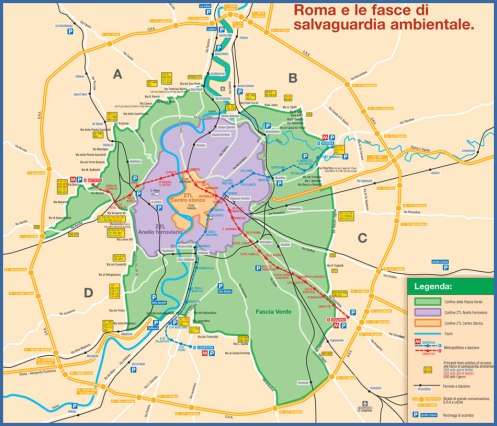
With the air not forecast to clear for several more days, several cities have introduced restrictions on driving, central heating and open flames, including a ban on diesel vehicles in central Rome that is expected to affect some 700,000 drivers.

roma

Diesel vehicles are banned within Rome’s ‘Fascia Verde’ green zone on Tuesday. Image: Comune di Roma

The alarm concerns levels of fine particle pollution known as PM10, which can be linked to respiratory disorders, allergies, poisoning and cancer.

Warm, windless weather has helped trap pollution and created what’s been dubbed a ‘smog emergency’ across large parts of Italy, with dozens of towns reporting poorer than average air quality over the past fortnight.

The measures in place across Italy on Tuesday include:

  • Rome: ban on all diesel vehicles in the ‘Fascia Verde’ limited traffic zone between 7:30-10:30 am and 4:30-8:30 pm, with all-day restrictions on higher-polluting vehicles in emissions categories Euro 0-3.
  • Milan: heaviest polluting diesel vehicles (Euro 1-4) are banned and drivers are required to switch off their engines while stopped. Bonfires, barbecues and fireworks are also banned.
  • Turin: ban on diesel vehicles up to and including older Euro 5 models for most of the day.
  • Emilia-Romagna (Piacenza, Parma, Reggio Emilia, Modena, Ferrara, Ravenna): Euro 1-4 diesel vehicles are banned from 8:30 am to 6:30 pm. Heating is limited to 19 degrees C in homes and 17 degrees in shops.
  • Venice: all-day ban on two-stroke Euro 0 motorbikes, Euro 0-1 petrol cars and Euro 0-4 diesel cars, as well as Euro 1-3 diesel goods vehicles.
  • Florence: restrictions for most of the day on two-stroke motorbikes, Euro 1 petrol vehicles, Euro 2-3 diesel vehicles, and Euro 1-2 goods vehicles.

Italy’s permitted limit for PM10 pollution is 50 micrograms per cubic metre, above which air quality is considered dangerously poor.

Air pollution is typically worst in northern Italy, where densely populated cities, industry and farming create emissions and mountains trap it in low-lying plains. Industrial Brescia, Monza, Milan, Turin, Venice and other cities in the Po Valley regularly exceed safe limits.

But Rome too, where sea winds help clear the exhaust fumes spewed out by relentless traffic, has seen its air quality plummet this month. At least four of Rome’s 15 monitoring stations measured pollution above the limit on Sunday, the most recent check published, in some cases for the tenth time in 12 days.

via ‘Smog emergency’ forces traffic bans across Italian cities – The Local

Posted in Air Quality, Europe, Italy | Tagged , , , , , , , , | Leave a comment

Smoke plays havoc with tennis as Australian Open qualifier suffers coughing fit

The safety of players at this year’s Australian Open has been brought into sharp focus after a day of poor air quality in Melbourne forced the abandonment of former world No 1 Maria Sharapova’s match in a warm-up event at Kooyong while another player, Dalila Jakupović, collapsed on court at Melbourne Park amid genuine concern for her health.

In jarring scenes at the venue for the year’s first grand slam, Australian Open hopeful Jakupović was forced to retire from her qualifying match midway through when she suffered a coughing fit. The match had been given the green light to go ahead by tournament organisers after the day’s play had initially been delayed for an hour due to the blanket of bushfire smoke enveloping Melbourne on Tuesday.

Jakupović, who was looking to qualify for the main draw of the tournament which is slated to start on Monday, was a set up in her match against Switzerland’s Stefanie Voegele when she fell to her knees on court. Suffering breathing difficulties, the world No 180 withdrew.

She later said she had no previous respiratory issues and had never suffered from asthma. “I was really scared that I would collapse. That’s why I went onto the floor because I couldn’t walk any more,” she said. “I don’t have asthma and never had breathing problems. I actually like heat. The physio came again and I thought it would be better. But the points were a bit longer and I just couldn’t breathe any more and I just fell on the floor.”

Jakupović took aim at officials for allowing the match to go ahead in the first place, saying it was “not fair”. “It’s not healthy for us,” she said. “I was surprised, I thought we would not be playing today, but we don’t have much choice.”

Eugenie Bouchard, the former Wimbledon finalist, also struggled in her opening match and called several medical timeouts during the eventual win over China’s Xiaodi You. “I felt like it was tough to breathe and a bit nauseous,” Bouchard said. “I felt like the conditions got worse as the match went on…but I was out there for a long time. As an athlete we want to be very careful, our physical health is one of the most important things. It’s not ideal to play in these conditions. Just like the heat rule, there should be an air quality rule.”

Screen Shot 2020-01-14 at 08.13.07.png

At Kooyong, Sharapova said smoke from the bushfires still raging in Victoria and New South Wales was behind the decision to call time on her match late in the second set against Germany’s Laura Siegemund. Organisers of the tournament in the inner Melbourne suburb pulled the plug on play with Siegemund a set up and the score locked at 5-5 in the second, as the city stifled in a smoke haze and was rated in the morning as having the worst air quality in the world.

“I started feeling a cough coming toward the end of the second set but I’ve been sick for a few weeks so I thought that had something to do with it,” Sharapova told SBS after the match. “But then I heard Laura speak to the umpire and she said she was struggling with it as well. We were out there for over two hours, so from a health standpoint it’s the right call from officials.”

Earlier, practice at Melbourne Park had been suspended and the start of the first round of qualifying delayed by an hour due to the poor air quality. But tournament organisers deemed it safe enough to start at 11am local time, once they said the air quality had sufficiently improved.

“This morning the smoke haze was significant,” said the tournament director, Craig Tiley. “And based on advice we made the decision to suspend practice and as a result to start the qualifying matches an hour later than originally scheduled. At any time we’re not going to put them [players and staff] in harm’s way or make any decision that’s going to negatively impact their health and wellbeing.”

Tom Larner, Tennis Australia’s chief operating officer, indicated the situation was comparable to other delays caused by atmospheric conditions, such as extreme heat, or rain. “We’re treating any suspension of play like a rain delay or a heat delay, in that we will stop if conditions become unsafe based on medical advice, and once those conditions are safe to play, players will get back on court.”

Tuesday’s delay lasted just one hour, as, according to Tiley, “during the period in which we suspended practice there was an improvement in conditions”. The suspension, and subsequent resumption of play was based on air quality measurements taken on-site using devices sourced specifically for this eventually, as well as advice from tournament medical staff.

Victoria’s Environment Protection Authority issued a warning on Monday evening that conditions in Melbourne on Tuesday would be poor to hazardous as a consequence of the bushfires raging across the state and neighbouring New South Wales. The Victorian government’s advice is for residents to “minimise the time spent in smoky conditions whenever practical to do so,” and “avoid exercise”. Both are considerable challenges for a major outdoor sporting event.

There has been no official response from the players about the circumstances at one of the most popular events on the circuit, but Tiley indicated the WTA and ATP Tours were supportive of the decision. “This is new for all of us,” Tiley said. Novak Djokovic, president of the ATP Player Council, has already indicated competitors would have to consider their options, with delaying their participation among them, should Melbourne’s air quality continue to prove hazardous.

Tiley would not be drawn on radical contingency plans, such as the steps taken earlier this month to relocate the Canberra International Challenger event from the ACT to Bendigo in Victoria to avoid hazardous playing conditions. “The expectation, because the long-term forecast, and even the short-term forecast is good. We’ll just take it a day at a time.”

via Smoke plays havoc with tennis as Australian Open qualifier suffers coughing fit | Sport | The Guardian

Posted in Air Quality, Australia & Oceania | Tagged , , , | Leave a comment

Air pollution could kill 160,000 in next decade – report

British Heart Foundation predicts current total of 11,000 particulate-related deaths per year will continue to rise

More than 160,000 people could die over the next decade from strokes and heart attacks caused by air pollution, a charity has warned. That is the equivalent of more than 40 heart and circulatory disease deaths related to air pollution every day.

The British Heart Foundation (BHF), which compiled the figures, said there are an estimated 11,000 deaths per year at the moment, but that this will rise as the population continues to age. It wants the UK to adopt World Health Organization (WHO) guidelines on air pollution and meet them by 2030.

Current EU limits – which the UK comfortably meets – for fine particulate matter (PM2.5) pollution are 25μg/m3 as an annual average. The WHO limits are tougher, at 10μg/m3 as an annual average.

The BHF said PM2.5 can have a “seriously detrimental effect to heart health”, increasing the risk of heart attack and stroke and making existing health problems worse.

Jacob West, executive director of healthcare innovation at the BHF, said: “Every day, millions of us across the country are inhaling toxic particles which enter our blood and get stuck in our organs, raising our risk of heart attacks and stroke. Make no mistake, our toxic air is a public health emergency, and we haven’t done enough to tackle this threat to our society.

“We need to ensure that stricter, health-based air quality guidelines are adopted into law to protect the health of the nation as a matter of urgency. Clean air legislation in the 1950s and 1960s, and more recently the smoking ban in public places, show that government action can improve the air we breathe.”

In July 2019, the Department for Environment and Rural Affairs published a study showing that meeting WHO guidelines on air pollution was “technically feasible” in most areas of the UK by 2030.

The BHF has launched a new campaign, You’re Full Of It, to highlight how people are inhaling dangerous levels of PM2.5 in towns and cities across the UK every day.

The environment minister, Rebecca Pow, said: “We all know the impact that air pollution has on communities around the UK, which is why the government is stepping up the pace and taking urgent action to improve air quality.

“Alongside our Clean Air Strategy, which has been praised by the World Health Organisation as ‘an example for the rest of the world to follow’, our landmark Environment Bill will include a commitment to a legally binding target on fine particulate matter which will improve the quality of millions of people’s lives.”

NHS medical director Professor Stephen Powis said: “The climate emergency is also a health emergency, with thousands of avoidable deaths and hospital admissions every year linked to air pollution, which is why the NHS is playing its part by taking action to reduce carbon emissions, including cutting traffic by reducing the need for millions of hospital appointments through better services.

“With air pollution contributing to around 40,000 deaths a year and four in 10 children at school in high-pollution communities, it’s clear that tackling air pollution needs to be everyone’s urgent business.”

via Air pollution could kill 160,000 in next decade – report | Environment | The Guardian

Posted in Air Quality, Health Effects of Air Pollution, Medical Studies | Tagged , , , , , , , | Leave a comment

Poor Air Quality Increases the Risk of Schizophrenia

A new study, which is published in the journal JAMA Open Network, uncovers an unexpected contributor to the risk of developing one of the most complex mental issues – schizophrenia. More specifically, the researchers looked at the effects of exposure to certain pollutants in the air such as Nitrogen Dioxide on the Polygenic Risk Score for Schizophrenia.

According to the World Health Organization, schizophrenia is a chronic and complicated mental health issue that affects more than twenty million people around the globe. A person with the health issue perceives and interprets the reality different than normal people. The development of the disease results in distorted thinking, sentiments, a sense of self, and behavior which further causes delusions and hallucinations.

While the disease is controllable when it is diagnosed in its early stage, it can become extremely difficult to manage in patients with a late diagnosis. In many of cases, patients require life-long treatment. They may also get aggressive or violent and require hospitalization and continued treatment in a mental asylum.

The symptoms of the health condition can vary from person to person but typically include a combination of distorted thinking, abnormal behavior along with hallucination. One of the earliest signs is a lack of proper functioning or disorganized behavior. For instance, the person experiencing schizophrenia may be unable to communicate normally. Eating very little and not maintaining personal hygiene are prevalent in most of the cases.

Over the passage of time, these symptoms can become more severe especially in cases with no appropriate medical attention. There may also be periods of remission of symptoms but some of the signs may also remain there. The majority of the people who are diagnosed with this mental disorder are either in their early or late twenties. Adults over the age of forty-five or very young children are less likely to have the disease.

Researchers have not identified the exact reasons for the development of schizophrenia but it has been established that the disease is likely to be multi-factorial. Environmental factors, genetics, and brain chemistry may all contribute to its progression and development.

Additionally, a number of studies have shown that problems associated with glutamate and dopamine also increase the risk of schizophrenia. This can be observed via the use of neuroimaging, which has also shown that people with the disease also have a different central nervous system and brain structure, which establishes that schizophrenia is a brain disease.

The new study, which has been conducted by researchers from Aarhus University in Denmark, focuses on air pollution as a potential contributor. Previously research linked poor air quality to bad pulmonary health. Now, researchers are exploring its impact on mental health as well. To look at air pollution as a possible factor, researchers took data from The Lundbeck Foundation Initiative for Integrative Psychiatric Research.

After analyzing the data of the participants, the researchers found that early exposure to toxins in the air can greatly increase the risk of developing schizophrenia later in life. Henriette Thisted Horsdal, the senior author of the study, states that with every ten micrograms per cubic meter increase of nitrogen dioxide in the air, the risk of the disease increases by seventy percent.

Overall, children who are exposed to more than twenty-five micrograms per cubic meter of nitrogen dioxide on a daily basis are sixty percent more likely to have schizophrenia. These findings further show the immediate need to control pollution for public health.

via Poor Air Quality Increases the Risk of Schizophrenia – TheHealthMania

Posted in Air Quality, Health Effects of Air Pollution, Medical Studies | Tagged , , , , | Leave a comment

Prenatal air pollution exposure tied to childhood blood sugar

Kids who are exposed to air pollution in the womb may have higher blood sugar levels during childhood than kids without this exposure, according to a study that suggests particle pollution could be an environmental risk factor for diabetes.

Researchers focused on so-called PM 2.5, a mixture of solid particles and liquid droplets smaller than 2.5 micrometers in diameter that can include dust, dirt, soot and smoke. This type of air pollution, also known as fine particulate matter, has been previously been linked to lung damage as well as an increased risk of heart disease, stroke and diabetes.

The current study included 365 children in Mexico City who were exposed to average daily PM 2.5 levels of 22.4 micrograms per cubic meter of air (mcg/m3) while they were in the womb, far above the 12-mcg limit set by Mexican regulators.

Researchers also measured the children’s hemoglobin A1c levels, which reflect average blood sugar levels over about three months. HbA1c readings above 6.5% signal diabetes.

From about age 5 until about age 7, kids’ average levels of exposure to PM 2.5 in the womb were associated with 0.25% larger annual increases in HbA1c levels than would be expected with fine particulate matter exposure within Mexican regulatory limits, researchers calculated.

The effect was only seen in girls, and was associated with pollution exposure during the second and third trimesters of pregnancy.

It’s not clear whether or how prenatal air pollution exposure might directly impact kids’ blood sugar levels. But there are several possible explanations, said study co-author Dr. Emily Oken of the Harvard T.H. Chan School of Public Health in Boston.

“One is that air pollution causes a great deal of inflammation, and we know that other inflammatory exposures can affect organ development and function (such as brain, pancreas, liver, muscle and fat – all of which participate in blood sugar regulation) in ways that have long-lasting effects,” Oken said by email.

“Alternatively, air pollution could affect epigenetic regulation – the signal that tells the body which genes to turn on and off and which proteins to make,” Oken said.

The researchers lacked data on what mothers or children ate, which can have a profound impact on blood sugar levels. They also lacked information about the mothers’ personal and family history of diabetes, and whether children went on to develop diabetes when they were older.

There’s also not much that expectant parents can do to change their exposure to air pollution, unless they’re in a position to move to a place with better air quality.

“In terms of individual efforts, parents should not smoke or expose their children to smoking or vaping,” Oken said. “They should also avoid using wood stoves.”

Lifestyle habits can also impact diabetes risk, Oken added.

“While we don’t know for certain about interventions to minimize risks, it is reasonable to assume that healthy diet and regular physical activity and maintaining a healthy weight would be very likely to minimize risks,” Oken added.

SOURCE: bit.ly/2tNs1Dm JAMA Network Open, online December 18, 2019.

via Prenatal air pollution exposure tied to childhood blood sugar – Reuters

Posted in Air Quality, Health Effects of Air Pollution, Latin America, Medical Studies, Mexico | Tagged , , , , , , , | Leave a comment