Citing ‘unhealthy air’, Vietnam tells people to limit outdoor activities

Vietnam warned its people on Tuesday to limit outdoor activities because the air quality in the Southeast Asian country has persistently been at “unhealthy” levels for days.

The levels of hazardous small particles known as PM2.5 in the air at the country’s two largest cities, Hanoi and Ho Chi Minh City, have been rising persistently since early last month, exceeding “Vietnamese standards”, the government said in a statement.

The government blamed the pollution on low rain and farmers burning rice crop remnants after the harvest to prepare for new plantings. Coal is also widely used for power generation in the country.

Air Visual – an independent online air quality index monitor – says Hanoi’s reading of PM2.5 has exceeded 300 micrograms per cubic metre at times, the worst in the world. On Tuesday, it showed PM2.5 levels at 180 in Hanoi and 86 in Ho Chi Minh.

The World Health Organization recommends an air quality standard for PM2.5 of no more than 10 micrograms per cubic metre.

Such pollution could become a political issue in Vietnam, where protests have been held in the past against the degradation of the environment. Communist-ruled Vietnam tolerates little dissent and protesters and activists are often prevented from gathering or charged with “causing public disorder”.

“Local people, especially children, the elderly, pregnant women and people with respiratory issues should refrain from traffic and outdoor activities,” the government said in the statement.

PM2.5 levels are forecast to stay high over the next days, particularly at night and early in the morning, it added.

“People should wear masks and goggles when going outdoor,” the government said in the statement.

Similar slash-and-burn farming practices have also led to forest fires in Indonesia that have created a choking haze across Malaysia and Singapore in recent weeks.

via Citing ‘unhealthy air’, Vietnam tells people to limit outdoor activities – Reuters

Posted in Air Quality, Asia, Vietnam | Tagged , , | Leave a comment

Babies exposed to air pollution have greater risk of death – study

Infant mortality rate higher in babies exposed to pollutants such as sulphur dioxide

Babies living in areas with high levels of air pollution have a greater risk of death than those surrounded by cleaner air, a study has found.

It is not the first study to investigate the link between air pollution and infant mortality , but thestudy drew particular focus on different pollutants and its analysis at different points in babies’ lives.

Dr Sarah Kotecha , a researcher at Cardiff University, said the results were difficult for pregnant women and their families to do much about.

“You live where you live and you can’t avoid pollution day in day out,” she said, adding that it was down to policymakers to reduce pollution levels and for researchers to unpick how pollutants affect health. “If you can find out some of the mechanisms you can look at potential interventions,” she added.

A growing body of research has revealed links between different components of air pollution and health issues, including lung problemsheart diseasemental health problemsdementia and low birthweight.

The latest study, yet to be peer-reviewed or published, will be presented at the European Respiratory Society international congress in Madrid.

Kotecha said the research was based on data for almost 8 million live births in England and Wales between 2001 and 2012.

The team divided England and Wales into 35,000 areas, each containing approximately 1,500 residents, and looked at the annual death rates for babies up to one-year-old, together with the average annual levels for three pollutants. These were particulate matter known as PM10, which comes from sources including vehicles and waste incineration, nitrogen dioxide (NO2), and sulphur dioxide (SO2), which is released through burning of fossil fuels in power stations and refineries as well as metal extraction.

For each pollutant the team compared the death rate for babies in the worst fifth of polluted areas with those in the best fifth.

Once factors such as maternal age, deprivation level for the area and birthweight were taken into account, the team said that babies aged up to one year had a greater chance of dying living in areas with the worst air pollution compared with areas with the cleanest air.

The results held across all three pollutants, with the odds of death 7% worse for NO2, 4% worse for PM10 and 19% worse for SO2. Further analysis suggested that of the three pollutants, only SO2 was associated with deaths within a baby’s first 28 days.

The study was unable to prove whether high levels of air pollution were to blame for the increased risk of death in those areas. It also did not take into account levels of indoor air pollution.

Prof Mireille Toledano, an expert in population child health at Imperial College London, said the study confirmed that air pollution is a major public health hazard, adding that current standards are failing to protect people.

She said the latest study had a number of limitations. It looked at average pollution levels over relatively large areas while in reality levels can vary greatly over a small distance – meaning the babies’ true exposure was not captured.

The study also did not take into account fluctuations in air pollution with the weather or over seasons, and did not take into account where the mother spent her pregnancy or factors such as maternal smoking. Toledano said it was also unclear how factors like birthweight were accounted for.

“It is showing there is some kind of additional risk from air pollution for infant death but the way that it has been set up is quite a crude analysis,” said Toledano.

Dr Penny Woods, the chief executive of the British Lung Foundation, said action must be taken to tackle the public health crisis of air pollution – including introducing clean air zones in the most polluted cities.

“The evidence linking infant mortality and air pollution is still emerging but Dr Kotecha’s study, which suggests babies born in the UK’s most polluted areas see a significantly increased risk of death, should be a wake-up call to government,” she said.

A second study found that exposure to PM10 from traffic during pregnancy and children’s early life was linked to a slightly lower lung function of the children at eight years old – although the effect was no longer seen by the time the children were 15.

Wood said the study mirrored previous findings, adding that children cannot protect their own lungs.

“Both these studies concentrate on the damage done by air pollution to some of the most vulnerable members of our society – the very young,” she said.

via Babies exposed to air pollution have greater risk of death – study | UK news | The Guardian

Posted in Air Quality, Health Effects of Air Pollution, Medical Studies | Tagged , , , , , | Leave a comment

Anchors away: Cannes bans cruise ships over air quality concerns

The Mediterranean resort town of Cannes, France’s fourth-biggest cruise ship port, will ban the most polluting cruise ships from next year in a bid to boost air quality in the city.

The ban will target ships that do not respect a 0.1% cap on sulphur in their fuel and could stop some passengers from disembarking in the city famous for its film festival.

“It’s not about being against cruise ships. It’s about being against pollution,” Cannes Mayor David Lisnard told Reuters in an interview.

Under the European Union’s clean air policy, the cap is already enforced in Baltic, North Sea and Channel ports and it may be extended to the Mediterranean.

Cruise ships run on fuel oil which contains about 2,000 times more sulphur oxide than ordinary diesel, according to German pollution analyst Axel Friedrich.

“We will no longer accept cruise ship passengers coming from polluting cruise ships,” Lisnard said.

The exponential growth of the cruise ship industry is often criticised by residents of tourist towns but it is also increasingly considered a threat to the environment.

Endangered cities
Three months ago, Italy’s main conservation group said Venice should be put on the United Nations’ list of endangered cities and cruise ships should be banned from its fragile lagoon to prevent an ecological disaster.

According to figures from the Cruise Lines International Association (CLIA), the industry’s main trade association, 30 million passengers are expected to cruise on almost 300 ships this year, up from 17.8 million 10 years ago.

In July, Norwegian Cruise Line Holdings, which represents 40% of Cannes’ maritime traffic, signed a Cruise Charter agreement with the city of Cannes, promising to make its ships more environmentally friendly.

via Anchors away: Cannes bans cruise ships over air quality concerns | Euronews

Posted in Air Quality, Europe, France | Tagged , , , | Leave a comment

Cooler air blamed for PM2.5 rise

A cloud of ultra-fine dust particles known as PM2.5 has returned to Bangkok due to cooler temperatures, with air quality indicators across the capital registering unhealthy levels of the harmful micro pollutant.

According to the Pollution Control Department (PCD), the concentration of PM2.5 pollutants in Bang Phlat reached 53 microgrammes per cubic metre (µg/m³) yesterday — exceeding the PCD’s safe threshold of 50 µg/m³.

Air quality indicators in other areas in Bangkok and parts of Samut Prakan and Samut Sakhon also registered PM2.5 levels ranging between 40 µg/m³ on Charoen Nakhon Road in Khlong San district and 49 µg/m³ in Bang Sue district.

The PCD said PM2.5 levels are likely to increase in the next couple of days across the city, and warned residents about the health risks posed by the micro pollutant.

Officials said a high pressure system above China — which has lowered temperatures in the northern part of Thailand — is causing dust to accumulate as the air stagnates.

While Bangkok has not registered unhealthy levels of PM2.5 pollutants in the past several months, earlier in the year PM2.5 concentrations soared beyond unhealthy levels, prompting officials to adopt emergency measures — including spraying water from high-rise buildings.

A Palang Pracharath MP for Bangkok, Pada Vorakanon, on Wednesday urged the government to act before the situation turns critical.

“Why should we wait until that day comes — when masks and air filters become expensive because they are in such short supply that they’re next to impossible to get?” she said.

via Cooler air blamed for PM2.5 rise

Posted in Air Quality, Asia, Thailand | Tagged , , , | Leave a comment

Indonesian forest fires putting 10 million children at risk, says Unicef

Millions aged under five are particularly at risk from the slash and burn fires due to undeveloped immune systems

Indonesian forest fires are putting nearly 10 million children at risk due to air pollution, the United Nations has warned.

The fires have been spewing toxic haze over south-east Asia in recent weeks, closing schools and airports, with people rushing to buy face masks and seek medical treatment for respiratory ailments.

Jakarta has deployed tens of thousands of personnel and water-bombing aircraft to tackle the slash-and-burn blazes that are set to clear agricultural land. The fires are an annual problem but this year is the worst since 2015 due to the dry weather.

On Tuesday, Greenpeace accused Indonesia of failing to impose serious penalties on pulpwood and palm oil firms that had large fires on their land between 2015 and 2018, with more fires on some of those farms also polluting the region’ this year.

“Many of the palm oil and pulp groups with the largest burned areas in their concessions have either not received any serious civil/administrative sanctions, or have had sanctions imposed that do not appear to fit with the level or frequency of burning,” the environmental action group said in its report.

Indonesia’s environment ministry said law enforcement had been “very strict” through administrative sanctions, including revoking licences and civil lawsuits.

Almost 10 million people under 18 – a quarter of them under five – live in the areas worst affected by fires on Indonesia’s Sumatra island and the country’s part of Borneo island, UN children’s agency Unicef said.

Small children are especially vulnerable due to undeveloped immune systems while babies born to mothers exposed to pollution during pregnancy may have problems such as low birth weight, the agency said.

“Poor air quality is a severe and growing challenge for Indonesia,” said Debora Comini from Unicef. “Every year, millions of children are breathing toxic air that threatens their health and causes them to miss school – resulting in lifelong physical and cognitive damage.”

Thousands of schools have been closed across Indonesia due to poor air quality, with millions of youngsters missing classes.

Pictures circulating on social media have shown the sky turning blood-red over hard-hit Jambi province, on Sumatra, in the middle of the day due to the haze.

Schools were forced to shut across Malaysia last week as smog from its neighbour clouded the skies, while Singapore was also shrouded in haze during the weekend’s Formula One motor race.

Air quality improved in Malaysia on Tuesday and was at “moderate” levels on an official index in most places with the skies looking largely clear, while the haze lifted from Singapore.

A regional forecasting centre said the number of “hotspots” – areas of intense heat detected by satellite which indicate a likely fire – had fallen sharply on Sumatra. Fires on the island are usually blamed for belching smog over Malaysia and Singapore.

There have been a series of wildfire outbreaks worldwide, from the Amazon to Australia, and scientists are increasingly worried about their impact on global warming.

via Indonesian forest fires putting 10 million children at risk, says Unicef | World news | The Guardian

Posted in Air Quality, Asia, Health Effects of Air Pollution, Indonesia, Malaysia, Singapore | Tagged , , , , , , , , , , | Leave a comment

Ireland breaking WHO air quality directions

The Environmental Protection Agency (EPA) has warned that Ireland needs to accelerate progress towards clean energy and environmentally-friendly transport options.

The agency made the recommendations in its Air Quality Report for 2018, which has been launched today to coincide with World Lung Day.

The report shows that while Ireland’s air quality complied with the legal minimums outlined by the European Union, the health-related guidelines outlined by the World Health Organization (WHO) were exceeded.

The WHO guidelines are the benchmark for global air quality globally and exceeding these is described as “a cause for concern” by the EPA.

The report was based on data gathered at 57 monitoring stations around Ireland. It showed that levels at the monitoring sites were below the EU legislative limit values in 2018.

However, Ireland was above WHO air quality guideline value levels at a number of monitoring sites for fine particulate matter, ozone and nitrogen dioxide, and was also above the European Environment Agency reference level for PAH, a toxic chemical, at three monitoring sites.

Transport emissions in urban areas and emissions from burning solid fuels for home heating are the primary issues when it comes to air quality in Ireland, according to the authors of the report.

Poor air quality can be a factor in a myriad of health issues, both short and long term.

These can range from issues like headaches and breathing difficulties to issues such as asthma, reduced liver function or cardiovascular disease. There are an estimated 1,180 premature deaths in Ireland per year due to air pollution.

The authors of the report raises particular concern regarding the levels of fine particles in our air. Levels of this pollutant are particularly high during the winter months due to the increased use of solid fuels, such as coal, peat and wood in-home heating. This is particularly acute in small towns and villages.

The EPA report notes that any movement along the spectrum of home heating choices and solid fuels towards cleaner modes will have a subsequent improvement on air quality.

The report also notes that, in urban areas, transport- related emissions of nitrogen dioxide are increasing and it looks probable that Ireland will exceed the EU annual legal limit value for nitrogen dioxide in the near future.

Launching the report, Micheál Lehane, director of the EPA’s office of Radiation Protection and Environmental Monitoring, said:

We all expect that the air we breathe is clean, but we cannot take this for granted. Air pollution is a major environmental risk to health, so it is now time to tackle the two key issues that impact negatively on air quality in Ireland: Transport emissions in large urban areas and emissions from burning of solid fuels.

“The choices we make affect the levels of pollution in the air we breathe. We need to decarbonise our public transport system and in general reduce our reliance on internal combustion vehicles. Moving to cleaner ways of heating our homes will also significantly improve air quality in our towns and cities.”

In its recommendations to improve air quality, the EPA said that people need to be encouraged “to move to using cleaner fuels, more efficient methods of using those fuels and with effective implementation and enforcement of the proposed nationwide ‘smoky’ coal ban can all help reduce air pollution”.

via Ireland breaking WHO air quality directions

Posted in Air Quality, Europe | Tagged , , , | Leave a comment

Is air pollution worsening kids’ mental health?

Cincinnati study finds fine particulate matter exposure linked to increased psychiatric-related emergency room visits for kids

Children exposed to high amounts of air pollution were more likely to end up in the emergency room for a mental health problem a couple days later than children with lower exposure, according to a new study.

The study, published today in Environmental Health Perspectives, is the first to examine short-term exposure to small particulate matter pollution and mental health effects in children, and found that pollution was linked to worsening mental health disorders just days after exposure.

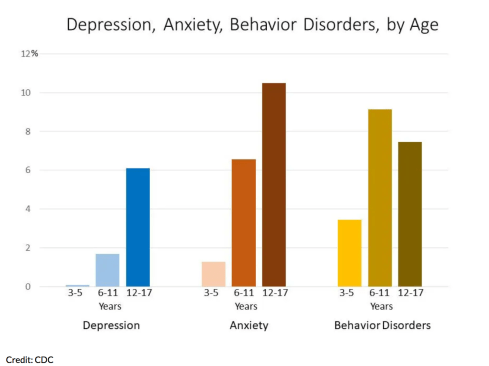
It adds to growing evidence that dirty air may be causing and worsening depression, anxiety and other mental health issues in children and teenagers. Nearly 1 in 7 children and teens in the U.S. have a mental health condition, according to a 2018 study.

Researchers from the Cincinnati Children’s Hospital Medical Center and the University of Cincinnati examined 13,176 emergency room visit to the Medical Center by 6,812 children from 2011 to 2015 for psychiatric disorders, including anxiety, depression, bipolar disorder, suicidality, personality disorders and schizophrenia.

They then estimated the kids’ exposure to small particulate matter pollution (PM2.5) from the three days prior to their visit to the emergency room.

They found every 10 micrograms per cubic meter of increase in PM2.5 exposure was linked to a large jump in emergency room visits. “Notably, all daily exposures within our study domain were below the National Ambient Air Quality Standards set by the U.S. Environmental Protection Agency,” the authors wrote.

They saw an even stronger association between air pollution and emergency room visits from children living in poorer, high poverty neighborhoods.

“The fact that children living in high poverty neighborhoods experienced greater health effects of air pollution could mean that pollutant and neighborhood stressors can have synergistic effects on psychiatric symptom severity and frequency,” said lead author Cole Brokamp, a researcher and assistant professor in the University of Cincinnati Department of Pediatrics, in a statement.

Poverty causes stress, inflammation and harms normal brain and immune system development, the authors wrote, which could add to any potential air pollution impacts on mental health.

Growing evidence

Screen Shot 2019-09-25 at 10.32.34

The study doesn’t prove air pollution causes or exacerbates mental health problems in children, but it is the latest research to suggest the association exists.

In August a large study of Danish and Americans found people exposed to high levels of air pollution have much greater odds of suffering from a psychiatric illness such as depression, schizophrenia or bipolar disorder. In the Danish population, people with the highest exposures had 148 percent and 162 percent higher rates of schizophrenia and personality disorder, respectively.

In addition, two other recent Cincinnati children studies reported similar links: In May researchers found traffic-related air pollution was linked to higher anxiety in children, by measuring markers of the kids’ brain neuroinflammatory responses. And, in a companion study, they found traffic pollution was associated with more self-reported depression and anxiety in children.

“Collectively, these studies contribute to the growing body of evidence that exposure to air pollution during early life and childhood may contribute to depression, anxiety, and other mental health problems in adolescence,” said coauthor Patrick Ryan, a professor and researcher in the University of Cincinnati Department of Pediatrics, in a statement.

Instigating inflammation

It’s not entirely clear how air pollution could spur mental health issues, however, prior research in rodents shows exposure to pollution can cause inflammation and cell death in brain tissues—such changes can potentially lead to and worsen psychiatric disorders.

PM2.5—fine particles less than 2.5 microns in diameter and comprised of particles, gases, metals and other toxic chemicals —comes from traffic, power plants, fires and other sources. Given its small size it is good at infiltrating our bodies and is known to cause oxidative stress and inflammation, which is why it would make sense for it to cause inflammation in cells crucial for the brain and mental health.

Ryan and Brokamp compared the idea of PM2.5 worsening mental health to asthma, “wherein an individual with an underlying inflammatory disorder is prone to acute exacerbations after experiencing acute increases in air pollution exposure.”

The study was limited in that it relied on medical records for emergency room visits, so there could have been impacts on children that didn’t result in a hospital visit.

“These findings need to be confirmed in other populations, but they strongly support the need for further research on the potential influence of ambient air pollution on child and adolescent mental health,” the authors wrote.

via Is air pollution worsening kids’ mental health? – EHN

Posted in Air Quality, Health Effects of Air Pollution, Medical Studies | Tagged , , , , , | Leave a comment

Smoke-laced smog envelops Phuket

Phuket awakes today enveloped by an eerie sea of smoke-laced mist and smog – a combination of light winds, smoke blowing up the Malacca Strait from the Indonesian plantation fires and low seasonal cloud. The conditions have reduced visibility generally around the island to less than a kilometre.

Planes have still been landing at Phuket International Airport without disruption but airport officials say they are monitoring the situation and getting feedback from pilots.

Officially, the Thai Meteorological Department forecast is for a cloudy day with rain, and its hoped that the monsoonal winds may kick in during the day. But the prevailing winds are also the direction from where the problem is happening, from the south and south-west.

Cloudy with scattered thundershowers and isolated heavy rain in Ranong, Phangnga, Phuket, Krabi and Trang. Minimum temperature 23-25 °C. Maximum temperature 29-33 °C. Southwesterly winds 20-35 km/hr. Wave height about 2 meters and above 2 meters in thundershower areas.

Singapore ran its showcase annual street-circuit Grand Prix last night amid the regional smoke crisis, caused by intentionally lit fires on the Indonesian islands, mostly Sumatra and Kalimantan. Indonesia President Jokowi has sent officials, army and fire-fighters to the areas to battle the blazes, arrest the farmers and representatives from the companies responsible. Some 30,000 people are now deployed to solve the urgent, but seasonal, problem.

Meanwhile the air quality readings for Phuket this morning indicate the air pollution is three times the world upper-limit standard of 50 micrograms per cubic metre of air. Southern Thailand is also suffering the poor air quality with Narithawat also recoding readings over 150 this morning.

via Smoke-laced smog envelops Phuket | The Thaiger

Posted in Air Quality, Asia, Thailand | Tagged , , , , , , , , , | Leave a comment