Polluted city neighborhoods are bad news for asthmatic children: Study shows that children with asthma react differently to changes in air pollution depending on the environment they grow up in

Children with asthma who grow up in a New York City neighborhood where air pollution is prevalent need emergency medical treatment more often than asthmatics in less polluted areas. This is according to researchers from Columbia University in the US in a new study published in the Springer Nature-branded journal Pediatric Research. Lead author, Stephanie Lovinsky-Desir, warns however that neighborhoods where asthma cases in children are less common should not be excluded from efforts to improve air quality. This is because children that live in neighborhoods where asthma is less common may be more vulnerable to the effects of air pollution.

For this study, 190 participants aged seven and eight were recruited between 2008 and 2011. All participants were part of the New York City Neighborhood Asthma and Allergy Study and had previously been diagnosed as having asthma. They all grew up in middle-income families in neighborhoods in the Bronx, Brooklyn, Queens, and Manhattan.

The participants were grouped as belonging to neighborhoods with high numbers of asthma cases or neighborhoods with low instances of asthma. There was no significant difference between the household incomes and access to health care (private insurance) enjoyed by the families of the participants. However, those growing up in areas where asthma was more common tended to live in apartment buildings or on higher floors. They were also more likely to live in crowded environments and be raised by single mothers.

Lovinsky-Desir and her colleagues found that children living in neighborhoods where asthma was more common needed emergency care more often and tended to suffer more from exercise-induced wheezing. Also, the concentrations of ambient pollutants in these neighborhoods were higher. Over the course of a year, concentrations of known air pollutants such as nitrogen dioxide, small airborne particles and elemental carbon were much higher in these neighbourhoods than in those with fewer asthma cases.

An interesting finding was that children living in neighborhoods where asthma was less common were effected most by pollution, even though pollution levels were higher in the more common asthma neighborhoods.

“In neighborhoods with less poverty, children exposed to air pollution were more likely to be taken for emergency asthma treatment. However, in neighborhoods with more poverty, it’s likely that other things in the environment, such as stress and violence, have a stronger effect on urgent asthma treatment than air pollution,” explains Lovinsky-Desir.
via Polluted city neighborhoods are bad news for asthmatic children: Study shows that children with asthma react differently to changes in air pollution depending on the environment they grow up in — ScienceDaily

Posted in Air Quality, Asthma, Health Effects of Air Pollution, USA, USA & Canada, World News | Tagged , , , , , , , , , , | Leave a comment

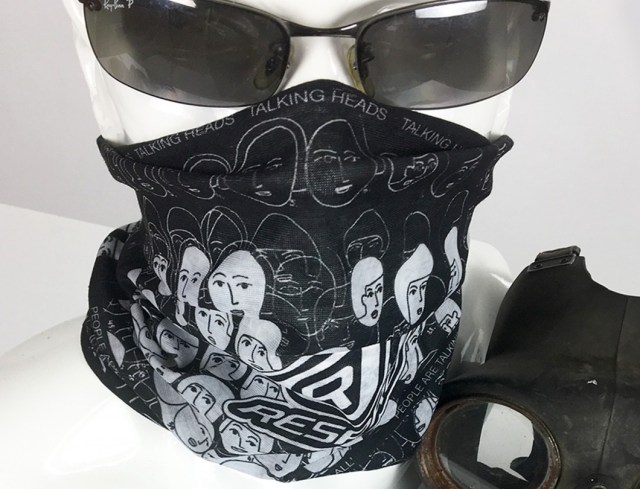
RESPRO® TUBULAR ALL PURPOSE SCARF

This limited edition tubular ‘Talking Heads’ scarf, has a black and white print, created especially for Respro® by artist Margo of Margate. It is the perfect accompaniment to any Respro® mask. It can be used as a cover for our Street Smart or EV mask range, or simply as a head or neck scarf while out in the windy weather. Our print makes a ’ Clean Air For All’ statement while making you look and feel cool.

Talking Heads scarf


Posted in Respro® Products | Leave a comment

Delhi chokes: Air quality dips to ‘very poor’; will deteriorate further, says pollution board

The overall Air Quality Index (AQI) of Delhi was recorded at 315 and the overall air quality has dipped to ‘very poor’ category. As per the Pollution Control Board, the worst was recorded from Dwarka Sector-8.

Once again the national capital is soon to become a gas chamber, the air quality deteriorates to ‘very poor’ category for the first time in the season on Wednesday. The overall Air Quality Index (AQI) of Delhi was recorded at 315. An AQI between 0 and 50 is considered ‘good’, 51 and 100 ‘satisfactory’, 101 and 200 ‘moderate’, 201 and 300 ‘poor’, 301 and 400 ‘very poor’ and 401 and 500 ‘severe’.

As per the Central Pollution Control Board (CPCB), the worst was recorded from Dwarka Sector-8, 376, followed by Anand Vihar at 358, Jahangirpuri 333, Rohini 330 and ITO at 295. According to news agency PTI, the air quality will deteriorate further as the forecast mentioned that in coming days the PM10 level will reach 341 and the PM2.5 level 159.

via Delhi chokes: Air quality dips to ‘very poor’; will deteriorate further, says pollution board

Posted in Air Quality, Asia, India | Tagged , , | Leave a comment

Moss rapidly detects, tracks air pollutants in real time

Moss, one of the world’s oldest plants, is surprisingly in tune with the atmosphere around it. Now in a study appearing in ACS’ journal Analytical Chemistry, scientists report that they have found a simple and inexpensive way to detect air pollutants, specifically sulfur dioxide, in real time based on subtle changes in moss leaves. The discovery could rapidly alert authorities to potentially dangerous alterations in air quality using a sustainable, natural plant sensor.

Plants have evolved the ability to sense light, touch, gravity and chemicals in the air and soil, allowing them to adapt and survive in changing environments. Thus, plants have been used in studies to assess the long-term damage caused by accumulated air pollution worldwide. However, this type of study requires skilled personnel and expensive instrumentation. Xingcai Qin, Nongjian Tao and colleagues wanted to develop an easier way to use moss, a particularly good indicator of sulfur dioxide pollution, as a rapid, real-time sensor.

The researchers gathered wild moss and exposed it to various concentrations of sulfur dioxide in a chamber. Using a highly sensitive, inexpensive webcam, the research team found that moss leaves exposed to sulfur dioxide slightly shrank or curled and changed color from green to yellow. Some of these changes, analyzed with an imaging algorithm, began within 10 seconds of exposure to the pollutant. However, once the sulfur dioxide was removed from the chamber, the moss leaves gradually recovered. This result suggests that the plant, unlike traditional colorimetric sensors, can regenerate its chemical sensing capacity. The researchers conclude that combining remote webcams or drones with moss or other plant-based sensors could lead to cheaper, faster and more precise monitoring of the air for sulfur dioxide and other pollutants over vast regions.

via Moss rapidly detects, tracks air pollutants in real time — ScienceDaily

Posted in Air Quality, World News | Tagged , , , | Leave a comment

California vessel emissions rules could get even tougher

Air pollution regulators are looking to tighten California’s air emissions rules for commercial vessels, already the strictest in the nation.

The California Air Resources Board (CARB) announced it is beginning a new rulemaking process to modify the state’s existing Commercial Harbor Craft Rule.

Now in its implementation phase, the rule makes California the only state in the U.S. that requires most vessels with older engines — pre-dating the U.S. Environmental Protection Agency diesel emissions standards, or just meeting Tier 1 standards — to be repowered with newer Tier 2 or Tier 3 engines before the end of their economic lives.

Yet CARB staff contends commercial vessel operations in state waters “will continue to contribute a significant amount of diesel particulate matter risk after full implementation of the current regulation in 2023,” according to CARB’s notice of rulemaking intent.

The notice initiates a fact-finding process that includes seeking input from the maritime industry and other stakeholders. CARB is proposing to complete that and have a rule proposal ready to present to board members in 2020. The agency has created a list server where interested parties can sign up to track the process and receive notifications.

That next step would bring on more stringent requirements for tugboats and other freight-related vessels, and for passenger vessels including ferries and excursion boats. The CARB staff will also look at the feasibility of retrofitting existing vessels with Tier 4 propulsion, advanced emission control devices, hybrid power and alternative fuels.

California asserts state regulatory control over air emissions within 24 nautical miles of its coastline, so its requirements are a huge consideration for vessel operators, designers and builders on the West Coast. Many have been anticipating a future of even tougher air pollution limits, designing new vessels to approach or even meet Tier 4-like performance below the EPA horsepower thresholds.

The San Francisco Bay Ferry’s new Hydrus-class 400-passenger ferries are powered by MTU 12V4000M64 engines, nominally rated at Tier 3, but delivering Tier 4 performance with a selective catalytic reduction (SCR) system designed by Pacific Power Group, Kent., Wash.

Meanwhile, California port authorities are pushing toward reducing emissions from their operations, including repowering harbor tugs and converting cranes and trucks from diesel to all-electric operation. In April the Port of Long Beach launched a “zero emissions” pilot project to test newly electrified equipment, financed with a $9.7 million grant from the California Energy Commission.

via California vessel emissions rules could get even tougher | WorkBoat

Posted in Air Quality, USA, USA & Canada | Tagged , , , | Leave a comment

Beijing turns nose up at perfumes in war on smog

Hair gel and perfumes have become the latest targets in China’s war on smog.

Scientists and researchers claim that “daily life emissions” from household items containing volatile organic compounds, including air fresheners and kitchen cleaners, are to blame for 12 per cent of the air pollutants in the city, as much as industrial emissions.

Car emissions, especially those from diesel-powered vehicles, are the single largest source of pollution, China said, contributing nearly half of the air pollutants in the city.

Beijing has vowed to clean up the city’s foul air and it has taken some drastic measures, including ordering a fifth of the city’s 5.6 million cars off the roads every weekday and shutting down heavy-polluting factories in the region. Villagers in Beijing’s suburbs have had to huddle for warmth when authorities banned coal burning for winter heating.

The capital cut its pollution levels by about 35 per cent between 2013 and 2017. Last week its environmental protection bureau said that the average concentration of PM2.5, the tiny, harmful particulate matter, fell almost 17 per cent in the first nine months of this year, compared with the previous period, but it is far from what is deemed safe. There was thick smog yesterday with PM2.5 reaching more than 150 micrograms per cubic metre. World Health Organisation guidelines state that the 24-hour average of PM2.5 should be kept below 25 micrograms per cubic metre to be deemed safe.

The city was shrouded in thick smog yesterday, with the density of PM2.5 reaching more than 150 micrograms per metre cubed. The WHO guidelines state that the 24-hour average of PM2.5 should be below 25 micrograms per metre cubed to be deemed safe.

Tang Xiaoyan, a professor at Peking University, warned that emissions from household items may appear insignificant but should not be ignored. When the city’s air turned foul days before the 2008 Olympics, authorities ordered city-wide closures of laundry services, which helped turn the air quality around on the eve of the Games, Mr Tang told the Science and Technology Daily.

Wang Gengchen, a research fellow at the Chinese Academy of Sciences’ Atmospheric Physics Institute, told the state-run Global Times that Beijing should tackle indirect pollution sources while measures against vehicles and coal burning are already strict enough.

He said that the volatile organic compounds, common in many household products, generate tiny pollutants through a series of physical and chemical reactions. Chinese scientists have relied on sales data of perfume, hair spray, detergents and cleaners in estimating the amounts of volatile organic compounds released through daily use and their share in causing the foul air.

via Beijing turns nose up at perfumes in war on smog | World | The Times

Posted in Air Quality, Asia, China | Tagged , , , , , , | Leave a comment

Delhi’s air quality set to worsen as stubble burning intensifies

Based on data from monitoring stations, Air Quality Index for Delhi was recorded at 246 (poor) on Monday

Air quality in the national capital region is likely to deteriorate as burning of paddy stubble by farmers in Punjab and Haryana intensifies over the next fortnight.

According to the environment ministry, fire-related incidents are 75% and 40% lower in Punjab and Haryana, respectively, so far but that may not be a reason to cheer. The paddy grown in summer in Punjab was sown late this year by a week, while both Punjab and Haryana witnessed unseasonal rains in end-September, which has delayed harvesting by about 10 days because of a rise in crop moisture levels. Air quality is likely to worsen as more farmers begin harvesting.

The situation is however likely to be better than last year when a dust storm, stubble burning and Diwali celebrations took place around 19 October. This year, Diwali falls on 7 November.

The Air Quality Index (AQI) for Delhi was recorded at 246 (poor) on Monday at 4 pm, on the basis of data collected from 31 monitoring stations. An AQI between 0-50 is considered ‘good’, 51-100 ‘satisfactory’, 101-200 ‘moderate’, 201-300 ‘poor’, 301-400 ‘very poor’, and 401-500 ‘severe’. According to the System of Air Quality and Weather Forecasting and Research (SAFAR), air quality is set to worsen, as levels of two main pollutants, PM 2.5 and PM 10, is likely to increase in the next three days.

“We can plan better if we have advance information on air quality. Last year, we were caught surprised when a dust storm from Gulf countries led to spike in pollution levels. This year, at least we would be able to forewarn people and take proactive measures,” environment minister Harsh Vardhan said on Monday at the launch of an early warning system that can issue air quality forecast three days in advance.

“It is difficult to predict how bad it is going to be,” said Anumita Roychowdhury, executive director at the Delhi-based Centre for Science and Environment. “Right now, from the satellite images we can see some (stubble) burning but end October will be the real test of government measures,” she said.

Farmers in Punjab and Haryana usually burn the paddy straw after combine harvesters leave a 7-8 inch stubble on the field following harvest, and farmers have to prepare the field for planting of wheat crop in two to three weeks. As the straw cannot be fed to cattle, the way out is on-field management of stubble by using machines such as straw management system, mulchers, rotavators and happy seeders.

The central and state governments have announced 50-80% subsidy on purchase of these machineries but have seen limited success. “The machinery is very expensive despite the subsidy and manufacturers raised prices after these subsidies were announced,” said Jagmohan Singh, a farmer leader.

“The number of machines that has been purchased on subsidy will not even cover 10% of Punjab’s paddy area… besides it costs farmers over ₹5,000 per acre for straw management by rented machines,” Singh said.

Farmer in these states are demanding a direct financial assistance of ₹200 per quintal of paddy harvested to account for straw management expenses. According to the agriculture ministry, 23 mt of paddy straw is burnt in Punjab, Haryana and UP every year, shooting up carbon dioxide levels in the air by 70%, triggering respiratory problems.

via Delhi’s air quality set to worsen as stubble burning intensifies – Livemint

Posted in Air Quality, Asia, India | Tagged , , , , , , | Leave a comment

People burning wet wood on inefficient stoves ‘poisoning themselves’

Study highlights ‘shocking contribution’ of domestic wood and coal fires to air pollution, which causes 40,000 early deaths a year in the UK

People burning wet wood on inefficient stoves are poisoning themselves and their neighbours, according to a new report from a leading thinktank.

The IPPR study highlights the “shocking contribution” domestic wood and coal fires make to the UK’s air pollution crisis, which causes 40,000 early deaths a year and devastating health problems for hundreds of thousands of others.

“For almost 2 million homes in the UK, solid fuels, particularly wood, are a part of everyday life,” said Josh Emden, research fellow at the IPPR and co-author of the report. “For many this is the enjoyment of a warm log fire, for others it is the only way to heat their homes – but the reality is that, without stringently tested, hyperefficient stoves and properly dried wood, people are unknowingly poisoning themselves, their children and their neighbours.”

Although many of the health problems caused by air pollution come from traffic fumes, the study points out that burning wood, coal or other solid fuels in the home is the largest single contributor to production of the most dangerous pollutant, known as particulate matter: tiny particles that penetrate deep into the body.

According to government figures, wood, coal and solid fuel fires in the home generate 40% of total PM2.5 – the smallest and most dangerous particulate. This is more than double the PM2.5 emissions from industrial combustion (16%) and more than three times as much as from road transport (12%).

The IPPR report calls on the government to ban the sale of wet wood and smoky coal in England no later than 2020 and commit to reduce all domestic PM2.5 emissions to as close to zero as possible by 2050.

Emden added that the government had to adopt tougher air pollution standards post-Brexit if it was to live up to its pledge to leave the environment in a better state than [it] found it.

“Communication of the problem in the government’s Clean Air Strategy is a start,” he said, “but this must be backed up by urgent policy action including stove standards that are stricter than EU regulations.”

Last year the Guardian revealed that that every person in London is breathing air that exceeds global guidelines for PM2.5.

The scale of the UK’s air pollution crisis has been underlined by a flurry of scientific studies over recent months showing the long-term damage air pollution is doing to people’s health, including connecting it with asthma, dementia, damage to unborn babies, and an increased risk of heart disease.

Last month the world’s biggest children’s charity, Unicef, told the Guardian it had refocused its UK operation to tackle air pollution because of the scale of the “health crisis” facing young people in the country.

The UK government has been widely criticised by clean air campaigners and environmental groups over what they say has been its failure to tackle the crisis. It has been defeated three times in court over its plans and is now one of six countries taken to European Court of Justice over them.

via People burning wet wood on inefficient stoves ‘poisoning themselves’ | Environment | The Guardian

Posted in Air Quality, Europe, UK | Tagged , , , , | Leave a comment