Fine particle air pollution is Parkinson’s risk factor: US study

25% rise in disease risk noted in areas with greatest long-term PM2.5 exposure

People living in areas with high levels of an air pollutant called fine particulate matter (PM2.5) — whose sources include power plants, motorized vehicles, and fires — are at greater risk of Parkinson’s disease, according to a U.S. study.

“We found a nationwide association between Parkinson’s disease and air pollution exposure, with people exposed to the highest levels of fine particulate matter having an increased risk of Parkinson’s disease compared to people exposed to the lowest levels,” Brittany Krzyzanowski, PhD, the study’s first author with the Barrow Neurological Institute in Arizona, said in a press release from the American Academy of Neurology (AAN).

The Mississippi-Ohio River Valley is a particular “Parkinson’s disease hot spot,” Krzyzanowski added, with “some of the highest levels of fine particulate matter pollution in the nation.”

Study findings, “Fine Particulate Matter and Parkinson’s Disease Risk in Medicare Beneficiaries,” will be presented at the AAN’s 75th annual meeting, set to run in Boston and virtually on April 22–27.

Fine particulate matter consists of smoke, aerosols, soot, and the like

“By mapping nationwide levels of Parkinson’s disease and linking them to air pollution, we hope to create a greater understanding of the regional risks and inspire leaders to take steps to lower risk of disease by reducing levels of air pollution,” Krzyzanowski said.

Both genetic and environmental factors appear to influence the risk of Parkinson’s, a progressive neurodegenerative disorder widely known for its movement-related symptoms.

Increasing evidence suggests air pollution is an environmental risk factor for Parkinson’s. A European report also linked long-term exposure to air pollutants such as PM2.5 with a greater risk of dying due to Parkinson’s.

PM2.5 are particles less than 2.5 micrometers in diameter — about 30 times smaller than a strand of human hair — consisting of smoke, soot, aerosols, mold spores, dander, and the like. Such particulates derive from motor vehicles, fossil fuel-fired power plants, other industries, and forest and grass fires.

Krzyzanowski and colleagues investigated the potential links between higher PM2.5 exposure and Parkinson’s risk across the U.S.

“We used geographic methods to examine the rates of Parkinson’s disease across the United States and compared those rates to regional levels of air pollution,” Krzyzanowski said.

Researchers used 2009 data from Medicare, the government-funded health insurance program for people 65 years or older and those with certain disabilities. Among the more than 22.5 million people enrolled in Medicare that year, 83,674 had been newly diagnosed with Parkinson’s.

Disease rates were mapped out and calculated for several U.S. regions. The average air pollution exposure levels, sourced from annual PM2.5 concentrations, were established for this 2009 patient group using their residency ZIP codes and counties.

These people were then divided into four groups based on their average PM2.5 exposure. Those with the highest exposure had an average yearly exposure of 19 micrograms per cubic meter (mcg/m3), while people in the lowest exposure group were exposed, on average, to five mcg/m3 of PM2.5 each year.

Among those in the highest exposure group, 434 in every 100,000 people were newly diagnosed with Parkinson’s compared with 359 new cases in the lowest exposure group.

After adjusting for factors known to influence Parkinson’s risk, such as age, sex, race, smoking, and medical care use, the researchers found the disease’s risk increased by 25% from the lowest to the highest exposure groups.

Exposure risks noted in Rocky Mountain region, Mississippi-Ohio River Valley

Researchers then divided PM2.5 exposure into 10 levels for a more detailed geographic assessment.

The link between PM2.5 exposure and Parkinson’s risk was strongest in the Rocky Mountain region, which included Lake County, Colorado — southwest of Denver — and its neighboring counties. Moving up from one exposure level to the next in these counties was associated with a 16% increase in Parkinson’s risk.

In the Mississippi-Ohio River Valley, which includes Tennessee and Kentucky, higher exposure to PM2.5 was also linked to higher Parkinson’s rates, but this association was weaker than in the Rocky Mountain region.

Here, the risk of Parkinson’s was 4% higher for every exposure level increase.

“Finding a relatively weaker association where we have some of the highest Parkinson’s disease risks and fine particulate matter levels in the nation is consistent with the threshold effect we observed in our data,” Krzyzanowski said.

“In the Mississippi-Ohio River Valley, for example, Parkinson’s disease risk increases with increasing air pollution exposure until about 15 [mcg/m3] of fine particulate matter, where Parkinson’s disease risk seems to plateau,” Krzyzanowski added.

Researchers noted that this weaker link may be due to an apparent plateau effect between 12–19 mcg/m3, and the fact that air pollution is also associated with a greater risk of other health conditions, including dementia, that can affect the likelihood of a Parkinson’s diagnosis.

“Using state-of-the-art geospatial analytical techniques, we identified a nationwide association between PD [Parkinson’s disease] and PM2.5, which varied in strength by region,” the researchers wrote in the abstract.

Since PM2.5 contains a variety of air pollutants, some more toxic than others, “a deeper investigation into the specific subfractions of PM2.5 may provide insight into regional variability in the PM2.5-PD association,” the team added.

This work was supported by the U.S. Department of Defense, the National Institute of Environmental Health Sciences, and the Michael J. Fox Foundation for Parkinson’s Research.

Fine particle air pollution is Parkinson’s risk factor: US study | 25% rise in risk noted in areas with greatest long-term PM2.5 exposure | Parkinson’s News Today

Posted in Air Quality, Health Effects of Air Pollution, Medical Studies, USA, USA & Canada | Tagged , , , , , | Leave a comment

London air pollution as bad as ‘smoking 154 cigarettes every year’

Air quality in London is so poor it is currently the equivalent of indirectly smoking 154 cigarettes a year, according to new research.

A number of measures have been implemented in London to try and reduce pollution, including the Ultra Low Emission Zone (ULEZ), which is set to expand later this year.

But the capital is still not yet leading the way when it comes to clean air. 

London has come in ninth place – with Northampton, Nottingham and Bristol scooping the top three places.

Levels of air pollution in the capital were showing as ‘very high’ in Greater London at the end of January, according to the Defra website.

Air pollution alerts are sent when levels rise high enough to affect health – but there aren’t any currently in place.

The study has found most of the worst culprits are located in the south east of England. 

Northampton was the highest, with residents inhaling the same as 189 cigarettes a year. 

According to one study by the British Heart Foundation, approximately one in every 20 deaths in Northampton can be linked to air pollution.

In the North, the most polluted city is Kingston upon Hull, where residents indirectly inhale the equivalent of 161 cigarettes annually. 

Number of cigarettes you’re indirectly smoking each year by city

  1. Northampton – 189
  2. Nottingham – 181
  3. Bristol – 163
  4. Southampton – 162
  5. Kingston Upon Hull – 161
  6. Cardiff – 160
  7. Southend-on-Sea – 157
  8. Norwich – 157
  9. Leeds – 155
  10. London – 154
  11. Stoke – 149

The number goes down drastically if you look further afield to Scotland.

Both Glasgow and Edinburgh possessed significantly better air quality, at 92 and 87 cigarettes indirectly smoked. 

HouseFresh, which compiled the data, said: ‘Berkeley’s Earth describes a rule-of-thumb that compares exposure to PM2.5 particles to cigarettes smoked: one cigarette per day is the rough equivalent of a PM2.5 level of 22 µg/m3. 

‘We converted that value to cigarettes as per Berkeley’s Earth rule-of-thumb and multiplied the result by 365 to obtain how many cigarettes you’ve indirectly smoked during a year.’

London air pollution as bad as ‘smoking 154 cigarettes every year’ | Metro News

Posted in Air Quality, Europe, Health Effects of Air Pollution, London, Research on Air Pollution in the UK, UK | Tagged , , , , | Leave a comment

Air Pollution Linked to Depression in Older Adults: Study

Researchers from Harvard and Emory Universities have found a link between long-term exposure to air pollution and being diagnosed with depression after age 64.

“Depression in older adults is a concern and can be as important as dementia,” the authors write, noting that previous studies have shown the impact of air pollution on mental health.

The study was published Friday in JAMA Network Open. Researchers analyzed Medicare data from 2005 to 2016 for 8.9 million people age 64 and older, of whom 57% were female and 90% were white. During the study, more than 1.5 million people were diagnosed with depression.

The researchers looked at air pollution data for the ZIP code associated with where each person in the study lived during a 16-year period. The three air pollutants studied were: 

Fine particulate matter, which are tiny particles such as those that can make the air look hazy when pollution levels are high.

Ozone, also known as smog, which comes from sources such as tailpipes and smokestacks.

Nitrogen dioxide, which is among the group of gases that form when fossil fuels such as coal, oil, gas, or diesel are burned.

Prolonged exposure to each of the three pollutants was linked to an increased risk of a new diagnosis of depression. Researchers found that nitrogen dioxide exposure was particularly dangerous.

Depression later in life is often under diagnosed, according to the CDC, because “healthcare providers may mistake an older adult’s symptoms of depression as just a natural reaction to illness or the life changes that may occur as we age, and therefore not see the depression as something to be treated.”

“That’s one of the biggest reasons we wanted to conduct this analysis,” Harvard T.H. Chan School of Public Health researcher Xinye Qiu, PhD, told CNN. “Surprisingly, we saw a large number of late-onset depression diagnoses in this study.”

The authors write that they hope both environmental regulators and public health officials will take the impact of air pollution into account when considering the prevention of depression in older people.

“We hope this study can inspire researchers to further consider possible environmental risk factors (such as air pollution and living environment) for the prevention of geriatric depression, to understand the disease better moving forward, and to improve the delivery of mental health care services among older adults,” they write.

Air Pollution Linked to Depression in Older Adults: Study
Posted in Air Quality | Tagged , , , , , | Leave a comment

Air pollution particles ‘linked to higher blood pressure in London teenagers’

Long-term exposure to tiny air pollution particles known as PM2.5 is linked with higher blood pressure in teenagers living in London – with stronger associations seen in girls, according to research.

Scientists from Kings College London, who analysed data from more than 3,000 adolescents, also found that exposure to high levels of nitrogen dioxide (NO2) – a pollutant from diesel traffic in London – is associated with lower blood pressure in this group.

The team said that based on its findings, published in the journal Plos One, more research is urgently needed to assess how air pollution may be affecting the cardiovascular health of children and adolescents.

Senior author Seeromanie Harding, a professor of social epidemiology from King’s College, London, said their study “provides a unique opportunity to track exposures of adolescents living in deprived neighbourhoods”.

She added: “Given that more than one million under-18s live in neighbourhoods where air pollution is higher than the recommended health standards, there is an urgent need for more of these studies to gain an in-depth understanding of the threats to (and opportunities for) young people’s development.”

Tiny pollution particles are small enough to be inhaled into the body.

These pollutants can make their way into the bloodstream, causing damage to blood vessels and airways.

The findings highlight the potential detrimental role of exposure to higher concentrations of particulate matter on adolescents’ blood pressure levels – Dr Alexis Karamanos

For the study, the researchers examined the effects of air pollution on children attending 51 schools across London.

They analysed data from 3,284 adolescents, following up from ages 11-13 and 14-16 years old.

The results show Particulate Matter (PM2.5) – tiny pollutants that come from car exhaust fumes, building, and industry materials – was associated with higher blood pressure across all ages, particularly among girls.

Meanwhile, NO2 was associated with lower blood pressure.

Co-author Dr Andrew Webb, from King’s College London, said: “The effect of NO2 on blood pressure is similar to what we and other researchers have observed previously after ingesting green leafy vegetables or beetroot juice.

“These are rich in dietary nitrate (NO3-) which increases circulating nitrite (NO2-) concentration in the blood and lowers blood pressure, an effect which may also be sustained over weeks or months with continued ingestion of nitrate-rich vegetables.”

Researchers also found teenagers from ethnic minority groups were exposed to higher annual average concentrations of pollution at home than their white UK peers.

But, they added, the impact of pollutants on blood pressure did not vary according to ethnicity, weight, or economic status.

Corresponding author Dr Alexis Karamanos, from King’s College London, said: “The findings highlight the potential detrimental role of exposure to higher concentrations of particulate matter on adolescents’ blood pressure levels.

“Further studies following the same adolescents over time in different socio-economic contexts are needed to understand whether and how exposure to higher pollutant concentrations may affect differently the cardiovascular health of children and adolescents.”

Air pollution particles ‘linked to higher blood pressure in London teenagers’ | Times Series
Posted in Air Quality, Europe, Health Effects of Air Pollution, London, Medical Studies, Research on Air Pollution in the UK, UK | Tagged , , , , , , | Leave a comment

Sitting in traffic for just 2 hours can lead to brain damage

Breathing in diesel exhaust fumes while sitting in traffic could be disastrous for your brain, a new neuroscience study warns. A team at the University of British Columbia says brain scans show increased impairments in brain function after exposure to traffic pollution. In fact, signs of decreased brain function can start to appear in as little as two hours.

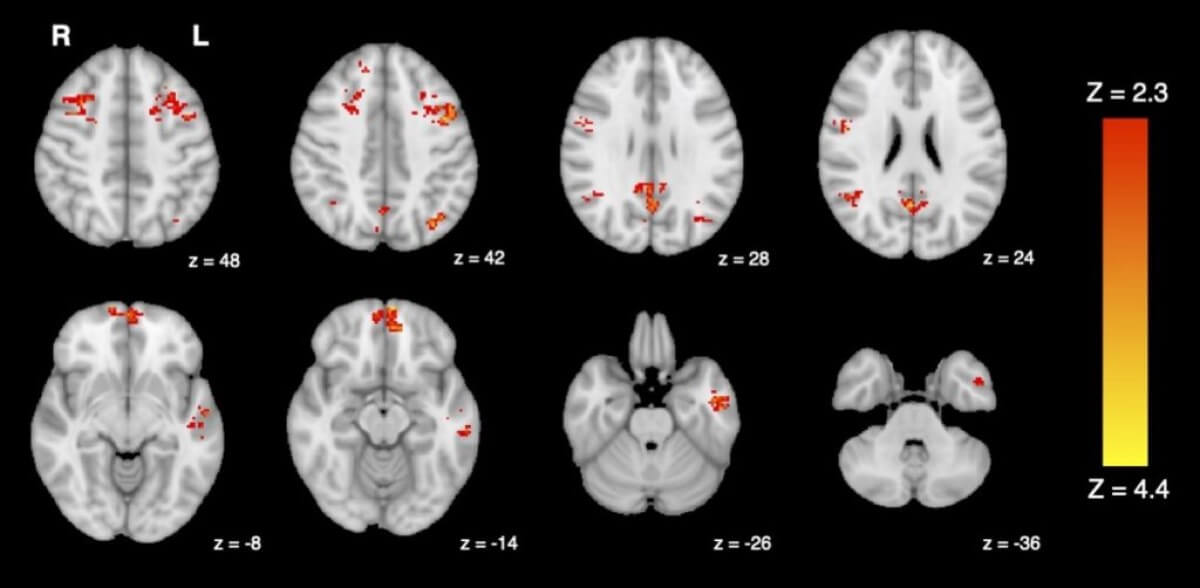
The study focused on a person’s functional connectivity — a measure that tests how well different brain regions interact with one another. According to the study authors, this is the first controlled experiment to show evidence of humans showing altered brain network connectivity as a result of air pollution exposure.

“For many decades, scientists thought the brain may be protected from the harmful effects of air pollution,” says Chris Carlsten, a professor and head of respiratory medicine and the Canada Research Chair in occupational and environmental lung disease at UBC, in a university release. “This study, which is the first of its kind in the world, provides fresh evidence supporting a connection between air pollution and cognition.”

The team briefly exposed 25 healthy adults to either diesel exhaust or filtered air in a lab. They used functional magnetic resonance imaging (fMRI) to measure their brain activity before and after each exposure. One of the areas they looked at for possible changes is the brain’s default mode network (DMN). The DMN includes several brain regions connected together that play a part in people’s internal thoughts and memories. The fMRI scans show that people exposed to diesel exhaust have lower DMN activity compared to the air-filtered group.

“We know that altered functional connectivity in the DMN has been associated with reduced cognitive performance and symptoms of depression, so it’s concerning to see traffic pollution interrupting these same networks,” explains study first author Jodie Gawryluk, a psychology professor at the University of Victoria. “While more research is needed to fully understand the functional impacts of these changes, it’s possible that they may impair people’s thinking or ability to work.”

The good news is that the neurological effects from diesel exhaust were temporary. Every person exposed to air pollution had their brain activity return to normal. However, the study authors speculate that long-term exposure, like sitting in gridlock traffic every day, may cause more permanent damage. While we don’t know how much car exhaust could cause long-lasting brain damage, Dr. Carlsten says it’s better to minimize any exposure in the first place.

fMRI shows decreased functional connectivity in the brain following exposure to traffic pollution. (Credit: University of British Columbia)

“People may want to think twice the next time they’re stuck in traffic with the windows rolled down,” says Dr. Carlsten. “It’s important to ensure that your car’s air filter is in good working order, and if you’re walking or biking down a busy street, consider diverting to a less busy route.”

The study is published in Environmental Health.

Sitting in traffic for just 2 hours can lead to brain damage – Study Finds
Posted in Air Quality, Health Effects of Air Pollution, Medical Studies | Tagged , , , , | Leave a comment

Air pollution warning for Bangkok

Unsafe levels of fine dust are forecast for the capital city from Tuesday to Friday due to stagnant air and extensive burn-off in Cambodia.

A high pressure systems from China would cover the country and cause stagnant air which would result in the accumulation of dust particles that could reach unsafe levels from Jan 31-Feb 3, Bangkok Governor Chadchart Sittipunt said on Monday.

“There are more hotspots due to biomass burn-off in Cambodia. Northeasterly winds are blowing the dust of burnt biomass to the Gulf of Thailand but on Feb 1 and 2 the wind direction will change. The easterly wind will bring more biomass dust to Bangkok,” Mr Chadchart said.

He advised people in the city to wear face masks when outdoors, but to try to avoid outdoor activities.

From Tuesday to Friday, businesses and employees should work from home where possible, to avoid the  pollution, the governor said.

The Geo-Informatics and Space Technology Development Agency reported 771 hotspots in Thailand, 1,996 in Cambodia, 683 in Laos, 647 in Myanmar, 384 in Vietnam and one in Malaylia on Sunday.

Air pollution warning for Bangkok
Posted in Air Quality, Asia, Thailand | Tagged , , , | Leave a comment

Bangkok air pollution prompts advice to work from home

Thai capital’s already bad air made worse by forest fires and burning on farms

People in Bangkok have been advised to work from home and wear face masks due to air pollution that has worsened to unhealthy levels.

Officials urged people to use public transport rather than private cars for commuting, and said the authorities would seek to reduce sources of pollution such as outdoor burning and construction activities. Face masks would be distributed to vulnerable people, Bangkok authorities said.

The Bangkok governor, Chadchart Sittipunt, said pollution was expected to rise on Thursday but it did not require schools to be closed. “I would like to ask people to be prepared by checking the pollution level before planning a trip. The BMA [Bangkok Metropolitan Administration] and pollution department will control the sources of the dust and ask for cooperation from activities that generates dust such as construction sites or truck transportation,” he said.

If the situation worsened, he added, limitations on transport would be considered.

Agricultural burning and forest fires are a major cause of air pollution in Thailand between December and April, especially in the north-west. Pollution from these fires also affects Bangkok, which already struggles with bad air due to its factories, construction and traffic.

On Thursday morning, PM2.5 levels reached 63.2µg/m³ (micrograms per cubic metre), according to the Swiss air quality company IQAir – far higher than the WHO annual air quality guideline of 5µg/m³. Areas of Samut Songkhram, south-west of Bangkok, and Lampang, in the north, ranked worst in Thailand.

Dr Opas Karnkawinpong, the permanent secretary in the health ministry, said this week that all provincial public health services would monitor the situation and that emergency centres would be opened in provinces experiencing high levels of pollution for more than three consecutive days.

The number of patients experiencing pollution-related health problems more than doubled to nearly 213,000 this week, from about 96,000 last week, Opas said. Most were experiencing respiratory tract problems as well as symptoms such as dermatitis or eye inflammation.

Chadchart said the situation would be monitored closely throughout February and was expected to be better in March.

Bangkok air pollution prompts advice to work from home | Thailand | The Guardian
Posted in Air Quality, Asia, Thailand | Tagged , , | Leave a comment

Jet engine lubrication oils are a major source of ultrafine particles

Ultrafine particles form during combustion processes, for example when wood or biomass is burned, as well as in power and industrial plants. Alongside road traffic, large airports are a major source of these ultrafine particles, which are less than 100 millionths of a millimetre (100 nanometres) in size. Because they are so small, they can penetrate deep into the lower respiratory tract, overcome the air-blood barrier and, depending on their composition, cause inflammatory reactions in the tissue, for example. What’s more, ultrafine particles are suspected of being capable of triggering cardiovascular diseases.

Since several years, the Hessian Agency for Nature Conservation, Environment and Geology (HLNUG) has been measuring the number and size of ultrafine particles at various air monitoring stations in the vicinity of Frankfurt International Airport, for example in the Frankfurt suburb of Schwanheim and in Raunheim. Last year, scientists led by Professor Alexander Vogel at Goethe University Frankfurt analysed the chemical composition of the ultrafine particles and came across a group of organic compounds which, according to their chemical fingerprints, originated from aircraft lubrication oils.

The research team has now corroborated this finding by means of further chemical measurements of the ultrafine particles: the particles originated to a significant degree from synthetic jet oils and were particularly prevalent in the smallest particle classes, i.e. particles 10 to 18 nanometres in size. Such lubrication oils can enter the exhaust plume of an aircraft’s engines, for example through vents where nanometre-sized oil droplets and gaseous oil vapours are not fully retained.

In laboratory experiments, the researchers also succeeded in reproducing the formation of ultrafine particles from lubrication oils. To this end, a common engine lubrication oil was first evaporated at around 300 °C in a hot gas stream, which simulated the exhaust plume of an aircraft engine, and subsequently cooled down. The number-size distribution of the freshly formed particles was then measured.

Alexander Vogel, Professor for Atmospheric Environmental Analytics at the Institute for Atmospheric and Environmental Sciences of Goethe University Frankfurt, explains: “When the oil vapour cools down, the gaseous synthetic esters are supersaturated and form the nuclei for new particles that can then grow fast to around 10 nanometres in size. These particles, as our experiments indicate, constitute a large fraction of the ultrafine particles produced by aircraft engines. The previous assumption that ultrafine particles originate primarily from sulphur and aromatic compounds in kerosene is evidently incomplete. According to our findings, lowering lubrication oil emissions from jet engines holds significant potential for reducing ultrafine particles.”

The experiments show that the formation of ultrafine particles in jet engines is not confined to the combustion of kerosene alone. Potential mitigation measures should take this into consideration. This means that using low-sulphur kerosene or switching to sustainable aviation fuel cannot eliminate all the pollution caused by ultrafine particles.

A comprehensive scientific study by the Federal State of Hesse, which will start in 2023, will examine pollution from ultrafine particles and their impact on health. In this context, the results from the current study can help to identify airport-specific particles and derive possible mitigation measures.

Story Source:Materials provided by Goethe University Frankfurt. Note: Content may be edited for style and length.

Jet engine lubrication oils are a major source of ultrafine particles — ScienceDaily
Posted in Air Quality, Europe, Germany, Health Effects of Air Pollution | Tagged , , , , | Leave a comment