Gas stoves have given 650,000 U.S. children asthma, study finds

Gas stoves are responsible for 12.7% of U.S. childhood asthma cases, a new study in the peer-reviewed International Journal of Environmental Research and Public Health has found. That proportion is much higher in states such as Illinois (21.1%), California (20.1%) and New York (18.8%), where gas stoves are more prevalent.

“When the gas stove is turned on, and when it’s burning at that hot temperature, it releases a number of air pollutants,” Brady Seals, a co-author of the study and the carbon-free buildings manager at the energy policy think tank RMI, told Yahoo News. “So these are things like particulate matter, carbon monoxide and nitrogen dioxide, along with others. So, for example, nitrogen dioxide is a known respiratory irritant. And the EPA, in 2016, said that short-term exposure to NO2 causes respiratory effects like asthma attacks.”

The study was based on a meta-analysis from 2013 on the correlation between gas stoves and childhood asthma, which found that living in a home with a gas stove corresponds to a 42% higher chance of current childhood asthma. Combining that with data on the prevalence of gas stoves, which are present in 35% of U.S. homes, the researchers estimated how many more childhood asthma cases exist because of their presence. As a result, the researchers found that 650,000 American children have asthma because of gas stoves in their home.

The new study follows other research showing gas stoves are harmful to indoor air quality. In 2020, UCLA public health researchers commissioned by the Sierra Club found that 90% of homes have unhealthy levels of nitrogen dioxide pollution after cooking with gas for one hour. A 2020 study by RMI found homes with gas stoves have 50% to over 400% higher nitrogen dioxide concentrations than homes with electric stoves. When burned, gas also emits harmful substances, such as carbon monoxide, nitrogen oxide, particulate matter, nitrogen dioxide, and formaldehyde, which is a known carcinogen.

In addition to the indoor air pollution at issue in this study, home gas use also contributes to outdoor air pollution, another primary driver of asthma. The same toxins that harm children’s lungs while they are indoors contribute to the formation of ground-level ozone, also known as smog, which is toxic. In 2019, the Institute for Health Metrics and Evaluation estimated that ozone is responsible for 11% of deaths from chronic respiratory disease. And natural gas is mostly methane, which is also an ingredient in smog formation.

Methane is also a very powerful greenhouse gas, accounting for 11% of planet-warming emissions, according to the Environmental Protection Agency. Global warming also worsens air pollution, as hotter weather contributes to smog formation.

Increasingly, cities looking to reduce their greenhouse gas emissions are banning the installation of gas appliances in new construction. Liberal bastions such as Berkeley, Calif., San Francisco, Seattle and New York City have adopted such measures.

Researchers are also discovering that gas stoves and ovens may pollute indoor air when they’re not even in use. A January 2021 study in the journal Environmental Science & Technology found that gas stoves and ovens frequently leak, and it estimated that in the U.S. their leaked methane emissions are equivalent to the carbon emissions of half a million cars.

The UCLA study estimated that in California alone, if all residential gas appliances were transitioned to clean-energy electric appliances, the reduction of particulate pollution and nitrogen oxides would result in 354 fewer annual deaths and an even greater reduction in bronchitis.

The researchers in the newest study recommend two approaches to reducing indoor pollution from gas stoves: either improving ventilation or replacing them with clean alternatives such as electric stoves. They lean heavily towards the latter.

“Notably, ventilation is associated with the reduction, but not elimination, of childhood asthma risk,” they write.

Even many stoves with range hoods, they note, do not vent outdoors — which defeats the purpose — and people often forget to turn their vents on.

Last month, eight senators and 12 members of the House of Representatives, all Democrats, signed a letter to the Consumer Product Safety Commission to take action to protect consumers from gas stove pollution. The letter did not call for banning gas stoves, but instead asking for regulation to require ventilation and performance standards to limit leakage. CPSC Commissioner Richard Trumka Jr. said in a subsequent webinar that a ban on gas stoves would be a “real possibility.”

Gas stoves have given 650,000 U.S. children asthma, study finds
Posted in Air Quality, Asthma, Health Effects of Air Pollution, Medical Studies, USA, USA & Canada | Tagged , , , , | 1 Comment

UK study adds to evidence of air pollution link to long-term illness

Research found greater chances of multiple chronic illnesses in people living in polluted areas

Are the impacts from air pollution hiding in plain sight in the everyday aliments that so many of us suffer from? A new study, the largest of its kind, found that people living in polluted areas were more likely to have more than one long-term illness. Researchers looked at more than 360,000 people aged between 40 and 69 who had health data in the UK Biobank. They found greater chances of multiple neurological, respiratory, cardiovascular and common mental health conditions such as depression and anxiety, even having allowed for differences in income. These long-term problems affect people’s lives and place big burdens on our economy and health services.

Earlier this month the UK government announced a target for the worst particle pollution in England in 2040. It means that England plans to meet the 2005 World Health Organization (WHO) guidelines in 18 years’ time, 35 years after the guidelines were set. The new health study found an extra 20% chance of multiple long-term illnesses for those living with particle pollution that is worse than the 2040 England target.

Dr Ioannis Bakolis, from King’s College London, who led the study, said: “We will need to track people’s changing health over time to know for sure if air pollution caused these chronic health problems. If air pollution exposure indeed affects risk, it presents an opportunity to shape the epidemic of multiple long-term illness using environmental policy such as expanding low-emission zones or avoiding building care homes in pollution hotspots.”

It may be decades before we get data on the progress of these chronic illnesses, but we can learn by looking into the past. Seventy years ago, London was coping with the deaths of about 12,000 people in the city’s worst ever smog. A subsequent Ministry of Health report reviewed past death records and found that smogs had been killing people over the previous 80 years. The evidence had been there all along.

In 2016, a study looked at the health of Londoners who survived the 1952 smog as infants under one year old or in utero. They were left with a 20% greater chance of developing asthma in childhood, compared with those outside London. Although less clear in the data, the chances of them having adult asthma increased by about 10%.

Recent analysis of first world war army records found that air pollution had been reducing the height and health of soldiers who grew up downwind of areas of intense coal use.

This all adds to the evidence that air pollution can lead to a whole range of chronic illness. Putting this another way, the benefits of clean air could be even greater than we imagine.

UK study adds to evidence of air pollution link to long-term illness | Air pollution | The Guardian
Posted in Air Quality, Europe, Health Effects of Air Pollution, Medical Studies, Research on Air Pollution in the UK, UK | Tagged , , , , | Leave a comment

Major study shows exposure to air pollution puts people at greater risk of multiple health conditions

Exposure to higher concentrations of air pollution has been linked to an increased risk of developing long term, multiple physical and mental health issues, new research has indicated.

In the largest study of its kind worldwide, researchers examined the data of more than 364,000 people and say their findings “warrant further research in this area”.

People exposed to greater levels of traffic-related air pollution were found to be at an elevated risk of at least two long term health conditions, with the strongest links found for co-occurring neurological, respiratory, cardiovascular and mental health conditions such as depression and anxiety.

The study was led by researchers from Institute of Psychiatry, Psychology & Neuroscience (IoPPN), King’s College London and was funded by National Institute for Health and Care Research (NIHR), Maudsley Biomedical Research Centre and NIHR Applied Research Collaboration (ARC) South London.

The study’s first author, Dr Amy Ronaldson, a Research Associate at Institute of Psychiatry, Psychology & Neuroscience (IoPPN), King’s College London, said: “People with more than one long-term health condition have a lower quality of life and greater dependence on the healthcare system.

“Our NIHR funded research has indicated that those people that live in areas of higher traffic-related air pollution are at greater risk of having multiple health conditions. The study does not prove that air pollution causes multimorbidity, but it does warrant further research in this area. It could be that simple measures to reduce traffic levels could potentially improve lives and lessen the pressure on our healthcare systems.”

Study participants who were exposed to higher levels of fine particulate matter had an increased risk of 21% of having two or more co-occurring conditions.

For those people exposed to higher levels of nitrogen dioxide, they had a 20% increased risk of having two or more co-occurring conditions.

Senior author Dr Ioannis Bakolis, Reader at IoPPN, King’s College London, said: “How air pollution affects multiple organs and systems at the same time is not yet fully understood, but there is some evidence that mechanisms such as inflammation, oxidative stress and immune activation could be triggered by air particulates, which can cause damage to the brain, heart, blood, lungs and gut.

“Our study suggests that it could be through shared mechanisms that air pollution negatively impacts several body systems and increases the likelihood of people developing multiple long term health conditions. More research is needed to understand just how air pollution affects the different bodily systems, but it may be that tackling air pollution could help prevent and alleviate the debilitating impact of multiple long-term health conditions.”

Read the study in the journal Frontiers in Public Health.

Major study shows exposure to air pollution puts people at greater risk of multiple health conditions
Posted in Air Quality, Health Effects of Air Pollution, Medical Studies | Tagged , , | Leave a comment

London Underground polluted with metallic particles small enough to enter human bloodstream

The London Underground is polluted with ultrafine metallic particles small enough to end up in the human bloodstream, according to University of Cambridge researchers. These particles are so small that they are likely being underestimated in surveys of pollution in the world’s oldest metro system.

The researchers carried out a new type of pollution analysis, using magnetism to study dust samples from Underground ticket halls, platforms and operator cabins.

The team found that the samples contained high levels of a type of iron oxide called maghemite. Since it takes time for iron to oxidise into maghemite, the results suggest that pollution particles are suspended for long periods, due to poor ventilation throughout the Underground, particularly on station platforms.

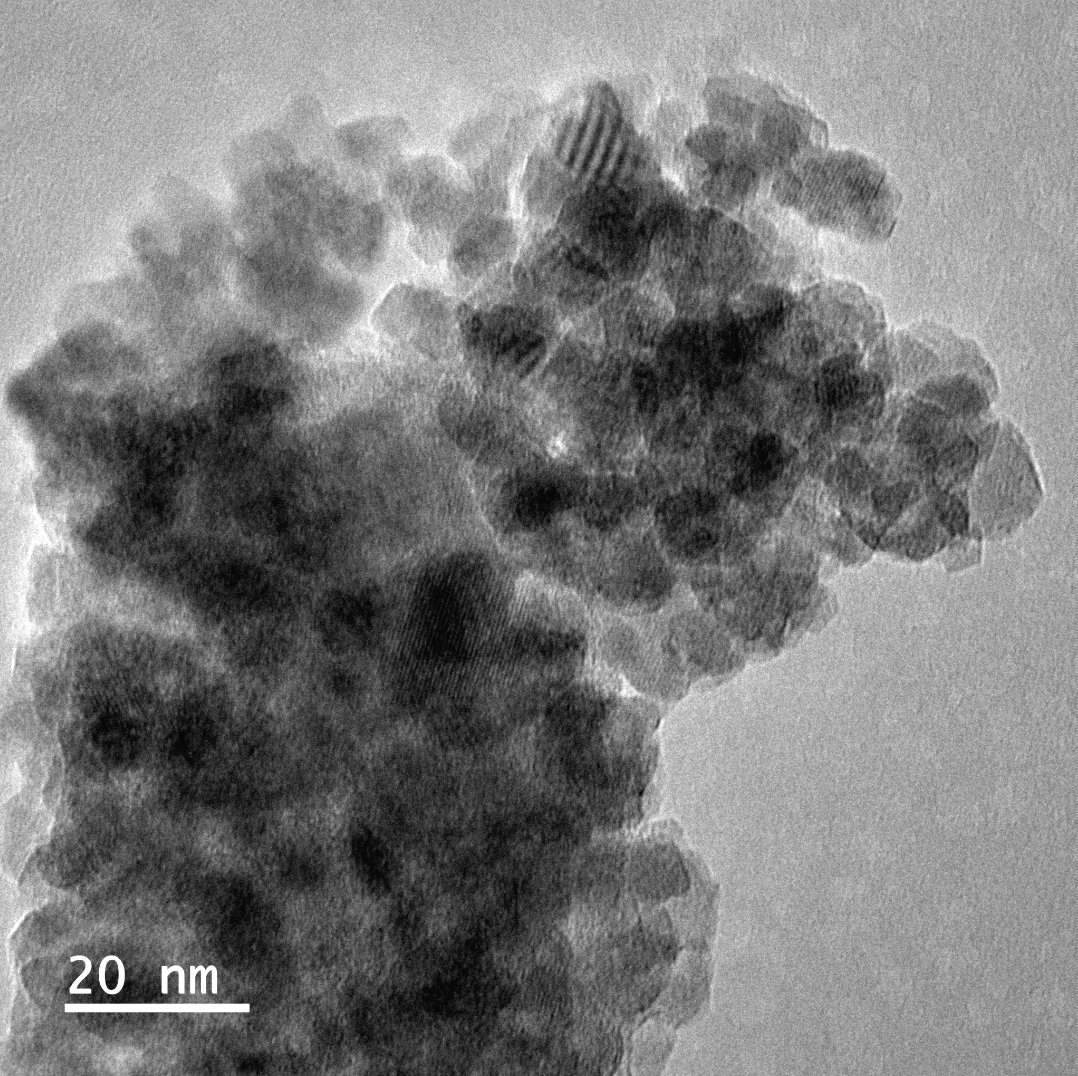
Some of the particles are as small as five nanometres in diameter: small enough to be inhaled and end up in the bloodstream, but too small to be captured by typical methods of pollution monitoring. However, it is not clear whether these particles pose a health risk.

Other studies have looked at overall pollution levels on the Underground and the associated health risks, but this is the first time that the size and type of particles have been analysed in detail. The researchers suggest that periodic removal of dust from Underground tunnels, as well as magnetic monitoring of pollution levels, could improve air quality throughout the network. Their results are reported in the journal Scientific Reports.

Environmental magnetism

The London Underground carries five million passengers per day. Multiple studies have shown that air pollution levels on the Underground are higher than those in London more broadly, and beyond the World Health Organization’s (WHO) defined limits. Earlier studies have also suggested that most of the particulate matter on the Underground is generated as the wheels, tracks and brakes grind against one another, throwing up tiny, iron-rich particles.

“Since most of these air pollution particles are metallic, the Underground is an ideal place to test whether magnetism can be an effective way to monitor pollution,” said Professor Richard Harrison from Cambridge’s Department of Earth Sciences, the paper’s senior author. “Normally, we study magnetism as it relates to planets, but we decided to explore how those techniques could be applied to different areas, including air pollution.”

Pollution levels are normally monitored using standard air filters, but these cannot capture ultrafine particles, and they do not detect what kinds of particles are contained within the particulate matter.

“I started studying environmental magnetism as part of my PhD, looking at whether low-cost monitoring techniques could be used to characterise pollution levels and sources,” said lead author Hassan Sheikh from Cambridge’s Department of Earth Sciences. “The Underground is a well-defined micro-environment, so it’s an ideal place to do this type of study.”

Working with colleagues from Cambridge’s Department of Materials Science and Metallurgy, Sheikh and Harrison analysed 39 dust samples from the London Underground, provided by Transport for London (TfL). The samples were collected in 2019 and 2021 from platforms, ticket halls, and train operator cabins on the Piccadilly, Northern, Central, Bakerloo, Victoria, Northern, District and Jubilee lines. The sampling included major stations such as King’s Cross St Pancras, Paddington, and Oxford Circus.

The researchers used magnetic fingerprinting, 3D imaging and nanoscale microscopy to characterise the structure, size, shape, composition and magnetic properties of particles contained in the samples. Earlier studies have shown that 50% of the pollution particles in the Underground are iron-rich, but the Cambridge team was able to look in much closer detail. They found a high abundance of maghemite particles, ranging in diameter from five to 500 nanometres, and with an average diameter of 10 nanometres. Some particles formed larger clusters with diameters between 100 and 2,000 nanometres.

A potential risk?

“The abundance of these very fine particles was surprising,” said Sheikh. “The magnetic properties of iron oxides fundamentally change as the particle size changes. In addition, the size range where those changes happen is the same as where air pollution becomes a health risk.”

While the researchers did not look at whether these maghemite particles pose a direct health risk, they say that their characterisation methods could be useful in future studies.“

If you’re going to answer the question of whether these particles are bad for your health, you first need to know what the particles are made of and what their properties are,” said Sheikh.

“Our techniques give a much more refined picture of pollution in the Underground,” said Harrison. “We can measure particles that are small enough to be inhaled and enter the bloodstream. Typical pollution monitoring doesn’t give you a good picture of the very small stuff.”

The researchers say that due to poor ventilation in the Underground, iron-rich dust can be resuspended in the air when trains arrive at platforms, making the air quality on platforms worse than in ticket halls or in operator cabins.

Given the magnetic nature of the resuspended dust, the researchers suggest that an efficient removal system might be magnetic filters in ventilation, cleaning of the tracks and tunnel walls, or placing screen doors between platforms and trains.

The research was supported in part by the European Union, the Cambridge Trust and Selwyn College, Cambridge.

Reference:
H. A. Sheikh, P.Y. Tung, E. Ringe, R.J. Harrison. ‘Magnetic and microscopic investigation of airborne iron oxide nanoparticles in the London Underground.’ Scientific Reports (2022). DOI: 10.1038/s41598-022-24679-4

London Underground polluted with metallic particles small enough to enter human bloodstrem
Posted in Air Quality, Europe, Health Effects of Air Pollution, London, Medical Studies, Research on Air Pollution in the UK, UK | Tagged , , , , , , , | Leave a comment

Air pollution shuts schools in Tehran

Deputy Tehran provincial governor said on Sunday that due to dangerous air pollution the school in the Iranian capital will be closed on Monday and Tuesday.

The schools have remained closed since yesterday for air pollution. The school week in Iran starts on Saturday and finishes on Wednesday. Thursdays and Fridays are weekends. 

However, the Tehran official said that the classes will continue online from home.

Similar measures have been taken for elementary and secondary schools in Alborz Province located next to Tehran, an official at the Alborz governor’s office said on Sunday.

Air pollution commonly occurs in Tehran, a city of 15 million population, and other large cities in the country when the weather is cold during autumn and winter when there is no wind or rain and temperature inversion happens. 

According to studies results available on the Internet, temperature inversions affect air pollution because they change the dynamics of air movement. Warm air rises in the atmosphere because it is less dense and, therefore, more buoyant than the cooler air above it. 

Air pollution shuts schools in Tehran – Mehr News Agency
Posted in Air Quality, Iran, Middle East | Tagged , , | 3 Comments

Seventy years on from the Great Smog, Mayor warns that air pollution is still a matter of life and death in London

A new report released today has illustrated the air quality issues Londoners faced in 1952, the year of the Great Smog.

Great London Smog of 1952 led to an estimated 4,000 deaths.

The first Clean Air Act was introduced in 1956 and was a significant milestone in the development of the legal framework to protect public health.

Without the Clean Air Act an estimated 1,600 additional Londoners would have died prematurely each year from issues associated with air pollution.

Mayor says more bold action is needed today as air pollution in London is leading to thousands of premature deaths each year.   

Seventy years ago today, London was hit by one of the worst air quality disasters ever experienced in the UK. The Great Smog of 1952 lasted five days and was responsible for more than 4,000 deaths with 100,000 people made ill, leading to life-long conditions for many. The Mayor of London, Sadiq Khan, has warned that air pollution is still a matter of life and death in London and that bold action – like expanding the Ultra-Low Emission zone – is needed to save lives and protect the health of millions of Londoners. 

City Hall has published a report today which looks at the air quality issues Londoners faced in 1952 and illustrates what air quality could have looked like if the Clean Air Acts of Parliament had not been introduced. The report looks at a hypothetical scenario to estimate what the present-day concentrations of air pollutants, like nitrogen dioxide (NO2) and particulate matter (PM2.5 and PM10), could have been without the Clean Air Acts. 

Results from the calculation show that without the legislation, there would be:·      

  • an additional 1,633 additional deaths per year – an increase of 22 per cent from the present day.·      
  • an estimated additional 2,979 cardiovascular hospital admissions per year attributable to PM10 emissions in the Greater London area – an increase of 235% from present-day admissions associated with air pollution.·      
  • an estimated additional 3,392 respiratory hospital admissions per year attributable to PM10 emissions in the Greater London area – which also represents an increase of 235% from present-day admissions associated with air pollution.

The report also shows the evolution of air pollution sources in London. Seventy years ago, the main causes of concern were smoke and sulphur dioxide arising from coal combustion from domestic fireplaces, power stations and industrial furnaces. Levels of air pollution have steadily declined since then due to the clean air Acts of Parliament, other legislation and interventions. Now the principal source of pollution in London is road traffic, contributing 44 per cent of all nitrogen oxides (NOx) emissions and 31 per cent of all PM2.5 emissions in London.  

Studies show that air pollution is still causing thousands of Londoners to die prematurely each year and over 500,000 Londoners live with asthma, with more than half of these people living in outer London boroughs. Toxic air also contributes to children growing up with stunted lungs and causes adults to suffer a range of illnesses, including lung and heart disease and dementia in older people.

Sadiq Khan has made cleaning London’s air one of his key mayoral priorities. He introduced the world’s first Ultra Low Emission Zone in 2019, which has already helped to reduce roadside pollution levels by 44 per cent in central London and 20 per cent in inner London, leading to cleaner air for four million Londoners. Last month, the Mayor confirmed plans to expand the ULEZ London-wide in August 2023 to ensure five million more Londoners can breathe cleaner air.

Mayor of London, Sadiq Khan said:

“Four thousand Londoners died in the immediate aftermath of the Great Smog in 1952. The politicians of the day showed leadership by standing up to the vested interests and making the politically tough, but right choice to introduce the Clean Air Act, which ended up saving thousands of lives. 

“Air pollution in London today is still a matter of life and death. But unlike the toxic pollution of the past, which could be seen, the air pollution today is an invisible killer. It’s making people sick from cradle to grave – from stunted lungs in young children to adult onset asthma, lung disease and dementia.   

“The politicians in the 1950s led the way in how they tackled air pollution – now it’s our duty to take the action necessary to save lives so that we can continue building a greener, fairer and healthier London for everyone. That’s why we will be expanding the ULEZ London-wide. The ULEZ is our generation’s Clean Air Act. It’s already cut pollution levels by almost a half in central London, but thousands of Londoners are still dying prematurely each year due to poisonous air, with the greatest number of deaths in outer London boroughs. Expanding the ULEZ will mean five million more people will be able to breathe cleaner air.   

“Every penny raised from expanding ULEZ will be reinvested back into delivering public transport, including the biggest ever expansion of bus routes in outer London. And we have announced the most generous vehicle scrappage scheme ever to help charities, small businesses and those on the lowest incomes.” 

Jemima Hartshorn, Founder of Mums for Lungs, said: “Three things are clear: London’s air is toxic to children, stunting their lungs and exacerbating and causing asthma and many more; the Mayor’s initiatives have been crucial in cleaning up the air and lastly, much more needs to be done to ensure that breathing doesn’t make Londoners sick. We need a massive reduction of driving around our wonderful capital, and we need national government to sort out woodburning which is back on the rise, to the detriment of everyone’s health.”

Seventy years on from the Great Smog, Mayor warns that air pollution is still a matter of life and death in London | London City Hall
Posted in Air Quality, Europe, London, UK | Tagged , , , , | Leave a comment

Smog engulfs Indian capital as winter pollution worsens

Thick smog engulfed India’s capital New Delhi on Tuesday as air pollution worsened with the setting in of winter, shooting up concentrations of fine particles in the air three times above the acceptable limits.

The world’s most polluted capital city struggles to breathe easy every winter as cold temperatures and calm winds trap pollutants closer to the ground.

“As the minimum temperature is dropping, gradual fog occurrence during early morning hours is likely to increase, leading to deterioration of air quality index (AQI),” said the federal government’s System of Air Quality and Weather Forecasting and Research (SAFAR) in a daily bulletin.

The AQI in parts of the city shot up above 400 on Tuesday, which is classified as the ‘severe’ category of air pollution, according to the Central Pollution Control Board (CPCB).

The level of fine particles measuring 2.5 micrograms or PM2.5 was 180 micrograms per cubic metre of air as of 10am in the Delhi National Capital Region, CPCB data showed, three times above the 24 hour acceptable limit of 60 micrograms per cubic metre of air.

Authorities have brought in several measures over the years to improve the city’s air quality, including switching Delhi’s fleet of public transport to cleaner fuel, spraying water from on top of towers and on roads and controlling burning of firewood and waste during cold weather.

But experts have said these measures need to be applied across northern India and in cities and towns around New Delhi that form the wider National Capital Region, which also suffer from poor air quality, to effectively control pollution.

Smog engulfs Indian capital as winter pollution worsens | Reuters
Posted in Air Quality | Leave a comment

Air pollution killed 238,000 Europeans prematurely in 2020: EU watchdog

Fine particle air pollution led to 238,000 premature deaths in the European Union in 2020, the bloc’s environmental watchdog said Thursday, a slight rise from the previous year. At the same time, the overall rate for EU countries in 2020 was 45 percent lower than in 2005, the agency said, noting that “if this rate of decline is maintained, the EU will reach [its] zero pollution action plan target before 2030.”

Across the 27-nation bloc that year, “exposure to concentrations of fine particulate matter above the 2021 World Health Organization guideline level resulted in 238,000 premature deaths,” the European Environment Agency said in a new report.

That was slightly more than those recorded in 2019 in the EU, despite a fall in emissions due to Covid curbs.

Fine particulate matter, or PM2.5, is a term for fine particulates that are typically the by-product of car exhausts or coal-fired power plants.

Their tiny size enables them to travel deep into the respiratory tract, worsening the risk of bronchitis, asthma and lung disease.

Also in 2020, exposure to nitrogen dioxide (NO2) above the WHO’s recommended threshold led to 49,000 premature deaths in the EU, the EEA said.

Acute exposure to ozone (O3) caused 24,000 people to die early.

“When comparing 2020 to 2019, the number of premature deaths attributable to air pollution increased for PM2.5 but decreased for NO2 and O3,” the agency said.

“For PM 2.5, falls in concentrations were counteracted by an increase in deaths due to the pandemic.”

The Covid-19 pandemic led to the deaths of some people already living with diseases related to air pollution.

The EU wants to slash premature deaths related to fine particulate matter pollution by 55 percent in 2030 compared to 2005 levels.

Overall, the rate for EU countries in 2020 was 45 percent lower than in 2005, the agency said.

“If this rate of decline is maintained, the EU will reach the aforementioned zero pollution action plan target before 2030.”

According to the WHO, air pollution causes seven million premature deaths per year worldwide, putting it on par with smoking or poor diets.

Air pollution killed 238,000 Europeans prematurely in 2020: EU watchdog
Posted in Air Quality, Europe, Health Effects of Air Pollution | Tagged , , , , | Leave a comment