London’s quality of life ranking slips over pollution and traffic 

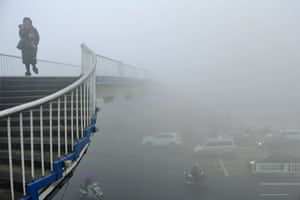
London has slipped down a list of the best cities in the world for quality of life due to high levels of traffic and pollution.

The capital placed 40th in the 19th annual Mercer Quality of Life Survey. London was 39th last year but was nudged down one place in the latest rankings by the French city of Lyon.

Kate Fitzpatrick, Mercer’s global mobility practice leader for the UK & Ireland said: “The capital’s only downfall in regard to infrastructure is heavy traffic congestion, which also contributes to the city’s low score for air quality and pollution.”

London was five places ahead of Edinburgh – the only other British city to make the top 50.

Ms Fitzpatrick said Brexit could also have an impact on London’s position in the rankings in future.

“Mercer will continue to closely monitor any impact of the upcoming Brexit negotiations on the quality of living in UK and European cities overall, in order to support multinational companies as they assess the best locations to attract the skilled workforce they require,” she said.

The study ranks cities by looking at access to healthcare, social and economic conditions, quality of education, housing and environmental factors, including traffic congestion and air pollution.

London mayor Sadiq Khan is pressing ahead with a series of measures to cut air pollution in the capital including a £10-a-day T-charge on the most polluting vehicles to drive into central London from October, as well as introducing the Ultra Low Emission Zone earlier than 2020 and possibly expanding it from the city centre to the north and south circulars.

Nitrogen dioxide emissions from diesel cars are a key contributor to the capital’s poor air quality, which has seen City Hall advising the public to avoid strenuous activity on the worst-affected days.

A series of high air pollution alerts have already been issued for the capital in the first three months of the year.

In January, air pollution in London reached a six year high when a “black” alert was issued for parts of the capital leading to one school restricting time outdoors for children.

Last month, a report commissioned by the mayor revealed that tens of thousands of children in London schools are being exposed to illegal levels of air pollution.

The report also showed that London’s poor are far more likely to be living in areas affected by air pollution linked to 9,000 early deaths every year in the capital.

London is one of many places hit by the UK’s air quality crisis, which has led to the Government being issued with a “final warning” by the European Commission for repeated breaches of legal limits.

Vienna in Austria beat 231 other cities to claim the top spot in the study. Baghdad was handed the lowest ranking.

The German citiies of Dusseldorf, Munich and Frankfurt all made the top ten.

Destinations from further afield that made the cut include Auckland, Vancouver, Zurich and Sydney.

This year's Mercer Quality of Life rankings:
1. Vienna, Austria

2. Zurich, Switzerland

3. Auckland, New Zealand

4. Munich, Germany

5. Vancouver, Canada

6. Dusseldorf, Germany

7. Frankfurt, Germany

8. Geneva, Switzerland

9. Copenhagen, Denmark

10=. Basel, Switzerland

10=. Sydney, Australia

12. Amsterdam, Netherlands

13. Berlin, Germany

14. Bern, Switzerland

15. Wellington, New Zealand

16=. Melbourne, Australia

16=. Toronto, Canada

18. Ottawa, Canada

19. Hamburg, Germany

20. Stockholm, Sweden

San Francisco was for the second year running ranked the highest  American city, with Boston, New York and Honolulu all making the top 50.

In 69th place, Prague is the highest ranking city in Central and Eastern Europe, followed by Ljubljana and Budapest.

Rome fell by four places due to ongoing waste removal issues.

Source: London’s quality of life ranking slips over pollution and traffic | London Evening Standard

Posted in Air Quality, Australia & Oceania, Europe, Germany, Iraq, London, Middle East, UK, USA & Canada | Tagged , , , , , , , , , , , , , , , , , , , , , , | Leave a comment

The Moss That Saved Portland 

Roadside plants helped officials trace the source of a public health crisis and led to new standards for clean air in Oregon.

Orthotrichum lyellii is the hero of this story. You’ve probably met it before: a tuft of green with soft tassels of leaves, stuck to a tree trunk or possibly a rock. Unlike plants with roots, this moss absorbs all it needs from air—an adaptation that allowed it to pinpoint poisons in Portland, Oregon, two years back.

In the spring of 2015, Oregon’s Department of Environmental Quality (DEQ) conducted tests as part of its Portland Air Toxics Solutions project. The department was monitoring dirty compounds that persist in the air via car exhaust, fuel burning, construction, and industrial processes.

The results were alarming. Concentrations of metals like cadmium and arsenic were three to six times higher than what is deemed safe. Elevated levels of this kind of toxin in the air can cause serious human health issues, including cancer and kidney, bone, and lung disease. Exposure to the metals can also impact neurological development in children. “We didn’t know the source, and we got pretty concerned,” says Oregon DEQ’s air toxics specialist Sarah Armitage.

DEQ was primarily interested in finding the source of the cadmium. The Portland office of the U.S. Forest Service, which had been testing air pollution for the previous two years and was interested in partnering with DEQ, guided the department to nature’s well-suited detective, Orthotrichum lyellii. Absorbent and rootless, moss and lichen are regularly employed as indicators of air pollution in European cities, explains the Forest Service’s Sarah Jovan. But environmental scientists in the United States are just now taking advantage of the valuable service that they offer.

Obtaining samples was a cinch. Orthotrichum lyellii grows particularly well on hardwood trees like maples and oaks. “We just went out and pulled a lot of moss off the tree trunks,” Jovan says.

After testing nearly 350 Orthotrichum lyellii samples from Portland’s trees, Jovan’s team crafted a moss-cadmium map for the city. It revealed two very toxic hot spots next to the Bullseye and Uroboros glass factories in different parts of town. Jovan and her colleagues shared their findings with Oregon’s DEQ that May.

What happened next was alarming. Five months passed before the DEQ placed air monitors near the metal hot spots that the moss testing had revealed. And the agency waited another three months before telling Bullseye that its southeast Portland factory was the prime source of the toxic cadmium emissions. When the public and Governor Kate Brown learned of the regulators’ lackadaisical approach to addressing such a serious case of air pollution, they cried foul.

In February 2016, state senators called the findings a public health emergency. During a heated community meeting that month, the Portland Mercury reporter who broke the story asked state air quality manager David Munro why the DEQ allowed businesses to freely vent carcinogens like cadmium into the city’s air. “It’s a good question,” Munro responded. Oregon did not have sturdy laws or regulations in place to stop them from doing so. In March, the New York Times reported locals weeping at public meetings and “raging” at their state officials. Home gardeners became afraid of their soils. Citizen air quality groups formed. Both Munro and Dick Pedersen, Oregon’s DEQ director, resigned.

Gradually, the glass companies and the government responded to the health scare. Both factories voluntarily stopped using arsenic and cadmium shortly after being notified about the moss study results. (The smaller, artist-owned factory, Uroboros, has since closed its Portland base.) After the compounds were put out of use, outdoor metal levels, as one would suspect, began to fall. In April 2016, DEQ established a set of glass-manufacturing rules that called for Bullseye to monitor its emissions. Today, the factory has returned to using arsenic (which rids the glass solution of bubbles) and cadmium (a key coloring ingredient in red and orange glass) but has installed new exhaust filters on its furnaces to keep the two toxins out of the atmosphere.

According to the DEQ, metal levels outside the Bullseye plant are now in sync with the background levels found throughout Portland. (The Cornell Waste Management Institute notes that there is no single standard that defines acceptable levels of these contaminants, however.) And the DEQ concedes that air monitors won’t always be spot on; windy weather and technology errors can get in the way of accurate readings.

Portland is now in the process of correcting its previously lax air regulations. Bullseye still does not have controls for other metals such as chromium or cobalt, which is used for blue glass. The company also had a serious, unaddressed lead issue. Moreover, a follow-up moss study found that nickel levels near one Portland industrial and metal factory were four times above health benchmarks. After this, DEQ quickly installed air-quality controls.

Beyond factories, car emissions like nitrogen and diesel are also a big concern in Oregon. When California tightened its own emissions rules, its northern neighbor became a dumping ground for hundreds of thousands of old trucks shooed off Golden State roads.

As a state that prides itself on its progressive environmental ethos, Oregon has grown especially sensitive to the issue of air pollution. In April of last year, the EPA ordered the state’s environmental health agencies to monitor for toxins via the Cleaner Air Oregon initiative. Now Oregon must comply with federal air-quality standards that it had been violating. But since these regulations aren’t tailored to specific facilities, emissions from individual businesses may still exceed lawful levels. Starting next fall, facilities statewide will be required to submit a detailed inventory of 600-plus potential chemicals they use, to help inform pollution prevention activities and related legislation. While about half of U.S. states, including California, have already gone above and beyond EPA regulations and adopted their own industry air-toxics control programs, Oregon has yet to do the same. Clearly, says Armitage, “we had an air-quality regulatory gap.” Regulators are relying on Cleaner Air Oregon to help fill that gap—the initiative’s timeline calls for new, permanent air-quality rules to be issued by the end of this year.

While public outcry helped to raise Portland’s awareness of its air problems, let’s not forget the original canary in the coal mine: the tree moss by the factories. Thanks to its absorbent powers, this easily overlooked plant revealed invisible toxins hiding in plain sight and spurred an effective movement to protect the city in whose midst it lived.

Source: The Moss That Saved Portland | NRDC

Posted in Air Quality, USA & Canada | Tagged , , , , | Leave a comment

Madrid to ban old cars by 2025 in crackdown on air pollution

Madrid’s city government announced plans on Monday to ban the oldest and most polluting vehicles from the city centre by 2025 in a bid to crackdown on air pollution.

The local government will prohibit the use within the city’s limits of gasoline cars registered before 2000 and diesel-powered cars registered before 2006, which at the moment account for 20 percent of all those registered.

The ban would lower nitrogen dioxide levels in the city by an estimated 15 percent, a poisonous gas behind respiratory problems, Madrid’s local government said in a presentation.

Madrid has failed to meet European Union-set limits on air quality for the last eight years. Other European cities such as Paris and Berlin have already put similar plans in place to curb emissions.

“This is plan A for air quality in Madrid. It’s plan A because there can’t be any plan B,” Madrid’s mayor Manuela Carmen said at an event to present the new plan.

Madrid’s local government has allocated 544 million euros ($580.83 million) to completing 30 measures included in the plan, which also encourages greater use of renewable energy and regenerating urban areas, according to the presentation.

Source: Madrid to ban old cars by 2025 in crackdown on air pollution | Reuters

Posted in Air Quality, Europe, Spain | Tagged , , | Leave a comment

B vitamins may have ‘protective effect’ against air pollution 

B vitamins may offer some protection against the impacts of air pollution, a small scale human trial suggests.

Researchers in the US found that high doses of these supplements may “completely offset” the damage caused by very fine particulate matter.

The scientists involved say the effect is real but stress the limitations of their work.

Follow up studies are urgently needed, they say, in heavily polluted cities like Beijing or Mexico.

While the impacts of air pollution on health have become a cause of growing concern to people all around the world, the actual mechanics of exactly how dirty air makes people sick are not clearly understood.

According to the World Health Organization (WHO), over 90% of the world’s population live in areas where air pollution exceeds safety guidelines.

One of the pollutants that is considered the most dangerous is very fine particulate matter, referred to as PM2.5, where particles have a diameter of less than 2.5 micrometres.

These complex particulates come from diesel cars, wood burning stoves and as a by-product of chemical reactions between other polluting gases.

At around 1/30 the width of a human hair, PM2.5 fragments can lodge deep in the human lung and contribute to lung and heart health issues in the young and old.

Scientists have long suspected that PM2.5 causes what are termed epigenetic changes in our cells that can damage our health.

The genes in our DNA contain the instructions for life, but epigenetics controls how those instructions are used – it’s like the relationship between an mp3 track and the volume control, you can only hear the musical notes (genes) when you dial up the volume (epigenetic changes).

The study shows the very presence of environmental factors like air pollution seems to alter genes in the immune system at the epigenetic level – switching them on or off, and inhibiting our defences.

Researchers had already seen that nutrients could somehow stop this process in animal studies with the chemical Bisphenol A.

Now in this new human trial, an international team of scientists wanted to see if exposure to concentrations of PM2.5 could be mitigated by a daily B vitamin supplement containing 2.5mg of folic acid, 50mg of vitamin B6, and 1mg of vitamin B12.

Ten volunteers were tested initially exposed to clean air while given a placebo to measure their basic responses. The same volunteers were later tested with large doses of B vitamins while exposed to air containing high levels of PM2.5.

The researchers found that a four week B vitamin supplementation limited the PM2.5 effect by between 28-76% at ten gene locations. They found a similar reduction in impact on the mitochondrial DNA, the parts of cells that generate energy.

“Where we quantify the effect, it is almost close to a complete offset on the epigenome of the air pollution,” said Jia Zhong from Harvard School of Public Health, who led the study.

“On the mitochondrial DNA side, it also offset a big proportion of it.”

However, the authors caution that their study, while observing a real effect, has many limitations. As well as the small number of participants, there was little information on the size of the B vitamin dose that elicited the response.

“We didn’t have different doses and the doses we used were quite high, higher than a normal pregnancy suggested intake. So it is quite high but at the same we did observe this protective effect,” said Jia Zhong.

Other scientists in the field, while welcoming the study, agree that caution is needed.

“The fact that they find a coherent story in only 10 subjects is promising, but clearly warrants further follow-up in larger populations especially considering the ethnic variability in this study,” said Prof Carrie Breton from the University of Southern California, who wasn’t involved in the report.

“While I think it is great that doing something as easy as taking a vitamin would help protect against air pollution harm, the public health goal still needs to be one of reducing air pollution to a level that is not harmful,” she said in a statement.

The authors acknowledge that this was a pilot study to test a hypothesis and they are not in a position to make any deductions about whether B vitamins could be used in clinical practice as a means of protecting against air pollution.

More and bigger studies are needed – and they need to be done in environments where people have a major exposure to PM2.5.

“I think that B vitamins are a likely hope that we can potentially utilise as an individualised treatment to complement the policy regulations to minimise the impacts of air pollution,” said Jia Zhong.

“A more sophisticated study is urgently needed in Beijing or India or Mexico just to see whether those who are chronically exposed, if the protective effect can still be effective.”

The study has been published in the journal Proceedings of the National Academy of Sciences (PNAS).

Source: B vitamins may have ‘protective effect’ against air pollution – BBC News

Posted in Air Quality, Health Effects of Air Pollution | Tagged , , , , | Leave a comment

Excessive air pollution from South to North

South winds carried sand and dust from Sinai that covered most of the country; An Austrian Airlines flight from Vienna to Ben Gurion Airport had to turn back due to the unusual amount of dust in the air.

The smog that spread over Israel’s skies Sunday came from the Sinai Peninsula and is only growing heavier, causing heavy air pollution in most parts of the country and disruption of air traffic.

An Austrian Airlines flight from Vienna to Ben Gurion Airport turned around over the Mediterranean resort town of Marmaris, re-landing in Vienna. Representatives of the airline in Israel told Ynet that “the airplane returned to Vienna following the abnormal amount of dust in the air.”

Particle concentration data demonstrated a surge in air pollution in the afternoon hours. Until early morning, air pollution was relatively tolerable, but it was around noon that exceedingly high pollution levels were registered in the south and in the center. The peak was recorded at 2:00pm in Be’er Sheva—5 times the daily average. Ashkelon, Ashdod, Rehovot and Modi’in registered particularly high air pollution in the afternoon as well.

Another Austrian Airlines flight from Vienna to Larnaca had also turned around, making an unplanned landing at the airport in Athens. The company said that the airline has a “particularly strict policy regarding safety and when the amount of dust in the air exceeds the norm, the company does not operate its aircrafts. The company apologizes for the inconvenience and will arrange alternative flights for its passengers.”

The thick pollution is expected to last into the night. The particle concentration should significantly drop once it starts raining, which is expected to happen overnight.

The Ministry of Environmental Protection issued a warning following the afternoon heavy air pollution spreading from the south to the center and up north.

It is highly recommended for people with heart or lung diseases, the elderly, children and pregnant women to avoid strenuous physical activity, and spending unnecessary time outside. The healthy population should also avoid strenuous physical activity outdoors.

Source: Ynetnews News – Excessive air pollution from South to North

Posted in Air Quality, Middle East | Tagged , , , | Leave a comment

Air pollution is devastating UK’s wild flowers turning countryside into ‘monotonous green badlands’ 

‘The very fabric of our countryside is changing under this rain of nitrogen’

Air pollution is having a devastating effect on Britain’s wild flowers by helping nettles, hogweed and other “thuggish” species turn the countryside into “monotonous green badlands”, major environmental groups have warned.

A report by the Plant Link UK network, backed by organisations including Plantlife, the National Trust, Woodland Trust and Royal Society for the Protection of Birds, found that 90 per cent of heathlands, acid grasslands and  other sensitive habitats in England were suffering because of nitrogen emissions from fossil fuels and fertilisers. Across the whole of the UK, the figure was 63 per cent.

Nitrogen is a fertiliser, but plants fare differently depending on the amount present in the soil.

Some 37 per cent of Britain’s flowering plants prefer low nutrient conditions, whereas nettles in particular thrive when there is a lot of nitrogen in the soil.

Dr Trevor Dines, botanical specialist at Plantlife, said: “It is hard to exaggerate what a destructive impact nitrogen deposition is having on our wild flowers and other flora, fungi and ecosystems more broadly.

“Put simply, this report reveals that nitrogen deposition may present a far more immediate threat to semi-natural habitats than even climate change.”

He said as spring began to turn the countryside green again “all may seem as it should but look more closely and the truth is a little different”.

“Nettles, hogweed and hemlock – ‘thuggish’ species that thrive in soil steeped in excess nitrogen – are drowning out rare and more vulnerable wild plants who can only survive in less nutrient-rich soil,” Dr Dines said.

“We are force-feeding the natural world a diet of nutrient-rich junk food and it is having a devastating impact.

“Once diverse habitats are becoming monotonous green badlands where only the thugs survive and other more delicate plants are being bullied out of existence.”

He added that air pollution’s impact on human health was being “increasingly well documented”. It is estimated that tens of thousands of people die prematurely every year because of fossil fuel emissions.

“And it is now incumbent on us to ring the alarm bell for nitrogen deposition,” he said.

Nitrogen deposition takes place when emissions from transport, power stations, farming and industry – mainly in the form of nitrogen oxides and ammonia – are washed out of the air when it rains or if they simply drift down onto the land.

The report, called We Need to Talk About Nitrogen, said plants such as the harebell and bird’s-foot trefoil were at risk.

Rare lichens – used for more than 100 years to gauge air quality – such as the beautiful eyelashes treebeard lichen (Usnea florida) are also suffering, along with mosses, hornworts and liverworts.

Source: Air pollution is devastating UK’s wild flowers turning countryside into ‘monotonous green badlands’ | The Independent

Posted in Air Quality | Tagged , , | Leave a comment

Infants are more exposed to harmful pollution on the way to school than on the way home, new research finds 

Babies in prams accompanying older siblings on the school run are twice as likely to be exposed to harmful air pollution in the morning than in the afternoon, a new study has found.

The new research, published in the journal Environmental Pollution today, highlights the high levels exposure of babies in prams to fine and ultrafine particulate matter during the morning drop-in hours of school children compared with the afternoon drop-off hours.

The study, carried out by researchers at the University of Surrey, also revealed that the worst places for infants to be exposed was at bus stops and traffic lights when they are waiting to cross roads.

A recent WHO report states that 570,000 children under the age of 5 die every year from respiratory infections, such as pneumonia, attributable to indoor and outdoor air pollution, and second-hand smoke.

Surrey researchers carried out a series of experiments using high specification air monitoring equipment located inside a pram to gauge the kind of pollutants and toxic chemicals toddlers are exposed to when accompanying older siblings during the school drop off/pick up peak times.

During the study tests, the monitoring equipment simulated the average primary school drop off/pick up, passing through a number of traffic intersections and bus stops during the drop-in (morning) and pick-up (afternoon) hours.

Primarily, the work of the research group identified that traffic intersections and bus stops emerged as pollution hotspots, with high levels of both coarse (PM2.5-10) and fine (PM2.5) particles.

The researchers also found that small-sized particles, including ultrafine particles, were higher on an average by about 47% (PM1), 31% (PM2.5) and 31% (PNC) during the morning than afternoon hours, reflecting the influence of traffic emissions during the morning peak hours.

Coarse particles (PM2.5-10) showed an opposite trend with 70% higher concentration during afternoon than morning, indicating that re-suspension was affected by the wetness of road pavement due to overnight dew in the early mornings.

The above findings clearly suggest much higher concentrations of fine and ultrafine particles during the morning peak hours, especially at the traffic intersections and bus stops, substantiating their past research findings.

Dr Prashant Kumar, lead author and Reader at the University of Surrey, said: “Previous research has shown that young children are far more susceptible to pollution than adults, due to their immature and developing systems and lower body weight. These findings provide an insight for families who walk to and from nursery/primary schools with young children. Essentially, children could be at risk of breathing in some nasty and harmful chemical species such as iron, aluminium and silica that form together the particles of various size ranges.

“One of the simplest ways to combat this is to use a barrier between the in-pram children and the exhaust emissions, especially at pollution hotspots such as traffic intersections, so parents could use pram covers if at all possible. We are also working closely with our industrial partners to develop innovative methods to clean the air around the children in their in-pram microenvironments.”

This project has been carried out under the framework of the University Global Partnership Network funded project, NEST-SEAS (Next-Generation Environmental Sensing for Local To Global Scale Health Impact Assessment).

The research was carried out in Guildford, Surrey, in the United Kingdom.

Source: Infants are more exposed to harmful pollution on the way to school than on the way home, new research finds — ScienceDaily

Posted in Air Quality, Health Effects of Air Pollution | Tagged , , , , , , | Leave a comment

London mayor Sadiq Khan launches low-emission bus zone‎ 

The first of 12 low-emission bus zones (LEBZ) has been launched by London mayor Sadiq Khan as part of his strategy to tackle air pollution.

It was established earlier in Putney High Street, one of the most polluted areas of London.

Only buses that meet the toughest emission standards will now be able to run in the Putney LEBZ, City Hall said.

It said Putney exceeded hourly legal levels of nitrogen dioxide (NO2) on 1,248 occasions in 2016.

Under European Union rules, the limit should not be exceeded more than 18 times in a year.

The changes, which affect 145 buses on seven scheduled routes in Putney, are expected to reduce bus emissions across the 12 zones by over 80%.

The launch of the LEBZ comes as a recent opinion poll found nine out of 10 Londoners believe air pollution is at “crisis” level.

A report released by the mayor last week showed that every London borough has recorded illegally high levels of air pollution in the past two years, with Wandsworth recording some of the highest levels.

Wandsworth has exceeded the annual mean limit for NO2 pollution at five out of six of its automatic monitoring stations, with the sites on Putney High Street recording levels more than double the legal limit.

London’s new low emission bus zones:

  • Putney High Street – from Putney Station to Putney Bridge Road
  • Brixton to Streatham – from Brixton Hill via Stockwell Road and Streatham High Road to Streatham Place
  • A12 Eastern Avenue – from Blake Hall Road via High Road Leyton and Homerton High Street to Marsh Hill
  • Lewisham to Catford – from Bromley Road via Rushey Green to Lewisham High Street
  • Stratford – from Abbey Lane via Mile End Road to Woodgrange Road
  • Haringey – from High Road to Green Lanes
  • Camberwell to New Cross – from Blackheath Road via Camberwell Green and Peckham High Street to Wood’s Green
  • Wandsworth to St John’s Hill – from Lavender Hill to Wandsworth Road.
  • Edgware Road (Kilburn to Maida Vale) – from Cricklewood Broadway via Kilburn High Road to Shoot-Up Hill
  • Edmonton to Seven Sisters – from Amhurst Park via Green Lanes and Seven Sisters Road to The Broadway
  • Uxbridge Road to Shepherds Bush – from Ealing Broadway via Hanger Lane to Uxbridge Road, The Broadway
  • Chiswick High Road to Kensington – via Hammersmith Broadway and Kensington High Street to Studland Street

The 11 further LEBZs will be introduced by 2020, with the Brixton to Streatham one to be launched in October.

The mayor has previously announced that diesel-only buses will be phased out in London, which will only buy hybrid or zero-emission double-decker buses from 2018.

Mr Khan said “London’s toxic air is an outrage and I promised to make cleaning it up one of my top priorities.

“I have asked TfL to remove the oldest, dirtiest buses from our streets and this new route, along with the 11 others we’ll be introducing, will make a big difference to the pollution caused by our public transport system.

“I now need other cities around the world to work with me to demand cleaner bus technology so we can phase out diesel buses altogether.”

Source: London mayor Sadiq Khan launches low-emission bus zone‎ – BBC News

Posted in Air Quality, Europe, London, UK | Tagged , , , , , , , , , | Leave a comment