The Guardian view on air pollution: the next generation carries the burden of our inaction

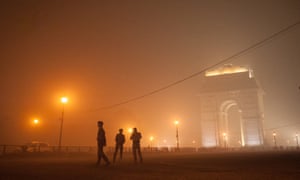
On Sunday, the capital city of one of the world’s fastest growing economies was effectively shut down in an emergency act. The reason was not terrorism, but air pollution. The threat to citizens from smog in Delhi was judged so great that traffic was ratioined, coal-fired power stations closed and diesel generators suspended. This was a brave and sane decision in the world’s largest democracy.

Right now Delhi is the world’s most polluted city. But air quality is at crisis levels in cities around the world. More than 300 million children live at the severest risk, Unicef declared last week, and 2 billion in areas where outdoor pollution exceeds health guidelines. Half of Delhi’s schoolchildren have permanently impaired lung capacity, thanks to the air they breathe.

India’s capital city is telling people to stay away or work from home, but offering no compensation to those who cannot, or whose livelihood suffers. This can only be a short-term solution; it hurts those who can least bear it. Although the prime minister Theresa May will have been sheltered from the worst of the choking smog during her trip to India, arriving in Delhi should have been a powerful warning about the effects of privileging growth over environmental concerns. Citizens of rich countries are sometimes too relaxed about such things when air pollution afflicts the richest cities as well as the poorest. That London has not yet been closed down in similar fashion to Delhi is only through lack of courage on the part of the government.

Air quality in London has hit levels worse than those in Delhi and Beijing. Earlier this year, annual air pollution limits were breached in just a week. Earlier this month, in what may be one of the last chances to bring EU law to bear on the issue, the high court ruled that the government had knowingly failed to draw up plans to bring it within legal limits and there must be immediate action, even if that means drastic measures to curtail traffic.

The causes of air pollution differ around the world, from coal-fired power plants to agricultural burning. One constant is traffic. Older cars and diesel engines produce particulates that clog up the lungs and may enter brain tissue, and nitrogen oxides that affect breathing. Car manufacturers were forced to admit last year that they had flouted tests on their diesel emissions. But the bigger question is why in a shortsighted attempt to reduce greenhouse gases by a tiny amount (diesel cars do more miles to the gallon) the risks were ignored, and customers persuaded that diesel cars were actually greener.

Now that the consequences for air quality are clear, it is time to rebalance taxation and regulation in favour of petrol, which is cleaner though producing more carbon, and urgently incentivise electric cars. In London Sadiq Khan, the new mayor, to his credit has taken a strong line on air pollution, in contrast to Boris Johnson’s tactics which amounted to unconvincing denial and attempts to silence scientists. Mr Khan should move faster still on banning the most polluting vehicles – he would find public support in inner London.

Air pollution shames us all. From Beijing to Los Angeles, Marseille to Manila, the air we breathe in cities has deteriorated so much that it is no longer safe for children. Adults who grew up breathing cleaner air are more resilient in the face of polution. But when a child’s lungs are damaged, they are damaged for life. The next generation already carries the burden of our inaction. This is a problem we know how to solve. Cut down coal-fired power, cut out diesel in cities, encourage electric cars and public transport. India should follow the declaration of emergency with long-term action, not just this short-term fix. Richer cities, London foremost among them, should be ashamed that they, with all their resources, have failed their children for so long. The high court judges were right. The government can and must act now.

Source: The Guardian view on air pollution: the next generation carries the burden of our inaction | Editorial | Opinion | The Guardian

Posted in Air Quality, Asia, India | Tagged , , | Leave a comment

Pollution near equator has biggest impact on global ozone levels, study finds 

When it comes to air pollution, a new study has found countries close to the equator do more damage than their northern neighbours, even when those in the tropics produce fewer emissions.

When it comes to air pollution, a new study has found countries close to the equator do more damage than their northern neighbours, even when those in the tropics produce fewer emissions.

The study, published today in the journal Nature Geoscience, looks specifically at global levels of ozone — a greenhouse gas and toxic air pollutant — which have increased worldwide over the last three decades.

“We wanted to ask the question how much of that change that’s happened over the last three decades is due to the change in location of emissions versus the increase in total emissions globally,” Jason West, who led the research at the University of North Carolina-Chapel Hill, told CBC News. “So we separated out those two factors and we found that change in location was by far the most important.”

That means where we pollute matters more than how much we pollute, at least when it comes to ozone-producing chemicals from car exhaust fumes, power plants, biomass burning and more.

So while China’s emissions have increased more than India’s and Southeast Asia’s from 1980 to 2010, the last two have contributed more to the total global ozone increase, the researchers say.

These findings are significant as more ozone-forming emissions come from rapidly industrializing nations in South and Southeast Asia — places like India and Indonesia.

Historically, most emissions have come from North America and Europe, says West.

“But that’s changed a lot over the past few decades as we have controlled our emissions and other parts of the world have industrialized,” West said. “So that shifted emissions toward the equator.”

More sun, more ozone

The sunny climate in these nations exacerbates the problem.

That’s because people don’t actually emit ozone into the atmosphere. Rather, we emit a whole slew of other pollutants called nitrogen oxides, which form ozone when they come into contact with ultraviolet light.

In the stratosphere, part of the upper atmosphere, ozone protects us against the sun’s ultraviolet rays. But when ozone forms in the lower atmosphere, or troposphere, it becomes very dangerous to human health, causing respiratory problems and heart disease.

The intense, heat-producing sunlight near the equator speeds up the chemical reactions that form ozone. The higher temperatures also push the air up faster, transporting more pollutants higher into the troposphere, where they stick around longer and produce more ozone.

None of this is groundbreaking — scientists have long known that emissions from tropical locations have a greater impact on ozone production — but the scale of it took the researchers by surprise.

“We thought that the change in location would be important, but we didn’t expect really that it would be the most important,” West said. “When we first saw the results we thought it was surprising, and so of course we checked and double checked and found that that was the case.”

Nobody’s off the hook

Those findings, he said, should have a serious impact on policymaking going forward, especially as it pertains to international agreements to combat air pollution.

“The world is changing and emissions are continuing to grow and they’re continuing to shift toward the equator,” West said.

But nobody’s off the hook. Global ozone levels affect everybody, West said, and when it comes to our health, local air quality matters most.

“So we have every incentive to reduce our own emissions.”

Source: Pollution near equator has biggest impact on global ozone levels, study finds – Technology & Science – CBC News

Posted in Air Quality | Tagged , , | Leave a comment

1,200 premature deaths caused by air pollution in Ireland 

Approximately 1,200 people die prematurely in Ireland every year as a result of air pollution.

“In Ireland the premature deaths attributable to air pollution are estimated at 1,200 people,” states today’s Environmental Protection Agency (EPA)’s report.

“The most common causes of premature death attributable to poor air quality are strokes and heart disease.”

In contrast with our European counterparts, the World Health Organisation (WHO) estimates that more than 400,000 premature deaths can be linked to poor air quality in Europe annually.

Overall, however, Ireland’s air quality is “good relative to other EU member states”. The introduction of the smoky coal ban in Dublin in 1990 has played a key role in this and this ban will be extended nationwide in 2018.

There are some specific challenges though, in spite of the general picture; in urban areas such as Dublin and Cork, levels of nitrogen dioxide are close to the specified EU limit values for air quality as a result of exhaust emissions from vehicles.

As a country, we face significant challenges in order to meet new air quality standards for fine particulate matter (PM10 and PM2.5) concentrations by 2020.

PM10 refers to particles with a diameter of less than 10 micrometres. These particles can penetrate the lungs, while the related pollutant PM2.5 refers to particles with a diameter of less than 2.5 micrometres.

This smaller size allows them to penetrate the alveoli of the lungs, where gaseous exchange occurs.

“PM10 concentrations have decreased in urban environments since the early 2000s, mainly as a result of the shift from residential solid fuel and developments in diesel particulate filter technology.

“The picture in smaller towns and villages in Ireland is different, where the predominant source of PM is combustion of solid fuel,” states the EPA report.

The agency said a key part of the approach to tackling our air quality challenges is through public engagement.

Some suggestions, from the EPA that members of the public could implement are: Using low-smoke solid fuel, opting for public transport where possible, switching to a gas boiler, and transitioning to a hybrid or electric car.

Source: 1,200 premature deaths caused by air pollution in Ireland | Irish Examiner

Posted in Air Quality, Europe | Tagged , , , , , , , | Leave a comment

Ban on crackers, deregistration of old diesel vehicles: Delhi govt’s measures to tackle pollution 

The Delhi Lieutenant Government Najeeb Jung has directed agencies to ensure that immediate measures are taken to ensure the steps taken to mitigate Air Pollution in Delhi are strictly implemented.

The Delhi government on Monday listed out measures which will be implemented to tackle the worsening air quality in the city. According to the government, a complete ban will be imposed in the city on crackers, other than for religious functions. The government has also decided to disallow overloaded, non-destined trucks into the city to reduce traffic congestion. The government has put a stoppage on all construction activity in Delhi till November 14 and all pollution creating industries will also be shut down.

Besides, the government declared that deregistration of 15-year-old diesel vehicles in the city will begin from today. The government will review these measures on November 15.

In the meantime, Delhi Lieutenant Government Najeeb Jung has directed agencies to ensure that immediate measures are taken to mitigate air pollution in Delhi are strictly implemented. Jung also asked MCD to take measures to control fire in Bhalswa as soon as possible. He also directed Delhi Police and Municipal Corporation to implement an action plan.

The pollution levels in Delhi has hit an all time-high since last week after Diwali. The city is covered with toxic smog and many have complained of irritation in eyes and throat. The air is dangerous even for healthy children and adults, which is recorded at ten times the permissible levels of PM2.5 and PM10.

Meanwhile, the Delhi government today suggested the Centre to consider engineering artificial rain over Delhi and the NCR region which are grappling with record- breaking levels air pollution. At a meeting between the Centre and NCR states, Delhi Environment Minister Imran Hussain said “the Centre should consider (engineering) artificial rains.” However, Union Environment Minister Anil Madhav Dave said there is a need to examine its “workability”.

Source: Ban on crackers, deregistration of old diesel vehicles: Delhi govt’s measures to tackle pollution | The Indian Express

Posted in Air Quality, Asia, India | Tagged , , , | Leave a comment

Indian government declares Delhi air pollution an emergency 

Capital’s schools closed for three days and building work halted as harmful pollutants reach a level 15 times the safe limit

The Indian government has declared severe levels of toxic air pollution in Delhi an “emergency situation” as administrators announce a plan to temporarily shut construction sites and a coal-fired power station to bring the situation under control.

Schools in the capital will be closed for three days and traffic may be rationed, following six days of heavy smog and concentrations of harmful particles so high they cannot be measured by most air quality instruments.

The level of PM2.5 pollutants, which are the most harmful because they can reach deep into the lungs and breach the blood-brain barrier, have reached at least 999 in parts of the city this week, more than 16 times the safe limit of 60.

On Sunday, Delhi’s chief minister, Arvind Kejriwal, announced emergency measures aimed at protecting residents, including a five-day ban on construction and demolition, thought to be a major contributor to pollution levels.

Bulldozers are to be used to put out fires at the Bhalswa landfill, which constantly smoulders.

Kejriwal said: “People should stay home as much as they can [and] work from home.”

A coal-fired power station in Badarpur, south-east Delhi, will stop operating for 10 days, along with diesel generators in the city.

Kejriwal has called on neighbouring states to enforce laws against burning agricultural waste.

Around this time each year, hundreds of thousands of farmers in Haryana and Punjab set their fields on fire to dispose of crop remnants, sending smoke billowing across India’s northern plains.

The Delhi government is preparing to reintroduce a temporary scheme to only allow cars to drive on odd or even days depending on the last digit of their registration numbers.

Airborne pollution in Delhi rarely stays within safe levels, even during summer, when winds are stronger and dust and droplets disperse more easily in the hot air.

It is traditionally worst in the winter months, beginning with Diwali, when hundreds of thousands of fireworks are let off across the city. They leave a haze that usually lasts for two or three days, but has persisted for almost a week this year.

The Centre for Science and Environment, a Delhi-based NGO, has said the air quality is the worst the Indian capital had seen in 17 years.

Hospitals in the city have reported increased admissions of people suffering respiratory diseases – of which India has the highest rate in the world, with 159 deaths per 100,000 people in 2012, according to the World Health Organisation.

Children are particularly vulnerable, a 2015 study finding about half the city’s 4.4 million schoolchildren had stunted lung development and would never completely recover.

Arti Maria, an associate professor of paediatrics at the Ram Manohar Lohia Hospital told local media the air was “killing presently”.

“[The] presence of even little smoke is considered harmful for newborn and toddlers. The air quality right now can lead to slow brain development, mental irritation and psychological problems,” she said.

Businesses are reportedly suffering as a result of this week’s fog and the low visibility was blamed for a 20-car pile up a major Delhi expressway on Thursday.

The city struggled with poor air quality in the 1990s but managed to clear its atmosphere by raising emissions standards for vehicles, mandating its fleet of taxis and buses use compressed natural gas and moving some heavy industry to the outskirts of the city.

Other than smoke from fires in neighbouring states, the city’s poor air is attributed to a combination of road dust, exhaust fumes, industrial emissions and open fires, including those lit by poorer residents to cook and keep warm.

Source: Indian government declares Delhi air pollution an emergency | World news | The Guardian

Posted in Air Quality, Asia, India | Tagged , , | Leave a comment

Polluted air means city walkers and cyclists should watch their speed 

2016-11-03-1478165969-4741972-125769_web-thumb

Image: University of British Columbia


Walking and cycling are good exercise, but in urban settings, increasing your breathing rate can mean inhaling more polluted air. In a new study, Alex Bigazzi of the University of British Columbia has pinpointed optimal walking and cycling speeds to minimize exposure to air pollutants. We asked him about his research and findings.

ResearchGate: What led you to research this?


Alex Bigazzi:
I’ve been doing research on traffic-related air pollution and travelers’ exposure for a while, mostly focused on mitigation strategies for transportation engineers and planners. In communicating those results to the public, many people expressed interest in what they could do on their own to reduce their personal air pollution risks when they walk or bicycle in cities. This led to my recent research on the pollution-related impacts of route and speed choices. And, as a daily bicyclist, I’d personally wondered how my speed impacts my pollution inhalation.

RG: Different cities have different levels of pollution. Does it matter which city the pedestrian or cyclist is in?

Bigazzi: Absolutely, the city makes a big difference, and where you are within a city makes a big difference too. We know that on-road pollution concentrations can vary greatly over distances of a single block, so route choices are important for pollution risk. But in this research, I was just looking at how speed choice impacts pollution inhalation. The results are independent of the concentration in the air. The analysis essentially shows how speed and breathing rate combine to amplify pollution risk by influencing the total volume of air inhaled over a fixed distance. The degree to which the traveler’s health is ultimately impacted will, of course, depend on where they are and what route they take.

RG: What walking and cycling speeds do you recommend based on your findings?

Bigazzi: The findings show that there is an optimal speed which leads to the least total pollution inhalation dose over a trip – what I call the minimum dose speed (MDS). The MDS depends on a number of personal, bicycle, and roadway factors, such as body mass and road grade. Across a wide range of people, the MDS is 3-6 km/hr walking and 12-20 km/hr bicycling on level ground. The MDS is lower when going up hills. For the vast majority of people, the MDS corresponds to a moderate exercise intensity on relatively flat terrain. Moderate exercise intensity can be roughly judged as being too winded to sing, but not so winded you can’t hold a conversation. The good news is that moderate exercise intensity is associated with the positive health benefits we expect from exercise.

RG: How do these speeds compare to how fast most people cycle and walk?


Bigazzi:
The minimum-dose speeds are similar to what we see in on-road studies of people walking and biking. So people are already traveling around their optimal speeds from an air pollution point of view, which is good news. I don’t imagine this is because they’re trying to minimize their inhaled dose, and speed choice behaviour is something I’m in the process of researching.

RG: Why is it worth being conscious about limiting our exposure to air pollutants?

Bigazzi: There is a large body of literature showing diverse negative health impacts of air pollution on urban populations. There are also some studies showing acute health impacts over very short exposure periods, such as a single commute. There is even some recent work suggesting that air pollution can counteract some of the positive neurological effects of exercise. Unfortunately, because some of the most worrying health outcomes, like cancer and cardiovascular and respiratory diseases, tend to be the long-term result of years of cumulative exposure, it is still challenging to translate variations in on-road inhalation doses to major health outcomes.

There are also thousands of different toxicants in urban air pollution, and we don’t have great understanding of which are most responsible for the observed health effects. We should be cautious about predicting effects from trip-level changes or comparing very different types of health mechanisms that happen over varying time scales, such as air pollution risk versus exercise or crashes, for example. I’m more confident saying that we know inhalation of air pollution presents a substantial health risk, and so whatever we can do to minimize pollution inhalation, the better.

I do not want to discourage people from engaging in more vigorous exercise, like power walking, jogging, or sport cycling, in cities. Especially in Europe and North America, where there is evidence that the net health effects are positive.

RG: Are there ways other than speed regulation people can limit their exposure to pollution while walking and cycling in cities?

Bigazzi: Absolutely. Route choice is very important, and recent work has shown that choice of a lower-traffic route can significantly reduce the amount of pollutants absorbed by the body over a single trip. It’s particularly important for those exercising vigorously to avoid high-traffic streets, because the total volume of air and its pollutants you inhale can easily be 2-4 times higher than at a more moderate pace.

RG: Has your research changed your own walking or cycling behavior?

Bigazzi:
It’s hard not to be more conscious of my breathing when I’m bicycling. My typical speeds are above my personal MDS, so when I’m on busy streets, I try to moderate my speed. But when I’m off on a quiet street that I know is fairly clean, I let myself speed up. And I already avoid higher-traffic roadways more because of my other work on route choice.

RG: What do you hope the public will take away from your study?

Bigazzi: I always like to emphasize that I am not suggesting that people should not engage in active transportation like walking and bicycling. We should acknowledge that there are certain risks associated with it, and try to minimize those risks while still reaping the many benefits.

Source: Polluted air means city walkers and cyclists should watch their speed | Huffington Post

Posted in Air Quality, Cycling, Health Effects of Air Pollution | Tagged , , | Leave a comment

Diesel vehicles face charges after UK government loses air pollution case

Ministers now bound to implement new measures to cut toxic air quickly after high court ruling that current plans are so poor they are illegal

Drivers of polluting diesel vehicles could soon be charged to enter many city centres across Britain, after the government accepted in the high court on Wednesday that its current plans to tackle the nation’s air pollution crisis were so poor they broke the law.

The humiliating legal defeat is the second in 18 months and ends years of inadequate action and delays to tackle the problem which causes 50,000 early deaths every year.

Ministers are now bound to implement new measures to cut toxic air quickly and the prime minister, Theresa May, indicated the government would this time respond positively: “There is more to do and we will do it.”

The most likely measure is using charges to deter polluting diesel vehicles from “clean air zones” in urban centres, which could be in place next year in London and in 2018 in Birmingham and other cities. Nitrogen dioxide, the pollutant at the heart of the legal case, has been at illegal levels in 90% of the country’s air quality zones since 2010 and largely stems from diesel vehicles.

EU law requires the government to cut the illegal pollution in the “shortest possible time” but legal NGO ClientEarth, which brought the cases, argued the government’s plans ignored many measures that could help achieve this.

In the high court on Wednesday, Mr Justice Garnham agreed. He said it was “remarkable” that ministers knew they were using over-optimistic pollution modelling, based on flawed lab tests of diesel vehicles rather than actual emissions on the road, but proceeded anyway. He also said the law required the protection of health to come above the costs of measures: “I reject any suggestion that the state can have any regard to cost.”

The government said it would not appeal against the decision and agreed in court to discuss with ClientEarth a new timetable for more realistic pollution modelling and the steps needed to bring pollution levels down to legal levels. The parties will return to court in a week but if agreement cannot be reached, the judge could impose a timetable upon the government.

At prime minister’s questions, May said: “We now recognise that Defra [the Department for Environment, Food and Rural Affairs] has to look at the judgment made by the courts and we now have to look again at the proposals we will bring forward. Nobody in this house doubts the importance of the issue of air quality.”

The government’s own estimates show air pollution causes at least £27.5bn a year and in April MPs called the issue a “public health emergency”.

ClientEarth lawyers said they looked forward to working with Defra ministers to make a genuine attempt to rapidly cut pollution to legal limits throughout the UK, including a national network of clean air zones by 2018. “The government will have to be tougher on diesel,” said James Thornton, CEO of ClientEarth. “If you put in clean air zones, it works overnight.”

“Today’s ruling lays the blame at the door of the government for its complacency in failing to tackle the problem quickly and credibly,” said the mayor of London, Sadiq Khan, who took part in the case. “In so doing they have let down millions of people the length and breadth of the country.” Khan aims to have pollution charging in place in central London by 2017 and across the area within the north and south circular roads by 2019.

ClientEarth defeated the government on the same issue at the supreme court in April 2015. Ministers were then ordered to draw up a new action plan, but on Wednesday that new plan was also found to be illegal. The UK’s duty to cut illegal air pollution as quickly as possible derives from EU laws but the action required following the high court defeat will be taken well before Brexit takes place. The government has said it will transfer all EU rules into UK law but, post-Brexit, the government could revise air pollution legislation.

The court defeat is also a blow for the new runway at Heathrow the government has backed. Its approval depended on the effectiveness of the government’s national air pollution plan to meet legal requirements on air quality. The Liberal Democrat leader, Tim Farron, said: “This ruling deals a huge blow to May’s reckless Heathrow expansion plans. The government has already illegally delayed meeting EU pollution limits until 2025 – building a third runway would make the situation even worse.”

Documents revealed during the high court case showed the Treasury had blocked initial government plans to charge polluting diesel vehicles for entering towns and cities blighted by air pollution, due to concern about the political impact of angering motorists.

Both the environment and transport departments recommended changes to vehicle excise duty rates to encourage the purchase of low-pollution vehicles. But the Treasury also rejected that idea, along with a scrappage scheme for older diesels, which ClientEarth supports.

The government’s draft plan had envisaged 16 clean air zones, but in the final plan the number was cut, on the grounds of costs to business, to just five outside London: Birmingham, Leeds, Nottingham, Derby and Southampton. The further cities and towns that now need to introduce clean air zones will be determined by the more realistic pollution modelling ordered by the court on Wednesday.

Keith Taylor, Green party MEP, said: “The failure highlighted by the judge today is as much moral as it is legal: ministers have displayed an extremely concerning attitude of indifference towards their duty to safeguard the health of British citizens.”

screen-shot-2016-11-03-at-07-55-35 screen-shot-2016-11-03-at-07-55-51 screen-shot-2016-11-03-at-07-56-05

Source: Diesel vehicles face charges after UK government loses air pollution case | Environment | The Guardian

Posted in Air Quality, Europe, UK | Tagged , , , , , , | Leave a comment

Madrid poised to restrict cars in city centre amid air pollution fears 

With high nitrogen dioxide levels in Spanish capital, council is on verge of halving number of cars allowed in

Madrid’s city council is on the verge of temporarily slashing the number of cars allowed into the city centre by half as the Spanish capital struggles with high levels of air pollution.

With levels of nitrogen dioxide rising above permitted levels, the city authorities have activated a series of anti-pollution measures, reducing the speed limit on the M30 orbital motorway around the centre and banning parking in the area for non-residents. Authorities are also urging people to use public transport wherever possible.

The boina, or beret, of smog that hovers over Madrid prompted the council to introduce a raft of strict traffic protocols last year. In mid-November 2015, nitrogen dioxide levels in the city centre reached almost double the World Health Organisation (WHO) guidelines.

On Tuesday, the council said that although the threshold had been met to enact a measure forbidding 50% of vehicles from entering the centre – those with number plates ending in even numbers allowed on even days and those ending in odd ones on odd days – the move would be suspended because many people were returning from the long All Saints’ Day bank holiday weekend.

“However, the Madrid city council asks people not to head into the central area in order to lower the levels of NO2 pollution,” it said in a statement. “As an alternative, we recommend the use of public transport.”

Should nitrogen dioxide levels remain high on Wednesday, the council will bring in the odd/even ban in Madrid’s seven central districts. Emergency services vehicles are exempt from the ban, as, among others, are taxis, zero-emission cars, motorbikes and removal vans.

A number of cities have similar schemes. Last November, the mayor of Paris, Ann Hidalgo, won a fight with the French government to introduce emergency traffic bans during pollution spikes that would see alternate driving days based on number plates.

The city has banned old, more polluting cars registered before 1 January 1997 from the city’s streets from Monday to Friday, 8am to 8pm.

In March, the WHO warned that outdoor air pollution has risen 8% globally in the past five years, with billions of people around the world now exposed to dangerous air.

Outdoor air pollution causes more than 3m deaths a year – more than malaria and HIV/Aids – and is now the biggest single killer in the world.
The UN says air pollutants such as sulphates, nitrates and black carbon penetrate deep into the lungs and the the cardiovascular system, posing huge risks to human health. The toll of toxic air is expected to double as urban populations increase and the number of cars in the world reaches 2bn by 2050.

Source: Madrid poised to restrict cars in city centre amid air pollution fears | World news | The Guardian

Posted in Air Quality, Europe, Spain | Tagged , , , , | Leave a comment