A red alert, the most serious level, will be issued for air pollution in Beijing if the city’s Air Quality Index (AQI) reaches 500, local authorities said on Monday.
The information office of the municipal government released an updated emergency response plan for severe air pollution, aiming to better address air pollution with minimal disturbance to people’s lives.
According to the new plan, which will become effective on Dec. 15, more gas-burning vehicles will be pulled off the streets when an alert is issued.
Li Kunsheng from the city environmental protection department said Beijing had about 5.7 million registered vehicles, which emit 500,000 tonnes of pollutants every year, contributing over 30 percent of the hazardous PM2.5 accumulated locally.
Schools and factories will be suspended or closed based on more detailed and flexible standards.
Besides, as part of the Beijing-Tianjin-Hebei integration effort, the air pollution alert system in the three adjacent municipalities and province will be synchronized as per the new version.
China has a four-tier warning system for severe weather, with red being the most serious, followed by orange, yellow and blue.
Beijing issued its first air pollution alert plan in 2012. The plan has played an effective role in alleviating pollution accumulation and protecting the public’s health, said Fang Li, deputy director of the environmental protection department.
Exposure to air pollution at the place of residence increases the risk of developing insulin resistance as a pre-diabetic state of type 2 diabetes.
Scientists of Helmholtz Zentrum München, in collaboration with colleagues of the German Center for Diabetes Research (DZD), reported these results in the journal Diabetes.
“Whether the disease becomes manifest and when this occurs is not only due to lifestyle or genetic factors, but also due to traffic-related air pollution,” said Professor Annette Peters, head of the research area of epidemiology of the DZD.
For the current study, she and her colleagues analyzed the data of nearly 3,000 participants of the KORA study who live in the city of Augsburg and two adjacent rural counties.
All individuals were interviewed and physically examined. Furthermore, the researchers took fasting blood samples, in which they determined various markers for insulin resistance and inflammation.
In addition, leptin was examined as adipokine which has been suggested to be associated with insulin resistance.
Non-diabetic individuals underwent an oral glucose tolerance test to detect whether their glucose metabolism was impaired.
The researchers compared these data with the concentrations of air pollutants at the place of residence of the participants.
They estimated air pollution using predictive models based on repeated measurements at 20 sites (for particle measurements) and at 40 sites (for nitrogen dioxide measurements) in the city and in the rural counties.
“The results revealed that people who already have an impaired glucose metabolism, so-called pre-diabetic individuals, are particularly vulnerable to the effects of air pollution,” said Dr. Kathrin Wolf, lead author of the study.
“In these individuals, the association between increases in their blood marker levels and increases in air pollutant concentrations is particularly significant!”
“Thus, over the long term — especially for people with impaired glucose metabolism — air pollution is a risk factor for type 2 diabetes.”
Next, the scientists want to investigate the influence of ultrafine particles.
“Diabetes will be a main focus of our research, also in this context. A precise knowledge of the risk factors is crucial for counteracting the increasing incidence of diabetes,” said Peters, looking to the future.
Wildfires in Indonesia and Borneo exposed 69 million people to unhealthy air pollution and are responsible for thousands of premature deaths, new research has shown.
The study, published today in Scientific Reports, gives the most accurate picture yet of the impact on human health of the wildfires which ripped through forest and peatland in Equatorial Asia during the autumn of 2015.
The study used detailed observations of the haze from Singapore and Indonesia. Analysing hourly air quality data from a model at a resolution of 10km — where all previous studies have looked at daily levels at a much lower resolution — the team was able to show that a quarter of the population of Malaysia, Singapore and Indonesia was exposed to unhealthy air quality conditions between September and October 2015.
Estimating between 6,150 and 17,270 premature deaths occurred as a direct result of the polluted haze, the research team — involving academics from the UK, US, Singapore and Malaysia — said the study confirmed the extent of this public health crisis.
Lead author Dr Paola Crippa, from Newcastle University, UK, said:
“Our study showed that 69 million people living in Malaysia, Singapore and Indonesia were exposed to unhealthy air quality conditions during the time of the fires — that’s more than a quarter of the local population.
“The wildfires of 2015 were the worst we’ve seen for almost two decades as a result of global climate change, land use changes and deforestation. The extremely dry conditions in that region mean that these are likely to become more common events in the future, unless concerted action is taken to prevent fires.
“Our study estimated that between 6,150 and 17,270 premature deaths occurred due to breathing in the polluted air over that short two month period. To put this into perspective, we estimate that around 1 in 6,000 people exposed to the polluted haze from these fires died as a result. The uncertainty in these estimates is mostly due to the lack of medical studies on exposure from extreme air pollution in the area.”
Ten times the recommended limit of PM2.5
Performing numerical simulations on the Indiana University high performance computing resources, the team analysed the levels of particulate matter in the air — PM2.5 — during the two months of the fires.
WHO air quality guidelines state that levels of PM2.5 should not exceed 25 μg/m³ in a 24 hour period.
Dr Christine Wiedinmyer, from the National Center for Atmospheric Research in Colorado, said:
“Exposure to particulate pollution was substantially greater in autumn 2015 than in other recent years. This is due to the large particulate matter emissions from fires in this region in 2015.”
During the two month period, levels of PM2.5 — the most dangerous of these tiny toxic particles — were on average above 70 μg/m³ with peaks reaching 300 μg/m³ in densely populated areas such as Singapore.
Professor Dominick Spracklen, a co-author of the study based at the University of Leeds, explained:
“In most of the UK, levels of PM2.5 are usually below 10 μg/m³ and we would consider a serious pollution episode to be where concentrations rose to above 30 μg/m³. During these fires, Singapore experienced levels of pollution 10 times higher. It is hard for us in the UK to imagine air pollution as bad as that experienced across much of Indonesia and Singapore last autumn.
“If large fires occurred every year, repeatedly exposing the local population to polluted air, the number of deaths would rise substantially — to as many as 75,000. Our findings are consistent with a recent estimate of the number of deaths that occurred due to long-term exposure to air pollution from these fires.”
The team say it is imperative that action is taken to prevent forest fires and killer haze events in the future. Deforestation and drainage of peatlands makes for very susceptible conditions for fire and new efforts are needed to re-wet peatlands and reduce further deforestation in this region.
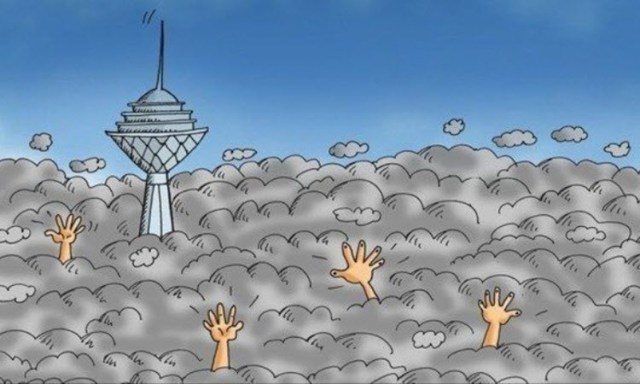
Tehran is currently engulfed in thick, yellow smog, resulting in the deaths of hundreds of people.
The noxious cloud has surrounded the city for almost a week now; due to the public health risk, officials ordered the schools closed last Wednesday and recommended that citizens stay indoors.
This is not an option for many Iranians though; they have no choice but to go out and work.
Authorities have reported 412 deaths from respiratory illnesses in the past 23 days, linked to the high pollution levels. It is believed that these level stems from Iran having to refine gasoline within its own borders due to previous sanctions leveled against it.
Despite the lifting of these sanctions in January, Tehran has continued down this path and now the government can’t decide how to solve the problem; instead, putting the onus on the people.
Iran’s Supreme Leader, Ayatollah Ali Khamenei, issued a religious edict on Monday, which forbade the use of cars during this time without a good reason. Meanwhile, an official from the Ministry of Health, Khosrow Sadeghniyat, recommended that Iranian shield themselves from pollution by staying indoors, drinking milk and eating fresh vegetables.
It is not clear, however, how the cows or the vegetables have been affected by this smog.
A particle which is particularly threatening to respiratory health, PM2.5, has now reached a concentration level of more than 150 in Tehran. It is linked to heart disease and lung cancer.
Dariush Mehrjui, a filmmaker, told the Iranian news agency, ISNA: “I can’t breathe in Tehran, simple as that. Everyone is fleeing Tehran … everyone is choking, look at cancer rates. Who can live [in Tehran] under these circumstances?”
The World Health Organisation (WHO) listed the city of Zabol in Iran as the most polluted in the world according to those PM2.5 levels.
The head of Tehran’s Environment Agency has stated that air pollution contributes to the deaths of around 45,000 Iranians per year.
More evidence showing that living in areas with high levels of air pollution is linked to a higher stroke risk has come from two new studies.
Both studies are published online in the journal Stroke. The first, from the United Kingdom, shows a higher risk for death after a stroke in patients who live in areas of high air pollution, and the other, a Japanese study, suggests a higher risk for a new stroke the same day as exposure to high levels of air pollution.
“We have shown a significantly increased risk of death after stroke in patients who had long-term exposure to high levels air pollution before their stroke occurred,” senior author of the UK study, Charles Wolfe, MD, professor of health & social care at King’s College London, commented to Medscape Medical News. “This was particularly pronounced for high exposure to smaller particulate matter — particles below 2.5 μm in diameter (PM2.5) — which are found in high quantities in exhaust fumes.”
For the study, Professor Wolfe and colleagues analyzed data from the South London Stroke Register, a population-based register covering an urban, multiethnic population.
They linked mortality data from this registry with data on air pollution represented by averaged annual concentrations related to residential postcode before stroke.
In total, 1800 strokes were recorded between 2005 and 2012 (74.3% were ischemic, 14.5% were hemorrhagic, and 11.2% were of unknown type).
Results showed an increased risk for death up to 5 years after stroke in patients living in areas of high air pollution.
Hazard ratios (HRs) for death for a 1 interquartile range increase in PM2.5 were 1.28 (95% confidence interval [CI], 1.08 – 1.53) for all strokes and 1.32 (95% CI, 1.08 – 1.62) for ischemic strokes.
Within ischemic subtypes, PM2.5 pollution was associated with a two-fold increase in mortality risk for total anterior circulation infarcts and a 78% increase for lacunar infarcts.
PM10 pollution was associated with 45% increased mortality risk for lacunar infarct strokes.
Separating PM2.5 and PM10 into exhaust and nonexhaust components did not show increased mortality.
“While this study adds to the evidence linking air pollution to cardiovascular disease, it cannot prove causality as it has an observational design,” Professor Wolfe commented. “And while we did control for socioeconomic status, other illnesses and age and sex, there will of course be other confounders that we won’t have accounted for — people who live in an area with high air pollution probably have other factors that may affect cardiovascular and cerebrovascular disease as well.
“So it is difficult to say for certain that it is the air pollution that is responsible but there are many studies now that have shown similar associations,” he said.
He noted that the smaller particles (PM2.5) were associated with a worse effect on mortality and this correlated with biological studies that have shown a greater inflammatory effect of small particulate matter vs larger particulate matter on the vessel wall.
“Our study suggests that people who have previously had an ischemic stroke, but not a hemorrhagic stroke, may be more vulnerable and at a higher risk of death to chronic, long-term exposure of PM,” they conclude.
“By identifying the groups that are particularly vulnerable to air pollution–associated mortality (eg, survivors of ischemic stroke and, in particular, [total anterior circulation infarcts] and [lacunar infarcts]), our study may have implications for wider health policies.”
Acute Risk
The Japanese study, by lead author Ryu Matsuo, MD, PhD, Department of Health Care Administration and Management Graduate School of Medical Sciences, Kyushu University, Fukuoka, Japan, and colleagues, looked at acute exposure to air pollution and shows a small increase in the risk of having a stroke within a day of high exposure to pollution.
For the study, the researchers analyzed data on 6885 ischemic stroke patients from a multicenter hospital-based stroke registry in Japan who were previously independent and hospitalized within 24 hours of stroke onset. Time of symptom onset was confirmed. They also obtained hourly data on air pollutants from the National Institute for Environmental Studies.
A case-crossover analysis was conducted to evaluate the effects of short-term exposure to particulate matter on ischemic stroke events, with 3 or 4 control periods from the same day of the week, month, and year as the case period.
Results showed that increased ambient PM2.5 concentrations within 1 day before stroke onset were associated with the occurrence of ischemic stroke: hazard ratio, 1.03 (95% CI, 1.00 – 1.06) per 10-μg/m3increase in PM2.5. This association was maintained after adjustment for other air pollutants (nitrogen dioxide, photochemical oxidants, or sulfur dioxide) or influenza epidemics, and was evident in the cold season.
No significant association could be seen for days 2 to 6 before the stroke.
The researchers conclude: “Subjects with any risk factor should, thus, take care during exposure to high PM2.5 concentrations, particularly in winter. However, it remains unclear whether avoiding exposure to ambient PM2.5 or paying particular attention to health after exposure is actually beneficial.”
They also point out that this study was performed in a limited area of western Japan that is susceptible to transboundary air pollution, and further studies are needed to investigate the generalizability of the findings.
Professor Wolfe said his group have conducted a similar study looking at exposure of air pollution in the year before stroke, which showed a 23% increase in stroke risk in those exposed to higher levels of PM2.5.
The research by Dr Wolfe and colleagues was funded/supported by the National Institute for Health Research (NIHR) Biomedical Research Centre based at Guy’s and St Thomas’ National Health Service (NHS) Foundation Trust and King’s College London, and the NIHR Collaboration for Leadership in Applied Health Research and Care South London at King’s College Hospital NHS Foundation Trust. The study by Dr Matsuo and colleagues was supported by Japan Society for the Promotion of Science KAKENHI Grants from the Japanese Ministry of Education, Culture, Sports, Science and Technology. None of the authors have disclosed any relevant financial relationships.
In 1952, a killer fog containing pollutants covered London for five days, causing breathing problems and killing thousands of residents. The exact cause and nature of the fog has remained mostly unknown for decades, but scientists now believe the mystery has been solved.
The same air chemistry also happens in China and other locales, they report.
In December of 1952, the fog enveloped all of London and residents at first gave it little notice because it appeared to be no different from the familiar natural fogs that have swept over Great Britain for thousands of years.
But over the next few days, conditions deteriorated, and the sky became dark. Visibility was reduced to only three feet in many parts of the city, all transportation shut down, and tens of thousands of people had trouble breathing. By the time the fog lifted on December 9, at least 4,000 people had died and more than 150,000 had been hospitalized. Thousands of animals in the area also died.
Recent British studies now say that the death count was likely far higher—more than 12,000 people of all ages died from the killer fog. It has long been known that many of those deaths were likely caused by emissions from coal burning, but the exact chemical processes that led to the deadly mix of fog and pollution have not been fully understood over the past 60 years.
The 1952 killer fog led to the passage of the Clean Air Act in 1956 by the British Parliament and is still considered the worst air pollution event in the European history.
Here’s how it happened
Through laboratory experiments and atmospheric measurements in China, the team has come up with the answers.
“People have known that sulfate was a big contributor to the fog, and sulfuric acid particles were formed from sulfur dioxide released by coal burning for residential use and power plants, and other means,” says Renyi Zhang, professor and chair of atmospheric sciences and professor of chemistry at Texas A&M University.
“But how sulfur dioxide was turned into sulfuric acid was unclear. Our results showed that this process was facilitated by nitrogen dioxide, another co-product of coal burning, and occurred initially on natural fog.
“Another key aspect in the conversion of sulfur dioxide to sulfate is that it produces acidic particles, which subsequently inhibits this process. Natural fog contained larger particles of several tens of micrometers in size, and the acid formed was sufficiently diluted. Evaporation of those fog particles then left smaller acidic haze particles that covered the city.”
China’s air pollution problem
The study shows that similar chemistry occurs frequently in China, which has battled air pollution for decades. Of the 20 most polluted cities in the world, China is home to 16 of them, and Beijing often exceeds by many times the acceptable air standards set by the US Environmental Protection Agency.
“The difference in China is that the haze starts from much smaller nanoparticles, and the sulfate formation process is only possible with ammonia to neutralize the particles,” Zhang adds.
“In China, sulfur dioxide is mainly emitted by power plants, nitrogen dioxide is from power plants and automobiles, and ammonia comes from fertilizer use and automobiles. Again, the right chemical processes have to interplay for the deadly haze to occur in China. Interestingly, while the London fog was highly acidic, contemporary Chinese haze is basically neutral.”
Zhang says China has been working diligently over the past decade to lessen its air pollution problems, but persistent poor air quality often requires people to wear breathing masks during much of the day. China’s explosive industrial and manufacturing growth and urbanization over the past 25 years have contributed to the problem.
“A better understanding of the air chemistry holds the key for development of effective regulatory actions in China,” he adds.
“The government has pledged to do all it can to reduce emissions going forward, but it will take time,” he notes. “We think we have helped solve the 1952 London fog mystery and also have given China some ideas of how to improve its air quality. Reduction in emissions for nitrogen oxides and ammonia is likely effective in disrupting this sulfate formation process.”
Funding came from the National Natural Science Foundation of China, the Robert A. Welch Foundation, the Ministry of Science and Technology of China, a US National Science Foundation Fellowship, a NASA Earth and Space Science Fellowship, and a collaborative research grant between Texas A&M and China.
This week, as a yellow blanket of smog settled in for what is typically a winter-long stay, Reza Shajiee, a prominent hipster socialite, posted a picture of himself on Instagram wearing a gas mask under his motorcycle helmet. The text reads, “My city is better than yours, its air is better than yours,” and is accompanied by an emoticon wearing a gas mask.
One of his followers, @j.barzegar, responded, “Tehran gas chamber, slow death.”
Mr. Shajiee said he posted the picture in protest, but he didn’t know against whom. “No one can solve this, and it’s only getting worse,” he said.
Schools were closed for a second day in Tehran on Tuesday, and many citizens stayed home as the capital was covered in an unusually noxious cloud for a fifth day.
Like many other metropolises in developing countries, including New Delhi and Beijing, Tehran and other Iranian cities regularly disappear under a thick blanket of smog. Every year in the autumn, the pollution gets trapped by the Alborz Mountains that hug the city like an overbearing mother. It happens so often that it is hardly news anymore.
For most Iranians, the pollution is the new normal, a problem so large and complex that it is better just to pretend that it is not there.
Of course, the consequences are undeniable. On Tuesday, a City Council member said that 412 people had died because of the pollution in recent days. Iranian officials estimate that the pollution causes the premature deaths of about 45,000 people nationwide each year.
Hospital wards are filled with coughing patients. Children are told to cover their mouths when they go outside. With the increase in air pollution over the past decade, cases of bone marrow and lung cancer related to high levels of lead in the air have exploded, health experts say.
Iranian officials are at loss. A Health Ministry official told the Asr-e Iran news site that people can shield themselves from the cancerous pollution by staying indoors and drinking lots of milk and eating fresh vegetables. “This will strengthen the body,” said the official, Khosrow Sadeghniyat.
The office of Iran’s supreme leader, Ayatollah Ali Khamenei, issued a religious edict on Monday that said using cars during times of pollution without a good reason was religiously forbidden. A member of Parliament, Elias Hazrati, apologized to the nation on Tuesday, saying the conditions were “shameful.”
Mr. Shajiee, the socialite, said, “There are too many cars, too many people, the only solution is to stop everyone from going out, and everybody knows that will never happen.”
“I hate this city,” he added. “I’ll move out at the first opportunity.”
But he kept driving around on his chocolate-colored Vespa, churning out smoke. “What else to do?” he asked.
Under the city’s yellow blanket, most Tehranis go about their business as if the skies were blue and the air was clean. The traffic jams that define much of Tehran life are as insane as ever, despite emergency regulations aimed at keeping cars out of the center. Cafes and restaurants are full, and people even continue exercising in the city’s many parks.
“I can’t just sit at home,” said Pani Aghavan, 24, a musician. “I need to work and make money.” She wears a mask for protection, one of the few Tehranis to do so. “Most people simply don’t care; they prefer not to think of the pollution and the poison it is,” she said.
There has been pollution in Tehran for quite a while, but it picked up after the Iranian government was forced by sanctions to refine its own gasoline — a poisonous, high-octane brew. The sanctions were lifted after the nuclear agreement with world powers in January, but Iran continues to produce gasoline locally instead of sending its oil abroad for refining.
Many Iranians say that ignoring the problem is their only option. In a country where participation in politics is mostly limited to voting in elections, citizens simply learn to endure whatever comes their way.
“I work two jobs, have no money even to have a child and really don’t see how I can stop this pollution,” said Morteza Hosseinzadeh, who has a master’s degree in theater studies but sells fruit to survive. “Without hardship and taking risks I won’t get anywhere, so I can’t focus on solving such big problems.”
President Hassan Rouhani on Sunday called on citizens to help solve “national problems,” including pollution, an extreme water shortage and unemployment. Warning that there were several crises in the country, especially concerning the environment, Mr. Rouhani somewhat unhelpfully lauded the nuclear agreement for bringing “a breath of fresh air” to the country.
In response, the conservative Javan newspaper posted a picture of Tehran covered in smog with the headline: “Fresh air; Gradual death of citizens.” Other newspapers pointed out that the government’s obsession with car manufacturing was taking a toll. Over the past year, Iranian state-owned car manufacturers have closed deals with the French automakers Renault and Peugeot, aiming to increase the production of cars to two million a year.
“Even one additional car is too many,” said Mojgan Faraji, a journalist who is normally supportive of the government. Auto policies should change, she said. “As long as our gasoline is substandard, every new car worsens the situation.”
Children, elderly people and those with weak lungs are most affected by the pollution, but the effects of the smog go beyond the lungs, health experts say.
“It makes people agitated, depressed and even aggressive,” said Parisa Pakdel, a psychoanalyst in Tehran. “Youths lose their ability to concentrate, become hyperactive and develop sleep disorders. It’s not a pretty picture.”
Air quality in China’s smog-hit northern regions, which include the capital Beijing, worsened in October despite overall improvements over the course of the year, the environment ministry said in a notice late on Monday.
The Ministry of Environmental Protection said concentrations of small breathable particles known as PM2.5, a key smog indicator, fell 12.5 percent to an average of 42 micrograms per cubic metre from January to October. World Health Organisation guidelines recommend an annual average of 10 micrograms.
But in October alone, smog concentrations in the Beijing-Tianjin-Hebei region, a front line in China’s war on pollution, were worse than the same period last year, the ministry said.
The ministry said six of the worst performing cities over the first 10 months were located in the industrial province of Hebei, which surrounds Beijing. Xian, the location of China’s famous Terracotta Army, also appeared in the top 10 smoggiest cities over the period.
Smog normally worsens in winter as China’s largely coal-fired urban heating systems are activated in northern regions, but the ministry has warned that the situation could be more challenging this year as a result of unfavorable weather conditions.
During several recent smog build-ups, the ministry dispatched inspection teams to establish whether emergency smog alert systems in Beijing and Hebei were being implemented correctly. It found that local governments were not cracking down hard enough on firms that broke rules.
The alert systems allow authorities to limit traffic, suspend construction activities and force firms to cut production during heavy smog.
China’s capital Beijing has closed down dozens of industrial enterprises, shut down coal-fired power plants and replaced coal heating with natural gas in a bid to tackle smog. Cities in Hebei have also been under the pressure to cut coal consumption and impose tougher punishments on firms that exceed emission limits.
Environment group Greenpeace said in a research report published on Monday that Beijing’s efforts to cut coal burning has led to a 90.4 percent decline in arsenic concentration levels since 2013, meaning that the city now meets national standards.
Pollution Masks since 1993 - The 'Original' and still the best - Made in the UK - respro.com
THE AIR WE BREATHE
The Respro® Bulletin Board is designed to keep you up to date with current views and issues relating to Air Pollution and its health implications in our daily lives.










 Respro® Masks are reusable

