UK air quality shows little improvement over past 20 years, says study 

Academics say planners are concentrating on reducing road deaths and promoting growth at expense of environment

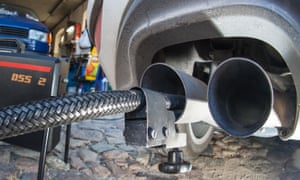
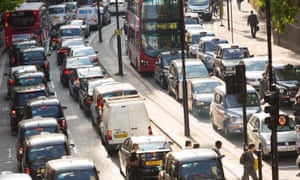
There has been little improvement in air quality over the past 20 years as transport planners focus on preventing road deaths, according to a study.

Two university academics set out to try to understand why there has been little improvement in air pollution concentrations from road transport since the UK signed up to international air quality standards in 1995, as part of the Environment Act.

Dr Tim Chatterton and Prof Graham Parkhurst, from the Bristol-based University of the West of England, said their work concluded that UK transport planners were not taking the environmental impacts of transport choices sufficiently into account.

They said that current figures estimate that more than 50,000 deaths a year can be attributed to air pollution in the UK yet planners focus on reducing road accidents.

“Air pollution is perhaps the grossest manifestation of a general failure of UK transport planning to take the environmental impacts of transport choices sufficiently into account,” said Prof Parkhurst.

“Currently air pollution is a shared priority between the Department for Environment, Food and Rural Affairs and Department for Transport but shared priority does not mean equal priority.

“Environmental managers only identify and monitor the problems. Insufficient relevant priority has been given within the sector responsible for most relevant emissions – transport policy and planning – which has instead prioritised safety and economic growth.”

The academics also claimed there were limited regulatory and financial support for alternative transport and for local authorities seeking to introduce air improvement measures such as low emissions zones.

They also said there was a strong social equity issue, with households in poorer areas more exposed to much higher levels of air pollution, while contributing much less to the problem, mainly through driving less.

Prof Parkhurst and Dr Chatterton also called for poor air quality to be promoted as a public health issue.

“Air pollution-related morbidity and mortality are at epidemic levels and, although less obvious, are more significant than road transport collisions as a cause of death and injury,” Dr Chatterton said.

“Politicians at local and national levels must treat poor air quality as a public health priority, placing clear emphasis on the severity of the problem and the limitations of technological fixes.

“Existing approaches that focus on individual, voluntary, behaviour change and technological innovations are not sufficient to tackle poor air quality.

The findings are due to be presented at Royal Geographical Society annual international conference in London on Wednesday.

Source: UK air quality shows little improvement over past 20 years, says study | Environment | The Guardian

Posted in Air Quality, Europe, UK | Tagged , , | Leave a comment

Haze Makes Unwanted Return in Kalimantan, Sumatra, Singapore and Malaysia 

Visibility levels in Sumatra and Kalimantan have decreased sharply as haze blanketed various parts of the islands and neighboring Singapore and Malaysia over the weekend.

In South Kalimantan, the cities of Banjarmasin and Martapura were blanketed by haze caused by forest fires.

According to state news agency Antara, visibility levels in Martapura stood at 200 meters, but it was even lower in the area closer to Banjarmasin.

“The haze was very thick and visibility was very limited as it was not even 10 meters,” Martapura resident Asyam said on Monday (29/08).

Forest fires in Riau spread smoke across a large part of Sumatra, with light haze spotted in Pekanbaru, Dumai, Rokan Hilir and Bengkalis.

“The smoke in Bengkalis is thick enough that citizens are beginning to fall ill,” said Jon Kenedy of the Riau Health Agency.

In Dumai, pollution levels were described as “hazardous” with an air pollution index of 369, resulting in a Pelita Air flight having to be diverted to Pekanbaru’s Sultan Sharif Kasim II International Airport.

“The Pelita Air flight had to be diverted to Pekanbaru as it was unable to land in Dumai due to the smoke,” Pekanbaru airport duty manager Bambang said on Sunday.

On Monday, the northern Malaysian town of Tanjung Malim in Perak recorded an unhealthy air pollution index of 119, with indices in several areas in Kuala Lumpur and Putrajaya nearing unhealthy levels, local media outlet Malay Mail Online reported.

According to Bloomberg, Singapore’s air pollution index stood at “very unhealthy levels” on Friday, with the Singaporean government advising its citizens to reduce prolonged outdoor activities.

Meanwhile, the National Disaster Management Agency (BNPB) said this year’s peatland and forest fire handling is much better compared to last year, with a 61 percent decrease to 12,884 compared to last year.

“We must keep a close eye and look out for potential fires until September in the provinces close to the equator, such as Riau, West Kalimantan and Central Kalimantan,” BNPB spokesman Sutopo Purwo Nugroho said.

Sutopo added that forest fire handling has improved this year thanks to the collaborative efforts of the central and regional governments and corporations to extinguishing the fires. Hotspots detected on Monday stood at 138 points, with 60 percent of them in the Riau region.

Fires were also reported in North Sumatera’s Samosir district, where it destroyed 2,400 hectares of forest and agricultural land. Sutopo said the Samosir district head did not declare an emergency despite the blaze continuing to spread.

“This area burnt between June and Aug. 20, but last Saturday it flamed up again,” Sutopo said. “The Samosir Disaster Management Agency has asked the Samosir district head to declare a state an emergency.”

He added that the fires are occurring in a newly expanded area of the district.

Source: Haze Makes Unwanted Return in Kalimantan, Sumatra, Singapore and Malaysia | Jakarta Globe

Posted in Air Quality, Asia, Singapore | Tagged , , , , , , , | Leave a comment

Riau air pollution reaches dangerous level 

Riau has grappled with severe air pollution for the past week as land and forest fires continue to spread. In the Mandau and Pinggir districts in Bengkalis regency, air pollution has already reached dangerous levels.

Based on Riau Land and Forest Fires Emergency Task Force data, the air pollution standard index (ISPU) in Duri Camp, Mandau district, stood at 361 PSI, a dangerous level, on Monday.  Three days before, the air pollution level in Duri even reached 460 PSI. Schools in Bengkalis gave their students a two-day vacation due to the worsening haze.

The air quality is considered good if the ISPU is below 50 PSI, moderate if 101-199 and unhealthy if 101-199. Meanwhile, air with an ISPU level of 200-299 PSI is considered very unhealthy and dangerous if it reaches beyond 300 PSI.

In Pekanbaru, haze has led to severe air pollution, in which the ISPU decreased to an unhealthy level of 162 PSI on Monday. The air quality in Dumai, Kampar and Rokan Hilir was also unhealthy, with ISPU readings of 166, 144 and 184 PSI, respectively.

On Sunday, the air pollution in Dumai reached a dangerous level, with the ISPU standing at 369 PSI. Despite the severe air pollution, schools in Dumai have not yet decided to close.

“We are still waiting for recommendations from the Dumai environment and health agencies. A temporary school closure can be applied only through a decree from the Dumai mayor,” the Dumai Education Agency’s secondary education head Misdiono said.

Source: Riau air pollution reaches dangerous level – The Jakarta Post

Posted in Air Quality, Asia | Tagged , , , , | Leave a comment

All is not pristine in New Zealand 

Most images of New Zealand show a pristine environment of great beauty. It therefore comes as a surprise that airborne particle pollution in many towns is above World Health Organisation guidelines. This is not due to the diesel cars that confound efforts to manage air pollution in Europe, or the density of cities and industry that contributes to problems in east Asia, Europe and parts of north America. It is due mainly to home heating.

With limited availability of natural gas and expensive electricity many New Zealanders, especially those in the South Island, rely on wood burning to heat their homes. National standards for particle pollution allow for one polluted day per year but Christchurch measured eight in 2015 and the city of Timaru breached standards on 26 days.

New Zealand’s poorly insulated homes and fuel poverty contribute to high winter deaths and children’s asthma. No heating is not an option. Better wood stoves or heat pumps are alternatives, along with insulation, but upgrading homes takes time and even with modern stoves the smoke produced depends on the user . Teaching people to burn wood better could help air pollution right away. TheWarmer Cheaper programme takes you step by step through lighting a fire and keeping it going for the evening with the least pollution. One of the main causes of smoke is insufficient kindling. Schools and community groups are therefore being harnessed to sell kindling and an award-winning invention, the Kindling Cracker, by Kiwi teenager Ayla Hutchinson can help people chop kindling easily and safely.

Source: All is not pristine in New Zealand | Environment | The Guardian

Posted in Air Quality, Australia & Oceania | Tagged , , , , | Leave a comment

Singapore’s Air Quality Remains Unhealthy as Haze Worsens

Singapore’s air quality stood at unhealthy levels as haze from Indonesian forest fires intensified Friday, blanketing the city-state in a layer of smoke.

The three-hourly air pollution index peaked at 215 as of 2 p.m. before slipping back to 188 at 3 p.m., according to the National Environment Agency. Readings above 200 are classed as “very unhealthy” and the government advises people to reduce prolonged outdoor activities.

Fire hotspots have appeared over Indonesia’s Sumatra island and West Kalimantan, where the Indonesian government said last week it deployed fire fighters. It has also used cloud seeding and water bombing to try to extinguish the fires.

The number of hotspots is lower than 2015, when dry conditions from the El Nino weather phenomenon drove the pollution reading to a record, forcing the city-state and neighboring Malaysia to shut schools.

Satellite data showed a total of 1,950 hotspots from January through to Aug. 18, compared with 6,595 in the same period a year ago.

The haze caused by plantation land-burning has become an annual occurrence in Southeast Asia and leads to periodic tensions with the Indonesian government. Smoke from illegal burning to clear land for palm oil and paper plantations that blanketed Singapore, parts of Indonesia, Malaysia and Thailand last year briefly turned Indonesia into the world’s biggest climate polluter.

Smoke from Indonesian forest fires shrouded the city-state to such an extent last year that the pollution index went well above 300, forcing Singapore to close schools and cancel a number of public events. A reading exceeding 300 is deemed hazardous.

As Singapore distributed N95 masks to “vulnerable and needy” citizens and permanent residents across the island last year, there were concerns that rising pollution would affect the annual Singapore Grand Prix. The event went ahead and this year’s Grand Prix is scheduled for Sept. 16-18.

Source: Singapore’s Air Quality Remains Unhealthy as Haze Worsens – Bloomberg

Posted in Air Quality, Asia, Singapore | Tagged , , , | Leave a comment

Motorists breathe in 40% more deadly pollutants when sat at red lights 

Car emissions take longer to disperse in built-up areas and end up accumulating in the air at traffic lights and junctions, researchers from the University of Surrey found.

  • Drivers inhale seven times more pollutants at red lights than pedestrians
  • Pollutants can be cut by more than 75% by simply closing the window
  • Motorists should leave more space between cars to allow fumes to escape
  • Safest option for fans is the setting where they re-circulate air in the car

Sitting in a traffic jam is enough to send even a calm person’s blood pressure soaring.

But new research has found it could be even worse for your health than previously thought.

Being stuck at a red light exposes motorists to deadly pollutants which could seriously damage health, scientists warn.

They found pollution levels inside cars are up to 40 per cent higher in queues and at a busy junctions.

And fans which draw in air from outside could be adding to the danger.

The World Health Organisation (WHO) has warned outdoor air pollution is as carcinogenic to humans as smoking.

It is expected to kill more than 6.5 million people a year worldwide by 2050 – twice the current number, a study has found.

Globally, the problem causes around 3.3 million premature deaths annually – mainly in Asia.

The premature deaths are due to two key pollutants – fine particulate matter known as PM2.5s – and the toxic gas nitrogen dioxide, both produced by diesel cars, lorries and buses.

The pollutants affect a person’s lung capacity and growth, and are linked to ailments including lung cancer and heart disease.

And emissions created by traffic queues take more time to disperse, especially in built-up areas.

They end up accumulating in the air at traffic lights, a known pollution hot spot for pedestrians and road users.

But contrary to popular belief, it is drivers who are the most affected.

Researchers from the University of Surrey found those who have their windows open breathe in seven times more PM10 – pollutants up to 10 micrometres in diameter –  than pedestrians at junctions.

Particles of this size can be inhaled deep into the lungs and can also become trapped in the nose, mouth or throat.

From here, they can then be absorbed into the blood and have a negative effect on the body.

The study monitored pollution levels at traffic lights and inside a car under five different ventilation settings over 3.7 miles (6km), passing through 10 different junctions.

However there is a simple solution.

Motorists caught up in queues can slash the levels of pollutants inside their vehicle by more than three-quarters by simply closing the window and switching off the fan.

Drivers should also leave more space between bumpers so exhaust fumes have greater chance to disperse, the researchers say.

They found the safest option is to put fans onto the setting where they re-circulate air within the car, without drawing polluted air in from outside.

Lead researcher Dr Prashant Kumar, said: ‘Travelling time has increased over the years in the UK and elsewhere, indicating a growing need for accurate exposure assessment during daily commuting.

‘Our recent study has shown in some cases as low as 2 per cent of the commuting time spent at traffic intersections could contribute as high as 25 per cent of the total commuting exposure to particle number concentrations (PNCs).

‘If the fan or heater needs to be on, the best setting would be to have the air re-circulating within the car without drawing in air from outdoors.’

Dr Kumar showed last year drivers stuck at traffic lights were exposed up to 29 times more harmful pollution particles than those driving in free flowing traffic.

The latest findings were published in the journal Environmental Science: Processes & Impacts.

Source: Motorists breathe in 40% more deadly pollutants when sat at red lights | Daily Mail Online

Posted in Air Quality, Health Effects of Air Pollution | Tagged , , , , , , | Leave a comment

Smoke from vehicles polluting Lake City

Increasing number of vehicles as well as the ever rising population have been causing environmental pollution in the tourist city of Pokhara.

The lake city has become the most polluted city after Kathmandu due to escalating environmental pollution. Earlier, the government had formed a working team to carry out a study and suggest measures to manage the transport in Pokhara. The team had examined air pollution in five areas of the city.

Dhiraj Pokhrel, general secretary of the Society for Legal and Environment Analysis and Development Research, who was assigned the responsibility of examining air quality in the city, said Pokhara’s air quality was terrible. Since Pokhara is a bowl-shaped Valley, it takes a long time for the air to exit the city.

The research centre had collected air samples from Prithvi Chowk, Mahendrapul, Halnachowk, Harichowk and Nadipur areas.

According to the study, high content of carbon mono oxide has been found in places with high pressure of vehicles. Similarly, dust particles weighing below 10 micro grams were also found in excessive amount.

As the air in Pokhara contains sulfur-dioxide and nitrogen oxide, immediate measures need to be taken to reduce air pollution.

The team has recommended pollution-free vehicles to curb pollution in the Lake City. The team has submitted a 16-point report to the Ministry of Physical Infrastructure and Transport.

They have suggested establishing an Air Quality Monitoring Centre to inspect air quality in the city at the earliest. Other recommendations include implementation of green stickers on vehicles, no permission to new vehicles and promoting electric, gas, and solar vehicles.

A member of the working team, Gandhiraj Giri, said his team had also suggested adding large vehicles with many seats.

Source: Smoke from vehicles polluting Lake City

Posted in Air Quality, Asia | Tagged , , , | Leave a comment

Air pollution threat hidden as research ‘presumes people are at home’: study 

Previous investigations fail to reveal impact of ‘world’s largest human health threat’ because they do not account for people’s movement, researchers say

The true impact of air pollution has been obscured by the failure to consider people’s exposure as they move around during the day, according to a new study that has mapped the hotspots of New York’s air pollution based on where people gather for work or recreation.

The research cites air pollution as “the world’s single largest environment and human health threat” but laments that the problem has not previously been “considered spatially and temporally”, with most studies basing a person’s pollution exposure on where they live.

Using information obtained from cellphone towers, the researchers were able to build up a picture of millions of New Yorkers’ movements over the course of 120 days. They used a formula that charts population density as well as pollution levels to look at how people’s exposure to PM2.5, an airborne particle linked to an array of health problems, varies according to where they typically congregate during the day.

The researchers found that areas of midtown and lower Manhattan, which have some of the highest PM2.5 levels, saw large numbers of people exposed during the day, but less so at night. Conversely, areas of southern Brooklyn with high PM2.5 levels peaked in pollution exposure at night as people returned to their neighborhoods after work. Areas of Queens near LaGuardia airport remained elevated throughout the day.

Concentrations of PM2.5 also vary throughout the day and affect the identification of hotspots, depending on factors including power generation and traffic.


“Air pollution is linked to respiratory and cardiovascular illnesses but we have previously presumed that people exposed are at home all the time,” said Dr Marguerite Nyhan, lead author and a researcher in environmental health at Harvard University, although all the research was conducted at MIT’s Senseable City Lab.

“We know that’s not a true assessment of exposure as more people are exposed as they go from home to work and when they are socializing. We found that lots of people are being exposed in central Brooklyn and Queens and lower Manhattan, where people work and recreate.

“But that’s not the way cities are typically regulated for air pollution – they just look at highly polluted areas rather than the amount of time people spend in them.”

Disregarding population shifts throughout the day, PM2.5 air pollution in New York is greatest in midtown and downtown Manhattan, parts of the Bronx and areas of Queens and Brooklyn that meet the East River. These areas have PM2.5 levels that are around 14 micrograms per square meter – higher than the annual average advised as acceptable by the World Health Organisation (WHO).

According to WHO, worldwide around 7 million people a year die as a result of air pollution. The US accounts for around 200,000 of these annual deaths, with most linked to fumes from cars, trucks and other transportation, as well as emissions from power plants. Particles of PM2.5, which are around 30 times smaller than a human hair in width, can worsen asthma and heart disease and are linked to reduced lung function.

A study commissioned by New York City found that annual average PM2.5 levels fell by 16% in the six years to 2014 but warned that air pollutants “remain at levels that can be harmful to public health, particularly among seniors, children and those with pre-existing health conditions”.

Asked whether the city considers peoples’ exposure as they move around the metropolis, a spokesman for New York’s mayor, Bill de Blasio, said: “The city’s monitoring study is designed to assess outdoor, street-level air pollutant levels across the city.

“So in a sense, the data can be used to assess exposures at residences, places of employment, or parks and other recreation areas. The study is not designed to assess any single exposure setting.”

De Blasio has set a goal for New York to have the cleanest air of any US city by 2030, pledging to cut PM2.5 levels by 50% in this timeframe by adding electric vehicles to the city fleet, phasing in clean sources of electricity and making buildings more energy efficient.

Nyhan said her research, published in Environmental Science & Technology, could be used if New York wanted to go down the path of “low emissions zones” as London has done. Motorists driving in most areas of Greater London have to pay a daily charge unless their vehicles meet European emissions standards.

“If you identify areas of higher exposure, you can implement low emissions zones there for the maximum health benefit,” said Nyhan, who plans to undertake a similar spatial study in Boston.

“In the last 100 years, air quality has certainly improved but we are still seeing problems in larger cities. We are seeing a transition to electric vehicles but it’s not quick enough – more and more people are residing in cities, which means more people are contributing to and being exposed to pollution in urban areas.”

Source: Air pollution threat hidden as research ‘presumes people are at home’: study | Environment | The Guardian

Posted in Air Quality | Tagged , , , , | Leave a comment