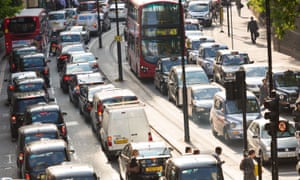
Vietnam mulls test of motorbike emissions to cut urban air pollution 

Vietnam is considering a plan to test motorbike emissions in its five largest cities after tests found the vehicle has become a major polluter.

Vietnam Register, which checks vehicle quality, has urged the Ministry of Transport to test around 23 million motorbikes in Can Tho, Da Nang, Ha Noi, Hai Phong, and Ho Chi Minh City.

The number of vehicles in these cities accounts for half the country’s total.

The tests are expected to start in July 2018. Older bikes will be tested first — and each will be tested every two years – for a fee of VND100,000-150,000 (US$4.5-7).

A similar plan was made in 2010, but it has remained on paper.

Vietnam Register is pushing for action again after recent tests found that vehicles are responsible for 70-90 percent of urban air pollution, and motorbikes are the biggest culprits.

Official figures show that 95 percent of vehicles on Vietnamese streets are motorbikes.

In the country’s biggest cities, Hanoi and HCMC, nearly 12 million motorbikes account for 94 percent of hydrocarbon emissions, 87 percent of the toxic carbon monoxide, and nearly 60 percent of nitrogen oxide.

Motorbikes that fail the emission tests will have to go through maintenance. Drivers who avoid the tests will be fined.

Vietnam Register suggested that to make the plan feasible the fee should not be collected directly from motorbike owners, most of whom are low- and middle-income people.

Instead, the money collected as environment protection tax on gasoline should be used, it said.

At VND3,000 per liter of gasoline, a motorbike driver pays an average of VND480,000 a year, it said.

Source: Vietnam mulls test of motorbike emissions to cut urban air pollution | Society | Thanh Nien Daily

Posted in Air Quality, Asia, Vietnam | Tagged , , , , , , | Leave a comment

Air pollution causes wrinkles and premature ageing, new research shows 

Toxic fumes may be the primary cause of skin ageing in polluted cities such as London, New York and Beijing, scientists say
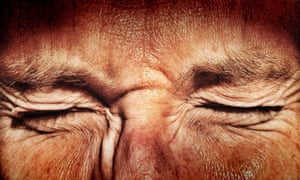
Air pollution is prematurely ageing the faces of city dwellers by accelerating wrinkles and age spots, according to emerging scientific research.

The effects of toxic fumes on skin are being seen in both western cities, such as London and New York, as well as in more visibly polluted Asian cities and in some cases may be the primary cause of ageing. The pollution is also being linked to worsening skin conditions such as eczema and hives.

The scientific discoveries are now driving the world’s biggest cosmetics companies to search for solutions, including medicine-like compounds that directly block the biological damage. But doctors warn that some common skin care routines, such as scrubs, make the damage from air pollution even worse.

Poisonous air is already known to cause millions of early deaths from lung and heart diseases and has been linked to diabetes and mental health problems. But perhaps its most visible impact, the damage caused to skin, is just beginning to be understood.

“With traffic pollution emerging as the single most toxic substance for skin, the dream of perfect skin is over for those living and working in traffic-polluted areas unless they take steps to protect their skin right now,” said Dr Mervyn Patterson, a cosmetic doctor at Woodford Medical clinics in the UK.

“Unless people do more they will end up wearing the pollution on their faces in 10 years’ time. It is definitely something people now need to take seriously.”

Prof Jean Krutmann, director at the Leibniz Research Institute for Environmental Medicine in Germany, said: “UV [damage from the sun] was really the topic in skin protection for the last 20-30 years. Now I think air pollution has the potential to keep us busy for the next few decades.”

Air pollution in urban areas, much of which comes from traffic, includes tiny particles called PMs, nitrogen dioxide (NO2) and chemicals such as polycyclic aromatic hydrocarbons (PAHs). “What is very clear is that PMs are a problem for skin,” said Krutmann, whose work has shown PMs increase age spots and wrinkles.

But one of the his newest studies showed NO2 also increases ageing. They studied people in both Germany and China and discovered that age spots on their cheeks increased by 25% with a relatively small increase in pollution, 10 microgrammes of NO2 per cubic metre. Many parts of the UK have illegally high levels of NO2, with London breaking its annual limit in the first week of 2016, with levels reaching over 200 microgrammes of NO2 per cubic metre.
Krutmann said other factors, such as UV exposure, nutrition and smoking contribute to ageing: “But what we can say is that, at least for the pigment spots on the cheeks, it seems air pollution is the major driver.”

“It is not a problem that is limited to China or India – we have it in Paris, in London, wherever you have larger urban agglomerations you have it,” he said. “In Europe everywhere is so densely populated and the particles are being distributed by the wind, so it is very difficult to escape from the problem.”

The accelerated skin ageing was seen in relatively young people and Patterson said: “If you are seeing these changes in middle age, these are worrying trends.”

Other recent research is summed up in a review paper in the journal Frontiers in Environmental Science, which concluded: “Prolonged or repetitive exposure to high levels of these [air] pollutants may have profound negative effects on the skin.”

Understanding exactly how air pollution causes the skin damage is at an early stage, according to Krutmann: “We are just now dipping into the mechanisms.” But many of the pollutants are known to pass easily through the skin and cause a variety of impacts.

“These agents have a very irritating effect and once they get into the skin, they activate multiple pathways of inflammation,” said Patterson. “Some pathways ignite the melanocytes, which create far too much pigment and end up giving you unwanted sun spots.”
“Other pathways ignite messengers that make blood vessels grow, that’s what results in increased redness and potentially rosacea,” he said. “Also, if you damage skin, it goes into repair mode and excites enzymes which re-adsorb damaged collagen. When you have too much chronic inflammation, these enzymes remove more collagen than your skin can create. This produces skin laxity and that’s where fine lines and wrinkles come in.”

Dr Debra Jaliman, a skin expert based in New York City, says her patients are now worrying about the impact of air pollution on their skin, which she said can cause darkening of the skin and acne-like eruptions, as well as ageing.

“At the moment, there are not many products for prevention [of air pollution damage], however it may be a trend in the coming years as it becomes a much bigger issue,” she said.

Major beauty companies have begun their own research and are launching the first products formulated to battle skin damage from toxic air. Dr Frauke Neuser, senior scientist for Olay, a Procter and Gamble brand, has run studies showing significantly lower skin hydration in people living in polluted areas and lab studies showing that diesel fumes and PMs cause inflammation in skin cells.

Her team then screened for ingredients that could counteract some of the damaging effects. “We found niacinamide – vitamin B3 – to be particularly effective,” she said. “We have recently increased its level in several products by as much as 40%.”

Frauke’s work has also shown direct correlations between spikes in PM air pollution in Beijing and an increase in hospital visits by people with skin conditions including hives. “This indicates that not only skin ageing but also skin health are affected by air pollution,” she said.

L’Oreal, another cosmetics giant, published a medical study in 2015 showing that eczema and hives were more common in people in Mexico exposed to higher levels of air pollution, a conclusion supported by separate research in Canada. “The next step is to understand more deeply the environment-induced damages, in order to develop skin ageing prevention routines and products,” said Dr Steve Shiel, scientific director at L’Oreal.

Clinique, a big makeup brand, has already launched a sonic face cleansing brush it claims better removes pollution. “This [air pollution] is not going to go away. This is not a problem that is easily fixed,” said Janet Pardo at Clinique.

However, researchers are now working on medicine-like compounds that block the damage from air pollution from occurring in the first place. Krutmann’s lab helped Symrise, one of the world’s biggest suppliers of cosmetics ingredients, identify one, though the lab has no commercial stake in the product, which is called SymUrban.

“We found one molecule that can do the job,” he said, and it is now being registered as cosmetic ingredient. “In a few years from now I expect we will see cosmetic products that can specifically protect against skin ageing from air pollution.”

Patterson said it is possible for people to give themselves some protection now. “You don’t have to sit back passively and put up with it. You can take sensible, easy steps that will make a difference.”

“If your skin is really healthy, it is quite a good barrier,” he said, explaining that the top layer is like a roof – flattened cells like tiles separated by protective lipids.

“Certain skin care products are very disruptive to the surface of the skin,” he warned. “So a darling of the industry is retinoids, but these have a very profound negative effect on barrier function. Another darling of the industry is glycolic acid, but it is also very disruptive to the external skin barrier. People think these are good skin care, making the skin look smoother, but they are not helpful for the overall health of the skin barrier.”

Patterson is also dismissive of face scrubs: “The skin is trying its damnedest to make this wonderful defence mechanism and what do women and men do? They scrub the hell out of it. It just doesn’t make sense.” He said products that help repair the skin barrier, by delivering the pre-cursor lipids the cells need, are beneficial, as are ones that tackle inflammation.

“You can also put on a very nice physical shield in the form of good quality mineral makeup,” he said. “That produces an effect like a protective mesh and probably has some trapping effect, protecting against the initial penetration of particles. But you also need always to try to remove that shield in the evening, washing the slate clean every night.”

Source: Air pollution causes wrinkles and premature ageing, new research shows | Environment | The Guardian

Posted in Air Quality, Health Effects of Air Pollution | Tagged , , , , , | Leave a comment

Increase in childhood, adult asthma linked to London’s 1952 Great Smog 

London’s Great Smog of 1952 resulted in thousands of premature deaths and even more people becoming ill. The five December days the smog lasted may have also resulted in thousands more cases of childhood and adult asthma. Researchers studied how London’s Great Smog affected early childhood health and the long-term health consequences. The results showed that the Great Smog event of 1952 likely still affects some people’s health more than 60 years later.

London’s Great Smog of 1952 resulted in thousands of premature deaths and even more people becoming ill. The five December days the smog lasted may have also resulted in thousands more cases of childhood and adult asthma. Researchers from Columbia University’s Mailman School of Public Health, the University of California, San Diego and University of Massachusetts studied how London’s Great Smog affected early childhood health and the long-term health consequences. Findings are published online in the American Thoracic Society’s American Journal of Respiratory and Critical Care Medicine.

The results, based on health data from the 1940s and 50s, showed that the Great Smog event of 1952 likely still affects some people’s health more than 60 years later.

In “Early Life Exposure to the Great Smog of 1952 and the Development of Asthma,” Matthew Neidell, PhD, associate professor of Health Policy and Management at the Mailman School of Public Health, and colleagues noted that the Great Smog presents a “natural experiment” because the smog was intense, “exceeding current regulations and guidelines by a factor of 5 to 23”; localized to a major city; and unanticipated. “Because the smog was unexpected, residents likely didn’t leave the city,” said Prashant Bharadwaj, PhD, associate professor of economics at the University of California, San Diego and co-investigator.

The researchers analyzed 2,916 responses to a life history survey that is part of the English Longitudinal Study on Aging. Among other health questions, the survey asked participants if they had asthma as a child (up to age 15) or asthma as an adult.

Responses of those who were exposed to the Great Smog in utero or in early childhood were compared with those born between 1945 and 1955 who lived outside of London during the Great Smog or lived in London but were not exposed to the smog in utero or in their first years of life.

The results showed that exposure to the Great Smog in the first year of life was associated with a statistically significant 20 percent increased incident of childhood asthma. The researchers said they found a non-significant, but similar trend between exposure to the smog in the first year of life and adult asthma (a 9.5 percent increase) and in utero exposure and childhood asthma (8 percent increase).

The authors note that a number of studies examine the relationship between early childhood exposure to air pollutants and the development of asthma but can only determine an association, not a cause-and- effect relationship, because there may be confounding factors that are overlooked or not fully accounted for in the analysis.

Given that there is no evidence of another event simultaneous with the Great Smog that might affect asthma incidence, they add, their study overcomes the issue of confounding and “suggests a strong possibility of a causal link between early childhood exposure to air pollution and the later development of asthma.”

The study has implications for other countries and cities today with high levels of air pollution. In recent years, the authors write, Beijing has experienced the highest levels of air pollution ever recorded.

“Our results suggest that the harm from this dreadful event over 60 years ago lives on today,” noted Dr. Neidell. “It also suggest that very young children living in heavily polluted environments, such as Beijing, are likely to experience significant changes in health over their lifecourse.”

The full report can be found at:http://www.thoracic.org/about/newsroom/press-releases/great-smog-and-asthma.pdf

Source: Increase in childhood, adult asthma linked to London’s 1952 Great Smog — ScienceDaily

Posted in Air Quality, Asthma, Europe, Health Effects of Air Pollution, London, UK | Tagged , , , | Leave a comment

Classic cars to be charged £10 London T-Charge after 2017 

In an effort to cut dangerous pollution levels in the centre of London, Mayor Sadiq Khan has announced a new £10 T-Charge for the most polluting cars entering the centre of London.

London Mayor Sadiq Khan has confirmed plans to introduce a new £10 T-Charge for all vehicles entering the London Congestion Charge zone – on top of the existing £11.50 fee – for all vehicles with pre-Euro 4 emissions standards.

This age cut-off means that most cars registered after 2005 will escape the charge, but the many pre-2005 vehicles – including all classic cars regardless of historic status – will be subject to the new charge from next year. As it stands, historic vehicles are currently exempt from the Ultra Low Emissions Zone restrictions, however no such allowance will be made for the T-Charge.

This means that if you want to drive your classic into Congestion Charge zone on Monday to Friday between 7am and 6pm, the total cost will be £21.50 per day.

Paris has recently been in the news for a similar scheme, which rather than being charged extra will simply be banned from the city centre during peak hours.

London’s air pollution has been a key issue for the newly elected mayor. Khan said: ‘With nearly 10,000 people dying early every year in London due to exposure to air pollution, cleaning up London’s toxic air is now an issue of life and death.

‘Today we face another pollution public health emergency in London and now it’s our turn to act for the good of Londoners and for future generations to come.

‘That’s why I’m launching a hard-hitting plan of action to clean up our filthy air. Tough challenges call for tough measures, so I’m proposing a new £10 charge for the most polluting vehicles in central London from 2017, followed by an even stronger crackdown on vehicles pumping out hazardous pollutants.’

Source: Classic cars to be charged £10 London T-Charge after 2017 | Classic and Performance Car

Posted in Air Quality, Europe, London, UK | Tagged , , , , , , , | Leave a comment

Oxford Street to be car-free by 2020 in bid to tackle air pollution

Oxford Street will be pedestrianised by 2020, the Mayor of London’s office has announced.

The central London shopping hub is one of the busiest in the capital and is visited by more than four million people a week, according toThe Times.

The plan will be rolled out in two stages to reduce disruption on the 1.2-mile stretch.

Valerie Shawcross, London’s deputy mayor for transport, told the London Assembly that the plan was to ban all vehicles from Tottenham Court Road to beyond Selfridges and the entrance to Bond Street Tube station.

The ban will be first implemented on the eastern section, from Oxford Circus onwards, she said.

The plan, reported in The Times, is part of new mayor Sadiq Khan’s commitment to tackle air pollution in the city.

He has already pledged to introduce a charge for the most polluting vehicles.

One study two years ago named Oxford Street as the most polluted street in the world, mainly because it is used by about 270 buses a day, the newspaper reported.

The pedestrianisation will coincide with the opening of Crossrail – a new east-west train line – which is expected to boost the number of shoppers significantly.

Stations are scheduled to open at Tottenham Court Road and Bond Street in December 2018.

Cars are already banned on most of Oxford Street between 7am and 7pm on every day apart from Sunday, but it is a major thoroughfare for buses and taxis.

Siwan Puw, policy manager at the London Chamber of Commerce, said: “Doing the work in stages means trading will continue more easily. However, we need to ensure continuity of service in the area during the changes.”

Source: Oxford Street to be car-free by 2020 in bid to tackle air pollution

Posted in Air Quality, Europe, UK | Tagged , , , , , | Leave a comment

EU set to impose stricter air pollution limits

National Emissions Ceiling Directive to put further national limits on toxic pollutants such as NO2 and particulates

Plans for tighter national caps on the levels of dangerous air pollutants in EU member states have moved a step closer to fruition, after a compromise deal was passed by the European Parliament’s Environment Committee (ENVI) and member states.

The ENVI today voted in favour of a new deal on the National Emissions Ceiling Directive (NECD), which aims to cut the number of premature deaths from air pollution by around half across member states by 2030 by setting limits on the emissions of several hazardous pollutants, including sulphur dioxide, nitrogen oxides and fine particulates.

The deal, which will ensure for the first time that all polluting sectors – including agriculture – have to take action to tackle emissions, could see up to 25,000 lives saved in the UK by 2030, assuming the country retains the proposed rules post-Brexit.

The legislation will put a legal limit on emissions to ensure they result in a 49.6 per cent health improvement, after a compromise was reached between the parliaments and council’s proposed targets of a 52 per cent and 48 per cent improvement, respectively.

Despite initially pushing for a stronger deal, Seb Dance, Labour MEP and lead member of the European Parliament’s negotiating team on the NECD, said the parliament decided to settle for a compromise since failure to secure the deal before the end of the Dutch Presidency of the Council in June risked significantly delaying action on air pollution.

“With time running out and up against the intransigence of member states, this is the best deal we can deliver to protect the public without the whole thing being kicked into the long grass,” said Dance. “This is not a time for principled opposition; 50,000 British lives are lost prematurely every year because of air pollution and the stakes are simply too high for this report to fail.”

Dance also accused the UK government of being a key player in blocking a far higher level of ambition, alongside the governments of France, Italy, Poland, Romania and Bulgaria.

“The UK government has used its considerable weight in the council to lead a coalition of the unwilling, successfully lobbying MEPs and other member states to weaken the overall ambition level of air pollution targets,” said Dance.

The next step for the agreement will be a vote by the EU Parliament as a whole, which is expected in October or November.

The UK is already in breach of current EU pollution limits, with a fresh challenge from environmental law firm ClientEarth launched earlier this year after a new plan by the government only set out measures to bring the UK within legal air pollution limits by 2025 at the earliest, 15 years after the initial legal deadline for compliance.

While it remains uncertain whether legislation under the NECD will apply once the UK has left the EU, if it remains part of the European Economic Area (EEA) single market it is likely the NECD directive would continue to take affect, as it does for Norway. The legislation will also continue to apply in the UK during the two years of negotiations after Article 50 is triggered. In the case of the UK leaving the EEA, individual pieces of legislation including the NECD could be repealed if the UK government chose to do so.

Source: EU set to impose stricter air pollution limits

Posted in Air Quality, Europe | Tagged , , , , , | Leave a comment

Air pollution standards breached again in Timaru 

Timaru had its 18th high pollution day for 2016 on Monday, four more than the number of breaches recorded by the same time last year and the fifth time air quality standards were breached for the month.

The latest breach recorded by Environment Canterbury’s (ECan) monitoring station at Anzac Square showed the 24 hour average PM10 concentration for July 11 was 57 micrograms of suspended particulate per cubic metre of air.

PM10 refers to particulate matter in the air that is smaller than 10 micrometres in diameter. A reading over 50 micrograms indicates “high” pollution under the national environmental standard.

Timaru had 14 high pollution days by July 11 last year. Since 2006, there have been anywhere between 15 and 32 days of high pollution by the same day.

So far this year, the Timaru station has recorded the most high pollution days of all centres monitored by the regional council.

Kaiapoi and Rangiora have had six high air pollution days, Christchurch has had five, and Ashburton has had two. The Geraldine and Washdyke stations recorded one breach this year.

All but two of Timaru’s breaches this year happened in June and July.

ECan’s Canterbury Air Regional Plan, which will become operative later this year, ultimately aims for Timaru to have fewer than three high pollution nights per year.

TIMARU’S PM10 READINGS THIS YEAR

July 11: 57 micrograms of suspended particulate per cubic metre of air. The temperature high was 8 degrees Celsius, and low was minus 4 degrees Celsius.

July 4: 60 micrograms (19C, 2C)
July 3: 88 micrograms (16C, 0C)
July 2: 62 micrograms (11C, -5C)
July 1: 58 micrograms (9C, -4C)
June 29: 57 micrograms (12C, -1C)
June 22: 67 micrograms (15C, 4C)
June 21: 56 micrograms (10C, 5C)
June 18: 58 micrograms (11C, 0C)
June 17: 74 micrograms (17C, -3C)
June 16: 55 micrograms (14C, -2C)
June 9: 70 micrograms (16C, -2C)
June 8: 70 micrograms (10C, -5C)
June 7: 73 micrograms (11C, -3C)
June 6: 59 micrograms (13C, -2C)
June 4: 51 micrograms (15C, -2C)
May 2: 51 micrograms
March 10: 55 micrograms

(Sources: Environment Canterbury, Metservice)

Source: Air pollution standards breached again in Timaru | Stuff.co.nz

Posted in Air Quality, Australia & Oceania | Tagged , , , | Leave a comment

Calls for a new clean air act in the UK 

Last week Sadiq Khan, the Mayor of London, joined campaigners to call for a new clean air act.

This July marks the 60th anniversary of the original legislation that transformed the air in our cities and saved many lives. The Act followed the deaths of nearly 13,000 Londoners in the 1952 and 1956 smogs. Government finally accepted that regulating factory chimneys was not enough. We had to tackle home fires, too. This was politically difficult, since a cheery fire was seen as the heart of a family home. The Act required smokeless coals and, importantly, provided money to help people to change their fireplaces and boilers to burn cleaner fuels. It worked. Air pollution improved across the UK and the deaths of up to 700 Londoners during the last great coal smog in December 1962 marked the welcome end of an era.

Since the 1970s, European countries have worked together to control air pollution over the whole continent. Over 30 years these actions saved around 80,000 early deaths, avoiding a health cost of around 1.4% of our gross domestic product. Despite this, we are still a long way from being able to breathe air that does not harm our health. Across the UK, up to 40,000 die early each year due to the state of our air.

Drawing inspiration from the 1956 Act, campaigners and MPs have called for a funded diesel vehicle scrappage scheme to help business and car owners upgrade to less polluting vehicles. Additionally, making public transport, cycling or walking the easiest option for urban journeys could transform our cities and our health.

Source: Calls for a new clean air act in the UK | Environment | The Guardian

Posted in Air Quality, Europe, London, UK | Tagged , , , , , | Leave a comment