Children in hundreds of London schools exposed to illegal levels of air pollution

Over 400 schools across London are currently exceeding legal air pollution limits, new figures released on Friday by the Mayor of London Sadiq Khan has shown.

The analysis shows 443 schools across the capital are exposed to air quality in breach of EU limits for NO2 air pollution and for the first time reveals 86 secondary schools in the capital are in highly polluted areas.

The mayor also released the details of the 100 primary and secondary schools in London that register the highest levels of pollutants such as NO2, with the figures showing Southwark, Westminster and Tower Hamlets are the three boroughs with the highest number of schools in high pollution areas.

Since taking office in May, Khan has made tackling air pollution a top priority. The new figures come after he asked City Hall officials to provide an update on the current impact of air pollution on schools, following the emergence in May of a previously-unpublished 2010 report that showed that four-fifths of the 433 London primary schools exceeding air pollution limits were in deprived areas.

The new figures show that little has changed since 2010, with a higher number of schools now breaching the legal limits.

Khan said that the latest figures show why it is absolutely right to act now on London’s air pollution. “It is simply not acceptable that young Londoners – our children, grandchildren, family, neighbours and friends – are being exposed to dangerously polluted air and putting them at greater risk of respiratory and other conditions,” he said in a statement.

“This is yet more evidence that the last mayor failed Londoners when it comes to improving air quality in the capital. I have been clear that I will not stand by and continue to let that happen and that is why I am more determined than ever to get to grips with tackling the capital’s toxic air pollution and delivering on a promise of cleaner air for all Londoners.”

Khan has argued that London can meet the EU legal standards for NO2 well before 2025, the date the government’s current plans project London will be compliant. Since coming into office in May, Khan has joined a high court challenge against the government over its air pollution plans, and set out proposals to tackle air pollution including an extension of the planned ultra-low emissions zone (ULEZ) and implementation of a charge on the most polluting vehicles entering the capital.

The new mayor has also asked City Hall and Transport for London (TfL) officials to develop a programme which promotes cleaner air walking routes to school, and last month announced he had directed TfL to “urgently” develop a package of public alerts and signs to better inform the public on air pollution.

Khan is set to launch a formal public consultation on his package of measures to tackle air pollution in London next week.

Source: Children in hundreds of London schools exposed to illegal levels of air pollution

Posted in Air Quality, Europe, UK | Tagged , , , , , , , | Leave a comment

Paris drives old cars off the streets in push to improve air quality 

Vehicles made before January 1997 banned from streets of French capital from 8am to 8pm, Monday to Friday

Paris has banned old cars from its streets in a war on air pollution that environmentalists hope will also drive dirty vehicles from the centres of other European cities.

Air pollution, in large part caused by fine particulate fuel emissions, kills 48,000 people each year in France, about 400,000 in Europe and around 3.7 million worldwide, data published by France’s public health agency this month showed.

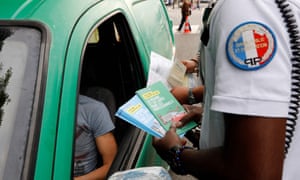
From Friday, any car registered before 1 January 1997 will be banned from the city’s streets from Monday to Friday, 8am to 8pm.

Some owners protested by parking their vehicles near the National Assembly and Champs Elysees avenue to denounce a ban they said would hurt poor people most and slash the resale value of their vehicles.

“I drive 50km per week, I don’t have the means to change vans so I will continue using it, I’ll get fined every week and there you go,” said Marc Martin, who uses his ageing Peugeot van to deliver picture frames to clients.

“And if it goes too far, I’ll close my business, people will lose their jobs, that’s it. What can I say, not much. This law is pathetic.”

Paris mayor Anne Hidalgo said the ban could be extended in 2020 to all combustion-engine cars more than nine years old.

After an initial tolerance period, motorists who flout the ban face fines of €35 (£32), an amount that is set to increase from the end of the year.

Upwards of half a million owners in and around Paris will be hit by the ban, according to a driver defence group, 40 million d’Automobilistes, which is taking legal action to seek financial compensation for drops in the value of now-banned vehicles.

Norway is planning to ban petrol and diesel-fuelled cars from 2025 and several cities in Europe are testing various anti-pollution or anti-congestion measures based on tolls for city centre access or temporary and selective car bans during surges in pollution levels.

Source: Paris drives old cars off the streets in push to improve air quality | World news | The Guardian

Posted in Air Quality, Europe, France | Tagged , , , | Leave a comment

Air pollution linked to increased rates of kidney disease: Regions in China with high levels of fine particulate air pollution have elevated rates of membranous nephropathy 

While air pollution is known to cause respiratory and cardiovascular diseases, a new study indicates that it also likely causes damage to the kidneys.

While air pollution is known to cause respiratory and cardiovascular diseases, a new study indicates that it also likely causes damage to the kidneys. The findings, which appear in an upcoming issue of the Journal of the American Society of Nephrology (JASN), call for attention on the role of air pollution in the development of kidney disease in urban areas.

Air pollution has become a serious problem in many cities in China, but the extent of its impact on individuals’ health is unclear. To examine how particulate matter in the air is affecting kidney health, a team led by Fan Fan Hou, MD, PhD and Xin Xu, MD, PhD (Southern Medical University, in Guangzhou, China) analyzed data on kidney biopsies taken over 11 years from 71,151 patients from 938 hospitals in 282 cities across China, encompassing all age groups.

On average, the likelihood of developing membranous nephropathy, an immune disorder of the kidneys that can lead to kidney failure, increased 13% annually over the 11-year study period, whereas the proportions of other major kidney conditions remained stable. Regions with high levels of fine particulate air pollution had the highest rates of membranous nephropathy.

“Our primary finding is that the frequency of membranous nephropathy has doubled over the last decade in China. We show that the increase corresponds closely with the regional distribution of particulate air pollution,” said Dr. Hou.


Source: Air pollution linked to increased rates of kidney disease: Regions in China with high levels of fine particulate air pollution have elevated rates of membranous nephropathy — ScienceDaily

Posted in Air Quality, Health Effects of Air Pollution | Tagged , , | Leave a comment

Household fuels a major contributor to Beijing’s infamous air pollution: China’s plan to reduce Beijing pollution must include household fuels, surrounding regions

Because of uncontrolled and inefficient combustion of solid fuels in household devices, emission reductions from the residential sector may have greater air-quality benefits in the North China Plain, including Beijing, than reductions from other sectors, such as vehicles and power plants, new research shows. The study is the first to incorporate local and regional data on air emissions, weather impacts and atmospheric chemistry.

China’s plans to curb Beijing’s health-damaging air by focusing on restricting emissions from power plants and vehicles may have limited impact if household use of coal and other dirty fuels is not also curtailed, according to a new study.

“You cannot have a clean outdoor environment if a large percentage of the population is burning dirty fuels in households several times a day,” said Kirk Smith, a professor with the University of California, Berkeley’s School of Public Health who co-led the study with Tong Zhu of Peking University and Denise Mauzerall of Princeton University. “The smoke may start indoors, but soon leaves the house and becomes a significant part of regional air pollution.”

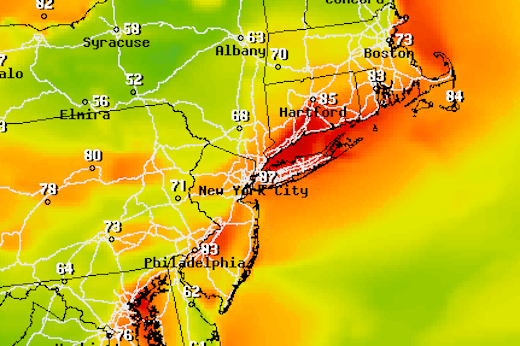
Beijing’s polluted air came to international attention before the 2008 summer Olympics. Today, the average daily concentration of the smallest particulates — those that can lodge deeply in the lungs and trigger chronic and acute respiratory illness, heart disease and lung cancer — is more than six times what the World Health Organization regards as safe. Levels of other major pollutants, such as ozone, also rank high.

China developed a five-year plan to reduce emissions, but the researchers concluded that focusing too narrowly on controlling emissions of pollutants just within Beijing and its suburbs, without also reducing emissions from the entire region, including widespread surrounding rural areas, may limit the potential effectiveness of pollution-control efforts.

Their study will be published next week in the journal Proceedings of the National Academy of Sciences.

The modeling study is the first to incorporate local and regional datasets on air emissions and to combine these with modeling of weather impacts and atmospheric chemistry in the region to come up with estimates of impacts of household emissions during winter months, when heating demands are greatest.

“We show that due to uncontrolled and inefficient combustion of solid fuels in household devices, emission reductions from the residential sector may have greater air quality benefits in the North China Plain, including Beijing, than reductions from other sectors,” the researchers wrote. Household uses include cooking and heating.

The researchers used the Weather Research and Forecasting Model with Chemistry, a model developed in the United States and used by researchers worldwide, to generate atmospheric simulations using real data from China. They focused on Beijing, Tianjin and Hebei provinces, where more than 100 million people live.

They then made estimates of the relative contributions of emissions sources using data from 2010, and also modeled emissions reductions scenarios to derive estimates for reduction levels of small particulates over the region that would result from different mitigation efforts.

The researchers concluded that eliminating household emissions alone would reduce levels of small particulate pollution in the air over Beijing in winter by about 22 percent, but that eliminating household emissions in all three provinces surrounding Beijing would nearly double the reduction in particulate levels in the city itself.

In other words, Beijing does not have its fate entirely in its own hands, according to Smith, and the results highlight the importance of regional efforts to reduce urban air pollution.

“On a smaller scale, here in the Bay Area, air-quality control is not only focused on San Francisco and Oakland, but also coordinated across nine Bay Area counties through a regional governing body,” Smith said. “One might think that, because China has a powerful central government, it would be easy to coordinate regional governing bodies to fight pollution, but that is not necessarily the case.”

The researchers did not attempt to evaluate how climate change might be affected by Chinese efforts to reduce household burning of biomass fuel by supplying natural gas. China has begun building plants to convert coal to “synthetic natural gas,” which burns cleaner, but results in more carbon dioxide emissions than direct burning of coal.

Nor did the researchers try to gauge the health benefits of reducing household emissions. However, a Global Burden of Disease study found that direct household exposure to air pollution from solid fuels was responsible for 800,000 premature deaths in China in 2013, about equal to the number of premature deaths from outdoor particulate pollution, Smith said. The work by Smith and colleagues indicates that a significant portion of the ill-health from outdoor pollution in China should also be attributed to household fuels.

Source: Household fuels a major contributor to Beijing’s infamous air pollution: China’s plan to reduce Beijing pollution must include household fuels, surrounding regions — ScienceDaily

Posted in Air Quality, Asia, China | Tagged , , , , | Leave a comment

UK coal power station in breach of EU air pollution law 

ENDS report: Defra and the Welsh government are likely to have to pay European commission’s legal costs for breaching air pollution rules at Aberthaw power station

The UK breached EU law by allowing a coal-fired power station to emit too much air pollution, the court of justice (CJEU) has said.

In a reasoned opinion, published on 28 June, the CJEU said the UK’s defence of how it regulated Aberthaw power station did not stack up and it should be forced to pay legal costs.

The European commission brought the case to court last year, on the grounds that not enough had been done to address excessive emissions of nitrogen oxides (NOx) from coal-fired Aberthaw in the Vale of Glamorgan. It had first raised concerns in June 2013.

The plant’s permitted NOx emission limit was reduced from 1,200 milligrams per normal cubic metres to 1,100mg/Nm3 in 2012, but this was still well above the 500mg/Nm3 limit set in the EU’s large combustion plant directive – now part of the industrial emissions directive (IED). From 1 January 2016, the limit dropped even further to 200mg/Nm3.

Defra and the Welsh government claimed that they could use an exemption in the law for plants burning solid fuels whose volatile content is less than 10%. They argued that this exemption was specifically designed for plants such as Aberthaw which uses locally sourced anthracitic coal that is more difficult to burn and is economically important to the local area.

They added that Aberthaw’s operator RWE was investing in the plant and its NOx emissions were expected to fall to 450mg/Nm3 by the end of 2017.

But the court was not convinced. It pointed out that the annual average volatile content of Aberthaw coal was above the 10% limit and said there was no official evidence that the exemption was designed with Aberthaw in mind.

The next step is a formal judgment from the court. If it agrees, which is likely, Defra and the Welsh government will have to change how Aberthaw is regulated to comply with the rule as soon as possible. If they do not, they face being dragged back to court and could be fined. The CJEU also recommended that the UK should pay the European commission’s legal costs.

Aberthaw has also been a major sticking point in UK discussions with the EU over a plan to delay compliance with air pollution limits from large power plants.

In the end Aberthaw was excluded from the plan, and would only be reinstated the UK wins its case in the CJEU. Since that looks unlikely to happen, the plant may be at risk of closing.

Brexit may prove a complication in future but for the moment the UK is still bound by CJEU rulings.

Source: UK coal power station in breach of EU air pollution law | Environment | The Guardian

Posted in Air Quality, Europe, UK | Tagged , , , | Leave a comment

Study Links 6.5 Million Deaths Each Year to Air Pollution 

A sobering report released on Monday by the International Energy Agency says air pollution has become a major public health crisis leading to around 6.5 million deaths each year, with “many of its root causes and cures” found in the energy industry.

The air pollution study is the first for the agency, an energy security group based in Paris, which is expanding its mission under its executive director, Fatih Birol.

The agency, whose 29 members are wealthy, industrialized countries, was founded in response to the Arab oil embargo in 1973 to coordinate international responses to energy issues. It is perhaps best known for its monthly oil market reports that are eagerly awaited by traders.

Mr. Birol, an economist, argues that pressing concerns about climate change and the emergence of countries like China and India as major energy consumers and polluters mean that the agency needs to shift its strategy.

“To stay relevant,” he said in an interview on Friday, we “need to work much closer with new emerging energy economies.”

Mr. Birol has been working to build bridges with China in particular, which energy experts say is crucial to the success of global efforts to reduce emissions.

“To solve today’s biggest energy problems, the I.E.A. needs to have the world’s most important energy players as part of it,” said Jason Bordoff, director of the Center on Global Energy Policy at Columbia University.

Environmental issues, Mr. Birol said, are very important to emerging economies like India and China, whose cities are often plagued by choking smog.

Helping these countries solve problems through increasing energy efficiency or filtering out pollutants can make progress on climate change goals. We need to make these countries “understand that their problems are our problems,” Mr. Birol said.

Mr. Birol appears to be well-suited to this approach. Born in Turkey, he obtained his doctorate in energy economics in Vienna and began his career as an analyst at the Organization of the Petroleum Exporting Countries, the oil producers’ group, often seen as having an agenda rivaling the agency’s.

Mr. Birol appears to be pushing to make the agency crucial in coordinating a global approach to energy-related efforts. This includes carrying out the global emissions reduction agreement reached in Paris last year. “The world needs a global energy body,” said Neil Hirst, a senior policy fellow at the Grantham Institute at Imperial College in London.

Mr. Birol said that through relatively low-cost actions, like adopting more ambitious clean air standards and more effective policies for monitoring and enforcement, countries could make major strides in reducing pollution over the next quarter-century.

China, for instance, needs to retire polluting coal-fired power plants and to establish stricter standards for motor vehicles.

Such changes could produce big benefits. In India, the proportion of the population exposed to a high concentration of fine particles, a type of pollution, would fall to below 20 percent in 2040, from 60 percent today. In China, it would drop to below one quarter, from well over one half.

Source: Study Links 6.5 Million Deaths Each Year to Air Pollution – The New York Times

Posted in Air Quality, Health Effects of Air Pollution | Tagged , | Leave a comment

New bands for PM2.5 air pollution readings 

Bands will help public interpret readings better, says NEA, three-hour PSI to be phased out

From Monday (June 27), one-hour readings of fine particulate matter, or PM2.5, will come with bands indicating if levels are normal, elevated, high or very high.

This is to help the public to interpret one-hour PM2.5 better, and to plan their immediate activities.

Under the new banding, one-hour PM2.5 concentrations of 55 micrograms per cubic metre and below are “normal”; readings of 56 to 150 are “elevated”; readings of 151 to 250 are “high”; and anything above 250 is “very high”.

But the one-hour readings are not tied to health advisories, which apply only to 24-hour Pollutant Standards Index (PSI) readings because studies on sub-daily PM2.5 exposure still do not provide a sufficient evidence base, said the National Environment Agency (NEA).

The 24-hour PSI forecast will also continue to be used for major decisions such as the closure of schools.

The one-hour PM2.5 readings will come with a general guide stating that each person’s reaction to pollutants may vary. Hence, the level of physical activity should be according to one’s health status and those with chronic heart or lung diseases should have medication handy. Healthy individuals exposed to high levels of haze particles may get irritation of the eyes, nose and throat.

Although the PSI includes other pollutants like sulphur dioxide and carbon monoxide, PM2.5 is the air pollutant of concern during haze episodes. The highest one-hour PM2.5 recorded in Singapore last year was 471 on Oct 19, when the region was affected by forest and plantation fires raging in Indonesia.

With the introduction of bands for one-hour PM2.5, the NEA will do away with three-hour PSI readings as they will “no longer be relevant”. They will be phased out by the end of the year.

The haze microsite, www.haze.gov.sg, and NEA’s myENV app will feature the new one-hour PM2.5 bands.

Source: New bands for PM2.5 air pollution readings | TODAYonline

Posted in Air Quality, Asia, Singapore | Tagged , , , , | Leave a comment

Global air pollution crisis ‘must not be left to private sector’ 

Energy authority says governments must take responsibility, and investment would pay for itself in health benefits

The global air pollution crisis killing more than 6 million people a year must be tackled by governments as a matter of urgency and not just left to the private sector, a report from the world’s leading energy authority says.

An increase of investment in energy of about 7% a year could tackle the problem, and would pay for itself through health benefits and better social conditions, the International Energy Agency estimates.

Its report says air pollution is often seen as a social problem but the economic consequences are huge. Lost work from air pollution is an increasing issue for rapidly developing cities, for instance.

Fatih Birol, executive director of the IEA, told the Guardian that governments should take more responsibility: “Air pollution does not get the attention it deserves. It is a global problem, and it is extremely important. It is a crisis.”

The energy industry is a leading source of pollution – including sulphur and nitrogen compounds – that cause breathing difficulties in vulnerable people, including children and older people, and can lead to premature death. Another key problem is that about 2.7 billion people around the world are still dependent on wood and waste fires that cause indoor air pollution, affecting women and young children the most.

At least 6.5 million people a year are believed to be dying from air pollution, and many more lives are harmed, according to experts. But governments have been slow to respond, according to the first IEA report on the issue. If they act, the problem could be halved in the next three decades, the IEA says.

Air quality has been identified as the fourth-largest threat to human health, after high blood pressure, poor diet and smoking. Eight in 10 of the cities around the world that monitor the problem exceed the levels at which harm is caused.

This is the first time the IEA, which normally confines itself to statistics on energy use and greenhouse gas emissions arising from that, has ventured into this territory. Birol said it was a measure of the seriousness of the problem, which was costing the global economy billions a year.

He said the most important thing to be done was for governments to take responsibility and put in place the policies needed – such as regulation of industry – as well as to cooperate with each other. Clean energy sources such as renewables could play a key role, he added.

Energy production and use account for about 85% of particulate matter and almost all of the sulphur oxides and nitrogen oxides, the IEA report says.

It notes that air pollution from agriculture should be a concern for governments, as fertilisers used on intensively farmed fields can cause problems both for air pollution and agriculture. Nitrous oxide and ammonia, arising from fertilisers, are more powerful than carbon in terms of trapping heat in the atmosphere, and can combine with other emissions to form more harmful gases.

Source: Global air pollution crisis ‘must not be left to private sector’ | Environment | The Guardian

Posted in Air Quality, World News | Tagged , , | Leave a comment