Oslo votes to slash emissions 95% by 2030 

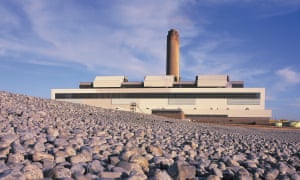
Oslo city council will ban cars from its city centre by 2019 as it seeks to meet a new goal of wiping out practically all of its greenhouse gas emissions.

Late on Wednesday Socialist, Labour and Green parties voted to slash carbon emissions 50% by 2020 and 95% by 2030 on 1990 levels1, a goal lawmakers admit is demanding.

“A key part of the plan is to prioritise pedestrians, bicyclists and public transport before car traffic, both when it comes to investments in infrastructure and the use of space1,” Lan Marie Nguyen Berg, Oslo vice mayor for the environment told Climate Home via email.

“This will also lead to reduced local air pollution and improve quality of life in the city. Making the city centre car free by 2019 is part of this plan.”

Transport accounts for the largest chunk of the city’s emissions, 63%. According to local media, 90,000 people work in the city centre on a daily basis, but only 1,000 call it home.

A strategy document published in February aims to boost bike use 25% by 2025 and says by 2020 all public transport should be powered by renewables.

“Oslo will arrange for at least 20% of heavy transport to go on renewable fuels by 2020 and all heavy transport equipment operation should go on renewable fuel by 2030,” reads the plan.

Car traffic across the city will need to drop 20% by 2019, while the council plans to commission a feasibility study on fitting carbon capture technology to a waste incineration plant at Klemetsrud.

The announcement comes two weeks after Norway’s national government announced it was targeting climate neutrality from 2030, to be achieved by buying international carbon credits.

Source: Oslo votes to slash emissions 95% by 2030 | Climate Home – climate change news

Posted in Air Quality, Europe | Tagged , , , | Leave a comment

Is Chile’s Success Causing Air Pollution at Home?

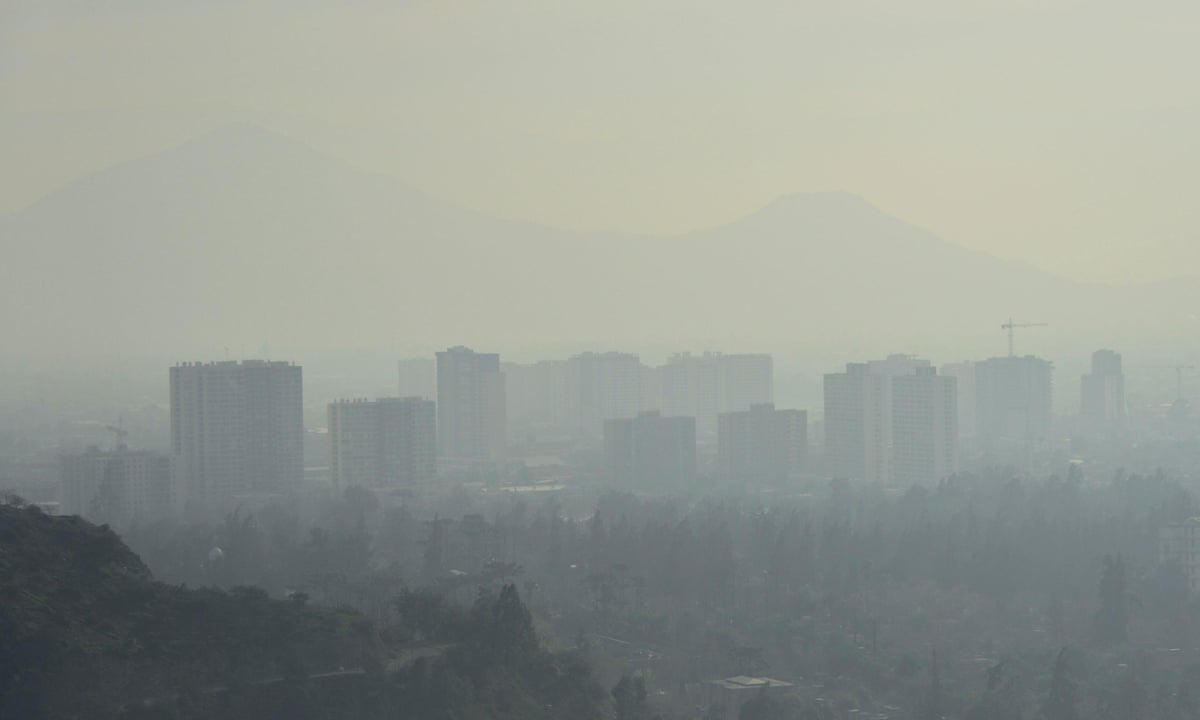
Chile’s run to the Copa America semifinals has been another bright spot for the nation’s soccer fans, but is it making the country’s longstanding air-pollution problem worse?

Some observers in Santiago think so.

The 7-0 win against Mexico may have inspired some Chilean soccer fans to celebrate the blowout victory with barbecues. The emanating smoke may be a contributing factor in the increased air pollution recorded in Santiago and some southern Chilean cities over the weekend, authorities said, according to the Associated Press.

Along with barbecues, traffic congestion and burning firewood were also named as contributing pollutants.

A chart published in an article by the newspaper La Tercera andposted on Twitter by a government official showed a spike in poor air quality around matches. In the article, the official, Claudio Orrego, said soccer matches were well known to be a contributing factor in air pollution, causing one in every four air-quality alerts since 2014.

Scientists studying the problem can take some new measurements tonight. Chile plays Colombia in the semifinals on Wednesday night in Chicago. And it will have another match this weekend, either in Saturday’s third-place game or Sunday’s final.

Source: Is Chile’s Success Causing Air Pollution at Home?

Posted in Air Quality, Chile, Latin America | Tagged , , | Leave a comment

Air pollution in France kills 48,000 people each year

Air pollution is behind the deaths of 48,000 people in France each year, and most of these deaths are preventable, a new study has found.

It’s no secret that pollution is a huge problem in the major cities in France, but it appears the problem runs a lot deeper, according to a new study by France’s national health agency.

Indeed, air pollution kills 48,000 people each year – or 9 percent of the total number of people who die each year.

The study focused on “PM2.5 particles”, which are particulate matter measuring 2.5 micrometres or less, and which are known to produce respiratory and cardiovascular illness. These particles are small enough to invade even the smallest airways of the human body.

Over 47 million French people are exposed to a level of these particles that is considered to be unsafe by the World Health Organization (WHO).

Tuesday’s study found that people aged 30 living in cities with over 100,000 residents can expect a reduction of 15 months to their life expectancy.

A 30-year-old living in an area with 2,000 to 100,000 people isn’t much better off, facing life a reduction of 10 months to their lives, on average.

 Those living in rural France face a nine-month reduction, the study found.

The study noted that if pollution areas were reduced to match the levels in the five least polluted areas of France, around 34,000 lives could be saved each year and people could expect an extra nine months in life expectancy.

The main source of pollution, the study noted, came directly from humans and was typically in the form of industry, agriculture, transport, and heating.

The only things that are more deadly to the French are tobacco at 78,000 deaths a year, and alcohol at 49,000 deaths a year, only a fraction more than the 48,000 related to air pollution.

France has been well aware of the poor pollution levels for years, but perhaps surprisingly, it’s not Paris that’s the worst. In May, a study from environmental group Robin des Bois (which literally translates as Robin Hood) found that Marseille had the highest levels of air pollution in the country.

With a 31.8µg/m3 concentration of fine particles, Marseille was worse than Lyon at 29.5µg/m3 and Paris at 27µg/m3. All three cities exceeded the World Health Organization’s (WHO) recommended safe level.

Paris, meanwhile, has enforced driving bans in the past when smog levels get particularly bad, and these bans are now set to be rolled out “whenever the region and city authorities demand it”, health officials said in November.

Such a ban was after Paris was briefly measured to have been the most polluted city on earth in March last year.

One study produced in 2014 claimed that the air quality in Paris was so bad that it was the equivalent of being in a room with eight smokers.

Source: Air pollution in France kills 48,000 people each year – The Local

Posted in Air Quality, Europe, France | Tagged , , , , , , | Leave a comment

Diesels more polluting below 18C, research suggests 

Pollution from many popular diesel cars is much worse when it is colder than 18C outside, new research suggests.

Testing company Emissions Analytics told the BBC it has measured a significant rise in poisonous gas emissions from a wide range of models as the temperature drops.

It found the problem is worst among the Euro 5 category of cars, which became mandatory in 2011.

The firm tested 213 models across 31 manufacturers.

The finding means millions of vehicles could be driving around much of the time with their pollution controls partly turned off.

But it seems many cars are deliberately designed that way and it is all perfectly legal.

Taking advantage

European rules allow manufacturers to cut back on pollution controls as long as it is to protect the engine.

Engineers agree that hot and cold weather can damage components.

But some suggest car companies are taking advantage of the rule to switch things off, even in mild weather, because it improves the miles per gallon of the car.

“I would say from the Euro 5 generation of cars, it’s very widespread, from our data. Below that 18 degrees [Celsius], many have higher emissions… the suspicion is, to give the car better fuel economy,” Emissions Analytics CEO Nick Molden told the BBC.

“If we were talking about higher emissions below zero, that would be more understandable and there are reasons why the engine needs to be protected. But what we’ve got is this odd situation where the [temperature] threshold has been set far too high, and that is a surprise”.

Carmakers insist it is to stop the vehicles breaking down.

There are currently 5.1 million Euro 5 diesels on Britain’s roads and they are likely to be driving around for another 10 to 15 years.

The Emissions Analytics data found the average Euro 5 vehicle was 3.6 times over the legal limit for poisonous Nitrogen Oxides (NOx) when it was above 18C. But that increased to 4.6 times over the limit, when the air temperature dropped.

The latest generation of Euro 6 cars, on sale from September last year, were better, he added.

They averaged 2.9 times the limit above 18C, rising to 4.2 times the limit at lower temperatures, but the figures were skewed by three especially bad performers, Mr Molden said, although he refused to name those cars.

Asked if millions of diesel cars are currently driving around for most of the year, not using their pollution cleaning systems at all Mr Molden replied:

“That is the suspicion, or they’re using their emissions system at a reduced level”.

Governments agree

Recent testing by the German, French and UK governments uncovered a similar trend.

Many popular models polluted more when it was colder.

In Britain for example, experts checked the same Euro 5 Range Rover Sport early on a cold morning, and then later in the day when it had warmed up. Its pollution (NOx) levels nearly doubled when it was colder.

Jaguar Land Rover said it was a car that was engineered 10 years ago and had the best emissions equipment available at the time. It is not on sale any more.

Professor Ricardo Martinez-Botas from Imperial College London, the independent engineer overseeing the British tests, told the BBC that despite decades designing engines he was “shocked” at the higher pollution levels on the real road compared to the lab.

He is calling for carmakers to be more open about what they do with temperature.

“They need to be clear as to what strategies are employed,” he said.

The German government has asked Opel, Mercedes, VW, Porsche and Audi to upgrade the software controlling emissions on around 630,000 European vehicles, including thousands in the UK.

Unlike in Germany though, the UK government hasn’t asked car firms to make changes.

A Department for Transport spokesman said: “The regulations are clear that temperature control devices can be justified to prevent engine damage, but we want to see action to ensure that manufacturers are only using these systems in limited circumstances”.

Still, some argue that ministers are failing to get tough on powerful carmakers which employ lots of people in Britain.

What the car firms say

Carmakers keep engineering details close to their chest, so we don’t know for certain how any of their systems work and at what temperatures. They argue that this information is commercially sensitive and stress they haven’t broken any rules.

But there is some information available that gives clues.

Vauxhall has been accused by German media of not using one of its diesel cleaning systems for 80% of the time on one model. It is something the company flatly denies.

“Exhaust gas recirculation [the emissions cleaning system] remains active at temperatures below 17C, however, for physical reasons related to engine protection as permitted by the regulations, with differing rates”, a spokesperson for the firm said.

In other words it is on, but not at full strength below 17C.

Suzuki said it is changing the software on 3,200 cars in the UK, all of which use Fiat engines, and added it is linked to temperature. Fiat could not provide numbers but did say: “As a voluntary measure, not mandated or requested by any regulatory authorities, FCA will be updating its Euro 6 calibrations with new data sets to improve emission performance in real driving conditions”.

Renault is offering anyone with a car bought from September last year to July this year a software upgrade that will double the temperature range of the emissions system.

And Mercedes say they will adjust around 26,000 A class and B class models in the UK, all with Renault engines and it will lower NOx levels.

Ford says its system works normally until it gets to -10C outside.

Mike Hawes, the chief executive of industry body The Society of Motor Manufacturers and Traders, told the BBC: “Any manufacturer that’s responded has done so on a voluntary basis, because all the vehicles that have been put on the road are legal. It’s a small number”.

Mr Hawes also stressed that it was all about protecting engine parts, which is good for customers.

European regulations will begin to get much tighter from 2017 although they will not be fully in place until 2021. Mike Hawes says it will get rid of this temperature issue completely.

What it will not do of course, is deal with the millions of cars driving around for the next 15 years that could be affected.

Pollution is a balancing act.

The down side of cutting NOx gases is that the engine uses more fuel. The more fuel you use, the more carbon dioxide the car puts out and that’s a greenhouse gas that harms the planet.

Emissions Analytics found that, in 2015, average mpg dropped for the first time in years. Probably because the car firms are concentrating more on cleaning up NOx.

“That is evidence that the tightening emissions regulations are having a negative effect on mpg,” Mr Molden says. Although he thinks vehicle engineers will eventually find a way around the problem.

Why does it matter?

Pollution has been linked to heart attacks, strokes, breathing problems and premature babies. There is a suggestion that children going to school near busy roads may develop smaller lungs.

Professor Frank Kelly at King’s College London has been calling for tighter rules for years, especially with diesel vehicles.

“On average we think pollution is probably taking away about six months of life for the average British citizen,” he says.

Source: Diesels more polluting below 18C, research suggests – BBC News

Posted in Air Quality, Europe, UK | Tagged , , , , , , , | Leave a comment

Mayor Sadiq calls for London air pollution signs and alerts

Transport for London told to ‘urgently’ develop package of public alerts and signs to raise awareness of air pollution

Roadside signposts and online alerts could be used to inform Londoners of air pollution hotspots and periods of poor air quality, under proposals announced today by the capital’s new Mayor Sadiq Khan.

Londoners should be much better informed when air pollution reaches dangerous levels in the UK capital, Khan said, announcing he has directed Transport for London (TfL) to “urgently” develop a package of public alerts and signs aimed at increasing awareness of poor air quality in the city.

Proposals being considered include roadside signs on the most polluted roads, greater promotion of the free airTEXT phone alert service and more effective use of social and traditional media to raise awareness of air pollution.

The Mayor will launch a formal public consultation on a number of air pollution policies in the coming weeks and he said plans to boost awareness of air pollution episodes would be launched as part of the new policy package.

Other policies he has mooted include extending the 2020 ultra-low emission zone (ULEZ) area and investigatory work towards a possible diesel car scrappage scheme.

Khan said new air pollution figures suggested people in London should have been better informed about the dangers to their health during peak pollution periods on more than 100 occasions over the past two and a half years.

Alongside today’s announcement, the Mayor released statistics from King’s College London showing that air pollution in the capital reached ‘moderate’ or ‘high’ levels on the official measurement scale on at least 49 occasions in 2014.sa

The statistics included the high profile Saharan dust episode in April 2014, during which the London ambulance service reported a 14 per cent rise in 999 calls for patients with respiratory issues and a higher than normal volume of calls from people with breathing difficulties, asthma and heart problems.

“I will do everything humanly possible to put the well-being of Londoners first and will be taking robust steps to clean up the capital’s filthy air and drive down the number of days when air quality is dangerously high,” said Khan. “In the short term, I want to ensure Londoners are given clear information and advice during these episodes, when they can take practical measures to protect their health.”

Kay Boycott, chief executive of Asthma UK, said it was “vital” Londoners with asthma know when pollution levels are high so they can “take steps to keep themselves safe”.

“According to the latest figures from the Health Survey for England toxic air affects nearly 600,000 people living in the capital with asthma,” said Boycott. “We urgently need significant investment into asthma research to find practical solutions to this invisible killer and we need governments across the UK to take action to reduce pollution levels.”

Mayor Khan has also joined a recent High Court challenge against the UK government over high NO2 levels in the UK, including London. Environmental NGO ClientEarth’s case was fast-tracked by the Court last week and is now set to be heard in October.

Source: Mayor Sadiq calls for London air pollution signs and alerts

Posted in Air Quality, Europe, London, UK | Tagged , , , , , , , | Leave a comment

Air pollution standards again breached in Timaru

Timaru’s air pollution levels exceeded environmental standards for an eleventh day this year on Tuesday as Geraldine recorded its first breach of the year.

Environment Canterbury’s monitoring station at Anzac Square, Timaru, recorded a 24 hour average PM10 concentration of 56 micrograms on June 21. The same reading was recorded in Geraldine.

A reading over 50 micrograms of suspended particulate per cubic metre of air indicates “high” pollution under the national environmental standard.

PM10 refers to particulate matter in the air that is smaller than 10 micrometres in diameter.

PM10 particles are so small that they can get into the lungs, potentially causing serious health problems.

All but two of the breaches in Timaru so-far this year happened in June. The highest reading of the year was 74 micrograms, which was recorded on June 17.

Timaru had ten high pollution days by June 21 last year. Since 1999, there have been anywhere between seven and 23 days of high pollution by the same day.

Environment Canterbury’s Geraldine station recorded two high pollution days by the same time last year. In previous years, anywhere between zero and 5 days of high pollution were recorded there.

So far this year, the Timaru station has recorded the most high pollution days of all centres monitored by the regional council.

Rangiora has had four high pollution days, while Christchurch has had three and Ashburton has had two. In common with Geraldine, the Washdyke station has recorded one breach this year.

Three main sources of PM10 are home heating, industry and vehicles, from the combustion of fuels such as wood, coal, petrol and diesel.

On a typical winter day in Timaru, an estimated 88 per cent of emissions come from home heating, Environment Canterbury confirmed.

Timaru has an air standard compliance target of three high pollution days from September 1.

It drops to one from September 2020.


Timaru’s PM10 readings this year:

June 21: 56 micrograms of suspended particulate per cubic metre of air. The temperature high for the day was 5 degrees celsius; the low was 5 degrees.

June 18: 58 micrograms (11 degrees, 0 degrees)

June 17: 74 micrograms (17 degrees, -3 degrees)

June 16: 55  micrograms (14 degrees, -2 degrees)

June 9: 70 micrograms (16 degrees, -2 degrees)

June 8: 70 micrograms (10 degrees, -5 degrees)

June 7: 73 micrograms (11 degrees, -3 degrees)

June 6: 59 micrograms (13 degrees, -2 degrees)

June 4: 51 micrograms (15 degrees, -2 degrees)

May 2: 51 micrograms

March 10: 55 micrograms

(Source: Environment Canterbury, Metservice)

Source: Air pollution standards again breached in Timaru | Stuff.co.nz

Posted in Air Quality, Australia & Oceania | Tagged , , , | Leave a comment

Solano smog prompts air pollution alert

Smog that’s expected Tuesday led air quality officials Monday to call to a pollution alert across a large swath of Solano County.

The Bay Area Air Quality Management District projects air quality Tuesday in the district’s Eastern Zone that’s unhealthy for people who are sensitive to air pollution – such as people with asthma or some other condition that affects their ability to breath freely.

Southern Solano County, to include Fairfield, Suisun City, Travis Air Force Base, Benicia and Vallejo, are in the district’s Eastern Zone. Air quality should remain moderate throughout the district ’s remaining four zones, according to the district, but residents there will still be under a Spare the Air alert.

Residents in the Yolo-Solano Air Quality Management District should see moderate air quality Tuesday, based on forecasts in that district.

The Yolo-Solano district includes northern Solano County along with Vacaville, Rio Vista and Dixon.

Summertime Spare the Air alerts are issued when ozone pollution is forecast to reach unhealthy levels. Ozone, or smog, can cause throat irritation, congestion, chest pain, trigger asthma, inflame the lining of the lungs and worsen bronchitis and emphysema, according to the air district. Long-term exposure to ozone can reduce lung function, the district said.

Solano County residents weathered three consecutive days of air pollution alerts early this month. Last summer’s first Spare the Air alert occurred in late July.

The National Weather Service predicts a high Tuesday of 94 at Travis Air Force Base, with winds from the west-southwest of 7 to 9 mph during the day.

High temperatures and pollution from the exhaust of cars and other vehicles combine to produce smog, which lingers when winds are not strong enough to clear the air.

Source: Solano smog prompts air pollution alert

Posted in Air Quality, USA & Canada | Tagged , , , | Leave a comment

Most air polluted places in the country 

Air pollution has been a problem since the industrial revolution hit America in the 1800s. The BBC reports that more than 5.5 million people worldwide die prematurely each year due to air pollution, so this really is nothing to take lightly.

According to the World Health Organization (WHO), more than 80% of people living in urban areas are exposed to levels that exceed WHO limits. In the US, the American Lung Association believes that over 50% of US counties suffer from an unhealthy amount of particle pollution. That’s a whopping 166 million Americans at risk.

These harmful air particles come from such things as coal-fired power plants, diesel emission, or wildfires. The particles are small enough to get stuck in our lungs and this can cause asthma attacks, heart attacks, strokes, and even death.

Here is the American Lung Association’s 2016 State of the Air list showing the top 10 U.S. cities subjected to the worst year-round particle pollution. You may want to consider living elsewhere if you take your health seriously.

Bakersfield, California

Bakersfield is home to a crude oil company, which is nothing but harmful to human health. Contaminants are released at all stages of production. Exhaust fumes discharge particulate matter, while the burning of diesel fuel and natural gas produces the nitrogen oxides that form ground level ozone.

However, the Los Angeles Times reported last year that as fuel prices have dropped, drilling projects in Bakersfield have been delayed or canceled. This may be bad news for the employees being layed off, but residents worried about their lung health can rejoice.

Hanford, California

According to the Hanford Sentinel, it’s no surprise to residents that air quality in this city is worse than ever. To blame are the combustion engines that burn petroleum-based fuels, which release particulate matter, as well as the ever-warming temperatures trapping pollution in this city surrounded by mountains. Officials there know they are over the EPA’s pollution standards, but don’t know how to fix the problem without new technology while long-term drought conditions persist in the area.

Fresno, California

The American Lung Association has been reporting Fresno to be a hotspot of pollution for many years. According to the Los Angeles Times, a 3,000-person-area on the west side of the city is drowning in diesel exhaust, unsafe water, and pesticides. This dirty city is also suffering from poverty, which has only increased since 2000 according to a study done last year by The Century Foundation.

Los Angeles, California

In 2015, the EPA created stricter ozone standards, reducing the limit from 75 parts per billion to 70 parts per billion. The Los Angeles Times reported that the South Coast air basin, including Los Angeles, violated the 75-ppb standard for 92 days in 2014. This new standard has forced Los Angeles to make changes to its transportation and construction equipment, which will hopefully lessen the threat of lung damage.

The edges of the Los Angeles area are also prone to wildfire, especially in light of climate change. Climate Central found that any wildfire burning within 50 to 100 miles of a city can cause air quality to be 5 to 15 times worse than normal. Fires can make air quality up 2 to 3 times worse than the worst non-fire day of the year.

El Centro, California

CNN reported that one of the major factors working against El Centro’s air quality is the fact that it borders Mexico, which has much lower standards for air pollution.

The Imperial County farm in El Centro is also home to 3 dairies and a cheese plant. This only increases area emissions even further, while also reducing available water levels at a time the state is suffering from huge droughts.

Merced, California

Situated between San Jose and Fresno (two other highly polluted cities), Merced has a lot of pollution problems. CNN showed that transportation on Route 99 and Route 140 is a huge contributor to emission-related pollution in the city. This is the route that takes vacationers to Yosemite National Park. According to the American Lung Association, 80% of the pollutants in the city can be traced to transportation sources. The big manufacturers, like Laird and Kirby, add to the pollution problem as well.

San Jose, California

The 2016 State of the Air report from the American Lung Association showed that San Jose had worse numbers for year-round particle pollution than they had in the report prior to 2014, going against a trend of improved air quality since 2000. The Mercury News reported that this is due to drought and high temperatures, which transform pollutants into ozone, as well as wildfires in the area. They also mention the devastating fact that the extreme climate of the city is working against all of the recent improvements in air pollution control programs and cleaner engine standards.

Pittsburgh, Pennsylvania

Pittsburgh is a part of America’s Midwestern “Rust Belt”. This is the country’s heartland of big unionized manufacturers, like the auto and steel industries. CNN reported that the city was once so polluted that streetlights had to be turned on at noon.

Power plants in the city can now switch back and forth between burning coal and natural gas, helping to reduce pollution when gas prices are low. The valleys here help to trap warm air and particulate matter, worsening an already bad problem.

Harrisburg, Pennsylvania

According to Penn Live, air pollution in Harrisburg is a big problem for multiple reasons. First, the 1.2 million people living in the metro area contribute to the pollution problem because of their commutes. Second, there are a lot of  industry emissions. And additionally, the unfortunate location of the city worsens the problem. Winds from Baltimore and Washington, D.C. bring in dirty air from power plants in those cities. The number of unhealthy days of ozone in the city was 64 in 2015, according to theAmerican Lung Association.

Louisville, Kentucky

Like many other cities on the list, Louisville’s geography doesn’t play in its favor. The surrounding hills help trap dirty air for long periods of time, especially in warm weather. General Electric is one of the major plants in the area, contributing to huge emissions. However, there is a glimmer of hope here: GE has promised to comply with waste-reduction and recycling efforts and has reduced its emissions by 12% since 2005.

Source: Most air polluted places in the country – Business Insider

Posted in Air Quality, USA & Canada | Tagged , , , , , , , , , , , , , , , , , | Leave a comment