World Asthma Day 2016: Why We Need To Reduce Air Pollution, Environmental Toxins More Than Ever

Asthma rates have only increased in recent decades, and air pollution may be one of the culprits.

Asthma rates have increased significantly in recent decades, with the number of people diagnosed with asthma in the United States growing 4.3 million between 2001 and 2009. In some cases, the rise could be a result of overdiagnosis; it could also be partially explained by what experts call the “hygiene hypothesis,” which says today’s children aren’t exposed to enough dirt or germs to condition their immune systems.

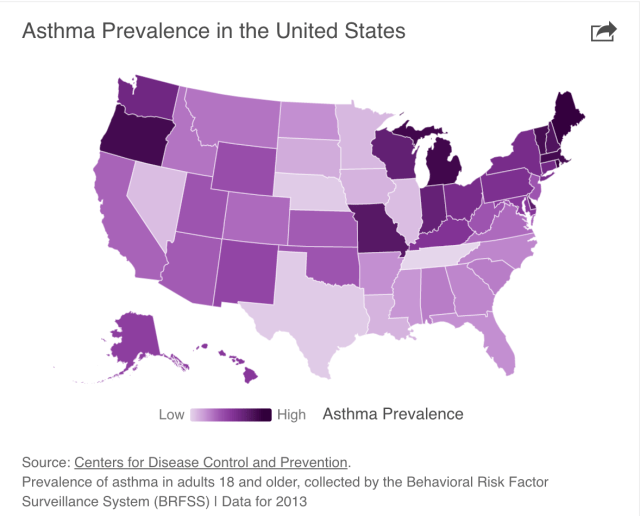
Regardless of the cause, the rates are high: Some 17.7 million adults in the U.S. have asthma (7.4 percent of the adult population), as do 6.3 million children (8.6 percent of the child population), according to the Centers for Disease Control and Prevention (CDC). And the one thing that has consistently been associated with increased rates of asthma (and other health issues) is pollution — whether in the air or water sources. On World Asthma Day 2016, which falls on May 3, let’s remember that fighting one of the roots of the problem may prevent future asthma diagnoses.

The Clean Air Acts enacted in the 70s and 90s had a positive impact on U.S. air pollution, reducing carbon monoxide, nitrogen oxide, and sulfur dioxide emissions by nearly half decades later. But as highlighted by the recent water crisis in Flint, or the unusually high air pollution levels in Detroit, the U.S. isn’t as safe as we might expect. Low-income and minority communities in places like Detroit and Flint, in particular, are often at highest risk of environmental toxin exposure, making their inhabitants more likely to develop chronic health conditions like asthma, ADHD, stroke, chronic stress, and neurological disorders.

That’s because pollution can actually change your genes. Constant exposure to environmental toxins modifies genes, and causes lung damage or asthma to be passed on to next generations. Babies in Fresno, Calif. (the most polluted city in the U.S.) and Detroit are often born with asthma and other pollution-related health issues. And pregnant women who are exposed to air pollution may give birth to babies with asthma or other health problems.

Of course, as asthma rates increase, so do the number of new asthma treatments. In a recent study, researchers developed a new method to prevent asthma and allergies by sneaking allergens into the body inside biodegradable nanoparticles. These hidden allergens wouldn’t cause the immune system to react against them, but instead would condition it to recognize it as a normal visitor and not a foreign agent. But new medical treatments and technologies still don’t solve the root issue of air pollution.

If we’re able to reduce air pollution and environmental toxin exposure, it’s likely that the rates of asthma, respiratory illnesses, and other health issues among children in poverty and U.S. adults in general will decrease. A recent study found that a 47 percent reduction in ambient air pollution resulted in a 32 percent decrease in bronchitis symptoms among kids with asthma, hinting that we can make a difference. On World Asthma Day, let’s be aware of the impact humans have on the environment, and know that we have to work together in order to reduce it. Otherwise, our health will suffer for generations to come.

Source: World Asthma Day 2016: Why We Need To Reduce Air Pollution, Environmental Toxins More Than Ever

Posted in Air Quality, Asthma, Health Effects of Air Pollution, USA & Canada | Tagged , , , | Leave a comment

Mexico City bans 40 per cent of cars again over air pollution 

The new rules keep one-in-five cars off the road every day, but the alert issued yesterday will double the ban on today.

Mexico City officials issued a new air pollution alert, meaning that 40 per cent of vehicles will be banned today, while industries will be required to cut emissions. Smog in the megacity of more than 20 million people worsened in March, prompting authorities to issue the first alerts in a decade and impose new traffic restrictions through June. The new rules keep one-in-five cars off the road every day, but the alert issued yesterday will double the ban on today. Some 5.5 million vehicles circulate on normal days. The Environmental Commission of the Megalopolis, which includes authorities from the capital and surrounding states, also ordered cement, chemical, pharmaceutical, oil and power companies to reduce emissions by as much as 40 per cent.

The alarm was raised after ozone levels reached 161 points, above the 150 level. The threshold was lowered from 190 to 150 last month. Before the new air quality alert was issued, the environmental prosecutor’s office (Profepa) warned that it may shut down and fine five companies that did not allow authorities to check their emissions during a pollution emergency in the greater Mexico City area in March. Three of the companies are subsidiaries of US firms, while one is based on Canada.

Source: Mexico City bans 40 per cent of cars again over air pollution | The Indian Express

Posted in Air Quality, Latin America, Mexico | Tagged , , | Leave a comment

What causes air pollution?

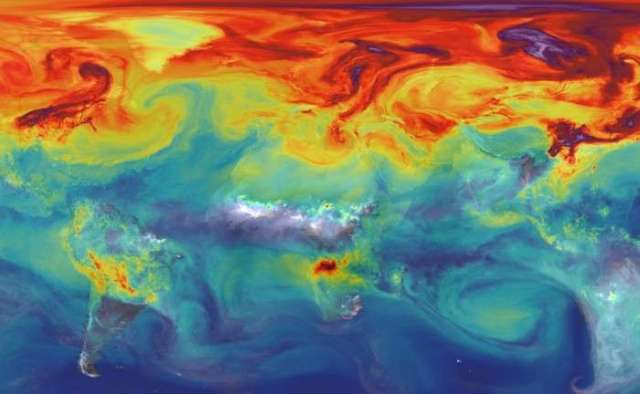
Carbon dioxide in Earth’s atmosphere if half of global-warming emissions are not absorbed. Credit: NASA/JPL/GSFC

By definition, pollution refers to any matter that is “out of place”. In other words, it is what happens when toxins, contaminants, and other harmful products are introduced into an environment, disrupting its normal patterns and functions. When it comes to our atmosphere, pollution refers to the introduction of chemicals, particulates, and biological matter that can be harmful to humans, plants and animals, and cause damage to the natural environment.

Whereas some causes of pollution are entirely natural – being the result of sudden changes in temperature, seasonal changes, or regular cycles – others are the result of human impact (i.e. anthropogenic, or man-made). More and more, the effects of air pollution on our planet, especially those that result from human activity, are of great concern to developers, planners and environmental organizations, given the long-term effect they can have.

By composition, Earth’s atmosphere is made up of nitrogen gas (78%), oxygen gas (21%), and other trace gases (such as argon and carbon dioxide). This balance is essential to all life here on Earth, so the introduction of pollutants can have a profound and damaging effect. All told, pollution can take many forms, like carbon compounds such as carbon monoxide (CO) and carbon dioxide (CO²). sulfuric compounds like sulfur dioxide (SO²), methane, radioactive decay, or toxic chemicals.

In addition, air pollution can be divided into Primary and Secondary types of pollutants. Whereas primary pollutants are caused by primary sources – i.e. the direct result of processes (such as industrial emissions or volcanic eruptions ) – secondary pollutants are the results of intermingling and reactions by primary pollutants (such as carbon emissions and water vapor, which creates smog).

Natural Causes:

Natural forms of pollution are those that result from naturally-occurring phenomena. This means they are caused by periodic activities that are not man-made or the result of human activity. What’s more, these sources of pollution are subject to natural cycles, being more common under certain conditions and less common under others. Being part of Earth’s natural climatic variations also means that they are sustainable over long periods of time.

Dust and Wildfires:

In large areas of open land that have little to no vegetation, and are particularly dry due to a lack of precipitation, wind can naturally create dust storms. This particulate matter, when added to the air, can have a natural warming effect and can also be a health hazard for living creatures. Particulate matter, when scattered into regions that have natural vegetation, can also be a natural impediment to photosynthesis.

Wildfires are a natural occurrence in wooded areas when prolonged dry periods occur, generally as a result of season changes and a lack of precipitation. The smoke and carbon monoxide caused by these fires contribute to carbon levels in the atmosphere, which allows for greater warming by causing a Greenhouse Effect.

Animal and Vegetation:

Animal digestion (particularly by cattle) is another cause of natural air pollution, leading to the release of methane, another greenhouse gas. In some regions of the world, vegetation – such as black gum, poplar, oak, and willow trees – emits significant amounts of volatile organic compounds (VOCs) on warmer days. These react with primary anthropogenic pollutants – specifically nitrogen oxides, sulfur dioxide and carbon compounds – to produce low-lying seasonal hazes that are rich in ozone.

Volcanic Activity:

Volcanic eruptions are a major source of natural air pollution. When an eruption occurs, it produces tremendous amounts of sulfuric, chlorine, and ash products, which are released into the atmosphere and can be picked up by winds to be dispersed over large areas. Additionally, compounds like sulfur dioxide and volcanic ash have been known to have a natural cooling effect, due to their ability to reflect solar radiation.

Anthropogenic Causes:

But by far the greatest contributing to air pollution today are those that are a result of human impact – i.e. man-made causes. These are largely the result of human reliance on fossil fuels and heavy industry, but can also be due to the accumulation of waste, modern agriculture, and other man-made processes.

Fossil-Fuel Emissions:

The combustion of fossil fuels like coal, petroleum and other factory combustibles is a major cause of air pollution. These are generally used in power plants, manufacturing facilities (factories) and waste incinerators, as well as furnaces and other types of fuel-burning heating devices. Providing air conditioning and other services also requires significant amounts of electricity, which in turn leads to more emissions.

According to the Union of Concerned Scientists, industry accounts for 21% of greenhouse gas emissions in the US, while electricity generation accounted for another 31%. Meanwhile, emissions caused by gasoline-burning vehicles – i.e. CO, CO², nitrogen oxides, particulates and water vapor – are also a significant source of air pollution.

A study conducted by the UCS in 2013 showed that transportation accounted for more than half of the carbon monoxide and nitrogen oxides, and almost a quarter of the hydrocarbons emitted into the air in the US. Globally, the situation is similar, with minor variations according to sector. According to the IPCC Fifth Assessment Report (2014), industry accounted for 21% of total greenhouse gas emissions, electricity and heat production for another 25%, and transportation accounted for 14%.

Agriculture and Animal Husbandry:

Greenhouse gas emissions from agriculture (aka. the cultivation of crops and livestock) is created by a combination of factors, one is the production of methane by cattle. Another cause is deforestation, where the need for pastureland and growing fields requires the removal of trees that would otherwise sequester carbon and clean the air.

According to the IPCC Fifth Assessment Report, agriculture accounts for 24% of annual emissions. However, this estimate does not include the CO2 that ecosystems remove from the atmosphere by sequestering carbon in biomass, dead organic matter and soils, which offset approximately 20% of emissions from this sector.

Waste:

Landfills are also known to generate methane, which is not only a major greenhouse gas, but also an asphyxiant and highly flammable and potentially hazardous if a landfills grow unchecked. Population growth and urbanization have a proportional relationship with the production of waste, which in turn leads to greater demand for dumping grounds that are far removed from urban environments. These locations thus became a significant source of methane production.

For some time, environmental scientists have been aware that the Earth has several self-regulating mechanisms. When it comes to the Earth’s atmosphere, these mechanisms allow for the sequestration of carbon and other pollutants, ensuring that the balance of its ecosystem remains unaffected. Unfortunately, the growing impact humanity has had on the planet is threatening to permanently alter that balance.

Basically, we are adding pollutants to the air (as well as the oceans and land masses) faster than the Earth’s natural mechanisms can remove them. Ad the results of this are being felt in terms of acid rain, smog, global warming, and a number of health problems that can be directly attributed to exposure to these harmful pollutants. If we intend to go on living on planet Earth, then sustainability and less pollution need to be our goals!


Source:
What causes air pollution?

Posted in Air Quality | Tagged , , , , , , , | Leave a comment

Exposure to particulate air pollutants associated with numerous types of cancer 

In 2015, the International Agency for Research on Cancer (IARC) published a series of monographs on the evaluation of various carcinogenic risks. In a monograph on air pollution, the organization pointed out the difficulty of assessing the effects of pollution on multiple types of cancers, given their different etiologies, risk factors and variability in the composition of air pollutants in space and time. However, the IARC identified certain key components of air pollution, including particulates.

How the Study Was Conducted: Thach, Thomas and colleagues enrolled 66,280 people who were age 65 or older when initially recruited between 1998 and 2001. The researchers did not have data on whether they had cancer before they were enrolled. Researchers followed the study subjects until 2011, ascertaining causes of death from Hong Kong registrations. Annual concentrations of ambient fine particulate matter, or matter with an aerodynamic diameter of less than 2.5 micrometers (PM2.5), at their homes were estimated using data from satellite data and fixed-site monitors. Researchers adjusted for smoking status and excluded deaths that had occurred within three years of the baseline to control for competing diseases.

Results: The study showed that for every 10 microgram per cubic meter (µg/m3) of increased exposure to PM2.5, the risk of dying from any cancer rose by 22 percent. Increases of 10 µg/m3 of PM2.5 were associated with a 42 percent increased risk of mortality from cancer in the upper digestive tract and a 35 percent increased risk of mortality from accessory digestive organs, which include the liver, bile ducts, gall bladder, and pancreas.

For women, every 10 µg/m3 increase in exposure to PM2.5 was associated with an 80 percent increased risk of mortality from breast cancer, and men experienced a 36 percent increased risk of dying of lung cancer for every 10 µg/m3 increased exposure to PM2.5.

Author Comment: Thach and Thomas indicated possible explanations for the association between PM2.5 and cancer could include defects in DNA repair function, alterations in the body’s immune response, or inflammation that triggers angiogenesis, the growth of new blood vessels that allows tumors to spread. In the case of the digestive organs, heavy metal pollution could affect gut microbiata and influence the development of cancer, the authors added.

While further research would be required to determine whether other countries experience similar associations between PM2.5 and cancer deaths, Thomas said this study, combined with existing research, suggests that other urban populations may carry the same risks.

“The implications for other similar cities around the world are that PM2.5 must be reduced as much and as fast as possible,” he said. “Air pollution remains a clear, modifiable public health concern.”

The authors added that the large scale of their study, as well as its documentation of cancer-specific mortality, adds to the IARC’s report on the contribution of particulate matter to various cancers.

Study Limitations: Thach said a limitation of the study is that it focused solely on PM2.5. He said emerging research is beginning to study the effects of exposure to multiple pollutants on human health. He also cautioned that pollution is just one risk factor for cancer, and others, such as diet and exercise, may be more significant and more modifiable risk factors.

Source: Exposure to particulate air pollutants associated with numerous types of cancer | EurekAlert! Science News

Posted in Air Quality, Health Effects of Air Pollution, Medical Studies | Tagged , , , , | Leave a comment

1,000 Londoners killed in four months by the capital’s toxic air 

The death toll from tiny particulate pollution in London has soared above 1,000 in less than four months this year, shock figures revealed today.

The disclosure sparked fresh calls from campaigners and academics for tougher action from Boris Johnson’s successor and the Government to tackle the “silent killer” of air pollution shortening so many people’s lives in the city.

Clean Air in London estimates that the 2016 death toll attributable to long-term exposure to human-made PM2.5 pollution reached the 1,000 mark on Monday and now stands at more than 1,020.

The campaign group’s founder Simon Birkett said: “This is the single issue where the Mayor has the greatest power to act.

On the 60th anniversary of the Clean Air Act we need to ban diesel vehicles from the most polluted places before 2020, as more than half of Londoners are demanding.”

Scientists say PM2.5 pollution is particularly dangerous as it can get deep into the lungs and seep into the bloodstream — causing heart and lung disease, cancer, and aggravating asthma.

Jonathan Grigg, professor of paediatric respiratory and environmental medicine at Queen Mary University, London, called on the Government to appoint an “air pollution czar” to clean up filthy air in the capital and other towns and cities.

“We live in Europe’s most polluted city,” he said. “Politicians really have got to get a grip on this.

“There is no point waiting 10 years. We have  got a whole generation of children to protect  now.” He stressed that youngsters are especially vulnerable to air pollution, as their lungs are still developing. Some experts blame diesel engines for most PM2.5 pollution generated in the capital.

City Hall, though, stressed that many adverse effects associated with PM2.5 are linked to pollution coming into London from other countries.

A spokeswoman said: “Air quality in London is improving but further measures are needed to tackle this issue fully.”

She emphasised that recent measurements of particulate matter found the greatest improvements are beside busy roads where people are most exposed to pollution.

“This is a result of action to cut emissions, including cleaning up taxis and upgrading the bus fleet and has led to the capital becoming compliant with legal limits for particulate matter for the first time,” she added.

The death toll — the combined total of months of lost life due to PM2.5  pollution among a local population — was highest in Barnet, equating to 47 deaths, followed by Bromley and Croydon on 46 and Ealing on 41.

Pollution levels are higher in central London. But the local totals also depend on the number of residents.

The analysis by Clean Air in London is based on Public Health England figures for local mortality rates linked to PM2.5 pollution.

They show the rate nudging up slightly from 2012 to 2013, the latest available data. Experts believe the combined death toll from nitrogen dioxide and PM2.5 pollution in London is more than 9,000 a year.

The Department for the Environment, Food and Rural Affairs said: “Improving air quality is a priority for this government.

“That is why last year we published plans setting out a new programme  of clean air zones which, alongside national action to encourage uptake of low-emission vehicles and continued investment in clean technologies, will create cleaner, healthier air for all.”

Source: 1,000 Londoners killed in four months by the capital’s toxic air | London | News | London Evening Standard

Posted in Air Quality, Europe, London, UK | Tagged , , , , | Leave a comment

UK government faces second court battle over air pollution plans 

High court to hear case against government’s ‘woefully inadequate’ plans to tackle air pollution, just a year after losing in the supreme court

The UK government is to be sued in the high court over its air pollution plans, just a year after losing at the supreme court and being ordered to fulfil its legal duty to cut pollution rapidly.

A request for a new judicial review by environmental lawyers at ClientEarth was granted by a judge on Thursday.

ClientEarth argues the government is in breach of its legal duty to produce new air quality plans to cut pollution to legal levels in the “shortest possible time”, despite being ordered to do so by the supreme court in 2015. The development puts the spotlight on the environment secretary, Liz Truss, who is named as the defendant in the new case.

Air pollution was called a “public health emergency” by MPs on Wednesday, and causes 40,000-50,000 early deaths every year. A report from two Royal Colleges of medicine estimated the cost of the damage at £20bn a year.

A deadline for the UK to meet EU air quality rules was missed in 2010 but the plan put forward by the government after losing at the supreme court would not cut pollution to legal levels until 2025 in some cities.

“The government’s new plans to tackle air pollution are woefully inadequate and won’t achieve legal limits for years to come,” said ClientEarth lawyer Alan Andrews. “The longer they are allowed to dither and delay, the more people will suffer from serious illness or an early death.”

“Today’s decision means we will be returning to court to demand that ministers respect our right to breathe clean air,” Andrews said. “The health evidence is mounting and, as we saw yesterday, MPs from across the political spectrum agree with us that the government is not doing enough.”

Mary Creagh MP, chair of the environmental audit committee, which is currently investigating air pollution, said: “The government has dragged its feet on tackling air pollution and that is simply not good enough. It is about time the government set out a clear, comprehensive plan to go much further, much faster.”

A spokeswoman for the Department of Environment, Food and Rural Affairs said: “Our plans clearly set out how we will improve the UK’s air quality through a new programme of Clean Air Zones, which alongside national action and continued investment in clean technologies will create cleaner, healthier air for all. We cannot comment on ongoing legal proceedings.”

The MPs’ report said the government needed to do much more, including introducing a scrappage scheme for old, dirty diesel vehicles, giving dozens of cities stronger powers to deter polluting vehicles with charging schemes and acting to cut pollution from farms.

“There is clear consensus that the government’s plans are wholly inadequate to address this public health crisis,” said Kerry McCarthy, Labour’s shadow environment secretary. “It should not take legal action to force the environment secretary to take urgent action and help save lives.”

Penny Woods, chief executive of the British Lung Foundation, said: “This is the second time the government has been taken to court over air pollution. They must now take immediate action to prevent people being needlessly killed by the air they breathe. Air pollution affects everyone [and] it has greatest impact on the most vulnerable – children, the elderly, and those with lung conditions.”

The government has been accused of trying to bury the news of its air pollution plans. The government released a draft of the plan required by the supreme court on the Saturday in September on which Jeremy Corbyn was elected leader of the Labour party. The final plan was published on “take out the trash day” in December, along with dozens of other ministerial statements and many hundreds of government documents.

Source: UK government faces second court battle over air pollution plans | Environment | The Guardian

Posted in Air Quality, Europe, UK | Tagged , | Leave a comment

Even a little air pollution may have long-term health effects on developing fetus 

Even small amounts of air pollution appear to raise the risk of a condition in pregnant women linked to premature births and lifelong neurological and respiratory disorders in their children, new Johns Hopkins Bloomberg School of Public Health research suggests.

Fine particles from car exhaust, power plants and other industrial sources are breathed into the lungs, but the scientists have now found evidence of the effects of that pollution in the pregnant women’s placentas, the organ that connects her to her fetus and provides blood, oxygen and nutrition. They found that the greater the maternal exposure to air pollution, the more likely the pregnant women suffered from a condition called intrauterine inflammation, which can increase the risk of a number of health problems for her child from the fetal stage well into childhood.

The researchers, reporting online April 27 in Environmental Health Perspectives, say the findings add to the growing evidence that the air a pregnant woman breathes could have long-term health consequences for her child and that current U.S. Environmental Protection Agency air pollution standards may not be stringent enough to protect her developing fetus.

“Twenty years ago, we showed that high levels of air pollution led to poor pregnancy outcomes, including premature births. Now we are showing that even small amounts of air pollution appear to have biological effects at the cellular level in pregnant women,” says the study’s senior author, Xiaobin Wang, MD, ScD, MPH, the Zanvyl Krieger Professor and Director of the Center on the Early Life Origins of Disease at Bloomberg School.

Says the study’s lead author Rebecca Massa Nachman, PhD, a postdoctoral fellow in Department of Environmental Health Sciences at the Bloomberg School: “This study raises the concern that even current standards for air pollution may not be strict enough to protect the fetus, which may be particularly sensitive to environmental factors. We found biological effects in women exposed to air pollution levels below the EPA standard.”

For the study, researchers analyzed data from 5,059 mother-child pairs in the Boston Birth Cohort, a predominantly low-income minority population. They assessed the presence of intrauterine inflammation based on whether the mother had a fever during labor and by looking under a microscope at the placenta, which was collected and preserved after birth. They assessed maternal exposure to fine particulate matter (PM2.5) air pollution using data from EPA air quality stations located near the mothers’ homes. Boston, where the women lived, is known as a relatively clean city when it comes to air pollution. The majority of the women in the study were exposed to air pollution below the level that EPA deems acceptable, fewer than 12 micrograms per cubic meter. A subset of 1,588 women (or 31 percent) were exposed to air pollution at or above the EPA standard.

The researchers found that pregnant women who were exposed to the highest levels of air pollution were nearly twice as likely as those exposed to the lowest levels to have intrauterine inflammation and it appeared that the first trimester might be a time of highest risk. These results held up even when researchers accounted for factors including smoking, age, obesity and education levels.

Intrauterine inflammation is one of the leading causes of premature birth, which occurs in one of every nine births in the United States and one in six African-American births, the researchers say. Babies born prematurely can have lifelong developmental problems. Researchers have linked preterm birth to both autism and asthma.

While maternal exposure to air pollution during pregnancy is associated with adverse birth outcomes, the biological mechanism has not been well understood. There are few outward signs of intrauterine inflammation in most women. But the researchers say that the placenta — which is typically discarded after birth — offered vital clues to the condition and could be the source of other important health information.

“The placenta may be a window into what is going on in terms of early life exposure and what it means for future health problems,” Wang says. “This organ is discarded, but testing it is non-invasive and could be a valuable source of all kinds of environmental information.”

Source: Even a little air pollution may have long-term health effects on developing fetus — ScienceDaily

Posted in Air Quality, Health Effects of Air Pollution, Medical Studies | Tagged , , , , | Leave a comment

Delhi’s Air Quality Plunges 

Delhi’s air quality plunged today with monitoring stations recording this month’s highest level surface-level ozone and a spike in respirable pollutants.

The air quality across the national capital was ‘very poor’.

According to SAFAR (System of Air Quality and Weather Forecasting and Research), the eight-hour average of ozone touched 80 parts per billion (ppb), almost breaching the moderate category.

The monitoring stations of Central Pollution Control Board (CPCB) located in East Arjun Nagar, Punjabi Bagh, RK Puram and Shadipur listed ozone as the most prominent pollutant around 8 PM.

Ground-level ozone, as opposed to stratospheric ozone which shields the earth from ultra-violet rays, is a product of chemical reaction between oxides of nitrogen (NOX) and carbon monoxide (CO) among others in the presence of strong sunlight.

Delhi Pollution Control Committee’s RK Puram monitoring station had PM 2.5 and PM 10 at an alarming 293 and 941 micrograms per cubic metre (ug/m3), as against their safe limits of 60 and 100 respectively.

The average readings of PM 2.5 and PM 10 were 132.3 and 244.6 ug/m3 respectively according to Centre’s SAFAR agency.

In a statement, TERI said the 24-hourly concentrations of both the fine pollutants violated the safe limits at most stations across the NCR.

“The PM 2.5 concentrations were 1.4-3.1 times above the prescribed standards while PM 10 levels showed higher violation of 1.8-4.1 times of the standard,” it said.

Source: Delhi’s Air Quality Plunges | News World India

Posted in Air Quality, Asia, India | Tagged , , , , , , , | Leave a comment