NASA CSI: On the Trail of a Hazy Global Killer 

For more than three decades NASA has focused its space-faring skills and science chops CSI-like on an elusive global killer. Later this month, that pursuit takes us to East Asia. In a few years, part way to the moon.

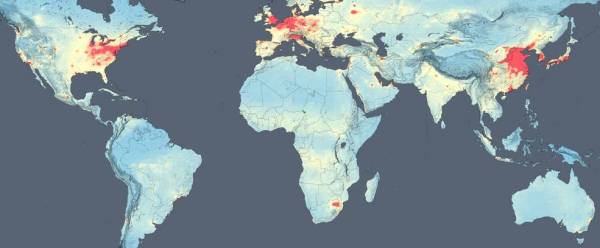
Spacecraft orbiting Earth can provide global views of the ebb and flow of different types of air pollution, but getting down to the local scale where people live and breathe can be a challenge. This map shows concentrations of nitrogen dioxide in the lower atmosphere as detected by the Ozone Monitoring Instrument aboard the Aura satellite. Credits: NASA

Air pollution causes an estimated 152,000 deaths a year across the Americas and more than 2 million deaths in the Western Pacific, according to the United Nations. Some parts of the world have a detailed view of local air quality from ground sensor networks and forecast models that generate public alerts. But for much of the world this type of information and warning are not available.

Space offers a tantalizing global solution.

Spacecraft orbiting Earth hundreds or thousands of miles away with instruments to track pollutants – the way weather satellites watch clouds and storms – could benefit people worldwide. And if scientists had the global facts about air pollution and could better unravel the complex ebb and flow and mixing of pollutants from different sources, there would be a more solid scientific foundation for smart strategies to cut air pollution.

NASA and other spacefarers are working toward just such a future, but it’s not a simple job.

NASA took its first steps to probe the composition of Earth’s atmosphere in the 1970s, capitalizing on its success building weather satellites and exploring the atmospheres of Venus and Mars. The environmental challenge that drove the agency was the thinning of Earth’s protective ozone layer in the stratosphere.

Detecting clear signs of ozone depletion proved extremely difficult. It demanded rock-solid measurements of minute quantities over a decade or more to observe a trend and ultra-sensitive measurements to determine the cause.

To tackle the problem, NASA built a rigorous in-house science infrastructure to develop new space sensors, fly airborne field experiments to directly sample the atmosphere, conduct laboratory work and comparisons of data from space- and ground-based instruments and develop computational models. This investment paid off, and with new space-based measurements scientists can now see the first signs of the ozone layer healing.

But probing air pollution at the bottom of the atmosphere where people live and breathe was a tougher problem. Ozone, for example, a harmful pollutant, is less than one-tenth as abundant at the surface as it is in the stratosphere where it protects us from the sun’s ultraviolet rays. The satellite instruments NASA has used most to study ozone look down through miles of atmosphere and register the total amount of ozone in the entire column of air beneath below, but they don’t detect exactly where that ozone is.

Scientists can’t directly detect pollution gases and particles with their space instruments. Most sensors work by taking in a jumbled spectrum of light scattered or absorbed when sunlight interacts with molecules and particles. Each pollutant has a unique “spectral” fingerprint that scientists tease out of the atmospheric soup with algorithms they continually fine-tune.

Starting in the 1990s, NASA began producing a wealth of global air quality data from sophisticated new space sensors. With the launch of the Earth Observing System fleet of multi-instrument satellites designed for a broad range of Earth sciences, scientists could document regional trends in carbon monoxide, nitrogen dioxide, sulfur dioxide and particulates. Pollution plumes from cities and forest fires could be seen moving downwind hundreds of miles.

NASA scientists continued to grapple with the inherent difficulties of making these space measurements as reliable as possible, sponsoring global networks of ground sensors and elaborate airborne field experiments to ground-truth the new satellite data.

Since the early 2000s, NASA has partnered with air quality professionals to put this satellite data to work protecting public health.

The U.S. Environmental Protection Agency now routinely incorporates satellite estimates of fine particulate matter (PM 2.5) at the surface into nationwide air quality maps for areas with sparse ground-based monitoring. State air quality managers are using NASA satellite and airborne data and the insights they yield about local pollution conditions to develop more accurate local air quality forecasts and alerts.

NASA is now taking its pursuit of this lethal global health hazard to a new level with a trio of science and technology projects. The first begins next week in the skies over South Korea.

A joint field study by NASA and the Republic of Korea will spend about six weeks collecting data from three aircraft, ground sites, ships and satellites to advance the ability to monitor air pollution more accurately from space. The Korean Peninsula offers a robust natural laboratory for air quality scientists with a mix of sources, including the megacity of Seoul, pollution blown across borders, seasonal fires and desert dust.

Findings from this Korea U.S.-Air Quality (KORUS-AQ) study will play a key role in the development of a new international observing system that will combine ground and space-based sensors with computer models to provide improved air quality assessments.

A constellation of next-generation sensors that will orbit 22,000 miles above Earth – one-tenth the distance to the moon – and provide unprecedented views of major air pollutants across the Northern Hemisphere is being built by NASA, South Korea and the European Space Agency.

The NASA contribution called TEMPO (Tropospheric Emissions: Monitoring of Pollution) will collect hour-to-hour air pollution measurements over North America from a fixed position directly over this hemisphere. The international constellation of three separate sensors is slated to be in operation by 2022.

Just last month NASA gave the green light to a new space mission that targets how airborne particles are harming people in major cities around the world. The MAIA sensor (Multi-Angle Imager for Aerosols) will analyze the sizes, compositions and quantities of particulate air pollution. Scientists will combine that information with public health records to probe connections between particulate pollution and specific health impacts, such as adverse cardiovascular and respiratory diseases and premature deaths.

The work continues on this grand challenge of bringing the vantage point of space to bear on global air pollution. By helping to create a more comprehensive measurement system that combines the unique vantage point from space with ground-based measurements, NASA is contributing its expertise to the long-term improvement of public health around the world from the effects of air pollution.

Source: NASA CSI: On the Trail of a Hazy Global Killer | NASA

Posted in Air Quality, Health Effects of Air Pollution | Tagged , , | Leave a comment

Paris introduces once a month ban on cars in bid to tackle air pollution 

The Champs-Elysees – often described as ‘world’s most beautiful avenue’ – will soon be closed to traffic once a month as the city tackles its air pollution problem.

The famous boulevard, along with four other areas, is one of nine new routes which will be car-free on the first Sunday of every month, joining 13 others already announced as part of the cities ‘Paris Breathes’ campaign.

Another four zones will also be pedestrian-only on Sundays, but just during summer months.

The initiative, which will launch on 8 May – the second Sunday of the month due to a public holiday on 1 May – is part of a drive by Paris mayor Anne Hidalgo to reduce air pollution and smog in the city.

The first Sunday of the month also happens to be the day when the city’s national museums have free entry.

Oliver Hayes, a Friends of the Earth air pollution campaigner, told The Independent: “Paris is in the fast lane in the race to tackle dirty air; from car free days, plans to phase out dirty diesel buses, and restrictions on traffic when congestion is high.”

He suggested London could learn a few lessons from the Paris example. “In London, which suffers some of the worst pollution in Europe, a traffic free day would be a welcome start,” he said.

“But we’re going to need much more than one day to prevent the thousands of early deaths each year caused by air pollution. London’s mayor has the powers to restrict diesel traffic on the worst pollution days. Boris Johnson’s successor must use them.

“The next mayor must also accelerate the conversion of London’s iconic red buses to electric or hybrid vehicles and introduce a much bigger, tougher Clean Air Zone than what’s currently proposed.

“Bad air effects everyone, causing more early deaths than everything other than smoking. As the VW scandal has shown, car manufacturers are not doing anything like enough to curb deadly diesel emissions. At the very least, the Government must introduce a diesel scrappage scheme to help drivers switch to cleaner vehicles.”

Source: Paris introduces once a month ban on cars in bid to tackle air pollution | Europe | News | The Independent

Posted in Air Quality, Europe, France | Tagged , , | Leave a comment

MPs: UK air pollution is a ‘public health emergency’ 

Cross-party committee of MPs says the government needs to do much more to tackle the crisis, including a scrappage scheme for dirty old diesel cars

Air pollution in the UK is a “public health emergency”, according to a cross-party committee of MPs, who say the government needs to do much more including introducing a scrappage scheme for old, dirty diesel vehicles.

The government’s own data shows air pollution causes 40,000-50,000 early deaths a year and ministers were forced to produce a new action plan after losing a supreme court case in 2015.

But the MPs’ heavily critical report, published on Wednesday, says even more action is required to tackle the crisis, such as giving dozens of cities which currently suffer illegal levels of air pollution stronger powers to deter polluting vehicles with charges.

Vehicle exhausts are a major cause of air pollution and the Guardian revealed on Saturday that 97% of all modern diesel cars emit more toxic NOx pollution than the official limit when driven on the road. A less comprehensive government investigation came to a similar conclusions.

In February, UK ministers backed more realistic EU regulations but these still allow new vehicles to emit double the official limit until 2021 and 50% more afterwards. The MPs report says ministers must instead “argue robustly” for lower limits in future.

“The government must act now to tackle this public health emergency,” says the report from the environment, food and rural affairs (Efra) select committee, which is chaired by Conservative MP Neil Parish. “Poor air quality is damaging the UK’s environment and harming the nation’s health: emissions have declined significantly over many decades, but not far enough to prevent the early deaths of 40-50,000 people each year.”

Alan Andrews, a lawyer at ClientEarth which defeated the government in the supreme court in 2015, said: “We’ve been telling the government it needs to act on air pollution for five years. Due to our legal case, the government was ordered to act. Now, almost a year on, a cross-party group of MPs has told the government it must get a grip. It seems there is near unanimous agreement on the need for urgent action from everyone other than the ministers responsible for dealing with our toxic air.”

“It’s time for the government to act in the interests of our health,” said Andrews. “Instead, ministers are championing weak emissions standards for cars and trying to get major air pollutants from agriculture dropped from European laws.”

A spokeswoman for the Department of Environment, Food and Rural Affairs (Defra), which is responsible for air quality, said: “Tackling air quality is a priority for this government and our plans set out how we will achieve this through continued investment in clean technologies and by encouraging the uptake of low emission vehicles.”

She said councils already have the power to charge polluting vehicles though the government was only requiring its use in five cities. The MPs said these powers are neither strong enough nor easy enough for local authorities to use effectively.

ClientEarth previously called the government’s latest plan “an insult to those being made sick and dying from air pollution” and is mounting a new legal challenge.

The MPs’ report adds to mounting pressure for a diesel scrappage scheme to help clean up the roads. It has already been backed by air quality experts at Kings College London, London mayor, Boris Johnson, and another committee of MPs.

The Efra committee says the financial incentives to trade in vehicles should target those older than 10 years old. The government ran a£300m car scrappage scheme in 2009, in order to boost the recession-hit motor industry.

Parish said existing subsidies for clean vehicles were welcome but added: “More action is needed if we are to get older, more polluting diesel vehicles off the road quickly. People need more of an incentive.”

However, the RAC Foundation said taking 400,000 diesel cars of the road with £2,000 incentive could cost £800m but only cut diesel emissions by 3%. Steve Gooding, RAC Foundation director, said: “The big problem is that not only have the oldest diesel cars failed to live up to official environmental standards, so too have many more recent ones.”

The most recent Defra air quality plan includes Clean Air Zones for five cities – Birmingham, Derby, Leeds, Nottingham and Southampton – where councils will impose charges on polluting vehicles to discourage them from coming into city centres. London already has plans for an Ultra Low Emissions Zone to take effect in 2020.

But, referring to other polluted cities, the MPs cited evidence from the Institute for Air Quality Management, which said “if councils were able to solve air quality problems using [existing] powers…. they would have done so already”.

Air pollution involves not only Defra but also transport, health and other departments. However, the MPs report is deeply critical of overall government efforts: “Despite mounting evidence of the costly health and environmental impacts of air pollution, we see little evidence of a cohesive cross-government plan.”

London’s smoggy skyline seen from Richmond park, January 2016.

London’s smoggy skyline seen from Richmond park, January 2016. Photograph: Gill Allen/REX/Shutterstock

It says the group tasked with co-ordinating efforts, led by Cabinet Office minister Oliver Letwin, is seen as “secretive” and “does not publish information on its meetings, outcomes or action plans.”

The MPs’ report also says farmers must step up action to cut pollution. A study in September indicated that the air pollution from farms, which reacts with traffic fumes in cities to produce tiny particles, was the ultimate cause of half the premature deaths.

The MPs said Volkswagen, the company which used cheat devices to fool emissions tests on its vehicles, should pay out to people who bought the cars: “Where proven to have misled customers, the company should pay appropriate compensation.”

Richard Howard, from thinktank Policy Exchange, welcomed the new report, but said: “It could go even further by making the case for wider fiscal reforms – for example changes to road tax and company car tax to dis-incentivise diesels.”

Jenny Bates, Friends of the Earth air pollution campaigner, said: “Dirty air is already the nation’s biggest killer after smoking. The solutions are out there but we need the government to listen to MPs and campaign groups and take more urgent action now.”

Source: MPs: UK air pollution is a ‘public health emergency’ | Environment | The Guardian

Posted in Air Quality, Europe, UK | Tagged , , , , , , , , , , , | Leave a comment

Delhi on top of air pollution list according to WHO report 

A new World Health Organisation (WHO) report says an estimated 12.6 million or (1.26 crore) people are dying each year globally from ‘unhealthy environment’ alone.

Air pollution woes in Delhi and other Indian cities stubbornly refuse to go away. A new World Health Organisation (WHO) report says an estimated 12.6 million or (1.26 crore) people are dying each year globally from ‘unhealthy environment’ alone. This is one of every four casualty across the globe.

Of these, two thirds, or 8.2 million (82 lakh), deaths are from non-communicable diseases (NCDs) such as strokes, heart attacks, cancers and chronic respiratory ailments only.

The lion’s share of this mortality is borne by Southeast Asia, which as per the UNO’s public health wing is seeing 3.8 million deaths annually. India is the largest country in WHO’s denomination of Southeast Asia which also covers Bangladesh, Bhutan, North Korea, Indonesia, Maldives, Myanmar, Nepal, Sri Lanka, Thailand and Timor-Leste.

While fortunately, the overall figure has climbed down from 13 million deaths in the last WHO report in 2006, the devil lies in the detail. It says though “deaths from infectious diseases such as diarrhoea and malaria, arising from poor water and sanitation have declined…those attributable to air pollution, have gone up”.

Predictably, children and elders are the worst-affected. The report says annually, deaths of 1.7 million children (under the age of 5) and 4.9 million adults (between ages 50 to 75) could be prevented through better environmental management. Lower respiratory infections mostly impact children under the age of 5, while older people are impacted by other NCDs, it underlines.

In 2014, a WHO ‘air quality database’ of 1,600 cities and 91 countries declared Delhi as the worst polluted in the world, sparking off a big public debate. It ranked Karachi (117 ug/m3), Dhaka (86 ug/m3) and even Beijing (56 ugm/m3) above Delhi’s air quality level in terms of Particulate Matter 2.5 concentration. PM 2.5 is an ultrafine dust which permeates into the lower lung system, eventually entering the bloodstream and causing asthma, heart attacks and cancer. The WHO standard for it is just 10 ug/m3 annually.

Dr Margaret Chan, WHO Director-General, said, “A healthy environment underpins a healthy population. If countries do not take action to better environments where people live and work, millions will continue to become ill and die too young.” At least 21.8 per cent of the disease burden in Disability-adjusted Life Years (DALYs) was also attributed to environmental factors by the report.

Dr Maria Neira, WHO Director, Department of Public Health, Environmental and Social Determinants of Health, commented, “By 2050, the proportion of people living in cities is expected to grow to two in three people. Cities are not known as healthy places. Heavy traffic, limited green spaces, air pollution, noise and violence all deteriorate our health. ”

She highlighted, “Many cities have already begun devising strategies to reduce environmental risk. In 2011, the City of Cape Town, South Africa, launched a new bus rapid transit system called MyCiti. It connects to a network of cycling paths and upgraded walkways, making it possible to walk or cycle to a bus stop in an integrated fashion.”

Plus, she added, all low- and middle income countries must start using cleaner fuels for cooking. It would result in reductions in acute respiratory infections, chronic respiratory diseases, cardiovascular diseases and burns – all at once. “It would result in millions worth of healthcare savings too,” she pointed out.

Source: Delhi on top of air pollution list according to WHO report : Mail Today, News – India Today

Posted in Air Quality, Asia, India | Tagged , , , | Leave a comment

Going by air pollution data, early morning exercise isn’t a good idea in these four metros

If you think mornings are the best time for outdoor exercise, you’re wrong. Mornings experience the worst air pollution in four Indian cities, according to an analysis of particulate matter 2.5 data from IndiaSpend’s #Breathe air quality sensors, analysed from Bengaluru, Chennai, Delhi and Mumbai between March 15 and April 15.

Bengaluru: Best air quality – midnight

The worst air quality was at 7 am, as PM 2.5 concentrations peaked at 61.54 micrograms per cubic metre of air (μg/m3). The air quality improved as the day wore on, worsening by evening at about 5 pm, reaching a late evening high at 7 pm (57.60 μg/m3). The best air quality was registered around midnight, when PM 2.5 levels fell as low to 40.12 μg/m3.

Chennai: Best air quality – 3 pm

The worst air was at 7 am, when PM 2.5 levels (61.54 μg/m3) reached their peak. Levels began to peak over the night and slide during the day, after 7 am. The best air quality was recorded in the afternoon, at 3 pm, with PM 2.5 levels reaching as low as 20.76 μg/m3.

Delhi: Best air quality – 4 pm

Mornings were the worst time, with PM 2.5 levels reaching as high as 108.16 μg/m3 at 7 am. Air quality gradually improved as the day wore on, registering the cleanest air at 4 pm (22.84 μg/m3). Pollution levels then picked up through the night.

Delhi topped the list of the world’s most polluted cities, according to the World Health Organization.

Mumbai: Best air quality – 5 pm

The worst hour for a Mumbaikar is 8 am, with PM 2.5 levels reaching 48.61 μg/m3; the air started to worsen after 5 am. The best air quality was registered at 5 pm, when PM 2.5 levels were 22.38 μg/m3.

Outdoor air pollution causes 670,000 deaths annually in India, according to this 2014 research paper from the Indian Institute of Management-Ahmedabad.

Air pollution has become a global concern with rising air pollution levels, as outdoor air pollution in cities and rural areas across the world estimated to cause 3.7 million premature deaths in 2012, according to the World Health Organization.

Particulate matter, or PM, is the term for particles found in the air, including dust, dirt, soot, smoke, and liquid droplets. These are classified according to their diameter. Particles less than 2.5 µm (micrometres) are called PM 2.5. They are approximately 1/30th the average width of a human hair. Particles between 2.5 to 10 µm in diameter are called PM 10.

PM 10 and PM 2.5 include inhalable particles that are small enough to penetrate the thoracic region of the respiratory system. The health effects of inhalable PM are well documented, caused by exposure over both the short-term (hours, days) and long-term (months, years). They include: Respiratory and cardiovascular morbidity such as aggravation of asthma, respiratory symptoms, and an increase in hospital admissions; and mortality from cardiovascular and respiratory diseases and from lung cancer.

There is good evidence of the effects of short-term exposure to PM 10 on respiratory health, but for mortality, and especially as a consequence of long-term exposure, PM 2.5 is a stronger risk factor than the coarse part of PM 10.

There is a close relationship between exposure to high concentrations of small particulates (PM 10 and PM 2.5) and increased mortality and morbidity from cardiovascular/respiratory diseases and cancer, both daily and over time, according to the WHO.

Source: Going by air pollution data, early morning exercise isn’t a good idea in these four metros

Posted in Air Quality, Asia, India | Tagged , , , , , , , | Leave a comment

Diesel cars’ emissions far higher on road than in lab, tests show 

UK inquiry after Volkswagen scandal finds much higher nitrogen oxide levels than when vehicles are tested in laboratory

Diesel cars are producing many times more health-damaging pollutants than claimed by laboratory tests, with some emitting up to 12 times the EU maximum when tested on the road, according to a government investigation undertaken following the Volkswagen scandal.

A Department for Transport (DfT) study of cars made by manufacturers such as Ford, Renault and Vauxhall found there was a vast difference in nitrogen oxide emissions measured in the laboratory and under normal driving conditions.

Not a single car among 37 models tested against the two most recent nitrogen oxide emissions standards met the EU lab limit in real-world testing, with the average emissions being more than five times as high.

However, the DfT said it had found no vehicles outside the VW group with systems in place to deliberately rig emissions figures. Robert Goodwill, the junior transport minister, said: “Unlike the Volkswagen situation, there have been no laws broken. This has been done within the rules.”

The minister denied that the findings meant the current emissions testing regime was a farce. “But certainly I am disappointed that the cars that we are driving on our roads are not as clean as we thought they might be. It’s up to manufacturers now to rise to the real-world tests and the tough standards we’re introducing,” he said.

The DfT exercise was ordered after it emerged that Volkswagen had allegedly used technology to cheat emissions tests. It measured Nox, or nitrogen oxide emissions. Nitrogen oxide helps to form ozone smog that can badly affect people with chest conditions such as asthma.

The tests were carried out by a team led by Ricardo Martinez-Botas, professor of mechanical engineering at Imperial College London. Among the vehicles tested were 19 models that meet the latest Euro 6 limit of 80mg/km NOx emissions in laboratory tests. Euro 6 was introduced for all new cars sold after September last year.

When driven in a real-world simulation of urban, rural and motorway travel, the average was nearer to 500mg/km, with some cars getting close to 1,100mg/km.

Among the new models tested that are meant to comply with the Euro 6 standard were the Ford Focus, which had a real-world emission about eight times above the EU limit, the Renault Megane, whose emissions were more than 10 times higher, and the Vauxhall Insignia, almost 10 times higher.

Officials stressed that comparisons directly between models was unfair as they were all tested on different days, with varying temperatures and road conditions.

The study also revealed that none of the 37 top-selling vehicles that were claimed to have met the previous Euro 5 limit of 180 mg/km, in place from 2009 until last year, stayed within that legal level when driven in the road.

The models tested represented 50% of all diesel cars on the roads sold from 2010 to 2015, the report said.

The results do not mean any of the manufacturers other than Volkswagen have potentially broken any laws, because the only legal standard currently is to meet the lab requirement.

In the US it emerged that the of nearly 600,000 Volkswagen vehicles rigged to cheat on diesel emissions tests will have the option to have their cars fixed or bought back by Volkswagen, a federal judge said on Thursday.

VW may have to spend more than $10bn to comply with the agreement it has struck with the US Justice Department, according to analysts and sources briefed on the deal. The German carmaker admitted in September using sophisticated secret software to cheat exhaust emissions tests.

Industry experts said the car industry faced a crisis similar to recent banking scandals. David Bailey, professor of industry at Aston University, said the government, manufacturers and regulators needed to act on the results of the study.

“I liken this to the Libor crisis in banking. There is a fundamental question of confidence in the industry,
” Bailey said. “Clearly the testing regime needs to more accurately reflect the real world. That is not happening at the moment, not just in terms of nitrogen oxide but fuel efficiency. There is also an issue of accountability and openness for manufacturers in terms of what they put into public domain.”

In the wake of the tests, the government has promised to introduce new “real driving emissions tests” from next year. Initially, manufacturers will be able to sell cars that produce slightly over double the 80mg/km limit on the roads, but from 2020 this will fall to the actual limit.

The report found big variations depending on outside temperatures, with engines producing more emissions when it was cold.

Manufacturers told the DfT that devices to reduce emissions, called exhaust gas recirculation, tended to switch off when it was cold to protect the engine. This partly explained the lower lab emission readings, as these were taken at temperatures of about 20C.

The transport secretary, Patrick McLoughlin, said car manufacturers needed to take action. “Following the Volkswagen emissions scandal, the whole of the automotive industry must work hard to restore public trust by being transparent about the systems they employ and advancing plans for introducing cleaner engine technology.”

He added: “I’m disappointed the results are as bad as they are. We expected them to be different by a factor of maybe 0.5 or two on the road compared to the lab, but the levels are disappointingly high – industry needs to raise its game.”

The Society of Motor Manufacturers and Traders (SMMT), which represents the auto industry, said it backed the new real-world tests. A spokesman said: “The differences between the results from official laboratory tests and those performed in the real world are well known, and industry acknowledges the need for fundamental reform of the current official test regime, which does it no favours.

“SMMT and industry support the introduction of the proposed new and more onerous test, which will help to reflect better real-world driving.”

Friends of the Earth said properly stringent standards would take too long to come into force, with tens of thousands of people a year dying early because of poor air quality. “This confirms what experts have been saying for years: deadly emissions are far higher in the real world than in controlled tests in the lab,” said Oliver Hayes, from the group.

Jaguar Land Rover said its customers should be confident that its cars were “fully compliant with all current emissions legislations”. It added: “The results demonstrate that Jaguar Land Rover does not use any cheat devices or software. Jaguar Land Rover recognises that there is a difference between lab and real-world test results. We fully support the move towards real-world testing and the greater clarity this will bring for our customer.”

Mercedes said its vehicles had been “certified and licensed in accordance with the applicable legal requirements”. Vauxhall said it “welcomes the clarity provided by the report from the UK government”.

A Vauxhall spokesman added:
“Vauxhall is actively engaged in the discussion on RDE (real driving emissions). We strongly believe that the industry has to regain trust by increasing the transparency with customers and authorities, and we have taken definitive steps in this direction.”

Source: Diesel cars’ emissions far higher on road than in lab, tests show | Business | The Guardian

Posted in Air Quality, Europe, UK | Tagged , , , | Leave a comment

VW reaches US deal in emissions scandal 

Volkswagen will offer “substantial compensation” and car buy-back deals in the US as part of a settlement of the the diesel emissions scandal.

Final details of the packages offered will be announced in June, but a court had given VW and regulators until Thursday to reach a deal in principle.

Last year, US regulators discovered that VW cars were fitted with software that could distort emissions tests.

The German giant subsequently said 11 million cars worldwide were affected.

‘Substantial’ compensation

Details of the preliminary agreement were announced in a California court. US district court Judge Charles Breyer said the settlement would include a buyback offer for nearly 500,000 2.0-litre vehicles.

He did not give details of how much car owners would offered in compensation, but said the deal between Volkswagen, the US government and private lawyers would be “substantial”.

Judge Breyer said VW would also pay into an environmental fund and commit other money to promote green car technology.

Volkswagen told its shareholders last year it had set aside $7.3bn to help defray the potential costs of a recall or regulatory penalties, but that figure could rise. The company faces as much as $20bn in fines for Clean Air Act violations alone.

Analyst Marc-Rene Tonn, at Warburg Research, estimated the direct financial impact on Volkswagen from the emissions scandal worldwide was $32.3bn.

The US settlement could influence what happens in Europe and in other countries, Mr Tonn said. “Very generous payments to US customers may add to some greediness here, too.”

Emissions cheating

Volkswagen installed software in the diesel engines to detect when they were being tested and cheat the results. Some models could have been pumping out up to 40 times the legal limit of the pollutant, nitrogen oxide, regulators disclosed.

“Volkswagen is committed to winning back the trust of its customers, its dealers, its regulators and all of America,” said VW lawyer Robert Giuffra. The agreements are “an important step forward on the road to making things right,” he added.

The firm said in a statement that it “intends to compensate its customers fully and to remediate any impact on the environment from excess diesel emissions”.

It said a deal in principle had been reached with the Justice Department, the Environmental Protection Agency and the California Air Resources Board.

It added that it had “reached an agreement on the basic features of a settlement with the class action plaintiffs in the lawsuit in San Francisco. This agreement will be incorporated into a comprehensive settlement in the coming weeks”.

The deal announced on Thursday covers mostly 2-litre vehicles. Judge Breyer said he expects an agreement between VW and regulators covering about 90,000 larger vehicles and SUVs to be addressed “expeditiously”.

Source: VW reaches US deal in emissions scandal – BBC News

Posted in Air Quality, USA & Canada | Tagged , , , , | Leave a comment

More than half US population lives amid dangerous air pollution, report warns 

American Lung Association’s ‘state of the air’ report finds 166 million Americans are living in unhealthy ozone or particle pollution with serious health risks

More than half of the US population lives amid potentially dangerous air pollution, with national efforts to improve air quality at risk of being reversed, a new report has warned.

A total of 166 million Americans live in areas that have unhealthy levels of either ozone or particle pollution, according to the American Lung Association, raising their risk of lung cancer, asthma attacks, heart disease, reproductive problems and other ailments.

The association’s 17th annual “state of the air” report found that there has been a gradual improvement in air quality in recent years but warned progress has been too slow and could even be reversed by efforts in Congress to water down the Clean Air Act.

Climate change is also a looming air pollution challenge, with the report charting an increase in short-term spikes in particle pollution. Many of these day-long jumps in soot and smoke have come from a worsening wildfire situation across the US, especially in areas experiencing prolonged dry conditions.

Six of the 10 worst US cities for short-term pollution are in California, which has been in the grip of an historic drought. Bakersfield, California, was named the most polluted city for both short-term and year-round particle pollution, while Los Angeles-Long Beach was the worst for ozone pollution.

Small particles that escape from the burning of coal and from vehicle tail pipes can bury themselves deep in people’s lungs, causing various health problems. Ozone and other harmful gases can also be expelled from these sources, triggering asthma attacks and even premature death.

People at Risk In 25 US Cities Most Polluted by Year-Round Particle Pollution

No. Metropolitan Area Total Population Pediatric Asthma Adult Asthma CV Disease
1 Bakersfield, CA 874,589 22,811 47,274 39,611
2 Visalia-Porterville-Hanford, CA 608,467 16,490 32,302 27,286
3 Fresno-Madera, CA 1,120,522 28,482 61,434 54,190
4 Los Angeles-Long Beach, CA 18,550,288 391,452 1,093,121 981,745
5 El Centro, CA 179,091 4,527 9,863 8,897
6 Modesto-Merced, CA 798,350 19,952 44,214 39,399
6 San Jose-San Francisco-Oakland, CA 8,607,423 166,204 523,893 488,003
8 Pittsburgh-New Castle-Weirton, PA–OH–WV 2,653,781 55,262 210,546 218,588
9 Harrisburg-York-Lebanon, PA 1,239,677 29,398 95,249 94,211
10 Louisville/Jefferson County-Elizabethtown-Madison, KY–IN 1,498,593 35,700 134,900 132,990
11 Cleveland-Akron-Canton, OH 3,497,851 79,634 296,253 285,478
12 Philadelphia-Reading-Camden, PA–NJ–DE–MD 7,164,790 164,662 520,226 491,940
13 Indianapolis-Carmel-Muncie, IN 2,353,935 46,418 190,921 157,184
14 Cincinnati-Wilmington-Maysville, OH–KY–IN 2,208,450 55,681 186,179 168,576
14 Altoona, PA 125,955 2,803 9,732 10,387
16 Houston-The Woodlands, TX 6,686,318 126,257 322,667 362,663
16 San Luis Obispo-Paso Robles-Arroyo Grande, CA 279,083 4,486 17,852 18,081
16 Lancaster, PA 533,320 13,929 39,794 39,175
16 Johnstown-Somerset, PA 213,950 4,396 16,796 18,455
20 Detroit-Warren-Ann Arbor, MI 5,315,251 123,521 448,280 401,894
21 Erie-Meadville, PA 365,618 8,598 28,186 27,596
22 Birmingham-Hoover-Talladega, AL 1,317,269 40,271 96,700 119,939
23 Little Rock-North Little Rock, AR 902,443 19,823 60,518 83,498
23 Fairbanks, AK 99,357 2,205 5,999 3,875
23 Wheeling, WV–OH 145,205 2,779 12,814 15,016
SOURCE: American Lung Association, State of the Air 2016

It isn’t all bad news – the total number of unhealthy air days has fallen and year-round particle pollution has dropped as old diesel engines are retired and coal-fired power plants are cleaned up. The federal Clean Air Act, established in 1970, is credited with cleaning up many US cities that were previously blighted by harmful smog. According to the Environmental Protection Agency, the legislation will have saved around 4.2 million lives by 2020.

But environmental groups have warned that some members of Congress are actively attempting to weaken the Clean Air Act. A bill backed by the Republican presidential candidate Ted Cruz would prevent the federal government from regulating various toxins under the Clean Air Act. Republicans have also objected to the act being used to reduce greenhouse gas emissions, prompting a US supreme court challenge to the Clean Power Plan.

“There are wide-ranging extreme measures to undermine the Clean Air Act,” said Paul Billings, senior vice-president for advocacy at the American Lung Association. “If we roll back and weaken these protections, the health consequences will be dire.

“We’ve certainly seen dramatic improvements in air quality but far too many cities and counties exceed levels where adverse effects occur. Progress should be faster. Americans deserve to breathe clean air and there’s still a lot of work to be done.”

Billings said more needed to be done to prevent pollution from wood stoves and from oil and gas extraction.

Source: More than half US population lives amid dangerous air pollution, report warns | Environment | The Guardian

Posted in Air Quality, USA & Canada | Tagged , , , , , , , , , , | Leave a comment