UK government accused of pursuing ‘gimmicks’ to tackle air pollution 

Green lawyers criticise government after it emerged experts were commissioned to explore whether high-tech paint could reduce NO2 levels

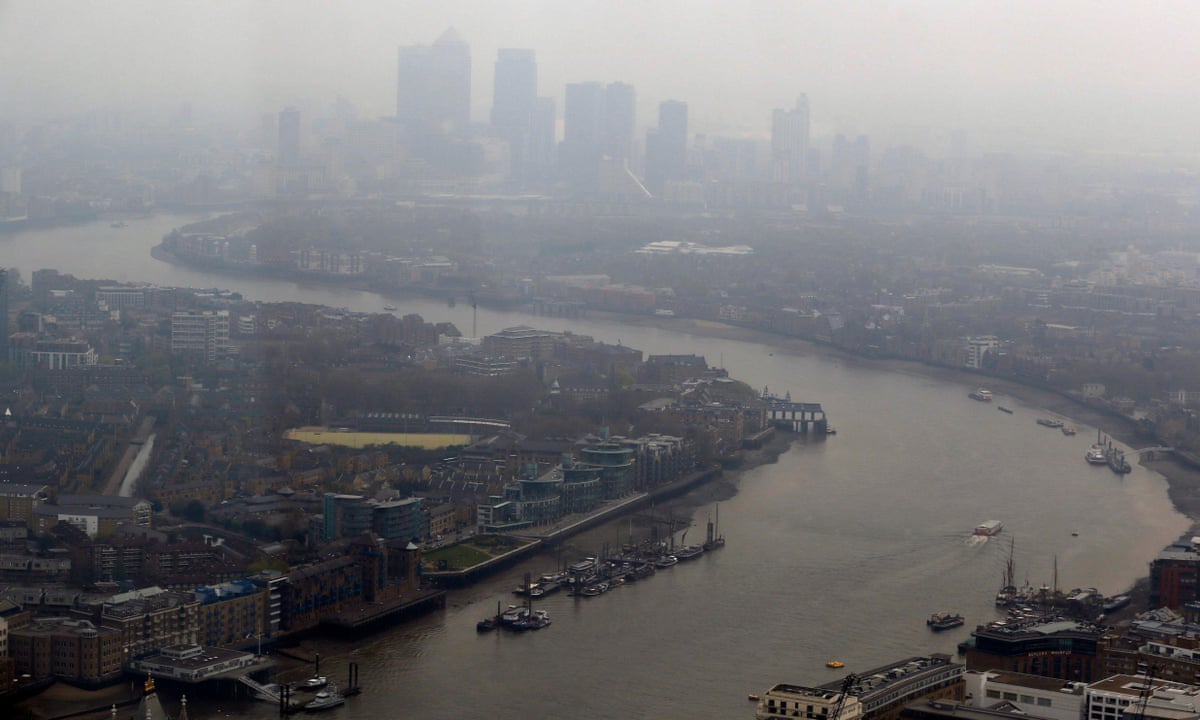
Lawyers have accused the government of pursuing gimmicks to tackle illegal air pollution, after it emerged experts were asked to examine whether high-tech paint could fix the problem.

After losing a legal battle over pollution in the supreme court last year, the environment department last year announced plans for five clean air zones which will not affect nine in 10 vehicles.

But in their search for solutions, officials also commissioned a study by scientists into whether a type of paint could effectively reduce nitrogen dioxide (NO2), a toxic gas produced by diesel vehicles linked to thousands of premature deaths in London alone each year.

The Department for the Environment, Food and Rural Affairs (Defra) said it was unable to provide a figure for the cost of the study because the group that produced it is paid an annual fee for a series of reports.

When exposed to sunlight, titanium dioxide in the paint converts NO2 to a nitrate bound to the surface, which can then be washed off. But the report by the Air Quality Expert Group concluded that the paint would not make a dent in the UK’s pollution problem.

“Taken as a whole, there is little current evidence to suggest the widespread use of photocatalytic surfaces will reduce ambient concentrations of NO2,” the team of experts from King’s College London, University of York and the University of Leeds found after analysing field trials.

The problem, they said, was that the volumes of air that would make contact with the surfaces was not enough to have a significant impact on NO2 levels, which are in breach of European limits in dozens of cities including London, Birmingham, Manchester, Cardiff and Edinburgh.

Even worse, using such paint could have unwanted side effects. “Furthermore, there is a risk that these materials will result in the production of other undesirable species such as nitrous acid and formaldehyde, which can have wider impacts on atmospheric chemistry as well as adverse health impacts,” the authors wrote in the report, which was quietly published in April.

Such an approach was much harder than tackling emissions at the tailpipe, they said. “Compared with emissions source control, reducing emissions once diluted in the atmosphere is challenging.”

Alan Andrews, a lawyer at ClientEarth, which won the supreme court case and is taking the government to court again, said: “Research should be focused on cutting air pollution at source, not on gimmicks which seek to treat the symptoms but not the causes of Britain’s air pollution crisis. The government is desperately trying to avoid tackling dirty diesel vehicles, which is why we’re taking them back to court over their failure to clean up our air.”

MPs, green groups and thinktanks have proposed a range of measures to tackle “public health emergency” of air pollution, including a scrappage scheme for diesel cars, more clean air zones and greener public transport. Paint has not featured in the debate so far.

A Defra spokeswoman said the government was not looking at pursuing paint as part of its air quality plans. “The point of the report was to give us a better understanding of all available options to reduce nitrogen oxides (NOx) [which include NO2],” a spokeswoman said.

Parts of the UK are forecast to suffer moderate air pollution this week, although it is expected to largely clear by Friday.

Source: UK government accused of pursuing ‘gimmicks’ to tackle air pollution | Environment | The Guardian

Posted in Air Quality, Europe, London, UK | Tagged , , , , , , , , , | Leave a comment

Europe’s problem with diesel cars 

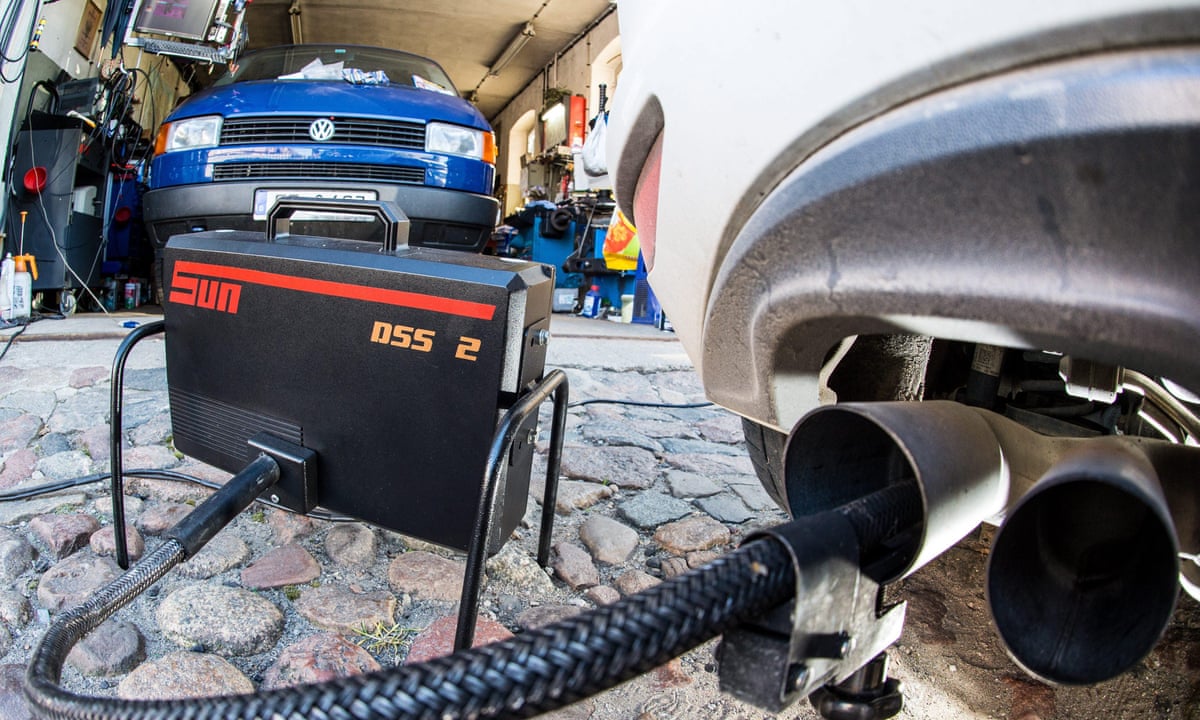
New UK government tests confirm that diesel cars produce a lot more air pollution in real-world driving when compared with the legal tests. Those sold since 2009 emitted six times more nitrogen oxides, on average.

Compared with the stricter standards applied to petrol cars, the average diesel sold between 2009 and 2015 emitted 19 times more nitrogen oxides.

In 2014, more than half of new cars in Europe were diesel, so solving our air pollution problems will not be easy. The Airuse project highlighted the role of taxation in car buying choice. All European countries, except the UK, have lower tax on diesel fuel compared with petrol.

Unsurprisingly, diesel tends to dominate car sales in countries where the fuel is most favoured by taxation: Luxembourg, Belgium, Portugal, Spain, France and Greece – where the ending of a ban on diesel cars in Athens and Thessaloniki in 2011 led to a boom in sales. India recently removed subsidies on diesel, but there is no sign of an end to the European tax incentives.

Airuse also highlighted how the geography of the Mediterranean affects its air pollution, with shipping, dry dusty soils and dense city centres adding to the problems from a high proportion of diesel cars. The UK and other countries surrounding the North Sea and the Channel form one of Europe’s most densely populated areas.

It also contains Europe’s only two mega-cities – London and Paris – which are separated by less than 350km. This makes action on traffic pollution the key to cleaning the air over our region.

Source: Europe’s problem with diesel cars | Environment | The Guardian

Posted in Air Quality, Europe, London, UK | Tagged , , , , | Leave a comment

Smoke prompts air pollution health advisory for Northeastern Minnesota 

Thick smoke and haze in the Northland — from wildfires both in the region and far to the north and west in Canada — has prompted the Minnesota Pollution Control Agency to issue an air pollution health advisory for Northeastern Minnesota through 10 p.m. Saturday.

The advisory includes Duluth, the Iron Range and the North Shore. The smoky haze continued to move across the Northland on Saturday morning.

“Periods of smoke … are expected to persist in this area through Saturday night,” the MPCA reported. “During this time, fine particle pollution is expected to remain near a level that is considered unhealthy for sensitive groups. On Saturday night into Sunday morning, the winds will decrease the movement of smoke into the affected region.”

The MPCA said populations sensitive to fine particles include “those with pre-existing cardiovascular or respiratory disease, the elderly, children, and individuals who participate in activities requiring extended or heavy exertion, both indoors and outdoors.”

People in those groups are encouraged to postpone or reduce vigorous activity, and minimize exposure to air pollution.

Source: Smoke prompts air pollution health advisory for Northeastern Minnesota | Duluth News Tribune

Posted in Air Quality, USA & Canada | Tagged , , , , | Leave a comment

Measuring the airborne toxicants urban bicyclists inhale 

By switching from four wheels to two, bicyclists help reduce traffic and air pollution — all while getting much-needed exercise. But that health benefit could be costly, due to exposure to potentially harmful compounds in motor vehicle exhaust. In a first-of-its-kind study, researchers analyzed breath samples to find out how much of these compounds are absorbed by the body.

By switching from four wheels to two, bicyclists help reduce traffic and air pollution — all while getting much-needed exercise. But that health benefit could be costly, due to exposure to potentially harmful compounds in motor vehicle exhaust. In a first-of-its-kind study, researchers analyzed breath samples to find out how much of these compounds are absorbed by the body. They report their findings in ACS’Environmental Science & Technology.

Previous reports have suggested that cycling in more rural areas and on off-street paths can reduce exposure to traffic-related toxicants. Absorption of compounds in the body — which can lead to deleterious health effects — is not always directly proportional to exposure, say this study’s researchers. It is a complex analysis because pollution levels and the way the human body processes compounds can vary. A few teams have investigated this for bicyclists, and they focused on the analysis of blood, urine and saliva samples from those riding in urban or rural areas. But until now, no one has looked at bicyclists’ absorption of pollutants while riding on multiple types of routes. So, Alexander Bigazzi and colleagues took a more in-depth look at the issue by using breath analysis.

The researchers studied the breath of three cyclists in Portland, Oregon, who rode on off-street bike paths, local streets with lighter traffic and main streets with heavier traffic. They also measured pollution levels in ambient air. Using a pollution detector mounted on the bicycles, the team found that the on-road exposure levels (above the urban background) of volatile organic compounds, a kind of pollution, were 100 to 200 percent higher when the cyclists took routes through high-traffic or industrial areas as compared to low-traffic or off-street routes. Using breath analysis, the team found that absorbed compounds were 40 to 100 percent higher in these situations. The study confirms that people can reduce their exposure and absorption of these toxicants — and potentially mitigate their health effects — by riding farther away from city traffic.

Source: Measuring the airborne toxicants urban bicyclists inhale — ScienceDaily

Posted in Air Quality, Cycling, Health Effects of Air Pollution, Sports | Tagged , , , | Leave a comment

Alberta wildfire smoke making its way into Saskatchewan 

Smoke from the raging fire in Fort McMurray has moved into Saskatchewan, producing low visibility in some areas.

Environment Canada issued special air quality statements for parts of the province, saying northwest winds are spreading smoke from wildfires in northeast Alberta into portions of western and central Saskatchewan.

As of 7 p.m. Thursday, the following areas were at risk.

  • Cluff Lake Mine
  • La Loche and Clearwater River Prov. Park
  • Buffalo Narrows and Peter Pond Lake
  • Île à la Crosse and Beauval
  • Green Lake
  • R.M. of Beaver River including Pierceland and Goodsoil
  • R.M. of Big River including Big River and Chitek Lake
  • R.M. of Loon Lake including Loon Lake and Makwa
  • R.M. of Meadow Lake including Waterhen Res.

The statement said smoke near the ground is causing very high health risk conditions.

The agency warns people might experience symptoms such as increased coughing, headaches or shortness of breath.

Those most at risk include children, seniors, and those with cardiovascular or lung disease, such as asthma and COPD.

Environment Canada encourages people to check local weather forecasts and alerts in the coming days to know when extra care will be needed.

Saskatoon and Regina are noted as being at moderate risk for impacted air quality.

Meteorologist John Paul Cragg said winds will bring the smoke into southern Saskatchewan near Saskatoon Thursday afternoon and push it to Regina by the end of Friday.

“By the time it makes it to Saskatoon, it looks like it will have dissipated enough that it won’t cause a lot of air quality issues,” he said.

Skies in Saskatoon will be hazy and it is still recommended that people with lung diseases or extreme breathing problems check Environment Canada before heading outside.

Source: Alberta wildfire smoke making its way into Saskatchewan | News Talk 650 CKOM

Posted in Air Quality, USA & Canada | Tagged , , , , | Leave a comment

Canadian wildfire smoke on course to reach Minnesota by Thursday

Smoke from a wildfire rises in the air as cars line up on a road in Fort McMurray, Alberta, Tuesday, May 3, 2016. At least half of a northern Alberta city was ordered evacuated Tuesday as a wildfire whipped by winds engulfed homes and sent ash raining down on residents.

Smoke from a massive wildfire in Alberta is at Minnesota’s doorstep, meaning the dimmer switch on the sun will be dialed down a touch come Thursday.

The wildfire has been burning since Sunday, some 1,400 miles to the northwest of the Twin Cities in and around Fort McMurray, forcing tens of thousands of Canadians to flee their charred neighborhoods.

Drifting smoke already hovers over much of North Dakota.

Next in line is Minnesota, according to the National Weather Service in Chanhassen.

“You can see it drifting in to northern Minnesota later tonight,” based on the Weather Service’s computer models, said meteorologist Michelle Margraf.

By Thursday, much of Minnesota will be under a smoky blanket, but the tangible impact should be limited.

“A dimming of the sun slightly,” Margraf said, “that’s primarily what we’re looking at.”

“It won’t linger for days and days,” Margraf added, and it should dissipate by Friday.

Because the smoke is expected to stick to the higher elevations of the atmosphere, officials said, people likely won’t notice any health or odor issues.

Steve Mikkelson, spokesman for the Minnesota Pollution Control Agency, said, “There are no indications yet” that the air folks in Minnesota breathe will be affected, “but that could change from day to day.”

Source: Canadian wildfire smoke on course to reach Minnesota by Thursday – StarTribune.com

Posted in Air Quality, USA & Canada | Tagged , , , , , , | Leave a comment

Air pollution warnings issued as UK temperatures set to soar 

Hot weekend means people with lung or heart problems should avoid outdoor strenuous activity, warns Defra

The government has issued air pollution warnings as temperatures are set to climb towards 27C (more than 80F) in south-east England and the Midlands on Sunday.

The warm weather, which threatens to be hotter than in parts of the Mediterranean, may be accompanied by moderate air pollution, with some local hotspots. Small areas in south-west England and western Scotland could be at higher risk by Sunday.

Defra, the department responsible for official pollution warnings, said those with lung or heart problems who experience symptoms should consider avoiding strenuous activity, particularly outdoors.

A Defra spokesman said: “Strong south-easterly winds blowing in air from the continent could lead to moderate levels of pollution on Thursday and over the weekend in parts of England and Wales. Levels are expected to fall after the weekend.

“This does tend to happen during the change in the temperature around spring time.” Defra said air pollution can cause long- and short-term health problems for those with heart, lung and other breathing conditions.

The Met Office says rain, mainly in northwestern areas leading up to the weekend, could also become more widespread as temperatures rise, with thundery showers in areas such as the east Midlands.

“It is going to be difficult to predict because showers can develop quite quickly in almost any area,” said forecaster Grahame Madge. By Sunday temperatures over 25C are possible. “It will feel a very warm day, particularly as April was relatively cold, so people will notice the contrast.”

Temperatures were likely to be highest in the south-east away from the coast, but they would not be anywhere near May records. These reached 32.8C in a number of places including Regent’s Park in London and Tunbridge Wells on 29 May 1944, just over a week before D-Day.

Source: Air pollution warnings issued as UK temperatures set to soar | UK news | The Guardian

Posted in Air Quality, Europe, London, UK | Tagged , , , , | Leave a comment

Polluted air may up risk of many cancers

For elderly people in Hong Kong, long term exposure to fine-particle air pollution is tied to an increased risk of dying from many cancers, including breast, liver and pancreatic cancer, in addition to the expected lung cancer risk, according to a new study.

“We assumed a number of sites would be affected, but outside of the expected lung and upper GI cancers, we were unsure which cancers would show an association, so this really helps highlight the breadth of involvement of particulates in the development of cancer,” said co-lead author G. Neil Thomas, from the Institute of Applied Health of the College of Medical and Dental Sciences at The University of Birmingham in the UK.

Ultrafine particles can pass into the blood stream and have the potential to impact any part of the body, Thomas told Reuters Health by email.

The researchers began following more than 66,000 people age 65 and older in Hong Kong between 1998 and 2001 and tracked them through 2011. They used satellite data and site monitors to estimate fine particulate matter in the air at the subjects’ homes.

They focused on fine particulate matter, or PM2.5, which is produced by motor vehicles, power plants and other industrial combustion, according to the U.S. Environmental Protection Agency.

After accounting for smoking status, the researchers found that as a subject’s home exposure to fine particles in the air increased, so did the risk of dying from any cancer, including cancer of the upper digestive tract, liver, bile ducts, gall bladder and pancreas.

As fine particulate concentrations increased by 10 micrograms per cubic meter, a woman’s risk of dying from breast cancer increased by 80 percent, while a man’s risk of dying from lung cancer increased by 36 percent, according to a report released by the journal Cancer Epidemiology, Biomarkers & Prevention.

“Biologically there is no reason to suggestion such observations wouldn’t apply to younger people,” Thomas said. “It is important though to remember that cancers are chronic diseases and thus it takes years between the exposure to the particulates to the development of a diagnosable cancer.”

Data from other populations and countries has been similar, he said.

According to the Clean Air Act in the U.S., the average annual concentration of fine particulate matter in the air should be 15 micrograms per cubic meter or lower. In Hong Kong, average annual particulate matter should not exceed 35 micrograms per cubic meter according to the Air Pollution Control Ordinance.

“In Hong Kong the PM2.5 concentrations are not comparable to those in North America or Europe,” said Giulia Cesaroni of the epidemiology department of the Regional Health Service of the Lazio Region in Rome, Italy, who was not part of the new study. “The (World Health Organization) suggested a limit value of 10 micrograms per cubic meter for PM2.5, and study participants are exposed to a mean value of 34 micrograms per cubic meter.”

“However, associations between air pollution and cancer risk have been found in other settings at low concentrations,” Cesaroni said.

The EPA provides air quality index forecasts for the U.S. at airnow.gov.

Particulate matter can cause cancer because it often contains toxic chemicals and causes inflammation, among other mechanisms, Cesaroni told Reuters Health by email.

“At an individual level the strongest risk factors for cancer are smoking and diet,” she said. “However, at a population level, given the wide distribution of exposure, even a small increase in risk can result in a large number of cases.”

Pollution also increases the risk of cardiorespiratory disease, Thomas said.

“The risk is not as great as that from smoking tobacco (and quitting greatly improves health of those smoking and those exposed to the second hand smoke) but is clearly present,” he said.

Source: Polluted air may up risk of many cancers | Reuters

Posted in Air Quality, Health Effects of Air Pollution | Tagged , , , , , , , | Leave a comment