Air pollution is damaging to mental health

Earth Day helps create awareness on how environmental issues affect us all. And one of the biggest challenges we face today is the health effects brought by airborne pollution.

Every year, the region’s air is choked by the haze. The haze last year was one of the worst on record.

Cities in Sumatra and Kalimantan saw more than 500,000 cases of acute respiratory tract infections have been reported between July and October.

The region’s Pollutant Standard Index ( PSI ) reached close to 2,000. Anything above 300 is considered hazardous.

Although the health effects of air pollution are apparent, less known is the psychological effect it has on our behavior and consequently our performance in the workplace.

In our study we focused on a behavioral theory known as ego depletion — the idea that an individual’s self-control draws upon a limited pool of mental resources; one that can be used up and needs opportunities to restore.

Air pollution can drain our self-control resources psychologically, causing a range of conditions including insomnia, feelings of anxiety or even depression.

Through a diary-based study of 161 full-time employees in various industries, our research examined how pollution affects two kinds of behavior — organisational citizenship behaviour and counterproductive workplace behaviour.

Organisational citizenship behaviour relates to employee actions that contribute towards the functioning of the firm, but are optional and not specifically part of their job.
These include an individual’s willingness to help others or to engage with their team beyond their job scope.

Counterproductive behaviour is the opposite. These include working on personal matters during work hours, as well as rudeness, hostility or even outright bullying towards colleagues.

We asked participants for their perception of pollution levels, their level of mental resource depletion as well as organizational citizenship and counterproductive workplace behaviours.

There was a clear link between high air pollution and decreased levels of organisational citizenship behaviour.

We also observed that increased pollution saw a corresponding and marked increase in counterproductive workplace behaviour.

We found that air pollution leads to a decrease in self-control resource, which in turn leads to increased counterproductive and decreased organisational citizenship behaviours.

Specifically the data gathered showed that the severity of air pollution accounted for an average of around 10 percent of an individual’s daily self-control resource depletion.

The impact of air pollution makes us less giving or engaged at work and more deviant.

In line with ego depletion theory it is apparent that both the direct physiological impact of air pollution and the individual’s own perception of its severity act to deplete resources affecting self-control.

A worker may experience little or no health effects from pollution while another in the same office may suffer badly.

Likewise one individual’s perception of what constitutes “severe” pollution may be very different from another.

An essential factor in determining an individual’s ability to manage the effects of drained self-control resources is the support they receive — or feel they receive — from those around them. For example, demonstrations of active support from the firm can go some way to replenish an employee’s mental resource pool.

Indeed our study also found that the negative effects of air pollution on employees’ behaviour were mitigated when organisational support was high — i.e. when the employee perceived that their supervisor or firm was concerned for their well-being.

There were firms that were supportive by providing additional work breaks or the option to work from home on high pollution days, or they may provide easier and better access to healthcare.

While this favours the argument that firms should do all that they can to support employees exposed to severe air pollution, all of this comes with a cost to the firm.

The worse the pollution gets, the higher the costs multiply for business — so at a broader level the best option would obviously be if there were no pollution at all.

Unfortunately the cost of pollution to Indonesia’s economy is huge.

In October last year, the Indonesian government estimated that the financial damage to its country could cost as high as US$35 billion (S$47.9 billion).

According to a World Bank study, for just the two months of February and March in 2014, the forest fires that caused the haze cost the Riau province S$935 million of lost productivity and trade.

By conducting studies like ours, we can better understand the true social and economic implications of pollution, and in turn add weight to the financial argument for stronger and more effective policies to tackle pollution at source.

Source: Air pollution is damaging to mental health: The Jakarta Post columnist , SE Asia News & Top Stories – The Straits Times

Posted in Air Quality, Asia | Tagged , , , , , , , | Leave a comment

On a Scale of 1 to 10, the Air Pollution in Fort McMurray is a 38 

It’s been almost two weeks since a monster fire took a nasty turn in Fort McMurray Alberta, and the air quality is so bad that it will likely delay the return of residents.

At a press conference on Monday, Alberta premier Rachel Notley said that on a scale of one to 10 that the province usually uses to measure the quality of air — 10 being the worst — Fort Mac read 38 that morning.

The index measures contaminants, smoke, ozone, and nitrogen dioxide.

“It is clear that this is something that could potentially delay recovery work and a return to the community,” Notley said at a news conference.

The reading means that officials are limiting the working hours of their staff in the city, and making use of proper face masks.

According to the province’s Air Quality Health Index, only Fort McMurray registers above 10, and it is expected that the air quality will remain that high for the next few days.

The Environment ministry is recommending that residents in the area avoid physical activities outdoors, especially children and the elderly.

The fires are also affecting other communities nearby. In nearby Fort McKay — just north of Fort McMurray where evacuees displaced by the fire have felt shelter, but which is itself facing a voluntary evacuation order — the air quality index currently sits at seven. The forecast, however, expects that the smoke will push that metric past 10 in that community as well. There is a similar forecast for Anzac, which is just south of the fires.

By comparison, Calgary and Edmonton — Alberta’s two largest cities — have scores of three and five, respectively.

The Fort McMurray wildfire, which forced more than 80,000 people to flee and fan out across the province, is now about 285,000 hectares and only 10 to 12 kilometers from the border of Saskatchewan. All told, there are 15 fires burning across the province, including one northwest of Edmonton near Fox Creek and a gas plant that forced another evacuation. Almost 2,000 firefighters are out battling all the blazes, with 161 helicopters, 29 air tankers and 377 pieces of heavy equipment.

Notley noted that the “fire conditions are really as bad now as they were on the first day of the fire and we expect a lot of fire activity today.”

Source: On a Scale of 1 to 10, the Air Pollution in Fort McMurray is a 38 | VICE News

Posted in Air Quality, USA & Canada | Tagged , , , | Leave a comment

Glasgow breaches WHO air pollution safety levels 

Glasgow has been named among 11 urban areas in the UK and Ireland which have breached air pollution safety levels.

The city featured in the data published by the World Health Organisation (WHO).

The health body warned poor air quality caused more than three million deaths around the world every year.

A spokeswoman for Glasgow City Council said it took its responsibility to monitor air quality “very seriously” and its data showed it met air pollution targets in 2015.

As air quality declines, the risk of stroke, heart disease, lung cancer, and chronic and acute respiratory diseases, including asthma, increases among residents, WHO said.

One way the global health body assesses air quality is by examining the levels of a type of pollution known as particulate matter (PMs).

Glasgow was one of a number of places which breached the safe limit set for PM10.

Port Talbot, Stanford-Le-Hope, London, Scunthorpe, Leeds, Eastbourne, Nottingham, Southampton and Oxford, as well the town of Longford in Ireland, also exceeded the safe level.

More than 40 towns and cities across Britain and Ireland breached the safe levels for another measure known as PM2.5.

Glasgow and Prestonpans in East Lothian featured on that list.

WHO said that across the world 80% of cities that measure outdoor air pollution are failing to meet its guidance for safe levels of air quality.

Dr Flavia Bustreo, WHO’s assistant director general for family, women and children’s health, said: “When dirty air blankets our cities, the most vulnerable urban populations – the youngest, oldest and poorest – are the most impacted.”

Jenny Bates, Friends of the Earth air pollution campaigner, said air pollution caused 40,000 early deaths a year in the UK.

He added: “This is a public health crisis. It’s time it was treated that way.

“We need fewer and cleaner vehicles with a Clean Air Zone in every city and large town – and politicians must urgently introduce a diesel scrappage scheme to get the worst polluting vehicles off our roads, as well as more investment in alternatives to driving.”

‘Swift action’

Dr Penny Woods, chief executive of the British Lung Foundation, said the report was “deeply concerning”.

“It is clear from this report that the UK is facing an air pollution crisis,” she said.

“Unfortunately, the government’s response so far has been inadequate. Swift action must be taken to reduce pollution levels in the UK and protect our lung health.”

A spokeswoman for Glasgow City Council said: “Glasgow has set a target of being one of the most sustainable cities in Europe and we take our responsibility to monitor air quality very seriously.

“In fact the latest data for air quality in the city shows that both the Scottish Air Quality Objective and WHO target level for the pollutants PM10 and PM2.5 were met across the city in 2015.

“While we have made good progress, we recognise there is more to be done. The council is a key partner in the Scottish government’s Clean Air for Scotland Strategy which is intended to define the path to achieving full compliance with the relevant air quality standards over the next few years.”


A total of 40 towns and cities in the UK and Ireland breached safe levels for fine particles in the air, known as PM2.5, according to WHO.

  • Glasgow
  • Scunthorpe
  • Leeds
  • Eastbourne
  • Salford
  • London
  • Southampton
  • Longford, Ireland
  • Port Talbot
  • Birmingham
  • Stanford-Le-Hope
  • Chepstow
  • Portsmouth
  • Stoke-on-Trent
  • Oxford
  • Thurrock
  • Warrington
  • Armagh
  • Cardiff
  • Bray, Ireland
  • Norwich
  • Leamington Spa
  • Newport
  • Bristol
  • Wigan
  • Manchester
  • York
  • Hull
  • Nottingham
  • Plymouth
  • Swansea
  • Carlisle
  • Prestonpans
  • Liverpool
  • Belfast
  • Londonderry
  • Brighton
  • Galway, Ireland
  • Middlesbrough
  • Birkenhead
  • Saltash
  • Southend
  • Dublin, Ireland

Source: Glasgow breaches WHO air pollution safety levels – BBC News

Posted in Air Quality, Europe, UK | Tagged , , , , , , , , , , , , , , , , , , | Leave a comment

UK accused of trying to undermine EU air pollution targets 

Leaked papers reveal that Tory MEPs were told to support a ‘get-out clause’ in proposed new Europe-wide laws

The British government has been accused of trying to secretly undermine new EU air pollution targets in favour of big business, as leaked papers reveal that Conservative MEPs were told to support a “get-out clause” in proposed laws.

Legislation designed to force member states to strictly limit the emission of sulphur dioxide, nitrogen oxides and ammonia by 2030 is currently being scrutinised in Brussels.

It is recognised by the British government that air pollution is estimated to reduce the life expectancy of everyone in the UK by an average of six months, an effect equivalent to 50,000 deaths a year.

However, it has emerged that the environment minister, Rory Stewart, advised Tory MEPs that the government does not believe that the proposed ceilings on emissions are “proportionate, deliverable and evidence based, and do not impact disproportionately on any one sector”.

In a leaked information note, Stewart insisted that they support an amendment that would give Britain “flexibility” and allow them to “adjust their inventory” if the country looked likely to breach targets because particular sectors were emitting more than had been expected.

The Liberal Democrat MEP Catherine Bearder claimed that the move fundamentally weakened the EU legislation and allowed the British government to ignore the damage done by high-emitting sectors, such as the car industry.

“It seems no lessons have been learnt from the dieselgate scandal. This shameful get-out clause could allow authorities to turn a blind eye while carmakers exceed EU pollution limits all over again,” she said.

“The UK government must enforce the rules to tackle deadly pollution instead of secretly trying to water them down.”

The revelation comes as an independent analysis by the European Environmental Bureau, a Brussels-based coalition of environmental charities, found that weaker pollution limits being pushed for by the British government would lead to about 11,000 additional deaths in the UK by 2030, and an extra 136,000 across Europe.

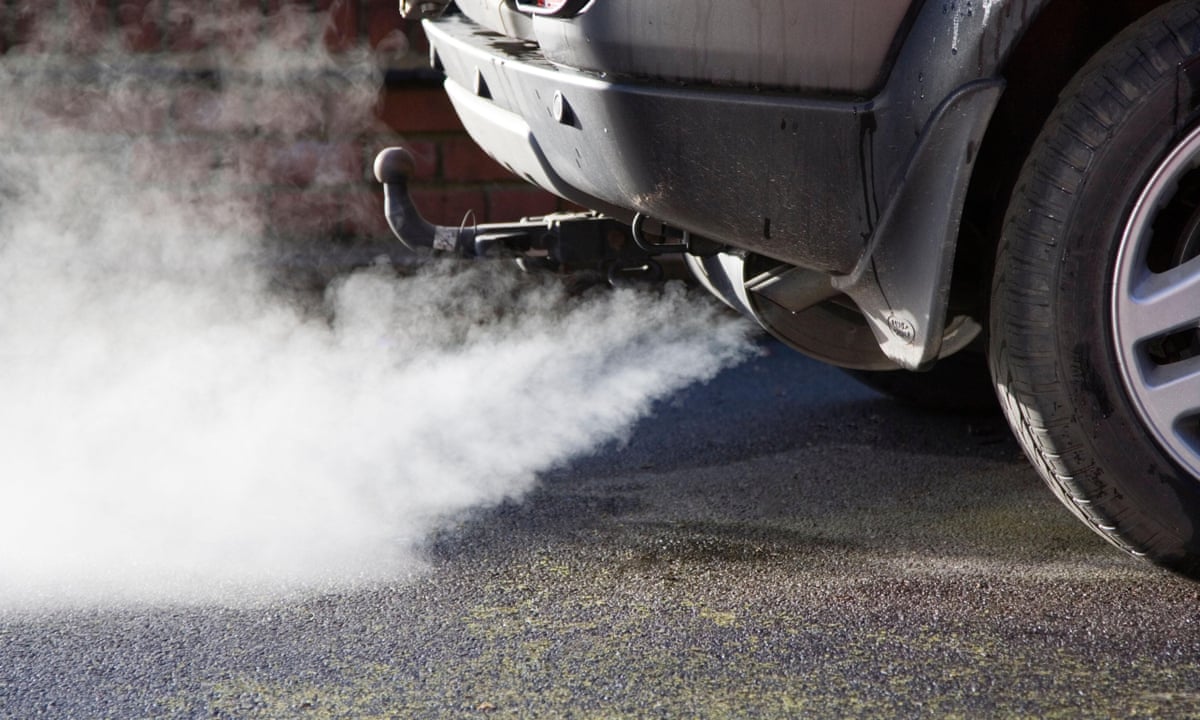
About 29,000 deaths in the UK are currently hastened by inhalation of minute particles of oily, unburnt soot emitted by all petrol engines, and an estimated 23,500 by the invisible but toxic gas nitrogen dioxide (NO2) discharged by diesel engines.

On Thursday, the publication of data from more than 3,000 cities compiled by the World Health Organization found that outdoor air pollution had increased by 8% globally in the past five years, with billions of people around the world now exposed to dangerous air.

Of 52 UK towns and cities included in the UN database, Port Talbot in south Wales, a hub for the UK steel industry, is the most polluted, ahead of London, Glasgow, Southampton and Leeds. The cleanest UK city in the WHO list is Inverness, followed by Bournemouth, Newcastle and Sunderland.

A spokesman for the Department for Environment, Food and Rural Affairs said the amendment to the 2030 national ceilings directive was designed to allow for scientific developments that could not have been foreseen when the limits were set. Defra claimed that under the proposals, member states would be unfairly penalised if there were scientific developments that “change the evidence base upon which ceilings are set”.

“Tackling air pollution is a priority for this government and we are working with EU partners to agree ambitious and realistic emission limits for key air pollutants from 2030,” the spokesman said.

“It is important these limits are based on the best available evidence and member states are not penalised by any new and unforeseen developments in the way emissions are calculated, which could hamper our ability to agree ambitious limits that will lead to long-term improvements in air quality.”

Source: UK accused of trying to undermine EU air pollution targets | Environment | The Guardian

Posted in Air Quality, Europe, UK | Tagged , , , , , , , , , , , | Leave a comment

Air Pollution Linked To Other Cancers, Not Just Lung 

Long-term exposure to ambient fine particulate matter such as PM2.5 has been linked to increased risk of mortality for a range of cancers.

Researchers in Hong Kong have found that long-term exposure to ambient fine particulate matter is associated with increased risk of mortality from many types of cancer in an elderly Hong Kong population. Findings of the study, led by a team from the University of Hong Kong, were published in Cancer Epidemiology, Biomarkers & Prevention.

The present territory-wide study involved local elderly that were followed up for thirteen years. The team of scientists analyzed the risk of mortality from cancers and exposure to ambient fine particulate matter—that is, particles with an aerodynamic diameter of less than 2.5 micrometers, or PM2.5—on almost 67,000 persons aged 65 or above. Particulate matter are particles found in the air, including hydrocarbons and heavy metals produced by transportation and power generation, among other sources.

The population studied was enrolled in the Elderly Health Services Cohort of the Department of Health from 1998 to 2001 and subsequently followed up until 2011. Causes of death were determined based on Hong Kong’s death registry. Annual concentrations of PM2.5 at their residential addresses were estimated using PM2.5 concentrations measured at fixed-site monitors, horizontal-vertical locations, and satellite data.

After adjusting for the factor of smoking, the study showed that the risk of dying from any cancer rose by 22 percent; by 42 percent from cancer in the upper digestive tract; and by 35 percent from accessory digestive organs, which include the liver, bile ducts, gall bladder and pancreas, for every 10 µg/m3 increase in PM2.5.

The rate of increase in PM2.5 was also associated with an 80 percent increased risk of mortality from breast cancer for women, and a 36 percent increased risk of dying of lung cancer for men.

“The study findings are of public health importance, particularly in Asia where air quality is poor and that local data on the long-term health effects of PM2.5 to support policy on air quality management is scarce,” said lead researcher of this study, Honorary Associate Professor Wong Chit-ming.

“Long-term exposure to particulate matter has been associated with mortality mainly from cardiopulmonary causes and lung cancer, but there have been few studies showing an association with mortality from other cancers. We suspected that these particulates could have an equivalent effect on cancers elsewhere in the body,” added co-lead author, scientific officer Dr. Thach Thuan-quoc.

Thach indicated that some possible explanations for the association between PM2.5 and cancer could include defects in DNA repair function, alterations in the body’s immune response, or inflammation that triggers angiogenesis, or the growth of new blood vessels that allows tumors to spread. In the case of the digestive organs, heavy metal pollution could affect gut microbiota and influence the development of cancer, Thach added.

“Further research would be required to determine whether other countries experience similar associations between PM2.5 and cancer deaths, but this study combined with existing research suggests that other urban populations may carry the same risks,” the team said.

“The implications for other similar cities around the world are that PM2.5 must be reduced as much and as fast as possible. Air pollution remains a clear, modifiable public health concern.”

One limitation of the study is that it focused solely on PM2.5. Thach said that emerging research is beginning to study the effects of exposure to multiple pollutants on human health. He also cautioned that pollution is just one risk factor for cancer, and others, such as diet and exercise, may be more significant and more modifiable risk factors.

Source: Air Pollution Linked To Other Cancers, Not Just Lung | Asian Scientist Magazine | Science, Technology and Medicine News Updates From Asia

Posted in Air Quality, Health Effects of Air Pollution, Medical Studies | Tagged , , , , | Leave a comment

Air pollution rising at an ‘alarming rate’ in world’s cities 

Outdoor pollution has risen 8% in five years with fast-growing cities in the developing world worst affected, WHO data shows

Outdoor air pollution has grown 8% globally in the past five years, with billions of people around the world now exposed to dangerous air, according to new data from more than 3,000 cities compiled by the World Health Organisation (WHO).

Screen Shot 2016-05-12 at 07.13.23

While all regions are affected, fast-growing cities in the Middle East, south-east Asia and the western Pacific are the most impacted with many showing pollution levels at five to 10 times above WHO recommended levels.

Screen Shot 2016-05-12 at 07.14.02

According to the new WHO database, levels of ultra-fine particles of less than 2.5 microns (PM2.5s) are highest in India, which has 16 of the world’s 30 most polluted cities.

China, which has been plagued by air pollution, has improved its air quality since 2011 and now has only five cities in the top 30. Nine other countries, including Pakistan and Iran, have one city each in the worst 30.

Screen Shot 2016-05-12 at 07.15.06

For the larger, but slightly less dangerous PM10 particles, India has eight cities in the world’s top 30. Nigeria, Saudi Arabia and Pakistan each have two cities in the top 10. The true figure for the growth in global air pollution is likely to be worse because only a handful of African cities monitor their levels.

Screen Shot 2016-05-12 at 07.15.44

The most polluted city in the world, according to the WHO data, is Onitsha, a fast-growing port and transit city in south-eastern Nigeria that recorded levels of nearly 600 micrograms per cubic metre of PM10s – around 20 times the WHO recommended level.

Air pollution levels were generally much lower for cities in developed countries with Sydney, New York and London registering 17, 16 and 22 micrograms per cubic metre for PM10s respectively. However, the data only includes measurements for particulates and does not include forms of air pollution such as NO2 and ozone.

“We have a public health emergency in many countries. Urban air pollution continues to rise at an alarming rate, wreaking havoc on human health. It’s dramatic, one of the biggest problems we are facing globally, with terrible future costs to society,” said Dr Maria Neira, director of public health at the WHO in Geneva.

“The cost for countries is enormous. Air pollution affects economies and people’s quality of life. It leads to major chronic diseases and to people ultimately dying,” she said.

The new data, drawn from city and academic records, shows a rapid deterioration in air quality as low-income cities grow unchecked and populations become unable to escape clouds of smog and soot from transport, industry, construction sites, farming and wood-burning in homes.

Outdoor air pollution causes more than 3m deaths a year – more than malaria and HIV/Aids – and is now the biggest single killer in the world. The toll is expected to double as urban populations increase and car numbers approach 2bn by 2050.

Air pollutants such as sulphates, nitrates and black carbon penetrate deep into the lungs and into the cardiovascular system, posing the greatest risks to human health, says the UN.

“As urban air quality declines, the risk of stroke, heart disease, lung cancer, and chronic and acute respiratory diseases, including asthma, increases for the people who live in them. When dirty air blankets our cities the most vulnerable urban populations – the youngest, oldest and poorest – are the most impacted,” said Flavia Bustreo, WHO assistant director general.

Encouragingly, there is evidence from the WHO data that many cities are addressing air pollution. More than half of the monitored cities in high-income countries and more than one-third of those in low- and middle-income countries reduced their air pollution levels by more than 5% in five years. Delhi, one of the most polluted cities in the world, has banned large diesel cars from going into the city centre.

Measures taken by cities include reducing industrial smokestack emissions, increasing the use of renewable power sources like solar and wind, and prioritising rapid transit, walking and cycling networks in cities. Many cities are also committed to reducing reducing car traffic and diesel vehicles in particular.

The UN’s third outdoor air pollution database suggests the cleanest cities in the world are generally small, wealthy and situated far from industrial centres. Muonio in Finland, a town above the Arctic circle, has the world’s purest recorded urban air, recording just 2 micrograms per cubic metre of PM2.5 pollution and 4 micrograms per cubic metre of PM10s. It is closely followed by Norman Wells in Canada, Campisábalos in Spain and Converse County, Wyoming in the US.

Of 52 UK towns and cities included in the UN database, Port Talbot in south Wales, a hub for the UK steel industry, is the most polluted, ahead of London, Glasgow, Southampton and Leeds. The cleanest UK city in the WHO list is Inverness, followed by Bournemouth, Newcastle and Sunderland.

The most polluted city in Australia, according to the data, is Geraldton, a major seaport on the west coast, north of Perth. The most polluted city in the United States is the inland city of Visalia-Porterville in California.

“More than 80% of people living in urban areas that monitor air pollution are exposed to air quality levels that exceed the World Health Organisation limits. While all regions of the world are affected, populations in low-income cities are the most impacted; 98% of cities in low- and middle income countries with more than 100,000 inhabitants do not meet WHO air quality guidelines. However, in high income countries, that percentage decreases to 56%,” said the WHO.

“It is crucial for city and national governments to make urban air quality a health and development priority,” said Dr Carlos Dora, co-ordinator of the WHO’s Interventions for Healthy Environment programme. “When air quality improves, health costs from air pollution related diseases shrink, worker productivity expands and life expectancy grows. Reducing air pollution also brings an added climate bonus, which can become a part of countries’ commitments to the climate treaty.”

Source: Air pollution rising at an ‘alarming rate’ in world’s cities | Environment | The Guardian

Posted in Africa, Air Quality, Asia, Australia & Oceania, Europe, Iran, Latin America, Middle East, USA & Canada, World News | Tagged , , , , , , , , , , , , , , , , , , , , , , | Leave a comment

Dutch air quality breaks EU standards in some cities

The air quality in parts of Amsterdam, Maastricht and Rotterdam breaks EU standards, exposing the population to dangerous levels of pollution, environmental group Milieudefensie said on Tuesday.

The Netherlands has been required to meet EU rules on the concentration of nitrogen dioxide in the atmosphere since January 2015 but fails to do this in at least 11 places, Milieudefensie said.

‘This is extremely damaging because the European standards themselves are too weak to really protect health,’ campaigner Anne Knol told Radio 1 news.

The Stadhouderskade and Valkenburgerstraat in Amsterdam, Parallelweg in Maastricht and Coolsingel in Rotterdam are among the places where NO2 exceeds the 40 microgram level.

In Utrecht, the Milieudefensie tests found no breaches of the EU limit. Utrecht introduced a city centre ban for old diesel cars last January.

Air pollution is the third biggest cause of death in the Netherlands, following smoking and obesity, Knol said.

Source: Dutch air quality breaks EU standards in some cities – DutchNews.nl

Posted in Air Quality, Europe | Tagged , , , , , , , | Leave a comment

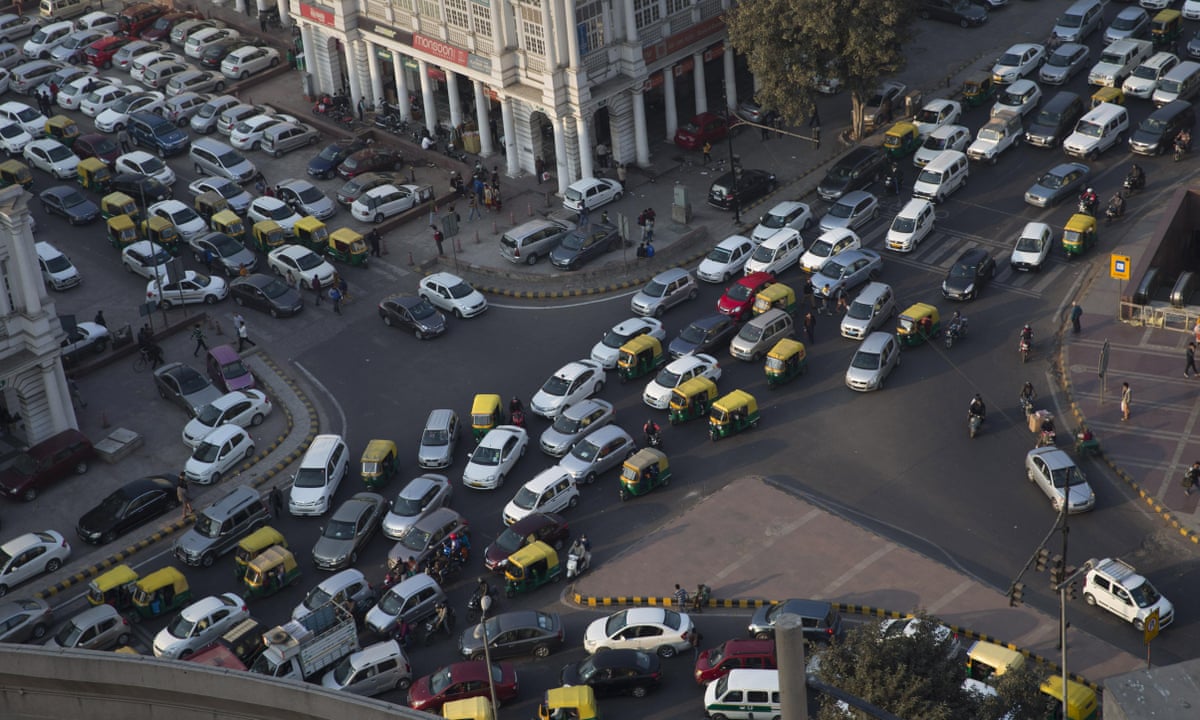
No new registration of diesel cabs in Delhi: Supreme Court 

The apex court allowed existing All India Tourist Permit (AITP) diesel taxis to operate in the national capital till the expiry of their permit, which is issued for a period of five years, and said no renewal of the same would be done.

The Supreme Court Tuesday relaxed its ban on diesel taxis in Delhi-NCR, allowing them to ply till their permits expire. But the bench, led by Chief Justice T S Thakur, said the Delhi government will not register any new diesel taxis, and that registration of all city taxis shall be permitted only if the vehicles operate on dual-fuel (CNG/petrol) or purely CNG or petrol.

The bench also underlined that diesel taxis will eventually have to go off the roads.

The Delhi government, the bench said, should work out adequate norms on safety, security and fares for taxis. “Safety and security is an important aspect…you must have seen some of the recent incidents. So, now you make sure these concerns are taken care of,” the bench, also comprising Justice A K Sikri and Justice R Banumathi, told the Delhi government’s counsel.

The court order is likely to free up more than 60,000 taxis, which had to go off roads since they had not switched to CNG. Further, the court-mandated stipulation regarding fare compliance with government norms may affect ‘surge pricing’ used by taxi aggregators, which the Delhi government had sought to stop during odd-even phase 2.

The bench provided relief to taxi operators after modifying its April 30-deadline, which had put in place a complete prohibition on plying of diesel taxis. On Tuesday, the court clarified that the extension till the expiry of their permits was only a one-time measure aimed at giving operators some respite.

“You must understand what we are trying to do here. There has to be a gradual phase-out…diesel taxis will have to go,” observed the bench.

It added that existing all India tourist permit (AITP) taxis will also be allowed in Delhi-NCR for point-to-point services so that BPO firms could use their services. The reprieve was granted after IT industry body National Association of Software and Services Companies (Nasscom) assured the bench that all its future contracts would ensure services of only non-diesel cabs.

Amicus curiae Harish Salve had supported a joint plea by the central and Delhi governments to relax the ban and permit a gradual phase-out of diesel taxis in the wake of inconvenience to the public and to enable the BPO industry, which relies heavily on these taxis to ferry employees, to function smoothly.

Salve also suggested that the Centre should issue norms for regulating taxis with all India permits and decide a way forward for non-diesel cabs. But Solicitor general Ranjit Kumar argued that NCR-specific rules would be difficult to formulate, as AITP rules were meant for the whole country. The bench said it would now hear in July the issues relating to levying a green cess on diesel vehicles and other measures to reduce pollution.

Source: No new registration of diesel cabs in Delhi: Supreme Court | The Indian Express

Posted in Air Quality, Asia, India | Tagged , , , | Leave a comment