Pollution along Dorset’s roads breaching EU and UK health standards 

Pollution along Dorset’s roads breach EU and UK air quality safety standards, figures show.

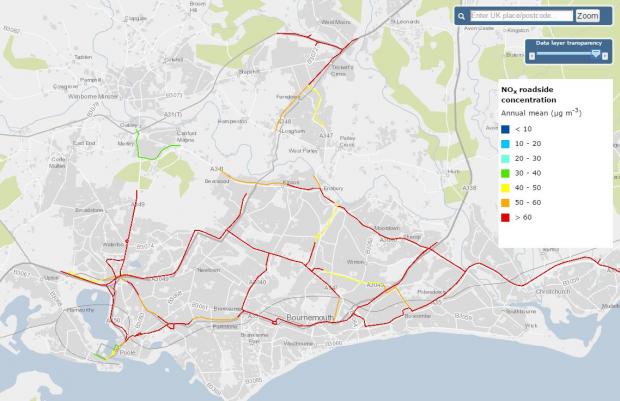
Latest figures from Defra show that most of Bournemouth and Poole’s commuter roads breached the acceptable standard for NOx gases in 2014.

Exposure to NOx gases is thought by the government to be ‘increasing mortality by the equivalent of 23,500 deaths per year’ and European law requires the UK to keep those gases to a minimum.

The ‘safe level’ for emissions is an annual mean of 40 (µg m-3), with hourly levels not allowed to exceed 200 µg m-3 more than 18 times in any one year.

While Bournemouth, Poole and Christchurch hit the target for background levels of NOx gases, all the connurbation’s main routes – 11.2km of road in total – are in the top two brackets for annual mean levels, with many at more than 60 (µg m-3).

But Defra’s air quality management plans say the Bournemouth Urban Area – which includes – Poole, Christchurch, Highcliffe and New Milton –  will be under safe levels by 2020.

It says a number of recent, ongoing and planned local authority policies are expected to reduce air pollution in the area below the annual limit by 2020.

Among them are plans by New Forest District Council to reduce emissions from its vehicle fleet, launch a public awareness campaign and improve walkways and cycle lanes around Ringwood and New Milton.

Borough of Poole is working with businesses to encourage their staff to use alternative means to get to work.

And in Bournemouth the report says ‘the local authority has seen the use of rail, bus, walking and cycling rise appreciably, including significant increases in bus patronage and those cycling to work, due to the contribution of their approach to local transport policy.’

Bournemouth already has two Air Quality Management Areas imposed by the government, which the action plans says are likely to be removed this year.

Future plans expected to reduce air pollution further after 2020 include the creation of a new lane on the A31 to reduce congestion at Ringwood.

A report published this month by the Royal College of Physicians claims the annual ‘mortality burden’ nationwide from exposure to outdoor air pollution is equivalent to around 40,000 deaths, resulting in costs of more than £20 billion.

And Public Health England figures say air pollution was responsible for 4.7% of deaths in Bournemouth and Poole in 2014, up from 4.4% in 2013. In Christchurch pollution was behind 4.4 per cent of deaths in 2014, up from 4.1% in 2013.

See the stats here.

The South West average is 4.5% of deaths, with the England average at 5.3%.

The area is not unique in the UK, with 38 of the country’s 43 air quality zones currently exceeding EU safety limits for nitrogen dioxide.

Source: Pollution along Dorset’s roads breaching EU and UK health standards (From Bournemouth Echo)

Posted in Air Quality, Europe, UK | Tagged , , , , , , , , , , | Leave a comment

Delhi’s air pollution is a classic case of environmental injustice 

India’s new tax on car sales is a step in the right direction, but can the country address the wealth and power imbalance driving the health disaster?

The news that India is introducing a new tax on car sales to help combat severe air pollution and congestion problems has unsurprisingly been decried by the country’s car industry.

The chair of India’s largest car manufacturer, Maruti Suzuki, says the tax “is going to hurt the industry, and will impact growth and affect job creation”. Following the announcement, shares in Maruti Suzuki traded more than 5% lower.

But others have celebrated the move, recognising that business as usual cannot continue in a country home to the four most polluted cities in the world. “Once Indians owning cars was seen as a sign of economic success. Now this sort of tax is seen as Indians being responsible,” a senior research fellow at Delhi-based thinktank told the Guardian.

The tax comes on the heels of the Delhi government’s unprecedented step this winter of imposing an emergency “odd-even” license plate number rule to restrict private car use to alternate days.

Reports of extreme air pollution in Delhi and other Indian cities are nothing new. The World Health Organisation estimates that more than 600,000 people die each year as a result of outdoor air pollution in India. Much less discussed is the fact that not all residents are equally affected, nor equally responsible.

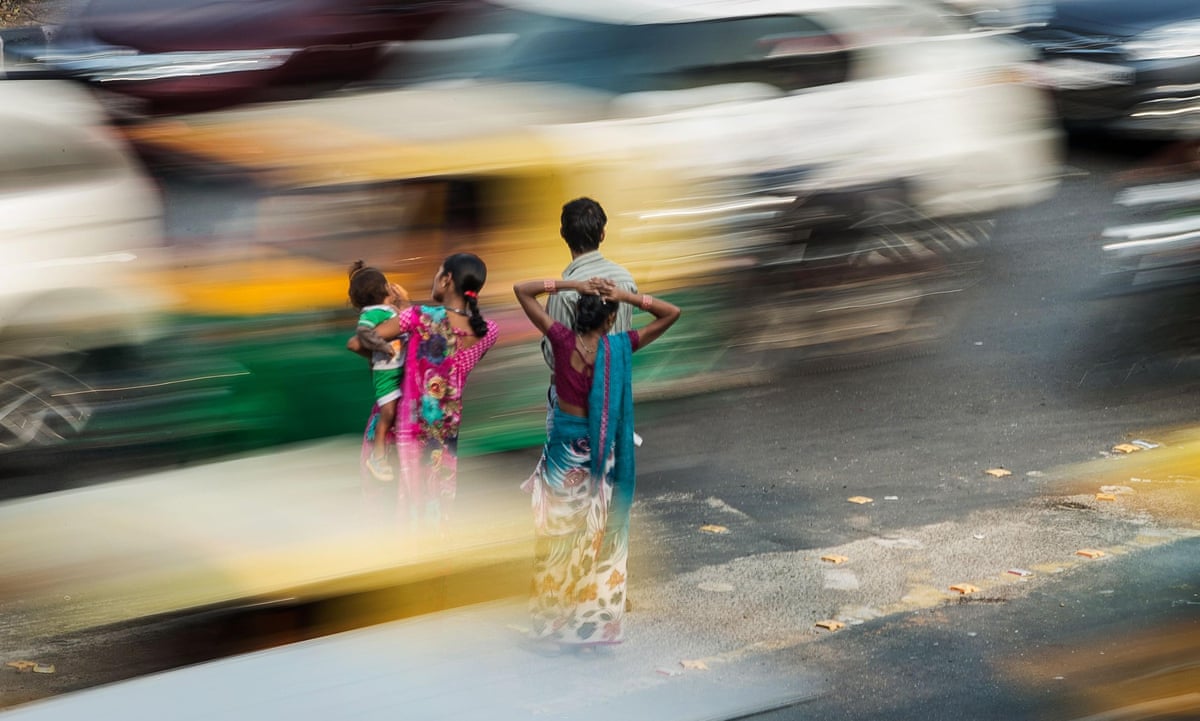
Delhi’s low-income residents – who don’t travel by car – bear the brunt of the city’s toxic air. This is partly because of where they live. A 2011 study found levels of suspended particulates to be generally higher in the city’s poorer neighbourhoods.

The poor also spend more time outdoors, where pollution is most intense. A study in the scientific journal Atmospheric Environment reports that men from low-income households spend on average about seven hours outdoors daily, compared to virtually zero for those at the top of the income scale.

What’s more, affluent households can afford air conditioning, better nutrition and better healthcare, all of which insulate them, to some extent, from dirty air.

Some of the highest pollution exposures are inflicted on those who make their living on the streets, including traffic police and drivers of three-wheeled auto-rickshaws. These rickshaws have been converted to compressed natural gas, a cleaner fuel source, as a result of a 1998 supreme court ruling in a case brought by environmental advocates.

Many of Delhi’s cars, by contrast, continue to burn particulate-heavy diesel. Researchers have measured concentrations of hazardous ultra-fine particles on the city’s arterial roads that are eight times higher than those recorded on rooftop monitors just a kilometre away

The health impacts on residents are becoming more and more evident. Children’s developing bodies are especially susceptible to long-term harm. A 2008 study for India’s Central Pollution Control board reported that more than two-fifths of Delhi’s schoolchildren have reduced lung function, damage that is likely to be irreversible.

The good news is that there is rising demand from India’s citizens for cleaner air, coupled with greater willingness of Delhi’s populist Aam Aadmi (roughly translated as common man) government, elected a year ago, to respond. Delhi needs ambitious, longer-term policies to tackle root causes of the problem. These must include not only steps to halt the exponential growth in car traffic and diesel trucks but also huge new investments in public transportation, tougher pollution controls on the smoke-belching power plants and brick kilns that ring the capital’s perimeter, and measures to reduce the clouds of dust from construction debris and road traffic.

Beneath the headlines, Delhi’s air pollution is not only a public health disaster; it is a classic case of environmental injustice. The city’s affluent classes reap the lion’s share of the benefits from the activities that poison the air, while less privileged residents bear most of the human health costs. This fateful disjuncture – and the inequalities of wealth and power that lie behind it – has posed the single biggest impediment to addressing the problem.

It remains to be seen whether the authorities in Delhi can muster the political will to go beyond stopgap emergency measures and launch the policies that are desperately needed to safeguard the public interest in a clean environment against the private interests of the polluting classes. Will India, often hailed as the world’s largest democracy, be able to overcome the oligarchy that rules its air? The poor who bear the heaviest air pollution burdens wish they could hold their breath long enough to find out.

Source: Delhi’s air pollution is a classic case of environmental injustice | Guardian Sustainable Business | The Guardian

Posted in Air Quality, Asia, India | Tagged , , , | Leave a comment

Indonesian province declares emergency as forest fires flare 

Indonesia’s western province of Riau has declared a state of emergency over forest and land fires blazing on the island of Sumatra, a government official said on Tuesday (March 8).

The fires, which send choking smog over Southeast Asia every year, raged uncontrollably across several provinces last year, costing an estimated US$16 billion (S$22 billion), and pushed average daily greenhouse gas emissions above those of the United States.

“The governor has declared an emergency now, to be able to prevent a repeat of the haze that occurred in 2015,” said provincial government spokesman Darusman, adding that life in the province continued to be normal.

About 500 military and police personnel and a water-bombing helicopter have been deployed to help fight the fires but the haze had not yet reached urban areas, he said.

The fires are often set by plantation companies and smallholders to clear land, and were particularly bad in 2015 because of a prolonged dry season caused by the El Nino weather pattern.

Indonesian President Joko Widodo has urged authorities to contain so-called hotspots, where fires start and spread to their surroundings.

This year, Widodo set up an agency to restore around 2 million hectares (5 million acres) of carbon-rich peatlands which typically produce more smog than forest fires.

But past efforts by Indonesia and neighbouring countries to prevent the fires, or put them out once started, have shown little success. Last year’s fires ended only when the rainy season arrived to douse them.

Source: Indonesian province declares emergency as forest fires flare | TODAYonline

Posted in Air Quality, Asia | Tagged , , , , | Leave a comment

This City Wants to Pay People to Bike to Work

It wouldn’t be the first one.

One of the E.U.’s most polluted cities is working to change its commuters’ habits.

Milan is considering implementing a program that would compensate people who bike to work, Fast Company reports. It’s consistently ranked as one of the most polluted cities in the E.U. and even had to ban cars temporarily when it had unhealthy smog levels for 30 straight days in December.

The smog has a difficult time getting aired out considering Milan is in a valley, and it’s made even worse when the climate is dry and warm, as it was this winter—an issue that will likely only intensify as climate change progresses. Milan wants to give money directly to those who commute to work bike, or “give them some other sustainable-mobility incentive,” Pierfrancesco Maran, Milan’s mobility councillor, told Fast Company.

France tested a similar program in 2014 that didn’t quite work. Out of the 8,000 participants, only around 400 people actually chose to bike to work rather than drive.


Source: air pollution – Fortune

Posted in Air Quality, Europe, Italy | Tagged , , | Leave a comment

Is your football team playing badly? It may be air pollution 

Footballers’ performance is affected by particles in the air, says German study

Down the years, professional footballers have blamed a lacklustre performance on many things. Famous explanations have included the ball being too bouncy (Newcastle United); the pitch being too small (Tottenham Hotspur); and the team being forced to play in the wrong colour kit (Manchester United).

Now a group of health economists has discovered another reason that should send alarm bells ringing far beyond the world of sport. Andreas Lichter, Nico Pestel and Eric Sommer, researchers at the IZA economic institute in Bonn, Germany, will present a study at this month’s Royal Economic Society’s annual conference in Brighton which shows that air pollution is significantly affecting the performance of professional footballers. Their findings are based on analysing the form of players in Germany’s Bundesliga between 1999 and 2011.

The three economists measured the total number of passes each player made in the matches in which they participated. “While the number of passes is not a measure of physical performance per se, it serves as our preferred productivity indicator since it is related to the speed of the game and, importantly, is highly relevant for a team’s success by retaining ball possession and creating scoring opportunities,” Lichter and his colleagues explained. “Moreover, passes provide a reliable measure, as passing is the essential nature of the game, which limits the role of chance.”

The number of passes was then mapped against hourly air pollution data collected outside each stadium by the German Federal Environment Agency.

The economists found that, at kick-off on any given match day, the mean concentration of pollution, the “particulate matter”, was 23.8 micrograms per cubic metre. In almost half of the matches covered (44%), the level ranged between 20 and 50 micrograms per cubic metre, the latter figure being the European Union regulation threshold for particulate pollution. This threshold was exceeded in 7% of the matches.

The economists found that player performance was impeded by pollution even at levels well below these health limits. And at high levels – above the EU threshold – there was a significantly noticeable decline equivalent in performance, by as much as 16%.

Some players were more affected by air pollution than others. The researchers write: “We find that negative effects of pollution on short-run productivity increase with the individuals’ age and are largest for players aged above 30. Moreover, midfielders’ and defenders’ productivity is particularly affected by pollution, players who are more attached to the game and exert a larger number of passes.”

They found that the shorter the gap between games, the more pronounced were the effects of air pollution on performance. Intriguingly, there is some evidence that the players adapted to higher levels of pollution. “Our analysis also suggests that players tend to marginally adjust their style of play, given that the ratio of long over short passes slightly increases with the concentration of particulate matter,” they note.

The findings are likely to be studied far beyond the world of professional football. And the academics want more work to be done to assess what impact pollution has on other professions’ “physical and cognitive productivity” and to broaden knowledge on the benefits of environmental regulation.

The European Environment Agency says the financial impact of air pollution on Europe’s population could be as high as €200bn (£154bn). About 40,000 people are estimated to die prematurely every year in the UK because of poor air quality. In April the Supreme Court ruled that an immediate plan was needed after the UK breached EU limits for nitrogen dioxide. Last week the government was threatened with legal action if it does not take steps to introduce the plan urgently.

Source: Is your football team playing badly? It may be air pollution | Environment | The Guardian

Posted in Air Quality, Europe, Health Effects of Air Pollution, Medical Studies | Tagged , , , | Leave a comment

Air pollution tied to higher risk of preterm birth for moms with asthma 

Pregnant women with asthma may be at an increased risk for preterm births if they are exposed to high levels of air pollution from vehicles, according to new research. The study,published March 1 in the Journal of Allergy and Clinical Immunology, found that short-term and extended exposure to nitrogen oxides and carbon monoxide was associated with preterm deliveries, particularly when asthmatic women were exposed to those pollutants just before conception and in early pregnancy.

“Preterm birth is a major public health problem in this country – affecting more than 1 in 10 infants born in the United States,” Pauline Mendola, PhD, lead study author and an investigator at the National Institutes of Health’s (NIH) Eunice Shriver National Institute of Child Health and Human Development, said in an NIH news release. “Our study found thatair pollution appears to add to the preterm birth risk faced by women with asthma,” Mendola added.

Asthma affects an estimated 9 percent of women of reproductive age in the U.S. While other studies have looked at the effects of air pollutants on preterm births, the research conducted by Mendola and her colleagues is the first to examine the ramifications of exposure before conception.

For the study, the researchers analyzed data from a sample of 223,502 singleton pregnancies delivered in 19 hospitals around the country from 2002 to 2008. Included in the information was the women’s asthma status and date of delivery.

The research team matched collected data with daily measures of air quality from the regions surrounding each of the hospitals to assess the potential impact of air pollution on preterm delivery. The researchers took into account such factors as location, age, race and ethnicity, pre-pregnancy weight, smoking and alcohol use, and chronic maternal health issues.

Findings showed that increased exposure to nitrogen oxide in the three months before pregnancy increased the risk of giving birth prematurely by 30 percent for women with asthma, compared to 8 percent for women who did not have the disease. Higher exposure to carbon monoxide during the same period raised the risk of preterm birth by 12 percent for women with asthma, but had no effect on women who were not asthmatic.

The research team also found that exposure to high levels of particulate matter air pollution – very small particles of substances such as acids, metals and dust in the air – in the last six weeks of pregnancy were linked to a higher risk of premature birth.

Mendola suggested one explanation for the link between air pollution and premature birth is that exposure to environmental pollutants may cause inflammation or other internal stresses that interfere with embryo implantation or placental development. Acknowledging that more research is needed, she advised women with asthma who are pregnant or trying to conceive to avoid exposure to air pollution whenever possible.

“There are already guidelines calling for people with asthma to avoid ambient exposure on bad air pollution days,” she told MedPage Today. “This may be especially important for women with asthma who are pregnant or trying to become pregnant.”

Source: Air pollution tied to higher risk of preterm birth for moms with asthma | Examiner.com

Posted in Air Quality, Asthma, Health Effects of Air Pollution | Tagged , , , | Leave a comment

Air pollution hit 163 Chinese cities  

Polluted air was reported in 163 cities across China as of midday Wednesday after air pollution reared its ugly head Tuesday, the Ministry of Environmental Protection (MEP) announced.

Tangshan in Hebei Province, and Fuyang in Anhui Province were the most polluted cities. Another 21 cities, including Langfang and Tianjin, all reported “heavy pollution.”

Beijing was also heavily polluted with an hourly average density of PM 2.5, particles that causes hazardous smog, hitting 190 micrograms per cubic meter.

Luo Yi, an MEP official in charge of surveillance, said the latest round of air pollution began Tuesday when the average density of PM 2.5 and PM 10 in 338 cities under surveillance surged by 17.6 percent and 11.7 percent, respectively, from one day before.

The affected cities are mainly scattered around the northern Beijing-Tianjin-Hebei; southwestern Chengdu-Chongqing; northwest and southern Guangdong-Guangxi regions, Luo said.

Air pollution in the Beijing-Tianjin-Hebei region will remain until Friday night, when weather condition favorable to disperse pollutants have been forecasted, according to forecast.

Source: Air pollution hit 163 Chinese cities – Xinhua | English.news.cn

Posted in Air Quality, Asia, China | Tagged , , , , , , | Leave a comment

East England towns and cities ‘have illegal NO2 levels’ 

The highest nitrogen dioxide readings recorded at various towns and cities in the eastern region. The legal limit is 40 micrograms in each cubic metre of air

Illegally-high levels of nitrogen dioxide were recorded at more than 250 sites in the east of England, it has emerged.

The law allows no more than 40 micrograms of nitrogen dioxide (NO2) per cubic metre of air (µg/m3).

ClientEarth, a group of environmental lawyers, is planning High Court action against the government over illegally high readings.

The government said it supported local authorities to tackle air quality.

NO2 is released when fuels such as car diesel or in central heating boilers are burned.

There is evidence high levels of NO2 can inflame the lungs and cause long term health issues.

The number of illegally high readings in the various counties of the east of England. TABLEAU

According to research by BBC East, levels of more than 70 µg/m3 have been recorded in Waltham Cross, Bishop’s Stortford, Sandy and Watford, with illegal readings taken in places like Castle Meadow in Norwich and the taxi rank in Newmarket.

The figures, although illegally high, are a far cry from some of the readings found in central London where the average annual level of nitrogen dioxide (NO2) in Grosvenor Place, near the Queen’s central London residence, reached 152 µg/m3 in 2014.

Illegally high readings have also been frequently recorded in cities such as Leeds, Birmingham, Southampton, Nottingham and Derby.

Alan Andrews, a lawyer with Client Earth, said they had been fighting a legal battle with the government for five years because “levels of air pollution in towns and cities across the UK are above legal levels”.

‘Create healthier air’

He said Client Earth was now planning High Court action against the government because its plans to deal with the problem were “just not good enough”.

“Air pollution is one of the biggest public health issues we face as a society,” he said.

“A plan which thinks it is okay for us to be breathing illegally high levels of pollution until 2020 to us isn’t good enough and we’re pretty confident judges looking at it will feel the same way.”

A spokeswoman for the Department for Food and Rural Affairs, said: “Our plans clearly set out how we will improve the UK’s air quality through a new programme of Clean Air Zones, which alongside national action and continued investment in clean technologies will create cleaner, healthier air

Source: East England towns and cities ‘have illegal NO2 levels’ – BBC News

Posted in Air Quality, Europe, UK | Tagged , , , , , , , , , | Leave a comment