Indoor and outdoor air pollution ‘claiming at least 40,000 UK lives a year’ 

Report finds air pollution inside and outside the home is costing £20bn a year as well as causing tens of thousands of deaths

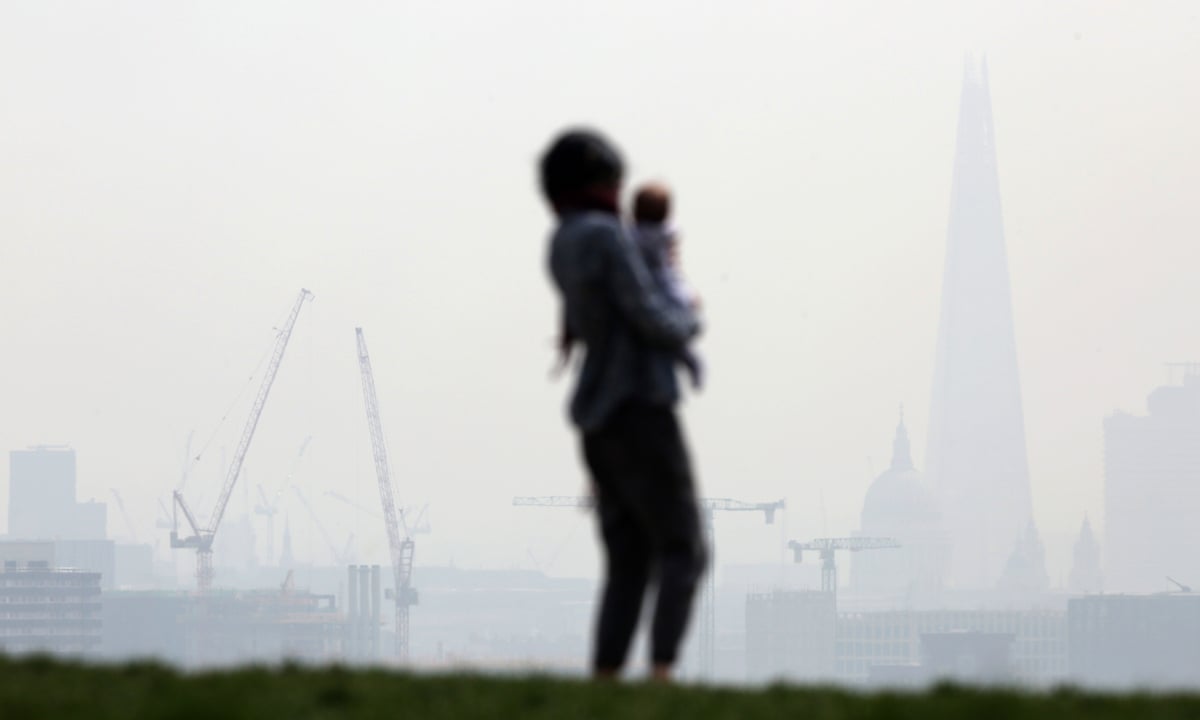
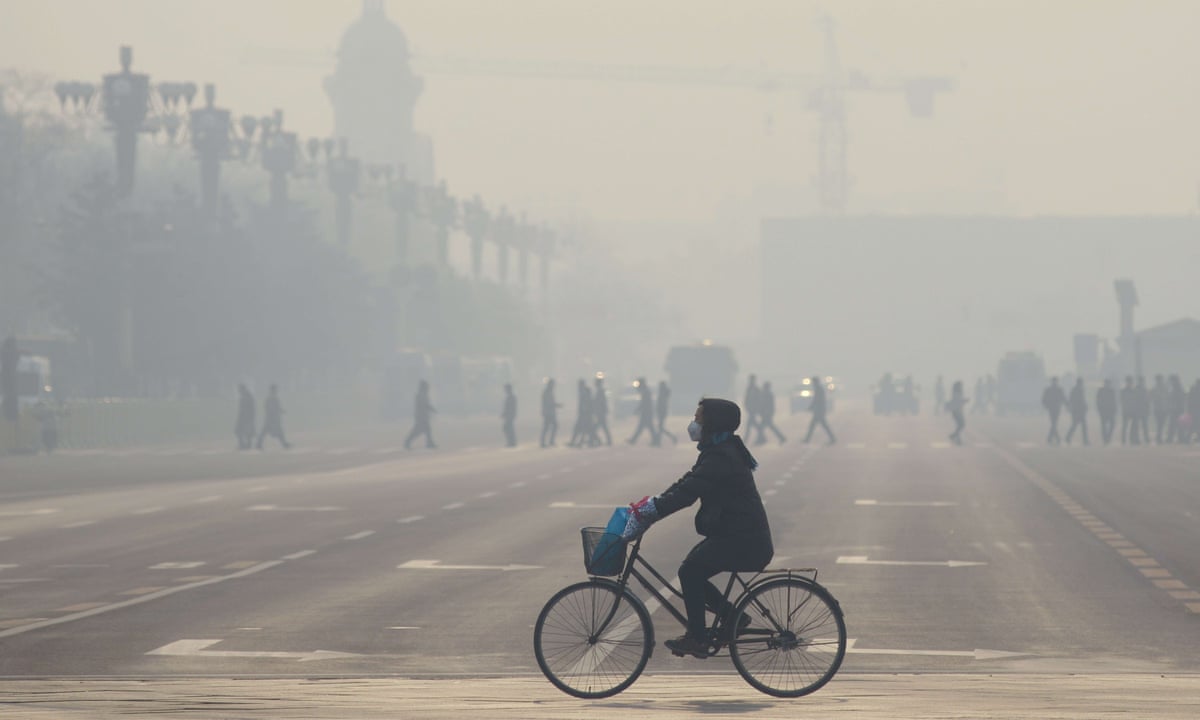
Air pollution both inside and outside the home causes at least 40,000 deaths a year in the UK, according to new report, which estimates the cost of the damage at £20bn.

The major health impact of outdoor air pollution is relatively well known but the report, from the Royal College of Physicians and the Royal College of Paediatrics and Child Health, also highlights the less understood impact of indoor pollution, as well as the growing evidence of harm to children’s health and intelligence.

Sources of indoor air pollution include smoking, faulty boilers, gas cookers and heaters, as well as irritant chemicals from new furniture, air fresheners and household cleaning products. House-dust mites, mould and dander from pets can also damage health, according to the report.

Outdoor pollution, much of it from vehicles, causes 40,000 deaths a year in the UK but the number linked to indoor pollution is not known. However, indoor air pollution is estimated to have caused or contributed to 99,000 deaths across Europe in 2012, the report states.

The report found unborn and young children were particularly susceptible to air pollution. “The developing heart, lung, brain, hormone systems and immunity can all be harmed by pollution,” the report said. “Research is beginning to point towards effects on growth, intelligence, asthma, and development of the brain and coordination. Harm to babies and children will have an impact that lasts far into the future.”

“When our patients are exposed to such a clear and avoidable cause of death, illness and disability, it is our duty to speak out,” said Prof Stephen Holgate, an asthma expert at Southampton University who led the report. “We now know that air pollution has a substantial impact on many chronic long-term conditions, increasing strokes and heart attacks in susceptible individuals. And now there is compelling evidence that air pollution is associated with new onset asthma in children and adults.”

Dr Andrew Goddard, at the Royal College of Physicians, said: “Taking action to tackle air pollution in the UK will reduce the pain and suffering for many people with long term chronic health conditions, not to mention lessening the long term demands on our NHS.”

Many people in the UK are currently exposed to illegal levels of air pollution. The UK government lost a supreme court legal battle in 2015 and was forced to produce an action plan. If successful, this will cut air pollution to legal levels by 2020 in most cities and 2025 in London.

The new report found that, although the government and the World Health Organization set “acceptable” limits for air pollution, there is in fact no level of exposure that can be seen to be safe, with any exposure carrying a risk.

The report called for a wide-ranging set of measures to tackle the problem, including tougher regulations to limit air pollution such as reliable testing of emissions from vehicles. Whilst Volkswagen actually cheated emissions tests, most manufacturer’s diesel cars produce far more pollution on the road than when being tested. On 3 February, the European parliament failed to veto loopholes in air pollution limits on new diesel cars.

Another measure demanded by the new report is for local authorities to have the power to close or divert roads to reduce the traffic, especially near schools, when air pollution levels are high.

The issue of indoor air pollution also needs more research, said the report: “We must strengthen our understanding of the key risk factors and effects of poor air quality in our homes, schools and workplaces.” It noted: “The drive to reduce energy costs, by creating homes with tighter ventilation, could be making the situation worse.”

National action to fight climate change will also help to cut air pollution, according to the report, which said meeting the UK’s carbon emissions target would lead each year to 5,700 less deaths and fewer hospital admissions for lung and heart problems.

The public can play a part in cutting air pollution too, said Prof Jonathan Grigg, from the Royal College of Paediatrics and Child Health: “We ask the public to consider using public transport, walking and cycling, and not choosing to drive high-polluting vehicles.”

Dr Penny Woods, chief executive of The British Lung Foundation, said: “This landmark report lays out in the starkest terms yet the devastating impact air pollution is having on our health, our children’s health, our economy and society as a whole. [In particular, children] should not have to pay the price for what has happened to the air they breathe.”

Prof Anthony Frew, a respiratory medicine expert at the Royal Sussex county hospital and not involved in the research, said: “While this report is interesting, its findings have to be seen in the context that on average we live longer, healthier lives than we did in previous generations, and that much of this is due to falling pollution levels. Furthermore, the ‘deaths caused by air pollution’ are generally considered to be deaths that are brought forward, rather than deaths that would not have happened.”

Source: Indoor and outdoor air pollution ‘claiming at least 40,000 UK lives a year’ | Environment | The Guardian

Posted in Air Quality, Health Effects of Air Pollution, London, UK | Tagged , , , , , , , , | Leave a comment

Malaysian Borneo’s air quality hits hazardous levels as forest fires rage 

The fires have spurred an emergency response from the state fire and rescue department, which is at the same time scrambling to manage nearly 8,000 people displaced by floods.

KUALA LUMPUR: Forest fires spread over 500 acres in the north of the Malaysian state of Sarawak in Borneo island have raised air pollution to hazardous levels on Monday (Feb 22) in areas close to the inferno, government data showed.

The fires have spurred an emergency response from the state fire and rescue department, which is at the same time scrambling to manage nearly 8,000 people displaced by floods in Sarawak’s southern region as of Monday morning, according to the Bernama newswire.

Sensors located in the coastal town of Miri – which is closest to the fires – registered an air pollutant index reading of over 300 parts per million (ppm) as at 9 a.m., though it went down to 185 ppm as at 3 p.m., the data showed. Readings above 300 ppm are deemed a health hazard.

State Fire and Rescue Department director Nor Hisham Mohammad told Reuters that the situation in the north of Malaysia’s largest state is “quite bad” and expects the fires to rage for a “minimum of one week”.

Sarawak’s forests are renowned for being home to eight out of the world’s 54 species of hornbills, according to the Sarawak Forestry Corporation, and also to the Orang Utan in some regions of the Bornean state.

Nor Hisham said the fires are unlikely to have affected the local wildlife as their numbers would be small because most of the timber in the area was already harvested.

The fires, however, forced local authorities to evacuate 650 students from an industrial training centre on Sunday, but classes have since resumed on Monday morning, Nor Hisham said.

Nor Hisham said a total of 50 personnel along with two helicopters and two excavators have been deployed and are working round the clock to contain the fires.

The fire and rescue department believes local hunters had started the fires, but are still investigating the matter.

Malaysian Meteorological Department senior officer Mohd Hisham Mohd Anip said the severity of the fires was caused by the El Nino weather phenomenon, which typically affects the northern region of Sarawak and the neighbouring state of Sabah.

Forest fires have increased in frequency over the past few years in Sarawak, where there are large tracts of peat soil.

This year’s forest fires, however, cover more than double the 200 acres in the same region scorched by forest fires in July last year.

Source: Malaysian Borneo’s air quality hits hazardous levels as forest fires rage – Channel NewsAsia

Posted in Air Quality, Asia | Tagged , , , , , | Leave a comment

UK air pollution ‘linked to 40,000 early deaths a year’ 

Air pollution is contributing to about 40,000 early deaths a year in the UK, say the Royal Colleges of Physicians and of Paediatrics and Child Health.

They say emissions from diesel engines have been poorly controlled and indoor air pollution has been overlooked.

Tobacco still poses the biggest indoor threat, but wood-burning stoves, spray deodorants, cleaning products, air fresheners and fly spray contribute.

Mould and mildew in poorly ventilated rooms can also cause illness.

“Being indoors can offer some protection against outdoor air pollution, but it can also expose us to other air pollution sources,” the report says.

“There is now good awareness of the risks from badly maintained gas appliances, radioactive radon gas and second-hand tobacco smoke, but indoors we can also be exposed to NO2 [nitrogen dioxide] from gas cooking and solvents that slowly seep from plastics, paints and furnishings.

“The lemon-and-pine scents that we use to make our homes smell fresh can react chemically to generate air pollutants, and ozone-based air fresheners can also cause indoor air pollution.”

Co-author Prof Jonathan Grigg said there was now clear evidence that air pollution – largely from factories and traffic – was linked to heart disease and lung problems, including asthma.

“As NHS costs continue to escalate due to poor public health – asthma alone costs the NHS an estimated £1bn a year – it is essential that policy makers consider the effects of long-term exposure on our children and the public purse,” he said.

Prof Grigg said the public could also help by:

  • walking, cycling or taking the bus or train instead of driving, when possible
  • keeping gas appliances and solid fuel burners in good repair
  • making homes more energy efficient

Prof Stephen Holgate, asthma expert at Southampton University and chairman of the reporting group, warned against complacency.

“We all have a part to play to cut environmental pollution. We can’t see it, smell it or taste it, which is why people do not necessarily think we have a problem,” he said.

“When you see cars piling up on the way to school taking their children, the fumes directly from the vehicle in front are being vented straight into the car behind, and exposing their child – and yet we are ignoring this,” he added.

He called for authorities to monitor pollution levels more closely, build new homes away from busy roads and consider closing particularly polluted roads at certain times.

He also advised people to open and close windows in the home several times a day.

“It’s amazing that we are now living in these tight, sealed homes that we are frightened of opening the window and letting a bit of fresh air in,” he told BBC Radio Four’s Today programme.

Source: UK air pollution ‘linked to 40,000 early deaths a year’ – BBC News

Posted in Air Quality, Europe, Health Effects of Air Pollution, UK | Tagged , , , , | Leave a comment

Beijing raises ‘red alert’ threshold for air pollution warning 

From March, China’s capital will bring in new sliding scale for air quality, after issuing its first ever ‘red alert’ for the city in December

Smog covers Beijing and Shanghai in December, as China’s government issues its first ever ‘red alert’ for the capital.

Beijing is to raise the thresholds for issuing its highest air pollution warnings, the state news agency Xinhua reported on Sunday, two months after acrid smog triggered the city’s first ever “red alert”.

In future, the highest alert will be issued only when the daily average air quality index (AQI) is forecast to exceed 500 for a day, 300 for two days in a row or 200 for four days, Xinhua reported, citing Beijing’s environmental protection bureau.

At present, a red alert is issued when the AQI is forecast to exceed 200, a level the US deems “very unhealthy”, for at least three days.

Schools were closed and outdoor construction work was suspended when thick smog prompted Beijing to issued its first red alert in December 2015.

The new criteria take effect at the end of March and are designed to standardise pollution alerts across Beijing, the neighbouring port city of Tianjin and four cities in the surrounding Hebei province, Xinhua reported.

Liu Wei, deputy head of the emergency response office at the environmental protection bureau, said the move would in effect tighten the pollution controls for the outlying regions, according to Xinhua.

Pollution is a sensitive topic in China, with thousands of protests sparked every year by concerns about environmental degradation.

Environmental officials admit China is unlikely to meet the air quality standards set by the state until at least 2030.

Beijing, one of China’s most polluted cities, announced in January it would close 2,500 small highly polluting firms in 2016. It also plans to develop a network of ventilation “corridors” to help disperse smog, Xinhua reported on Sunday.

Source: Beijing raises ‘red alert’ threshold for air pollution warning | World news | The Guardian

Posted in Air Quality, Asia, China | Tagged , , , , , | Leave a comment

Air pollution from China clouds skies in the south 

The EPA said the elderly or people who suffer from chronic lung and heart disease should try to avoid strenuous outdoor activity because of the poor air quality

Southern Taiwan saw very poor air quality yesterday due to pollution from China, with the key indicator of fine particulate matter smaller than 2.5 micrometers (PM 2.5) hitting the hazardous level of 10 in Kaohsiung, the Environmental Protection Administration (EPA) said.

As of 10am, concentrations of PM2.5 reached level 8 in Tainan and Pingtung County and 10 in Kaohsiung mainly because a cold air mass has brought a concentration of dust from China since Saturday, the EPA said.

Level 10 PM2.5 concentrations exceed 71 micrograms per cubic meter and are considered extremely high, but measurements above level 7 are deemed severe enough to cause tangible discomfort and health problems, the agency said.

Given the poor air quality, the elderly and those with chronic lung or heart diseases should avoid prolonged or strenuous outdoor physical activity, the EPA said.

Meanwhile, a physician at Chi Mei Medical Center said seven of the nation’s top 10 causes of death by cancer are associated with air pollution.

Hsieh Yi-ju (謝依儒) said the source of PM2.5 can be from natural activities such as volcanic eruptions, forest fires or rock weathering; or from human activities such as emissions from motor vehicles, factories and power plants, or burning, cooking and smoking.

More than 30 percent of the nation’s PM2.5 is brought in from across national borders, including industrial pollution and sand storms from China, Hsieh said, adding that these particles are so small that they can bypass the nose and throat and penetrate deeper into the lungs and bloodstream, bringing toxic substances into the body.

He said PM2.5 matter mainly affects the respiratory tract, triggering symptoms including coughing, breathing difficulties, a decline in lung function, asthma, chronic inflammation or a weakened immune system.

However, PM2.5 matter also affects the cardiovascular system, contributing to chronic inflammation, autonomic nervous system disorders and arrhythmias, Hsieh said, adding that studies showed that it effects the brain too, leading to higher risks of suffering a stoke or developing dementia.

Yu Chia-hang (余佳航), a doctor of traditional Chinese medicine at the Ministry of Health and Welfare’s Sinying Hospital, said vegetables and herbs classified by traditional Chinese medical theory as “white foods” might alleviate discomfort caused by PM2.5 pollution.

Exposure to heavy concentrations PM2.5 frequently caused symptoms such as watery eyes, eye pains, coughing, sneezing, runny nose, nasal congestion, throat pain and poor sleep, he said.

To reduce symptoms of exposure to PM2.5 pollution, Yu said people should incorporate medicinal vegetables and herbs classified as “white foods” in their diets because these foods are believed to bolster lung health.

“White foods” include Asian pears, white mu-err mushrooms and the fungus Wolfiporia extensa; lotus seeds, prickly water lily seeds and coix seeds; and the Chinese white radish, cinnamon vines and lilium bulbs, Yu said.

Yu said that only respirators or masks with a N95 rating or higher offer any protection against PM2.5 pollution, and that users should fit the masks snugly to the face without leaving gaps.

Users must replace the mask every four hours to avoid inhaling harmful quantities of fine particles accumulated on the mask, he added.

Concern about the smoke from burning mugwort in traditional Chinese medical therapy is misplaced because recent research suggests that mugwort smoke in a reasonably ventilated traditional clinic is not a significant health risk, while the medical benefits of mugwort smoke as an antioxidant is supported by several studies, Yu said.

Source: Air pollution from China clouds skies in the south – Taipei Times

Posted in Air Quality, Asia, Taiwan | Tagged , , , | Leave a comment

China unveils new measures targeting winter air pollution 

A suite of targeted and stricter measures have been announced to address severe air pollution in the area around China’s capital city during the winter heating season.

Recent data from China’s Environmental Protection ministry has shown that although air quality improved continuously nationwide last year, the Beijing-Tianjin-Hebei region still suffered heavy pollution, largely caused by PM2.5 particles.

The same data showed the average density of the particles in Beijing in the first ten months last year was cut by over 21 percent compared with the same period in 2014.

However, during the heating season, which began in mid-November, the PM2.5 density in the city surged over 75 percent year on year.

Speaking at a news conference on Thursday, Environmental Protection Minister Chen Jining said the latest step in the regional air pollution fight is to unify standards for issuing air pollution alerts and those alerts would be issued according to the forecast maximum level of PM2.5.

“Unified standards for issuing air pollution alerts in Beijing and five neighbouring cities, including Tianjin Municipality as well as Baoding, Langfang, Tangshan and Cangzhou in north China’s Hebei Province, will be rolled out before March 15.”

Beijing and its surrounding area is one of the worst PM2.5-polluted regions in China.

Coal-fired electricity generation, as well as vehicle exhaust, are said to be the main factors driving up pollution levels across the region in the annual heating season.

According to Chen Jining, a strong El Nino effect, which brought static weather patterns making it difficult for airborne pollutants to disperse, made the situation even worse this winter.

He said apart from a revised air quality warning system, a slew of follow-up measures will also be put in place to prevent air pollution from getting worse again.

“Continued efforts including information sharing, tougher supervision over polluting firms, crackdowns on polluting vehicles and replacing coal with electricity or gas in heating will be carried out to cope with winter smog.”

China enacted its Environmental Protection Law a year ago, and the Air Pollution Prevention and Control Law this January.

Chen Jinning noted it is also be a priority to implement these new laws effectively.

“Despite the deterrence of penalties and the growing public awareness of environment protection, many enterprises still risk being punished for discharging pollutants. During the 13th Five-year plan period, a major crackdown will be launched against polluters. But it requires the efforts of both the environmental protection authorities and groups from all walks of society.”

Source: China unveils new measures targeting winter air pollution | gbtimes.com

Posted in Air Quality, Asia, China | Tagged , , , , , | Leave a comment

More Air Pollution Means More Strokes

New research suggests stroke risk may be associated with climate change and air pollution, adding to the growing body of research that shows cardiovascular health is partially determined by the quality of air we breathe.

The study—the largest to date on pollution and climate change as a factor for stroke risk—is based on data from the U.S. and China. The researchers selected these two countries because they’re known to be the world’s largest emitters of greenhouse gases; combined, they cause approximately one-third of global warming, according to lead author Dr. Longjian Liu, an associate professor of epidemiology and biostatistics at Drexel University.

Liu presented the findings on Wednesday at the American Stroke Association’s  International Stroke Conference 2016.

Liu and his team looked at data between 2010 and 2013 from the Environmental Protection Agency for air quality on 1,118 counties and 49 states in the U.S., as well as 120 cities and 32 provinces in China. The measurement of air quality was based on particulate matter, which is the quantity and size of particles of dust, dirt, smoke and liquid droplets. Particles less than 2.5 micrometers in diameter are known to be harmful to humans, and generated by combustion from cars, power plants, forest fires and similar sources.

The researchers then cross-referenced this data with government public health data on stroke rates for both countries. After adjusting for factors that included poverty rate, race and age, they found that for every 10 micrograms per cubic meter increase of particulate matter, incidences of stroke rose 1.19 percent.

In the U.S., the South had the highest average annual particulate matter and the highest prevalence of stroke (4.2 percent), while states in the West had the lowest annual average of particulate matter and lowest rates of stroke incidence (3 percent).

The researchers also observed that temperature impacted air quality and stroke risk. In general, summertime means worse air quality and more stroke incidences.

Each year, approximately 15 million people suffer a stroke, according to the World Heart Federation. By their estimates, 1.3 million people in China experience a stroke each year.

In the U.S., it’s estimated that one person dies every four minutes from stroke, according to the U.S. Centers for Disease Control and Prevention.

Liu says his findings are a clear indication that air quality is a public health issue, and he believes the study should be a wake-up call to policymakers. His team plans next to conduct a similar study, but on a hyperlocal level, looking at correlation of stroke rates and air quality by zip code.

Source: More Air Pollution Means More Strokes

Posted in Air Quality, Health Effects of Air Pollution | Tagged , , , | Leave a comment

‘Dangerous’ air pollution in North

THE northern provinces of Lampang and Lamphun yesterday recorded dangerous levels of air pollution.

The levels of small particle matter of up to 10 microns in diameter (PM10) were recorded at 143 and 157 micrograms per cubic metre in Lampang and Lamphun respectively. The safe limit is 120. The Lampang reading was taken in Tambon Sob Pad in Mae Mo district and Lamphun reading was recorded in Tambon Nai Muang in Muang district, said Phasit Seuksanapapat of the Chiang Mai Provincial Office for Natural Resources and Environment.

The other northern provinces’ PM10 readings remained within the safe level, he said, adding that Chiang Mairecorded a high of 106 micrograms.

The region’s 60-day outdoor-burning ban would be enforced from today, he said, so the smog situation should be less severe.

However, Agriculture and Cooperatives Ministry spokesman Surapol Jarupong urged the Land Development Department, the Department of Agriculture Extension and the Department of Royal Rainmaking and Agricultural Aviation to implement measures to stop farmers in 10 northern provinces from burning agricultural waste.

The 2015 statistics found that such outdoor burning covered 1.83 million rai (293,000 hectares) of farmland in the 10 provinces, with some 200 tambons reporting high levels of outdoor burning activities, Surapol added.

Source: ‘Dangerous’ air pollution in North – The Nation

Posted in Air Quality, Asia | Tagged , , , , | Leave a comment