Air pollution cameras trialled on London roads to monitor vehicle emissions 

Emissions: The pollution cameras will scan exhaust fumes AP Photo/Matt Dunham

Emissions: The pollution cameras will scan exhaust fumes AP Photo/Matt Dunham


Pollution cameras created by an ex-NASA scientist are being installed on two London roads in a £149,000 trial to measure emissions given off by passing vehicles.

The temporary cameras, which will each be in place for a week, pass a laser beam through exhaust fumes to detect changes in light, giving an estimation of emissions emitted.

The emission detection and reporting devices (EDAR), developed by ex-NASA scientist Stewart Hager, were proposed by air pollution scientists at the University of Birmingham, University of Leeds and Kings College London.

The project – the first of its kind in Europe – is being funded by £149,000 from the Department for Transport.

Jonathan Isaby, chief executive of the TaxPayers’ Alliance said while lowering pollution levels is a “worthy goal”, many taxpayers may believe the cost for a three week trial is “pretty steep”.

He added: “The authorities must be able to demonstrate the value in these devices and should always be seeking cheaper alternative solutions wherever possible.”

One camera, in Marylebone, was installed today and will be in place until Saturday, while a second with be erected in Blackheath from Monday, February 22 to Friday, February 26. A further trial took place in Birmingham last week.

Scientists carrying out the trials will compare their findings with existing air pollution monitoring stations and will use the data as a benchmark to measure the effectiveness of the new technology.

But a spokesman for the London Cycling Campaign urged the government to tackle air pollution rather than monitoring it.

The spokesman said: “That means governmental and London-wide commitment and action on reducing private motor vehicle traffic and increasing cycling, walking and public transport use.

“And more cycling and walking is not just a good solution for pollution – it’s also the obvious solution to a looming public health inactivity crisis, and to keeping London moving as a predicted 1.5 million people arrive in our city by 2030.”

Sian Berry, Green Party London mayoral candidate, said she welcomed any initiative which gave better information about the state of London’s air.

She added: “Diesel-related pollution from traffic is an invisible killer, and I’ve been so concerned about lack of monitoring that I led a community-monitoring project of my own in Camden.

“Anything that makes it more visible is a step in the right direction, and if I’m elected Mayor I would ensure a truly comprehensive monitoring network across London.

“But we already know that pollution is at illegal levels across the city, and it’s only worth finding out how much there is if we then go on to do something about it.”

Andrew Jones, transport minister, said: “This newly-emerging technology is another example of British universities taking the lead in this area.

“We are pleased to support important work that improves our understanding of the impact that vehicle emissions have on air quality levels.

“It is early days for these cameras, but these first trials will help the development of air quality testing in the future.”

Source: Air pollution cameras trialled on London roads to monitor vehicle emissions | London | News | London Evening Standard

Posted in Air Quality, Europe, London, UK | Tagged , , , , | Leave a comment

Drivers ‘exposed to highest levels of pollution’ 

What’s the best way to avoid air pollution travelling in a city? Walking, cycling or in a vehicle?

It’s a question I put a few months ago when testing some mobile pollution monitors along the busy Brompton Road in London’s Knightsbridge.

The answer then was pretty categorical: being a car driver was best.

Not exactly the most environmentally friendly message – to avoid air pollution just stay in your polluting vehicle.

Environmental health experts at King’s College London told me the low readings of pollution in my car were probably due to it having good air filters and were at odds with their usual findings – that pollution inside vehicles was more often worse than that outside.

The handheld monitors I used could test only for particulates – the sooty debris that is emitted from vehicle exhausts.

They could not detect nitrogen dioxide – NO2. Within cities, diesel vehicles are the main culprits for this invisible toxic gas.

For the first time NO2 can be measured while on the move – in a mobile air quality monitoring vehicle dubbed the ‘smogmobile’.

Operated by UK firm Enviro Technology Services – the electric no-emissions vehicle can monitor NO2, particulates, ozone, carbon dioxide and methane.

Furthermore, it can switch every minute between measuring NO2 levels outside the vehicle, to those inside.

On a recent trip from Reading to central London, the smogmobile found levels of nitrogen dioxide were on average 21% higher inside – with the windows shut – than outside the vehicle.

I went for a drive in the smogmobile – in very heavy London traffic – from Broadcasting House, to Parliament Square and finally over the river to the South Bank.

The smogmobile is a two-seater van – with inlets on the roof, which ‘sniff’ the air for pollutants, and a lot of gadgetry and recording equipment in the rear.

In the front cabin there is a second NO2 inlet as well as a hand-held particulates monitor.

On our journey the levels of NO2 and particulates were roughly similar inside and out, but there were several pollution peaks within the vehicle.

One of these occurred when we were stuck behind an old-looking London tour bus.

I couldn’t smell or see any pollution, but the levels of NO2 shot up, shown clearly on a tablet screen recording the levels in real time.

Pea-souper

Duncan Mounsor, the MD of Enviro Technology Services who was driving the smogmobile told me: “People don’t realise the dangers of air pollution these days, because you can’t smell it, taste it or touch it. But it is still damaging for your health.”

Recent research suggests that NO2 is thought to contribute to 23,500 deaths a year in the UK, with all but five regions in the UK breaching EU safety limits.

Remarkably, parts of London breached the entire annual EU safety limit for NO2 after just eight days of January 2016.

Particulates, which can lodge in the lungs, are thought to contribute to around 29,000 deaths a year.

These figures are simply estimates, and can’t simply be added together, but air quality experts believe that pollution does lead to tens of thousands of excess deaths a year in the UK.

It is worth pointing out that air quality now is vastly better than the 1950s when pea-souper smogs were common.

Smog – a mixture of smoke and fog – was responsible for thousands of deaths a week.

But reductions in air pollution have stalled. In September 2015 the government released a draft air quality strategy saying it expected eight regions of the UK – including London, Birmingham, Leeds and Southampton – to still be in breach of EU limits for NO2 by 2020.

The government’s proposals for improving air quality include restrictions on diesel cars, including charging drivers for entering “clean air zones” or even banning them.

At the end my journey I visited Dr Ben Barratt, lecturer in Air Quality Science at King’s College London.

He told me: “There is a growing awareness of the dangers of air pollution. As well as respiratory problems it can have effects on mental health, cardiovascular conditions and child development. So the urgency behind this issue is becoming much greater”.

Exercise

The UK has a network of 133 static air quality monitoring stations, whose data are modelled to estimate pollution levels across the country.

They can show trends in pollutions levels over time. But their lack of mobility means that pollution levels can be very different just a few metres from their location.

By contrast the smogmobile can reflect the pollution exposure of commuters.

Duncan Mounsor said the smogmobile would give local authorities a “powerful tool to plan action to clean up our air and tackle one of the greatest public health challenges.”

The NO2 measurements from inside the smogmobile promote green commuting with the message that if you drive your polluting car into the city, not only are you harming the environment but you maybe damaging your health.

Ben Barratt put it like this: “It’s better for the environment if you leave your car at home and better for your health. It exposes you to less air pollution, you’re not contributing to the problem, and you are getting the benefits of exercise.”

Source: Drivers ‘exposed to highest levels of pollution’ – BBC News

Posted in Air Quality, Europe, Health Effects of Air Pollution, London, Research on Air Pollution in the UK, UK | Tagged , , , , , , , , | Leave a comment

Scientists: air pollution led to more than 5.5 million premature deaths in 2013

More than half of the deaths were in India and China, and researchers compared air pollution problem to the conditions under centuries of industrial revolution

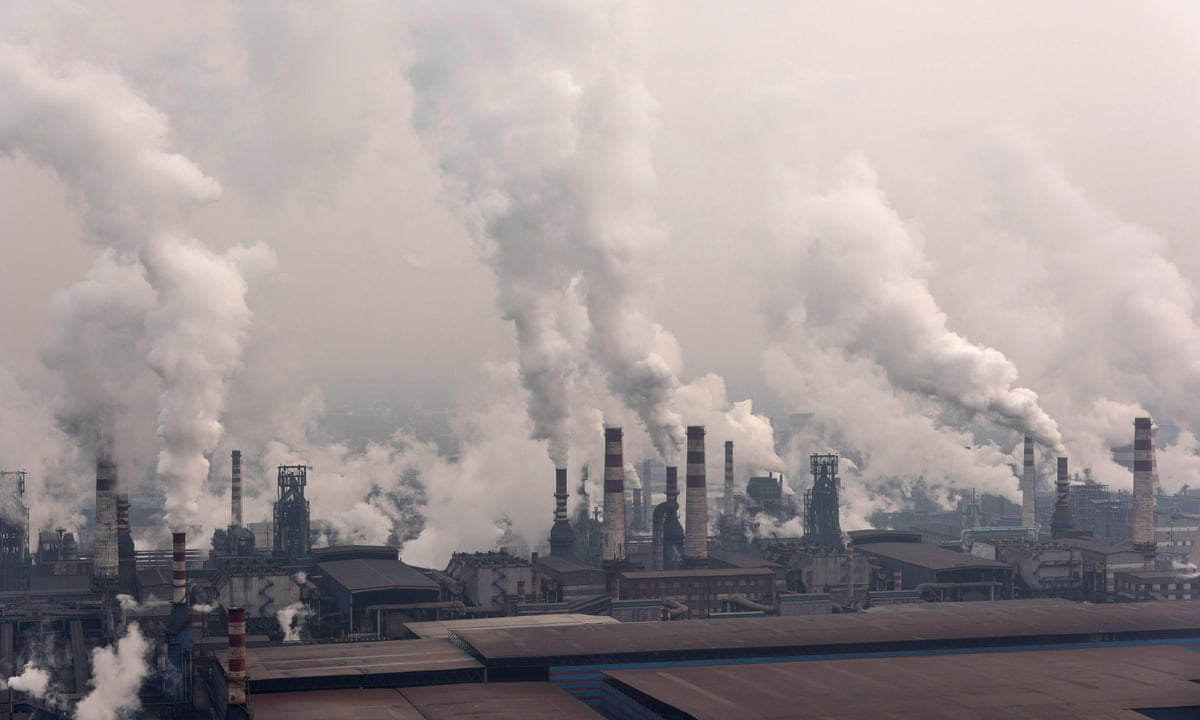
According to scientists, conditions caused by air pollution killed 1.6 million people in China and 1.4 million people in India in 2013. Photograph: Xiaolu Chu/Getty Images

Air pollution caused more than 5.5 million people to die prematurely in 2013, according to research presented on Friday, with more than half of those deaths in India and China and illnesses in those countries almost certain to rise.

According to scientists from the US, Canada, China and India, who presented their findings at the annual meeting of the American Association for the Advancement of Science (AAAS) in Washington DC, conditions caused by air pollution killed 1.6 million people in China and 1.4 million people in India in 2013.

“Air pollution is the fourth-highest risk factor for death globally and by far the leading environmental risk factor for disease,” said Michael Brauer, a researcher from the University of British Columbia.

Brauer said air pollution contributed to heart disease, stroke, lung cancer, bronchitis, emphysema and acute infections.

He and his colleagues compared the problem in Asia to the conditions under centuries of industrial revolution in the US and Europe: massive economic growth smothered by clouds of toxic matter in the air.

Coal pollution alone killed 366,000 people in China in 2013, according to researcher Qiao Ma. She said coal burned for electricity was the largest polluter in the country, and that China’s new targets to reduce emissions, agreed at the Paris climate talks last year, do not go far enough.

“Even in the most clean scenario in 2030,” Ma said, China’s growing and ageing population will still suffer 990,000 to 1.3 million deaths a year. Beijing, the city of her base at Tsinghua University, had its first “red alerts” for smog last year. By a separate study’s count, air pollution kills thousands every day.

“We think that more aggressive policies are urgently needed,” Ma said.

Researcher Chanda Venkataraman attributed the India’s high air pollution to coal, wood and dung fires, which send enormous amounts of ash and toxic particles into the homes of poor families.

About 920,000 deaths there were attributed to outdoor pollution, such as the particulate matter spread by power plants and vehicle emissions. About 590,000 deaths were attributed to household pollution: the emissions from burning for heating and cooking.

Venkataraman, a professor at the Indian Institute of Technology Bombay, said India needed to confront all three sources: industrial coal, agricultural fires and household pollution.

The researchers hailed lawmakers in the US, Canada, western Europe and Japan – or at least their predecessors, whom were credited with major accomplishments in curbing pollution over the past 50 years.

“We actually know the way to solve this problem,” Bauer said.

Dan Greenbaum, the former head of Massachusetts’ department of environmental protection, said in a statement: “Having been in charge of designing and implementing strategies to improve air in the United States, I know how difficult it is.

“This research helps guide the way by identifying the actions which can best improve public health.”

The US supreme court halted the most recent attempt to curb carbon emissions in the US, this week ordering the EPA not to enact Barack Obama’s sweeping new rules for coal-fired power plants, at least until its justices decide the rules’ legality.

The setback has raised fears about whether countries who agreed to the Paris accord will back out, but the Obama administration has insisted the decision will not affect the deal.

Source: Scientists: air pollution led to more than 5.5 million premature deaths in 2013 | Environment | The Guardian

Posted in Air Quality, Asia, China, Health Effects of Air Pollution, India, USA & Canada | Tagged , , , | Leave a comment

Polluted air causes 5.5 million deaths a year new research says 

More than 5.5 million people worldwide are dying prematurely every year as a result of air pollution, according to new research.

Most of these deaths are occurring in the rapidly developing economies of China and India.

The main culprit is the emission of small particles from power plants, factories, vehicle exhausts and from the burning of coal and wood.

The data was compiled as part of the Global Burden of Disease project.

Scientists involved in the initiative say the statistics illustrate how far, and how fast, some nations must travel to improve the air their citizens breathe.

“In Beijing or Delhi on a bad air pollution day, the number of fine particles (known as PM2.5) can be higher than 300 micrograms per cubic metre,” explained Dan Greenbaum from the Health Effects Institute, in Boston, US.

“The number should be about 25 or 35 micrograms.”

Breathing in tiny liquid or solid particles can increase the risk of heart disease, stroke, respiratory complaints and even cancer. And while developed nations have made great strides in addressing this problem these past few decades, the number of citizens dying as a result of poor air quality in developing countries is still climbing.

According to the study, air pollution causes more deaths than other risk factors like malnutrition, obesity, alcohol and drug abuse, and unsafe sex. The Global Burden of Disease project puts it as the fourth greatest risk behind high blood pressure, dietary risks and smoking.

Elderly factor

In China, there are said to be about 1.6 million deaths a year; in India, it is roughly 1.3 million. This data is from 2013, the most recent year for which it is available.

The key sources of pollution concern are slightly different in each nation, however.

In China, the dominant factor is particle emissions from coal burning.

The project calculates this source alone is responsible for more than 360,000 deaths every year.

And even though China has targets to restrict coal combustion and emissions in the future, it may struggle to bring down the number of deaths because it is acquiring an aging population and these citizens are naturally more susceptible to the illnesses associated with poor air quality.

“So, we think more aggressive policies are urgently needed to reduce the emissions from coal combustion and other sectors,” stated project researcher Qiao Ma, a PhD student at Tsinghua University in Beijing.

In India, the problem that draws particular attention is the practice of burning wood, dung, crop residues and other materials for cooking and heating.

This “indoor pollution” causes far more deaths than “outdoor pollution”.

And looking at the broad economic trends in India, the research team says the country runs the risk of having even poorer air quality in the future.

Chandra Venkataraman, from the Indian Institute of Technology Bombay, in Mumbai, warned: “Despite proposed emissions control, there is significant growth in the demand for electricity as well as industrial production.

“So, through to 2050, this growth overshadows the emissions controls (in our projections) and will lead to an increase in future air pollutant emissions in 2050 in India.”

Cost benefit

Michael Brauer, from the University of British Columbia in Canada, said the statistics should make governments think hard about the scope of their anti-pollution policies.

They ought to spur greater ambition, he added.

“The trick here is to not take the 50 or 60 years that it took in the high income countries, and to really accelerate the process; and that’s really where we think these statistics, the data, will come in handy,” he told BBC News.

“In the US, we know that for every dollar spent on air pollution improvements, we can get between a $4-$30 benefit in terms of reduced health impacts.”

Source: Polluted air causes 5.5 million deaths a year new research says – BBC News

Posted in Air Quality, Asia, China, India | Tagged , , , , | Leave a comment

Utah sees worst air pollution since 2013

Utah’s pollution is at its highest levels since 2013 thanks to an inversion that is trapping murky air above Salt Lake and Utah valleys.

Salt Lake City registered a red-air day on Wednesday, with the Utah Division of Air Quality reporting PM 2.5 concentrations as high as 70 micrograms of particles per cubic meter, well above the Environmental Protection Agency’s acceptable level of 35 micrograms per cubic meter, The Salt Lake Tribune reported.

DAQ Air-Quality Monitoring Manager Bo Call said the high pollution levels can be blamed on a prolonged temperature inversion that started earlier this week. The inversion moves warm air over Utah’s valleys, acting as a lid to keep cold air — and pollution — beneath it.

Call says a prolonged period of low air quality hasn’t occurred since January 2013 when a similar inversion moved over the city.

“There’s been the odd day that’s a high value, but not nearly as much,” Call said.

The current inversion is expected to stick around for a while. Salt Lake, Utah, Davis, Weber, Cache, Box Elder and Tooele counties have instituted mandatory solid-fuel burning bans.

Call said a weak storm system expected this weekend may break the inversion or at least weaken it, but otherwise a storm isn’t on the forecast until Feb. 18.

The Utah Climate Center expects the current inversion to continue for about a week.

Source: Utah sees worst air pollution since 2013

Posted in Air Quality, USA & Canada | Tagged , , , , , | Leave a comment

London drivers urged to turn off engines in bid to tackle air pollution

Plans announced by Boris Johnson would see the capital’s drivers encouraged by signs and volunteers to turn off their engines in traffic jams

London drivers will be encouraged by volunteers and signs to turn off their engines in traffic jams to tackle the capital’s illegal air pollution levels, under plans announced by Boris Johnson on Thursday.

But campaigners accused the mayor of failing to take hard measures to cut the city’s pollution problem, which has seen six sites including Oxford Street, Knightsbridge and Brixton Road already breach annual limits just weeks into 2016.

Johnson’s Ultra Low Emissions Zone (ULEZ) for cutting pollution does not come into effect until 2020 and only covers central London. The schemes unveiled today are those that have won £5m from an air quality fund.

Nearly £200,000 will be spent on new electronic signs and measuring equipment at Tower Bridge to ask drivers not to leave their engines idling when the bridge opens, causing congestion for the 31,000 cars that cross it daily. But there will be no enforcement or incentive for doing so.

Another scheme will see “friendly, trained volunteers” sent out on to the streets of eight boroughs including the City of London on high pollution days, to talk to drivers about turning their engines off.

Screen Shot 2016-02-12 at 08.21.06

“Behavioural change has its place, but it’s no substitute for hard measures,” said Green party London assembly member, Darren Johnson.

“For example, one-fifth of the nitrogen dioxide pollution on Tower Bridge comes from Transport for London’s (TfL) buses. The mayor should at least have kept his promise to ensure that all new TfL buses were clean hybrids or better, and focused on eliminating its outdated polluting fleet.”

Simon Birkett, director of Clean Air in London, said: “With many London roads in central London tending to have the highest concentrations of nitrogen dioxide (NO2) from diesel fumes, in the world, Boris’s track record looks like being the worst in the world.” However, he said that some of the projects awarded under the grant scheme looked good.

ClientEarth, an environmental law firm that successfully forced the government to issue a national air clean-up plan last year, said that Johnson should bring forward the start date of the ULEZ, a move called for by the London assembly last year.

“Any attempt to lower air pollution in London is welcome. However, to really tackle this public health crisis in the shortest time possible the mayor must bring in a much bigger and better Ultra Low Emissions Zone sooner than 2020,” said the group’s healthy air campaigner, Andrea Lee.

Dangerous air pollution in the capital has become a key issue in the 2016 London mayoral contest, with Zac Goldsmith promising a “comprehensive plan to tackle it” and Sadiq Khan saying he will consult on expanding the ULEZ to all of zones one and two to improve air quality. As it stands, Tower Bridge will be outside the current planned ULEZ.

Source: London drivers urged to turn off engines in bid to tackle air pollution | Environment | The Guardian

Posted in Air Quality, Europe, London, UK | Tagged , , , , , , , , , , , | Leave a comment

Utah Air Getting Dangerous 

Air quality along the Wasatch front isn’t just unsightly, but getting dangerous. Hospitals are seeing an increase in the number of patients having lung and heart issues. Studies have shown when air is this bad it can lead to more serious heart attacks.

Dr. Denitza Blagev is a Pulmonologist at Intermountain Medical Center, and sees the effects of the bad air first hand. Those with respiratory issues are suffering from the air quality. She notes why those with heart issues need to be careful.

“People with underlying heart disease can actually have an increased risk of heart attack or stoke as well,” said Dr. Blagev.

According to studies people suffer more serious heart attacks during prolonged orange and red air quality days. Intermountain Healthcare has resources to help people know the steps they should take during these conditions.

Dr. Blagev notes that even those not having lung and heart issues can see problems and be more susceptible to getting sick.

“The problem when you have air pollution exposure and then on top of that you get the viral infection your body just has less reserve to cope with that,” said Dr. Blagev.

Experts have said red air days are like smoking a half pack of cigarettes. Those who do outside activities have even more exposure during the same period because they’re breathing heavier. Runner Michael Croxton said he’s started noticing the bad air on his health, but still runs outside because it’s how he exercises.

“Been congested and just feels like I’m running behind a couple of semis the whole time,” said Croxton.

Some people have even resorted to wearing special masks as they walk around. Experts say people should try to stay indoors. Make sure the air filter is clean so the inside air is not as bad.

Source: Utah Air Getting Dangerous – Story | Utah | Good4Utah

Posted in Air Quality, USA & Canada | Tagged , , | Leave a comment

Traffic-Related Air Pollution Linked To Formation Of Facial Dark Spots In Women

Older women often struggle to control dark spots, because no matter what product they use, these spots would not go away. In a new study, researchers found the link between traffic-related air pollution and the formation of facial dark spots in women.

The study, published in theJournal of Investigative Dermatology, included women from Germany and China to demonstrate the link between the levels of traffic-related gas emissions and the formation of dark spots known as lentigines on the skin

They found that Asian women older than 50 years old usually had the most pronounced changes on their cheeks. Aside from particulate matter, air pollution contains increased amounts of nitrogen dioxide (NO2), which has been linked to the development of health conditions like lung diseases and cardiovascular problems. Its effect on the skin, however, has never been investigated, the researchers said.

With an aim to demonstrate the link, the researchers studied two groups of women. The first group involved 806 Caucasian German women and the second group included 743 Han Chinese women. The first group had 2.6 hours a day exposed to the sun while the other group had 3.5 hours. In terms of smoking, about 20 percent of both groups had done the habit.

For the levels of NO2 exposure, the German women had 28.8 micrograms per cubic meter (µg/m3) and the Chinese group had 24.1 µg/m3.

The researchers found no link between the levels of NO2 and formation of lentigines on the forearms and back of the hands, but they noted the increased formation on the cheeks in both groups.

“To the best of our knowledge, this is the largest epidemiological study demonstrating a link between traffic-related air pollution and the formation of lentigines,” the study says (PDF).

An increase of 10 µg/m3 NO2 concentration was linked to 25 percent increase in dark spots. The researchers also performed sensitivity analysis and unveiled that the NO2 gas had a stronger effect than particulate matter concentration.

“The findings also strengthen the concept that the pathogenesis of lentigines might differ depending on the anatomical site,” Li Jin, Ph.D., from the Fudan University’s State Key Laboratory of Genetic Engineering, said.

Lentigines are benign lesions that usually occur on sun-exposed parts of the body. The number and size of the dark spots usually increase with age. They are most commonly found on the face, forearms, hands, and upper trunk.

Source: Traffic-Related Air Pollution Linked To Formation Of Facial Dark Spots In Women : LIFE : Tech Times

Posted in Air Quality, Health Effects of Air Pollution | Tagged , , , | Leave a comment