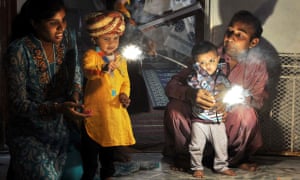
Delhi warns against Diwali fireworks to safeguard air quality 

City authorities advise vulnerable people to remain indoors during Hindu festival as they struggle to keep smog under control

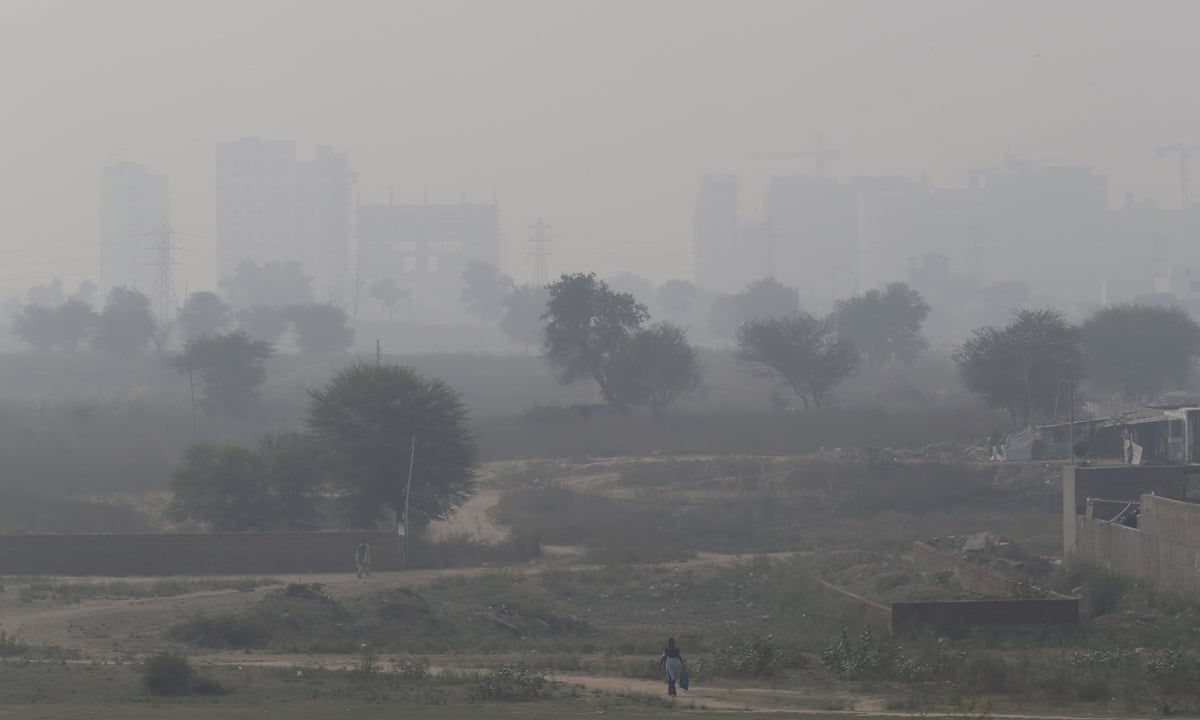
Authorities in Delhi are calling on inhabitants to forego traditional fireworks during this week’s Hindu festival of Diwali in a bid to free the Indian capital from toxic smog.

The festival, celebrated throughout the country, has been blamed in recent years for exacerbating the appalling air quality in the Indian capital, already the most-polluted city in the world, according to the World Health Organisation.

A combination of fireworks, the illegal burning of crop residue in surrounding rural areas, an increase in traffic and weather conditions have combined to send levels of potentially deadly fine particulates, known as PM2.5, up to about 800 micrograms per cubic metre in some areas this year.

Anything higher than an average of 25 micrograms per cubic metre in one day, or 10 micrograms per cubic metre over a year, is considered dangerous by the WHO. Levels of other pollutants are also extremely high.

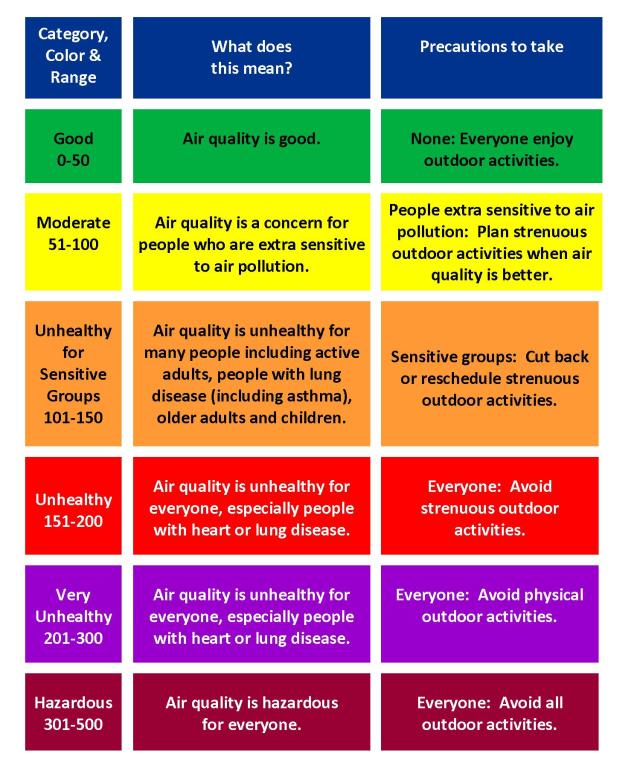
The smog has prompted the country’s top government meteorologists to take the rare step of issuing a health warning. “Everyone with heart and lung diseases, older adults and children should should avoid all physical activity outdoors. There is a serious risk respiratory effects in general public in prolonged exposure,” an official told local media.

Thirteen of the 20 most polluted cities in the world are in India, the WHO has said.

Narendra Modi, the prime minister, is likely to discuss the issue of clean energy with David Cameron during his visit to London this week. India faces pressure to reduce its soaring carbon emissions at the Paris conference later this month.

China has also been hit by a spike in pollution levels in the north-east of the country. In one city, levels of PM2.5 peaked at over 1,400 micrograms per cubic metre.

The bid to convince Delhi’s inhabitants to give up fireworks, though relayed by English-language papers favoured by the elite, did not seem to be having much effect on Wednesday and the city resounded with firecrackers and bangers.

Municipal authorities are now considering changing the law to force manufacturers of fireworks to avoid highly toxic ingredients. “The norms for regulating firecrackers need to be revisited,” said Delhi’s leading environmental official, Ashwani Kumar.

“Studies have shown that even if some components of these firecrackers fall to the ground, there is a chance they could enter our foodchain. This can cause damage to lungs and the metabolic system,” Kumar told the Indian Express.

Officials are also examining proposals for a congestion zone, like that operating in London. A ban on firecrackers, or restrictions on car ownership, is thought to be unworkable.

“I love my car and I love my fireworks,” said Surdeep Singh, a businessman in east Delhi who bought a new SUV a week ago. “That is what Diwali is about … bangs and flashes and shopping. No one can take these from me, only over my life.”

About 200,000 cars were sold in India in October, the highest total for the pre-Diwali shopping season in almost five years and an indication that growth in the south Asian power is accelerating.

Experts believe that about a third of Delhi’s pollution is caused by cars and, particularly, trucks. But stubble burning, when short stalks of leftover straw are deliberately purged, is also a contributing factor in surrounding rural areas. Though authorities have pledged to crack down on the practice, enforcement remains extremely lax. In Haryana, to the west of Delhi, this week, skies were dark with smoke from clearly visible roadside agricultural fires.

Attempts to enforce emission norms have also been stymied by weak enforcement.

The WHO found that India has the world’s highest rate of death from respiratory disease, with 159 per 100,000 in 2012, about 10 times that of Italy, five times that of the UK and twice that of China. One study found that half of Delhi’s 4.4 million schoolchildren would never recover full lung capacity.
“If you look at lung function in children [here], there is significant decline with constant exposure. This will probably be irreversible. For adults, there is also a more rapid decline than usual with age,” Dr Guleria, a lung specialist at the All India Institute of Medical Sciences, told the Guardian earlier this year.
Delhi saw significant improvement in its air quality a decade ago following a slew of measures, including converting buses and autorickshaws to run on gas, moving small industries to the outskirts of the city and raising emission standards.

Source: Delhi warns against Diwali fireworks to safeguard air quality | World news | The Guardian

Posted in Air Quality, Asia, India | Tagged , , , , , , | Leave a comment

Air pollution in Macedonia worsens in winter 

The Macedonian cities of Skopje, Bitola, Kicevo and Tetovo on Wednesday reported the worst air quality, with PM10 (particulate matter up to 10 micrometers in size) concentrations higher than the maximum amount allowed, according to official data.

The air in the capital city Skopje measured 196 micrograms of particulate matter per cubic meter (micrograms/m3), while in Tetovo city the reading was 110 and in Bitola 84 micrograms/m3, the Macedonian Ministry of Environment and Physical Planning said on Wednesday.

Skopje has introduced a new system through which the most polluted areas and streets are sprayed with the chemical calcium magnesium acetate (CMA) that helps reduce air pollution. CMA treatment of roads has proved effective in reducing air pollution in other cities across Europe.

Due to the use of wood for heating during winter, air quality across Macedonia got worse. Car and industrial pollution, as well as construction, contributed to the high levels of PM10 particles in Skopje, Bitola, Tetovo and Kavadarci.

Air pollution is a significant problem in specific locations in Macedonia. According to observations from the system of air quality monitoring stations in Macedonia, particulate matter concentrations have repeatedly exceeded EU standards.

Industrial and energy production is concentrated in several specific locations in Macedonia. The composition of production falls into sectors such as energy, metallurgy, construction, oil refining and textiles.

Source: Air pollution in Macedonia worsens in winter – Xinhua | English.news.cn

Posted in Air Quality, Europe | Tagged , , , , , , | Leave a comment

Reducing China’s air pollution may prevent about 900,000 cardiovascular deaths by 2030: study 

Lowering air pollution to the 2008 Beijing Olympics level could prevent about 900,000 cardiovascular deaths in urban China by 2030, a study said Tuesday.

To guarantee clean air for the 2008 Olympics, China temporarily closed factories, construction sites and limited auto traffic in Beijing.

In the new study, researchers from Beijing’s Fuwai Hospital and other research agencies simulated two air quality improvement scenarios from 2015 to 2030, each achieved gradually over 10 years.

One simulation was of the air quality during the 2008 Beijing Olympics, which was a fine particle matter (PM2.5) level of 55 micrograms per cubic meter. The other was of the World Health Organization’s recommendation of 10 micrograms per cubic meter.

For comparison, they also projected the effect of a 50 percent reduction in active and secondhand smoking and lowering systolic high blood pressure to 140 millimeters of mercury, each over 5 years.

They found achieving the 2008 Olympic air quality level would reduce stroke deaths by 2.7 percent and coronary heart disease deaths by 7.2 percent in urban China, including Beijing, from 2015 to 2030. That means 304,000 stroke deaths, 619,000 coronary heart disease deaths would be prevented in the next 15 years.

But the Olympics scenario would only gain life-years on the order of about a third of that projected for a 50 percent smoking reduction, and a fourth of that projected for systolic hypertension control, they said.

The more aggressive World Health Organization pollution goal, however, would yield greater life year gains than either tobacco or systolic blood pressure control.

“Air pollution is a leading cardiovascular risk factor in Beijing and all urban China,” the researchers concluded in their paper. “We projected that lowering air pollution to Beijing Olympics level could prevent about 900,000 cardiovascular deaths and gain about 4.2 million life years in urban China by 2030.”

The findings were presented Tuesday at the American Heart Association’s annual scientific meeting in Orlando, Florida.

Source: Reducing China’s air pollution may prevent about 900,000 cardiovascular deaths by 2030: study – Xinhua | English.news.cn

Posted in Air Quality, Asia, China | Tagged , , , , , , | Leave a comment

Scientists warn of health damage from Indonesia’s haze fires 

Toxic fumes from the Indonesian fires that have spread a choking haze across Southeast Asia may be doing more harm to human and plant health than officials have indicated, scientists measuring the pollution say.

Farmers are expecting a poor harvest because plants have too little sunlight for normal photosynthesis, while government figures of half a million sickened by the smoke are only the “tip of the iceberg”, said Louis Verchot, a scientist with the Center for International Forestry Research (CIFOR).

Meanwhile, the fires are converting carbon stored in burning peatlands into greenhouse gases, contributing to climate change.

“When the sun goes up, the whole world is yellow. On the worst day, the visibility was less than 100 metres (328 ft),” said Verchot, who led a workshop on the crisis in Central Kalimantan province last month with about 20 scientists from Indonesia, the United States and Britain.

While taking measurements on a burning 5,000-hectare (12,000-acre) plot, the scientists – equipped with gas masks and a drone – trod carefully across the ash-covered peatland to avoid calf-deep holes, hot from the smouldering underground.

They are still analysing their data, but Verchot said they had found harmful gases in the air including ozone, carbon monoxide, cyanide, ammonia, formaldehyde, nitric oxide and methane.

“It irritates your eyes, it irritates your throat. Without a mask, I don’t know how people live in this stuff,” he told the Thomson Reuters Foundation by telephone from Jakarta.

Many people wear simple masks that are ineffective at filtering the dangerous compounds, or no masks at all, he added.

The smoke from the fires on Borneo, Sumatra and elsewhere in Indonesia has spread to neighbouring Singapore, Malaysia, the Philippines and Thailand.

Local media reported that schools in Central Kalimantan had closed for almost five weeks over the past two months, while the haze killed at least 10 people and sickened 504,000 on Borneo and Sumatra – though Verchot believes the figure is much higher.

“People in rural areas seek medical attention when it’s really bad. I’m pretty sure it’s an underestimate. This must be the people who are seriously affected,” he said.

CARBON MONOXIDE IN HOTEL

Daytime flights to Central Kalimantan have been postponed to night when winds blow the all-permeating smoke in a direction that improves visibility for landing, Verchot said.

Martin Wooster, a professor at King’s College London who joined Verchot on the trip, tested his equipment in his hotel room, several kilometres from the fires, and found 30 molecules of carbon monoxide per million molecules of air – enough to trigger a household carbon monoxide detector.

Outside near the burning peatlands, Wooster’s preliminary data indicates more than 1,000 microgrammes of particulate matter per cubic metre of air, and sometimes up to 2,000.

The U.S. Environmental Protection Agency considers any amount over 300 microgrammes per cubic metre hazardous.

“I’d never seen anything like that … I thought it was catastrophic for the local population, having to live with that level of air pollution for such an extended period of time,” said Wooster, who has studied burning biomass in Mexico, Canada, South Africa and Britain.

“The geographic coverage of the smoke was enormous. You could drive for many tens of kilometres and still be in thick smoke. And it is persisting for weeks, even months,” he said by telephone from London.

PREDICTABLE and PREVENTABLE

The smokiest burn sites in Indonesia are the tropical peatlands that large companies and small-scale farmers have deforested and drained for agriculture, palm oil and wood products such as pulp and paper. Lacking a forest canopy, the dried-out peatlands are prone to fire.

Once considered a problem mainly in drought years, the smouldering fires on these “forest cemeteries” of dried peat and wood debris are now occurring annually.

This year has been particularly bad due to lower rainfall linked to the El Niño weather phenomenon, although recent downpours have doused some of the fires and reduced the haze.

While the Indonesian government is struggling to control the crisis, Verchot described the haze as “totally preventable”.

“This was predicted. The solution is not reacting to the crisis, it’s preventing the crisis,” he said. “It requires serious effort. It’s something the government could do if they wanted to.”

CIFOR has urged a reduction in forest conversion and peatland cultivation, better income opportunities in rural areas, and restoration of degraded peatlands.

Greenpeace has called on the pulp and palm oil industries to implement an immediate ban on forest and peatland development, and for peatlands to be reflooded to mitigate fire risks. To discourage palm oil-related forest destruction, the Union of Concerned Scientists and other green groups have lobbied for companies to trade and use palm oil that is not produced in a way that causes deforestation. (Credit: http://www.trust.org)

Source: Scientists warn of health damage from Indonesia’s haze fires | SciTech | GMA News Online

Posted in Air Quality, Asia | Tagged , , , , , , , , , , | Leave a comment

The Return of London’s Fog 

IN January, researchers at King’s College London announced that pollution levels on Oxford Street, in central London, had exceeded limits set for the entire year in just the first four days of 2015. Similarly alarming numbers have been recorded for other streets in the city — and yet the mayor, Boris Johnson, has delayed implementation of stricter air-quality measures until 2020.

What’s happening in London is being played out in cities worldwide, as efforts to curtail the onslaught of air pollution are stymied by short-term vested interests, with potentially disastrous results.

This is not the first time that society has confronted a threat of this kind. In the 19th century, the Industrial Revolution brought millions into the world’s cities, which expanded with unprecedented rapidity, leading to atmospheric pollution as the fossil fuels burned in urban homes poured huge quantities of sooty, sulfurous emissions into the air.

Nowhere was this more obvious, or more threatening, than in the greatest of all Victorian cities, London, where air pollution was literally in front of everyone’s face in the form of the city’s infamous, polluted fog.

The British capital is particularly liable to natural winter fogs. It is surrounded by low hills, with marshland on its outskirts, and a large river running through it. Its location encourages the meteorological phenomenon of temperature inversion, when warm air traps cold air beneath it for days on end. During such a fog, the sulfur-laden smoke from domestic coal fires and factory chimneys was unable to rise into the upper atmosphere, and seeped into the natural fog, turning it yellow, brown, green or black — a process beautifully captured by Claude Monet in his series of paintings of London fog.

Such fogs were known as “pea soupers.” As the name suggested, they were often so thick that people could not see their own feet as they walked through them on the city streets. As the city grew, these fogs occurred more frequently; they became more dense, and they lasted longer.

Londoners were well aware of the dangers the fogs posed to health. In 1873 a number of prize cattle at the Smithfield cattle show, in central London, choked to death during a particularly dense and suffocating fog. Newspapers and medical experts pointed to a statistical increase in deaths in London’s human population from bronchitis and other respiratory diseases during fogs. Now-forgotten pulp-fiction writers like William Delisle Hay produced alarmist stories imagining the destruction of London’s entire population caused by the fog.

Fog could also be a cover for crime. “Linklighters,” boys or men who earned a few pennies carrying lighted torches to lead people through the darkened world of the London streets, would sometimes lead people down a quiet alleyway to be robbed. Burglars were reported to be particularly fond of breaking into people’s houses during major fogs, which not only made them hard to see, but deadened sound as well.

And yet, for decades, every law proposed in Parliament to curb smoke emissions was watered down so heavily that it had no tangible effect. What explains such legislative inertia?

Vested interests were a major obstruction. In 19th- and 20th-century London, many industries thwarted attempts by successive governments to clean up the capital’s air. Often they would simply refuse to install smoke purifiers on their factory chimneys, blaming the smoke from household fires instead.

Moreover, the fines on violators were often so small that they could not serve as a deterrent. Magistrates had sympathy for the industrialists, especially the smaller ones, who could not afford to convert their furnaces to more efficient, cleaner models. And, above all, smoke from industrial chimneys represented jobs and growth — which, in turn, gave people wages with which they could afford a fire at home, thus exacerbating the problem.

There was a cultural component, too. The British were wedded to their open fires. Closed stoves, popular throughout much of Europe, especially in Germany, were shunned by Londoners. During World War I, Britons were exhorted, in the words of the famous song, to “keep the home fires burning.” Politicians were simply not willing to risk unpopularity by forcing Londoners to stop using coal and go over to gas or electric heating instead. In Britain today, in an echo of these earlier concerns, the government is cutting subsidies for onshore wind and solar farms, anxious not to offend voters in rural areas where such facilities would be built.

It took a disaster to force London to change direction. In 1952, a “great killer fog” lasted five days and killed an estimated 4,000 people. In a Britain trying to turn a corner after the death and destruction of the Blitz, this was unacceptable. A Clean Air Act was passed in 1956, forcing Londoners to burn smokeless fuel or switch to gas or electricity, power sources that had become much cheaper as these industries expanded.

Legislation for clean air was taken up by many politicians, but perhaps the most surprising was the extravagantly mustachioed Conservative politician Sir Gerald Nabarro, whose flamboyantly expressed opinions included the retention of capital punishment, opposition to European integration and strident racism. But it was Nabarro who sponsored the 1956 act.

More surprisingly still, it was Robert Maxwell, the Czechoslovakian-born British media mogul and Labour member of Parliament, who pushed through further legislation in 1968 to strengthen the provisions of the previous bill. His dubious financial transactions may have earned him the nickname “the bouncing Czech,” but in this instance he performed a genuine public service.

The 1956 act took a long time to become effective, but it worked: Another great yellow fog in 1962 was the last. Since then, despite the belief in some parts of the world — not least the United States — that there are still foggy days in London town, pea soupers have become a thing of the past.

And yet, after several decades of cleaner air, we seem to be sliding back. Motor vehicles are now the main cause of air pollution, and campaigners are trying to create some urgency around the debate to reduce car emissions. But people are as wedded to cars now as they were tied to their open fires a century or more ago. Will another eccentric British politician take up the mantle?

Mr. Johnson is certainly eccentric, but he has vehemently denied reports about London’s increasing pollution. “Ludicrous urban myth,” he wrote on Twitter. “London air qual better than Paris and many other Euro cities — and go to Beijing or Mexico City.” He later backed off his statement somewhat, but he also pared back London’s planned Ultra Low Emissions Zone and put off any effective action until 2020.

Empty promises, delays and evasions are reactions that many of London’s earlier clean-air campaigners would have recognized only too well. If a city like London can’t control its air quality, what hope is there for Beijing or Mexico City, or indeed the rest of the world’s rapidly growing cities? Great fogs may not come back to England, but it’s unlikely that the world has seen its last pea souper.

Source: The Return of London’s Fog – The New York Times

Posted in Air Quality, Europe, London, UK | Tagged , , , , , , , , , , , | Leave a comment

Even Moderate Air Pollution Could Trigger Severe Heart Attacks: Study 

Even moderate levels of air pollution have now been linked to increased risk of heart attacks in people with heart disease. That’s according to new research presented Sunday at the American Heart Association’s annual conference.

Researchers analyzed 20 years of data on 16,000 heart attacks treated at Intermountain Healthcare in Utah. They matched the medical records to weather data on fine particulate matter 1 in the air. That’s the kind of pollution that comes from burning fuel in vehicles or power plants, or other sources, such as wildfires.

They found that elevated risk of heart attacks began at a pollution level that U.S. environmental regulators consider “moderate.” The threshold was around 25 micrograms of fine particles per cubic meter, which translates to an air quality index of 78 on the Environmental Protection Agency’s scale. That’s considered a yellow warning—acceptable air quality for most people but potential concern for a “very small number of people who are unusually sensitive to air pollution,” according to the EPA.

The analysis is the first to link the most dangerous types of heart attacks, where an artery is entirely blocked, to short-term exposure to moderately polluted air, said Dr. Kent Meredith, an interventional cardiologist at Intermountain and lead investigator on the study. Researchers didn’t find an increased risk for people without heart disease, and they didn’t find risk at lower levels of pollution.

How does air pollution trigger heart attacks? “When you have exposure to that high a level of inhaled fine particulate matter, you’re triggering your immune system,” Meredith said. The immune response can cause plaque built up in the arteries to become unstable and dislodge, clogging arteries and blocking blood flow to the heart.

In the Salt Lake City area, where Intermountain is based, cold air masses tend to settle in the valley in January and February, Meredith said, bringing smog with them. “It’ll look pretty gray, the air is thick and brown,” he said. “In mountains a thousand feet above that, you can actually see that layer.”

For people with heart disease, the study suggests limiting time outdoors and exercise at relatively modest levels of pollution. The risk to people with heart disease increases with more particulates above that threshold. “The data suggests that you can recommend that patients with heart disease are more vulnerable for those types of events when they’re exposed to higher levels of pollution,” Meredith said.

Source: Even Moderate Air Pollution Could Trigger Severe Heart Attacks: Study – Bloomberg Business

Posted in Air Quality, Health Effects of Air Pollution | Tagged , , , , , , , , | Leave a comment

Airpocalypse now: China pollution reaching record levels 

In some areas level of harmful particles in the air were 56 times the levels considered safe by the World Health Organisation

Residents of north-eastern China donned gas masks and locked themselves indoors on Sunday after their homes were enveloped by some of the worst levels of smog on record.

Levels of PM2.5, a tiny airborne particulate linked to cancer and heart disease, soared in Liaoning province as northern China began burning coal to heat homes at the start of the winter.

Screen Shot 2015-11-10 at 09.12.21

<blockquote class=”twitter-tweet” lang=”en”><p lang=”en” dir=”ltr”>North East <a href=”https://twitter.com/hashtag/China?src=hash”>#China</a&gt; horrendous pollution levels at the moment. PM2.5 should be under 50 and in Shenyang it is… <a href=”https://t.co/WGOeiiKs7f”>pic.twitter.com/WGOeiiKs7f</a></p>— Stephen McDonell (@StephenMcDonell) <a href=”https://twitter.com/StephenMcDonell/status/663355094386278401″>November 8, 2015</a></blockquote>
//platform.twitter.com/widgets.js

In Shenyang, Liaoning’s capital, visibility levels plummeted to as little as 100 metres, the state broadcaster CCTV said.

China’s official news agency, Xinhua, published an apocalyptic gallery of images showing the country’s latest smog crisis alongside the headline: “Fairyland or doomsday?”

Screen Shot 2015-11-10 at 09.14.41

In some areas of Shenyang, PM2.5 readings reportedly surpassed 1,400 micrograms per cubic metre, which is about 56 times the levels considered safe by the World Health Organisation.

“The air stings and makes my eyes and throat feel sore when I’m outdoors,” one woman, who had ventured out to buy a face mask, was quoted as saying. “As for what exactly we should do, I don’t know,” she added.

By Monday afternoon there had been a slight improvement, although air quality remained at “hazardous” levels in Shenyang, an industrial city of about 8 million inhabitants.

Screen Shot 2015-11-10 at 09.15.11

The Associated Press said Sunday’s smog represented one of the worst episodes of air pollution recorded in China since authorities began releasing air quality data in 2013.

There was indignation on social media as China confronted its latest “airpocalypse”.

“The government knows how severe the smog problem is, so why haven’t they tackled it?” one critic wrote on Weibo, China’s Twitter.

“What’s the point of having an environmental protection department? The precondition for developing the economy is not damaging the environment. Our leaders are all well educated. Can’t they understand this simple truth?”

Others reacted with resignation. “Other than reporting it, what can the government do?”

Shenyang, a major industrial centre since the days of Mao Zedong, has been attempting to clean up its act in recent years by relocating factories and starting to use natural gas instead of coal to heat homes.

But on Monday doctors in Shenyang were dealing with the consequences of the latest bout of toxic pollution to hit their city.

Yang Shenjia, who works at the Liaoning Jinqiu Hospital, said there had been a sudden influx of patients suffering from breathing complaints over the past two days. “The respiratory department’s inpatient wards are full,” the doctor told Xinhua.

Source: Airpocalypse now: China pollution reaching record levels | World news | The Guardian

Posted in Air Quality, Asia, China | Tagged , , , , | Leave a comment

Kraków issues smog warning 

The southern Polish city of Kraków issued a warning on Thursday in the wake of a dramatic increase in smog.A statement released by the city hall advised that the most vulnerable groups, including asthmatics, children and the elderly, should avoid protracted exposure to the open air.”

The level of air pollution is apparently four times over the norm, and the mayor of Kraków has petitioned the regional governor to introduce emergency measures that would force lorries to bypass the city.

Smog levels always rise in Kraków with the onset of winter, and studies have shown that 50 percent of winter pollution comes from low emission sources, namely from the burning of coal and other objects in household stoves.

Anti-smog law

President of Poland Andrzej Duda signed a so-called ‘anti-smog’ law in October, following a long-running campaign by environmentalists.

The legislation gives local authorities complete sovereignty in deciding whether bans should be implemented regarding such matters as the burning of environmentally hazardous substances in domestic properties.

Kraków aims for a ban on burning coal to be enforced by 2019.

Meanwhile, the city is continuing a programme that funds the replacement of old-fashioned domestic stoves with environmentally friendly alternatives.

A 2013 report by the European Environment Agency found that Kraków had the third most polluted air of 383 cities across Europe.

Smoke, heavy traffic and Krakow’s location in a valley that has little wind to disperse the smog combine to make the city’s air the most polluted in Poland.

Source: Kraków issues smog warning – National

Posted in Air Quality, Europe | Tagged , , | Leave a comment