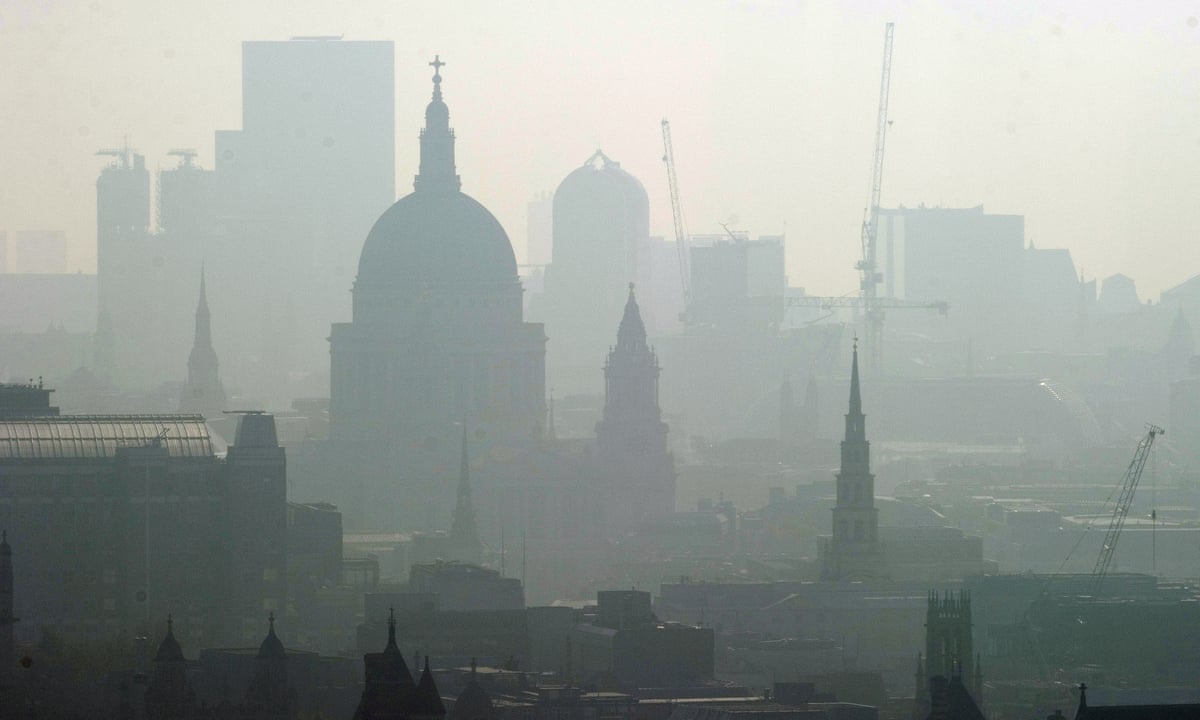
London’s toxic air: How is your London borough affected? 

Twice as many people in London are being killed by air pollution than previously thought. Research found 9,400 people a year die because of toxic fumes and particles in the air.Here’s how the figure breaks down between each London borough.

  • Barking and Dagenham, 142 deaths
  • Barnet, 279 deaths
  • Bexley, 201 deaths
  • Brent, 193 deaths
  • Bromley, 271 deaths
  • Camden, 173 deaths
  • Croydon, 271 deaths
  • Ealing, 245 deaths
  • Enfield, 212 deaths
  • Greenwich, 200 deaths
  • Hackney, 148 deaths
  • Hammersmith and Fulham, 132 deaths
  • Haringey, 144 deaths
  • Harrow, 150 deaths
  • Havering, 207 deaths
  • Hillingdon, 188 deaths
  • Hounslow, 174 deaths
  • Islington, 164 deaths
  • Kensington and Chelsea, 133 deaths
  • Kingston upon Thames, 117 deaths
  • Lambeth, 198 deaths
  • Lewisham, 204 deaths
  • Merton, 141 deaths
  • Newham, 165 deaths
  • Redbridge, 200 deaths
  • Richmond upon Thames, 136 deaths
  • Southwark, 206 deaths
  • Sutton, 157 deaths
  • Tower Hamlets, 158 deaths
  • Waltham Forest, 165 deaths
  • Wandsworth, 210 deaths
  • Westminster, 184 deaths

Source: Kings College London

Source: London’s toxic air: How is your London borough affected? | London – ITV News

Posted in Air Quality, Europe, London, UK | Tagged , , | Leave a comment

Air Pollution Increases Risk of Rejection of Transplanted Lung

Air pollution spells bad omen for people who are recipients of transplanted lungs, according to a new European study.

During the international meet among European Respiratory Society members, University of Leuven’s Dr David Ruttens shared that lung transplant recipients who lived in urban areas whose air pollution is more than what’s recommended by the World Health Organization (WHO) have an increased mortality risk by as high as 10% than those who lived in rural places where pollution levels are lower. WHO suggests keeping the levels of PM10 particles, which are ones emitted by road vehicles, to no more than 20 mcg per cubic meter.

Although more than 45% of the recipients of lung transplants live for at least 5 years, this percentage is lower than that of other transplant recipients, and one of the common reasons is chronic rejection of the organ.

For the study, the Dr Ruttens and his team worked with the data of more than 5,000 lung transplant recipients across 10 countries in Europe between 1987 and 2012. They also used the follow-up information in 2013.

For further analysis, they focused on smoking, sex, age, and type and date of transplant of these patients, whether they are taking macrolides (medications given to control organ rejection or inflammation), among others. They also estimated the amount of exposure they had on PM10 particles based on their addresses and road density.

The team also collaborated with ESCAPE (environmental expert consortium) to effectively measure the concentrations of these particles annually according to the distance between the main roads and homes of these recipients.

The results of the study reveal that within the next 5 years of follow-up, around 47% of the recipients had chronic organ rejection while more than 43% of them died. At least 60% of the patients received macrolides, and around 37% did not. Chronic organ rejection was significantly higher than those who took the macrolides. However, the rate of death was far lower among those who had the drug than those who did not, which suggested the drug helped prevent death among transplant recipients.

Moreover, the researchers found an association between distance of the recipient’s home to the main road and the rate of chronic organ rejection among the macrolide-free group, in which the mortality and chronic organ rejection risk is at least 11% for every increase of 100 meters of distance in 200, 500, and 1000 meter zones. This link is not present among those taking the macrolides.

Source: Air Pollution Increases Risk of Rejection of Transplanted Lung : HEADLINES : Youth Health Magzine

Posted in Air Quality, Health Effects of Air Pollution | Tagged , , , , | Leave a comment

How ozone attacks our food

September marks the end of the UK’s summer and also the end of our risk period for summertime smog. From now on, shorter days and weaker sun mean that ground level ozone won’t pass six on the 10-point UK pollution index.

This year summertime smog in the UK was confined to three main periods; during the early July heatwave over most of England and parts of Wales, in early August across the southern half of England spreading westwards, and then across Scotland and England later in the month.

Ozone at ground level is a main pollutant in summertime smog. It is bad for our health and it is bad for plants too. Air pollution has been damaging plants for centuries; the Victorians planted London Plane trees in city centres because of their resistance to sulphur from coal burning, and images of forest dieback across northern Europe in the 1980s were a powerful illustration of the harm that industrial and traffic pollution can do to trees and, more importantly, the soils that they grow in.

Ozone does not affect soils but instead it attacks plants’ leaves and stems causing small, pale yellow, cream or bronze pinhead sized blotches that can join together. The main crops affected in Europe are wheat, potatoes and sugar beet.

Researchers from Leeds and York universities estimate that ozone reduces European wheat yield by around 3%. You can help the UK Centre for Ecology and Hydrology to track these effects by planting an ozone garden and photographing leaf damage using their app.

Source: How ozone attacks our food | Environment | The Guardian

Posted in Air Quality | Tagged , , , , , | Leave a comment

What happens on the molecular level when smog gets into the lungs? 

Coughing. A sore throat. Maybe a pain in your chest as you take a deep breath. These are all common symptoms for many city-living people when smog levels are high. And while it is well understood that smog can cause such problems, new research has for the first time given us a glimpse as to what might be happening at the molecular level.

Coughing. A sore throat. Maybe a pain in your chest as you take a deep breath.

These are all common symptoms for many city-living people when smog levels are high. And while it is well understood that smog can cause such problems, new research has for the first time given us a glimpse as to what might be happening at the molecular level.

The University of Melbourne’s Professor Richard O’Hair, from the School of Chemistry’s Bio21 Institute, in collaboration with Professor Stephen Blanksby (from the Queensland University of Technology and formerly the University of Wollongong) co-authored a study examining how ozone reacts with models of lung proteins.

Smog is made up of ozone — an invisible gas and a well-known air pollutant made up of three oxygen atoms. Ozone is also the pollutant that leaves a distinctive smell in the air after using a photocopier.

Using a mass spectrometer, the research team was able to introduce the amino acid cysteine — a component of lung proteins — with ozone molecules in a highly-controlled, near-vacuum environment.

The effect was instant, or in scientific terms, close to the “collision rate.”

“We observed that the cysteine became ‘radicalised’ in the presence of ozone,” said Professor O’Hair.

“No one had really noticed that you can form free radicals in the reaction of proteins with ozone, and since these are highly reactive species, you don’t want them around.

“Free radicals can unleash fury and cause many chemical transformations.

“If they get out of control, they can just chew through a system and destroy it. For example, free radical damage is thought to play a key role in heart disease and some cancers.

“So when free radicals are formed in the body, such as the lining of the lung, damage occurs, that may ultimately result in inflammation and breathing difficulties.”

The research pushes forward the understanding of the molecular effect of ozone on proteins. But because the tests were conducted in an artificial environment, more work needs to be done to confirm the creation of protein free radicals in lungs and link their effects on human lung physiology.

Professor O’Hair hopes the research inspires fellow scientists to build on the findings.

Associated research will be of the most benefit to those with asthma, other respiratory illnesses or the young and the elderly who are most susceptible to smog.

“If there is free radical damage to lung proteins, it’s unlikely to be reversible, so you won’t be able to design a magic-bullet drug to undo the damage,” Professor O’Hair said.

“Ozone is the result of pollution. So the message has to go out that we need to be proactive on reducing smog levels and pollution.”

Source: What happens on the molecular level when smog gets into the lungs? — ScienceDaily

Posted in Air Quality, Health Effects of Air Pollution | Tagged , , , , | Leave a comment

Iran: catastrophic air pollution conditions in Tehran

198 tons of contaminating compounds and particles have entered Tehran’s air in one day alone.

State-run media wrote on September 23rd in which traffic into the Iranian capital increased by 20%, a total of 134 tons of carbon monoxide, 8 tons of nitrogen oxide, 16 tons of lightweight compounds, 400 kilograms of sulfur dioxide and 64 kilograms of other free-floating particles entered the air of Tehran.

World Health Organization statistics show Iran under the mullahs’ rule is ranked 3rd in the world in air pollution.

Source: Iran: catastrophic air pollution conditions in Tehran

Posted in Air Quality, Iran, Middle East | Tagged , , | Leave a comment

Differences between the Respro® StreetSmart™Mask and Respro® sports masks

Respro® StreetSmart™1. Technical

2. Practical

3. Application

4. Aesthetic

5. Price

6. Durability

From a a technical standpoint the filter material is the same, an electro statically charged non-woven material that is tested for the removal of 99% of all sub micron particulates down to 0.5 microns. The mask has to seal to allow inhaled air to pass though that filter. If the mask does not seal properly, then no matter how good the filter is, air will pass around the sides of the mask unfiltered.

street-smart-lifestyle-black

The white Respro® StreetSmart™ Mask, is certified to European Standard (EN149-FFP3). The black Respro® Streetsmart™ Mask is currently undergoing certification. It has been manufactured within the technical specification of EN149-FFP3NR.  Both masks offer the highest level of protection for the removal of PM2.5. The FFP3 is equivalent to the American Standard N99, which is higher than N95.

A regular commuter will find this mask invaluable for their daily trips in the city as it can be re-used in these environments*.

The Respro®StreetSmart™ Mask has been specifically designed with a unique seal to ensure an excellent fit for a variety of face shapes. This inner face seal helps maintain a close, snug fit around the nose and chin areas which is regarded to be the main weakness on most standard face masks. There are two head straps: one that sits at the top of the head and a second adjustable strap that clips around the back of the neck.

One size fits, large, medium and small faces and is glasses compatible.

From the practical point of view, we would not recommend the Respro® StreetSmart™ for running or any other activity that requires an elevated breathing rate. It would soon be obvious that anything above walking or home use would not be suitable and that the mask would become restrictive over a period of time.

The price reflects the aesthetic point of view, the Respro® StreetSmart™ is somewhat less attractive and in todays visual world, masks have to be seen to be cool as well as function efficiently.

The durability or reusability of the Respro® StreetSmart™ is not the same as a Respro® sports mask, whilst it can be used several occasions it is ultimately a disposable product unlike Respro® sports masks which have a replaceable filter and a durable shell that have comfort and aesthetic built into the design.

The benefits of the Respro® StreetSmart™ mask are there to ensure that the end user can acquire the best ‘industry standard’ product, albeit with regards to one particular pollutant type that of PM* or Particulate Matter which is currently being commented on around the globe as the major pollution concern.

*What does PM stand for?

* if used under guidelines for Health and Safety in the work place, this mask is regarded as a ‘single shift’ respirator. The black Streetsmart™ Mask, undergoing certification, is currently not suitable for use under these guidelines.

This post has been edited on 24th March 2020.

Posted in Respro® Masks, Respro® Products | Tagged , | 4 Comments

18 areas in UK exceed safe nitrogen dioxide levels, reports GMB 

The GMB is calling for action on nitrogen dioxide levels as a new study finds that roadside workers including street cleaners and parking enforcement staff are being exposed to unsafe levels of the pollutant

The study measured 2015 NO2 levels in the air at 110 monitoring stations across the UK, some by the roadside, others at background locations or in rural areas.

The European Union sets NO2 levels at 40ug/m3 (micrograms per cubic metre) on average over a year. However, a total of 18 stations were found to be this level, including in areas such as Camden, Oxford centre and Glasgow.

John McClean, GMB national health, safety and environment officer, said: “These figures on nitrogen dioxide confirm the urgent need for better air quality monitoring in urban and built up areas. Clean air should be a right, not a privilege.

“Road transport is a major cause of air pollution. Even though engine technology is improving, these exposure levels are still dangerously high, and place workers and the public at increased risk of respiratory diseases.”

He added: “We reiterate our call for high polluting vehicles to be banned from city centres, and for local authorities to take immediate action in priority areas such as near schools, hospitals and GP surgeries.

“Waiting for technology to reduce emissions is not an acceptable response. GMB calls for action now.”

Source: 18 areas in UK exceed safe nitrogen dioxide levels, reports GMB | Fleet World

Posted in Air Quality, Europe, UK | Tagged , , , , , , , | Leave a comment

Hazardous air quality detected in Kalimantan and Riau 

The Air Pollution Standard Index (ISPU) reached a hazardous level on Saturday in several cities, including in Palangkaraya in Central Kalimantan, Pontianak in West Kalimantan and in Riau’s cities of Pekanbaru, Kampar, Bengkalis and Siak.

Palangkaraya’s air quality suffered the most according to Saturday’s 2 p.m reading, reaching 1,912 micro grams per cubic meter (mg/m3), while others’ ranged from 401 to 602 mg/m3.

“The pollution index readings in these cities are far above the minimum hazard threshold, which is 350 mg/m3,” said National Disaster Mitigation Agency (BNPB) spokesman Sutopo Purwo Nugroho on Saturday as quoted by setkab.go.id.

He added that Jambi’s ISPU was not being monitored due to broken devices and that the index in Banjarbaru in South Kalimantan and Samarinda in East Kalimantan were both at mid-level with 66 and 98 mg/m3 respectively.

According to Sutopo, visibility in Palangkaraya since Saturday morning had been only 50 to 300 meters.

“Meanwhile, visibility in Jambi city and Kerinci, in Jambi, Sintang in West Kalimantan and Pekanbaru is between 300 and 500 meters,” said Sutopo.

The smog has also affected people’s health. Cases of respiratory infection have increased in several regions including South Kalimantan with 53,428 reported cases, Pekanbaru with 34,846, South Sumatra with 22,855, West Kalimantan with 21,130 and Central Kalimantan with 4,121.

Sutopo also said that the air quality in Singapore had gotten better. On Friday, Singapore recorded a very unhealthy ISPU reading of between 267 and 322 mg/m3.

“On Saturday, Singapore’s index was between 90 and 107, which is moderate,” said Sutopo.

He added that all smoke emergency operations were still ongoing in the air and on the ground as well as law enforcement and social welfare efforts.

“There are two reasons why the fires are still burning: extinguished fires have caught fire again in peatlands and people are still starting fires,” said Sutopo.

According to local reports as well as satellite images, both old and new hot spots are still being detected

Source: Hazardous air quality detected in Kalimantan and Riau | The Jakarta Post

Posted in Air Quality, Asia, Singapore | Tagged , , , , , , , , , , , , | Leave a comment