Smog from Indonesian forest fires blankets Thailand’s southern islands, including Phuket and Samui

Popular Thai holiday islands are being blanketed by haze from Indonesian forest fires, forcing several planes packed with tourists to turn back due to poor visibility.

The travel disruptions came as Indonesia finally agreed to accept international help to fight fires that have been started deliberately to clear agricultural land.

Five flights bound for the resort islands of Phuket and Samui turned back to Bangkok on Thursday, according to the Aeronautical Radio of Thailand, which controls air traffic across the country.

A further two airlines flying to Phuket from Singapore were forced to circle the airport for up to an hour before landing, it said.

“It is the worst haze [on the island] in many years,” said Trakul Thotham, director of the department of disaster prevention and mitigation on Phuket.

However, he said the smog was “getting better” on Thursday.

Of the seven affected southern Thai provinces, Phuket has been worst-hit with unhealthy levels of particulates in the air, according to the department.

Wipa Emem, a reservation clerk at the Holiday Inn Resort on the island, said some Thais wore protective masks to combat the pollution, but tourists were mostly “still on the beach”.

Fires illegally started to clear land for plantations on Sumatra and the Indonesian part of Borneo have shrouded Singapore and Malaysia in acrid smog, worsening air quality, closing schools and forcing the cancellation of outdoor events

After weeks of insisting it could tackle the crisis alone, Indonesia said it was in talks with countries about assistance including Australia, Singapore, Russia, Malaysia and China.

“Hopefully, we can speed up our efforts,” president Joko Widodo told reporters before flying to Jambi, one of the worst-affected provinces on western Sumatra island.

But his jet was unable to land at the local airport due to the haze and forced to divert to another airport on Sumatra, presidential spokesman Ari Dwipayana said.

The blazes are an annual occurrence during the dry season, but scientists have warned this year’s are on track to be the worst ever due to an El Nino weather system that has created tinder-dry conditions in Indonesia.

Jakarta has deployed about 25,000 personnel and aircraft, but the fire-fighters have seemed overwhelmed by the extent of the blazes.

On Thursday there was some respite from the haze for Singaporeans and Malaysians with air quality recording moderate levels.

Source: Smog from Indonesian forest fires blankets Thailand’s southern islands, including Phuket and Samui – ABC News (Australian Broadcasting Corporation)

Posted in Air Quality, Asia, Singapore | Tagged , , , , , , , , , | Leave a comment

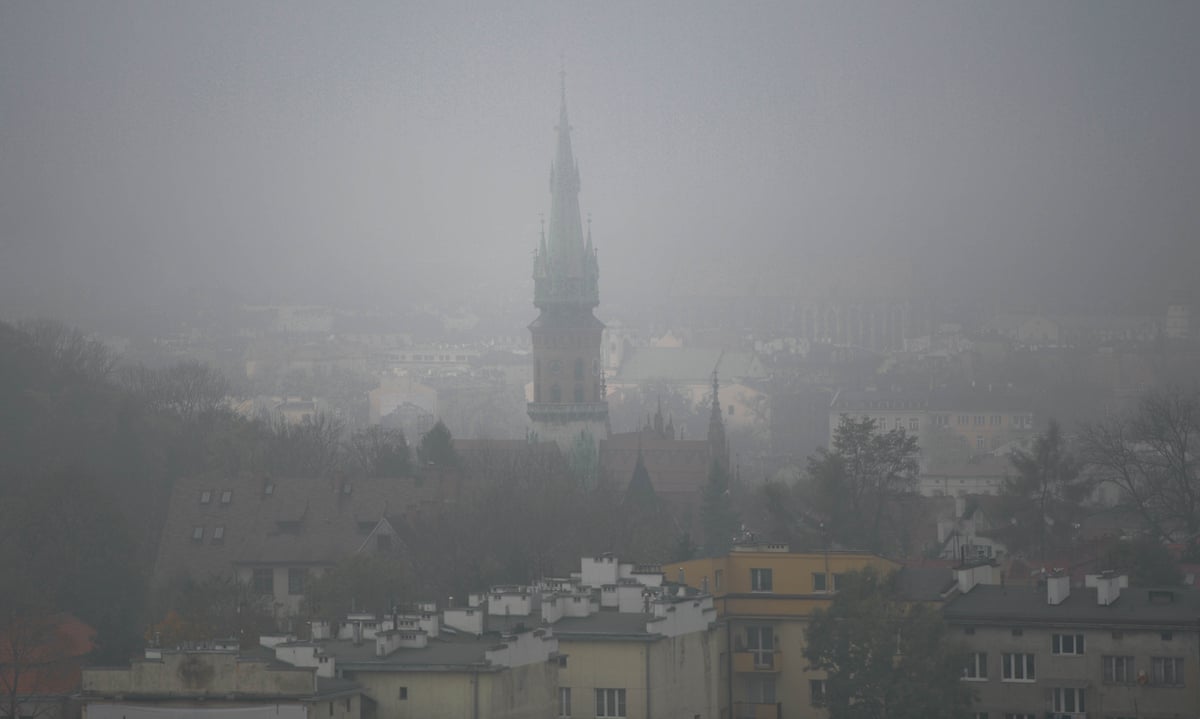
Poland’s second city to ban coal use after anti-smog law approved

Krakow says it will introduce a ban on burning coal in households, offices and restaurants, despite protection of the industry becoming an election issue

The Mayor of Krakow has told the Guardian he will introduce a ban on coal use in households, offices, government buildings and restaurants after an amended Environmental Protection Act was signed by the country’s president, Andrzej Duda.

Poland’s second largest city is as famed for the filthy smog that cakes its buildings and streets, as for its beautiful historic buildings. The European Environmental Agency has ranked it the third most polluted city in Europe and its particulate matter (PM) pollution can reach six times the safe levels.

Household stoves burning coal are responsible for an estimated 88% of the country’s non-industrial air pollution – and almost half of Krakow’s PM pollution. Under the new EPA signed on Tuesday, which was amended after a long-running battle with the courts, local authorities can now prohibit their use.

“We will concentrate our efforts on introducing in Krakow a ban on the use of coal in individual furnaces and boiler rooms,” said Jacek Majchrowski, the city’s mayor. “It will speed up the process of removing the coal stoves and replacing them with eco-friendly heating systems.”

Poland emits more greenhouses gases and sulphur dioxide from coal than any other European country, and also has the continent’s highest coal-related health costs, with around 45,000 premature deaths each year attributed to coal burning.

The coal industry is a major Polish employer, seen as a guarantor of energy independence. The protection of its future has become a major issue in the 25 October elections, with the leading parties out-bidding each other in its defence.

The country’s prime minister, Ewa Kopacz, last week announced a plan to transfer publicly-owned stakes in coal companies such as PGE for use as collateral in their buy-out of TF Silesia, a highly unprofitable national coal firm.

“In that context the decision in Krakow gives hope,” the Liberal MEP Gerben-Jan Gerbrandy told the Guardian. “All of Poland’s political parties are unanimous about protecting coal consumption so when, at local level, people start questioning its use for health reasons, it might become a game changer in the national debate.”

The Krakow council now says it will move ahead with plans for new district heating networks, and revamped public transit networks. Vehicle access to the city centre is being limited too, even though the national parliament rejected the introduction of low emissions zones in urban areas.

Majchrowski said he would also urge the Małopolska regional authority to follow Krakow’s lead and adopt the ban on solid fuels in heating. “We are hoping that local authorities elsewhere will start fighting air pollution as vigorously as we do in Krakow,” he said.

“This is a chance for a breakthrough in the fight for clean air in Poland,” said Ilona Jędrasik, a spokeswoman for the environmental law firm ClientEarth. “Now it is time for local authorities to make their next move.”

Poland depends on coal for nearly 90% of its electricity, and its defence of the fuel has been an ongoing bugbear in European climate negotiations.

Source: Poland’s second city to ban coal use after anti-smog law approved | Environment | The Guardian

Posted in Air Quality, Europe, Poland | Tagged , , , , , | Leave a comment

Smog begins to blanket Saigon as air pollution soars

Smog has been spotted at many places across Ho Chi Minh City in recent mornings and a weather expert says worsening air pollution is to blame.

The thick blanket of smoke and fog was most noticeable in Districts 1, 2, 4, 9 and Binh Thanh, where drivers on several streets said they had difficulties seeing vehicles in front of them and had to keep honking.

A xe om motorbike taxi driver in District 1 told Tuoi Tre newspaper that he first saw some smog on Monday, but it became thicker on Tuesday morning and refused to clear until after 10 a.m.

Owner of a coffee shop in Binh Thanh District said the smog on Tuesday morning was so thick she could not see people from ten meters away.

“It looks like Da Lat,” she said, referring to Vietnam’s Central Highlands town known as Little Paris where it is almost always cool and foggy.


Health risks

But experts said unlike the fog in Da Lat, there is nothing romantic about this.

Dang Van Dung, deputy director of the Southern Hydro-meteorological Forecast Center, said that it was the accumulation of dust and smoke particles.

It does not only affect visibility but can be a serious respiratory health threat, Dung said, recommending drivers to wear face masks.

He said the phenomenon will continue for several days as there’s not enough wind to disperse the smog.

He said the possibility of HCMC being affected by cloying smoke generated by forest fires in Indonesia is not ruled out.

He said smog began to appear in the city two years ago, warning that it will get worse if the city fails to reduce emissions.

Smog has also occurred at several other southern provinces with robust industrial activities, he said.

Smog seen on Nam Ky Khoi Nghia Street on Tuesday morning. Photos: Tien Long/Tuoi Tre

Smog on the Saigon River

The view of District 2 from District 1 across the Saigon River on Tuesday morning.

Source: Smog begins to blanket Saigon as air pollution soars | Society | Thanh Nien Daily

Posted in Air Quality, Asia, Vietnam | Tagged , , , | Leave a comment

Air pollution: invisible health threat 

How safe is the air that we breathe? The VW diesel emissions scandal has highlighted the issue of air pollution.

The two pollutants which give most cause for concern are the toxic gas nitrogen dioxide (NO2) and particulate matter (PM2.5), particles so small they can be ingested deep into the lungs.

Earlier this year the UK’s highest court ruled the government must take action to cut NO2 pollution. The UK has been in breach of EU limits for nitrogen dioxide for several years.

Last month the environment ministry DEFRA published a consultation on draft plans to improve air quality.

This places the emphasis on local authorities to improve air quality and would still see Greater London not meeting the required NO2 levels for another 10 years.

The government accepts that the combined impact of NO2 and particulate matter pollution “represents a significant public health challenge”.

The Committee on the Medical Effects of Air Pollutants (COMEAP) suggests that 23,500 lives are cut short each year by NO2, and 29,000 by particulate matter.

When I spoke to Frank Kelly, Prof of Environmental Health, King’s College London and a member of COMEAP, he stressed that you can’t simply add the two figures together to get the total effect – there will be some overlap.

Furthermore, he pointed out that new – more accurate – mortality estimates will be released by COMEAP in December.

Prof Kelly was nonetheless adamant that “tens of thousands of lives” in the UK are ended prematurely by air pollution every year.

He told me: “Air pollution is second only to active smoking as a public health threat, and in the past decade we have greatly increased our understanding of its dangers.”

It is worth pointing out that you won’t find air pollution listed on any death certificate.

Rather, these are lives cut short by heart disease, stroke, lung disease or cancer that are triggered or exacerbated by pollutants.

In city centres most of that pollution is coming from traffic, and diesel engines produce far more NO2 and particulate matter than petrol.

Prof Kelly’s team at King’s lent me two personal monitors so I could try to get a sense of what level of air pollution people are ingesting.

I walked, cycled and drove down Brompton Road in Knightsbridge, one of the busiest and most exclusive shopping streets in London.

I chose this because Kensington and Chelsea is, according to Public Health England, the most polluted borough in the UK.

One monitor measured PM2.5 – in a congested London street, most of this pollutant would be from vehicles, especially diesel.

The other measured black carbon – the sooty emissions from diesel engines.

I felt a bit self-conscious carrying these rather bulky items, complete with plastic tubes which “sniffed” the air.

But none of the hundreds of people I passed seemed to notice, or they were too polite to say anything.

There is no safety limit for either pollutant – rather the lower your exposure, the lower the risk of harm.

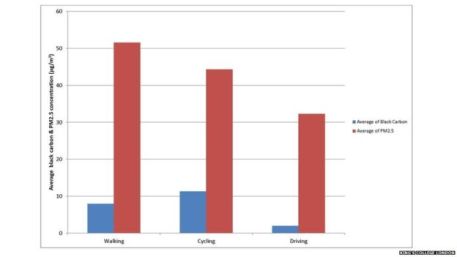
I spent around 30 minutes on each mode of transport and the broad findings were these: for black carbon the highest level of pollution was whilst on a bike, followed by walking, with the lowest level while driving.

bar chart of Fergus' exposure to air pollution
 All of pollution levels I was exposed to here are higher than the London average; Image copyrightKING’S COLLEGE LONDON

For PM2.5 it was – walking (highest), followed by cycling and driving.

The findings surprised Dr Ian Mudway, a lecturer in respiratory toxicology at King’s College London.

He told me: “Normally when we do this experiment, the levels for passengers in taxis or buses are higher than for cycling or walking. This suggests that this particular car has really effective filters – good for you but not for others breathing in your emissions.”

All the results were in ug/m3 (micrograms per metre cubed):

For black carbon I averaged 8.0, 11.3 and 2.0 while walking, cycling and driving.

To put that in context the figure away from a busy road in London is around 1.0.

The PM2.5 monitor showed an average of 51.6, 44.3, and 32.3 while walking, cycling and driving.

On a quieter road, the figure would be around 20.0.

The problem is that such figures are pretty meaningless to the public, and apart from a bit of a cough I felt no ill-effects from spending a few hours going up and down Knightsbridge.

Dr Mudway told me: “This is the big challenge because when we tell people about the tens of thousands who die prematurely as a result of air pollution, they can’t tangibly appreciate it – it’s not like people are dropping dead at the bus stop when a bus goes past. Rather these are the cumulative effects of air pollution over time.”

What struck me from my few hours with the air monitors, was how dramatically pollution levels dropped off once I went away from a busy road.

So if you can, it is worth seeking out quieter roads while walking or cycling – the exercise is good for you, and the air will be less polluted too.

Source: Air pollution: invisible health threat – BBC News

Posted in Air Quality, Europe, London, UK | Tagged , , , , , , , , | Leave a comment

Community groups record ‘illegal levels of air pollution’ in London 

Community groups recording air pollution in London found eight out of nine areas surveyed breached EU limits for nitrogen dioxide (NO2) in the air.

The University College London (UCL) project found the highest level of NO2 in the areas was in Marylebone in central London.

Diesel vehicles are a key source of NO2, which is linked to a range of respiratory illnesses.

London’s deputy mayor for environment and energy said NO2 was a “problem”.

The results are part of the social enterprise Mapping for Change‘s Air Quality Monitoring project.

Community groups were given kits to measure the amount of NO2 in July in areas including Marylebone, Soho, Walthamstow, Brentford, Haringey and Ham.

The highest reading was on Marylebone Road, in central London, measuring 145 micrograms of NO2 per cubic meter air (µg/m3), which is nearly four times the EU legal limit of 40µg/m3.

This was followed by Shaftesbury Avenue, in Soho, at 119µg/m3.

Tests in suburban areas like Walthamstow and Brentford also showed nearly double the EU limit.

Louise Francis, from UCL and co-founder of Mapping for Change, said the results were a snapshot of the level of pollution in the capital but the actual levels of NO2 could be higher as holiday levels were often lower than other times of the year.

She said that the public could make changes to reduce their intake of NO2 by walking down side roads instead of major routes.

Matthew Pencharz, deputy mayor for environment and energy, said: “NO2 remains a problem. We have now seen a 12% reduction in measured NO2 across London showing we are making real progress.”

He added that the introduction of taxi age limits and cleaner buses had also improved air quality, as would the introduction in 2020 of the Ultra Low Emission Zone (ULEZ), which will only allow zero and low-emission vehicles in central London.

Public Health England suggests about 3,000 people each year are estimated to die from polluted air in the capital, making it London’s second highest cause of death after smoking.

Source: Community groups record ‘illegal levels of air pollution’ in London – BBC News

Posted in Air Quality, Europe, London, UK | Tagged , , , , , , , , , , | Leave a comment

Asian haze set to become worst on record

Malaysia has ordered all schools to close for two days as choking haze blanketing a large swathe of south-east Asia is on track to become the worst on record.

The fog-like grey smoke caused by slash and burn techniques used to clear Indonesian forests has for weeks caused health problems, flight delays and school closures in Singapore and parts of Indonesia and Malaysia.

Hundreds of thousands of people are suffering acute respiratory infections as the region has struggled to find an effective response to the problem.

Malaysia’s deputy prime minister Ahmad Zahid Hamidi took a swipe at Indonesia as his country cancelled sporting events including a marathon for 30,000 runners and local soccer matches.

“We hope Indonesia’s commitment is not only on paper or mere statements pleasant to ears, but through implementation which could end all haze problems,” he said.

Singapore last weekend was forced to cancel a final of swimming’s World Cup.

The haze has even reached the Philippines island of Cebu which has suffered a week of polluted skies.

Malaysia’s education minister Mahdzir Khalid ordered his country’s schools to close for two days on Sunday, saying the haze is beyond Malaysia’s control.

“This issue has to be addressed wisely and quickly as it can do harm to our children,” he said. “We cannot compromise with anything that may bring harm to children in our schools.”

In Kuala Lumpur, pollutant monitoring stations registered “very unhealthy” or close to “hazardous” levels.

High levels were recorded across peninsular Malaysia and Borneo.

Similar crises have gripped the region each dry season for decades as palm oil plantation owners have set fires to clear forests to meet rising global demand for the oil used for cooking and in household products.

But scientists predict the current outbreak is on track to surpass 1997 levels when pollution soared to record highs in an environmental disaster that cost an estimated US$9 billion ($12.7 billion).

“If the forecasts for a longer dry season hold, this suggests 2015 will rank among the most severe events on record,” said Robert Field, a Columbia University Scientist based at NASA’s Goddard Institute for Space Studies.

The fires have raged despite Indonesia deploying more than 20,000 troops, police and other personnel to fight them through water bombing and chemically-induced rainfall.

Under criticism from its neighbours, Indonesia has investigated more than 200 companies and ordered four to suspend operations for allegedly causing fires on Sumatra and Kalimantan islands.

But weak enforcement in Indonesia is exacerbated by a lack of transparency about land ownership, making it harder to pinpoint and punish perpetrators, experts say.

Indonesia is the fifth largest emitter of greenhouse gases, mainly from deforestation.

The NASA-linked Global Fire Emissions Database has estimated this year’s fires have released around 600 million tonnes of greenhouse gases.

In the Indonesian province of Riau alone officials say 44,000 people have suffered acute respiratory infections.

Source: Asian haze set to become worst on record

Posted in Air Quality, Asia, Singapore | Tagged , , , , , , , , , , , , | Leave a comment

Air quality index in Shah Alam breaches 300, airports closed 

The smoke has deteriorated further this morning with the capital city of Selangor hitting the hazardous level in the air pollutant index (API) reading, while two airports in the country remain closed.

At 9am today, the Department of Environment said API in Shah Alam recorded 308, breaching the 301 hazardous API.

Five other areas in Selangor and Kuala Lumpur continued its “very unhealthy” air condition with Batu Muda in Kuala Lumpur at 271, Petaling Jaya (256), Banting (249), Port Klang (243) and Putrajaya (235).API readings of between 0 and 50 indicate good air quality; 51-100 moderate, 101-200 unhealthy, 201-300 very unhealthy and over 301 hazardous.

Meanwhile, Malaysia Airports Berhad (MAB) said operations at the Sultan Abdul Aziz Shah Airport reopened at 9.15am this morning, after it was declared closed earlier when visibility was reduced to 350m at 6.35am.

However, two other airports, Sultan Abdul Halim Airport in Alor Setar and Sultan Azlan Shah Airport in Ipoh, remain closed until further notice, MAB said in a series of tweets.

The visibility for both airports was 500m as of 7.20am and 7.30am this morning respectively.

Operations at the Kuala Lumpur International Airport and budget airport KLIA2 in Sepang continue as normal.

The worsening situation also forced the Standard Chartered Kuala Lumpur Marathon to be cancelled today.

This marks the second time the race was affected by air pollution. In 2013, the event was postponed from June to October. – October 4, 2015.

Source: Air quality index in Shah Alam breaches 300, airports closed – The Malaysian Insider

Posted in Air Quality, Asia | Tagged , , , , , | Leave a comment

Paris’s first attempt at car-free day brings big drop in air and noise pollution 

Vehicle ban, applied to just 30% of French capital, showed encouraging results – but new report says nation has far to go

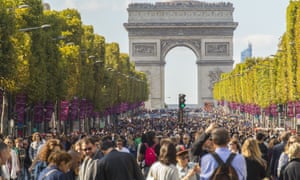
Paris’s “day without cars” last week led to such a dramatic drop in both air and noise pollution that the mayor’s office is now planning more vehicle-free days in the French capital.

Airparif, which measures city pollution levels, said levels of nitrogen dioxide dropped by up to 40% in parts of the city on Sunday 27 September.

There was almost one-third less nitrogen dioxide pollution on the busy Champs Elyées than on a similar Sunday.

Along the Seine in the city centre, levels were down by about 40%. At the busy Place de l’Opera, levels were 20% lower.

Bruitparif, which measures noise, said sound levels dropped by half in the city centre.

Officials and environmentalists hailed the event as a success despite disappointment that police had refused to allow the ban to cover the whole city. The official intervention meant only 30% of Paris was off limits to vehicles.

City mayor Anne Hidalgo, who has made reducing Paris’s worryingly high pollution levels a top priority, said she hoped to introduce a regular citywide vehicle ban.

“We might envisage days without cars more often … perhaps even once a month,” she wrote on Twitter.

In March, a spike in air contaminants briefly turned Paris into the world’s most polluted city. The noxious smog was so dense it almost obscured the French capital’s totemic landmark, the Eiffel Tower.

In a few weeks, world leaders will fly to Paris for what has been billed as the world’s biggest ever climate change conference.

COP21 will seek an international agreement on dramatic measures to keep global warming below 2C.

In his speech to the United Nations last week, French president François Hollande said it was the “last chance” for climate change and said the international community had an “obligation to succeed”.

French environment minister Ségolène Royal said France has a “particular responsibility to be exemplary to encourage other countries for climate regulations”.

Unfortunately, in terms of pollution, Paris is far from exemplary.

At Quai des Celestins, near Place de la Bastille, on a Friday morning, the traffic speeding along the riverside highway flanking the muggy grey Seine is relentless. A tag-covered white van belches black, noxious smoke. A cyclist following the van puts her hand over her mouth.

In the last two weeks the levels of nitrogen dioxide (NO2) here have peaked at “very high”, according to Airparif. In the last year, the level of NO2 on the quai has regularly topped 100µg/m3 with an average of 66µg/m3 over the year – well above the EU limit of 40µg/m3.

Across town at the Place de l’Opera, the traffic is equally intense, and the figures equally worrying. Here the annual average NO2 level is 95. On the péripherique, the ring road around the city, it has reached 150.

Airparif, an independent monitoring organisation, reports that Quai des Celestins broke the European hourly limit 11 times in 2014. Place de l’Opera broke the limit 17 times, and parts of the péripherique did so 67 times.
The widely published picture of the Eiffel Tower shrouded in smoke this spring symbolised the French capital’s battle with pollution, a battle that has pitted the city authorities against the government – both Socialist and both supposed to be singing from the same songsheet, but frequently at odds over how to solve the problem.

When the scandal broke over Volkswagen’s manipulation of emissions data for diesel vehicles, the French claimed this was typical “German economic arrogance”. Amid the bout of schadenfreude, no one mentioned that France has been flouting EU air quality targets since 2005.

In its report for 2014, Airparif wrote: “Despite meteorological conditions favourable to the quality of air in 2014, 2.3 million French people are still exposed to levels of pollution that do not respect the rules, particularly in the case of (lead) particles and nitrogen dioxide. Those living in the Paris region and near major roads are the most affected.”

Airparif said pollutions levels were up to double those allowed by the regulations. Five pollutants posed problems in the capital: benzene, nitrogen dioxide, ozone and the fine particles PM10 and PM2.5.

A report by the French Sénat, the upper house of parliament, found that air pollution costs France €101.3bn (£75bn) a year in negative health, economic and financial consequences.

It said illnesses created or worsened by pollution included Alzheimer’s disease, heart disease, respiratory disease and some cancers. Polluted air is also linked to foetal development problems, the report said.

Jean-Francois Husson, head of the Sénat committee, said: ”There’s lots of work to do … Europe and states have to act.”

The report – entitled Air Pollution: the Cost of Inaction – estimated that pollution caused up to 45,000 premature deaths in France a year, from asthma, chronic bronchitis, heart attacks, lung cancer and strokes.

The Sénat criticised successive governments for a “failure to mobilise” to clean up the city’s air.

Hidalgo has made doing so a priority. City hall launched an ambitious “anti-pollution plan” at the beginning of this year, which included an eventual prohibition of older diesel vehicles, multi-million euro improvements to public transport and pedestrian area projects – including banning all vehicles from the right bank of the Seine from Bastille to the Eiffel Tower.

However, when pollution spiked in March this year, Hidalgo’s traffic calming measures – including alternate day access to the city for cars – were overruled by Royal at the ministry, leading to a furious public spat between the two women.

Christophe Najdovski, deputy mayor in charge of transport, said Paris was lagging behind on tackling pollution. He said centralised state interference in the city authorities’ attempts to combat pollution were “an obstacle to modernisation”.

“We’re behind on this and we cannot afford to be,” Najdovski said.

“We have to change people’s attitudes and behaviour. The fact is you don’t need a car to get around in Paris and there is no reason to use one most of the time. You can take public transport, bicycles and even walk.”

He said young people were slowly changing attitudes. “The young have a different relationship with cars. They are much less likely to buy a car and more interested in car-sharing and similar schemes.”

Najdovski, a member of the Europe Ecology-Green (EELV) party, admitted he was disappointed that only one third of Paris was handed over to pedestrians and cyclists on 27 September.

However, he said the event was symbolic and aimed to demonstrate that it was possible for people to “move about the city differently”.

Najdovski added: “My dream Paris would be a city without cars. It may be idealistic, but we have to start somewhere. And this is the road we have to go down if we want to have a city we can live in.”

Source: Paris’s first attempt at car-free day brings big drop in air and noise pollution | World news | The Guardian

Posted in Air Quality, Europe, France | Tagged , , , , , , , | Leave a comment