Helping Kalimantan at the heart of the haze

Every year, a haze spreads across South East Asia – at the heart is Indonesia’s Central Kalimantan, where raging forest fires cause the hazardous air pollution.

Several provinces of Kalimantan often experience the direct wrath of the fires, with hundreds of hotspots detected.

In Malaysia and Singapore, people are advised to stay indoors when the haze is bad, avoid exercise and wear N95 masks – high quality protection against particles in the air.

But in Kalimantan “a lot of people do not even wear masks here because they are so used to the pollution,” relief worker Jonathan How told the BBC.

“They’ve been conditioned by the haze for decades and are subjected to serious health problems much worse than in Singapore.”

This week, Mr How took a team from Singapore to Kalimantan. Their mission: to raise awareness about the dangerous air pollution and distribute 25,000 of the N95 masks.

He described seeing “smoky yellow skies” in the region, where PSI pollutant levels have neared 2,000. Any reading over 300 is considered hazardous.

The team of five arrived in Kalimantan on Monday, where they spent three days visiting local schools and hospitals to distribute masks.

“One lesson we learnt was that haze awareness is key. Though people may politely receive the N95 masks they are given, they will only use them if they truly understand the long-term health impacts of inhaling fine particulates from the haze,” Mr How said.

Singaporean photographer Edwin Koo, who also travelled with the team, documented their efforts.

He shared with the BBC one experience of teaching a man how to put on a specialised N95 mask.

“When we first arrived at the airport, we gave out masks to the porters too. One of them took the strap [that were supposed to be looped over the head] and wore it on his ears, like a surgical mask.

It ended up blocking his eyes and he didn’t realize it was wrongly worn. So I showed him how to put it on correctly. It was then I realised that the mission was not as simple as it seemed.”

Mr Koo also said: “Sometimes we have to cross the line of documentation. In this case, it meant that I had to put my camera down to help people put on masks and explain the hazards of exposing oneself to haze.”

Mr Koo has also been actively sharing images from the trip onto his Facebook page.

His album titled, Haze Response Kalimantan 2015, features photographs of Kalimantan’s burning peatlands and the daily life of the locals.

Now back in Singapore, Jonathan How and the team are currently exploring new ideas on how to “better inform people about the negative health impact of the haze”.

They also want to continue to “encourage people to use the correct masks for their protection”.

“We want to meet as many like-minded individuals and organisations as possible, to explore collaboration on longer-term solutions to the haze,” he said.

“The regional pollution is a global responsibility, not just of the Indonesian government.”

Source: Helping Kalimantan at the heart of the haze – BBC News

Posted in Air Quality, Asia, Singapore | Tagged , , , , , | Leave a comment

Diesels illegally pumping out pollutants after garages remove filters designed to cut emissions 

Air pollution from diesel particulates has been linked to 29,000 deaths a year

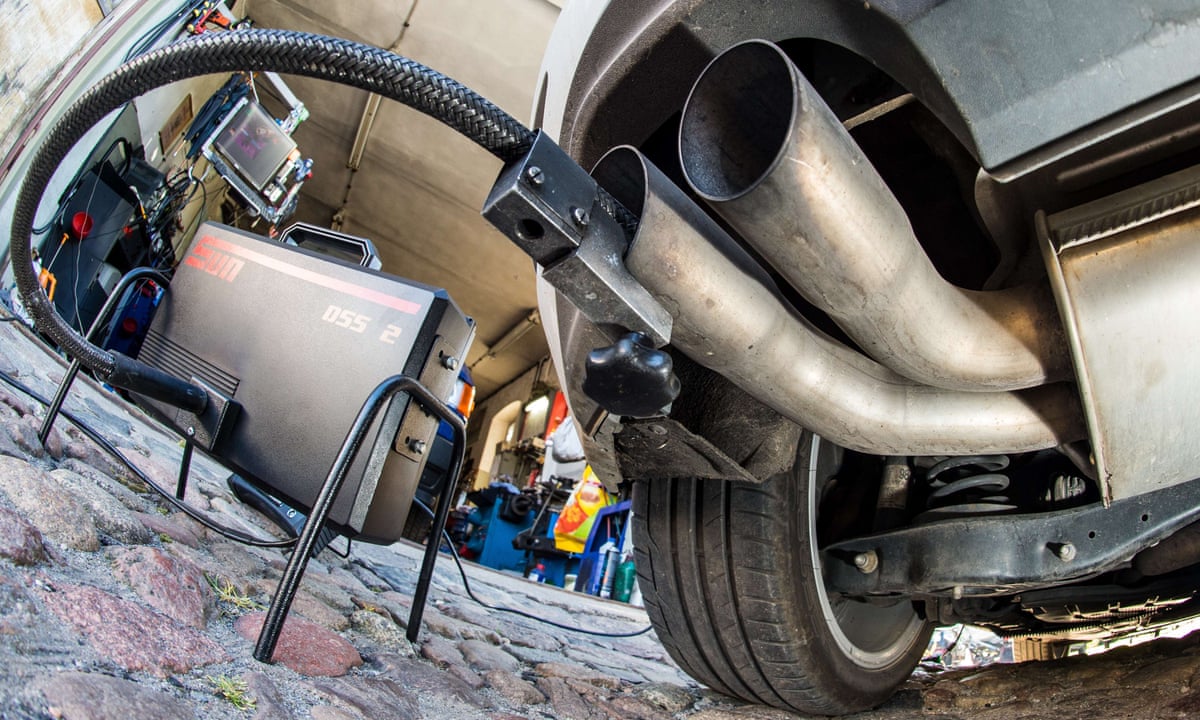
emissions-exhaustTens of thousands of diesel cars are illegally pumping out dangerous pollutants because unscrupulous garages have removed exhaust filters designed to cut emissions of deadly particulates.

Air pollution from diesel particulates has been linked to 29,000 deaths a year. Despite a government crackdown last year, backstreet garages and tuning shops are still advertising services to remove factory-fitted diesel particulate filters (DPFs) and reprogramme on-board computers to allow cars to be serviced more cheaply, deliver more power and trick emissions-testing equipment.

Diesel particulates enter the lungs and bloodstream; they have been shown to stunt children’s brains, and have been linked to autism, heart disease and cancer. Labour has joined air quality campaigners to accuse the Government of “negligence” over air quality regulation.

In the wake of the VW scandal – which centres on nitrogen oxides rather than particulates – testing authorities across Europe have been focusing on diesel engines. Last week, police in Spain raided eight garages in Madrid after a tip-off that they were removing DPFs and reprogramming software. However, in the UK, a legal loophole allows garages to remove the devices without fear of prosecution. An Independent on Sunday investigation has found that more than 1,000 garages, backstreet mechanics, and tuning firms are offering this service, often for as little as £250. It is only an offence to drive a car without a factory-fitted DPF.

The filter has been mandatory on any new diesel vehicle since 2009, but can become blocked after 80,000 miles and can cost up to £1,500 to replace. Last year, the Government introduced new rules so that a car should not pass its MOT if the filter has been removed; however, many garages reportedly fail to inform customers of this, while others openly boast that their work won’t be spotted during an MOT test.

“This will add to growing public concern about pollution from diesel cars, and the impact on air quality,” said Kerry McCarthy the Shadow Environment Secretary. “Air quality regulations exist to protect public health, but we are being let down by a negligent Government that is failing to enforce them.”

The revelation that thousands of drivers are still flouting the law by having their DPF removed and accompanying software altered has dismayed clean air campaigners. Simon Birkett, director of Clean Air in London, said the scale of DPF removal uncovered was “shocking”.

“Frankly, at least VW had a chip, even if it cheated during testing. Removing factory-fitted DPFs involves tricking or disengaging the whole emissions chip, all the time, on gases and particles,” he said.

Chris Roberts, managing director of Quantum Tuning, which provides DPF deletion-capable software to more than 280 garages and tuning firms, said garages were responding to “demand” from customers who “don’t have the money to spend on a £1,500 new filter for a car that might be worth £2,000”. He said: “Either they scrap the car or get something done about it. And if they are going to have it done, they may as well have it done properly by a garage that will explain what the MOT implications are, as our dealers do.” Mr Roberts said many customers viewed driving without a DPF as comparable to a minor speeding offence.

Campaigners say the MOT fails to catch DPF removal because it only includes a “visual inspection” of the hardware – which is often welded back together – and an “optical smoke test” which cannot detect dangerous particulate matter. A Department for Transport spokesman said: “If a car is fitted with a DPF and it is removed, it is illegal to be driven on the road. We continue to monitor how many vehicles are failing the MOT for this reason, and explore steps to stamp out this practice.”

Source: Diesels illegally pumping out pollutants after garages remove filters designed to cut emissions | Motoring News | Lifestyle | The Independent

Posted in Air Quality, Europe, UK | Tagged , , , | Leave a comment

Haze brings bootcamps, dragon boats to standstill in Singapore

Pollution from the burning of Indonesia’s rain forests appears to be claiming another casualty: physical fitness in Singapore.

Poor air quality is keeping people indoors, denting demand for outdoor exercise in the usually balmy city-state.

“We’re an outdoor fitness company, with up to eight sessions a day outside,” Lisa Clayton, a director of OzFit/UFit Bootcamps, said Wednesday. “We have had to cancel pretty much most of them over the last two weeks.”

She said her company usually catered to as many as 100 people a day training outside, but has instead hosted bootcamps at indoor locations, such as condominium function rooms, for about 60 people a day.

What’s colloquially called the haze, but is actually air pollution, is an annual event in Singapore as Indonesians deliberately set forest fires to clear land, but this year, it’s lasted longer than usual because El Nino weather conditions mean there’s less rain.

The Pollutant Standards Index, a global gauge of air quality, ranged between 97 and 111 in Singapore early on Monday, after several days of less-gritty levels under 100, according to the National Environment Agency (NEA).

A level between 100 and 200 indicates unhealthy air quality, while levels above 300 are considered hazardous. The gauge climbed over 300 in late September but hasn’t yet topped the 400-plus mark hit in 2013.

Indonesia finally accepted Singapore’s offer of personnel and equipment to help fight the forest fires on Wednesday after weeks of waffling over the decision.

Homebound residents aren’t just bad for Singapore’s fitness companies. The local economy is already hurting, with some analysts believing it slipped into a recession in the third quarter, and the haze is likely to take a further bite out of consumption.

“The protracted period of hazy conditions will certainly weigh on the retail industry, who will likely see their slim margins (on already high operating costs) being eroded further with households opting to stay home and tourists deferring their plans to visit the region,” Weiwen Ng, an economist at ANZ, said in an email last week.

He noted that previous years’ hazy seasons had resulted in sharp drops in retail sales, even though the city-state’s malls tend to be packed on days when the air quality worsens. Many Singaporeans don’t have air-conditioners in their homes.

“While they might seek safety in the air-conditioned malls, I doubt they will spend,” Ng said.

Consumers certainly aren’t spending at outdoor-focused businesses.

“I have lost 90 percent of my business,” said Isabella Malique, the owner of the SUP School, which rents standup paddleboards at the beach on Sentosa island, a resort just off the coast of Singapore.

“I don’t even have enquiries,” she said, adding that she was concerned it would take a long time to regain lost interest once the haze finally clears.

She has another worry: the end of the haze is likely to be followed closely by the start of Singapore’s rainy season, which may leave her business with little income for nearly six months.

Those customers aren’t necessarily searching out gyms to keep up their fitness level.

Pure Group, which operates both gyms and yoga studios, said that member check-ins hadn’t changed much over the past month or so.

“As much as we would like to think that many members are avoiding the outdoors and increasing their visits to the gym, this is not entirely the case,” Hannah Yang, the marketing manager at Pure, said via email last week. “Many have taken ill due to the haze and have been putting yoga and gym aside for the time being.”

Effects of the haze can range from respiratory symptoms, such as coughing and asthma attacks, to fatigue and headaches.

Sports teams are also struggling to practice.

“We’ve not been able to fully relocate training indoors,” Thomas Gascou, the captain of the German Dragons, a dragon boat team, said Thursday. Dragon boating is an Asian paddling sport, with teams of 10 or 20 paddlers competing in long boats.

The haze has forced the German Dragons to cancel most of its water-training sessions over the past few weeks, Gascou said, noting that one session held when the air quality was “borderline” resulted in several people feeling light-headed and sick.

He moved some of the general fitness training to one of the government’s community gyms but noted that while outdoor “land” sessions generally see as many as 60 people, that dropped to around 20 indoors.

All the effort to continue training may be for naught: There’s a strong chance that the haze will force the next race, the Singapore River Regatta, scheduled for October 31, to be canceled or postponed.

It wouldn’t be the first competition to get the axe; the first day of the international FINA Swimming World Cup on October 3 and the Race Against Cancer, a 15km and 10km running race set for last month, were both cancelled.

Source: Haze brings bootcamps, dragon boats to standstill in Singapore

Posted in Air Quality, Asia, Singapore | Tagged , , , , , | Leave a comment

Four more carmakers join diesel emissions row 

Mercedes-Benz, Honda, Mazda and Mitsubishi have joined the growing list of manufacturers whose diesel cars are known to emit significantly more pollution on the road than in regulatory tests, according to data obtained by the Guardian.

In more realistic on-road tests, some Honda models emitted six times the regulatory limit of NOx pollution while some unnamed 4×4 models had 20 times the NOx limit coming out of their exhaust pipes.

“The issue is a systemic one” across the industry, said Nick Molden, whose company Emissions Analytics tested the cars. The Guardian revealed last week that diesel cars from Renault, Nissan, Hyundai, Citroen, Fiat, Volvo and Jeep all pumped out significantly more NOx in more realistic driving conditions. NOx pollution is at illegal levels in many parts of the UK and is believed to have caused many thousands of premature deaths and billions of pounds in health costs.

All the diesel cars passed the EU’s official lab-based regulatory test (called NEDC), but the test has failed to cut air pollution as governments intended because carmakers designed vehicles that perform better in the lab than on the road. There is no evidence of illegal activity, such as the “defeat devices” used by Volkswagen.

The new data is from Emissions Analytics’ on-the-road testing programme, which is carefully controlled and closely matches the real-world test the European commission wants to introduce. The company tested both Euro 6 models, the newest and strictest standard, and earlier Euro 5 models. Data showed that:

  • Mercedes-Benz’s diesel cars produced an average of 0.406g/km of NOx on the road, at least 2.2 times more than the official Euro 5 level and five times higher than the Euro 6 level. A spokesman for Mercedes-Benz said: “Since real-world driving conditions do not generally reflect those in the laboratory, the consumption figures may differ from the standardised figures.”
  • Honda’s diesel cars emitted 0.484g/km of NOx on average, between 2.6 and six times the official levels. A spokesman for Honda said: “Honda tests vehicles in accordance with European legislation.”
  • Mazda’s diesel cars had average NOx emissions of 0.293g/km in the real world, between 1.6 and 3.6 times the NEDC test levels. One Euro 6 model, the Mazda 6 2.2L 5DR, produced three times the official NOx emissions. A spokesman for Mazda said: “In compliance with the law, Mazda works hard to ensure that every petrol and diesel engine it makes fully complies with the regulations.”
  • Mitsubishi diesel cars produced an average of 0.274g/km of NOx, between 1.5 and 3.4 higher than in the lab. “The NEDC was never intended to represent real-world driving,” said a spokesman for Mitsubishi.
  • The Emissions Analytics data seen by the Guardian also found Citroen, VW and Audi NOx emissions to be higher on the road than in the EU lab test.

Molden said Emissions Analytics had analysed about 50 Euro 6 diesels and 150 Euro 5 diesels, with only five having real-world NOx levels that matched the regulatory test. The failure of the EU’s NOx test to limit real-world emissions, and tackle air pollution, has been known for some years, but specific manufacturers have not been named.

“The VW issue in the US was purely the trigger which threw light on a slightly different problem in the EU – widespread legal over-emissions,” Molden said. “For NOx, [diesel] cars are on average four times over the legal limit, because of the lenient nature of the test cycle in the EU.” The Emissions Analytics tests showed 4x4s to have the highest NOx emissions, with several unnamed models emitting 15 times official levels and one more than 20 times.

“MEPs have been fighting for years to reform EU rules on diesel emissions-testing so they reflect real-world emissions. Yet the powerful car lobby and national governments have fiercely resisted these life-saving changes,” said Catherine Bearder, a LibDem MEP and a lead negotiator in the European parliament on the EU’s new air quality law. “The people of Europe have waited long enough for cleaner air, they must not be made to wait any longer.”

Friends of the Earth air pollution campaigner Jenny Bates said: “With further manufacturers implicated, this is yet more evidence that this scandal goes way beyond VW, and should cause decisionmakers to question the very future of diesel vehicles on our roads. This is a massive public health disgrace and the failure to prevent vehicles breaking pollution rules will have cost lives.”

Two car companies, Mercedes and Honda, said that supported a tightening of the regulations. “Mercedes-Benz emphatically supports the introduction of the WLTP test [which] is designed to supersede the NEDC, with the goal of bringing standardised and real-world consumption closer together,” said the spokesman. “To this end, we actively support the dialogue between industry (through trade group ACEA [European Automobile Manufacturers Association]) and the authorities.” Honda said it supported “additional testing in order to help strengthen regulatory and consumer confidence”.

However, in a letter seen by Reuters to EU officials, the ACEA chairman and Renault chief executive, Carlos Ghosn, said that no significant progress on NOx was possible before 2019. Reuters said that ACEA, which lobbies for Europe’s carmakers in Brussels, told the officials on 1 October that the NOx limit for a new, more realistic test should be 70% higher than today’s limit. An ACEA spokeswoman said it was “too early in the process to confirm or comment on hypothetical figures.”

“These new test results [from Emissions Analytics] prove that the Volkswagen scandal is just the tip of the iceberg. What we are seeing here is a dieselgate that covers many brands and many different car models,” said Greg Archer, an emissions expert at Transport & Environment. “The only solution is a strict new test that takes place on the road and verified by an authority not paid by the car industry.”

Source: Four more carmakers join diesel emissions row | Environment | The Guardian

Posted in Air Quality, Europe, UK | Tagged , , , , , | Leave a comment

Smog from Indonesian forest fires blankets Thailand’s southern islands, including Phuket and Samui

Popular Thai holiday islands are being blanketed by haze from Indonesian forest fires, forcing several planes packed with tourists to turn back due to poor visibility.

The travel disruptions came as Indonesia finally agreed to accept international help to fight fires that have been started deliberately to clear agricultural land.

Five flights bound for the resort islands of Phuket and Samui turned back to Bangkok on Thursday, according to the Aeronautical Radio of Thailand, which controls air traffic across the country.

A further two airlines flying to Phuket from Singapore were forced to circle the airport for up to an hour before landing, it said.

“It is the worst haze [on the island] in many years,” said Trakul Thotham, director of the department of disaster prevention and mitigation on Phuket.

However, he said the smog was “getting better” on Thursday.

Of the seven affected southern Thai provinces, Phuket has been worst-hit with unhealthy levels of particulates in the air, according to the department.

Wipa Emem, a reservation clerk at the Holiday Inn Resort on the island, said some Thais wore protective masks to combat the pollution, but tourists were mostly “still on the beach”.

Fires illegally started to clear land for plantations on Sumatra and the Indonesian part of Borneo have shrouded Singapore and Malaysia in acrid smog, worsening air quality, closing schools and forcing the cancellation of outdoor events

After weeks of insisting it could tackle the crisis alone, Indonesia said it was in talks with countries about assistance including Australia, Singapore, Russia, Malaysia and China.

“Hopefully, we can speed up our efforts,” president Joko Widodo told reporters before flying to Jambi, one of the worst-affected provinces on western Sumatra island.

But his jet was unable to land at the local airport due to the haze and forced to divert to another airport on Sumatra, presidential spokesman Ari Dwipayana said.

The blazes are an annual occurrence during the dry season, but scientists have warned this year’s are on track to be the worst ever due to an El Nino weather system that has created tinder-dry conditions in Indonesia.

Jakarta has deployed about 25,000 personnel and aircraft, but the fire-fighters have seemed overwhelmed by the extent of the blazes.

On Thursday there was some respite from the haze for Singaporeans and Malaysians with air quality recording moderate levels.

Source: Smog from Indonesian forest fires blankets Thailand’s southern islands, including Phuket and Samui – ABC News (Australian Broadcasting Corporation)

Posted in Air Quality, Asia, Singapore | Tagged , , , , , , , , , | Leave a comment

Poland’s second city to ban coal use after anti-smog law approved

Krakow says it will introduce a ban on burning coal in households, offices and restaurants, despite protection of the industry becoming an election issue

The Mayor of Krakow has told the Guardian he will introduce a ban on coal use in households, offices, government buildings and restaurants after an amended Environmental Protection Act was signed by the country’s president, Andrzej Duda.

Poland’s second largest city is as famed for the filthy smog that cakes its buildings and streets, as for its beautiful historic buildings. The European Environmental Agency has ranked it the third most polluted city in Europe and its particulate matter (PM) pollution can reach six times the safe levels.

Household stoves burning coal are responsible for an estimated 88% of the country’s non-industrial air pollution – and almost half of Krakow’s PM pollution. Under the new EPA signed on Tuesday, which was amended after a long-running battle with the courts, local authorities can now prohibit their use.

“We will concentrate our efforts on introducing in Krakow a ban on the use of coal in individual furnaces and boiler rooms,” said Jacek Majchrowski, the city’s mayor. “It will speed up the process of removing the coal stoves and replacing them with eco-friendly heating systems.”

Poland emits more greenhouses gases and sulphur dioxide from coal than any other European country, and also has the continent’s highest coal-related health costs, with around 45,000 premature deaths each year attributed to coal burning.

The coal industry is a major Polish employer, seen as a guarantor of energy independence. The protection of its future has become a major issue in the 25 October elections, with the leading parties out-bidding each other in its defence.

The country’s prime minister, Ewa Kopacz, last week announced a plan to transfer publicly-owned stakes in coal companies such as PGE for use as collateral in their buy-out of TF Silesia, a highly unprofitable national coal firm.

“In that context the decision in Krakow gives hope,” the Liberal MEP Gerben-Jan Gerbrandy told the Guardian. “All of Poland’s political parties are unanimous about protecting coal consumption so when, at local level, people start questioning its use for health reasons, it might become a game changer in the national debate.”

The Krakow council now says it will move ahead with plans for new district heating networks, and revamped public transit networks. Vehicle access to the city centre is being limited too, even though the national parliament rejected the introduction of low emissions zones in urban areas.

Majchrowski said he would also urge the Małopolska regional authority to follow Krakow’s lead and adopt the ban on solid fuels in heating. “We are hoping that local authorities elsewhere will start fighting air pollution as vigorously as we do in Krakow,” he said.

“This is a chance for a breakthrough in the fight for clean air in Poland,” said Ilona Jędrasik, a spokeswoman for the environmental law firm ClientEarth. “Now it is time for local authorities to make their next move.”

Poland depends on coal for nearly 90% of its electricity, and its defence of the fuel has been an ongoing bugbear in European climate negotiations.

Source: Poland’s second city to ban coal use after anti-smog law approved | Environment | The Guardian

Posted in Air Quality, Europe, Poland | Tagged , , , , , | Leave a comment

Smog begins to blanket Saigon as air pollution soars

Smog has been spotted at many places across Ho Chi Minh City in recent mornings and a weather expert says worsening air pollution is to blame.

The thick blanket of smoke and fog was most noticeable in Districts 1, 2, 4, 9 and Binh Thanh, where drivers on several streets said they had difficulties seeing vehicles in front of them and had to keep honking.

A xe om motorbike taxi driver in District 1 told Tuoi Tre newspaper that he first saw some smog on Monday, but it became thicker on Tuesday morning and refused to clear until after 10 a.m.

Owner of a coffee shop in Binh Thanh District said the smog on Tuesday morning was so thick she could not see people from ten meters away.

“It looks like Da Lat,” she said, referring to Vietnam’s Central Highlands town known as Little Paris where it is almost always cool and foggy.


Health risks

But experts said unlike the fog in Da Lat, there is nothing romantic about this.

Dang Van Dung, deputy director of the Southern Hydro-meteorological Forecast Center, said that it was the accumulation of dust and smoke particles.

It does not only affect visibility but can be a serious respiratory health threat, Dung said, recommending drivers to wear face masks.

He said the phenomenon will continue for several days as there’s not enough wind to disperse the smog.

He said the possibility of HCMC being affected by cloying smoke generated by forest fires in Indonesia is not ruled out.

He said smog began to appear in the city two years ago, warning that it will get worse if the city fails to reduce emissions.

Smog has also occurred at several other southern provinces with robust industrial activities, he said.

Smog seen on Nam Ky Khoi Nghia Street on Tuesday morning. Photos: Tien Long/Tuoi Tre

Smog on the Saigon River

The view of District 2 from District 1 across the Saigon River on Tuesday morning.

Source: Smog begins to blanket Saigon as air pollution soars | Society | Thanh Nien Daily

Posted in Air Quality, Asia, Vietnam | Tagged , , , | Leave a comment

Air pollution: invisible health threat 

How safe is the air that we breathe? The VW diesel emissions scandal has highlighted the issue of air pollution.

The two pollutants which give most cause for concern are the toxic gas nitrogen dioxide (NO2) and particulate matter (PM2.5), particles so small they can be ingested deep into the lungs.

Earlier this year the UK’s highest court ruled the government must take action to cut NO2 pollution. The UK has been in breach of EU limits for nitrogen dioxide for several years.

Last month the environment ministry DEFRA published a consultation on draft plans to improve air quality.

This places the emphasis on local authorities to improve air quality and would still see Greater London not meeting the required NO2 levels for another 10 years.

The government accepts that the combined impact of NO2 and particulate matter pollution “represents a significant public health challenge”.

The Committee on the Medical Effects of Air Pollutants (COMEAP) suggests that 23,500 lives are cut short each year by NO2, and 29,000 by particulate matter.

When I spoke to Frank Kelly, Prof of Environmental Health, King’s College London and a member of COMEAP, he stressed that you can’t simply add the two figures together to get the total effect – there will be some overlap.

Furthermore, he pointed out that new – more accurate – mortality estimates will be released by COMEAP in December.

Prof Kelly was nonetheless adamant that “tens of thousands of lives” in the UK are ended prematurely by air pollution every year.

He told me: “Air pollution is second only to active smoking as a public health threat, and in the past decade we have greatly increased our understanding of its dangers.”

It is worth pointing out that you won’t find air pollution listed on any death certificate.

Rather, these are lives cut short by heart disease, stroke, lung disease or cancer that are triggered or exacerbated by pollutants.

In city centres most of that pollution is coming from traffic, and diesel engines produce far more NO2 and particulate matter than petrol.

Prof Kelly’s team at King’s lent me two personal monitors so I could try to get a sense of what level of air pollution people are ingesting.

I walked, cycled and drove down Brompton Road in Knightsbridge, one of the busiest and most exclusive shopping streets in London.

I chose this because Kensington and Chelsea is, according to Public Health England, the most polluted borough in the UK.

One monitor measured PM2.5 – in a congested London street, most of this pollutant would be from vehicles, especially diesel.

The other measured black carbon – the sooty emissions from diesel engines.

I felt a bit self-conscious carrying these rather bulky items, complete with plastic tubes which “sniffed” the air.

But none of the hundreds of people I passed seemed to notice, or they were too polite to say anything.

There is no safety limit for either pollutant – rather the lower your exposure, the lower the risk of harm.

I spent around 30 minutes on each mode of transport and the broad findings were these: for black carbon the highest level of pollution was whilst on a bike, followed by walking, with the lowest level while driving.

bar chart of Fergus' exposure to air pollution
 All of pollution levels I was exposed to here are higher than the London average; Image copyrightKING’S COLLEGE LONDON

For PM2.5 it was – walking (highest), followed by cycling and driving.

The findings surprised Dr Ian Mudway, a lecturer in respiratory toxicology at King’s College London.

He told me: “Normally when we do this experiment, the levels for passengers in taxis or buses are higher than for cycling or walking. This suggests that this particular car has really effective filters – good for you but not for others breathing in your emissions.”

All the results were in ug/m3 (micrograms per metre cubed):

For black carbon I averaged 8.0, 11.3 and 2.0 while walking, cycling and driving.

To put that in context the figure away from a busy road in London is around 1.0.

The PM2.5 monitor showed an average of 51.6, 44.3, and 32.3 while walking, cycling and driving.

On a quieter road, the figure would be around 20.0.

The problem is that such figures are pretty meaningless to the public, and apart from a bit of a cough I felt no ill-effects from spending a few hours going up and down Knightsbridge.

Dr Mudway told me: “This is the big challenge because when we tell people about the tens of thousands who die prematurely as a result of air pollution, they can’t tangibly appreciate it – it’s not like people are dropping dead at the bus stop when a bus goes past. Rather these are the cumulative effects of air pollution over time.”

What struck me from my few hours with the air monitors, was how dramatically pollution levels dropped off once I went away from a busy road.

So if you can, it is worth seeking out quieter roads while walking or cycling – the exercise is good for you, and the air will be less polluted too.

Source: Air pollution: invisible health threat – BBC News

Posted in Air Quality, Europe, London, UK | Tagged , , , , , , , , | Leave a comment