Feds introduce stringent new standards to cut air pollution from on-road vehicles

The Government of Canada has adopted stringent new standards for cleaner vehicles and fuels, aligning the country with the U.S. in an effort to cut air pollution from on-road vehicles. The move is part of an ongoing commitment to improve air quality for Canadians.

The government said Canada’s Tier 3 regulations will introduce more stringent air pollutant emission standards for new passenger cars, light-duty trucks and certain heavy-duty vehicles – such as delivery vans – starting with the 2017 model year. They will also lower limits on the allowable sulphur content of gasoline beginning in 2017, all moves that align Canadian standards with those of the United States.

“Our Government is continuing to move forward with responsible regulatory measures that reduce air pollution and greenhouse gas emissions from the transportation sector while maintaining Canada’s economic competitiveness and protecting good, high-paying jobs in sectors of the economy integrated with the United States,” Environment Minister, Leona Aglukkaq, said in a statement.

The transportation sector is currently responsible for nearly a quarter of Canadian greenhouse gas emissions and is a major source of smog-forming air pollutants.

Air pollutant emissions from vehicles and fuels have continued to decrease as a result of regulatory actions, however. Specifically, total emissions of nitrogen oxides and volatile organic compounds from passenger vehicles and light trucks operated on Canadian roads have decreased by almost 40 percent from 2006 to 2013.

The government noted common Canada–United States standards deliver significant health and environmental benefits.

By 2030, the government estimates the Tier 3 vehicle and fuel standards will result in cumulative health and environmental benefits of $7.5 billion and cumulative fuel and vehicle related costs of $2.7 billion. Accordingly, the projected benefits would exceed the projected costs by a ratio of almost three-to-one.

The projected health benefits from the Tier 3 vehicle and fuel standards are also significant. Between 2017 and 2030, it is estimated that reductions in air pollutants from vehicles will prevent about 1,400 premature deaths, nearly 200,000 days of asthma symptoms and 2.8 million days of acute respiratory problems in Canada.

via Feds introduce stringent new standards to cut air pollution from on-road vehicles – Canadian Manufacturing.

Posted in Air Quality, USA & Canada | Tagged , | Leave a comment

Air pollution is the scourge of the City: We all have a role to play in tackling it

London’s air pollution is making thousands more people die early each year” and “time to transform London’s air quality” have been some of the more stark headlines in recent weeks. As air quality in London – and the impact on the health of the capital’s residents and workers – continues to pique the interest of the public, media and politicians, I am certain this issue will be even more prominent in the months and years to come.

The City can and should be playing an integral role in helping to tackle this challenge. For starters, it adversely affects the Square Mile more than other London boroughs. Our central location in the capital, our levels of traffic and the density of our buildings don’t help the matter. That is why we encourage developers to adopt green designs in their planning proposals, in particular green roofs and walls to make buildings in the City more environmentally-friendly.

On top of this, we have banned idling vehicles in the Square Mile’s streets, which reduces the amount of emissions. We’ve pushed for companies to cut back on vehicle deliveries and use more hybrid taxis. And we can’t forget our much-publicised app in the City, which helps people find the least polluted way to work or for other journeys, whether they are walking, jogging, cycling or driving.

But the question rightly being asked now is: should we be more radical in our approach? This comes in the context of a recent King’s College, London study, suggesting that the death toll from air pollution in the capital could be hitting nearly 10,000 a year.

At the City of London Corporation, we have asked the government to move more quickly in reviewing policies like the Vehicle Excise Duty, which encourages people to drive diesel rather than petrol cars. The mayor of Paris has taken the bold step of saying that diesel cars will be banned in the city centre from 2020, and now surely is the time for policy-makers to put this on the table in London and carefully consider it as a viable option.

In the meantime, the government also needs to put more resources into assisting the transition from low to zero emission vehicles, particularly taxis. And the Clean Air Act needs to be reviewed to ensure that it is fit for purpose for the fuels and technology we use today.

But City workers also have an important role to play. We want to encourage them to use more efficient modes of transport, walk and cycle whenever possible, and for companies to reduce their emissions of air pollutants in any way possible – particularly when considering fleet operations and deliveries. Only through a co-ordinated approach by government, the mayor’s office, boroughs, businesses and Londoners can we truly address this issue head on. We cannot afford to duck it anymore.

via Air pollution is the scourge of the City: We all have a role to play in tackling it | City A.M..

Posted in Air Quality, Europe, London, UK | Tagged , , , , | Leave a comment

The grey area over air pollution

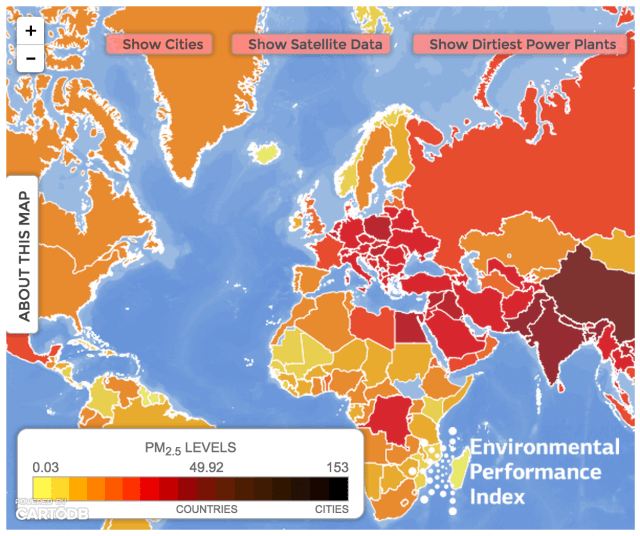
Statistics recently released by the World Bank claim the UAE has the highest mean average of air pollutants of any other country on the list, including China and India. But how have these figures been gathered, and are they reliable?

Air pollution is a murky business. Every year new rankings are released, often with conflicting results that leave some people scratching their heads.

Last month the World Bank released its Little Green Data Book, with more than 230 pages of numbers broken down by environmental topic and geography.

The figure that grabbed the world’s attention was the amount of very small particulate matter (PM) in the air we breathe. Measured by size, PM is the tiny particles of sand, chemicals or dust that float around the air, a lot of it invisible to the naked eye.

It is associated with heart disease and attacks, cancers and strokes. In its smallest form it is known as PM2.5. A PM10 is less than the width of a human hair.

“Particulate matter is particularly important because it is linked to premature mortality,” says professor Ranjeet Sokhi, director of the Centre for Atmospheric and Instrumentation Research (Cair) at the University of Hertfordshire in the UK.

“There is mounting evidence that finer particles, represented by PM2.5, are particularly hazardous to health, although coarse fractions are also of health importance.

“While the focus has been on people with pre-existing respiratory or cardiac health problems, new evidence is showing links with diabetes, neurological development in children and neurological disorders in adults.”

According to the World Bank report, the UAE has an annual mean of 80 PM2.5 micrograms for each cubic metre. This is higher than any other listed country, including China and India, and eight times the World Health Organisation’s (WHO) guidelines.

To those that have visited cities such as New Delhi in India and Beijing in China, the figures seem hard to believe. A blanket of grey hangs above those cities and the toxic contents of the air are almost palpable.

China’s reading, which excludes Hong Kong and Macau, was 73, seven points lower than the UAE. India’s reading was only 32.

The data for the report was provided by the Institute for Health Metrics and Evaluation at the University of Washington, from 2010.

In response to the report and its worldwide coverage, Fahad Hareb, director of air quality at the Ministry of Environment and Water, said pollution levels in the UAE were safe for residents and that the World Bank figures were inaccurate.

Mr Hareb said the ministry was trying to find out what kind of data-gathering model the institution had used.

The WHO released its own rankings last year, featuring data from more than 1,600 cities in 91 countries and producing a very different result.

In this measure, the city with the worst level – of 153 PM2.5 micrograms for each cubic metre of air – was New Delhi.

In fact, Indian cities occupied 10 of the top 15 spots.

The worst offending city in the Middle East was Khorramabad, in western Iran, which is the agricultural capital of the Zagros Mountains region.

The next Middle East city to feature on the extensive list was Doha, Qatar, with PM2.5 levels of 93 micrograms per cubic metre.

Al Gharbia in the UAE, took slot number 51 and Abu Dhabi number 55, with a reading of 64.

The aim of the database, which WHO calls the largest of its kind, was “not to rank cities or countries but to reflect the monitoring efforts undertaken in those countries”.

A report last year by the Environment Agency – Abu Dhabi, or Ead, offered a breakdown of the sources of PM2.5. It said between 54 and 67 per cent came from man-made sources.

Almost half of these particles were a secondary aerosol of sulphate and ammonia, from oil production and refining. A quarter were from mineral dust; between 13 and 15 per cent were from traffic, and 11 per cent originated in industry and shipping.

“PM2.5 is monitored in Abu Dhabi due to its effect on public health, but there are no established federal limits,” Ead said.

“However, it is known that the pressures on air quality are increasing with rising transport, water and electricity demand, expansion of the oil and gas sector, industrialisation, and increase in construction and demolition activities.”

Prof Sokhi says the desert environment in the UAE means the air will always contain significant amounts of windblown dust, especially during dust storms.

“This dust does have a health burden despite being naturally occurring,” he says. “It is likely that the most effective way of tackling this natural burden is through education aimed at encouraging people to stay indoors when there are high levels of PM in the air.”

Even estimates about the concentration of causes in cities and countries do not seem to explain the difference in figures.

As of March this year there were about 9 million registered vehicles on the roads in New Delhi. The most recent government figures also revealed there were more than 160 million registered motor vehicles in the country.

Figures from the Statistics Centre Abu Dhabi’s 2014 year book show there were 785,076 motor vehicles registered in the emirate in 2011. No more recent information is available.

Comparing air quality even within a single country is complex, says Prof Sokhi.

“In other areas, natural sources can be important as in the case of cities near desert areas. Meteorological processes play a key role too, for example photochemistry leading to urban smog and high concentrations when anticyclonic conditions prevail with stable atmospheric conditions.

“Similarly, differences in precipitation and seasonal changes will affect air pollution levels. The combination of these effects will be very different for cities such as London and Abu Dhabi.”

A recent study by United States researchers revealed that meeting the WHO’s air quality guidelines could prevent 2.1 million deaths a year.

The public health researchers said outdoor particulate air pollution resulted in 3.2 million premature deaths each year, more than the combined impact of HIV-Aids and malaria.

The calculations were specifically based on numbers for PM2.5, taken from the Institute for Health Metrics and Evaluation’s Global Burden of Disease report. Author Joshua Apte, of the Cockrell School of Engineering at the University of Texas, said the results should be used to shape better public health policies.

According to the study, published in Environmental Science and Technology magazine, if air pollution levels remain the same as they are today, deaths per capita from air pollution will increase 20 to 30 per cent over the next 15 years in India and China, the two countries marked as having the worst levels.

The regional office of the WHO last year said there were 1,450 estimated premature deaths in the UAE in 2010 resulting from ambient PM pollution.

Some other Middle East countries had much higher figures, with Saudi Arabia at 8,550 and Iran at 32,288.

In January 2013, the US embassy in Beijing recorded levels of PM2.5 as high as 526 micrograms per cubic metre. So high it is known as “beyond index”.

Airlines were forced to cancel flights because the visibility was so bad and the city’s inhabitants were warned not to go outside.

The city has taken a number of measures to reduce its air pollution and the premature deaths resulting from it. They include limits on car emissions and coal burning, and yearly quotas for local governments and individuals. There are also fines for those breaking the rules.

“A number of measures are already in place in UAE,” says Prof Sokhi. “Measures which improve the quality and which reduce the quantity of fossil fuels burnt in the UAE and its cities should be considered.”

via The grey area over air pollution | The National.

Posted in Air Quality, Middle East | Tagged , , , , , , , , | 1 Comment

Stagnant Summer Days on the Rise in U.S.

Those long, hot, sultry days of summer, the ones where the air seems so still it wouldn’t disturb a leaf, are also days where air quality can take a nosedive. With winds barely above a whisper and atmosphere-scouring rains nowhere in sight, pollutants can build up in the air we breathe, with potentially serious health consequences.

Since climate change is expected to usher in more oppressive heat waves, the number of days with stagnant air will likely go up, which could mean more days with bad air quality, if nothing is done to combat pollution. A recent Climate Central analysis suggests they already have.

Days with less than stellar air quality can of course happen at any time of year. They’re a regular occurrence during winter in Salt Lake City, where so-called inversions (featuring a layer of cold air trapped below a warm layer) allow pollutants to build up in the valley where the city sits.

But summer is when days with stagnant air are most likely to happen around most of the country, as areas of intense high pressure in the atmosphere can park over a region for days at a time, keeping away the winds and rains that could give the air a good cleaning.

When such events happen, it can mean that ozone and other harmful pollutants emitted by cars and industry can accumulate, irritating lungs and throats even in healthy people, but particularly causing issues for those with lung conditions like asthma.

Climate Central looked at how the number of summer “stagnation days” for cities across the U.S. had changed since 1973 using the National Centers for Environmental Information’s Air Stagnation Index. The ASI uses a combination of upper air wind, surface wind and precipitation data to determine days when conditions are ripe for pollutants to build up in the air.

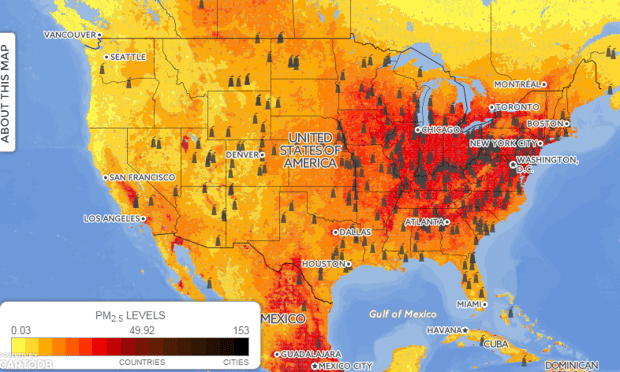
The analysis found that stagnation days had increased across much of the country, most noticeably in the Southwest and Southeast. For example, in San Francisco there are on average 23 more stagnant air days each summer now than there were 40 years ago, while in New Orleans there are 28. See how your city has fared in the interactive graphic below.

Separately, a group of researchers has looked at how those trends might change by the end of this century with additional warming.

In one study, published in 2012, they looked at how the number of stagnation days (following the ASI) would change assuming the world adopted a mix of fossil fuel and renewable energy sources, while the follow-up study, published in 2014, looked at the same question assuming fossil fuel emissions continued on the same path they’re on now.

They found the largest U.S. increases in the eastern portion of the country, but with some other hotspots in the central and western regions. The changes were around six to nine more stagnation days compared to the late 20th century, but the reasons behind the changes varied between regions.

In the West, increases came from having more days without precipitation to scour the air, while in the Southeast it was due to weak winds that would keep pollutants from being dispersed.

Of course, this doesn’t guarantee worse air quality in the future, as steps can be taken (as they have been in recent decades) to reduce the amount of pollutants getting into the air in the first place, as well as to combat the greenhouse gas emissions that lead to warming.

via Stagnant Summer Days on the Rise in U.S. | Climate Central.

Posted in Air Quality, USA & Canada | Tagged , , , , , , | Leave a comment

80 People Die In Delhi Everyday Due To Air Polliution, Says Environment Minister Prakash Javadekar

Government on Thursday said that air pollution is killing around 80 people in Delhi every day, according to an international study released recently.

In a written reply in Rajya Sabha, Environment Minister Prakash Javadekar said that polluted air, particularly the respirable particulate matter is one of the several factors responsible for morbidity and premature deaths.

o-yakub-memon-570

“An international study released recently has claimed that foul air is killing up to 80 people a day in Delhi. The numbers of premature deaths given in the study are based on the constructive estimates and extrapolations of data,” the Minister said.

via 80 People Die In Delhi Everyday Due To Air Polliution, Says Environment Minister Prakash Javadekar | What’sMovingIndia.

Posted in Air Quality, Asia, India | Tagged , , | Leave a comment

Respro® Masks FAQ: These bendy nose things, how far should I bend them?

These bendy nose things, how far should I bend them?

The malleable nose clip deforms easily so that a good fit can be formed around the bridge of the nose. Continuous or exaggerated deformation will eventually cause failure in the metal – it will snap. Once a good fit has been found, it is best to maintain the shape, rather than folding it flat when storing it or when not in use.

For more FAQs,  go to Respro® Mask FAQ

Posted in Air Quality | Tagged | Leave a comment

2,900 Tehran citizens die each year due to air pollution

Mehrdad Lahuti, a member of the environment faction in Iran’s so-called parliament said each year nearly 2,900 Tehran citizens due to air pollution.

“Moreover, air pollution has heavy medical costs for the people in major cities and therefore officials must take this problem very seriously,” he added.

“The truth is that 80% of air pollution in Tehran is due to a large quantity of non-standard vehicles roaming the streets,” Lahuti continued.

If various cabinets in Iran acted upon their legal duties on development projects, the air pollution in Tehran these days would be much lower.

via 2,900 Tehran citizens die each year due to air pollution.

Posted in Air Quality, Iran, Middle East | Tagged , , | Leave a comment

Air pollution costs European economies US$ 1.6 trillion a year in diseases and deaths, new WHO study says

A staggering US$ 1.6 trillion is the economic cost of the approximate 600 000 premature deaths and of the diseases caused by air pollution in the WHO European Region in 2010, according to the first-ever study of these costs conducted for the Region. The amount is nearly equivalent to one tenth of the gross domestic product (GDP) of the entire European Union in 2013.

The new study was published today by the WHO Regional Office for Europe and the Organisation for Economic Co-operation and Development (OECD) as a 3-day high-level meeting on environment and health in Europe opens. Over 200 representatives from European countries and international and nongovernmental organizations gather in Haifa, Israel, on 28–30 April 2015 to look at achievements, gaps and challenges and set future priorities.

“Curbing the health effects of air pollution pays dividends. The evidence we have provides decision-makers across the whole of government with a compelling reason to act. If different sectors come together on this, we not only save more lives but also achieve results that are worth astounding amounts of money,” says Dr Zsuzsanna Jakab, WHO Regional Director for Europe. “Cross-sectoral work is the backbone of the environment and health process, which was initiated 26 years ago, and it is even more relevant today in the discussions taking place at this meeting in Haifa.”

A ground-breaking report: economic cost of the health impact of air pollution in Europe

Economic cost of the health impact of air pollution in Europe is the first assessment of the economic burden of deaths and diseases resulting from outdoor and indoor air pollution in the 53 countries of the Region.

The economic cost of deaths alone accounts for over US$ 1.4 trillion. Adding another 10% to this, as the cost of diseases from air pollution, results in a total of almost US$ 1.6 trillion. In no less than 10 of the 53 countries of the Region, this cost is at or above 20% of national GDP (see Annex for data by country). The study uses the methodology applied in a 2014 report by OECD and makes the calculations based on the most recent economic estimates of the health impacts of air pollution.

The economic value of deaths and diseases due to air pollution – US$ 1 600 000 000 000 – corresponds to the amount societies are willing to pay to avoid these deaths and diseases with necessary interventions. In these calculations, a value is attached to each death and disease, independent of the age of the person and which varies according to the national economic context.

Air pollution: the single largest environmental health risk

Over 90% of citizens in the Region are exposed to annual levels of outdoor fine particulate matter that are above WHO’s air quality guidelines. This accounted for 482 000 premature deaths in 2012 from heart and respiratory diseases, blood vessel conditions and strokes, and lung cancer. In the same year, indoor air pollution resulted in an additional 117 200 premature deaths, five times more in low- and middle-income countries than in high-income countries.

“Reducing air pollution has become a top political priority. Air quality will be a key theme at the next Environment for Europe Ministerial Conference in Georgia in 2016”, says Mr Christian Friis Bach, Executive Secretary of the United Nations Economic Commission for Europe (UNECE). “Fifty-one countries are today finding joint solutions in the framework of the UNECE Convention on Long-range Transboundary Air Pollution. This work must be strengthened to reduce air pollution even further and extended to more countries and to other regions.”

“About 2500 people are estimated to die in Israel annually as a result of exposure to air pollutants. The main source of air pollution is transportation, mainly in major city centres,” says Mr Ofir Akunis, Deputy Minister of Environmental Protection and Member of Knesset (Parliament) for Israel. “Since 2011, the Ministry of Environmental Protection’s Clean Air Law regulates pollutants from major sources such as transport, industry and energy in accordance with the most stringent standards. The Ministry aims to use all available resources to reduce air pollution, as this means saving the lives of thousands of people, as well as billions to the Israeli economy”.

Improving environment and health in Europe: how far have we gotten?

The cost of the health impacts of air pollution is only one of many studies that will provide evidence on the environmental impacts on health to be released at the Haifa meeting.

Another new report, Improving environment and health in Europe: how far have we gotten? jointly published by WHO and UNECE, informs that one in four Europeans still falls sick or dies prematurely from environmental pollution. Data from several surveys in priority thematic areas such as water and sanitation, air quality, the day-to-day surroundings of children’s lives, chemicals and asbestos, climate change and health inequalities all show that while progress has been remarkable, it has been uneven (see Fact Sheet on the report).

via WHO/Europe | Media centre – Air pollution costs European economies US$ 1.6 trillion a year in diseases and deaths, new WHO study says.

Posted in Air Quality, Europe | Tagged , , , , | Leave a comment