Istanbul and Safer Streets and Air Pollution

After years of intense traffic congestion, Istanbul began pedestrianizing its Historic Peninsula in 2005, prioritizing walkability and improving local air quality.

Motorized vehicle emissions are a primary cause of air pollution and yield some of the most adverse impacts on public health. According to the World Health Organization (WHO), exposure to heavy traffic—even living near a major road—harms health and increases mortality rates. In 2012 alone, outdoor air pollution caused 3.7 million premature deaths worldwide, 88 percent of which occurred in low and middle-income countries.

In response, pedestrianization projects in cities worldwide are demonstrating that transforming car-oriented streets into walkable environments can generate a range of benefits—from higher levels of physical activity to greater economic activity. Istanbul, for example, has been a leader for pedestrianized communities and is demonstrating that making streets about people—not cars—can produce concrete benefits for all.

Istanbul Chooses People over Cars

The Historic Peninsula, one of Istanbul’s most iconic districts and a UNESCO World Heritage Site, is the heart of commerce and tourism in the city. Attracting approximately 2.5 million visitors on a daily basis, the Historic Peninsula’s heavily trafficked area was no exception to Istanbul’s car-centric design trend. In a study of the area, UNESCO documented how poor transport infrastructure and intense air pollution were causing damage to the monuments and designated historical sites.

In 2005, the Istanbul Metropolitan Municipality took action.  Launching the first pedestrianization project in the region, decision makers aimed to reduce the impacts of vehicle traffic on the local community.

Five years later, a report from EMBARQ Turkey entitled “İstanbul Historic Peninsula Pedestrianization Project- Current State Assessment” examined the Penınsula’s intense traffic and offered recommendations for improving its social and economic structure, accessibility, road safety, and environmental quality.

Respondents predominantly stated that disturbances caused by motorized vehicles and vehicle noise decreased significantly after pedestrianization. There was a mix of responses on the reduction of pollutants; 61 percent of employees or business owners reported a decrease in air pollution, while only 52 percent of residents thought that air quality had improved.

As a whole, however, the surveys show an overall satisfaction rate of 80 percent among residents, students, employees and business owners.

Riding on these results, the Historic Peninsula has pedestrianized 295 streets since 2010, making the region a vital transport hub for Istanbul’s citizens.

Map of the Historic Peninsula in Istanbul after Pedestrianization efforts, detailing its large scale and efforts to integrate various transport methods. (Graphic by EMBARQ Turkey)

Thanks to the recent pedestrianization efforts in the Historic Peninsula, vehicle emissions and pollution levels have come down significantly. A new report titled “Assessment of the Air Quality Effects of Pedestrianization on Istanbul’s Historic Peninsula” from EMBARQ Turkey analyses the impacts of pedestrianization on local air quality in Istanbul.

Records indicate that harmful gases, such as NO2 (Nitrogen Dioxide) and SO2 (Sulfur Dioxide) decreased significantly after pedestrianization efforts. Other general traffic-related emissions have also declined considerably at the tip of the Historic Peninsula, in Sultanahmet, and along transit stations closed to vehicles.

Meanwhile, the residential area in the Northeast of the Historic Peninsula—which has not been pedestrianized—has experienced little or no reduction in traffic-related emissions, demonstrating clearly the effect of pedestrianization on local air quality.

Next Steps: Enforcement and Integrated Planning

Pedestrianizing Istanbul’s streets has proven to be a key strategy for improving local air quality and public health. While the city has made significant progress in making the district more people-centered, there is still need for more work:

  • A comprehensive, long-term transport plan should be prepared that establishes a congestion charging program in the Historic Peninsula. Once constructed, the program will create a low-emissions zone to regulate traffic entering the peninsula.
  • Improve enforcement of existing provisions to ensure that pedestrianized streets remain pedestrian-friendly.
  • Traffic calming measures should be complemented by an integrated and efficient mass transport system with a high carrying capacity.
  • Cycling infrastructure should be integrated with other travel modes, such as mass transport or walking.

The benefits of these recommendations are not limited to air quality. These measures can reduce noise pollution and create additional advantages, such as improved pedestrian safety, transport access, and quality of life.

It’s critical that city leaders in Istanbul and beyond recognize the success that pedestrianization can have on urban communities and continue to support walkable, people-oriented streets.

via Istanbul and Safer Streets and Air Pollution | Sustainable Cities Collective.

Posted in Air Quality, Europe | Tagged , , , , , | Leave a comment

Tougher Air Pollution Targets In EU Could Save €40 Billion In Air Pollution Costs

Tougher national caps on the emissions of common air pollutants may soon be headed to the European Union, following the approval of European Commission proposals by the Environment Committee (ENVI) of the European Parliament.

The new caps call for the emissions in question to be reduced by 70% by 2030 (saving an estimated €40 billion in air pollution costs).

The report — coming via Julie Girling (European Conservatives and Reformists, ECR, UK) on the National Emissions Ceiling directive (NEC) — was adopted by a fair margin — 38 votes “for” versus 28 “against” (2 abstentions). Next up is a plenary vote set for October in Strasbourg.

Following the vote, Girling spoke on the topic, making some interesting points:

This legislative process has been overshadowed throughout by the Commission’s threat to withdraw their proposal and their stated intention to hold a review after the European Parliament adopts its initial position. It is estimated that around 400,000 people a year die prematurely across the EU from air pollution. This is not acceptable, we are all directly impacted by this crucial health issue.

I believe my original proposal presented the right balance between ambitious targets and realistic goals. Unfortunately a coalition of socialists, liberals and greens have focused on increasing the already ambitious targets set by the Commission. Therefore I fear that we are now embarking on a long and protracted negotiation, rather than taking the quicker route of improved health for EU citizens.

Green Car Congress provides more:

The Environment committee wants the future NEC directive to include caps on mercury (Hg) from 2020, as well as binding, rather than indicative, new caps in all member states on emissions of the air pollutants sulfur dioxide (SO2); nitrogen oxides (NOx); non-methane volatile organic compounds (NMVOC); methane (CH4); ammonia (NH3); and particulate matter (PM2.5) to be achieved by 2020 and 2030, that are proposed by the Commission. The committee stressed that more ambitious targets should be set in order to reach 2030 goals.

In addition, the committee argues for the creation of fully binding midpoint targets for 2025 and the elimination of offsets for international shipping, amongst other things.

As it stands, air pollution in Europe (according to the European Commission) results in total health-related external costs of between €330–940 billion a year.

via Tougher Air Pollution Targets In EU Could Save €40 Billion In Air Pollution Costs | CleanTechnica.

Posted in Air Quality, Europe | Tagged , , , , , , | Leave a comment

China’s ‘war on pollution’ leads to big improvements in air quality

The Chinese government’s “war on pollution” has led to a significant improvement in air quality in major cities this year; though levels of PM2.5, the deadly particles produced by burning coal and other fossil fuels, remain way in excess of international standards.

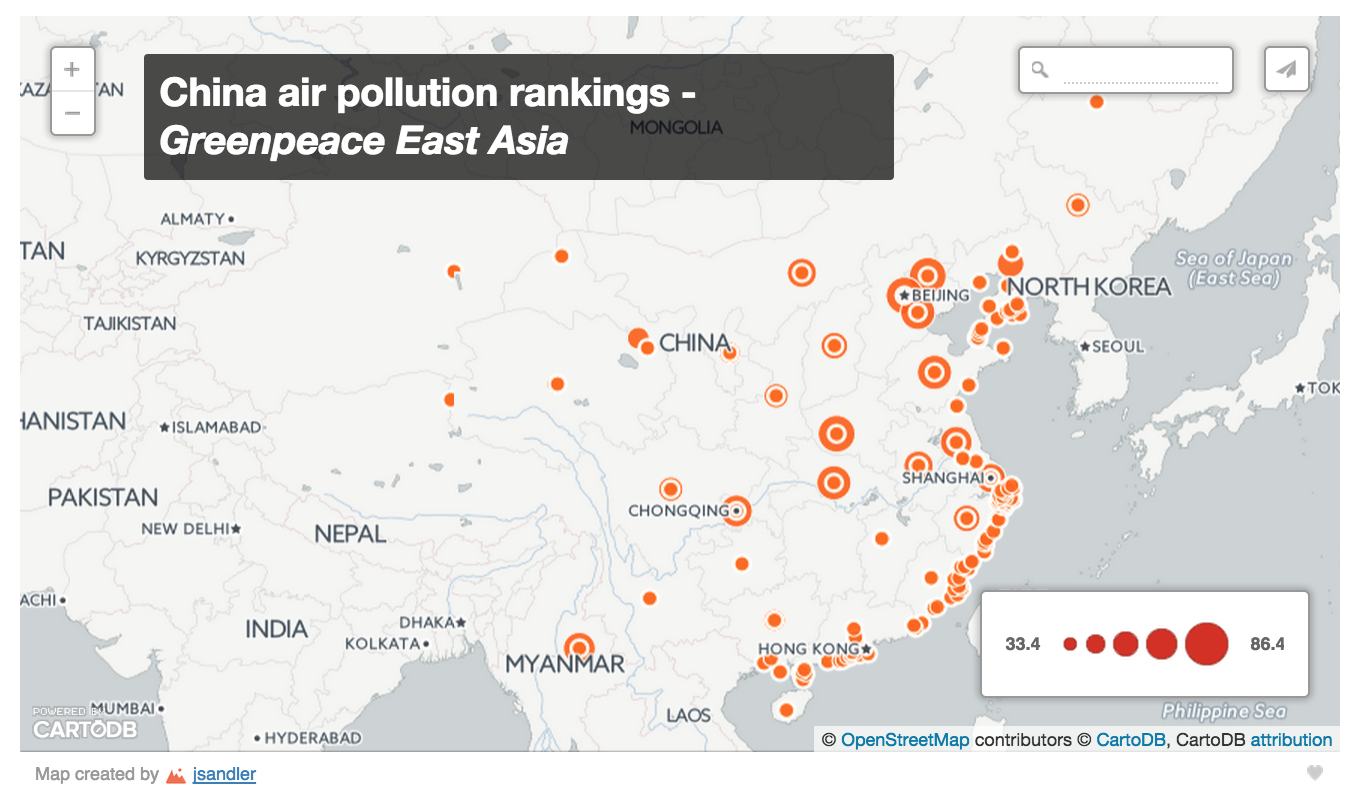
Data from 189 Chinese cities collected by Greenpeace East Asia show PM2.5 levels fell an average of 16% in the first half of 2015, compared to the same period last year.

China-air-pollution-290x145

In Beijing, where there are reports of children being forced to play in inflatable clean air sports halls, the research reveals dramatic reductions in pollution levels in 2015. PM2.5 levels fell 15.5% in the city compared to the same period last year, while sulphur dioxide (SO2) levels dropped 42.6%.

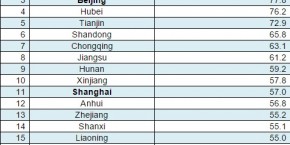
The data, which ranks Chinese cities and provinces according to the amount of concentration of PM2.5 in the atmosphere, puts Beijing third on the list of most polluted provinces, with Hebei, the province surrounding China’s capital second.

The World Health Organisation (WHO) state that urban air shouldn’t have more than 10 micrograms of PM2.5 particulate per cubic metre (µg/m3). In the first six months of 2015, the average PM2.5 level in the 358 ranked cities standing at 53.8 µg/m3, more than five times the WHO’s guidelines.

China itself is aiming to keep PM2.5 levels below 35 micrograms per cubic metre (µg/m3). Despite the progress, only five of the 31 provinces ranked by Greenpeace East Asia meet the Chinese target, with over 80% of cities also failing to meet air quality standards.

Screen Shot 2015-07-24 at 08.47.51

With an average PM2.5 concentration of 77.8 µg/m3, Beijing is more than double government targets. Shanghai, with 57.8 µg/m3 is more five times the WHO standards.

Sichuan province, in south-west China, which dropped from 10th to 18th in the rankings, has seen the fastest improvements in air quality compared to the first half of 2014, along with Shaanxi province, which went from 11th to 17th.

In recent years, the Chinese government has made a concerted effort to improve air quality in major cities.

Four provinces in the key economic regions have been set absolute coal consumption reduction targets, in addition to four others that already have ambitious targets.

Investment in renewable energy has been dramatically increased. Last year, over 50GW of solar, wind and hydro power was installed.

Separately, the Chinese Premier Li Keqiang has vowed to fight air pollution “with all our might”.

The problem of pollution in China has been well documented in the global media and Chinese scientists.

In February last year, the Guardian reported that air pollution had reached such a state in China, that parts of the country looked like they had experience “nuclear winter”; with the nation’s food supply damaged by the massive burning of fossil fuels used to fire the country’s unprecedented economic growth.

via China’s ‘war on pollution’ leads to big improvements in air quality – Energydesk.

Posted in Air Quality, Asia, China | Tagged , , , , | Leave a comment

Heathrow expansion: MPs probe pollution impact as conflict grows over ‘flawed’ commission report

Noise and air pollution from a potential third runway at Heathrow is to be investigated by MPs, as the Airports Commission’s report comes under growing criticism.

The Commons environmental audit committee is also to examine the climate change impact of a bigger airport in west London, in its first inquiry of the new parliament.

MPs will assess whether plans to curb aviation emissions — including charging £330 per ton of carbon dioxide from flights by 2050 — and proposals to tackle local air pollution and noise set out in the commission’s report are realistic and achievable.

The commission, led by the new Royal Bank of Scotland chairman  Sir Howard Davies, has strongly favoured expanding Heathrow.

But committee chairman Huw Irranca-Davies said: “Critics of airport expansion have raised concerns on whether it is possible to enlarge capacity in the South-East while meeting the UK’s binding commitments on air pollution and climate change.

“We will be examining the Airports Commission’s assessment of these issues in order to inform the debate about the future of aviation in the South-East.”

Separately, a group of six town hall leaders in London, eight MPs, academics, peers, environmental experts and London Assembly members have written to David Cameron.

They are urging the Prime Minister either to re-open the commission’s consultation on air quality, which they branded “flawed”, or rule out another runway in west London.

The group of council leaders comprises Tories Ray Puddifoot of Hillingdon, Lord True for Richmond, Ravi Govindia of Wandsworth and Kevin Davis at Kingston, as well as Labour’s Stephen Cowan of Hammersmith & Fulham and Liberal Democrat Ruth Dombey in Sutton.

The eight MPs who have also signed the letter are Conservatives Zac  Goldsmith of Richmond Park, Tania Mathias for Twickenham, Adam  Afriyie of Windsor and Bob Blackman in Harrow East, plus Labour’s John McDonnell of Hayes and Harlington, Kate Hoey for Vauxhall, Ruth Cadbury in Brentford and Isleworth and Andy Slaughter of Hammersmith.

They argued that an air quality consultation announced on May 8, the day after the General Election, did not give enough time to respond to highly complex reports, spatial maps and data sheets. They alleged that it was seen as a “tick box exercise” ahead of the commission’s final report, published this month.

The commission’s conclusions in- clude that another runway could be built at Heathrow even if it did not meet EU limits on air pollution — provided it did not delay London complying with them.

It also believes fewer people would be affected by noise from a three-runway Heathrow than currently as quieter planes come on stream.

via Heathrow expansion: MPs probe pollution impact as conflict grows over ‘flawed’ commission report – Transport – News – London Evening Standard.

Posted in Air Quality, Europe, London, UK | Tagged , , , | Leave a comment

’80 people die in Delhi every day due to air pollution’

Government today said that air pollution is killing around 80 people in Delhi every day, according to an international study released recently.

In a written reply in Rajya Sabha, Environment Minister Prakash Javadekar said that polluted air, particularly the respirable particulate matter is one of the several factors responsible for morbidity and premature deaths.

“An international study released recently has claimed that foul air is killing up to 80 people a day in Delhi. The numbers of premature deaths given in the study are based on the constructive estimates and extrapolations of data,” the Minister said.

He said that government had sponsored two studies in Delhi, ‘Epidemiological Study on Effects of Air Pollution on Human Health in Delhi’ during 2002-2005 and ‘Study on Ambient Air Quality, Respiratory Symptoms and Lung Function of Children in Delhi’ which was carried out during 2003-2005.

“The studies indicate that several pulmonary and systemic immunity and damage to chromosomes and DNA and other health impairments are associated with cumulative exposure to high level of particulate pollution that increases the risk of various diseases including respiratory and cardiovascular diseases,” Javadekar said.

via ’80 people die in Delhi every day due to air pollution’.

Posted in Air Quality, Asia, India | Tagged , , , | Leave a comment

Respro® Masks FAQ: How to fit a Respro® mask?

For more frequently asked questions,  see Respro® Mask FAQ

Posted in Air Quality | Tagged | Leave a comment

Air pollution can be lethal even when under threshold, study finds

New research shows that air pollution can be lethal even at low concentrations, under the levels determined to be harmful even under stringent definitions. These findings were published last month in the periodical put out by the United States Institute of Environmental Health Sciences. A collaborator in this study was Dr. Itai Kloog from Ben-Gurion University of the Negev.

Prof. Joel Schwartz of Harvard University, one of the leaders of the study, is visiting Israel this week as a guest of the Environment and Health Fund. On his visit, Schwartz held a meeting with experts at the Ministry of Environmental Protection, to discuss exposure to pollutants.

The researchers investigated the effects of exposing people over 65 years old, in New England, to miniscule polluting particles, fewer than 2.5 microns in diameter. Such particles are emitted by cars, factories and power-generating plants, penetrate the respiratory system and increase the risk of infection and respiratory and blood vessel disease. The researchers found that 10 micrograms of pollutants per cubic meter of air raised mortality by 7.5% in the population under study. According to U.S. standards a top level of 35 micrograms per cubic meter is the absolute permissible limit, yet the study showed that even lower levels can increase mortality.

“What’s special about this study is that participants are at an age at which they’re entitled to medical insurance, so we had all their details,” said Schwartz in a conversation with Haaretz. He added that they used a novel method to follow pollution with the aid of a satellite. “That way we could assess pollution even where there were no monitoring devices.”

Schwartz emphasized that the study doesn’t suggest the abolition of standards. “Standards are useful for planning and deciding what and where to build, but other methods should be used to reduce this pollution,” he said.

He cited Boston as an example. The city complies with established standards, yet local authorities decided to further reduce pollution levels by helping to upgrade filtering devices on cars and buses. New York decided to encourage the usage of natural gas-powered buses, where there is a sharp drop in the emission of polluting particles.

Polluting aerial particles are a worldwide problem, present in Israel as well. The head of the aerial monitoring division at the Ministry of Environmental Protection Levana Kordova says that Israel established a less stringent standard than the U.S. since naturally-originating pollution sources such as desert dust are more common here.

“Prof. Schwartz suggested that we try and isolate man-derived particles in our measurements, including particles smaller than 2.5 microns” notes Kordova. “We’ll examine his method and determine the health implications of these particles, looking at whether changing standards is worthwhile.”

In the meantime, the ministry is trying to expand the use of filters, especially in heavy diesel-powered vehicles such as trucks and buses. This will be a mainstay of the recommendations for reducing pollution in the Haifa Bay area currently being formulated by the ministry. Another step will be the introduction of gas-powered buses. In recent weeks Egged and Supergas, in collaboration with auto importer MAN, have been experimenting with such a bus in the Haifa area. The experiment will last three months, aided by the unit for alternative fuels at the Prime Minister’s Office.

via Air pollution can be lethal even when under threshold, study finds – Nature & Environment – Haaretz Daily Newspaper | Israel News.

Posted in Air Quality, Health Effects of Air Pollution | Tagged , , | Leave a comment

Canada can’t afford complacency on air pollution

Canada is being called on to adjust to recently established global guidelines for air pollution.

In an editorial, the Canadian Medical Association Journal advocates following the lead of the World Health Organization, which in May updated the acceptable levels of small particulate matter, nitrogen dioxide and ground-level ozone.

The CMA is particularly concerned about the impact of air pollution on children.

“We see increases in admissions to hospital for respiratory illnesses such as asthma [in children],” Dr. Moneeza Walji, one of the co-authors of the editorial, told CBC News.

That can increase the risk of developing respiratory or cardiac disease as an adult, she said

Canadian standards dated

The Canadian standard for ground-level ozone is 65 parts per billion, 15 ppb above the recently established WHO guideline. The Canadian standard for peak 24-hour concentration of fine particulate matter is 28 micrograms per cubic metre (µg/m3), four micrograms higher than the WHO guideline.

The Canadian standards were endorsed by the country’s environment ministers in 2000.

Health Canada was involved in the drafting stages of the WHO’s air-pollution resolution.

“In the end, the Canadian delegation made known Canada’s desire to co-sponsor the air-pollution resolution,” a Health Canada spokesperson told CBC News.

‘Silent killer’

Air pollution is a “silent killer” and is unique in that it affects the entire population, according to Dr. Michael Brauer, professor at the school of population and public health, University of British Columbia. Brauer was the co-author of a 2008 editorial in which CMAJ attributed more than 20,000 deaths annually in Canada to air pollution.

Small particles can travel deeply into our lungs, medical experts say, and the body’s response to fight the particles will keep continuing, even though it’s not a living particle that can be combatted. It can lead to inflammation that spills over into the bloodstream, causing health complications.

The problem is variable across Canada, and can change from year to year, Walji said.

“There is a lot of geographic variation when it comes to the improvement in air pollution,” Walji said. “There are some areas that have seen vast strides, and other places that are still striving from high pollution levels”

That’s because the sources of air pollution include such diverse factors as diesel transportation, oil and gas industry activity, forest fires, smoke from wood-burning stoves and air pollution in neighbouring provinces and states.

Ontario and Quebec, for example, score poorly on ozone measurements due to their own industrial activity, but pollution arriving from northeastern U.S. states contributes to the problem.

Better planning

National guidelines are important, but the issue can be fought locally with better planning by municipalities, according to University of Toronto chemistry Prof. Greg Evans, who has studied sources of air pollution.

Houses and schools downwind or close to highway corridors often see adverse air-pollution measurements, as can downtown areas, where particles can become trapped.

Canadian provinces regularly out-perform the newly adopted WHO guidelines, in addition to long-held national standards.

But medical experts believe that significantly reducing air pollution can lessen the frequency of heart attacks, chronic lung disease and emphysema in Canada, as well as the mortality rate.

via Canada can’t afford complacency on air pollution: CMAJ editorial – Health – CBC News.

Posted in Air Quality, USA & Canada | Tagged , , , , , | Leave a comment