A team of scientists drew a crowd Monday morning at the University of Utah, unveiling new tools that monitor air pollution.
“Today is the launch of the Hestia product. Hestia is an unprecedented look at the emission of carbon dioxide in Salt Lake valley,” professor at the University of Utah, John Lin, said.
Scientists at the University of Utah and Arizona State University collaborated on the project and say carbon dioxide monitoring will really help the understanding of pollution levels in Salt Lake.
“To use carbon dioxide as a proxy to get pollution emissions, so there’s where the connection to exposure and health and air quality comes in,” professor at the University of Utah, John Lin, said.
These new tools will work with other monitoring devices already in place. One of the Hestia machines is even mounted to a UTA trax train. These tools are monitoring emissions from anywhere in the county. Readings from these machines will help scientists pinpoint the who, what, when and where of air pollution. Many know our inversion season speaks for itself, and this team of scientists believe being able to actually see pollution levels, instead of hearing about them, could help spur change in our behavior.
“It’s a voluntary act, that sometimes is a reaction to seeing how things really are in your neighborhood and your city,” Kevin Gurney, professor at Arizona State University.
Other cities putting these machines to use include Los Angeles and Indianapolis. The scientists ABC 4 spoke to Monday say they believe Salt Lake City could see success and be the pioneer of this type of pollution monitoring.
Exposure to outdoor air pollution during the first year of life increases the risk of developing allergies to food, mould, pets and pests, new research concludes. The study showed that the sensitivity to allergens was associated with exposure to traffic-related air pollution during infancy.
New research from the Canadian Healthy Infant Longitudinal Development (CHILD) study shows that exposure to outdoor air pollution during the first year of life increases the risk of developing allergies to food, mould, pets and pests.
The study, published in the journal Environmental Health Perspectives, showed that the sensitivity to allergens was associated with exposure to traffic-related air pollution during infancy.
“With the increasing rates of allergies amongst children in Canada and elsewhere, we were interested in determining if air pollution from traffic might be partially responsible,” said Michael Brauer, the study’s senior author and a professor in the School of Population and Public Health at the University of British Columbia. “This is the first study to find a link between air pollution and measured allergic sensitization during the first year.”
While infants exposed to air pollution were at greater risk, researchers did not find a link between mothers exposed to air pollution during pregnancy and allergy risk in their children. Vancouver had the largest proportion of children to develop sensitivity to allergens (23.5 per cent), compared to Toronto and Edmonton (17 per cent each), and Manitoba (9 per cent). The study also found that children who live with furry pets and no attached garage were more likely to have no sensitivity to allergens.
“Understanding which environmental exposures in early life affect the development of allergies can help tailor preventative measures for children,” said Hind Sbihi, a PhD candidate at UBC and first author of the study. “We also found that children who attended daycare or with older siblings in the household were less likely to develop allergic sensitization, suggesting that exposure to other children can be protective.”
BACKGROUND
The CHILD Study, funded by AllerGen NCE and the Canadian Institutes of Health Research (CIHR), involves more than 3,500 families and their infants across Canada who are being closely monitored to determine how genetic and a wide range of environmental factors contribute to health outcomes, especially with regard to allergies and asthma.
The researchers used data from 2,477 children and assessed the children with skin allergy testing at approximately one year of age. They were tested for sensitivity to ten allergens, including cat, dog, dust mites, cockroach, fungus, milk, egg, soy and peanut. Of the participants, 16 per cent of infants were sensitive to at least one of the tested allergens; 12.5 per cent were sensitive to a food allergen; and 5.3 per cent were sensitive to an inhalant allergen.
Exposure to traffic-related air pollution was assessed by estimating nitrogen dioxide levels at each child’s home address. The researchers also evaluated the time each child spent away from home, including daycare attendance, and the use/type of the home’s ventilation system.
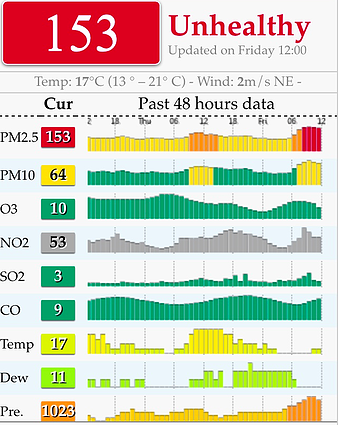
When I moved to Singapore in 2010, I knew little about haze and air pollution in general; I’d moved from London where the air wasn’t all that great either. In September 2010, we started to hear many residents of Singapore talking about the haze that would be coming our way soon, and sure enough few weeks later the thick choking wood smoke drifted in off the coast. After a little research, I learned that the farmers in Indonesia slash and burn their crops at this time of the year, because it is cheaper than buying the neccessary machinary to plow the fields in preparation for sowing next years crop. Depending on which way the wind is blowing Singapore and Malaysia may or may not be resigned to two months of smokey air, irritated eyes, throat irritations and worse if you already have some sort of respirtory condition like asthma. So very early on in Singapore, I got into the habit of checking the air pollution levels (PSI) on the government website each morning before I would go running. Below 100 PSI and I would run outside, above 100 and I would hit the treadmill.
Like many people in this part of the world, my job requires me to travel frequently within the Asia Pacific region, and I began to notice that many other cities also has bad air pollution; Hong Kong regulary has PSI reading above 150 (see left) and Beijing often has PSI readings above 200 and on occasions has had readings above 400 PSI. To cut a long story short, I just did a lot of running on treadmills.
I’m happy to say that the air quality in Singapore normally only suffers for a couple of months a year and is for the most part, a wonderful place to live. In my second year here there were no haze problems at all, mainly due to the wind direction, however in year 3 it was really bad, and at that time I decided to try to find a solution becuase I simply couldn’t bare to take another step on a treadmill, bored out of my mind staring at MTV or listening to the same playlist or audiobook. It was then that I remembered that whilst living in London, it wasn’t uncommon to see bicyle couriers and commuters wearing pollution masks to protect against the traffic fumes, so I started searching online to see if the same sort of mask could enable me to continue to run outside when the air pollution was bad and not impede my breathing too much. That was when I discovered Respro’s website; I reviewed all of the products on their site and finally emailed customer services to make sure I was ordering the right mask; I needed them to understand two things:
1. It is very hot and humid here all the time, 365 days a year.
2. I don’t do gentle jogging, I run.
They were very helpful and suggested that I try the Cinqro mask. When the mask arrived (free shipping worldwide) I went out with the intent of doing a 12-15km run. At first I was very pleased with how little the Cinqro impeded my breathing, until about 30 minutes into my run and the HEPA type filter inside the mask shell became saturated with the sweat pouring off my face (33 celcius 91 farenheit) and it became very hard to beathe. I removed the mask, gave it a good squeeze and a shake to get most of the moisture out, put the mask back on and continued with my run, only to find that 15 minutes later the filter was sweat-logged again. I reported the problem to Respro and they suggested that I try wearing a hat or headband to absorb the sweat which was a great solution and the Cinqro and I became unseparable during the rest of the haze season and whenever I traveled to one of the regions heavily polluted cities.
After about 2 weeks of wearing the Cinqro, the discolouration of the HEPA type filter was startling, it made me concerned about how much crap has been going into my lungs (and bloodstream) over the years.
A few months ago I was excited to see that the clever people a Respro had developed a new mask called the UltraLight; especially designed for hot and humid climates. I immediately emailed them and ask if they would allow me to test the mask against the Cinqro in a truly hot and humid climate – and they agreed.
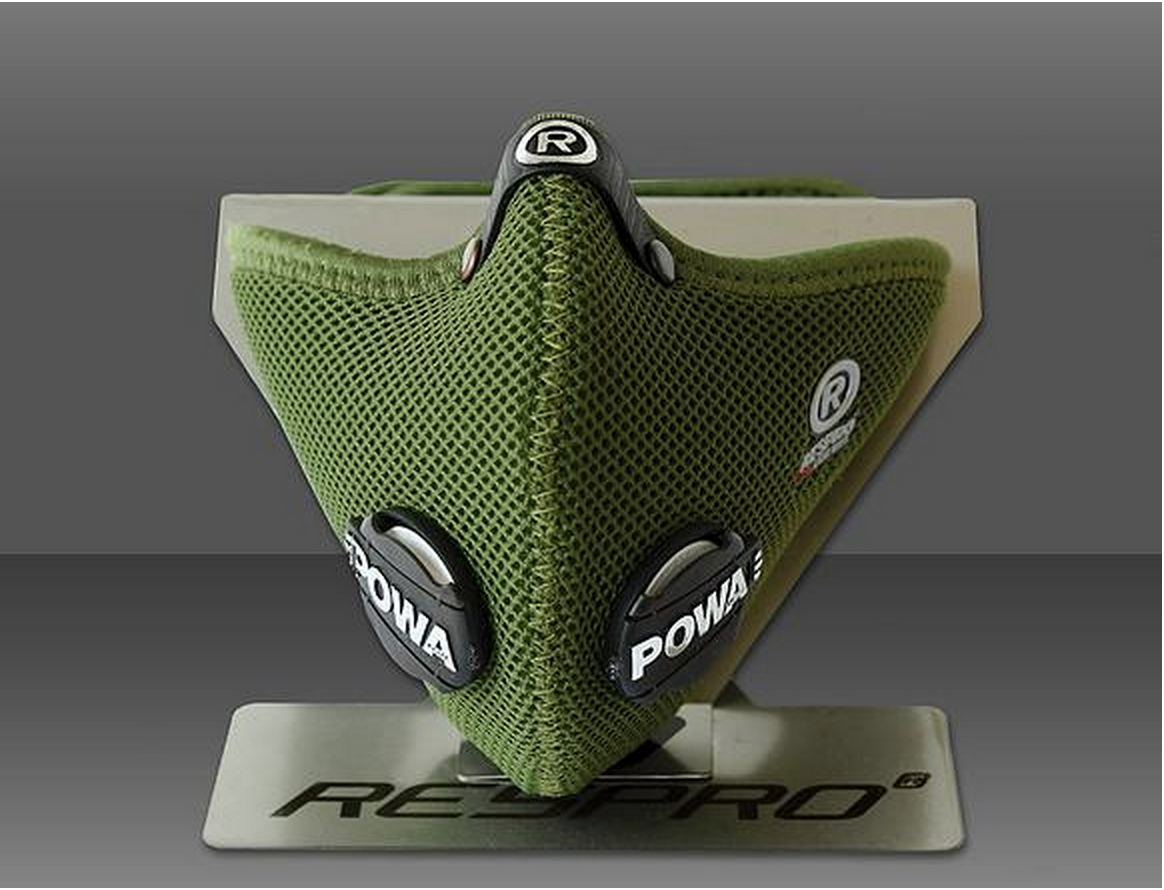
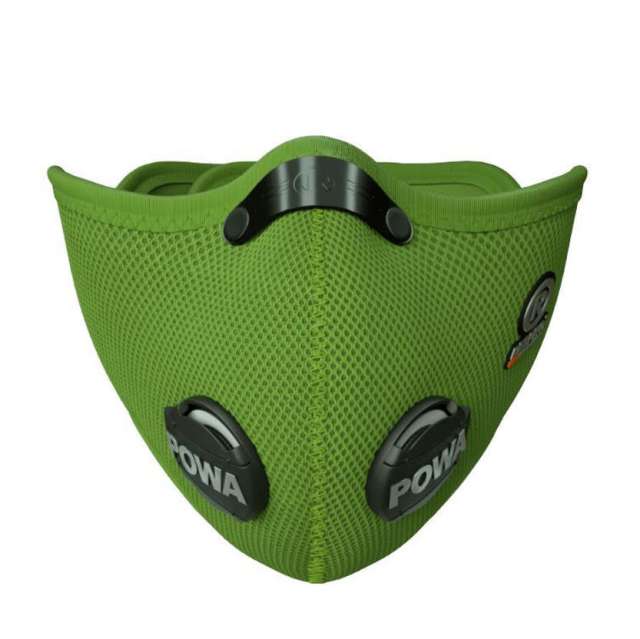
The main difference between the two masks is that the Cinqro mask shell is made out of a thin neoprene fabric and the UltraLight shell is made of a lighter, stretchy, breathable mesh that should be more suitable to this hot climate. Both masks are fitted with Respro’s Powa Elite Valves that can be adjusted to increase/decrease max airflow, and a replaceable HEPA type sports filter. As you can see in the pictures below, there is a very slight difference in the dry weight of the two masks; The Cinqro weighs in at 45.4grams and the UltraLight at 39.7grams.
The Tests
I decided that I would test the masks under my normal running conditions, because when I was looking to buy the Cinqro I wasn’t sure if you could really run in one of these things and a review like this would have been useful. So I decided on two tests:
1. 400m tempo runs
2. A longer run on undulating hills
On the running track, I did a lap without a mask to provide a baseline for time and heart rate, and then I ran a lap at the same pace wearing each of the Masks to see if there was any difference. The video of the track test is below.
Test 1 – 400m Track Test
Test 2 – 9 KM Hill Run
The second test involved running up and over the highest point in the Singapore Botanical Gardens (not very high to be honest, Singapore is pretty flat) 5 times to get to 9k. The aim was to assess if there is any difference in my ability to breath between these two masks and secondly, to see which one wicks moisture away better and which one is the most comfortable in this climate. One important thing to point out at this stage is that the HEPA type filter is made out of Dynamic Activated Charcoal Cloth (DACC) which filters out the harmful pollutants in the air. Being made out of cloth means that you do need to try to keep it as dry possible when running or the filter eventually becomes saturated and then sucks inwards as you inhale, signifiacntly impeding airflow. During the second test I was wearing a headband to absorb as much sweat as possible.
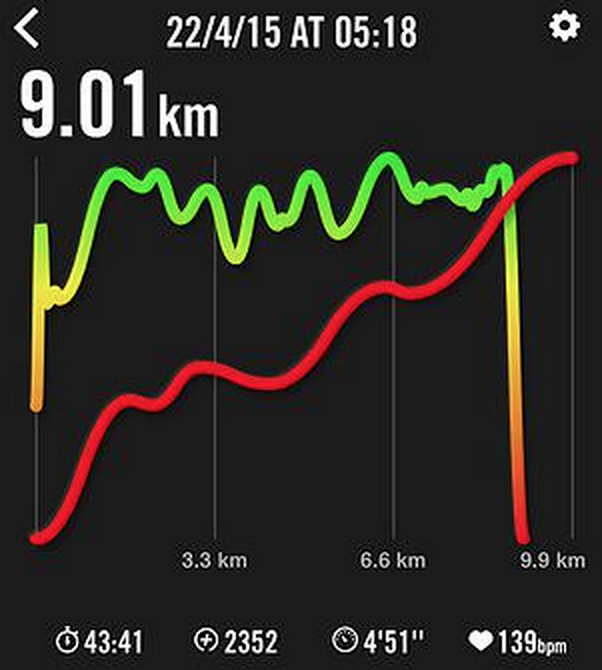
22 April 2015 wearing the Cinqro, running at an average pace of 4:51 per KM (7:48 per mile), and with the Powa Elite valves set wide open breathing was easy even when running uphill. But unfortunately at the 6KM point the HEPA type filter was becoming saturated and I started to notice a litte bit of back-suction as I inhaled which made breathing a little tougher, but I was able to complete the full 9km distance without having to remove the mask to wring-out the filter.
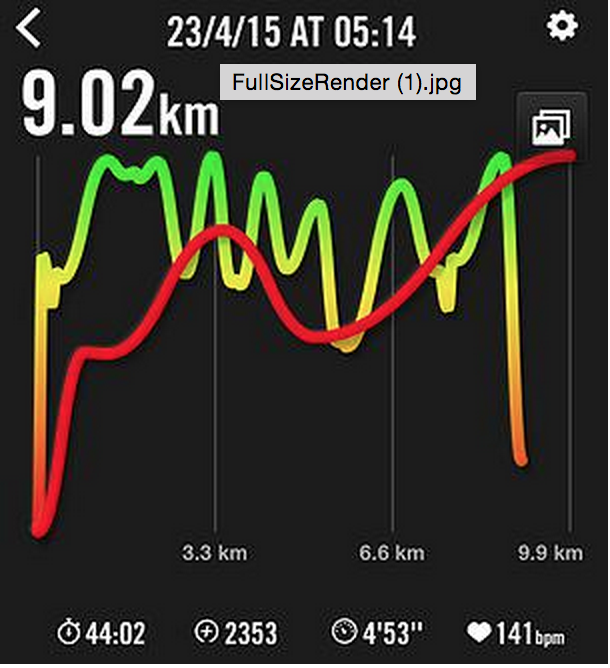
23 April 2015 wearing the UltraLight, running at an average pace of 4:53 (7:52 per mile) and with the Powa Elite valves set fully open, again breathing was very easy. The UltraLight fabric, does definitely allow air to permeate better than the Cinqro keeping my face a cooler, which also allowed the HEPA type filter to stay dryer because over the exact same course, at the same time of day, and the same temperature, the filter didn’t become saturated at any stage during the run.
Conclusion
I want to be clear, both of these masks are excellent and only differ in the fabric used in the mask shell; and if I were living in a more temperate part of the world, either one would suffice to keep my lungs clear of all the harmful crap sadly floating around our inner cities. But in hot and humid Singapore the UltraLight is the winner, keeping my face cooler, the HEPA Type filter dryer and me comfortable.
Finally I would also like to point out that running with anything covering your mouth and nose will have an impact on your ability to breath, however once I saw the brown colouring of the HEPA type filter after only 8-10 runs, I knew that the slight compromise in breathing was worth it. Another positive is that this minor restriction on my breathing has actually made me fitter! So if you are a cyclist or runner, living and training in an inner city, do yourself a favour; check the air pollution levels regulary (www.aqicn.org) and look after your lungs, they’re kinda important.
Over one thousand activists and Haifa area residents reignited protests Sunday over Health Ministry findings that linked heightened cancer rates in the city with high levels of air pollution.
Carrying signs reading “we’re suffocating,” and wearing anti-pollution masks, protesters gathered in the Haifa suburb of Kiryat Haim demanding the government take responsibility.
“My children have a greater chance of getting cancer than children in the rest of the country,” Kiryat Haim resident Haim Segal told Hebrew-language site Walla.
“The risk we face is far too high. I demand the government and mayors take responsibility and care for the public.”
Lior Amitay, head of the Public Health Coalition, the environmental group that organized the protest, demanded a designated task force be set up to address the prolonged pollution, and that expansion plans for the local industrial zone be frozen.
Haifa is home to Israel’s largest seaport and a number of petrochemical factories.
Last month it was reported that Prof. Itamar Grotto, head of public health services in the Ministry of Health, had found that half of the cases of cancer among children in Haifa were due to the city’s air pollution.
Grotto’s study also found that from 1997-2008, in the Haifa metropolitan area in general, the rates of cancer were 16 percent higher than in the rest of the country in 16 of the 18 types of cancer checked. Certain types of cancer — lung cancer, for instance — were even more prevalent: 29% more in Haifa than in the rest of the country.
But the Health Ministry later denied that there was evidence linking cancer rates in the northern port city to air pollution. “There is no testimony toward an excessive incidence of cancer in children,” it said.
The effect of air pollution on climate change is well-documented, but two new studies show that it may also pose surprising dangers to public health
On Wednesday, California Governor Jerry Brown announced an ambitious plan to reduce the state’s carbon emissions. His proposal – which would cut emissions by 40% below 1990 levels within the next 15 years – is aimed at curbing the potentially catastrophic effects of global warming, such as rising sea levels and super droughts. But while air pollution is bad for the planet, two studies released this week show that it’s also having a detrimental effect on public health.
One report, released on Wednesday, studied the impact of air pollution on fetal development. Researchers found that women who were in their final stage of pregnancy during the 2008 Beijing Summer Olympics – when China drastically cut down on air pollution – gave birth to heavier babies than those born during the same period a year earlier or later.
According to the study, babies of women who were in their eighth month of pregnancy during the event, which was held in August 2008, were – on average – 23 grams larger at birth compared to those born in 2007 and 2009. There weren’t any significant differences in weight for babies of women who were in their first seven months of pregnancy during the games.
The study credits cleaner air for the bump. Beijing, which the study’s authors described as “one of the most heavily polluted cities in the world”, was forced to combat air pollution as a condition for hosting the Olympics. The city temporarily closed down factories, halted construction, and reduced the number of cars on the road. As a result, air pollutants like nitrogen dioxide and sulfate decreased between 18% and 59% during the 47 days of the games, the report found.
“The results of this study demonstrate a clear association between changes in air pollutant concentrations and birth weight,” David Q Rich, an epidemiologist with the University of Rochester Medical Center and lead author of the study, said in a statement. “These findings not only illustrate one of the many significant health consequences of pollution, but also demonstrate that this phenomenon can be reversed.”
Growing old on smog
But smog isn’t just putting society’s youngest members at risk: another study has found that long term exposure to air pollution can lead to premature aging of the brain.
The report, published in the May issue of Stroke, analyzed data on 943 men and women over the age of 60. It found that those exposed to a form of pollution called PM 2.5 – a fine particulate matter that enters the lungs and blood – had smaller total cerebral brain volume, a sign of brain atrophy. People naturally lose cerebral brain volume as they get older, but these findings indicate that air pollution may speed up the process.
“The results suggest that exposures to air pollution may be associated with subtle but potentially harmful effects on the aging brain,” said Elissa H Wilker, the study’s lead author, and a researcher at Boston’s Beth Israel Deaconess Medical Center.
Wilker added that more studies are needed to investigate the effects of long term exposure to air pollution over time. But with 3 million deaths worldwide each year attributed to air pollution, Jerry Brown’s push to reduce carbon emissions is more pressing than ever.
Each filters type has a primary use in a specific environment.
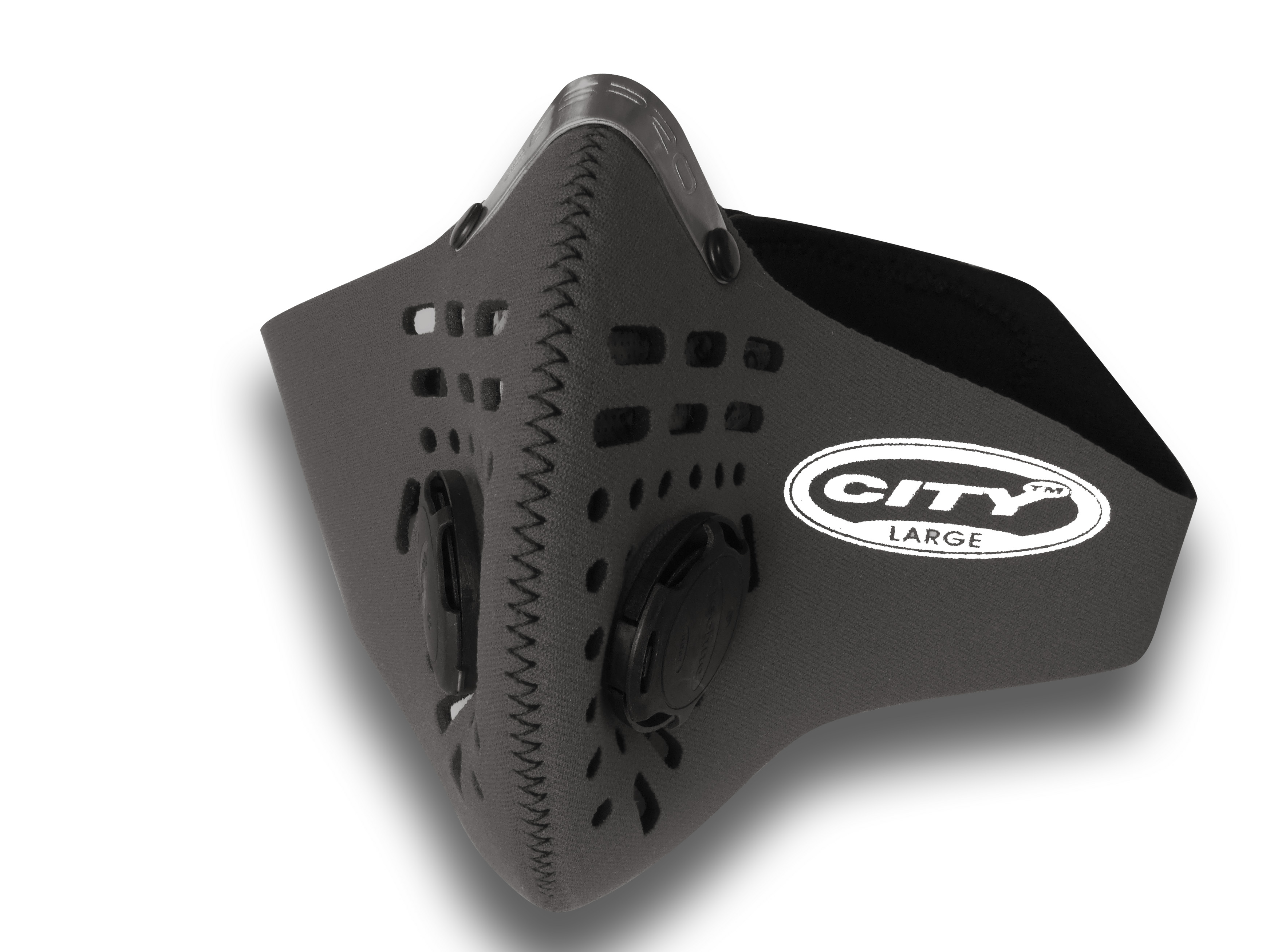
1. The City filter uses Dynamic Activated Charcoal Cloth (DACC) a 95% pure charcoal weave, originally developed by the U.K. Ministry of Defence for use in the protection against chemical and bacteria warfare situations. We use DACC to effectively filter out Primary pollutants associated with vehicle exhaust emissions. The DACC is laminated with medical grade non woven polypropylene material which filters particulates from the air and helps prevent them from entering the respiratory system.
The City™ filter offers protection against: – Hydrocarbons. e.g. Benzene; Pyrene; 1,3 Butadiene. – Acid gases. e.g. Nitrogen dioxide; Sulphur dioxide. – Photo-chemical pollutants. e.g. Low level Ozone – Particulates. e.g. Black smoke; Pollen; Lead oxide. For a more comprehensive list of all the chemicals that have tested with DACC, please go to the Industrial section of the website.
2. The Sportsta™ filter uses electrostatically charged fibres to attract airborne particulates down to 0.3 microns in size. 1 Micron = 1/1000mm. Unlike most particle filters which rely on mechanical retention, which inherently results in high inhalation resistance or very large cumbersome filters, the Sportsta™ filter offers extremely low inhalation resistance, by like comparison. The Sportsta™ filter offers protection against: – Pollen dust; Building dust; Clay dust; Grain dust; Soya dust; Carbon dust; House dust; Cigarette smoke. – PM10’s. e.g. Diesel smoke. – Lead & Tar.
The American Lung Association’s yearly State of the Air report ranked the cleanest and dirtiest metropolitan areas
California’s cities were among the dirtiest in the country
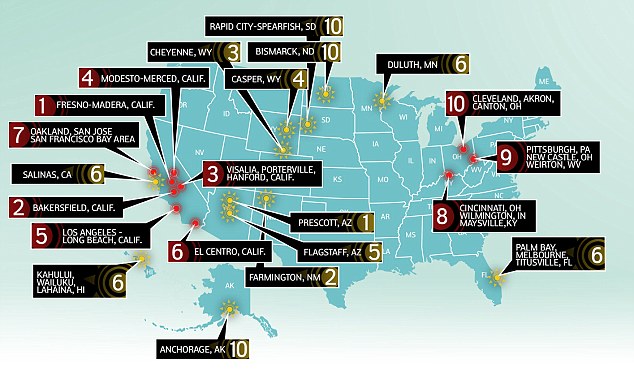
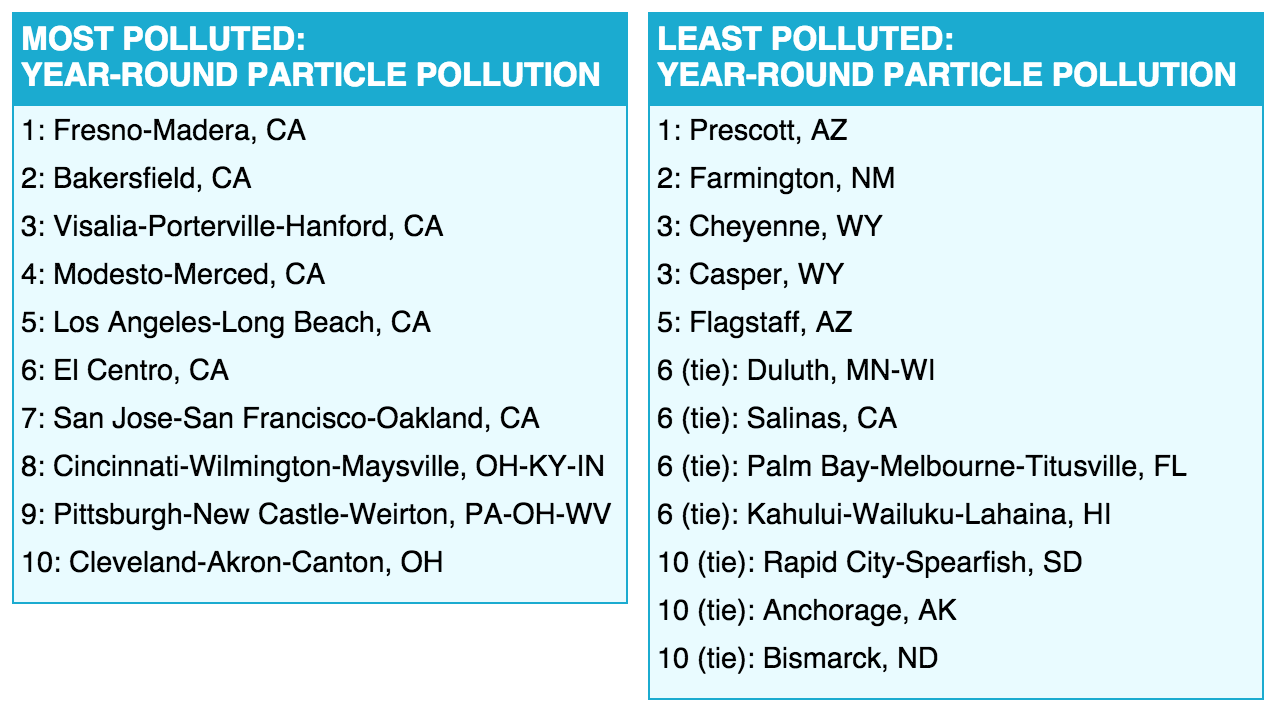
Fresno, Bakersfield and Visalia, California ranked as the worst for air pollution
Prescott, Arizona, Farmington, New Mexico, and Cheyenne, Wyoming, ranked as the cleanest
Air pollution can bring increased risks for asthma attacks, heart attacks and lung cancer
More than 40percent of Americans live where the air contains unhealthy levels of pollution, according to a newly released study.
The American Lung Association, in their yearly State of the Air report, ranked the cleanest and most polluted metropolitan areas, noting the ways in which some cities are trying to clear the air.
‘We strongly believe that everyone has the right to breathe healthy air, and that begins with knowing the quality of your air,’ ALA president and CEO Harold Wimmer said in a statement.
The organization measures pollution according to several different criteria, including excessive ozone pollution and high year-round and short-term particle concentration.
California had some of the most polluted cities, with Los Angeles-Long Beach, Bakersfield, Fresno-Madera and the Visalia-Porterville-Hanford area among the top five cities across all three categories.
The appearance of other cities on the list of most polluted may be more surprising.
For instance, Fairbanks, Alaska, came in ninth on the dirtiest cities list by short-term pollution. NPR reported that the wood-burning stoves residents use to stay warm has added pollution to the city’s air.
Those looking to duck out of the bad air without leaving the Golden State should head to Salinas, California, tied for sixth on the list of cleanest cities by year-round particle pollution.
Yahoo! Health notes that particle pollution such as that seen in high concentrations in some of the most polluted cities can lead to increased risk of asthma attacks and lung cancer.
Ozone pollution, which also plagues areas such as Houston and Dallas-Fort Worth, can cause wheezing and coughing and asthma complications and carries increased risks for heart attacks.
In the eastern United States, in spite of stubbornly high levels of pollution, a commitment to changing to diesel engines and cleaning up power plants has brought about some improvements.
Climate change may make it difficult for cities to stay ahead of air pollution, according to the organization, as warmer temperatures will increase ozone pollution, and droughts and wildfires triggered by increasing heat add to particle pollution.
Pollution Masks since 1993 - The 'Original' and still the best - Made in the UK - respro.com
THE AIR WE BREATHE
The Respro® Bulletin Board is designed to keep you up to date with current views and issues relating to Air Pollution and its health implications in our daily lives.








 Respro® Masks are reusable