Beijing’s smog is increasingly toxic for China’s politicians

As Beijing faces the possibility of another ‘airpocalypse’ this winter, the Chinese people are more environmentally conscious and increasingly willing to protest against dangerous pollution

The smog is back and the threat of another “airpocalypse” hangs heavy over Beijing. Late last week, PM2.5 readings hit 550 micrograms per cubic meter, more than 20 times higher than the World Health Organisation (WHO) recommended limit of 25µg/m³. There’s no mystery to the cause of this soupy, polluted, metallic-tasting concoction that makes up the capital’s air: fossil fuel combustion.

Three decades of industrialisation have brought a prosperity to China that those living under Mao would have found unimaginable. And with it has come toxic air that they would have found equally unimaginable.

This time of year in Beijing, air quality is especially bad. The biting cold means that the coal-fired heating in the capital and the surrounding Tianjin-Hebei area is operating at full-throttle. Meanwhile, below-freezing temperatures are an invitation to the locals to abandon walking and bicycling in favour of the warmth of petrol-fuelled cars, no matter how snarled the traffic.

Coal and cars are the culprits robbing Beijing — and much of the rest of China — of clean, healthy air.

The Chinese leadership, I suspect, is feeling anxious. A return of the airpocalypse, the off-the-chart air pollution (above 500µg/m³) that lingered over Beijing for much of January 2013, would have not only serious environmental consequences, but likely social and political ones as well.

The Chinese public’s awareness of air pollution — and its deleterious effects on human health — is light years ahead of where it was in early 2013. At that time, most Chinese, like everyone else in the world, were unfamiliar with the term “PM2.5.” But with the airpocalypse, Chinese became obsessed with daily PM2.5 readings, and the mobile apps devoted to tracking its levels proliferated. By the end of 2013 PM2.5 ranked #3 on the list of most popular memes in the country.

In short, Chinese people today are more environmentally conscious — and are looking more insistently to the government to safeguard the country’s air.

Prior to January 2013 Chinese people could, of course, see the blanket of soot that enveloped the city and feel the sting in their eyes and the scratchiness in their throat, but they had no way of understanding the serious long-term cardiovascular and cardiorespiratory damage that the microscopic particles in the air they breathed could do to their bodies.

Since then, a number of influential, international scientific studies have been published, and they have caused quite a stir in China. The people there have learned that in the year 2010 alone roughly 1,200,000 of their countrymen died prematurely from “ambient particulate matter pollution”. They’ve learned too that in the two decades from 1981-2001 the life expectancy of the 500 million Chinese living in the north was a full 5.5 years shorter than that of their fellow citizens in the south. The reason? Heavier coal use for heating during the north’s frigid winters.

They’ve also learned that although air pollution may be a necessary byproduct of the country’s growing prosperity, the pollutants exact a particularly high a toll on young children. The respiratory systems of the young are less immune to the assaults of the fine particles. State media reported that during the airpocalpyse more than 9,000 children a day received treatment at Beijing Children’s Hospital for respiratory ailments. In a society where most parents are limited to one child, little matters more than that child’s health.

Now, when PM2.5 hits the “hazardous” level (300µg/m³), parents keep their kids at home from school. And, if they can afford it, they might send their kids to private schools that have all-campus filtration systems, equipped with huge pressurised sports domes where students get daily “outdoor” exercise. Some parents have even begun packing up their families for good, leaving Beijing for the countryside or relatively undeveloped places in China’s southwest — and even abroad, for places like the US, Canada, Australia, and the UK.

To the dismay of the Beijing leadership, the Chinese people have become less reticent about taking to the streets to voice their mounting discontent with the wretched condition of the environment. These protests, until now, have been largely localised, of the not-in-my-backyard (Nimby) type. But there exists the concern that their number and intensity could one day coalesce into an organised, nationwide movement – potentially oppositional to the state.

In the spring of 2013 a former party official reported that pollution had overtaken land disputes as the main cause of social unrest in the country. With such public displeasure on the rise, Premier Li Keqiang in March of 2014 declared “war on pollution” and, indeed, the remainder of the year saw the Chinese government announce a range of deliberate measures intended to tackle the environmental crisis.

So what happens if, this winter, Beijing is visited by airpocalypse II, by days and weeks of air more polluted, more injurious to public health than that found in an airport smoking lounge? Will the public be tolerant, trusting that the leadership is doing all that it can? Or will it become impatient, concluding that Li’s declaration of war was hollow and that the government isn’t engaging the enemy with the necessary conviction or force? Could an airpocalypse II trigger massive expressions of frustration with the country’s leadership?

In November of this past year, when Beijing hosted the Asian-Pacific Economic Conference (Apec) forum, the government shut down factories, took half of the city’s cars off the streets, and granted special holidays to workers to reduce activity in the capital — and the sky complied, turning blue for the duration of the summit.

While the particular measures taken for Apec may not be workable in the long-term, the return of the airpocalypse could provoke the public — with memories of “Apec blue” still fresh – to demand to know why their government could manage to clear the skies for foreign dignitaries but not for the citizens of the country who have to breathe the air year-in and year-out.

I imagine that these winter days, whenever the PM2.5 index approaches 500, Bejing’s leaders will cross their proverbial fingers. An airpocalypse II could raise very uncomfortable questions. It would not be a welcome visitor.

via Beijing’s smog is increasingly toxic for China’s politicians | Dan Gardner | Environment | The Guardian.

Posted in Air Quality, Asia, China | Tagged , , , , , | Leave a comment

Gov’t plan tackles air pollution caused by commuter traffic

Israel

$1.52 million program promotes getting to work on public transportation • Tel Aviv’s bike sharing service to be expanded, shuttles will run between train stations and business centers • Initiative expected to eliminate over 300,000 car trips annually.

Is there anyone who isn’t tired of looking for a parking place every morning, or being stuck in traffic jams? The Environmental Protection Ministry might have a solution. The ministry is slated to start funding projects that will let commuters leave their cars at home and get to work on time. The expected result is reduced air pollution and gas consumption; less traffic; and shorter commuting times.

The proposed measures are part of the implementation of a national plan to cut air pollution that has been approved by the cabinet and is slated to go into action a few months from now. Some 6 million shekels ($1.52 million) will be put into the project.

The ministry is expected to lend it support to projects designed to encourage commuting by public transportation and using bicycles rather than cars. The plan, which is projected to cut back on hundreds of thousands of car tips annually, includes the establishment of a shuttle system to and from centers of business, as well as an expansion of Tel Aviv’s bike sharing system to all of the Gush Dan region. The latter initiative will also include upgrades to bike paths in the area.

Cities slated to benefit from the project include Tel Aviv and its surrounding cities Givatayim, Holon, Ramat Gan, and Petach Tikva, as well as Jerusalem. It should be noted that the amount of ministry support for the various municipal authorities is based on the cities’ population density and the data on annual carbon dioxide emissions from cars. The amount of aid is being set according to each city’s socio-economic status, with the poorer cities getting more money. Support from the Environmental Protection Ministry is conditional on each local authority submitting its own detailed plan to reduce air pollution and use of personal vehicles.

“The fight against air pollution will prevent deaths,” Deputy Environmental Protection Minister Ofir Akunis said.

“The citizens of Israel can imagine the savings they will enjoy if they decide to leave their cars at home during the week and get to work using the alternate methods of transportation we’ll be offering, in conjunction with the local authorities,” Akunis added.

Estimates say that placing bike rental stations in Givatayim, for example, would cut down on some 200,000 car trips per year. The shuttle initiative from the Petach Tikva train station to the city’s business center is expected to save another 120,000 car trips annually.

The ministry’s proposals to cut back on air pollution caused by commuter traffic also include developing ride sharing applications for government employees and steps to keep polluting vehicles out of city centers.

via Israel Hayom | Gov’t plan tackles air pollution caused by commuter traffic.

Posted in Air Quality, Middle East | Tagged , , | Leave a comment

Respro® Masks FAQ: These bendy nose things, how far should I bend them?

These bendy nose things, how far should I bend them?

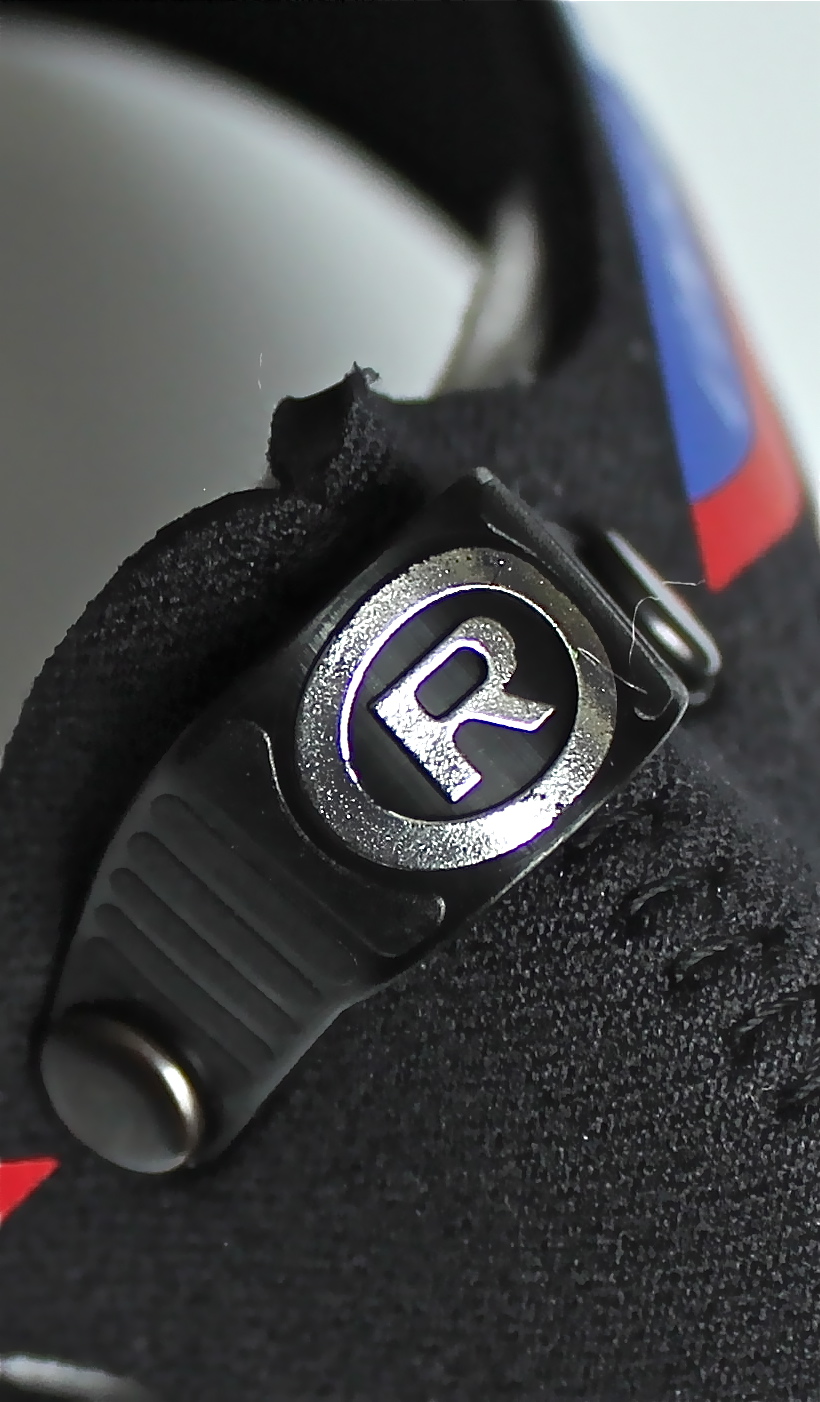
The malleable nose clip deforms easily so that a good fit can be formed around the bridge of the nose. Continuous or exaggerated deformation will eventually cause failure in the metal – it will snap. Once a good fit has been found, it is best to maintain the shape, rather than folding it flat when storing it or when not in use.

For more FAQs,  go to Respro® Mask FAQ

Posted in Air Quality | Tagged | Leave a comment

Ebtekar vows no leniency for polluting industries

Iran

The Department of Environment spares no leniency for polluting industries, the department’s chief Masoumeh Ebtekar said on Sunday.

Addressing a gathering on the occasion of the “Clean Air Day” in Tehran on Sunday, Ebtekar also admitted that the metropolis of Tehran is still grappling with heavy air pollution.

She said the organization under her leadership is negotiating to stop the sale of low quality petrol and replace it with petrol produced based on Euro 4 standard.

Iran to offer incentives for using electric cars

Ebtekar also spoke of incentives for using electric vehicles as the first Iranian-made electric car Sarina was unveiled on the sidelines of the ceremony marking Clean Air Day.

She told reporters that the organization is making endeavors to offer loans and other incentives for facilitating the purchase and use of electric vehicles.

Ebtekar added, “Combating air pollution particularly in major cities requires the imposition of much stricter standards.”

Mohammad Taghi Khanlou, the CEO of Diar Khodro Manufacturing Co. that produced Sabrina, also told reporters that based on a number of agreements made between car manufacturers and the ministries of oil and energy, electric cars would be soon deployed in the country’s taxicab fleets.


via Ebtekar vows no leniency for polluting industries – Tehran Times.

Posted in Air Quality, Iran, Middle East | Tagged , , | Leave a comment

REVIEW: Tested! Respro® Pollution masks… And they’re awesome!

We all love biking, but the one down part about urban motorcycling is the exposure to the elements. Pollution to be exact. We have all been behind a fume spewing bus or truck, or worse still, stuck behind either while waiting for a light to change. We have been there, we know.

And if you are Malaysian or Singaporean, there is the devilish annual haze fest. Millions of acres of forest is annually burnt down in Indonesia, and all that smoke, spills over to us. It does not only make breathing difficult, but simply stepping out is dangerous. Let alone riding a bike.

There are ways around it though.

Meet Respro®, a British company that develops masks for almost all uses; anti-pollution and reflective safety gear or race support products. These guys have been in the business since 1993 and lay claim to the title of ‘the original and the best’. And we believe them.

We were shipped three models of Respro® masks towards the end of last year, which has given us enough time to test them out. And yes, they work. Though it does take some getting used to, but once all is nice and tight, it just makes sense to wear one while riding.

We were given three models – the ‘bandit’ (our favourite), the ‘City’ and the Foggy anti-fog, breath guard.

Unfortunately there is no dealer for any of these products in Malaysia as yet, but you can buy them online by visiting: http://www.respro.com

The City

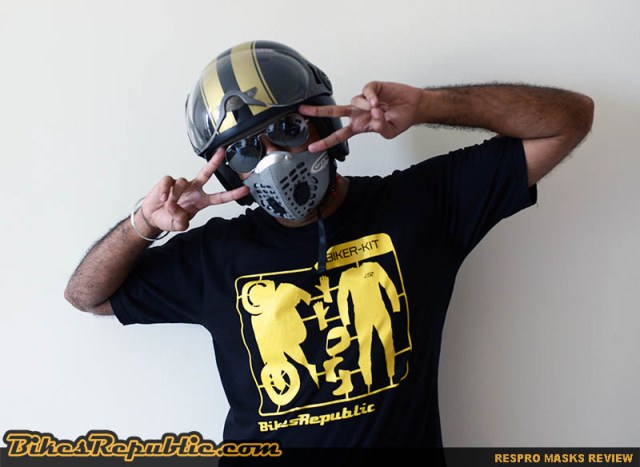
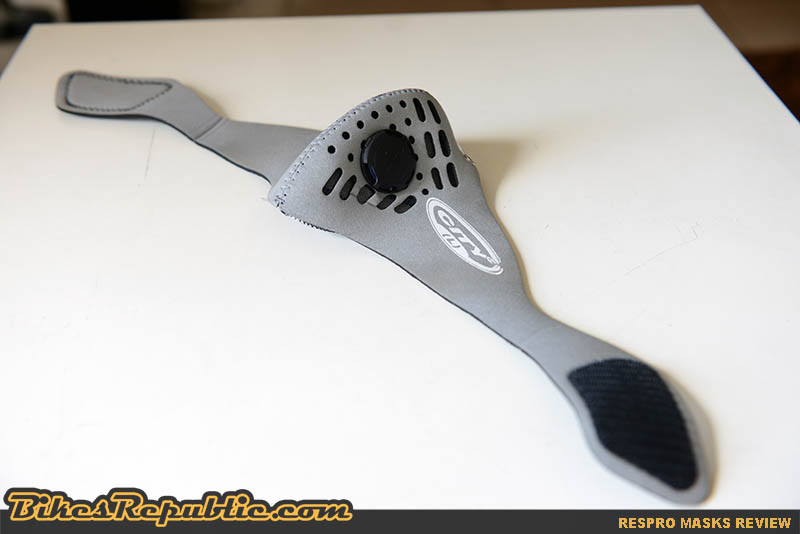
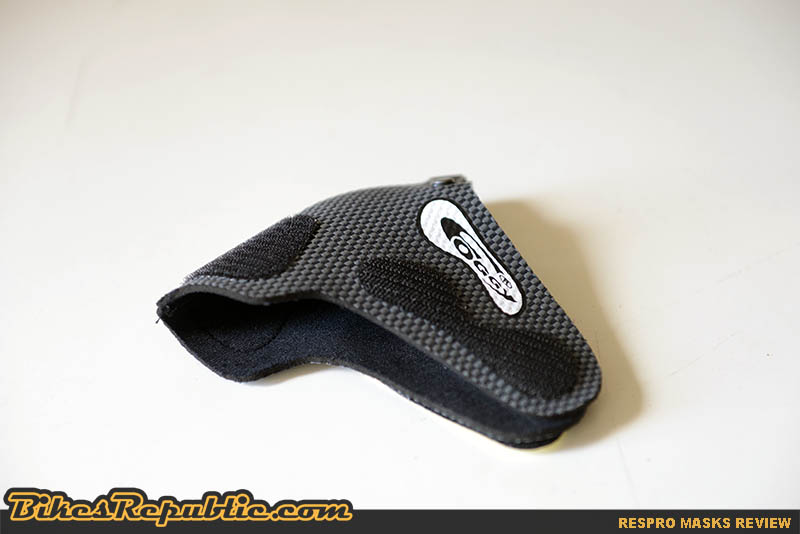
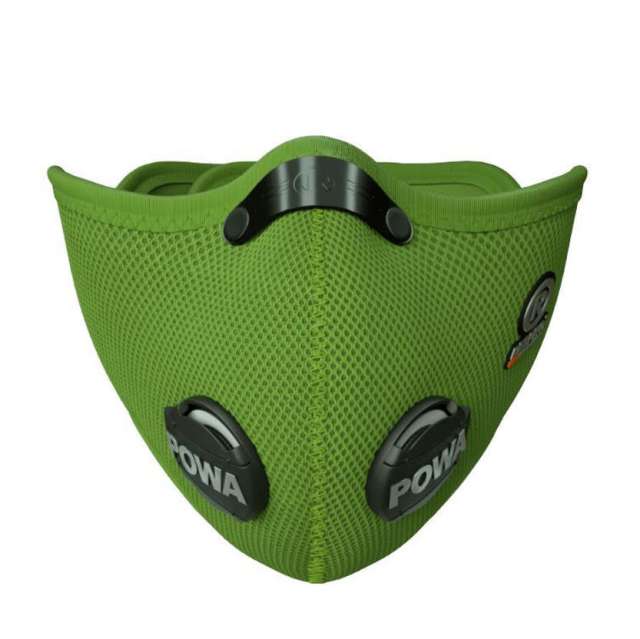
The City anti-pollution mask is arguably one of the meaner looking masks in this trio. It is made of hypo-allergenic Neoprene and is “wrapped” around your head and is held in place by a contoured design.

It may look like just another hardcore looking mask, but it is actually quite intelligent. It features an activated charcoal filter with particle filter liner, a particular matter rating of PM10 and two Techno exhalation valves. The inner filter is replaceable.

KSD_8303

It was designed for cyclists, motorcyclists, walking and for those who spend a lot of time outside in polluted areas.

It takes some time to get used to it but once the stretch gets comfortable and the material loosens up, you won’t even notice that it is there.

Price: GBP 26.99 (RM147)

KSD_8290


Bandit

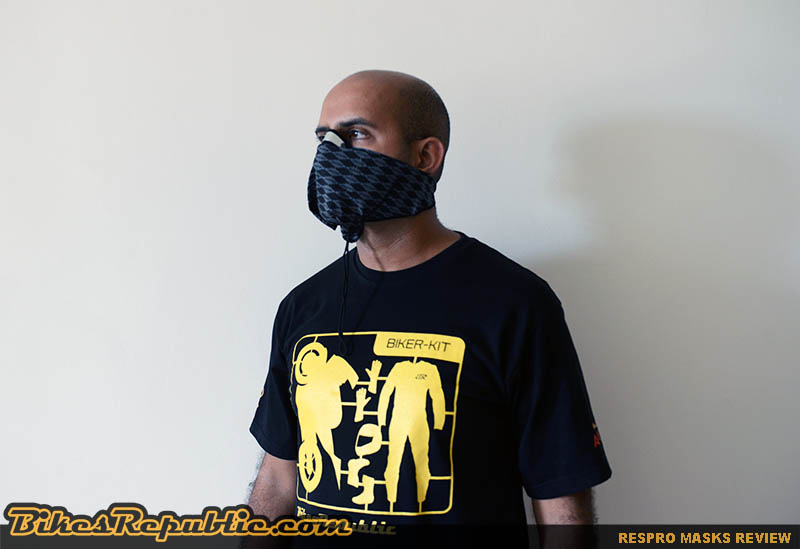
The Bandit Scarf is our personal favourite. It looks great and unlike the City, it does not look very intimidating. You should see the faces of some drivers who suddenly see you next to them in a City mask.

But the Bandit does have its drawbacks. Because it’s a scarf, it requires you to really tie it up tight, or risk the chance of it loosening while riding. It however, works a charm too.

KSD_8323

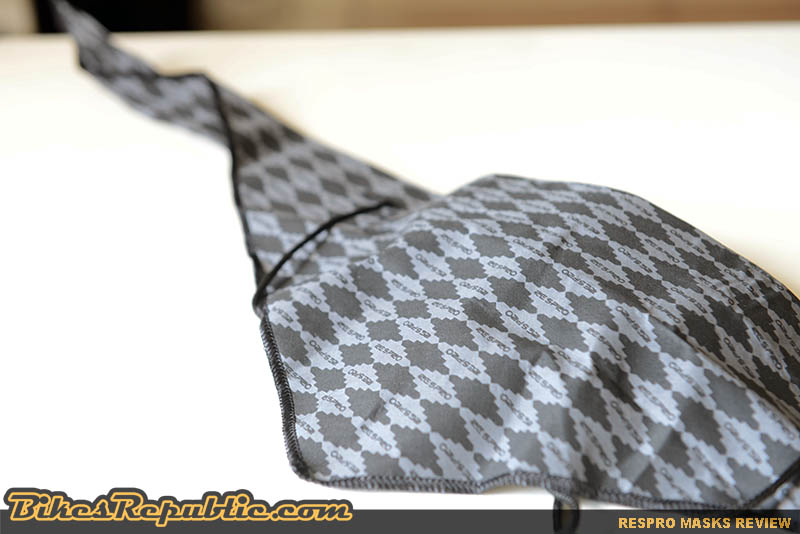
Utilising strategically placed filters, the Bandit scarf screens against nuisance dusts and odours. And because it is made of cotton, it is perfectly comfortable too. There is a drawstring that you can tighten around your chin area to give it a perfect fit.

Unlike the City, the Bandit will eventually expire. According to Respro®, the Bandit has been made to last for at least six months, while the filter is fully washable.

Truly one of the better face masks in the market today.

Price: GBP 19.99 (RM108.48)

KSD_8298


Foggy Mask

The Foggy Mask is unique, but we never truly got to test this mask properly. Reason being that it is mostly suited for cold weather riding. Breathing out of it in our humid Malaysian weather was difficult and ultimately tiring.

KSD_8299

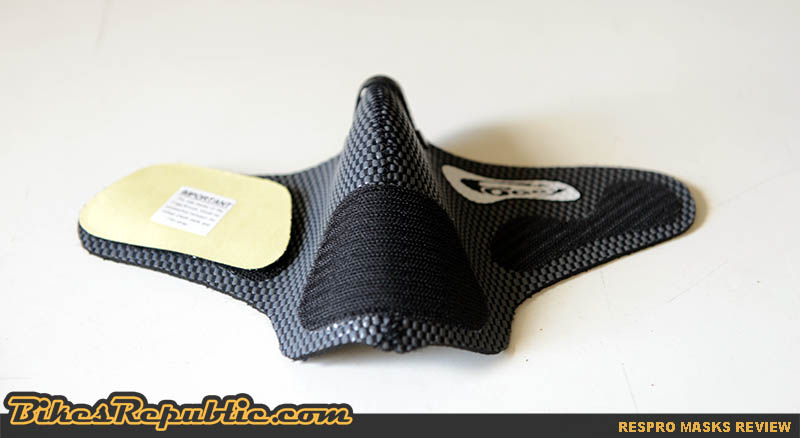
The Foggy mask works to prevent your visor from fogging up, which can be a major problem for a lot of us. It works first by strapping one end to the inner side of the cheek pad of your helmet, and the other to other inner side of your helmet. According to major reviews and user comments on this product, it is supposed to work excellently. Even Respro® says that it is 99.9% effective.

Sadly it was just too hot to use here, but if you are looking to ride in a cold weather country then this could just be the product for you. It does not require any gel, film and is easy to strap on.

It works for most major helmets like Shoei, Arai, Shark, AGV, Bell, HJC and others.

Price: GBP 19.99 (RM108.48)

via Tested! Respro Pollution masks.. And they’re awesome!.

Posted in Respro® Mask Reviews, Singapore | Tagged | Leave a comment

Bacon blamed for air pollution in northeast Sichuan

While experts point to car emissions and construction projects as the cause of China’s air pollution, a government official in Dazhou in Sichuan has laid the blame on smoked bacon.

The city of Dazhou in Sichuan province has been plagued with heavy smog since the new year began, with the PM 2.5 reading frequently exceeding healthy levels.

Rao Bing, deputy head of Dazhou Environment Protection Bureau, said on January 4 that one of the causes of the city’s lingering smog is the smoking of bacon.

Eating smoked pork and sausages is a long-held tradition in Sichuan, and almost every household makes smoked bacon before the Chinese lunar new year, which falls on Feb. 19 this year.

Local city inspectors or chengguan, have launched raids against bacon-smoking sites and forcibly demolished them.

The claim invited public ridicule and skepticism after Rao’s statement found its way online on Wednesday.

On Sina Weibo, netizens mocked the official’s argument by saying that Dazhou’s air might “smell like smoked bacon.”

“Smoking bacon has a long history, but smog does not,” said one comment.

Smoking meat only contributes to a small degree of air pollution, according to volunteers at the Bayu Public Welfare Development Center, a non-government environmental protection organization, which conducted a three-day survey at a dozen bacon-smoking sites.

“The impact of the smoking process is confined within a 50-meter radius,” a volunteer told Chinese-language Chongqing Evening News.

It is not the first time that Chinese government officials have suggested controversial explanations for smog. In October, environmental watchdogs in Beijing and the adjacent Henan province, two severely polluted places, blamed the smog on farmers burning straw, an agricultural practice with a long history.

In recent years, swathes of the country have frequently reported heavy smog, slashing visibility and posing health hazards. China has taken a variety of measures to contain severe air pollution, including restricting industrial production and vehicle use.

via Bacon blamed for air pollution in northeast Sichuan|Environment|News|WantChinaTimes.com.

Posted in Air Quality, Asia, China | Tagged , , , | Leave a comment

Air quality alert issued for southwestern New Hampshire

New Hampshire

The state Department of Environmental Services has declared an “air quality action day” for southwestern New Hampshire.

The state officials said they expected air pollution concentrations on Thursday to reach unhealthy levels for children, older adults and anyone with heart or lung disease such as asthma, emphysema and bronchitis.

The air quality concern is the result of local pollution stagnating under calm winds and temperature inversion conditions. That happens on calm, cold nights when warm air above traps cold air below, and prevents pollution near the ground from mixing with cleaner air.

Much of the locally emitted pollution comes from heating devices such as wood-burning fireplaces, stoves and boilers.

Conditions were expected to improve by Friday morning as wind speeds increase.

via Air quality alert issued for southwestern New Hampshire | Weather – WMUR Home.

Posted in Air Quality, USA & Canada | Tagged , , | Leave a comment

Review: Análisis de máscara Respro® City™ Mask

Josema Fuente prueba la Respro® City™ Mask

via BikeZona

Posted in Respro® Mask Reviews | Tagged , | Leave a comment